

DISTANT PLACES
Travel tips by Bremen sehenswert far from the Hanseatic City of Bremen
Hanseatic City of Rostock - A Travel Guide
The Gothic Town Hall
Town hall
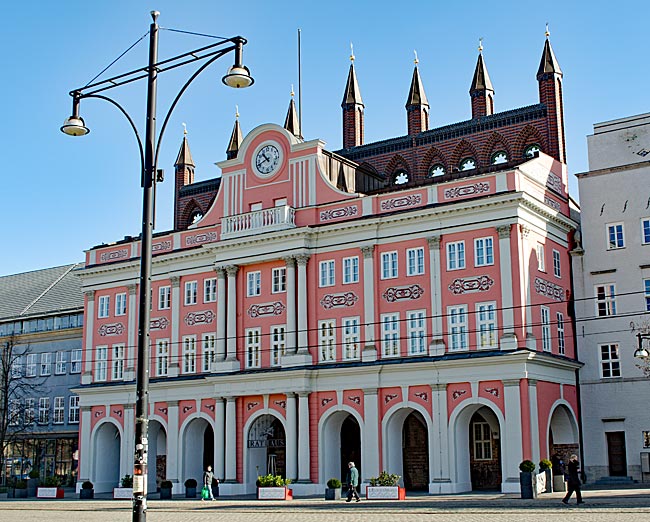
When you come from Kröpeliner Straße, the pedestrian zone of Rostock's city center, onto the expansive market square, the New Market (Neuer Markt), the town hall on the opposite side of the square immediately catches the eye. This is primarily due not so much to its size but rather to its pink-painted facade, which makes the building stand out as a splash of color from the row of houses.
That you cannot tell the age of this elegant seat of city administration at first glance is thanks to this facade - actually a complete extension - which is younger than the original building behind it. The town hall was erected around 1270 as a two-story double-gabled house. Its foundation consisted of two bourgeois houses with cellars from the first half of the 13th century, which were expanded by a second upper floor and finally, in 1484, connected to a third building, the municipal festival hall, by a Gothic facade of colored glazed bricks on the market side, creating a uniform front. A two-story arcade was built in front. The secular building is the oldest preserved structure in Rostock and, as such, one of the most significant examples of Brick Gothic architecture in the Baltic Sea region. On the Vicke Schorler's Panorama, an 18.68-meter-long and 60-centimeter-high colored ink drawing by the merchant's apprentice or journeyman Vicke Schorler, created between 1578 and 1586 and depicting part of the city and the Warnow River, one can see the late Gothic town hall - along with many other buildings in the city - in a markedly different appearance than today.
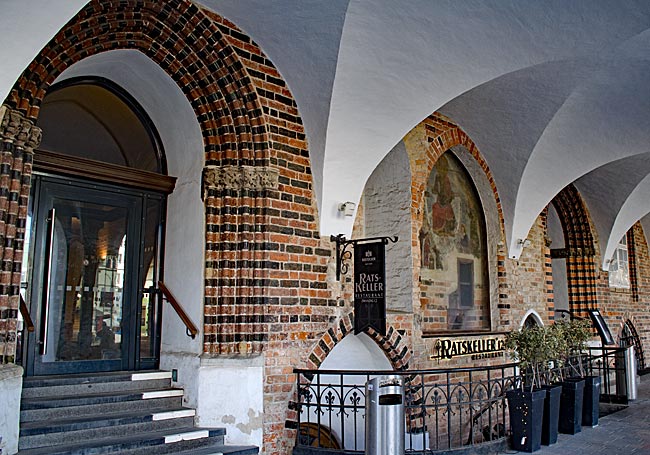
Beneath the arches of the extension, parts of the Gothic brick wall are still visible
Today, only the portion of the Gothic shield gable with its (added after 1484) seven pinnacle towers and pointed arch blinds that protrudes above the Baroque extension built between 1727 and 1729 is still visible. The new extension became necessary when the old wooden arcade, erected in the Middle Ages, could not withstand a storm in 1718. There have even been discussions about removing the then very modern French- and Italian-inspired extension and exposing the Gothic decorative wall again. So far, however, all serious attempts to consider demolition have failed - after all, the mayor would also lose his office.
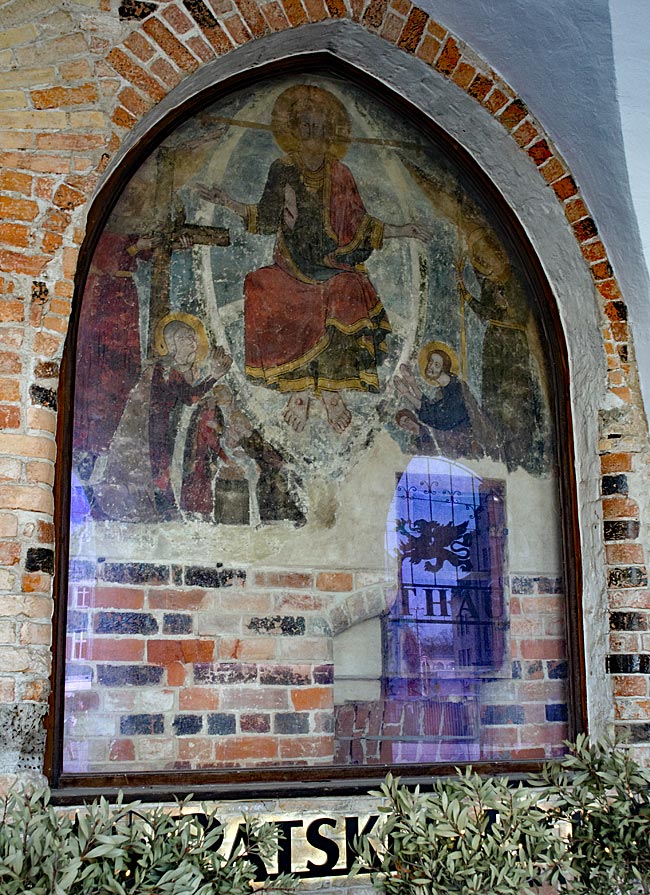
Remnants of an old holy image on the town hall wall beneath the arches
In earlier times, court was held in front of the town hall or under the arches of the arcade, and many a sentence was carried out here as well, for once there stood a pillory, and during the witch trials, pyres also burned on the New Market.
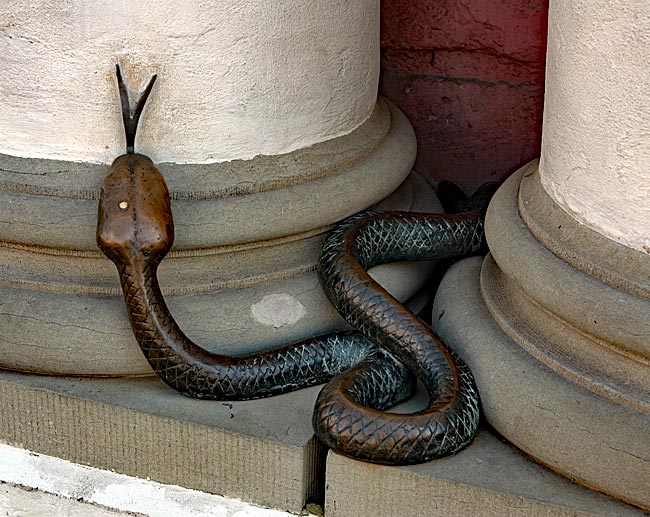
A bronze snake winding between the columns
Anyone who approaches the town hall more closely will find a bronze snake winding between the columns. It is not the first; mentions of a snake at the town hall date back to the 18th century - some were stolen, others destroyed. The current one, a snake with an eel tail, a life-sized sculpture by artist Erhard John, was cast in 1998 and has adorned the columns of the entrance portal since its ceremonial handover on June 24, 1998, the 780th anniversary of Rostock. It even has a name: Johannes, in remembrance of St. John's Day (Johannistag), the day of the handover. Its shiny head is due to the caresses of numerous hands, for it is said to bring good luck. The meaning of the snake is uncertain and invites interpretation. For example, it is said to symbolize the wisdom and cleverness of the councilors, or according to another interpretation, their duplicity. Alternatively, it could have been used as an eel measure for market traders or was a craftsman's mark.
Also worth seeing are the reconstructed town hall hall and the Ratskeller beneath the town hall, where many a barrel was emptied in past centuries with joyful singing.
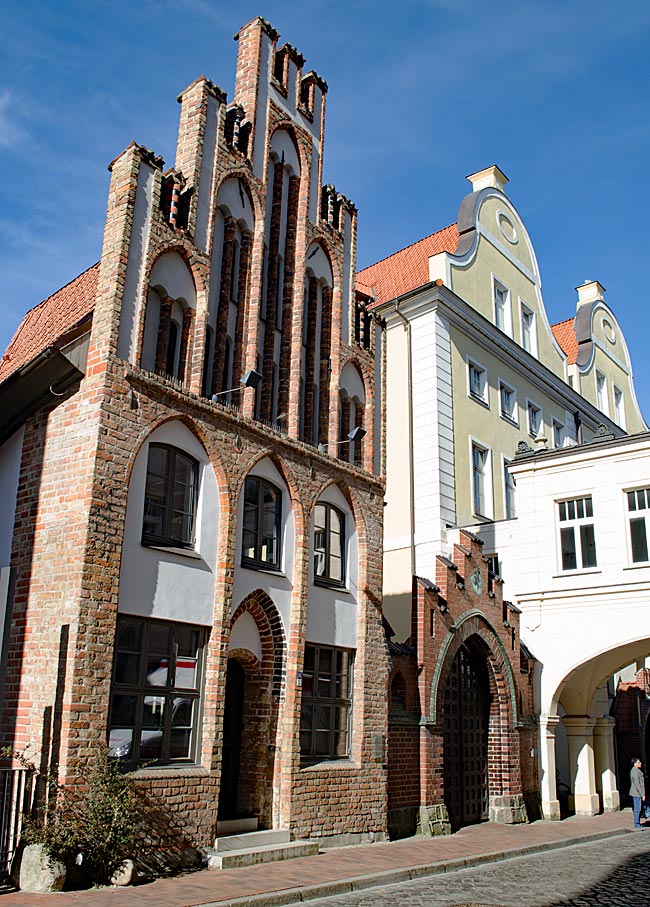
Walldienerhaus to the left, behind it the bridge to the Stadthaus and two gables of the town hall's rear side
At the back of the town hall, on An der Hege street, you can find the origin of the building again - the two bourgeois houses. Only individual brick elements still document its Gothic history. Since 1907, the town hall has been connected to the Stadthaus, a Jugendstil building, by an enclosed bridge. The additional space became necessary due to the growing administration.
In direct proximity stands the former Walldienerhaus, erected around 1500. The Walldiener, as a municipal official, was responsible for the maintenance and care of the city's fortifications (city wall and ramparts). At the beginning of the 20th century, the gabled house was temporarily used as a storage room for coal and equipment of the Ratsweinkeller before it underwent multiple renovations and its internal structure was completely altered.
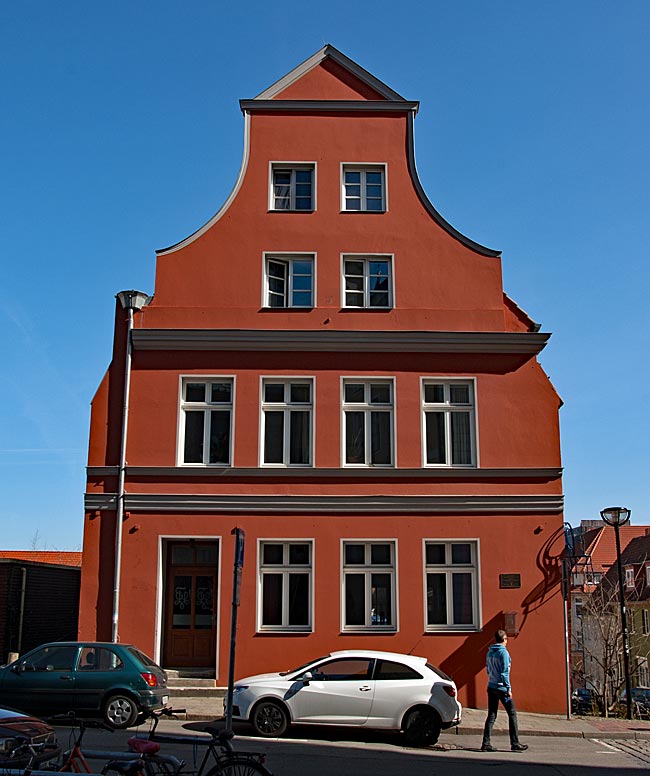
One of the oldest preserved gabled houses in the city
Just a stone's throw away (An der Hege No. 11) stands one of the oldest preserved gabled houses in the city. According to an information plaque, the south facade of the residential building dates back to the 13th century. The gable was renovated in the 18th century because the floor plan inside the house was changed. Among those who lived and worked here was Johann Ch. S. Koppe, mayor, bookseller, and early publisher of Lessing, who owned the house in the 18th century. The building's 100-year history as an inn following this period is no longer visible today after its reconstruction in 2002.
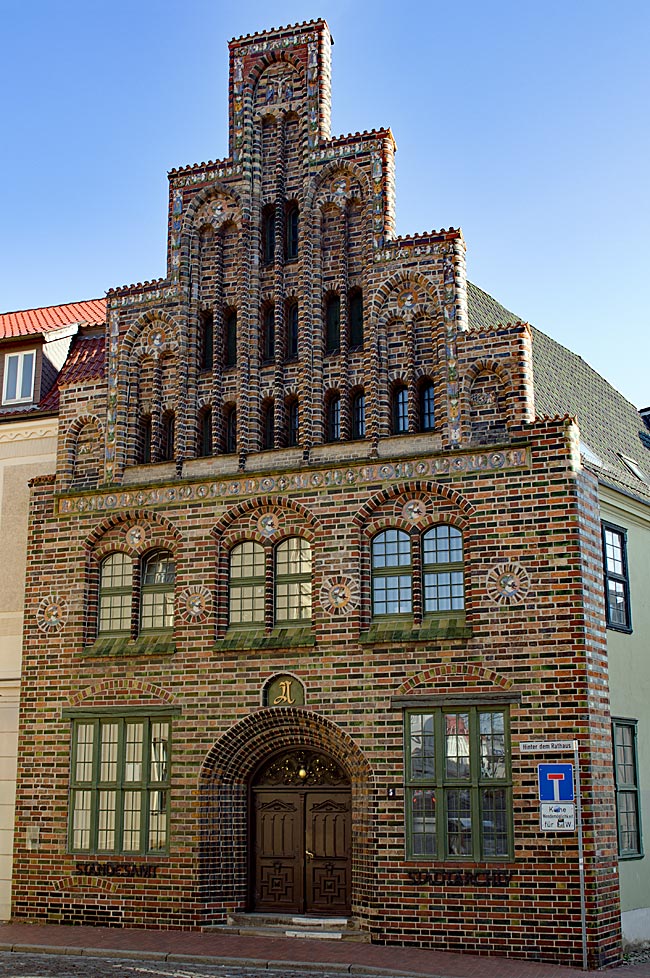
Facade of the Kerkhoffhaus
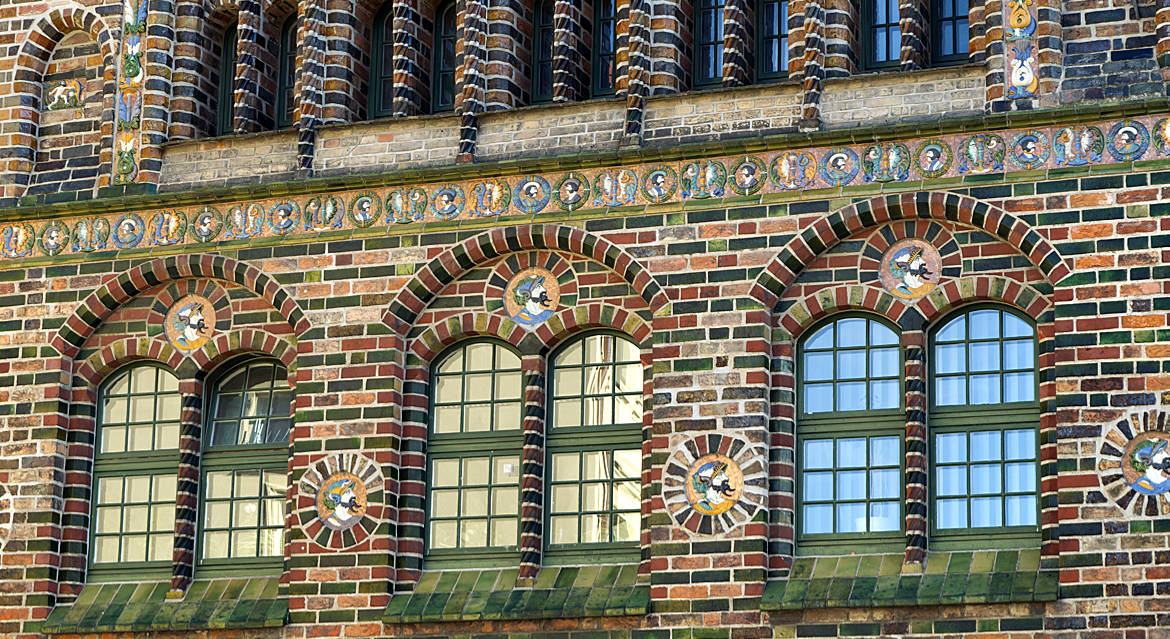
Also in immediate proximity to the town hall, though in the opposite direction, on Große Wasserstraße, stands the residential house that a former mayor of Rostock had built there around 1470. The building named after him, the Kerkhoffhaus, is considered one of the most beautiful houses of late Gothic architecture in the city. At that time, it was given a seven-axial stepped gable with tall pointed arch blinds and horizontal glazing. In the central gable blind, you can see a crucifixion group made of terracotta. About 80 years later, the gable was embellished with elements of the Renaissance such as colored glazed ceramic medallions and horizontal as well as vertical terracotta bands with figures and ornaments on them. Today, the building houses the registry office and provides an appropriate backdrop for wedding photos.
previous page
 next page
Read more about Rostock: The table of contents
Map
Rügen by the Baltic Sea
Active holiday featuring cycling and hiking
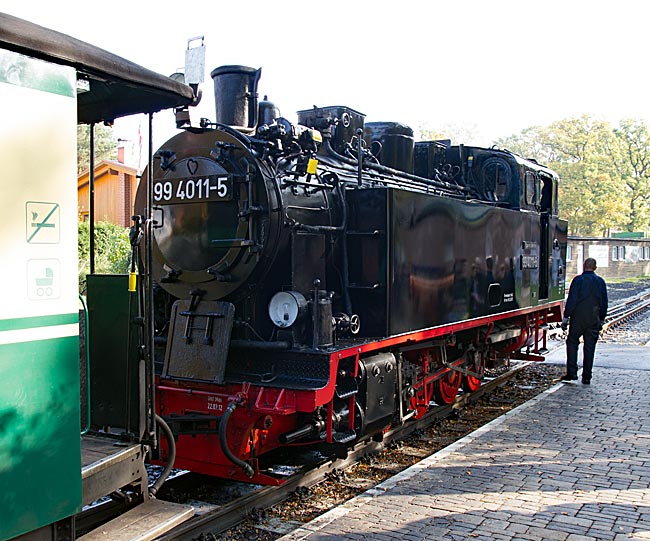
Enjoy an active holiday featuring cycling and hiking along the Baltic coast in Mönchgut on the island of Rügen. Long sandy beaches, rolling hills, and lush forests provide a varied and beautiful setting for your getaway. Often, the only thing breaking the peace is the distant whistle of the historic 'Rasender Roland' steam train. Despite its name (which suggests something "racing" or fast), it’s actually quite the opposite. A journey by train is simply part of the holiday experience.
read more about Rügen ...
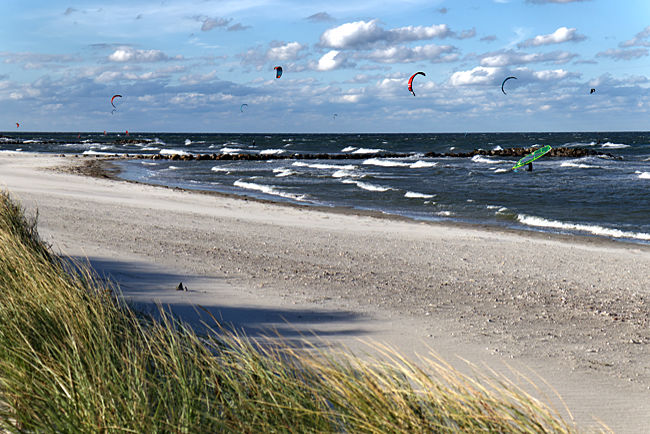
In the Probstei in late summer
Schönberger Strand and sea and more
Can you walk or ride a bike from Brasilien (Brazil) to Kalifornien (California) in just a few minutes, always with a view of the water? No, not with your finger on the globe or map, but in person. You’ll have to forgo Copacabana and the Sunset Strip with the Angels in Los Angeles (Spanish for "The Angels"). Instead, you get Germany’s "True North" with all its bright sides. Of course, there are sometimes shadows here too, but they belong only on the margins of this story.
read more about Schönberger Strand ...
Wismar
The Hanseatic City on the Baltic Sea and its UNESCO World Heritage
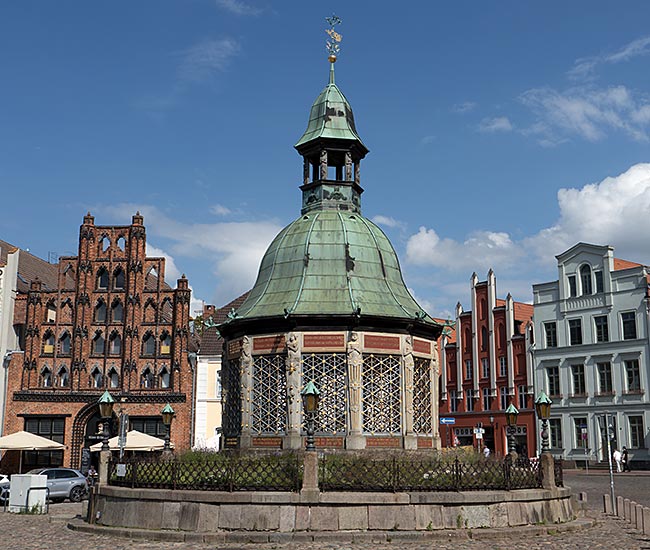
The World Heritage House is a building with a stone front house and an attached timber-framed Kemladen on a foundation of loose fieldstones from a medieval predecessor building. This beautifully restored small building complex visually illustrates and provides information via text panels about the lives of past generations in the hall houses typical for Wismar, along with their outbuildings. Additionally, there is extensive information about the city’s history and numerous protected buildings in the old town - there are 1,754 in total, with 306 designated as individual monuments. In the old town, one is right in the middle of Wismar’s UNESCO World Heritage Site.
read more about Wismar ...
Crabs, dikes and the Wadden Sea
The North Sea spa town of Büsum
Once an island, Büsum was repeatedly threatened by the "Blanken Hans". When the greatest flood of the last century struck in 1962, Büsum was already long connected to the mainland - since 1585. Today, this town of around 5,000 residents, part of the Dithmarschen district, is one of the most important holiday destinations along Schleswig-Holstein's North Sea coast. Since 1985, the sea in front of Büsum has been protected as the Schleswig-Holstein Wadden Sea National Park, and since 2009, it has also been listed as a UNESCO World Heritage Site.
read more about Büsum ...
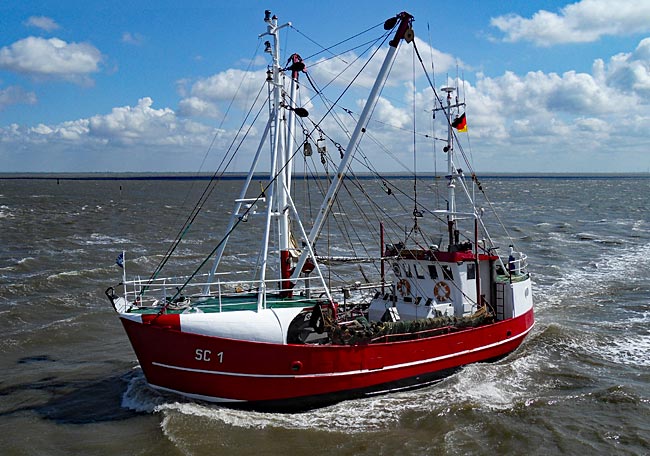
A stroll through Kiel
Sights in the fjord city and a visit to Laboe
A good starting point for exploring the city today, decades after the end of the war, is the centrally located main train station. On Sophienblatt, the main street running in front of the building, all major bus lines converge, and many sights can also be easily reached on foot during a multi-hour stroll.
read more about Kiel ...
Emden in East Frisia
Where East Frisians make jokes and serious art thrives
What do Henri Nannen, the journalist and founder of the print magazine STERN, director Wolfgang Petersen (e.g., Das Boot), and comedians Karl Dall and Otto Waalkes have in common? They were all born in Emden. "The Men of the Emden" (a film) not necessarily, but that's a different story. And of course, women have also been born in this city of around 50,000 inhabitants, the largest in East Frisia, such as former boxing world champion Heidi Hartmann - naturally mentioned only as a representative of all others.
read more about Emden ...
A short visit to the historic old town of Heppenheim
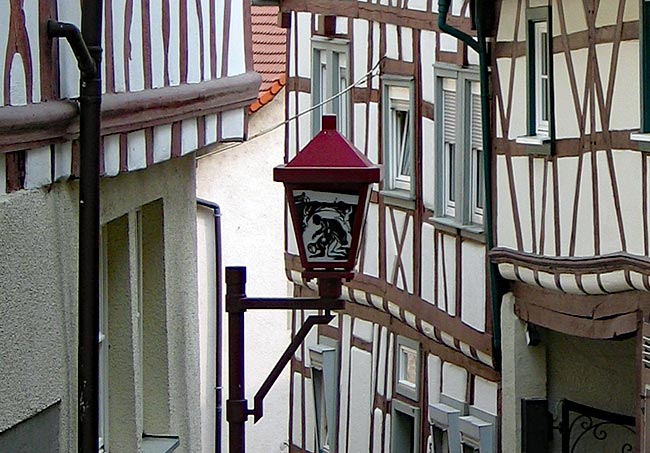
Half-timbering, a false dome, and legendary lanterns
The skyline of Frankfurt, Germany's financial capital with its office towers in the banking district, is still within sight when the train to Darmstadt and Bensheim pulls into the small station of Heppenheim. In 2010, the city was on everyone’s lips after native son Sebastian Vettel left all competition behind in his Red Bull car and became the youngest Formula 1 double world champion of all time. In 2011, he added another title to his collection, as did he in 2012 and finally in 2013 for a fourth time. However, we are not following in Vettel’s footsteps but rather those of history in the picturesque old town with its timber-framed houses.
read more about Heppenheim ...