

DISTANT PLACES
Travel tips by Bremen sehenswert far from the Hanseatic City of Bremen
Hanseatic City of Rostock - A Travel Guide
Ständehaus
Ständehaus
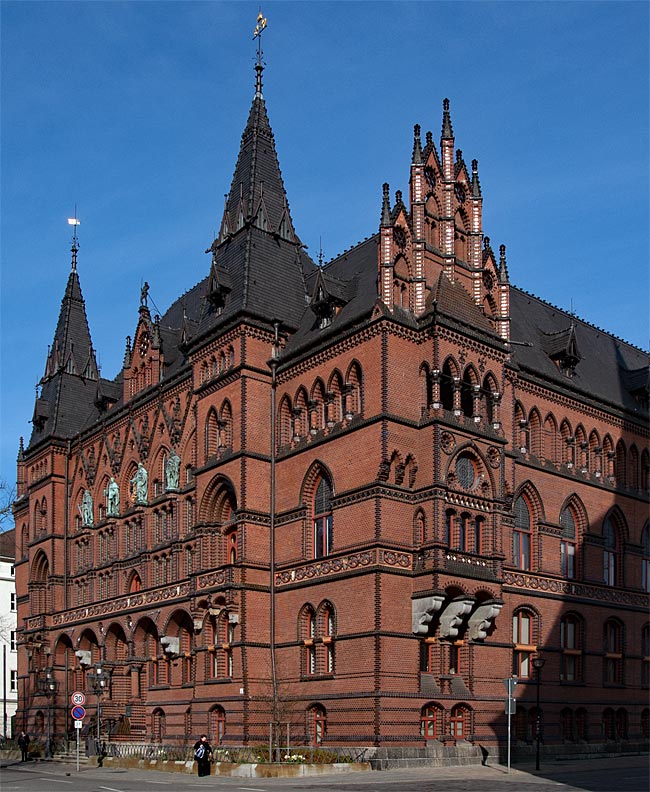
Next to the Steintor (Stone Gate) stands, unmissable due to its size, the Ständehaus. The brick building on Wallstraße was commissioned by the Mecklenburgische Ritterschaft and was intended to serve as the administrative seat of the Landesstände, which consisted of the Ritterschaft (landowning lower nobility, landowning bourgeoisie, and monasteries) and the Landschaft (cities). Unlike in the Prussian regions of the German Empire, Mecklenburg's state system had not evolved beyond that of medieval feudalism until 1918, leading to relative backwardness. It was only after the November Revolution of 1918 that the ständisch system was dissolved.
Details about the Ständehaus
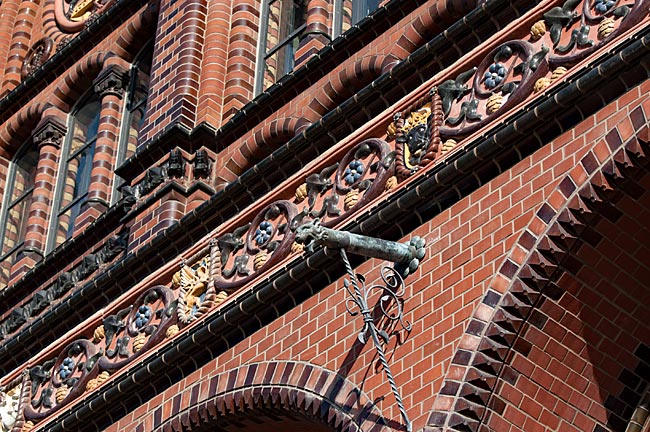
The architect and "Neo-Gothic" specialist Gotthilf Ludwig Möckel from Doberan was commissioned with the planning of the building. Between 1889 and 1893, this imposing structure, which has housed the Rostock Higher Regional Court since 1992, was constructed. The lavish use of decorative motifs and ornaments, as well as patterned walls and glazes, makes this building - stylistically inspired by High and Late Gothic architecture - a magnificent sight. This impression is further enhanced by the numerous turrets, ornate window arches, stylized columns, and four statues of the Dukes of Mecklenburg: Johann Albrecht I, Friedrich Franz II, Georg, and Christian Ludwig II, which are placed at a lofty height.
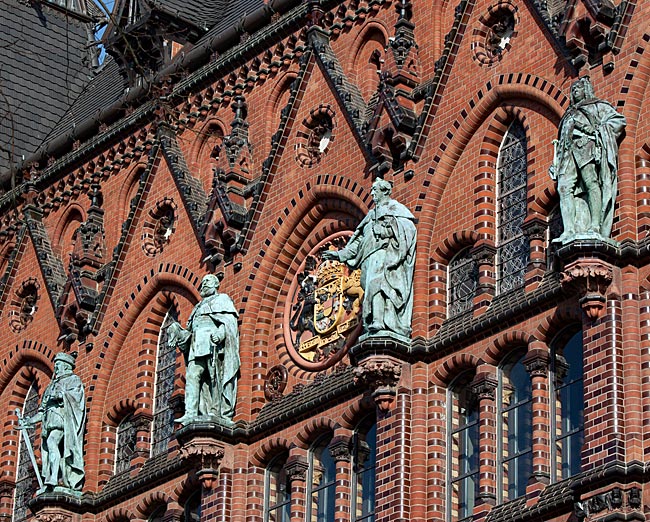
Four statues of the Dukes of Mecklenburg: Johann Albrecht I, Friedrich Franz II, Georg, and Christian Ludwig II
Inside this protected monument, the inner courtyard with its open staircase and galleries, as well as the paneled session hall, are particularly worth seeing.
On the other side of Wallstraße, parallel to it, lies the Rosengarten (Rose Garden). Until 1868, part of the Wallgraben (moat) was located here; since then, when it was filled in, the park has been green and blooming between the heavily trafficked streets. In addition to a memorial for victims of fascism, erected after World War II, there is a monument dedicated to the African explorer Paul Pogge, who died in Luanda in 1884. The bronze bust was created by Joachim Jastram, a sculptor born in Rostock, in 1995.
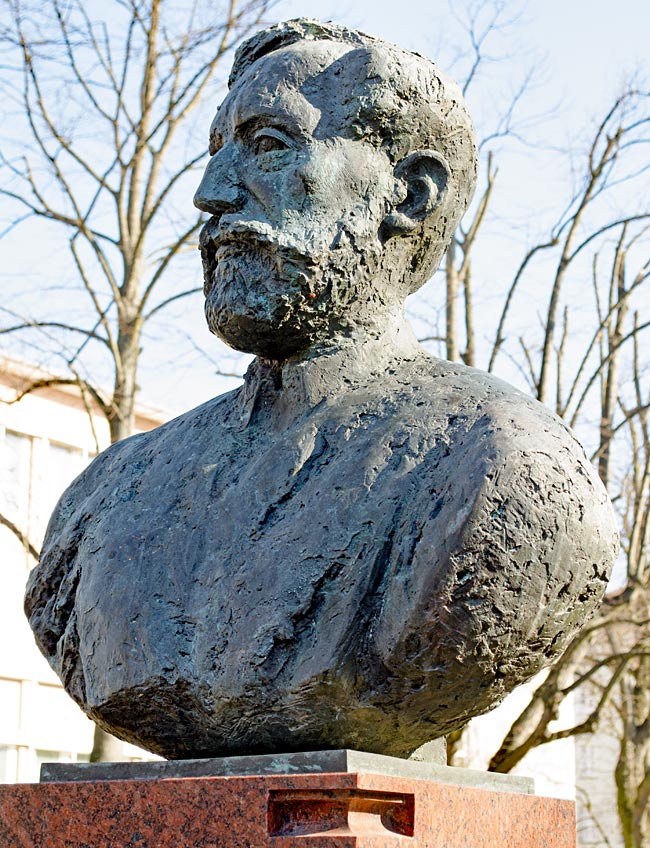
Paul-Pogge Monument in the Rosengarten
previous page
 next page
Read more about Rostock: The table of contents
Map
Rügen by the Baltic Sea
Active holiday featuring cycling and hiking
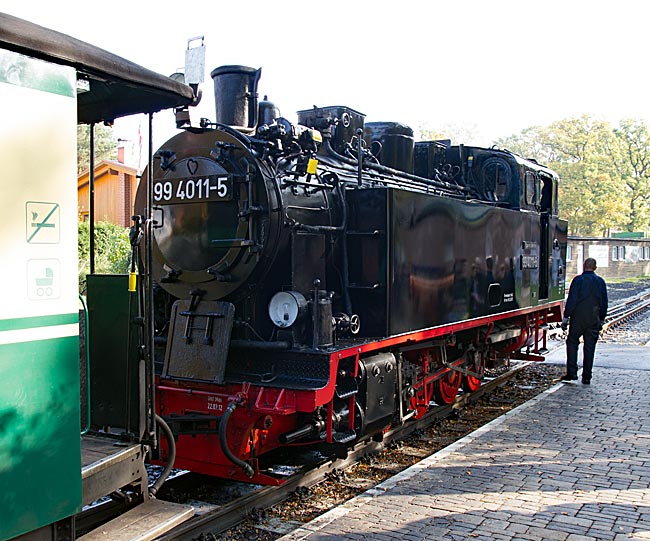
Enjoy an active holiday featuring cycling and hiking along the Baltic coast in Mönchgut on the island of Rügen. Long sandy beaches, rolling hills, and lush forests provide a varied and beautiful setting for your getaway. Often, the only thing breaking the peace is the distant whistle of the historic 'Rasender Roland' steam train. Despite its name (which suggests something "racing" or fast), it’s actually quite the opposite. A journey by train is simply part of the holiday experience.
read more about Rügen ...
In the Probstei in late summer
Schönberger Strand and sea and more
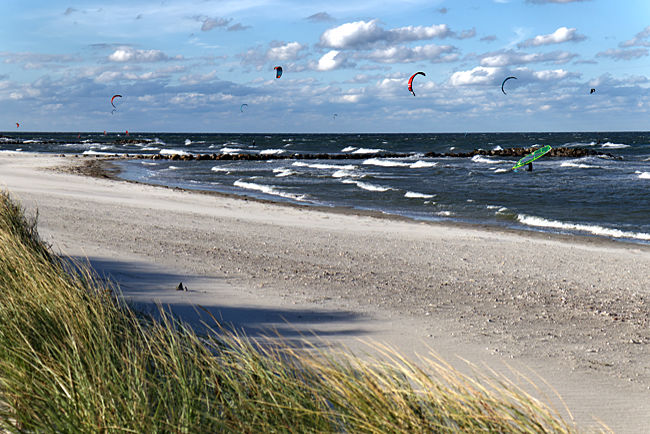
Can you walk or ride a bike from Brasilien (Brazil) to Kalifornien (California) in just a few minutes, always with a view of the water? No, not with your finger on the globe or map, but in person. You’ll have to forgo Copacabana and the Sunset Strip with the Angels in Los Angeles (Spanish for "The Angels"). Instead, you get Germany’s "True North" with all its bright sides. Of course, there are sometimes shadows here too, but they belong only on the margins of this story.
read more about Schönberger Strand ...
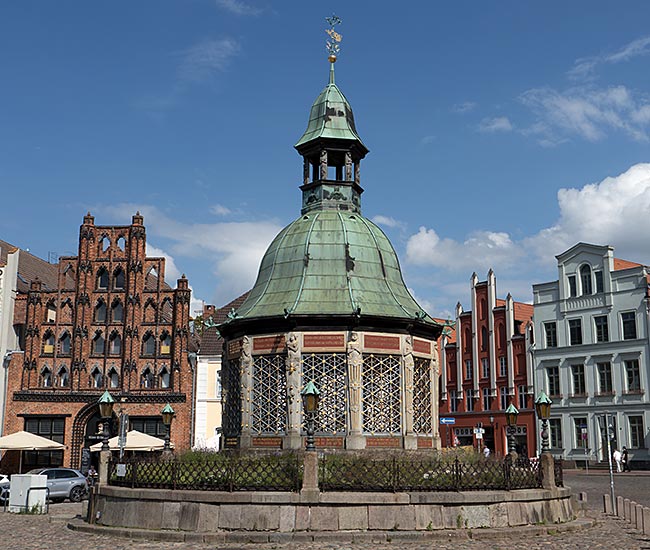
Wismar
The Hanseatic City on the Baltic Sea and its UNESCO World Heritage
The World Heritage House is a building with a stone front house and an attached timber-framed Kemladen on a foundation of loose fieldstones from a medieval predecessor building. This beautifully restored small building complex visually illustrates and provides information via text panels about the lives of past generations in the hall houses typical for Wismar, along with their outbuildings. Additionally, there is extensive information about the city’s history and numerous protected buildings in the old town - there are 1,754 in total, with 306 designated as individual monuments. In the old town, one is right in the middle of Wismar’s UNESCO World Heritage Site.
read more about Wismar ...
Crabs, dikes and the Wadden Sea
The North Sea spa town of Büsum
Once an island, Büsum was repeatedly threatened by the "Blanken Hans". When the greatest flood of the last century struck in 1962, Büsum was already long connected to the mainland - since 1585. Today, this town of around 5,000 residents, part of the Dithmarschen district, is one of the most important holiday destinations along Schleswig-Holstein's North Sea coast. Since 1985, the sea in front of Büsum has been protected as the Schleswig-Holstein Wadden Sea National Park, and since 2009, it has also been listed as a UNESCO World Heritage Site.
read more about Büsum ...