

DISTANT PLACES
Travel tips by Bremen sehenswert far from the Hanseatic City of Bremen
Hanseatic City of Rostock - A Travel Guide
City Harbor
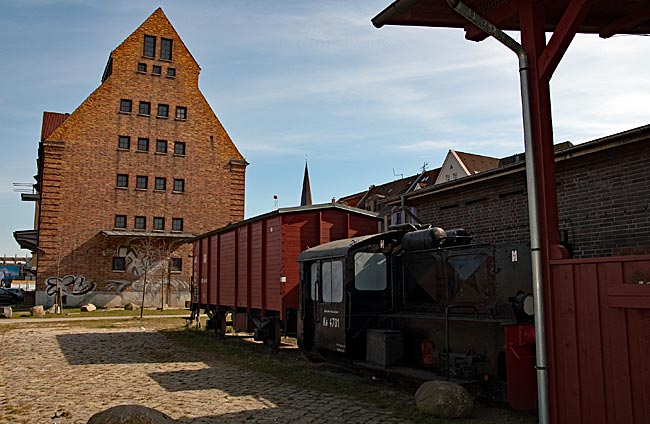
Relics of a bygone era
A city by the water without a harbor? That's not possible, even though Rostock's actual harbor is now located in Warnemünde. The city harbor is the historic harbor of the Hanseatic city. During the Hanseatic era, trade via the Rostock harbor primarily took place in the Baltic Sea region with Scandinavia and the Baltics, with beer being a central commodity.
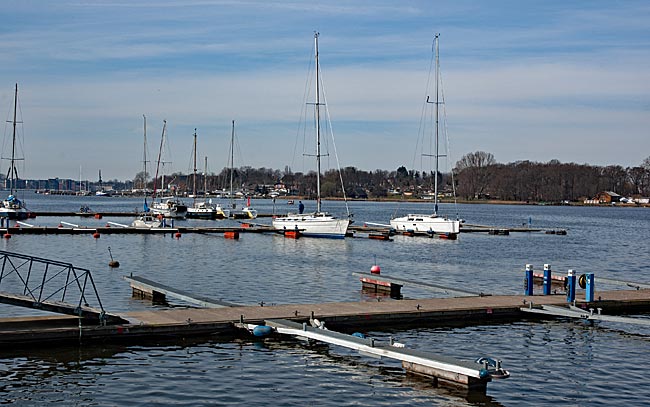
View over the Warnow river
As Atlantic (over)sea trade became increasingly important and the Hanseatic League lost significance, the city harbor also declined in importance. In the second half of the 19th century, it experienced a brief revival and expansion, for example, for coal transshipment. However, after the commissioning of the overseas harbor at Breitling near the Warnow estuary in 1960, the harbor finally lost all significance for maritime trade.
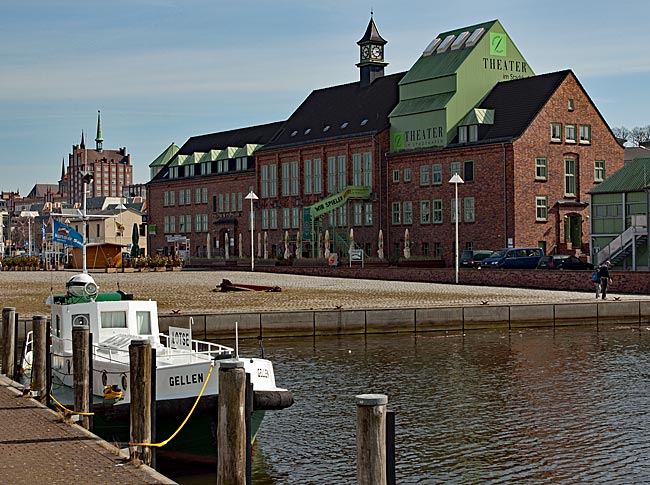
View of the theater in the city harbor
Today, the city harbor is a leisure promenade featuring restaurants, a theater, marina, museum harbor, and more. The old repurposed warehouses on the silo peninsula stand tall and are visible from afar. Although many old harbor facilities have been dismantled, some cranes remain, such as a portal crane from 1952 at the former coal quay, and an old railway at the historic and protected, now restored locomotive shed from 1853 at the freight station reminds us of a turbulent past.
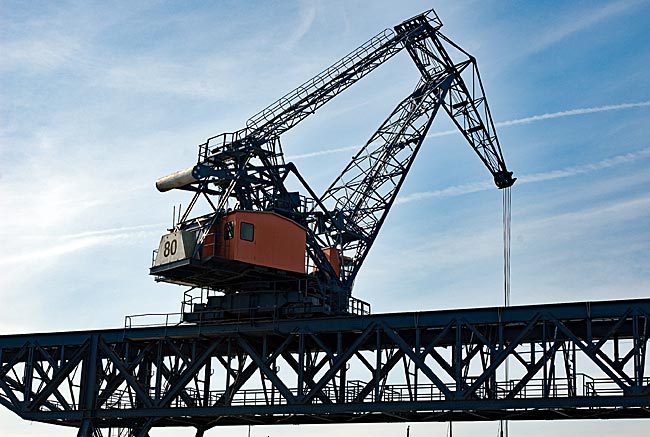
Portal crane from 1952 at the former coal quay
Several larger ships are moored at the quay, including the "MS Stubnitz," a former refrigerated ship launched in 1964 as part of the GDR's deep-sea fishing fleet. After renovations, it is now used as an event venue and visits other harbor locations. Since 2009, the "Stephan Jantzen," formerly Germany's largest icebreaker built in Leningrad, has also been docked in Rostock. The ship, which was commissioned in 1968 and decommissioned in 2005, can be visited as well. The converted former cargo and training ship "MS Georg Büchner," moored at another quay, serves as a floating hotel and youth hostel. It first touched water in 1950.
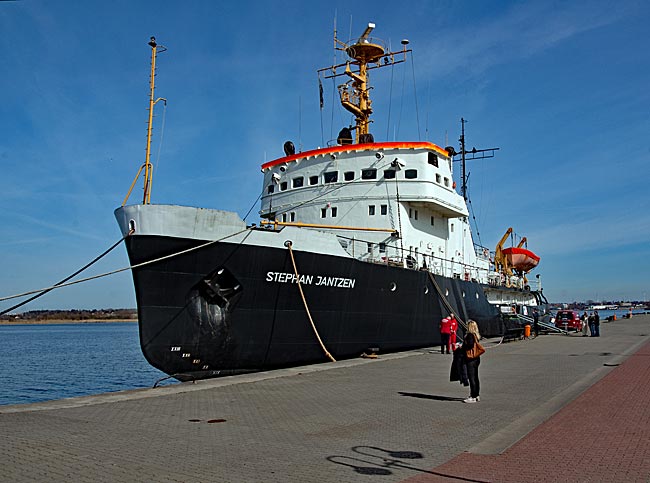
"Stephan Jantzen," formerly Germany's largest icebreaker
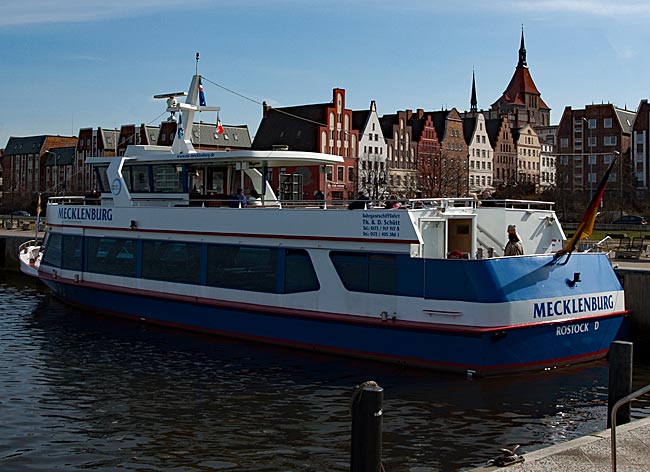
The large open spaces of the city harbor area are used for circuses and major events like the Hansesail. Those who want to venture out onto the water can also embark on a harbor tour or head to Warnemünde from here.
Contact Information:
Kapitän Olaf Schütt e. K.
Rostocker Personenschifffahrt
Wossidlo Straße 5
18147 Rostock
Phone: +49 (0)381 / 699962
Mobile: +49 (0)171 4240354
Email: info@rostocker-flotte.de
www.rostocker-flotte.de
Passenger Shipping
Fahrgastschifffahrt Thomas Schütt e.K.
Klaus-Groth-Str.2e
18147 Rostock
Phone: +49 (0)381 / 6372654
Mobile: +49 (0)173 9179178
Email: info@hafenrundfahrten-in-rostock.de
www.hafenrundfahrten-in-rostock.de
previous page
 next page
Read more about Rostock: The table of contents
Map
Rügen by the Baltic Sea
Active holiday featuring cycling and hiking
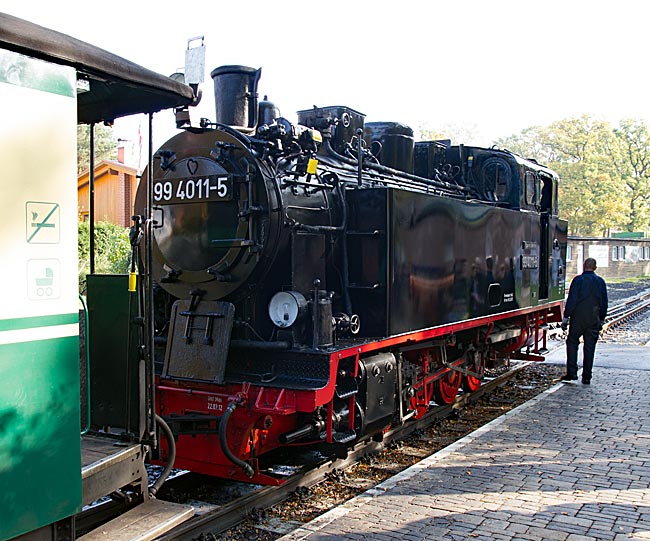
Enjoy an active holiday featuring cycling and hiking along the Baltic coast in Mönchgut on the island of Rügen. Long sandy beaches, rolling hills, and lush forests provide a varied and beautiful setting for your getaway. Often, the only thing breaking the peace is the distant whistle of the historic 'Rasender Roland' steam train. Despite its name (which suggests something "racing" or fast), it’s actually quite the opposite. A journey by train is simply part of the holiday experience.
read more about Rügen ...
In the Probstei in late summer
Schönberger Strand and sea and more
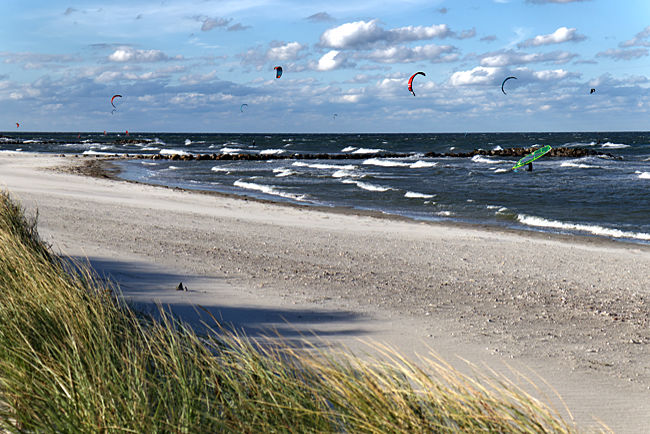
Can you walk or ride a bike from Brasilien (Brazil) to Kalifornien (California) in just a few minutes, always with a view of the water? No, not with your finger on the globe or map, but in person. You’ll have to forgo Copacabana and the Sunset Strip with the Angels in Los Angeles (Spanish for "The Angels"). Instead, you get Germany’s "True North" with all its bright sides. Of course, there are sometimes shadows here too, but they belong only on the margins of this story.
read more about Schönberger Strand ...
Wismar
The Hanseatic City on the Baltic Sea and its UNESCO World Heritage
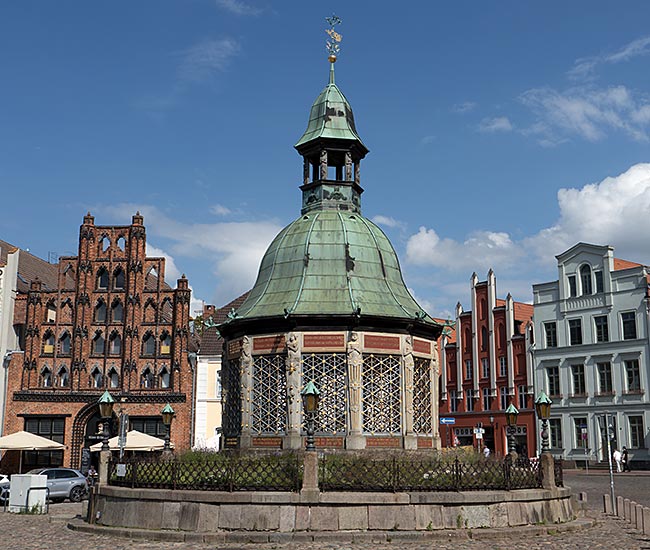
The World Heritage House is a building with a stone front house and an attached timber-framed Kemladen on a foundation of loose fieldstones from a medieval predecessor building. This beautifully restored small building complex visually illustrates and provides information via text panels about the lives of past generations in the hall houses typical for Wismar, along with their outbuildings. Additionally, there is extensive information about the city’s history and numerous protected buildings in the old town - there are 1,754 in total, with 306 designated as individual monuments. In the old town, one is right in the middle of Wismar’s UNESCO World Heritage Site.
read more about Wismar ...
Crabs, dikes and the Wadden Sea
The North Sea spa town of Büsum
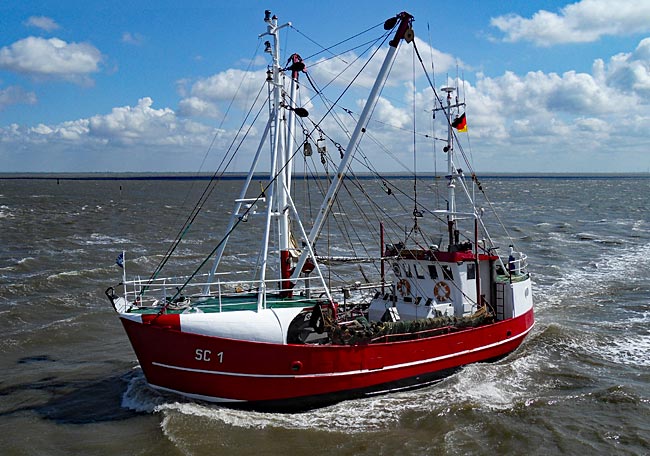
Once an island, Büsum was repeatedly threatened by the "Blanken Hans". When the greatest flood of the last century struck in 1962, Büsum was already long connected to the mainland - since 1585. Today, this town of around 5,000 residents, part of the Dithmarschen district, is one of the most important holiday destinations along Schleswig-Holstein's North Sea coast. Since 1985, the sea in front of Büsum has been protected as the Schleswig-Holstein Wadden Sea National Park, and since 2009, it has also been listed as a UNESCO World Heritage Site.
read more about Büsum ...
A stroll through Kiel
Sights in the fjord city and a visit to Laboe
A good starting point for exploring the city today, decades after the end of the war, is the centrally located main train station. On Sophienblatt, the main street running in front of the building, all major bus lines converge, and many sights can also be easily reached on foot during a multi-hour stroll.
read more about Kiel ...