

DISTANT PLACES
Travel tips by Bremen sehenswert far from the Hanseatic City of Bremen
Hanseatic City of Rostock - A Travel Guide
St. Mary's Church (Marienkirche) and Ziegenmarkt
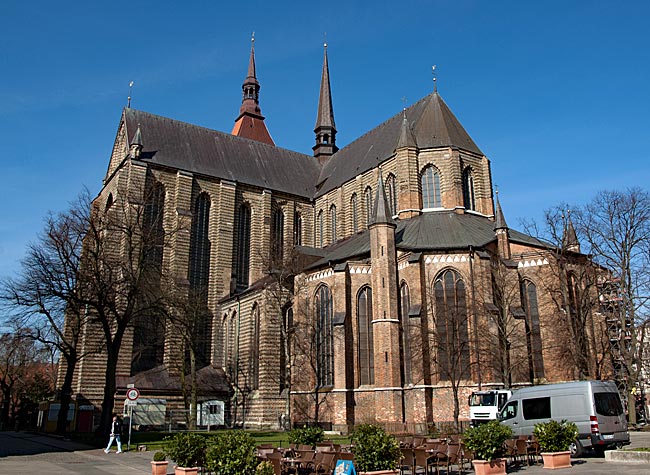
St. Mary's Church as seen from the New Market
One of the most impressive buildings in Rostock is St. Mary's Church, located just a stone's throw from the New Market and today within sight of the town hall. The sheer size of this massive brick basilica in the shape of a cross is already impressive. The structure is an architectural masterpiece spanning several generations and centuries. As early as 1232, a church was mentioned at this location, followed by an early Gothic three-aisled hall church that was completed in 1279 after construction began in 1265. Only eleven years later, the transformation of this church into a three-aisled Gothic basilica with a new choir in the east and a chapels' ring with five chapels began. Compared to the hall church, the vault height of the central nave was increased to now 31.5 meters with a width of 11 meters; the height measurement for the side aisles is 15 meters, slightly less than half. Among the large brick Gothic churches, St. Mary's Church is thus the sixth tallest.
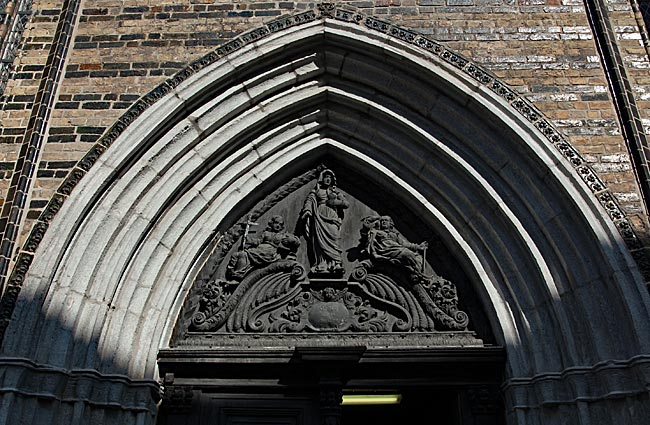
Entrance at the southern transept
Construction of the transept began in 1398. For this construction phase, green/brown glazed bricks were used on the exterior facade, alternating horizontally with unglazed yellowish-brown bricks. Because the new structure penetrates the nave exactly in the middle of the church and corresponds in length to the overall length of the church building in the other orientation, the current cross shape was created. The basilica appears particularly squat when viewed from Lange Straße towards the westwork with its massive tower (built instead of a double tower) and the protruding transept behind it. A sight that has been offered to people since the completion of St. Mary's Church in 1454.
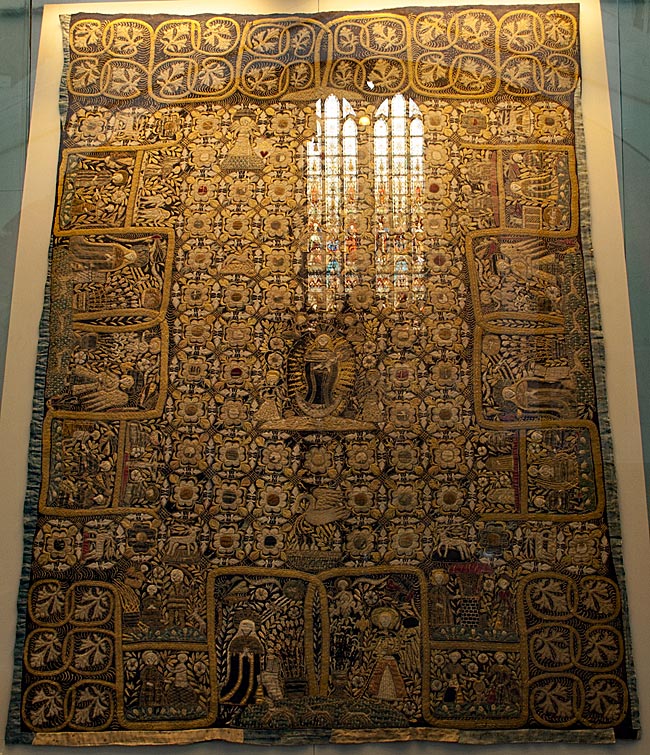
A valuable tapestry in a glass display case
Incidentally, on November 12, 1419, the university of the city and the first one in northern Germany was ceremoniously founded in the church, and it remained a university church until 1899. Today, the church of the Abbey of the Holy Cross fulfills this task.
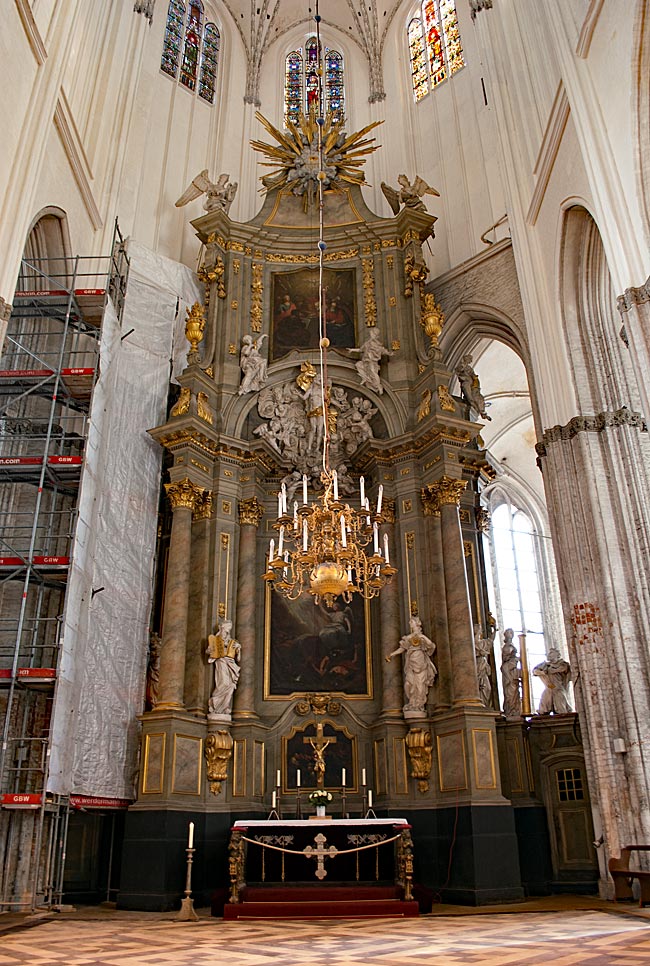
The two-story baroque high altar from 1720/21 is the main altar of St. Mary's Church
The interior decoration and furnishings of the church changed over the centuries. Thus, artworks from previous centuries were destroyed after Rostock joined the Reformation in 1531 at the instigation of St. Peter's pastor Joachim Slüter. Nevertheless, significant testimonies of past centuries can still be found in St. Mary's Church today.
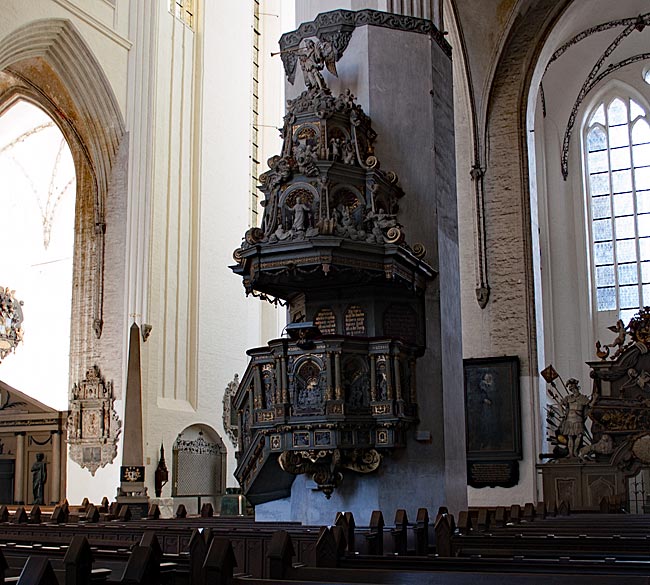
Renaissance pulpit
These include the wooden two-story baroque high altar created in 1720/21, as well as the equally wooden Renaissance pulpit built as early as 1574 and hanging quite far from the altar on a pillar, likely due to the poor acoustics in the church. Impressive, even without a sound being heard, is the organ soaring high up to the vault with 5,702 pipes, 83 stops, and four manuals, installed there between 1766 and 1769. However, as early as two years later, a multi-year renovation was necessary, and thus after the last changes in 1938, nothing remains of the organ of the original builder. Below it is a princely gallery in Rococo style, completed after two years of work in 1751 and serving as a place for the Mecklenburg dukes. Directly below at ground level, the city councilors had their seats in the church.
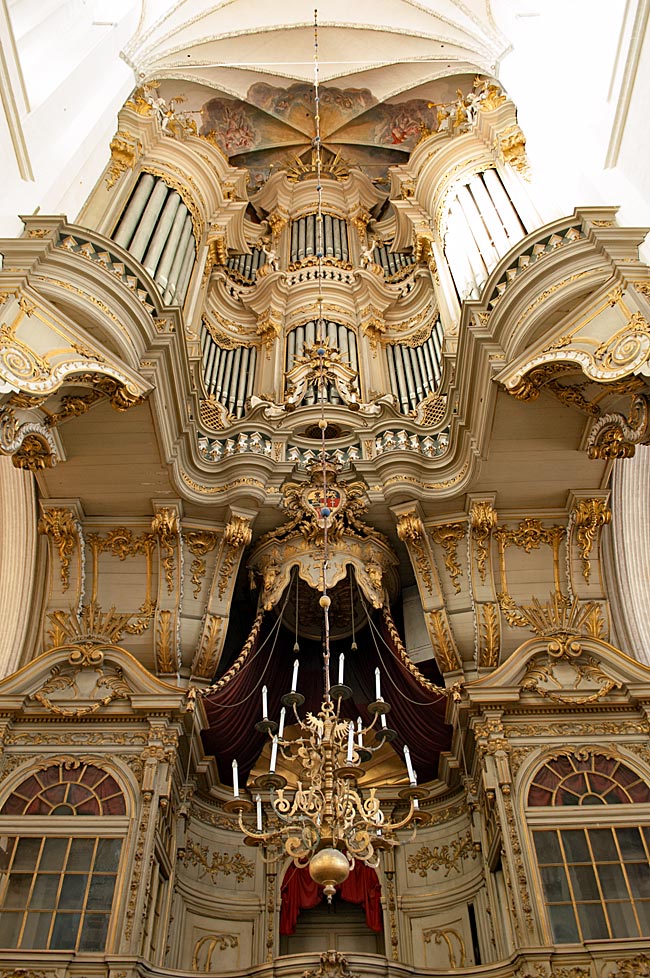
Organ with princely gallery
Also worth seeing is the astronomical clock built between two pillars behind the high altar. The 11-meter-high device, which later received a Renaissance frame, dates back to 1472 and remains functional, almost in its original state after only a few changes over time, such as a music feature. The clock displays not only the time but also the position of the sun and moon above the horizon, zodiac signs, and monthly images on a scale. Below the actual clock is a calendar showing the 365 days of the year.
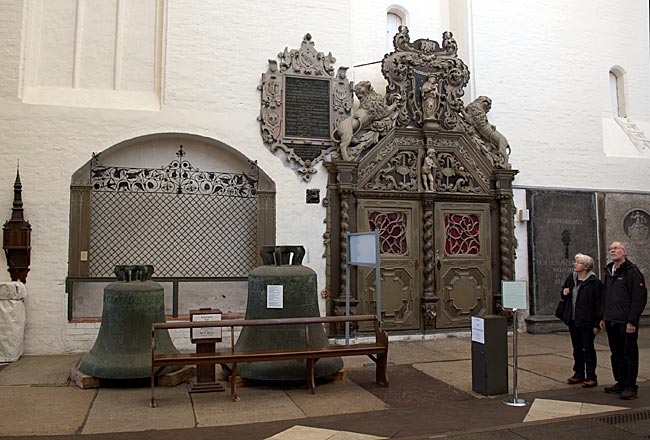
Bells
Directly in the entrance area at the southern transept, two bells are mounted: the smaller citizen's bell cast around 1300 weighing over 3.1 tons and the Great Bell cast by Rickert de Monkehagen in 1409, weighing more than 4.2 tons. The fact that they are not part of a peal or such is due to the irreparable cracks both bells have. It is a miracle that these two specimens did not suffer the fate of many church bells, which were melted down and turned into war equipment during World War II.
Ziegenmarkt
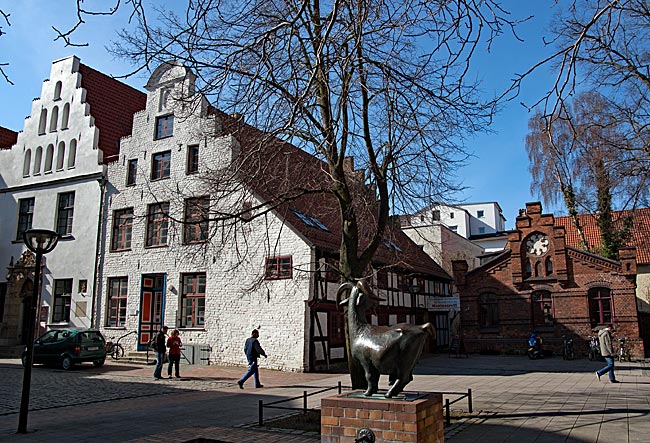
Ziegenmarkt with fountain, Kantorat, and the Old Mint to the left
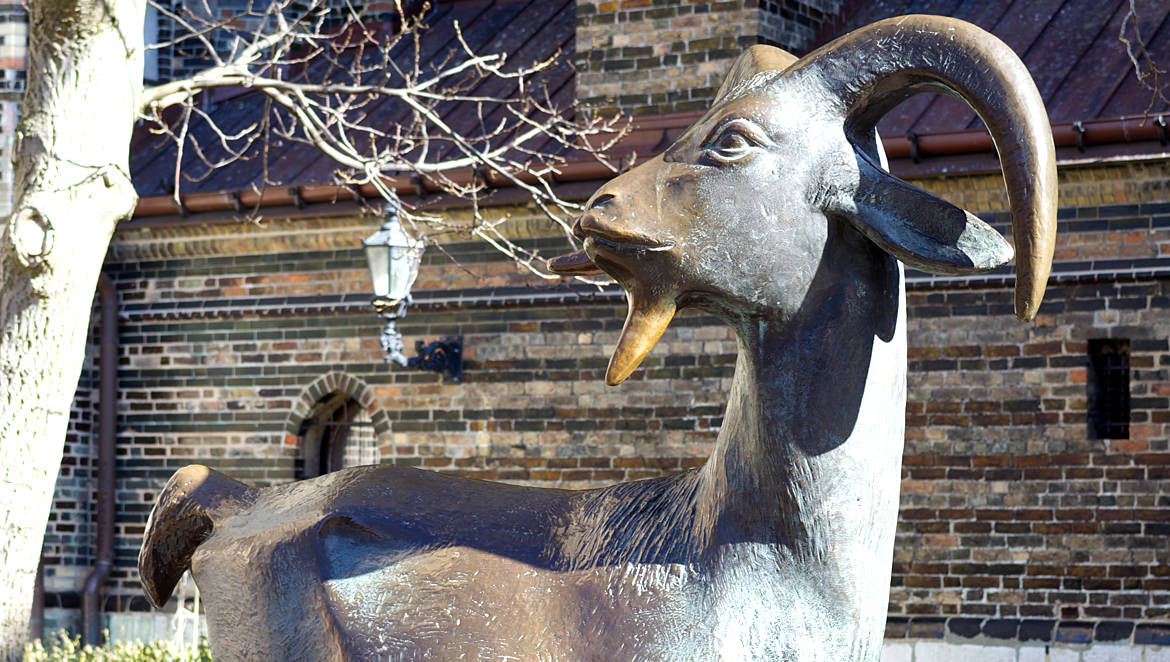
In front of the entrance to St. Mary's Church at the southern transept is the Ziegenmarkt with a small fountain erected there in 1979. Animals were once traded here, and it fits that the fountain is adorned with a bronze sculpture of a goat by sculptor Gerhard Rommel.
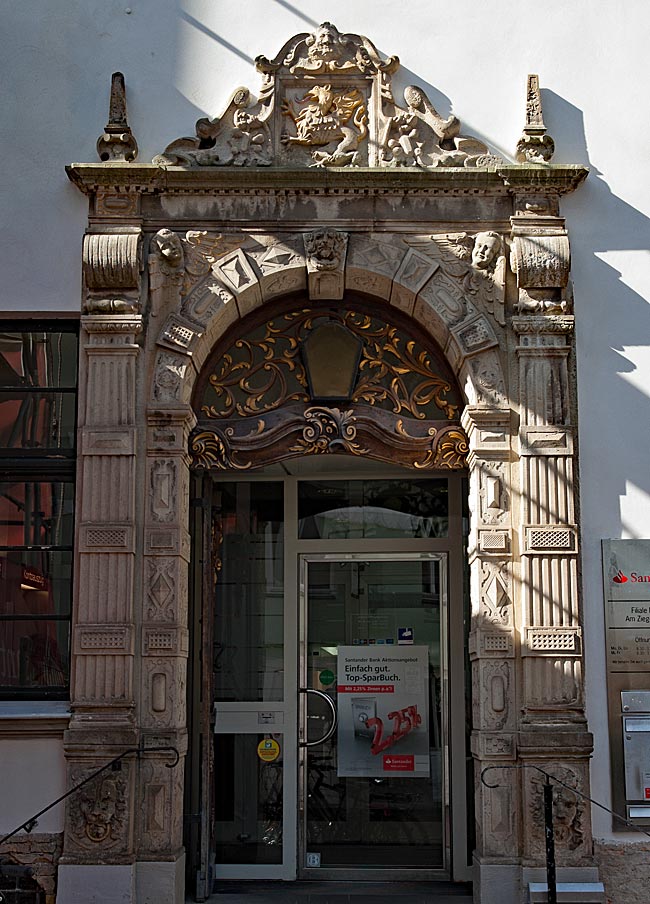
Renaissance portal of the Old Mint
In close proximity stands the Old Kantorat from the 13th century, restored between 1995 and 2000. To its left is the Old Mint with its Renaissance portal featuring the coat of arms animal of the Hanseatic city, the griffin, above the entrance. Coins were still minted in Rostock until 1864.
previous page
 next page
Read more about Rostock: The table of contents
Map
Rügen by the Baltic Sea
Active holiday featuring cycling and hiking
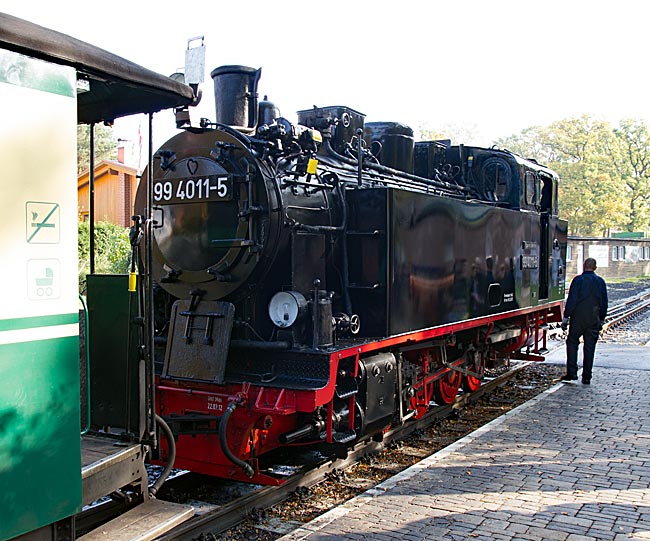
Enjoy an active holiday featuring cycling and hiking along the Baltic coast in Mönchgut on the island of Rügen. Long sandy beaches, rolling hills, and lush forests provide a varied and beautiful setting for your getaway. Often, the only thing breaking the peace is the distant whistle of the historic 'Rasender Roland' steam train. Despite its name (which suggests something "racing" or fast), it’s actually quite the opposite. A journey by train is simply part of the holiday experience.
read more about Rügen ...
In the Probstei in late summer
Schönberger Strand and sea and more
Can you walk or ride a bike from Brasilien (Brazil) to Kalifornien (California) in just a few minutes, always with a view of the water? No, not with your finger on the globe or map, but in person. You’ll have to forgo Copacabana and the Sunset Strip with the Angels in Los Angeles (Spanish for "The Angels"). Instead, you get Germany’s "True North" with all its bright sides. Of course, there are sometimes shadows here too, but they belong only on the margins of this story.
read more about Schönberger Strand ...
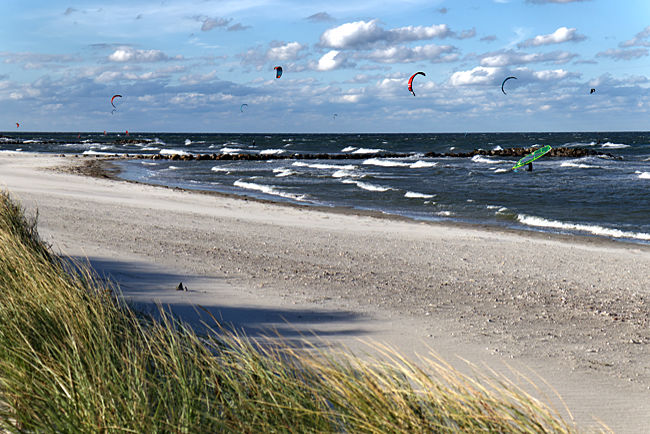
Wismar
The Hanseatic City on the Baltic Sea and its UNESCO World Heritage
The World Heritage House is a building with a stone front house and an attached timber-framed Kemladen on a foundation of loose fieldstones from a medieval predecessor building. This beautifully restored small building complex visually illustrates and provides information via text panels about the lives of past generations in the hall houses typical for Wismar, along with their outbuildings. Additionally, there is extensive information about the city’s history and numerous protected buildings in the old town - there are 1,754 in total, with 306 designated as individual monuments. In the old town, one is right in the middle of Wismar’s UNESCO World Heritage Site.
read more about Wismar ...
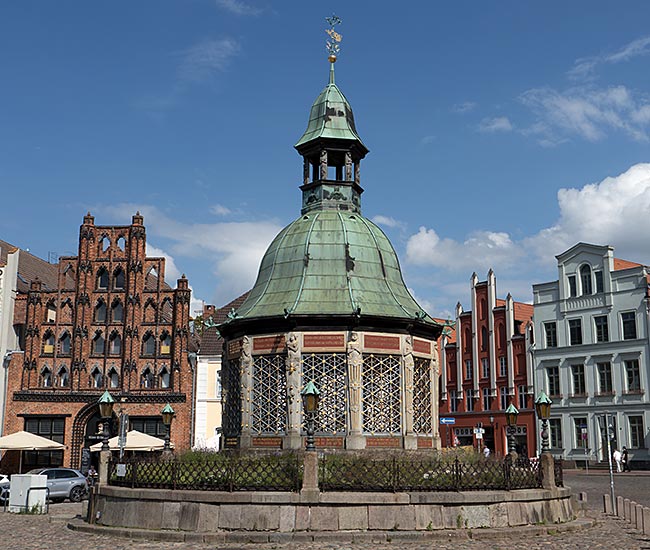
Crabs, dikes and the Wadden Sea
The North Sea spa town of Büsum
Once an island, Büsum was repeatedly threatened by the "Blanken Hans". When the greatest flood of the last century struck in 1962, Büsum was already long connected to the mainland - since 1585. Today, this town of around 5,000 residents, part of the Dithmarschen district, is one of the most important holiday destinations along Schleswig-Holstein's North Sea coast. Since 1985, the sea in front of Büsum has been protected as the Schleswig-Holstein Wadden Sea National Park, and since 2009, it has also been listed as a UNESCO World Heritage Site.
read more about Büsum ...
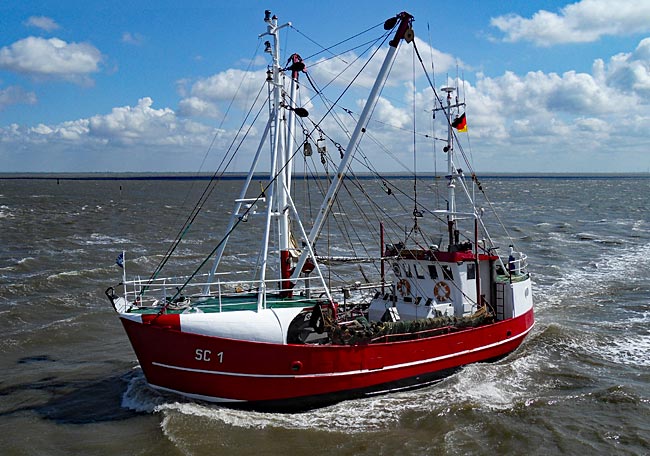
A stroll through Kiel
Sights in the fjord city and a visit to Laboe
A good starting point for exploring the city today, decades after the end of the war, is the centrally located main train station. On Sophienblatt, the main street running in front of the building, all major bus lines converge, and many sights can also be easily reached on foot during a multi-hour stroll.
read more about Kiel ...
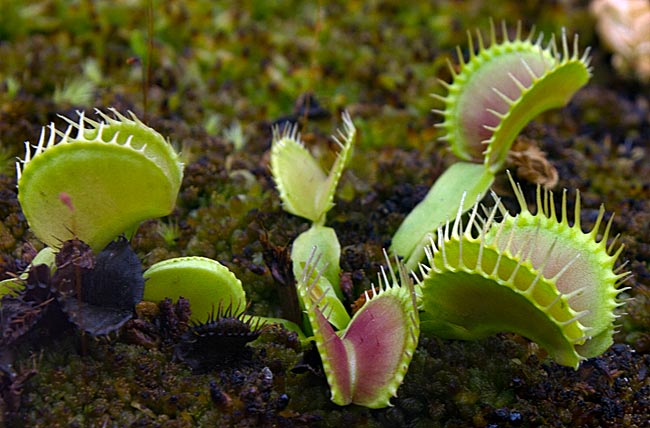
Emden in East Frisia
Where East Frisians make jokes and serious art thrives
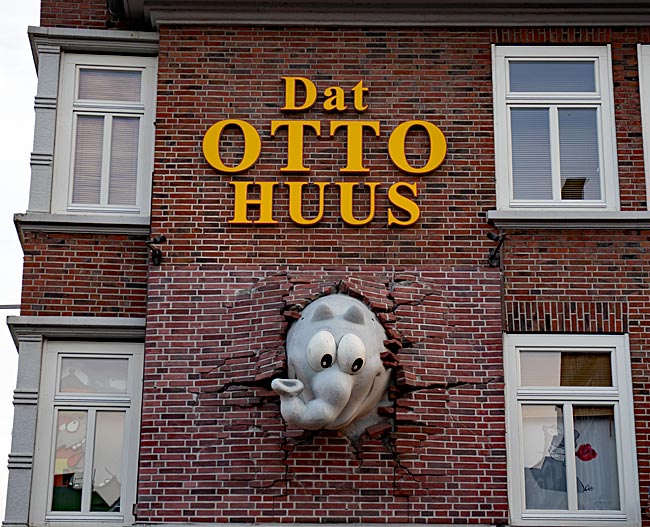
What do Henri Nannen, the journalist and founder of the print magazine STERN, director Wolfgang Petersen (e.g., Das Boot), and comedians Karl Dall and Otto Waalkes have in common? They were all born in Emden. "The Men of the Emden" (a film) not necessarily, but that's a different story. And of course, women have also been born in this city of around 50,000 inhabitants, the largest in East Frisia, such as former boxing world champion Heidi Hartmann - naturally mentioned only as a representative of all others.
read more about Emden ...
A short visit to the historic old town of Heppenheim
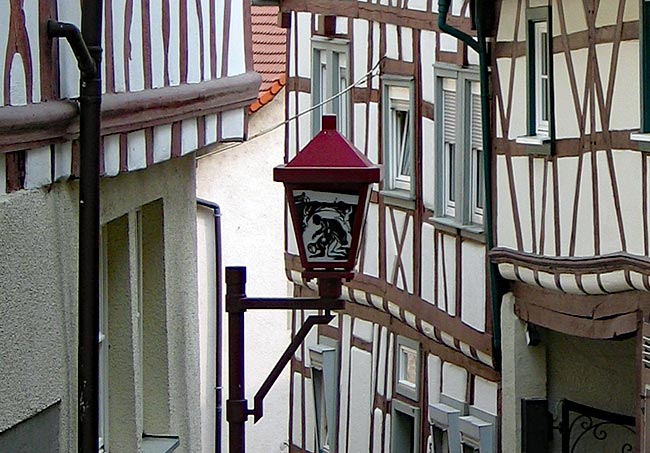
Half-timbering, a false dome, and legendary lanterns
The skyline of Frankfurt, Germany's financial capital with its office towers in the banking district, is still within sight when the train to Darmstadt and Bensheim pulls into the small station of Heppenheim. In 2010, the city was on everyone’s lips after native son Sebastian Vettel left all competition behind in his Red Bull car and became the youngest Formula 1 double world champion of all time. In 2011, he added another title to his collection, as did he in 2012 and finally in 2013 for a fourth time. However, we are not following in Vettel’s footsteps but rather those of history in the picturesque old town with its timber-framed houses.
read more about Heppenheim ...
Norden-Norddeich in East Frisia
At the north Sea
At first glance, one might get the impression that this North Sea resort is merely a transfer station for vacationers heading in droves to the islands. Not only do several ferry docks dominate the harbor, but large parking lots and multi-story garages belonging to the Frisia shipping company right behind the dike offer hundreds of parking spaces for island visitors who don’t want or can’t take their cars with them - Juist is car-free after all. But beyond that, Norddeich reveals itself as a far less hectic and manageably small coastal resort. In this state-recognized North Sea spa, tourism has only been promoted since the second half of the last century, apparently with success, as more than 1 million overnight stays per year show.
read more about Norden-Norddeich ...