

DISTANT PLACES
Travel tips for destinations far from the Hanseatic City of Bremen
Emden in East Frisia
Where East Frisians make jokes and serious art thrives
Page 1 of 3
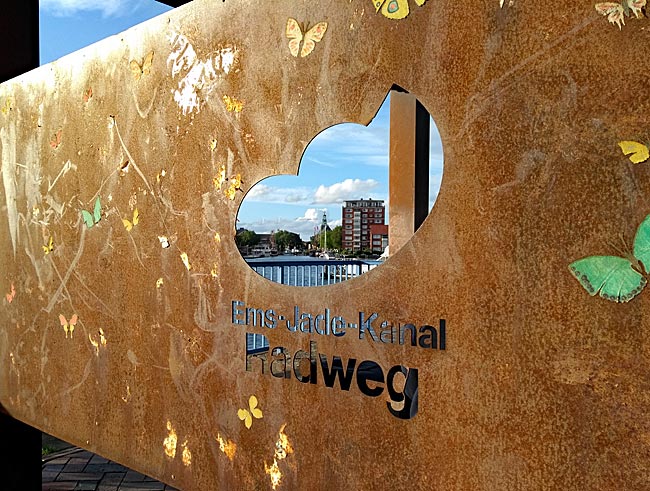
Ems-Jade Canal Cycle Path
What do Henri Nannen, the journalist and founder of the print magazine STERN, director Wolfgang Petersen (e.g., Das Boot), and comedians Karl Dall and Otto Waalkes have in common? They were all born in Emden. "The Men of the Emden" (a film) not necessarily, but that's a different story. And of course, women have also been born in this city of around 50,000 inhabitants, the largest in East Frisia, such as former boxing world champion Heidi Hartmann - naturally mentioned only as a representative of all others.
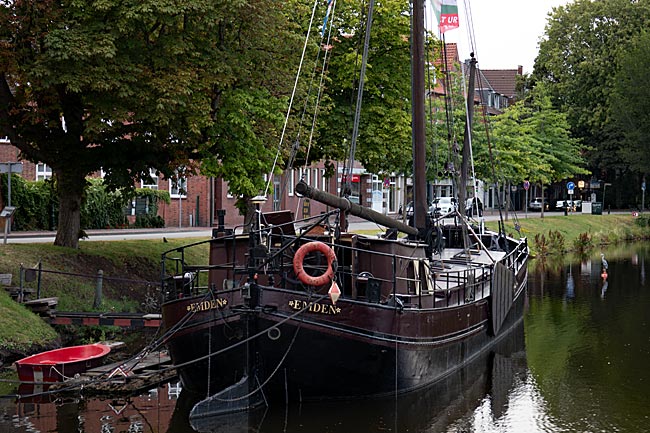
A dutch flat-bottomed ship in one of the city's numerous bodies of water
For many vacationers, the city on the Dollart or Ems is more of a transit point than a destination. At least the picturesque Greetsiel with it's harbor, Norddeich belonging to the city of Norden, and the East Frisian islands of Juist and Norderney with their great sandy beaches are often preferred tourist destinations.
But those arriving by train inevitably make a short stop at Emden station before continuing their journey. Naturally without getting off or even leaving the train building. And without examining the Emden memorial locomotive with its tender diagonally opposite the station.
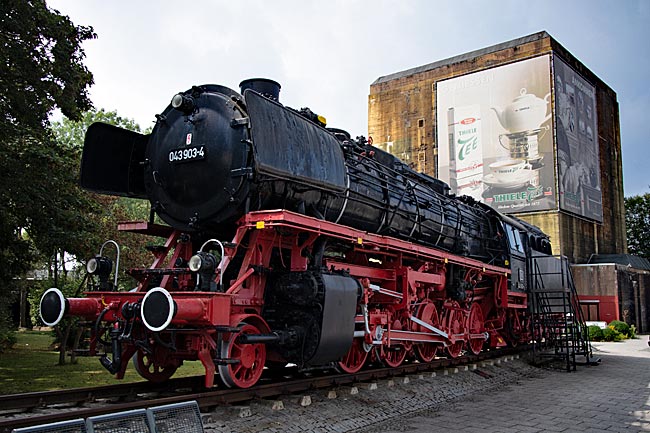
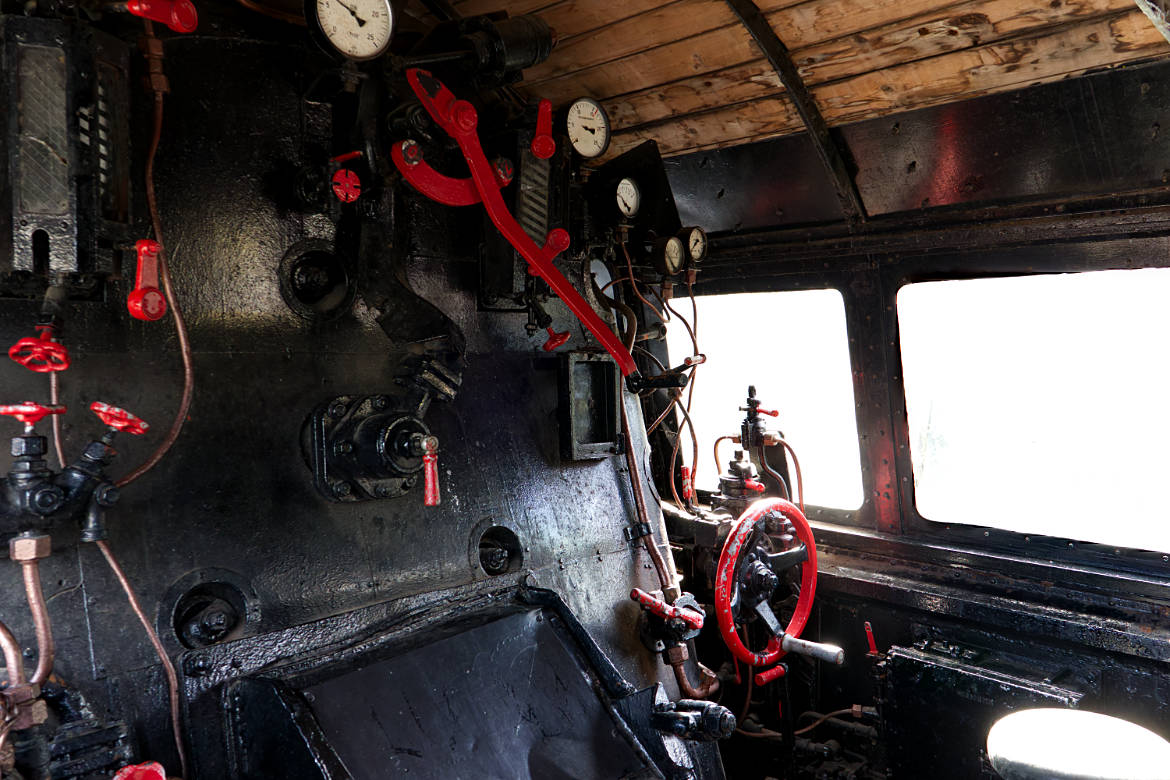
An impressive steel vehicle, behind which stretches a mini train set
The black-and-red former steam locomotive (Lok 043 903-4 [44 903]) is not a rare specimen; rather, 2,000 units of the 043 or 044 series were built starting in 1939. The example in Emden was built in 1944 in France occupied by Nazi Germany and, like the other locomotives, was used in freight traffic. In 1960, now owned by Deutsche Bundesbahn, it was converted from coal to oil firing. A club takes care of preserving this decommissioned but still impressive technical marvel of bygone days.
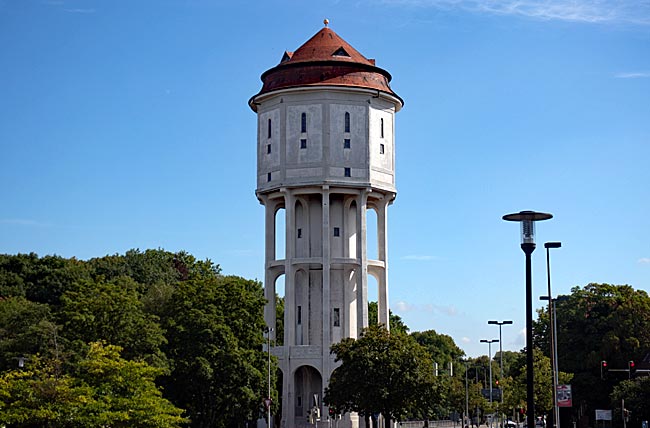
Visible from afar: the water tower
From the small platform next to the locomotive, not only does one's gaze fall on the control instruments and display panels in the driver's cab, but also a few hundred meters further away on the whitewashed water tower with its red roof. The building, which has been a protected monument since 1999, was built between 1910 and 1912 and is the first structure erected in reinforced concrete construction in the East Frisian city. Unlike many preserved water towers elsewhere, this one is not round but decagonal, giving it a distinctive appearance, and at 42 meters high, it is also hard to miss. The water tank in the tower can hold 1,000 cubic meters and is still in operation today.
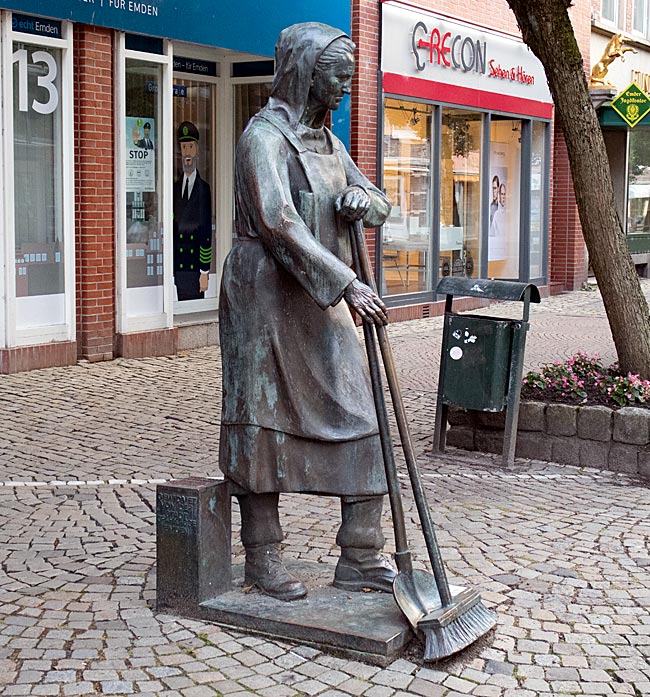
Peterke de Boer (1887-1956) was a well-known day laborer who earned money for herself and her family as a street sweeper. The bronze "Peterke" in the pedestrian zone was created by Karl-Ludwig Böke in 1986, donated by the savings bank
As is customary in comparable cities, Emden's city center is also not far from the train station and easily accessible on foot. And it is car-free in parts, where it is rather noticeably unremarkable; visitors will find tourist highlights primarily at the edge of the pedestrian zone.
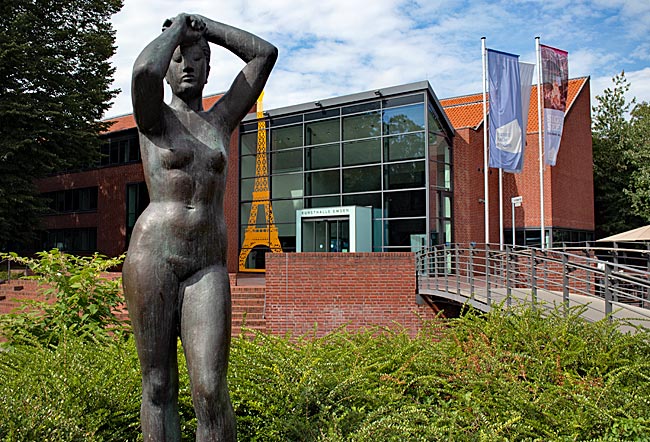
View of the Kunsthalle with the sculpture "Maja" (1942) by Gerhard Marcks in the foreground. The registry office also concludes marriages in the Kunsthalle, and a café is attached to the right of the building
Among these is the Kunsthalle, which has regional appeal and whose history is closely linked to the aforementioned name Nannen. It was the extensive art collection of the long-time editor-in-chief and his wife Eske that laid the foundation for the Kunsthalle's holdings as a foundation and enabled the construction of the building in 1986. Initially, Classical Modernism (1900-1939 or '45) was the focus of the collection of 650 works from the Nannens' possession; about ten years later, it was expanded to include works from after 1945 through a donation by collector Otto van de Loo, who operated a gallery in Munich. The expansion required the Kunsthalle to be structurally enlarged. Since then, the collection has been further increased through additional purchases.
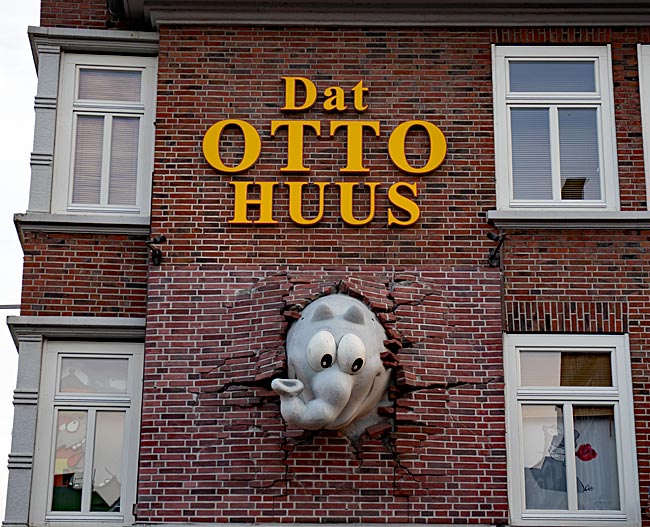
A real eye-catcher
The Ottohus is another house associated with the name of an Emden celebrity. Although Otto Waalkes' media presence has waned and his earlier sketch shows on television and his films are unknown to many younger people, the offer in this multi-story corner building at the end of Große Straße opposite the Ratsdelft is very popular. The comedian, as he is sometimes patronizingly called, is also a musician and talented painter and draftsman. Among his best-known figures are the Ottifanten (photo above) . It is primarily these that adorn the products in the Ottohus, ranging from postcards to trinkets to printed T-shirts and more.
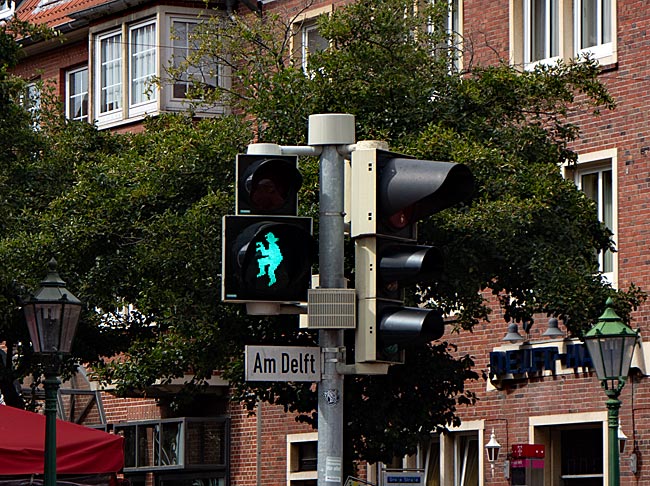
The green light of the pedestrian signal at the Ottohus shows a typical pose of the comedian
With the Ratsdelft opposite the Ottohus, you have reached what is probably the most attractive part of the city center. Delft is derived from ditch or canal and refers to the expansion of a natural body of water by human hands - primarily into a harbor. This is how the delft was created at the mouth of the small river Ehe, which flows into the Ems. This happened as early as around 800 AD, and later it grew into one of the largest and most important harbors on the North Sea coast. Large trading houses were located in the once wealthy city and imported and exported their goods via the harbor facilities. Even today, the East Frisian city has the third-largest harbor on the German North Sea coast. In the city center, you only see the smallest part of it, namely the Ratsdelft, which was partially filled in in 1887 and shortened to its current length up to the height of the town hall, and the inner harbor with leisure boats.
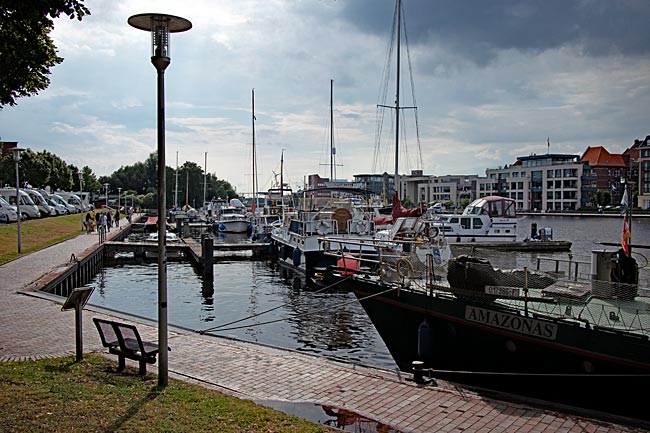
At the inner harbor with marina and RV parking
Paths have been laid out around the bodies of water or are already present due to the quay facilities, and there is a lot to discover on a circular walk. However, it is unfortunate that one of Emden's main traffic arteries runs around the Ratsdelft, and the noise of the traffic jams during peak hours can be quite intense for sensitive ears. But well - or not.
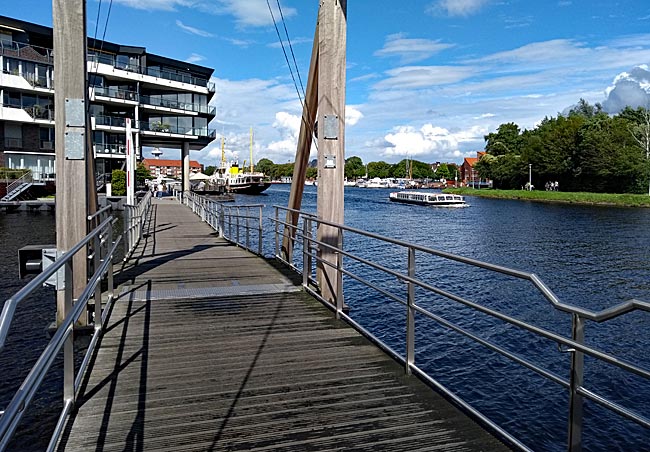
Path over a drawbridge at the inner harbor; on the right in the image, one of the harbor sightseeing ships
Among other things, you can discover the last remaining of several former stone city gates, the Emden Harbor Gate. It stands today at the entrance to the old harbor on the western bank. However, its location is not exactly the original one. Back then, it was not always possible for ships to enter harbors; often a strong rope or chain was stretched from shore to shore, or as in Emden, a barrier gate was used to control or block ship traffic. In any case, customs duties had to be paid at the customs house next to the gate and the no-longer-existing Blue Tower before ships could properly moor and unload their cargo. Payment was made at the gate - and payment was likely already required before this gate was erected in 1635 during the Thirty Years' War by order of the city's leaders, designed by the local architect Martin Faber. Although it is not a massive structure, those who look closely will discover above the archway on the somewhat weathered sandstone blocks the Latin inscription "Et pons est Embdae et portus et aura deus," which translates roughly to: "God is for Emden bridge, harbor, and sailing wind." Well, the city's location on the Ems River and maritime trade brought it considerable wealth as early as the mid-15th century.
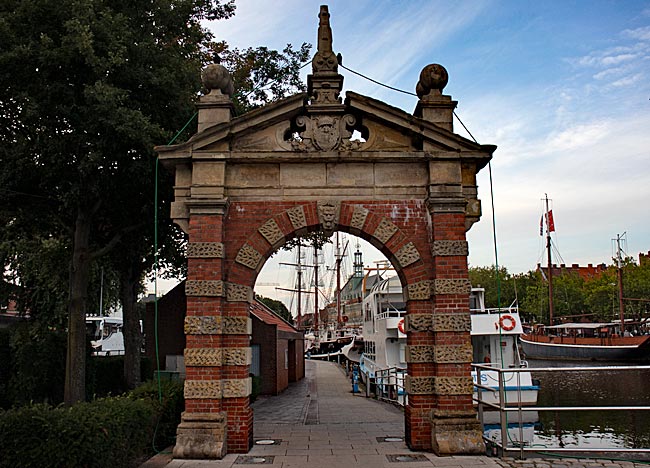
Through the city gate into the medieval harbor
In the stylized gable of the gate, you can find the city's coat of arms. Only after much pleading and payment of a substantial sum was Emden granted this coat of arms by King and later Emperor Maximilian I in 1495. The coat of arms is actually designed in yellow, red, and blue, though here it appears in sandstone monochrome and depicts an angel (yellow, better described as gold) behind a stone wall (red) with water (blue) in front. The water represents the Ems River, the wall symbolizes a protective flood barrier between the river and the city, and the "Engelke up de Muer" - the little angel on the wall? According to many sources, this is not an actual angel but rather a female demon of misfortune with wings and claws borrowed from Greek mythology. This so-called maiden eagle was supposedly taken from the coat of arms of the then-influential East Frisian noble family Cirksena, whose members were elevated to counts and princes in the region. So, a harpy as a heraldic animal - mythologically, they often represent storm winds, though one might question whether that's really needed right on the coast ... but calm seas are also bad for maritime trade with sailing ships.
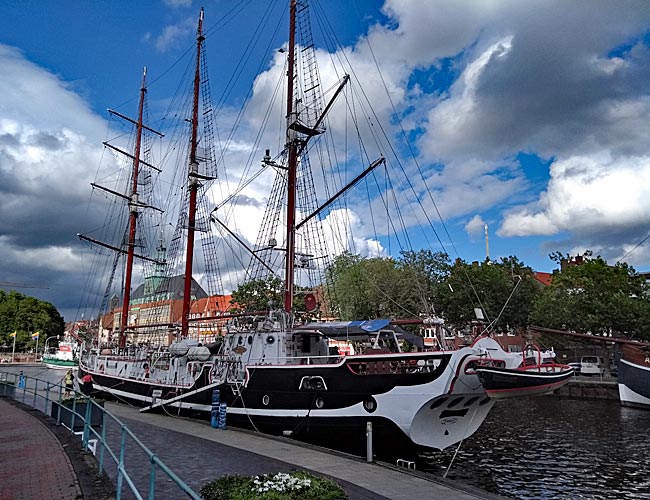
Sailling ship in the Ratsdelft
Apart from the harbor sightseeing ships, commercial shipping takes place in the more distant harbor areas, such as the industrial harbor. Large ships would not have had enough water under their keels in the old harbor facilities anyway. Additionally, enormous, awkwardly shaped RoRo (roll-on/roll-off) ships built for automobile transport or car carriers with thousands of new cars in their holds leave the city on the Dollart, because Volkswagen has been manufacturing cars here since 1964, and they have the shortest route to overseas from Germany's westernmost harbor. Time is money.
previous page
 next page
Map
Rügen by the Baltic Sea
Active holiday featuring cycling and hiking
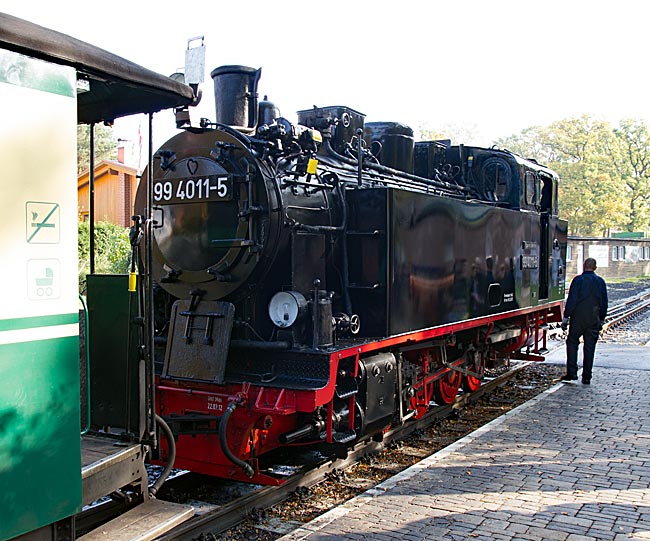
Enjoy an active holiday featuring cycling and hiking along the Baltic coast in Mönchgut on the island of Rügen. Long sandy beaches, rolling hills, and lush forests provide a varied and beautiful setting for your getaway. Often, the only thing breaking the peace is the distant whistle of the historic 'Rasender Roland' steam train. Despite its name (which suggests something "racing" or fast), it’s actually quite the opposite. A journey by train is simply part of the holiday experience.
read more about Rügen ...
Rostock and Warnemünde by the Baltic Sea
A travel guide
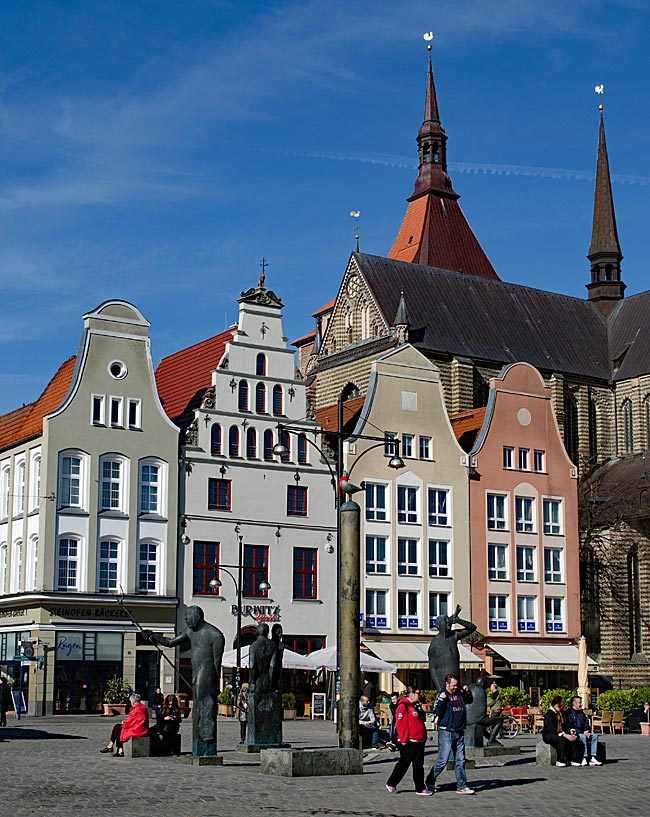
A mini-guide through the Hanseatic city of Rostock and its beautiful beach destination, Warnemünde. Home to one of the oldest universities in the Baltic region, the city boasts a rich history. Join us on a tour of discovery.
read more about Rostock ...
In the Probstei in late summer
Schönberger Strand and sea and more
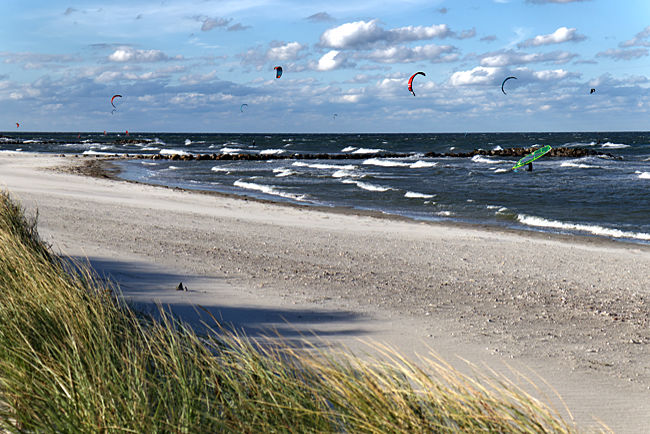
Can you walk or ride a bike from Brasilien (Brazil) to Kalifornien (California) in just a few minutes, always with a view of the water? No, not with your finger on the globe or map, but in person. You’ll have to forgo Copacabana and the Sunset Strip with the Angels in Los Angeles (Spanish for "The Angels"). Instead, you get Germany’s "True North" with all its bright sides. Of course, there are sometimes shadows here too, but they belong only on the margins of this story.
read more about Schönberger Strand ...
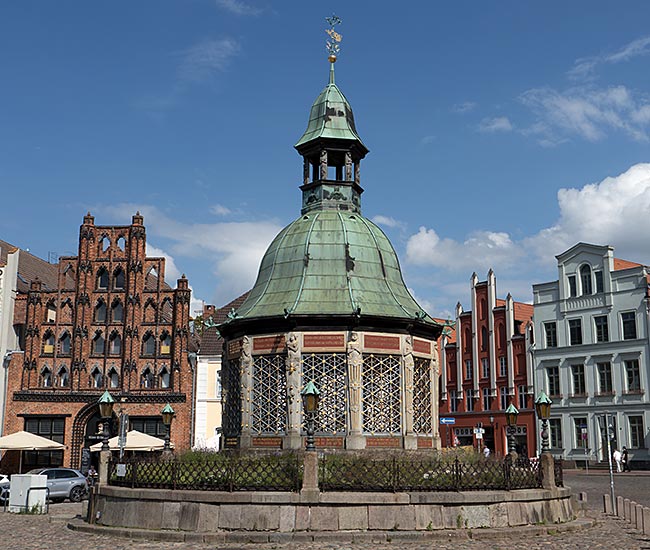
Wismar
The Hanseatic City on the Baltic Sea and its UNESCO World Heritage
The World Heritage House is a building with a stone front house and an attached timber-framed Kemladen on a foundation of loose fieldstones from a medieval predecessor building. This beautifully restored small building complex visually illustrates and provides information via text panels about the lives of past generations in the hall houses typical for Wismar, along with their outbuildings. Additionally, there is extensive information about the city’s history and numerous protected buildings in the old town - there are 1,754 in total, with 306 designated as individual monuments. In the old town, one is right in the middle of Wismar’s UNESCO World Heritage Site.
read more about Wismar ...
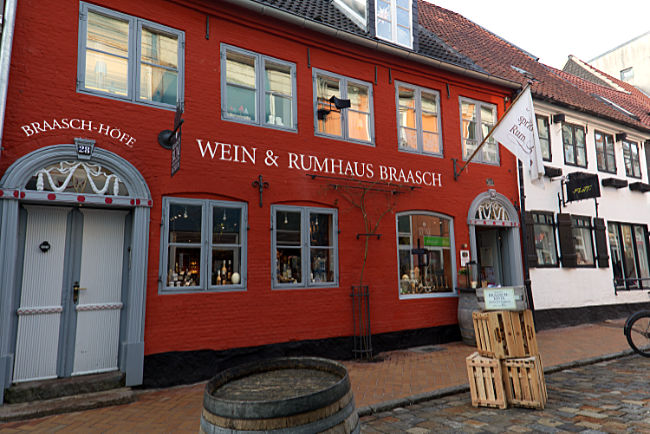
Flensburg on the Baltic Sea
On the Förde at the border to Denmark
"The True North" - that is how the northernmost federal state rightfully markets its unique charms. When "fresh air" is promoted as "the best thing about the North," it is hard to disagree once you are actually here. Fresh breezes blow across the Baltic on the east coast and the North Sea on the west, with roughly 70 kilometers of flat, sparsely populated land stretched between them. With just under 100,000 residents, Flensburg is the third-largest city in Schleswig-Holstein, following the state capital Kiel and the "Pearl of the Hanseatic League," Lübeck.
read more about Flensburg ...
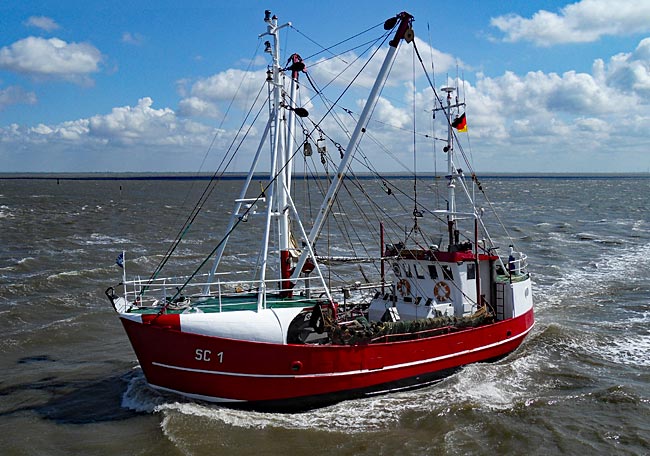
Crabs, dikes and the Wadden Sea
The North Sea spa town of Büsum
Once an island, Büsum was repeatedly threatened by the "Blanken Hans". When the greatest flood of the last century struck in 1962, Büsum was already long connected to the mainland - since 1585. Today, this town of around 5,000 residents, part of the Dithmarschen district, is one of the most important holiday destinations along Schleswig-Holstein's North Sea coast. Since 1985, the sea in front of Büsum has been protected as the Schleswig-Holstein Wadden Sea National Park, and since 2009, it has also been listed as a UNESCO World Heritage Site.
read more about Büsum ...
A stroll through Kiel
Sights in the fjord city and a visit to Laboe
A good starting point for exploring the city today, decades after the end of the war, is the centrally located main train station. On Sophienblatt, the main street running in front of the building, all major bus lines converge, and many sights can also be easily reached on foot during a multi-hour stroll.
read more about Kiel ...
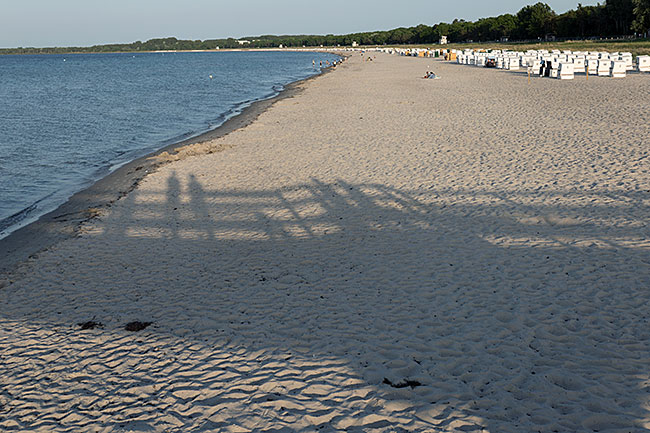
Boltenhagen Seaside Resort
A charming "village-style" town with a long beach
Located between Lübeck and Wismar, near Grevesmühlen, lies the seaside resort of Boltenhagen. Even during the GDR era, the area was a popular destination due to its long sandy beach and was known as the "Resort for the Working People". And tourism continues to bring money into the town, which is invested wisely. Many regularly emptied waste collection containers ensure that trash ends up where it belongs. But that is just one example.
read more about Boltenhagen ...
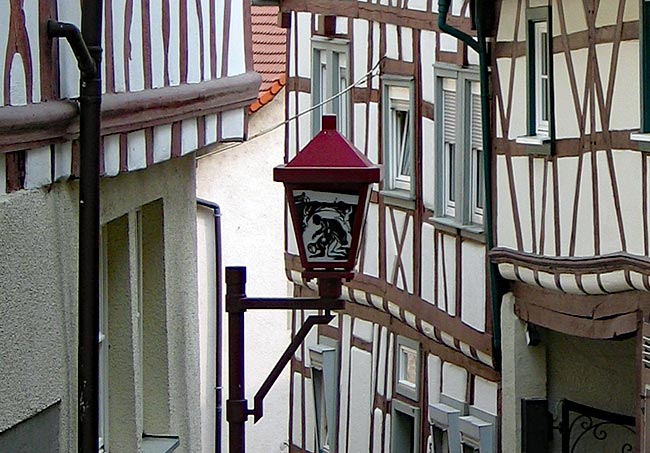
A short visit to the historic old town of Heppenheim
Half-timbering, a false dome, and legendary lanterns
The skyline of Frankfurt, Germany's financial capital with its office towers in the banking district, is still within sight when the train to Darmstadt and Bensheim pulls into the small station of Heppenheim. In 2010, the city was on everyone’s lips after native son Sebastian Vettel left all competition behind in his Red Bull car and became the youngest Formula 1 double world champion of all time. In 2011, he added another title to his collection, as did he in 2012 and finally in 2013 for a fourth time. However, we are not following in Vettel’s footsteps but rather those of history in the picturesque old town with its timber-framed houses.
read more about Heppenheim ...
Norden-Norddeich in East Frisia
At the north Sea
At first glance, one might get the impression that this North Sea resort is merely a transfer station for vacationers heading in droves to the islands. Not only do several ferry docks dominate the harbor, but large parking lots and multi-story garages belonging to the Frisia shipping company right behind the dike offer hundreds of parking spaces for island visitors who don’t want or can’t take their cars with them - Juist is car-free after all. But beyond that, Norddeich reveals itself as a far less hectic and manageably small coastal resort. In this state-recognized North Sea spa, tourism has only been promoted since the second half of the last century, apparently with success, as more than 1 million overnight stays per year show.
read more about Norden-Norddeich ...