

DISTANT PLACES
Travel tips for destinations far from the Hanseatic City of Bremen
A stroll through Kiel
Sights in the fjord city and a visit to Laboe
Page 1 of 7
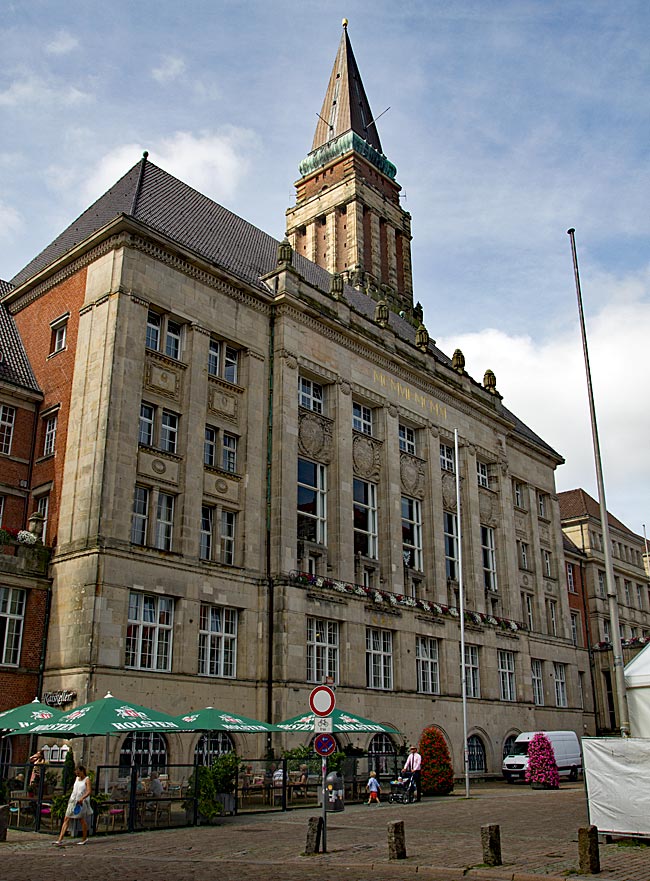
Town Hall
Kiel has many things, but it’s not really beautiful. At least that seems to be the opinion of those who have visited the city before. True, Kiel is a large city with around a quarter million inhabitants, a gateway to Scandinavia, and traffic is correspondingly heavy on its streets - but that’s no different elsewhere. So, it probably isn’t the traffic that makes the state capital seem lacking in attractions. Rather, the architectural appearance lacks special charm. In vain, one searches the central urban area for larger contiguous old buildings, stone witnesses of Kiel’s long history and its people, which dates back to the city’s founding in the mid-13th century.
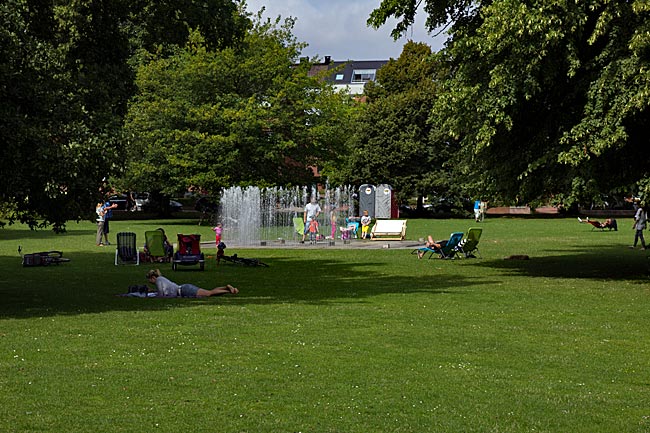
Relaxation in Hiroshimapark
An explanation lies in the more recent past of this port city. After the founding of the German Empire in 1871, the strategically well-located city became an imperial naval base and retained this military importance even during the Nazi dictatorship. As a naval base and with three large shipyards, Kiel naturally became a target of Allied air raids. The destruction wrought by the bombers’ deadly cargo between 1939 and 1945 was a harsh blow for the surviving residents - over 80 percent of their city had been reduced to rubble by the end of the war.
Through the City Center
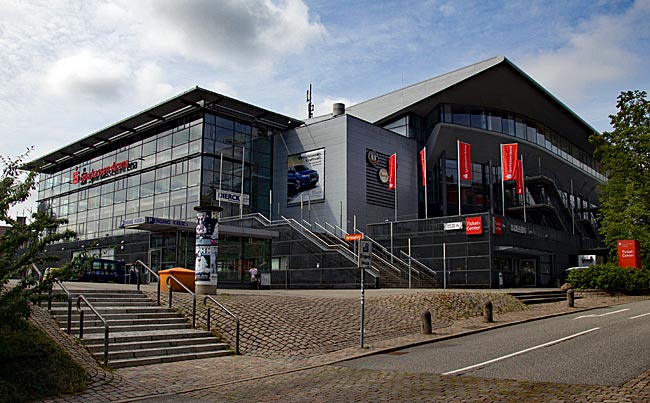
Sparkassen-Arena
A good starting point for exploring the city today, decades after the end of the war, is the centrally located main train station. On Sophienblatt, the main street running in front of the building, all major bus lines converge, and many sights can also be easily reached on foot during a multi-hour stroll. For example, the Sparkassen-Arena-Kiel at Europaplatz, where THW Kiel plays its home handball games. Nearby the arena and adjacent to Holstenplatz, which borders the main street, several restaurants have settled in, inviting visitors to dine and drink outdoors during the warmer months.
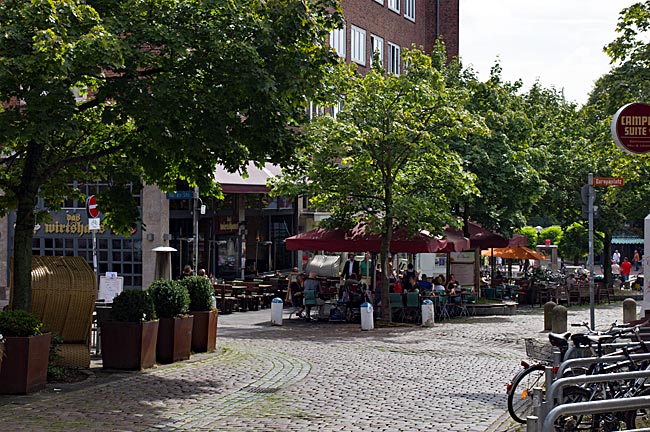
Dining at Europaplatz
From the arena, it’s just a stone’s throw to Rathausplatz, home to the town hall and, most notably, the 106-meter-tall town hall tower, visible from afar. The buildings were constructed between 1907 and 1911. A certain resemblance to the Campanile, the bell tower of St. Mark’s Basilica in Venice, is indeed noticeable - and was intended by architect Hermann Billing. The brick building houses a carillon that chimes every quarter-hour and on the hour. However, access to the observation gallery at 67 meters above ground level, offering views over the city and the fjord, is only possible through participation in a guided tour.
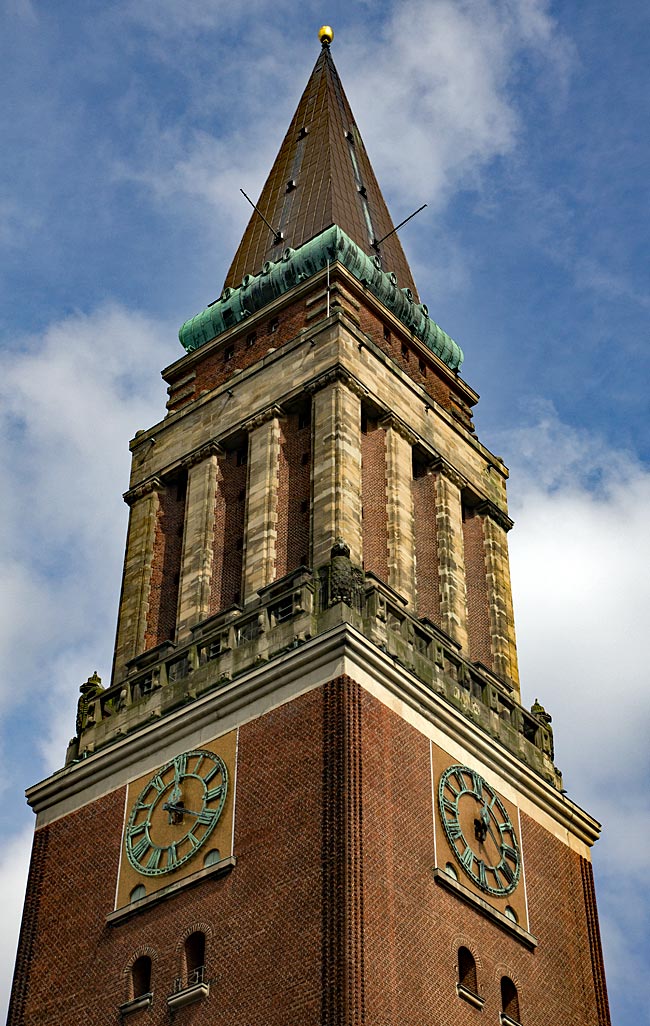
Town hall tower
Before the foundation stone for the town hall was laid, the city’s opera house had already been built across the street between 1905 and 1907. The structure, made of brick and partially sandstone, was repeatedly damaged during Allied air raids in World War II, with its Art Nouveau interior completely destroyed. In the early 1950s, new life emerged behind the remaining outer walls as reconstruction began. After later architecturally divergent expansions and structural changes, the opera has been under monument protection since 1993 ...
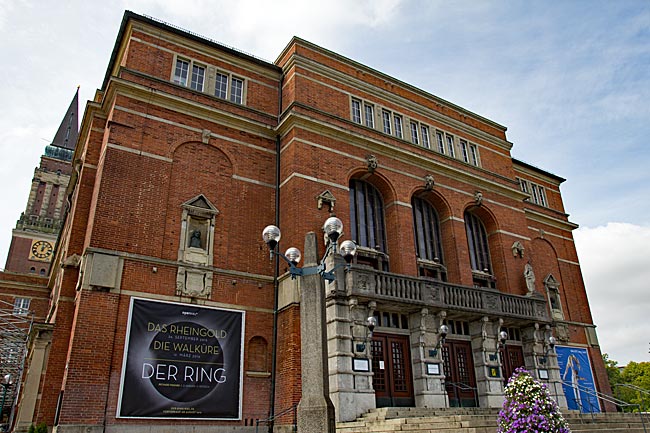
Main entrance of the opera
... under the watchful eye of Germany’s first chancellor, Otto von Bismarck, in uniform with a saber. His bronze statue, created by Harro Magnussen in 1897, gazes from the nearby Hiroshimapark - almost, well, at least a little. Incidentally, in his role as Prussian prime minister, he was significantly involved in the Second Schleswig War, which ended in 1864 with a Danish defeat and ultimately led to the not entirely conflict-free formation of Schleswig-Holstein by the Prussians in 1867. But those are other stories and ancient history - though still somehow uniting peoples in light of a Danish minority in Germany’s northernmost state, and indeed part of European history.
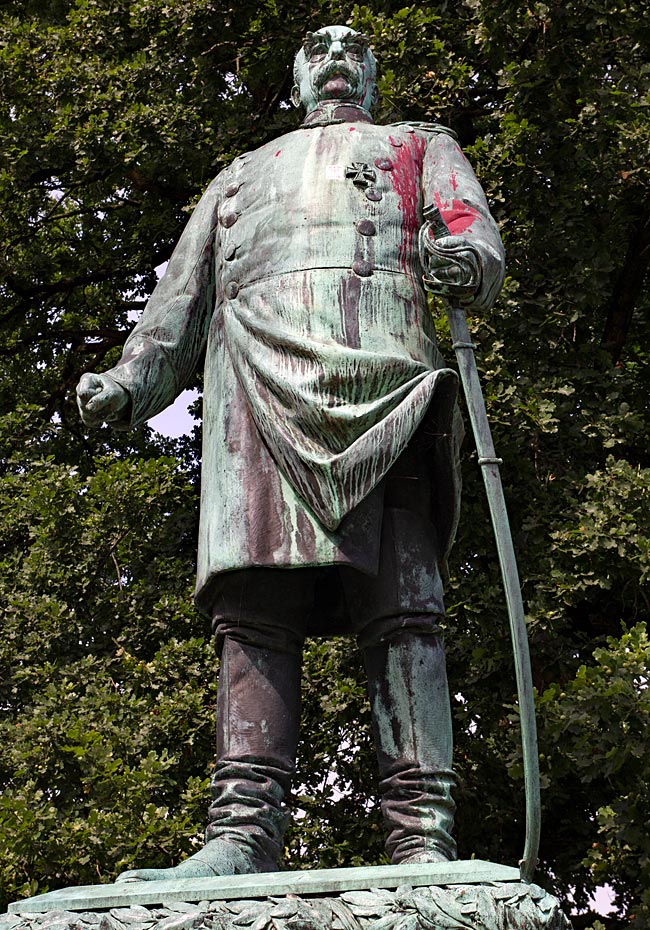
Bismarck Statue
Now, strolling through the inviting old town takes us toward the fjord, passing by Kiel’s oldest building: St. Nicholas’ Church at Alter Markt (old market), the historic center of the old town. What we humans sometimes like to hear is probably completely irrelevant to this towering hall church: you can’t tell it’s old from its appearance. For the medieval Gothic brick building, begun around the mid-13th century - shortly after the city’s founding - received a new façade in the Neo-Gothic style during the second half of the 19th century, a style that drew on and reinterpreted Central European building traditions, fundamentally altering the church’s exterior appearance. Moreover, this sacred structure also fell victim to Allied bombs and was largely destroyed behind its outer walls during an air raid on May 22, 1944. But just six years later, craftsmen were at work again, and today people once more find a place for their faith under a new roof in a more modern setting.
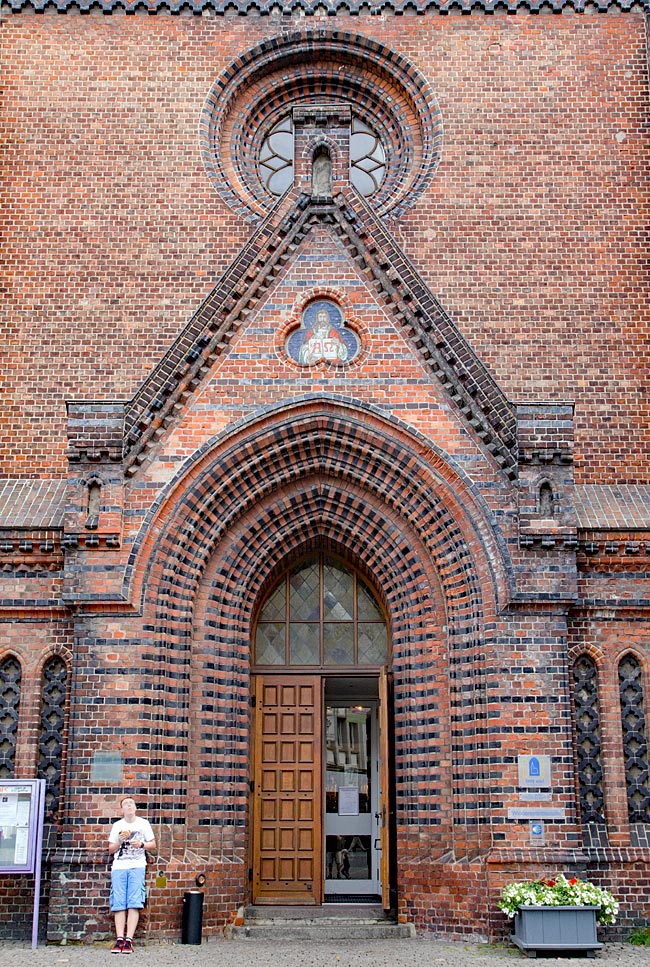
Part of the façade of St. Nicholas’ Church
previous page
 next page
Map
Information
Tourist Information Kiel
Andreas-Gayk-Straße 3
24103 Kiel
Phone: +49 (0)431 / 679 100
Email: info@kiel-sailing-city.de
Internet: www.kiel-sailing-city.de
Transportation
Train
The state capital is easily accessible by train. However, during storms, trees sometimes fall onto the tracks, disrupting rail services as there are no alternative routes.
Car
You can also comfortably reach Kiel by car via the highway. While a car isn’t necessary within the city, it is practical for trips to nearby attractions like Eckernförde.
Public Transport
Kiel’s tram service was discontinued in 1985 - a decision many now regret. However, the well-organized bus network extends throughout Kiel and its surroundings, provided buses aren’t stuck in traffic. Tickets are purchased from the driver upon boarding. Depending on your plans, day passes, group tickets, or small-group tickets may be cost-effective. In my experience, drivers are generally very friendly and willing to provide information - a quality many of their colleagues in other cities could learn from, especially since it costs nothing to do so. More info: www.kvg-kiel.de
For public transport connections beyond Kiel, visit: www.nah.sh
By Water
The Schlepp- und Fährgesellschaft Kiel mbH is a municipal service operating ferry and tugboat services. It offers passenger transport on the Kieler Förde with small ships known colloquially as "Fördedampfer" (ferry). These vessels depart from the central station and serve multiple stops along both sides of the fjord, including Laboe, Schilksee, and Strande. Bicycles are allowed in moderation. The company is part of the Verkehrsverbund Region Kiel, so regional tickets are valid on board. Students can use their semester ticket for free rides. However, schedules vary, so check the timetable: www.sfk-kiel.de/en
Additional Information
www.zoologisches-museum.uni-kiel.de
www.kunsthalle-kiel.de
www.uni-kiel.de/nickol/botgar.html
www.geomar.de/en/
www.maritimesviertel.de
www.mahnmalkilian.de
www.strande.de
www.laboe.de
www.seenotretter.de
www.deutscher-marinebund.de
www.stenalinetravel.com/routes/kiel-gothenburg
www.colorline.com
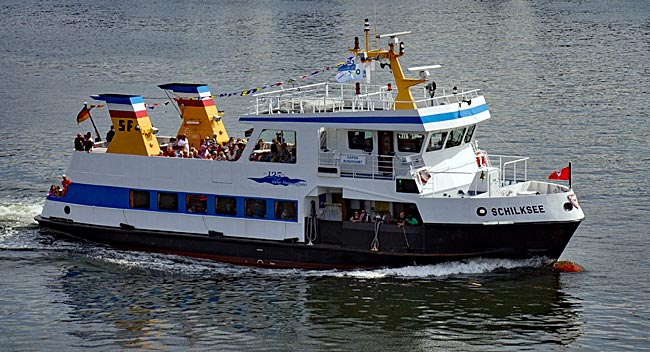
"Fördedampfer"
Rügen by the Baltic Sea
Active holiday featuring cycling and hiking
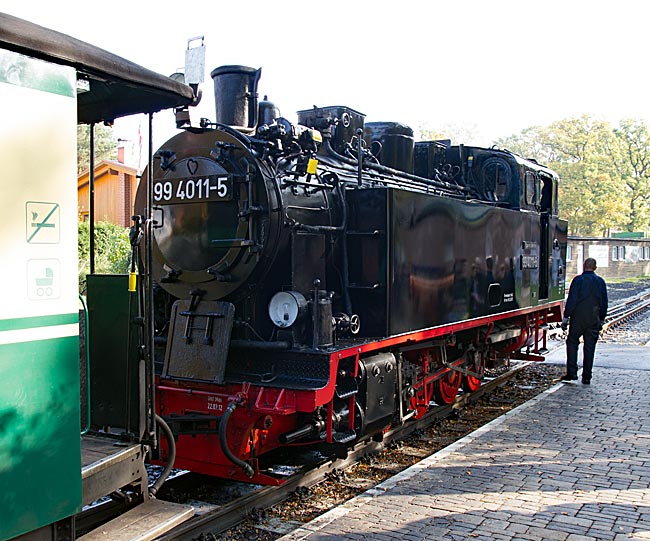
Enjoy an active holiday featuring cycling and hiking along the Baltic coast in Mönchgut on the island of Rügen. Long sandy beaches, rolling hills, and lush forests provide a varied and beautiful setting for your getaway. Often, the only thing breaking the peace is the distant whistle of the historic 'Rasender Roland' steam train. Despite its name (which suggests something "racing" or fast), it’s actually quite the opposite. A journey by train is simply part of the holiday experience.
read more about Rügen ...
Rostock and Warnemünde by the Baltic Sea
A travel guide
A mini-guide through the Hanseatic city of Rostock and its beautiful beach destination, Warnemünde. Home to one of the oldest universities in the Baltic region, the city boasts a rich history. Join us on a tour of discovery.
read more about Rostock ...
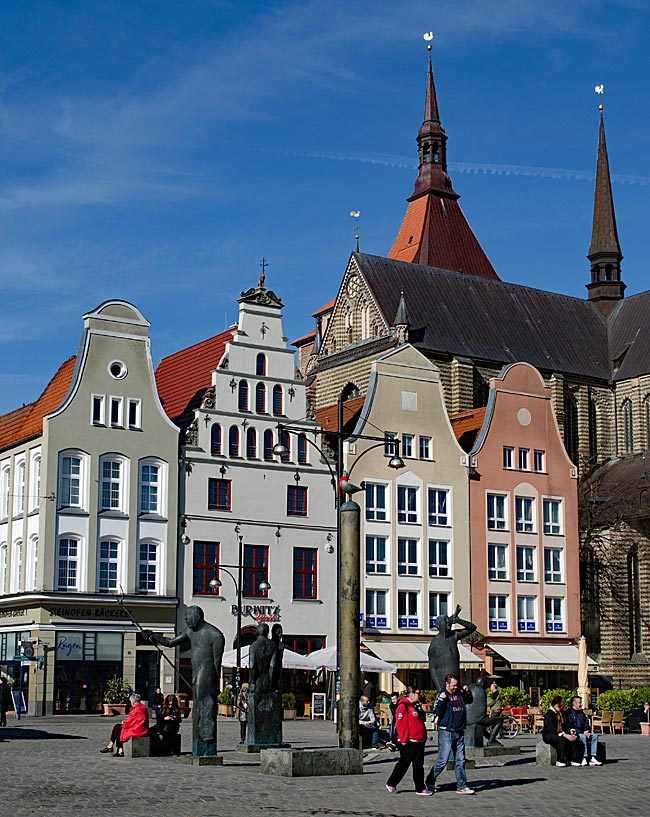
Wismar
The Hanseatic City on the Baltic Sea and its UNESCO World Heritage
The World Heritage House is a building with a stone front house and an attached timber-framed Kemladen on a foundation of loose fieldstones from a medieval predecessor building. This beautifully restored small building complex visually illustrates and provides information via text panels about the lives of past generations in the hall houses typical for Wismar, along with their outbuildings. Additionally, there is extensive information about the city’s history and numerous protected buildings in the old town - there are 1,754 in total, with 306 designated as individual monuments. In the old town, one is right in the middle of Wismar’s UNESCO World Heritage Site.
read more about Wismar ...
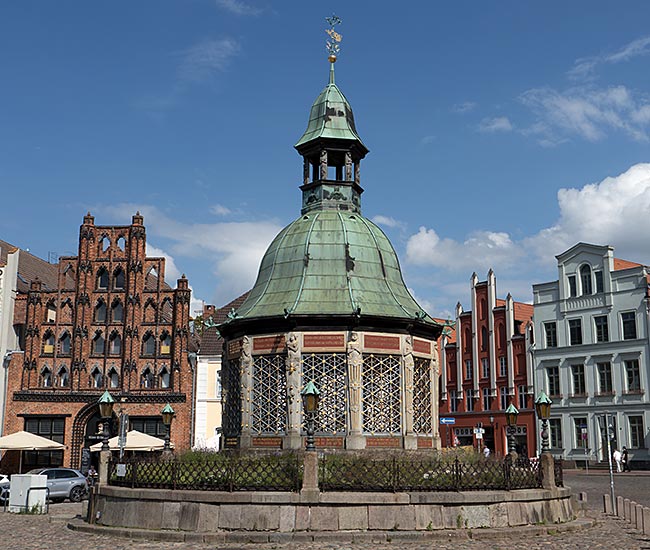
Crabs, dikes and the Wadden Sea
The North Sea spa town of Büsum
Once an island, Büsum was repeatedly threatened by the "Blanken Hans". When the greatest flood of the last century struck in 1962, Büsum was already long connected to the mainland - since 1585. Today, this town of around 5,000 residents, part of the Dithmarschen district, is one of the most important holiday destinations along Schleswig-Holstein's North Sea coast. Since 1985, the sea in front of Büsum has been protected as the Schleswig-Holstein Wadden Sea National Park, and since 2009, it has also been listed as a UNESCO World Heritage Site.
read more about Büsum ...
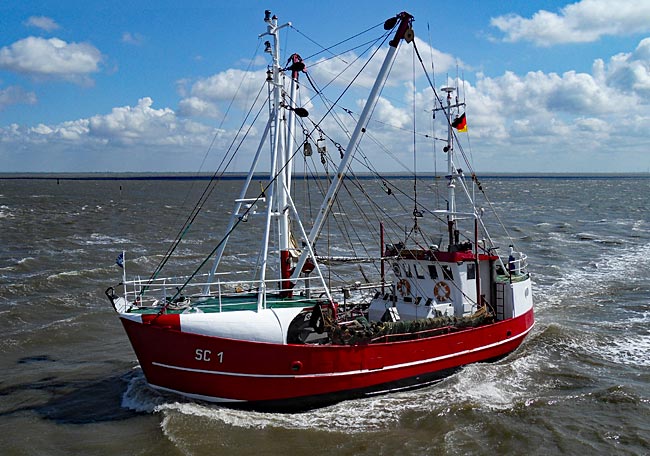
Emden in East Frisia
Where East Frisians make jokes and serious art thrives
What do Henri Nannen, the journalist and founder of the print magazine STERN, director Wolfgang Petersen (e.g., Das Boot), and comedians Karl Dall and Otto Waalkes have in common? They were all born in Emden. "The Men of the Emden" (a film) not necessarily, but that's a different story. And of course, women have also been born in this city of around 50,000 inhabitants, the largest in East Frisia, such as former boxing world champion Heidi Hartmann - naturally mentioned only as a representative of all others.
read more about Emden ...
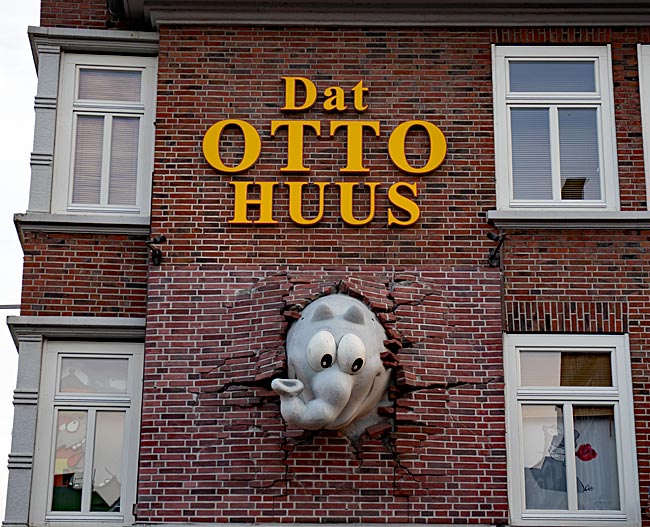
Norden-Norddeich in East Frisia
At the north Sea
At first glance, one might get the impression that this North Sea resort is merely a transfer station for vacationers heading in droves to the islands. Not only do several ferry docks dominate the harbor, but large parking lots and multi-story garages belonging to the Frisia shipping company right behind the dike offer hundreds of parking spaces for island visitors who don’t want or can’t take their cars with them - Juist is car-free after all. But beyond that, Norddeich reveals itself as a far less hectic and manageably small coastal resort. In this state-recognized North Sea spa, tourism has only been promoted since the second half of the last century, apparently with success, as more than 1 million overnight stays per year show.
read more about Norden-Norddeich ...