

DISTANT PLACES
Travel tips for destinations far from the Hanseatic City of Bremen
A stroll through Kiel
Sights in the fjord city and a visit to Laboe
Page 2 of 7
The ferry port
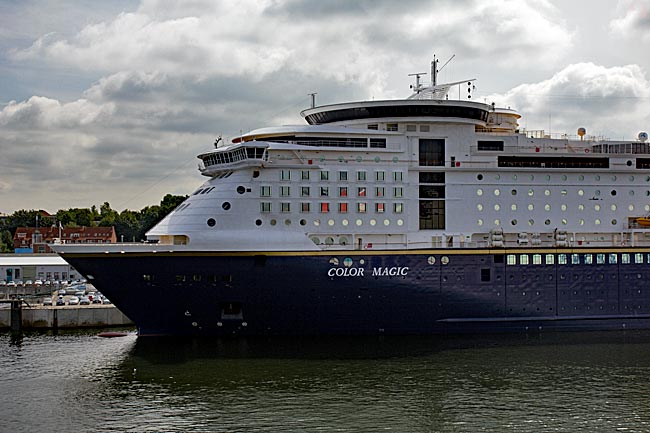
Oslo ferry of Color Line
When it blares loudly and can be heard from afar, you know something big is happening on the fjord. From St. Nicholas' Church, you quickly reach the Baltic Sea Quay and the adjacent Sweden Quay. For ship spotters, this is the place to pull out their cameras. Regularly, large ferries of Stena Line and Color Line depart from or arrive at the Sweden Quay and the opposite Norway Quay, heading for Gothenburg or Oslo respectively. The big "pots" are truly a sight to behold and elsewhere on the Baltic coast, such as in Warnemünde near Rostock, they provide a brief but scheduled pleasure for water sports enthusiasts: surfing on the bow waves that roll ashore. However, since many harbor areas are off-limits to third parties - such as gawking tourists - in Kiel as well, you have to find other spots for your personal unobstructed souvenir photo.
A good opportunity is offered by the Hörn Bridge, which has connected the western bank at the level of the train station with the opposite bank at the level of the Germania Harbor since 1997. The bridge is a three-part folding bridge and as such not always accessible because it is raised or closed to traffic - for example, when smaller ships want to enter the rear part of the harbor basin that ends there, or when the Oslo ferry of Color Line departs at noon.
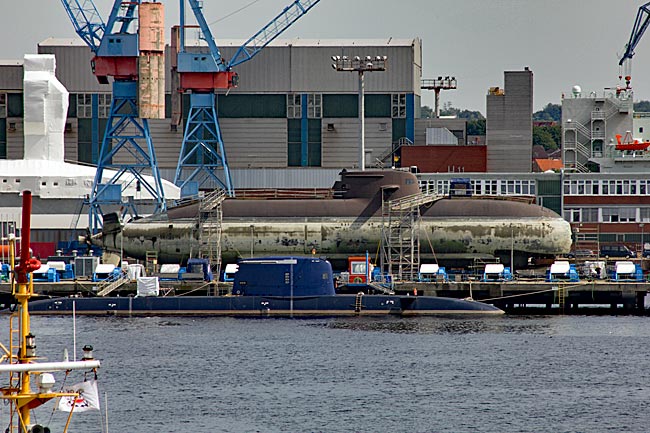
Submarines under construction
Another good opportunity for ship spotting and an overview of what else is happening on or near the water is provided by the building of Stena Line, which has an observation deck accessible via an outdoor staircase. From the observation deck, you not only have a view of the ferry operations but also, among other things, one of Germany's largest shipyards - the former Howaldtswerke-Deutsche Werft GmbH, short HDW, which today operates under the name German Naval Yards together with other shipyards. The lucrative business and export of maritime weapons, some of which are built at this shipyard, regularly make headlines and rightly spark heated discussions.
Nevertheless, the sight of submarines evokes images from Wolfgang Petersen’s film "Das Boot" and reports on the tragic - but not war-related - sinking of the Russian nuclear-powered submarine "Kursk" in August 2000, which at least gives me more than just an uncomfortable shiver. I also recommend a visit to Laboe, but more on that later.
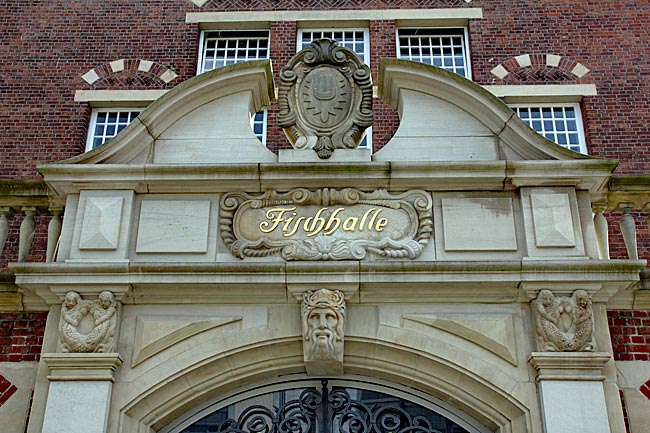
No longer fish hall, but maritime museum
Those interested in Kiel's maritime history can visit the Maritime Museum, which was first opened in 1978 and reopened in 2014 after several years of renovation and modernization. The museum is housed in a former fish auction hall built in 1909 and has been under monument protection since 1972. The exhibition provides insights into the history of shipbuilding, fishing, and the navy in the city that was once part of the Hanseatic League, using media and objects. Attention is also given to the North Sea-Baltic Sea Canal, which flows into the fjord, as well as to sailing sports. Near the museum bridge close to the building with its characteristic barrel-spitzdach roof, some museum ships are moored that can be visited during the summer months.
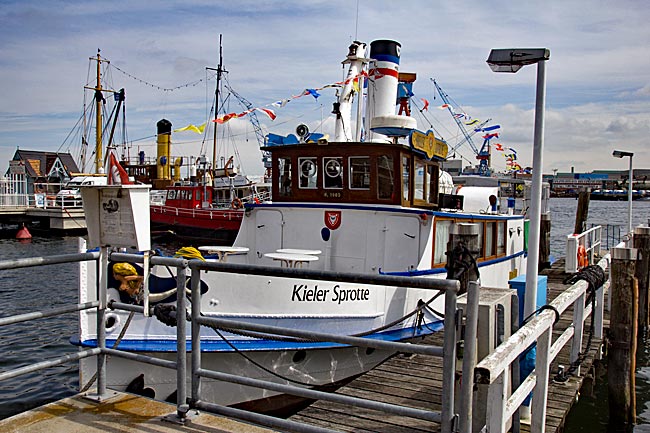
The "Kieler Sprotte" and museum ships in the background
Kiel Castle and the Castle Garden
Also under monument protection is Kiel Castle, to which a signpost directs visitors above the museum. The secondary residence and for a short time main residence of the Gottorf dukes, who ruled the duchies of Schleswig and Holstein from 1544 until the beginning of the 18th century, later only Holstein, presents itself more modestly than the former ducal and namesake ancestral seat, Schloss Gottorf near Schleswig, which is still worth seeing today.
The secular building was severely damaged in the last war and partially burned down. Remnants of the original east wing can still be seen from the fjord side as the base of the new building erected on it in 1961. The west wing, built in 1695 - the Rantzaubau - on the other hand, survived the war with significantly less damage and today gives an impression of what the entire residence once looked like.
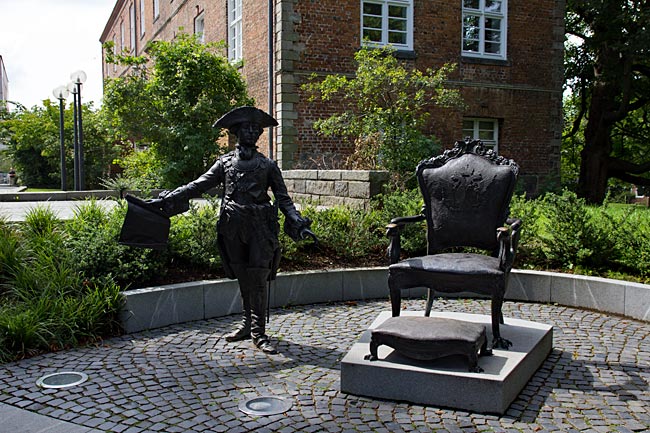
Tsar Peter III of Russia, simultaneously Duke Carl Peter Ulrich of Holstein-Gottorf; in the background, the west wing of the castle
How closely the respective histories of European nations are intertwined is once again demonstrated by the history of the House of Gottorf, which had emerged from a collateral line of the House of Oldenburg and provided four Swedish kings from 1751 to 1818. The first in this series was the younger son of Christian Albrecht, that duke who founded Kiel University in 1665. A scion of the Holstein branch was even crowned as Tsar Peter III of Russia in 1762, although he only ruled for six months. After his wife had successfully schemed, she took over the regency as Empress Catherine II, better known as Catherine the Great, almost until the end of the century, while Peter III died under unclear circumstances in the same year.
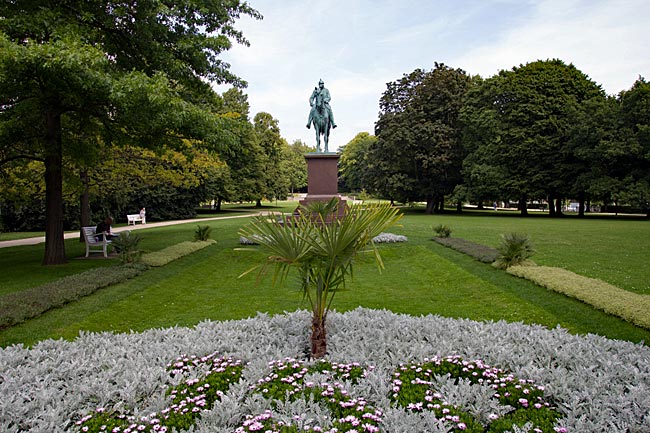
Emperor Wilhelm I in the castle garden
In the extensive adjacent castle garden, the people of Schleswig-Holstein have erected a monument to another ruler on horseback: the first German Emperor Wilhelm I. Together with Otto von Bismarck, he was significantly involved in making today's federal state part of the German Empire against the Danes in the Second War of Schleswig in 1864 and shortly thereafter against the interests of Austria.
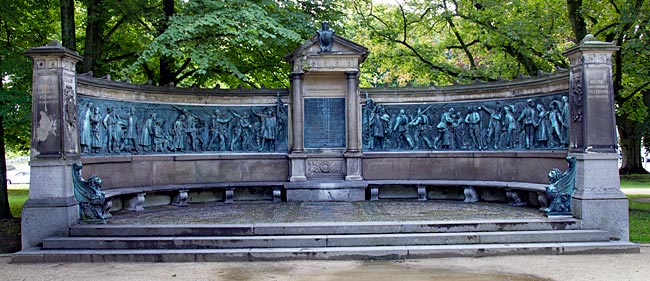
Monument commemorating the Franco-Prussian War of 1870/71
But before the latter became a reality in the form of a nation-state, there was war with France in 1870/71, which is also commemorated in the castle garden with a monument to the German soldiers who fell in battle. But emperors, the Gottorf dukes, and other unelected rulers are gone; now peace reigns in the park, and numerous benches invite you to take a break before things get busy again all around.
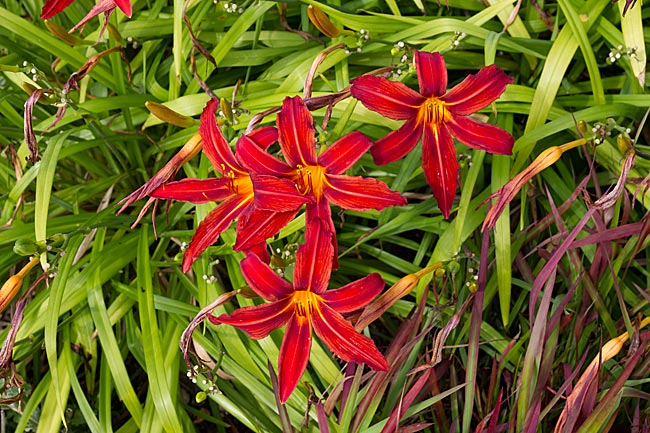
Plants in the castle garden


Map
Information
Tourist Information Kiel
Andreas-Gayk-Straße 3
24103 Kiel
Phone: +49 (0)431 / 679 100
Email: info@kiel-sailing-city.de
Internet: www.kiel-sailing-city.de
Transportation
Train
The state capital is easily accessible by train. However, during storms, trees sometimes fall onto the tracks, disrupting rail services as there are no alternative routes.
Car
You can also comfortably reach Kiel by car via the highway. While a car isn’t necessary within the city, it is practical for trips to nearby attractions like Eckernförde.
Public Transport
Kiel’s tram service was discontinued in 1985 - a decision many now regret. However, the well-organized bus network extends throughout Kiel and its surroundings, provided buses aren’t stuck in traffic. Tickets are purchased from the driver upon boarding. Depending on your plans, day passes, group tickets, or small-group tickets may be cost-effective. In my experience, drivers are generally very friendly and willing to provide information - a quality many of their colleagues in other cities could learn from, especially since it costs nothing to do so. More info: www.kvg-kiel.de
For public transport connections beyond Kiel, visit: www.nah.sh
By Water
The Schlepp- und Fährgesellschaft Kiel mbH is a municipal service operating ferry and tugboat services. It offers passenger transport on the Kieler Förde with small ships known colloquially as "Fördedampfer" (ferry). These vessels depart from the central station and serve multiple stops along both sides of the fjord, including Laboe, Schilksee, and Strande. Bicycles are allowed in moderation. The company is part of the Verkehrsverbund Region Kiel, so regional tickets are valid on board. Students can use their semester ticket for free rides. However, schedules vary, so check the timetable: www.sfk-kiel.de/en
Additional Information
www.zoologisches-museum.uni-kiel.de
www.kunsthalle-kiel.de
www.uni-kiel.de/nickol/botgar.html
www.geomar.de/en/
www.maritimesviertel.de
www.mahnmalkilian.de
www.strande.de
www.laboe.de
www.seenotretter.de
www.deutscher-marinebund.de
www.stenalinetravel.com/routes/kiel-gothenburg
www.colorline.com
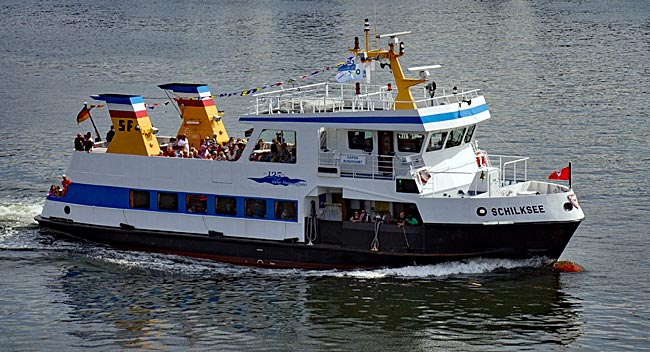
"Fördedampfer"
Rügen by the Baltic Sea
Active holiday featuring cycling and hiking
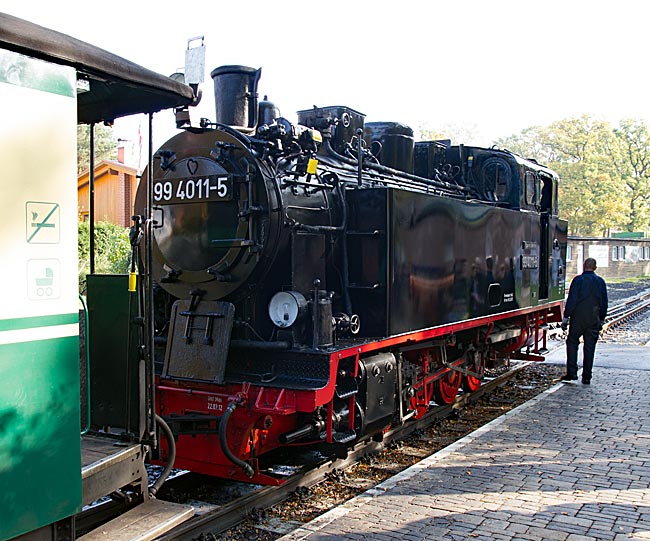
Enjoy an active holiday featuring cycling and hiking along the Baltic coast in Mönchgut on the island of Rügen. Long sandy beaches, rolling hills, and lush forests provide a varied and beautiful setting for your getaway. Often, the only thing breaking the peace is the distant whistle of the historic 'Rasender Roland' steam train. Despite its name (which suggests something "racing" or fast), it’s actually quite the opposite. A journey by train is simply part of the holiday experience.
read more about Rügen ...
Rostock and Warnemünde by the Baltic Sea
A travel guide
A mini-guide through the Hanseatic city of Rostock and its beautiful beach destination, Warnemünde. Home to one of the oldest universities in the Baltic region, the city boasts a rich history. Join us on a tour of discovery.
read more about Rostock ...
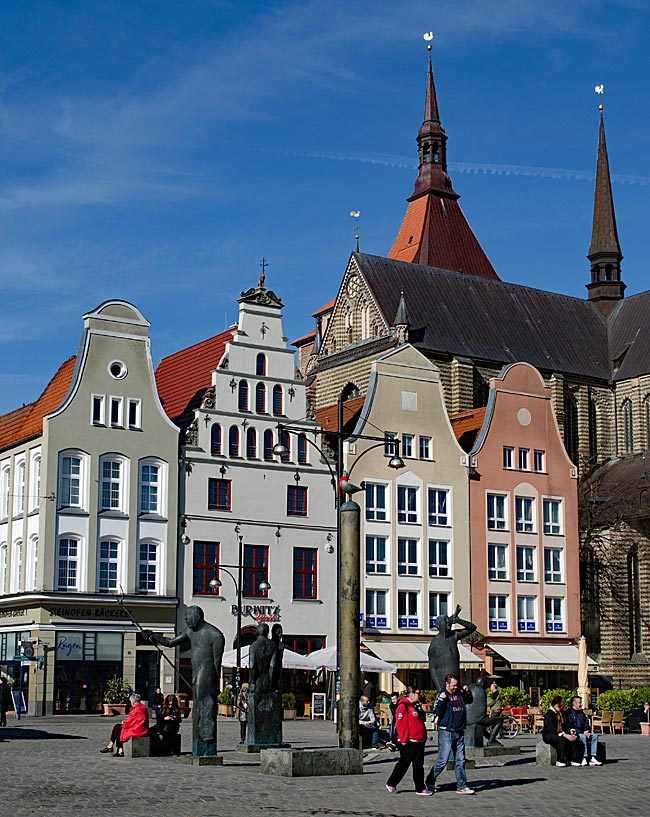
Wismar
The Hanseatic City on the Baltic Sea and its UNESCO World Heritage
The World Heritage House is a building with a stone front house and an attached timber-framed Kemladen on a foundation of loose fieldstones from a medieval predecessor building. This beautifully restored small building complex visually illustrates and provides information via text panels about the lives of past generations in the hall houses typical for Wismar, along with their outbuildings. Additionally, there is extensive information about the city’s history and numerous protected buildings in the old town - there are 1,754 in total, with 306 designated as individual monuments. In the old town, one is right in the middle of Wismar’s UNESCO World Heritage Site.
read more about Wismar ...
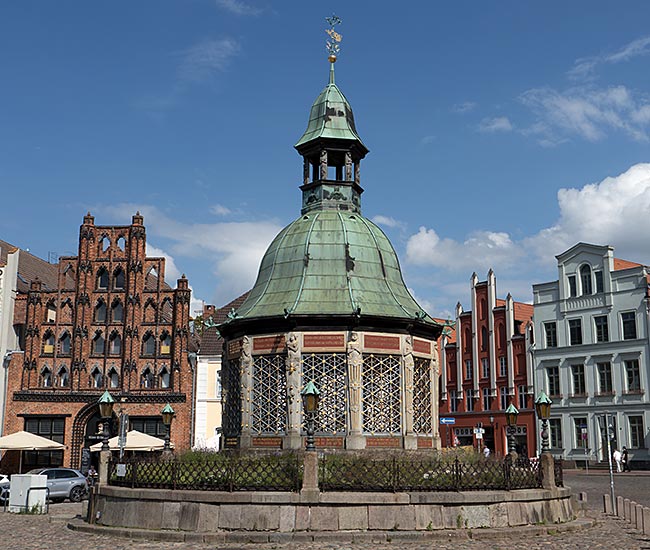
Crabs, dikes and the Wadden Sea
The North Sea spa town of Büsum
Once an island, Büsum was repeatedly threatened by the "Blanken Hans". When the greatest flood of the last century struck in 1962, Büsum was already long connected to the mainland - since 1585. Today, this town of around 5,000 residents, part of the Dithmarschen district, is one of the most important holiday destinations along Schleswig-Holstein's North Sea coast. Since 1985, the sea in front of Büsum has been protected as the Schleswig-Holstein Wadden Sea National Park, and since 2009, it has also been listed as a UNESCO World Heritage Site.
read more about Büsum ...