

DISTANT PLACES
Travel tips for destinations far from the Hanseatic City of Bremen
Wismar
The Hanseatic City on the Baltic Sea
and its UNESCO World Heritage
Page 1 of 4
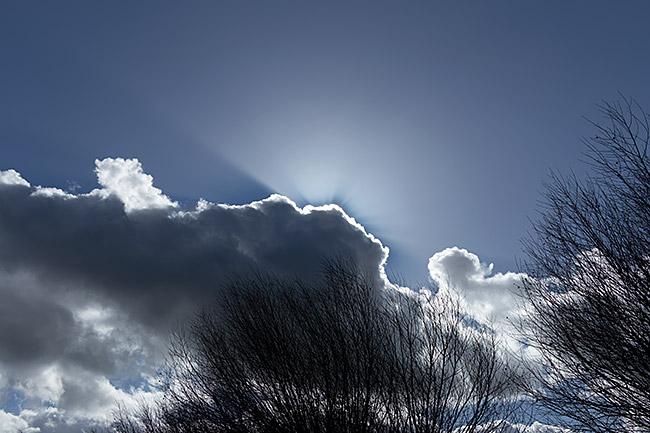
Clouds in the backlight
A stormy wind drives clouds across the sky, pushing water from the Baltic Sea into the bay at whose end lies Wismar. Just a few days before the calendar's spring equinox in March, people are still well wrapped up in warm clothing and braving the stiff breeze. Thanks to the protective bay, what is today known as the Old Harbor of the city founded in 1229 was once considered the safest and most convenient in the Baltic region.
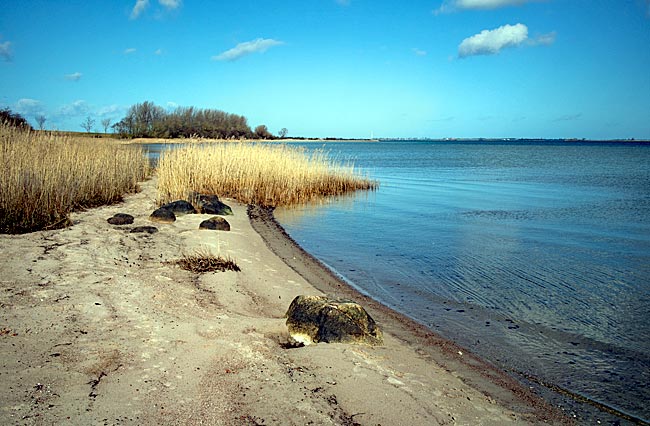
Out and about at the bay near Bad Wendorf
Once upon a time - documented as early as 1748 and likely already during the era of the Hanseatic League, that far-reaching medieval trade alliance and network to which not only Wismar but also Bremen and Hamburg on the North Sea coast, as well as Stralsund, Rostock, and the capital of the Hanseatic League, Lübeck, in Wismar's vicinity belonged - these cities proudly bore the designation "Hanseatic City" even today. Perhaps rightly so, for these prosperous merchant cities were known for their cosmopolitan outlook, engaging in brisk trade with the world over in the North and Baltic Seas, where obstacles only got in the way.
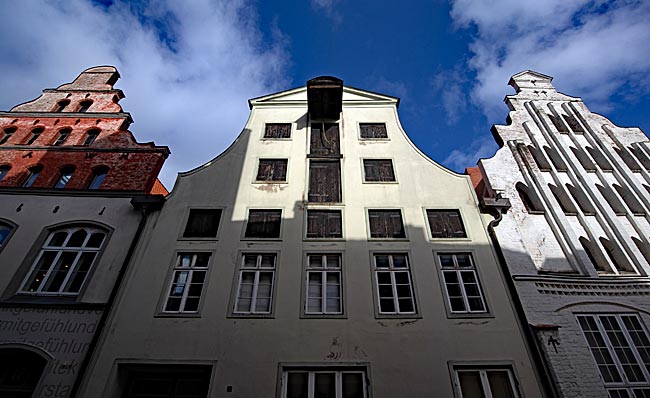
Numerous old warehouses like this formerly brewery in Scheuerstraße can be found throughout the historic city center
The fact that this alliance, which developed in northern Europe from the mid-12th century and lasted until the mid-17th century, encompassing around 300 cities far from the seas and along the coasts at its height, was so successful had much to do with the advancement of transportation methods, particularly on water. The so-called cog was the typical cargo ship of the Hanseatic League until the end of the 14th century. These simple and quickly built freight sailers with a single mast and square topsail appeared somewhat clumsy with their open-topped, rounded hulls, yet the 20-30 meter-long ships were seaworthy when loaded and could transport up to approximately 100 tons of cargo.
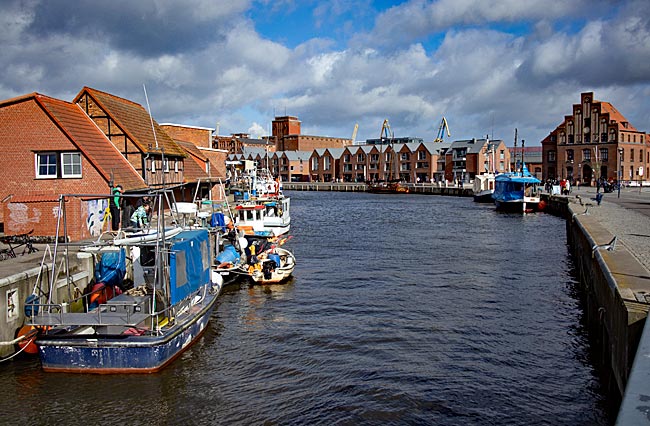
View into the Old Harbor, on the right the former customs house
Unlike later types of ships, the numerically small crews of cogs could not sail against the wind, which prolonged journeys in unfavorable winds but gave the freighters other advantages that were particularly useful in the shallow Wadden Sea of the North Sea coast and in tide-dependent rivers. With their small keel and flat, broad hulls, these ships could run aground on sandy seabeds during low tide without capsizing or sustaining damage and simply resume their voyage with the next high tide. Flat-bottomed ships and crab cutters on the North Sea still have similar characteristics today.
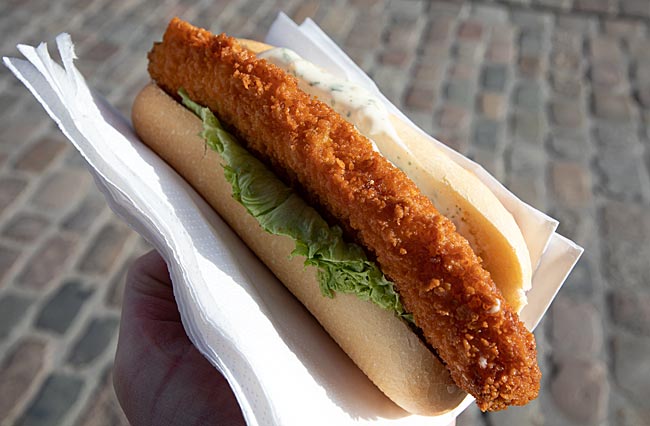
For seafood lovers, there is plenty of choice at the harbor
In 1962, a well-preserved cog was recovered from the silt of the Weser River near Bremen during dredging work. The ship had likely sunk shortly after its completion at the shipyard in 1380. The salvaged wreck, which can be seen today in the German Maritime Museum in Bremerhaven, has given boat builders many insights into the construction of these ships and the work of the shipwrights of that time.
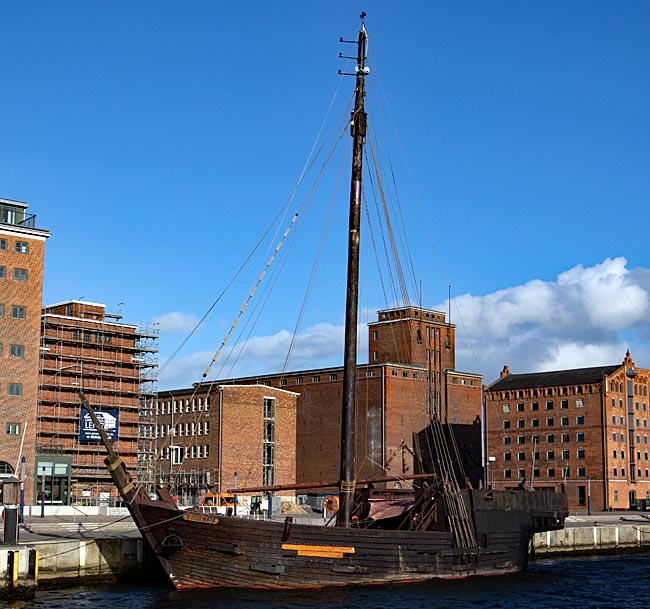
Poeler Cog "Wissemara"
Although built for civilian shipping, cogs were not defenseless. The elevated aftcastle, from which the helmsmen had a good view of the ship, could be equipped with cannons for defense. To be warned in time of unpleasant surprises, a man sat in the so-called crow's nest just below the masthead and kept watch. Today, several cog replicas are sailing in the North and Baltic Seas, including one in Wismar: the Poeler Cog "Wissemara."
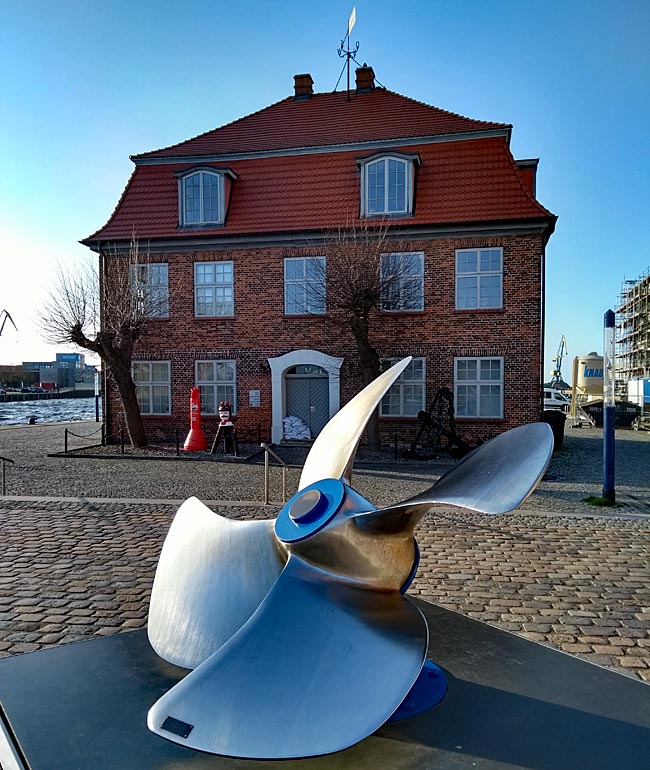
The Tree House in the Old Harbor
Next to the cog at the quay stands the Tree House. This square Baroque building dates back to the mid-18th century and served as an access control point for the harbor. Similar to a boom barrier, a long piece of wood (or even a chain) was used here to prevent ships from entering the harbor. The harbor entrance - or more precisely, the fairway - was marked by so-called "Swedish Heads," which were mounted on massive wooden piles driven into the ground during the Swedish era and now adorn the entrance portal of the Tree House. Incidentally, smaller versions of these Swedish Heads can often be found in the old town; sometimes you just have to look more closely.
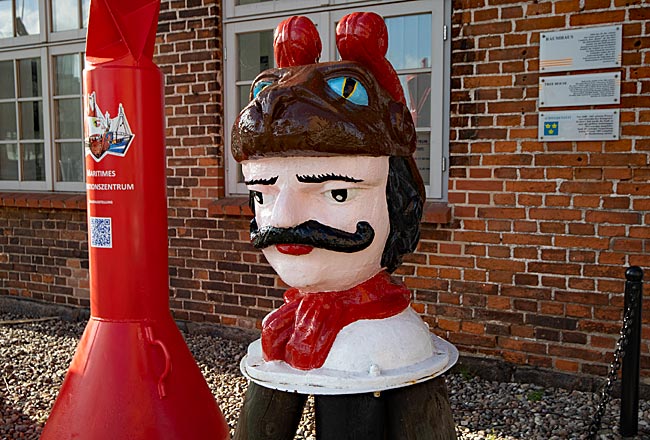
Swedish Head
But why Sweden at all? With the Peace of Westphalia, which after months of negotiations on October 24, 1648 sealed the final end of the Thirty Years' War that began as a Reformation war in Europe, there were contractually regulated far-reaching territorial power shifts. Thus, Western Pomerania, Rügen, and from Mecklenburg's possessions, including Wismar and the adjacent island of Poel, came under Swedish rule and became part of the Scandinavian kingdom. Wismar remained under Swedish control until 1803 but only officially rejoined Mecklenburg in 1903.
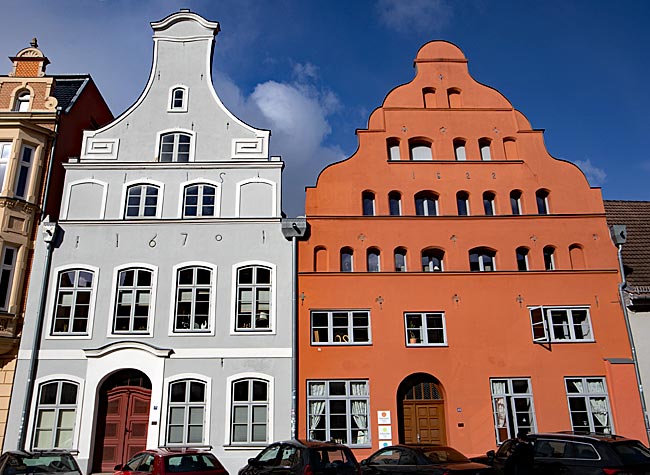
Houses on "Spiegelberg" Street near the Water Gate: The one on the right already stood before the Swedish era
Under Swedish rule, Wismar was expanded into a maritime fortress. On the one hand, military conflicts in Europe were by no means universally ended after the peace treaty, and the Baltic Sea is vast - many could come across the Baltic Sea. On the other hand, military technology had developed decisively - in the truest sense of the word. Handheld firearms such as muskets became increasingly common, and there was a massive arms buildup in naval artillery. Although cannons on ships were not uncommon in Europe as early as the 14th century, they were not comparable to the firepower and penetration force of the cannons of sailing warships in the 17th and 18th centuries, which had many guns on several continuous battery decks, with some of the ton-heavy guns requiring more than ten men to operate.
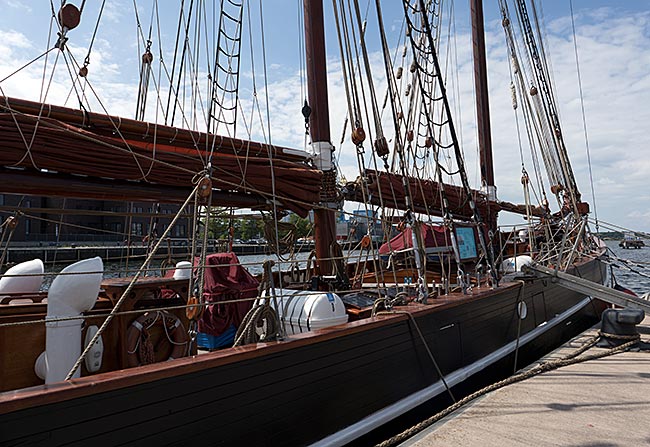
Pilot schooner Atalanta, built 1901
Remnants of the old city fortifications can be found at the end of the Old Harbor, coming from the Tree House, passing a restored warehouse with a brick facade from 1862 and the former customs house built in neogothic style in 1868, including the Water Gate. The square brick building on the heavily trafficked street "Am Hafen" with an upwardly tapering passage was actually created before the Swedish era - in the second half of the 15th century. It was then one of five gates in the old city fortifications and is the last remaining structure after the demolition of the defensive structures in 1865.
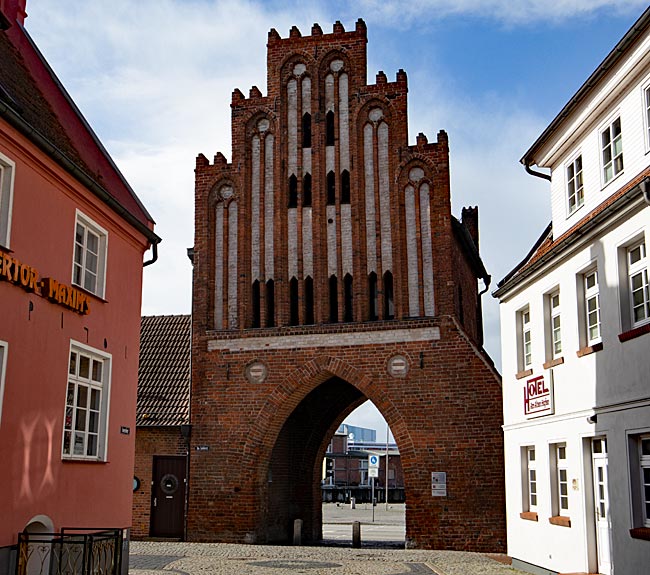
The Water Gate
The facades facing the harbor and the old town are quite differently designed, with the latter clearly displaying the characteristics of brick Gothic with its typical stylistic elements. This is not surprising, as the construction of the gatehouse dates back to the Gothic period (13th to 15th century), which also shaped the architecture of many other buildings in Wismar's historic cityscape that has been beautifully preserved and restored to this day.
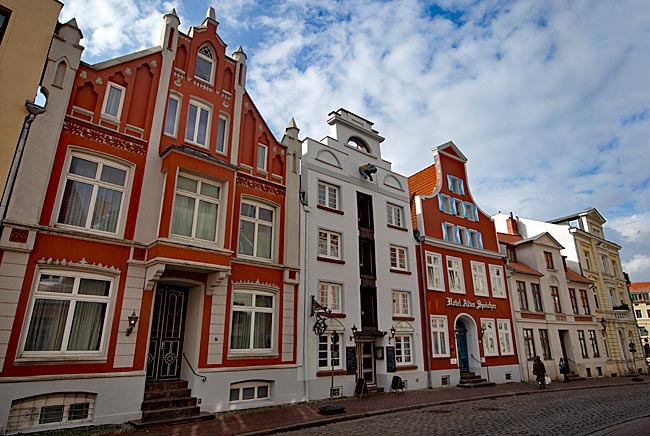
Row of houses near the Grube
previous page
 next page
Map
Information
Tourist Information
Opening Hours:
April to September: daily 9:00 AM – 5:00 PM
October to March: daily 10:00 AM – 4:00 PM
www.wismar.de/Tourismus-Welterbe (also in english)
Förderverein „Poeler Kogge“ e.V. (Poeler Cog)
www.poeler-kogge.de/kogge.html
Harbor Tour and Island Poel
www.adler-schiffe.de/ab-wismar-und-poel/hafenrundfahrt.php
Tierpark Wismar e.V. (Zoo)
Zum Festplatz 30
23966 Wismar
Phone.: +49 (0)3841 707070
Open: March – October daily 9 AM – 6 PM, November – February only on weekends and holidays 10 AM – 4 PM
Email: info@tierpark-wismar.de
www.tierpark-wismar.de
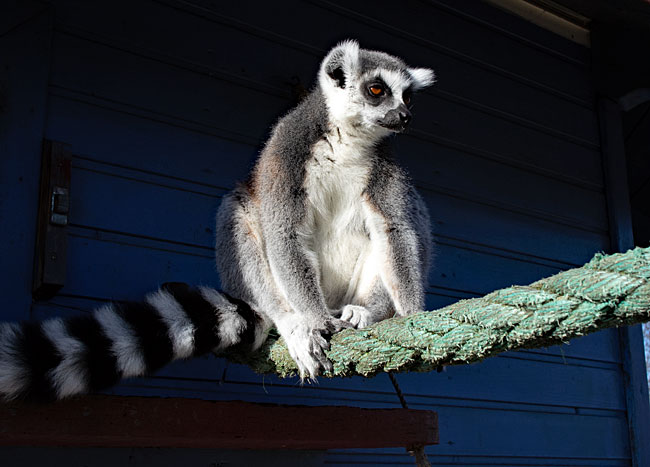
Katta at Tierpark Wismar
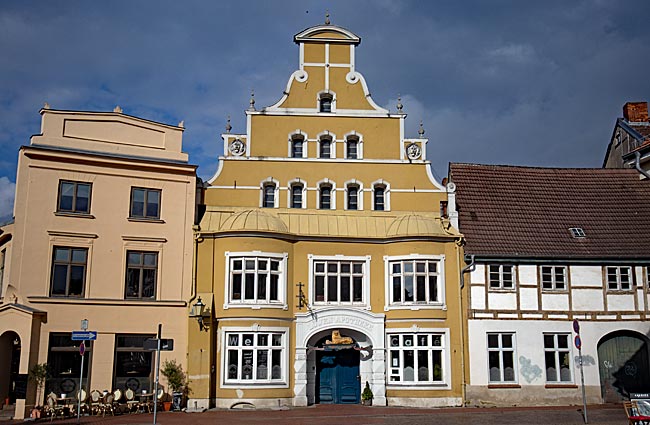
Also beautiful: The Löwen Apotheke (pharmacy) at Hopfenmarkt is now used differently
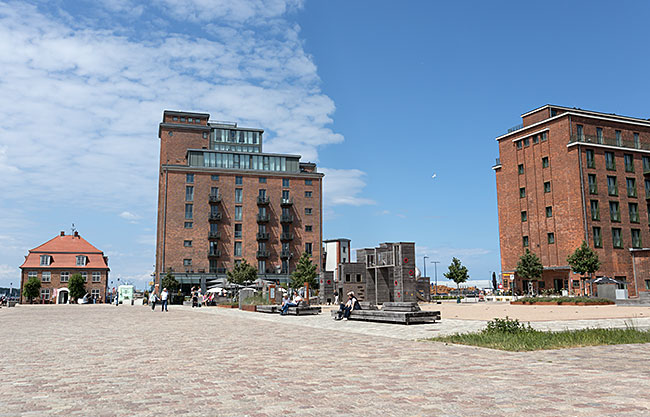
At the Old Harbor
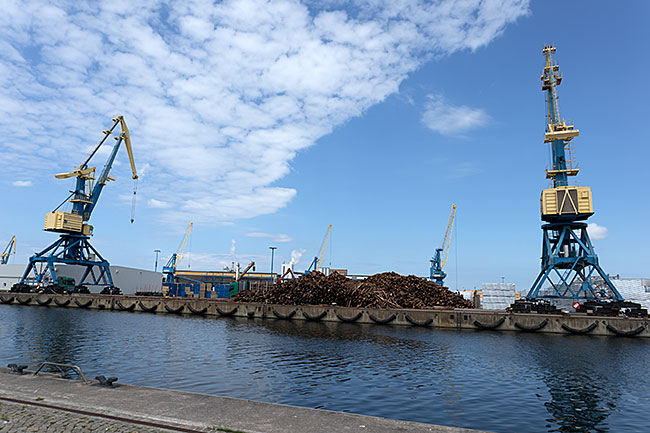
Timber handling in the port
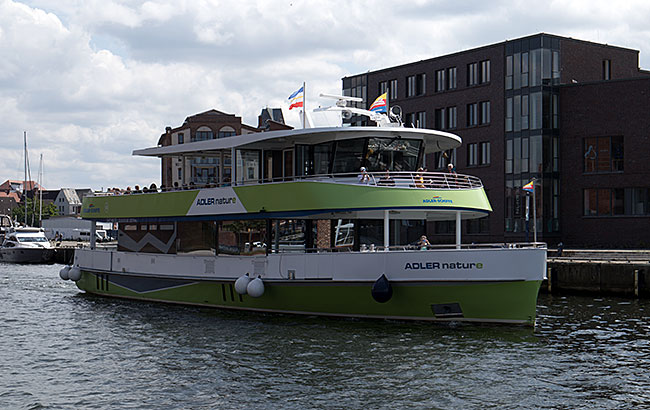
Electric-powered excursion boat
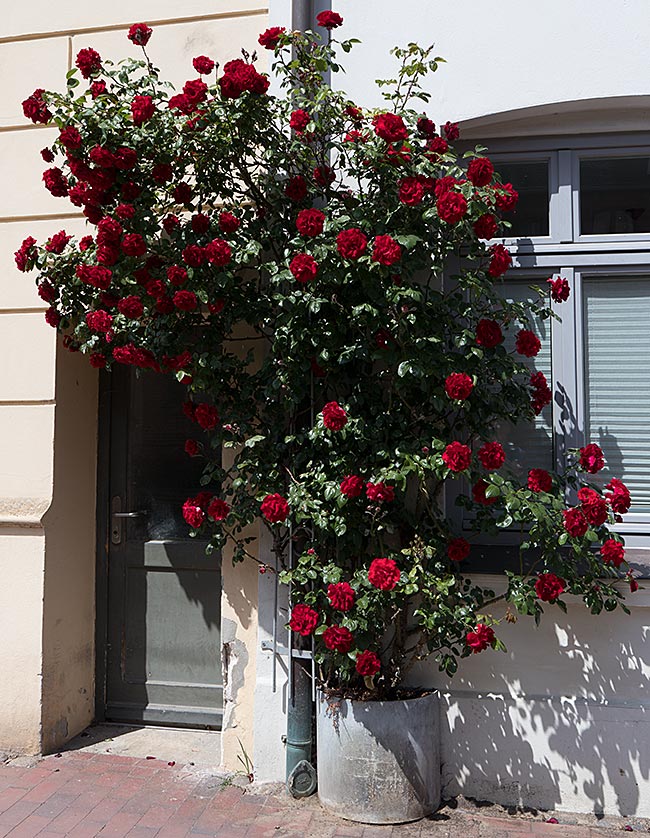
Blooming red roses
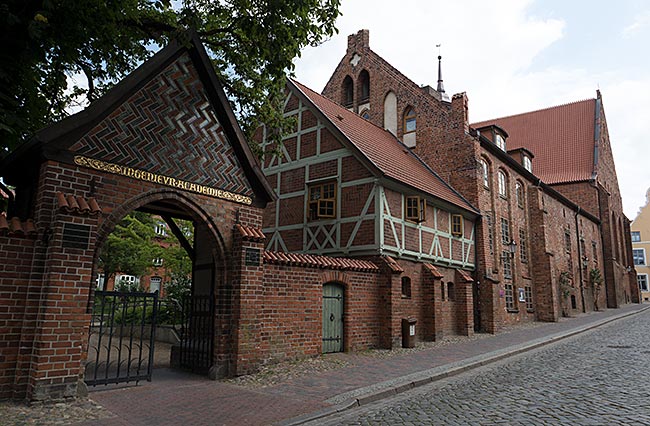
Evangelical lutheran congregation Wismar Heiligen Geist - St. Nikolai
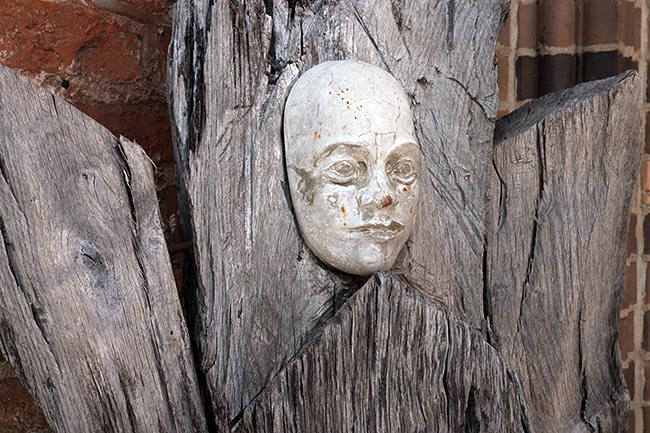
Part of "Holy Family" (2020), a work by Wismar confirmands and artist Lars Maué. The plaster casts of the faces were mounted on the pillars of a former bridge in Wismar.
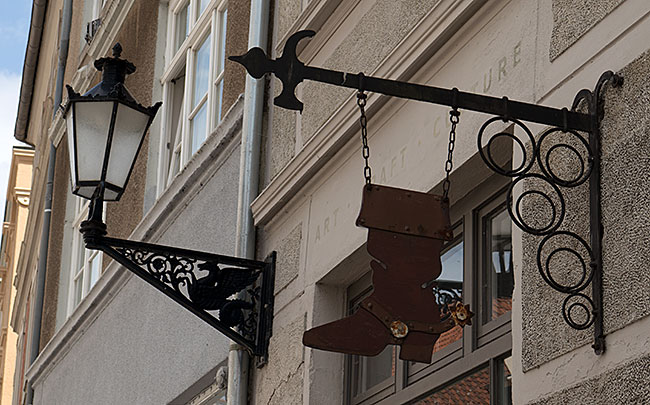
Lantern and sign
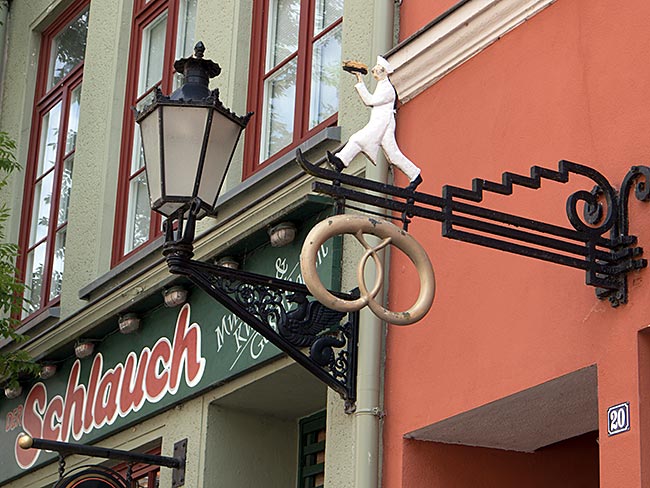
Lantern and sign
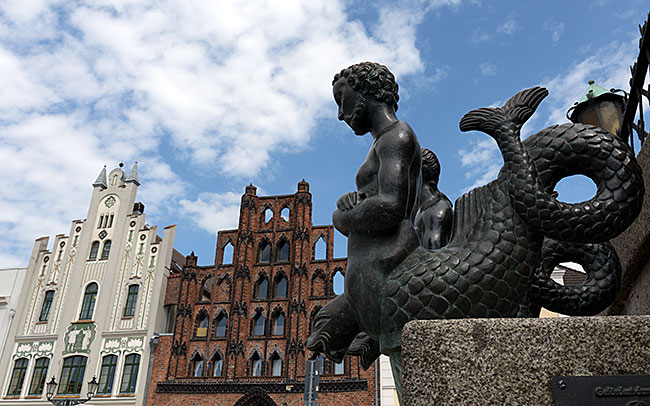
Nix and Nixe with historical houses in the background in the market square
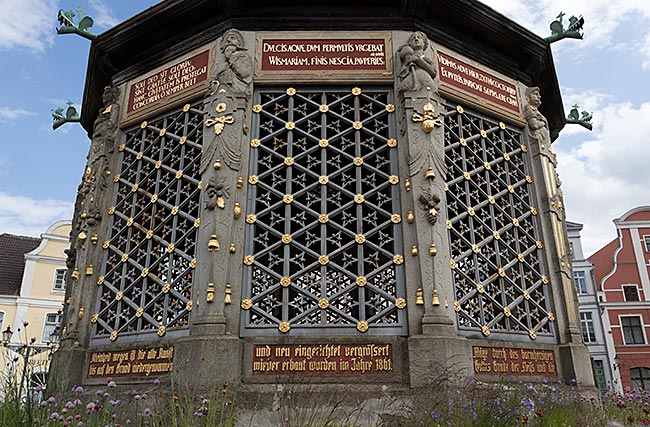
Details of the Wasserkunst, a dodecagonal fountain house in the market square
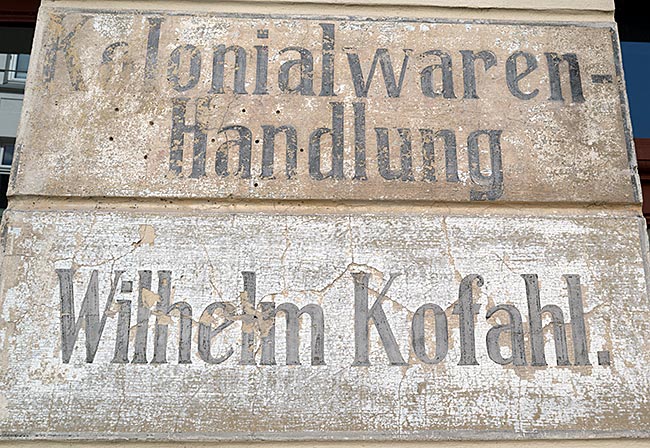
A formerly colonial goods store: These shops originally sold products from overseas colonies. In most of these colonies, the local people were exploited through slavery and even unto death. European merchants became wealthy or even very rich as a result.
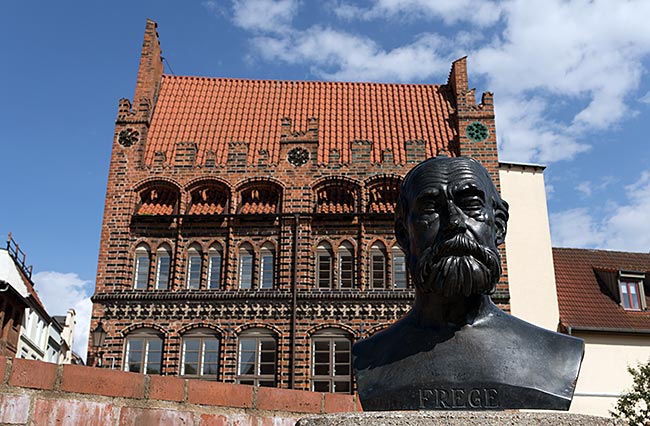
Bronze bust of Gottlob Frege on the Forum; he was a mathematician, logician, and philosopher, born in 1848 in Wismar and died in 1948 in Bad Kleinen. The house in the background is the Archidiakonat.
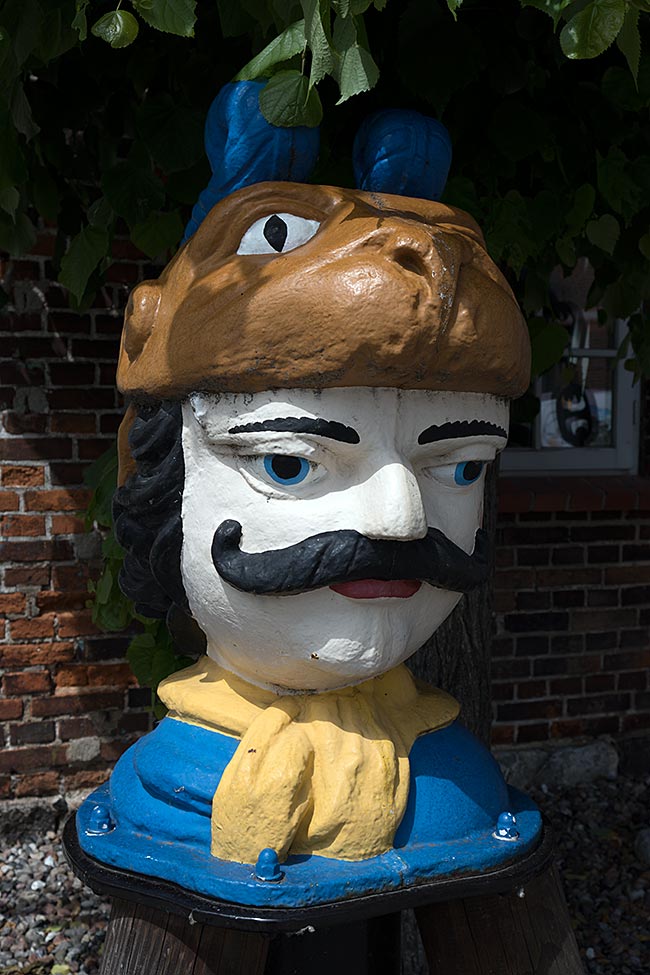
Another Swedish Head
Rügen by the Baltic Sea
Active holiday featuring cycling and hiking
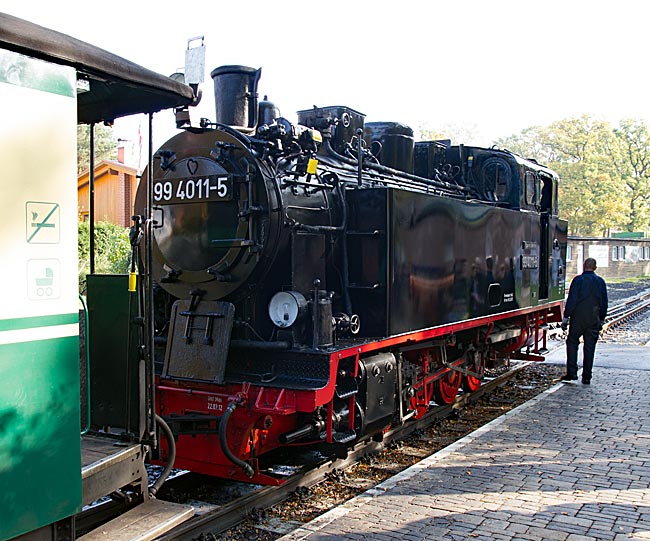
Enjoy an active holiday featuring cycling and hiking along the Baltic coast in Mönchgut on the island of Rügen. Long sandy beaches, rolling hills, and lush forests provide a varied and beautiful setting for your getaway. Often, the only thing breaking the peace is the distant whistle of the historic 'Rasender Roland' steam train. Despite its name (which suggests something "racing" or fast), it’s actually quite the opposite. A journey by train is simply part of the holiday experience.
read more about Rügen ...
Rostock and Warnemünde by the Baltic Sea
A travel guide
A mini-guide through the Hanseatic city of Rostock and its beautiful beach destination, Warnemünde. Home to one of the oldest universities in the Baltic region, the city boasts a rich history. Join us on a tour of discovery.
read more about Rostock ...