

DISTANT PLACES
Travel tips for destinations far from the Hanseatic City of Bremen
A short visit to the historic old town of Heppenheim
Half-timbering, a false dome, and legendary lanterns
The Grand Market
The skyline of Frankfurt, Germany's financial capital with its office towers in the banking district, is still within sight when the train to Darmstadt and Bensheim pulls into the small station of Heppenheim. In 2010, the city was on everyone’s lips after native son Sebastian Vettel left all competition behind in his Red Bull car and became the youngest Formula 1 double world champion of all time. In 2011, he added another title to his collection, as did he in 2012 and finally in 2013 for a fourth time. However, we are not following in Vettel’s footsteps but rather those of history in the picturesque old town with its timber-framed houses.
Timber-framed houses at Grand Market
With around 26,000 inhabitants, Heppenheim is significantly smaller than its neighbors Darmstadt and Mannheim. Located on the Bergstraße, a route used since Roman times as a trade and military road leading from Darmstadt in Hessen to Wiesloch in Baden-Württemberg along the western edge of the Odenwald, Heppenheim has historical significance. In 1955, during sewer works, about 20 square meters of ancient Roman paving stones were discovered and salvaged. Today, this historic section of the Roman Bergstraße can be viewed freely accessible in the Ferdinand-Feuerbach-Anlage at the intersection of Karlstraße and Karl-Marx-Straße between the train station and the old town.
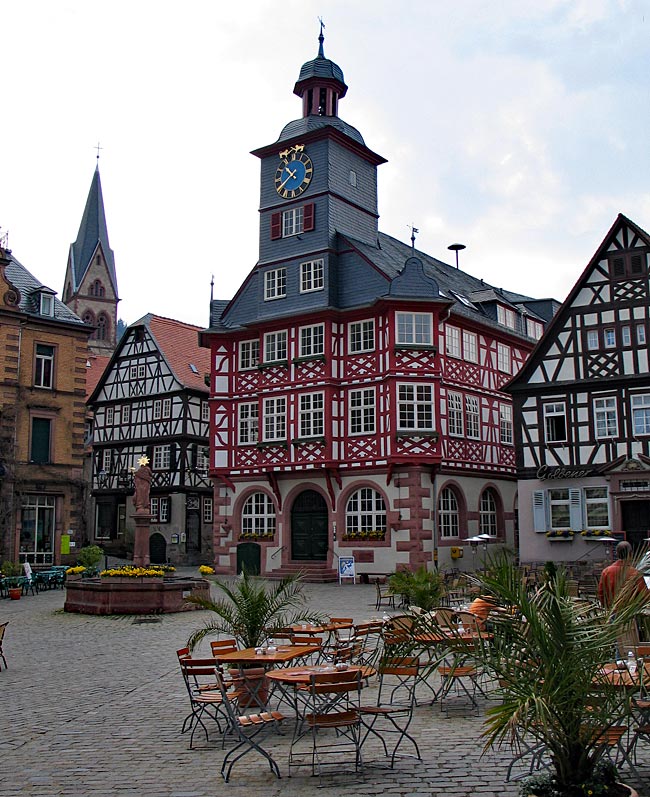
Town Hall
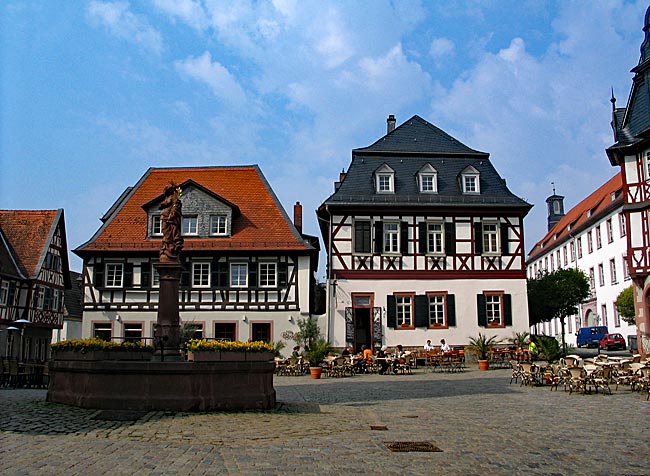
The most striking building at the Grand Market, the central square surrounded by tastefully restored timber-framed buildings in the old town, is the town hall. Rising high above the ground floor, built of stone in 1551, is a robust red timber-framed structure. Like many other houses in the city, the town hall fell victim to a fire set by French occupying troops after they plundered the city in 1693. Only the stone ground floor remained standing, and seven years later, the current Baroque-style timber framing was added. After another fire severely damaged the attic in 1958, the building received a new carillon during reconstruction, which chimes five times a day between 8 AM and 10 PM.
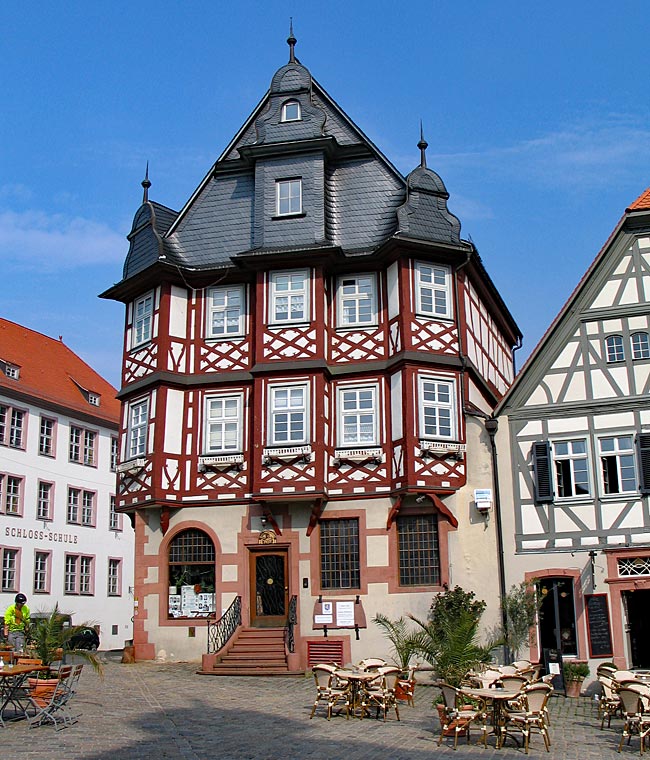
Former pharmacy Pirsch
A fire also broke out in the attic of the building diagonally opposite the town hall on the other side of the market square. The culprit was Justus Liebig, a chemist born in Darmstadt in 1803 who later gained fame. In 1817/18, he completed an apprenticeship at the former pharmacy Pirsch and accidentally started a fire during private experiments with flash powder (found today in cracker balls). The successful firefighting efforts not only extinguished the flames but also ended his apprenticeship. However, a plaque on this elegant timber-framed house from the early 18th century still commemorates Liebig’s brief time in Heppenheim.
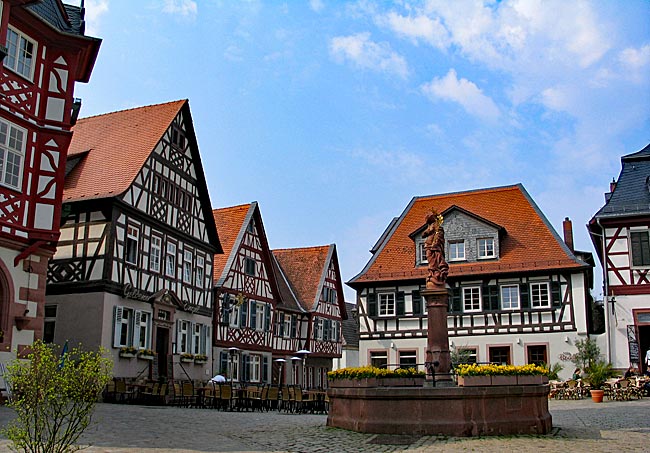
Market fountain
Since the first half of the 18th century, an octagonal market fountain made of red sandstone has stood between the town hall and the Liebig Apotheke (pharmacy), adding a touch of color to the otherwise gray granite paving on the market square. The column in the center of the fountain supports a statue of Mary as the Immaculate Conception with a golden lily and radiant crown. However, regardless of religious symbolism or the historical anecdotes surrounding the nearby buildings, the fountain appears to be the most interesting object for young children, who eagerly follow the sound of trickling water and splash in it at the next opportunity. Some parents may appreciate this, as it allows them to enjoy a meal or drink at one of the outdoor tables of the cafés and restaurants on the square while keeping an eye on their child.
A „False“ Cathedral?
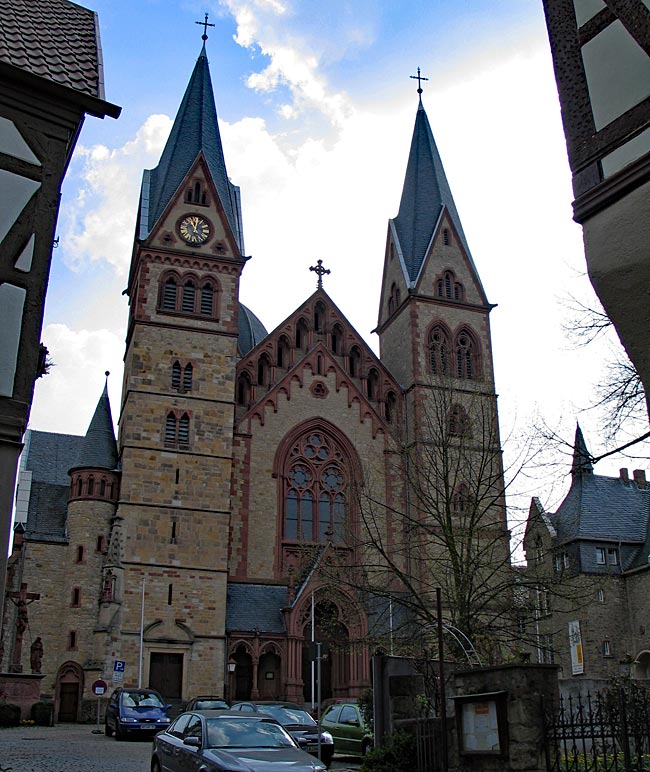
St. Peter’s Church
Between the town hall and the tourist information center, I make my way through the Kirchengasse toward St. Peter’s Church. Throughout the previous night in a nearby hotel, the church’s bell - part of the Gothic-style structure built between 1900 and 1904 - chimed every full hour, making it clear that sleep would be scarce. A brief shower from the overcast sky, as soon as I enter the alleyway, makes visiting this impressive sacred building even more appealing.
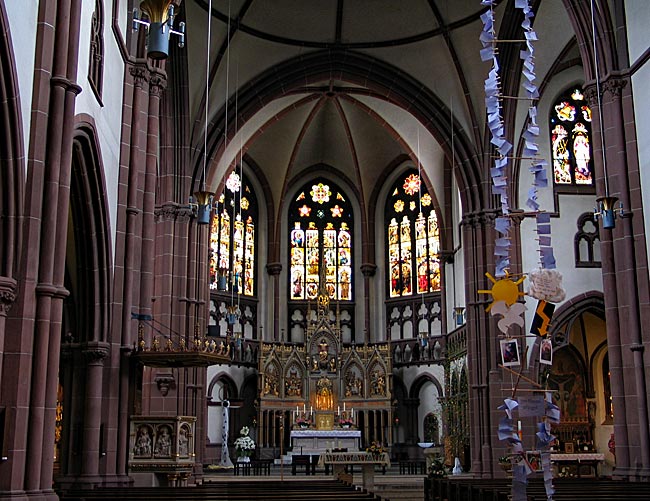
View of the altar
The church is not the first to stand at this location. Nothing remains of the structures built in the centuries following Heppenheim’s first documented mention and its church in 755 AD, but there are later testimonies. The lower part of the north tower (the left one with the clock mechanism) was erected in the 11th century, while the upper sections date back to the mid-13th and 18th centuries. Upon closer inspection from the outside, one notices that the two towers differ architecturally.
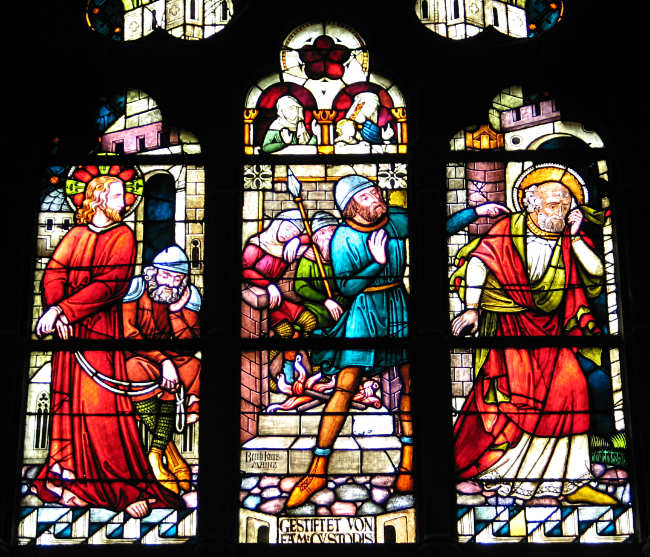
One of the church windows
Inside, the nave of this three-aisled basilica is flooded with light thanks to numerous large windows and appears open. The most impressive interior feature is undoubtedly the magnificent altar with the stained-glass windows above it, which depict biblical stories on their colored glass. Opposite the altar, directly above the entrance, stands the church organ with its dozens of gleaming pipes. After the old organ was deemed beyond repair due to material defects among other issues, the current organ was inaugurated in March 1997. The bells of St. Peter are also relatively new; after the original bells - like many others - were melted down during World War II for war materials production, the new peal first rang out in 1951.
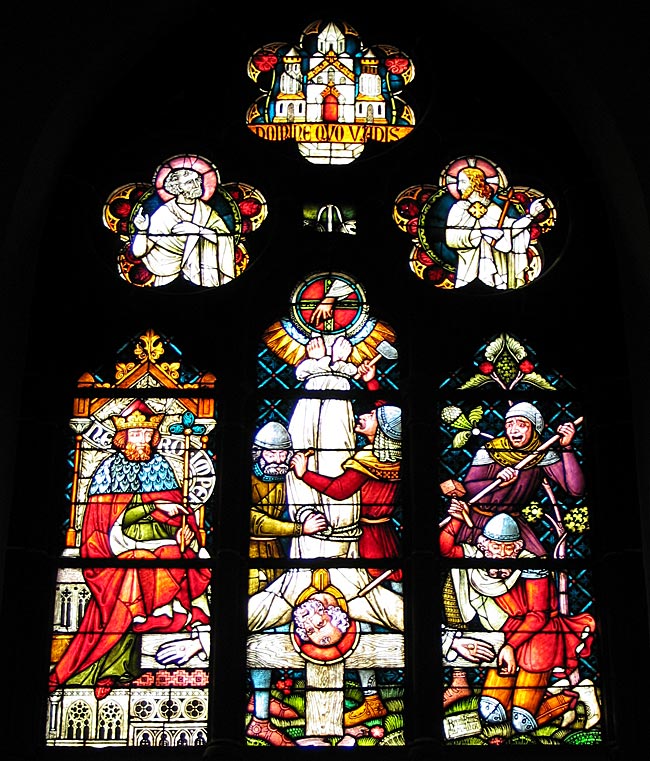
One of the church windows
Although St. Peter is referred to as the "Cathedral of Bergstraße," it is not a true cathedral, as it was never a bishop's church. Rather, the designation stems from an encounter between Pastor Bartholomäus Mischler and the Mainz Bishop Kirstein after the consecration of St. Peter’s Church, during which the latter remarked that something was missing from the church - a bishop.
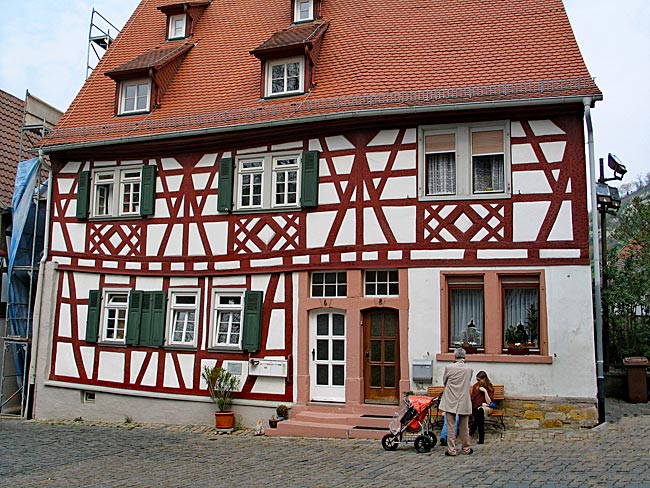
The oldest schoolhouse
Back outside, the gaze shifts diagonally across to the oldest schoolhouse. As an information board on the front of this half-timbered building from around 1680 states, remnants of a residential tower from the early church fortifications can still be found in the lower levels at the rear of the structure. This suggests that the church was not always as exposed in the past but had been fortified.
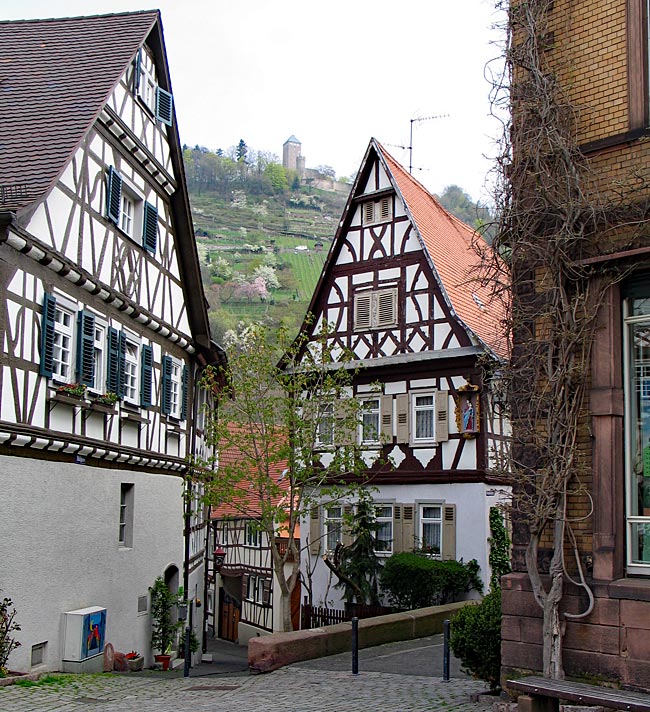
Speaking of fortresses, next to the old schoolhouse, the view extends over the vineyards behind it up to the 295-meter-high castle hill where Starkenburg stands, after which the region is named. The castle, built in 1065 on the orders of Abbot Udalreich of the Imperial Abbey of Lorsch, is one of the oldest in the western Odenwald. In 1229, the castle and later, in 1232, the monastery - along with Heppenheim, which was under its ownership - passed into the possession of the Elector of Mainz. A remnant from this period is the Electoral Mainzer Amtshof in Heppenheim’s old town. The current structure was likely built after the devastating city fire of 1369, which spared only a few houses, and it is one of the oldest buildings in the city. Of particular interest is the Elector’s Hall in the main building - the oldest part of the Amtshof - decorated with Gothic wall paintings. In the former Marstall building from the 16th century - a structure for horses, carriages, and harnesses - the museum of local history and folklore now occupies part of its grounds. Then as now, the Amtshof serves as a venue for gatherings and celebrations.
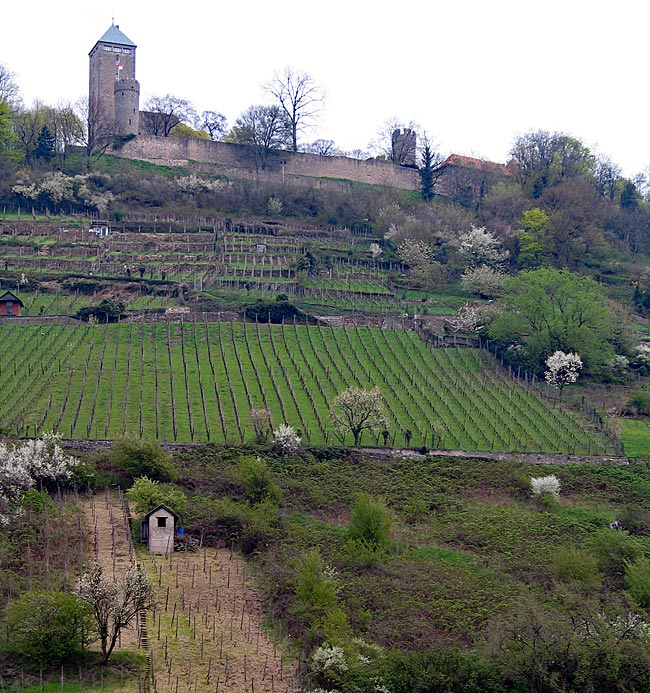
View of Starkenburg over the vineyards
However, the lords of Starkenburg and Heppenheim below were not always in control. In 1621, Spanish troops occupied Starkenburg, and in 1630, it was the Swedes. The people of Heppenheim suffered particularly under the French occupying forces. Not only had the plague epidemic of 1635 ravaged the town’s inhabitants, but the French also plundered the city during the Thirty Years' War in 1645, then again during the Palatine Succession Wars in 1689, and finally in 1693 - this time setting it ablaze. The garrison on the fortress, which had been reinforced once more in 1680, could only watch from above. After 1765, Starkenburg lost its strategic and military significance; the garrison withdrew, and the buildings fell into disrepair, becoming quarries and victims of the elements. In the 18th century, the decay was halted, and some restoration work followed. Today, a youth hostel is housed in a new building on Starkenburg.
When night falls in Heppenheim’s old town ...
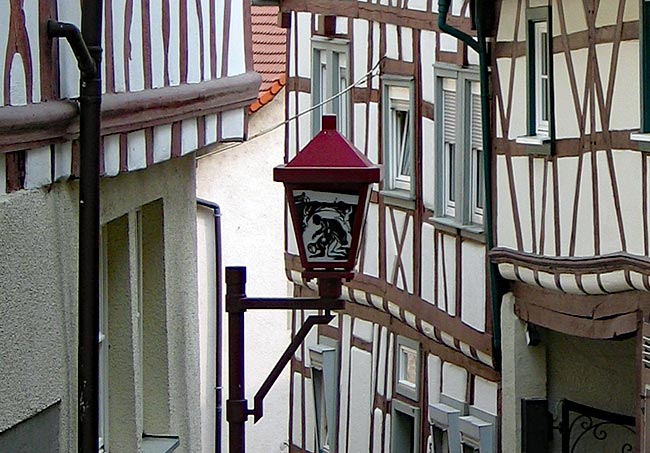
Lantern
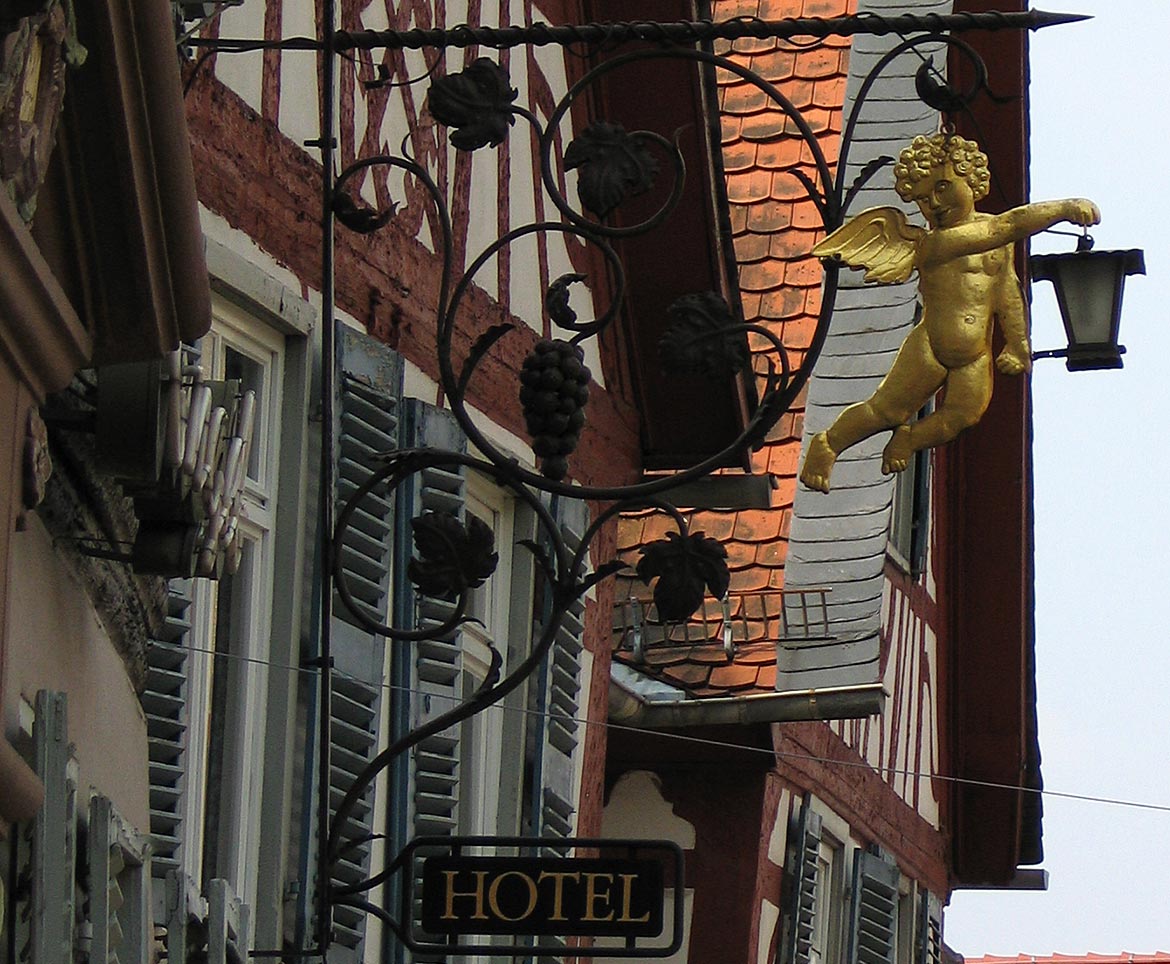
... the lights come on, and it becomes "legendary." Over 150 silhouette cutouts by Albert Völkl, a figure player and storyteller from northern Hessen, have adorned the street lamps in the old town’s alleys since 2004. They illustrate legends from all over Hessen - both well-known and nearly forgotten tales from past times involving knights as much as the devil, love, money, greed, courage, and heroic deeds. Since the cutouts along the lantern path are not always self-explanatory, their stories can be read on small plaques attached either to the lamp posts or house walls. Guided tours also take place during the summer months.
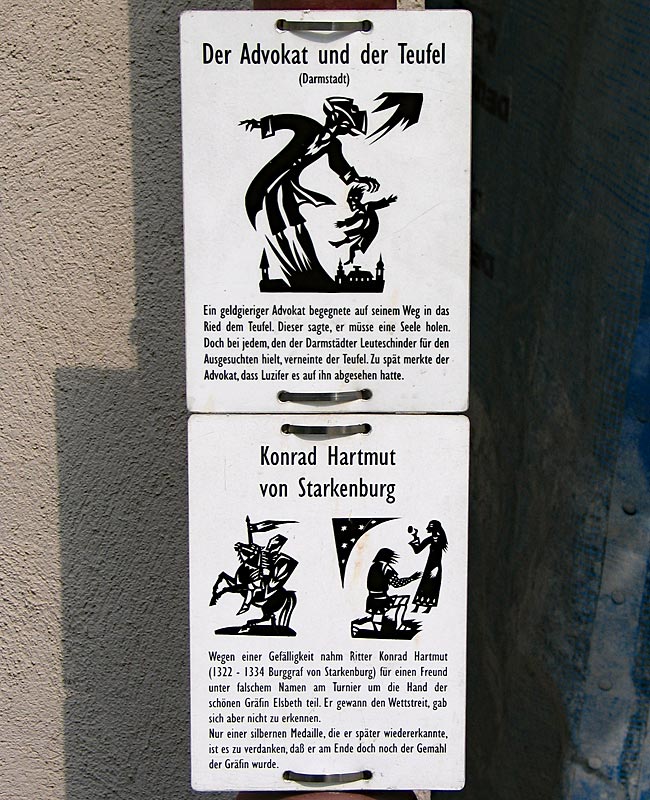
Small plaques attached either to the lamp posts or house walls
previous page
 next page
Map
Travel information
Tourist Information Heppenheim
Großer Markt 1
64646 Heppenheim
Phone: +49 (0)6252 / 13-1171
E-Mail: tourismus@stadt.heppenheim.de
www.heppenheim.de
Points of Interest
Museum for Local History and Folklore
Kurmainzer Amtshof
Amtsgasse 5
64646 Heppenheim
Phone: +49 (0)6252 / 69112
Email: museum@stadt.heppenheim.de
Opening Hours: Wed., Thu., Sat. 2–5 PM, Sun. and holidays 2–6 PM
Rügen by the Baltic Sea
Active holiday featuring cycling and hiking
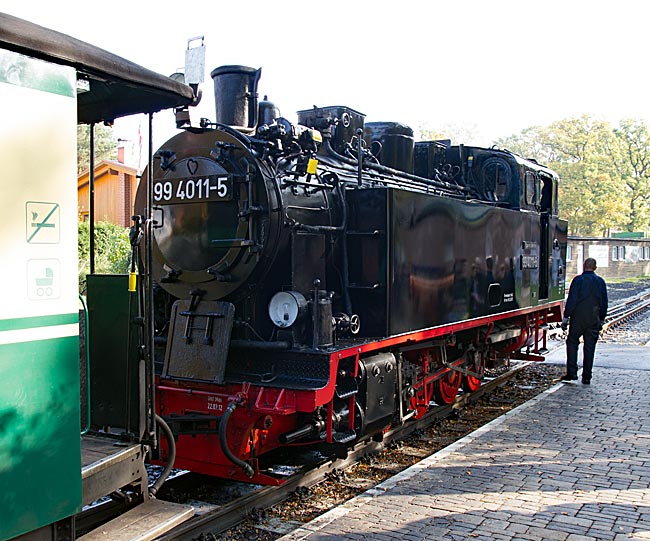
Enjoy an active holiday featuring cycling and hiking along the Baltic coast in Mönchgut on the island of Rügen. Long sandy beaches, rolling hills, and lush forests provide a varied and beautiful setting for your getaway. Often, the only thing breaking the peace is the distant whistle of the historic 'Rasender Roland' steam train. Despite its name (which suggests something "racing" or fast), it’s actually quite the opposite. A journey by train is simply part of the holiday experience.
read more about Rügen ...
Rostock and Warnemünde by the Baltic Sea
A travel guide
A mini-guide through the Hanseatic city of Rostock and its beautiful beach destination, Warnemünde. Home to one of the oldest universities in the Baltic region, the city boasts a rich history. Join us on a tour of discovery.
read more about Rostock ...
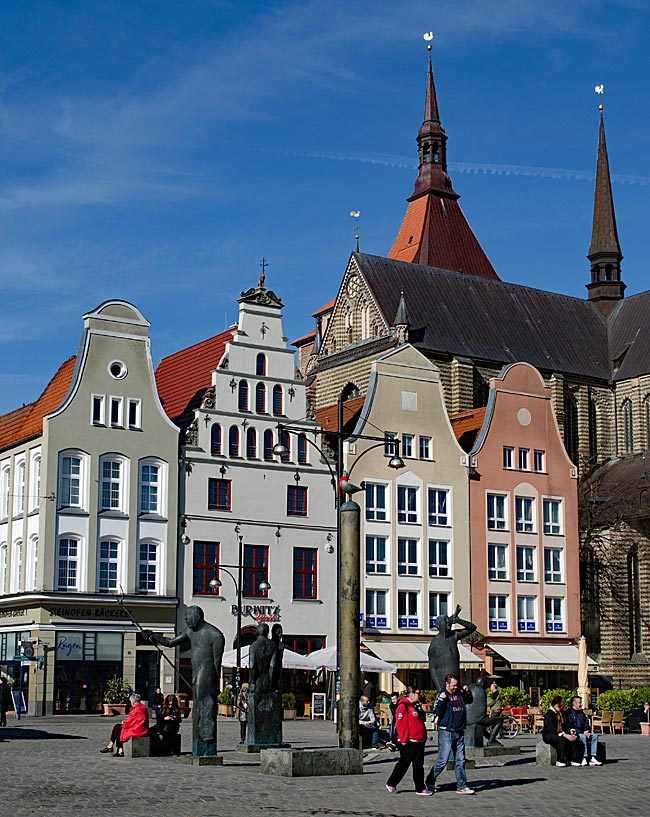
In the Probstei in late summer
Schönberger Strand and sea and more
Can you walk or ride a bike from Brasilien (Brazil) to Kalifornien (California) in just a few minutes, always with a view of the water? No, not with your finger on the globe or map, but in person. You’ll have to forgo Copacabana and the Sunset Strip with the Angels in Los Angeles (Spanish for "The Angels"). Instead, you get Germany’s "True North" with all its bright sides. Of course, there are sometimes shadows here too, but they belong only on the margins of this story.
read more about Schönberger Strand ...
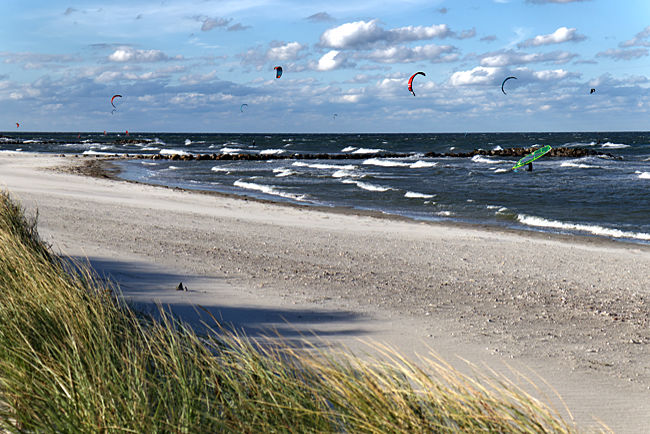
Wismar
The Hanseatic City on the Baltic Sea and its UNESCO World Heritage
The World Heritage House is a building with a stone front house and an attached timber-framed Kemladen on a foundation of loose fieldstones from a medieval predecessor building. This beautifully restored small building complex visually illustrates and provides information via text panels about the lives of past generations in the hall houses typical for Wismar, along with their outbuildings. Additionally, there is extensive information about the city’s history and numerous protected buildings in the old town - there are 1,754 in total, with 306 designated as individual monuments. In the old town, one is right in the middle of Wismar’s UNESCO World Heritage Site.
read more about Wismar ...
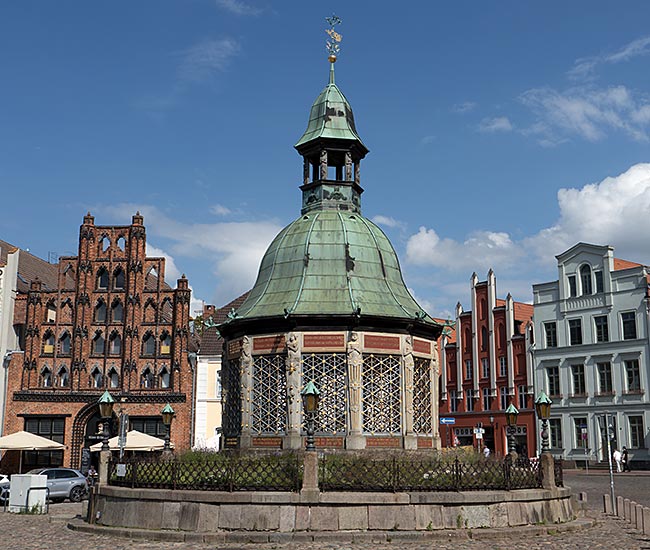
Crabs, dikes and the Wadden Sea
The North Sea spa town of Büsum
Once an island, Büsum was repeatedly threatened by the "Blanken Hans". When the greatest flood of the last century struck in 1962, Büsum was already long connected to the mainland - since 1585. Today, this town of around 5,000 residents, part of the Dithmarschen district, is one of the most important holiday destinations along Schleswig-Holstein's North Sea coast. Since 1985, the sea in front of Büsum has been protected as the Schleswig-Holstein Wadden Sea National Park, and since 2009, it has also been listed as a UNESCO World Heritage Site.
read more about Büsum ...
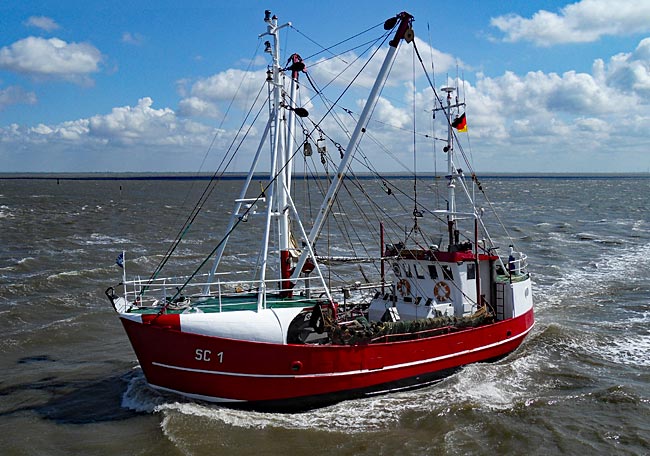
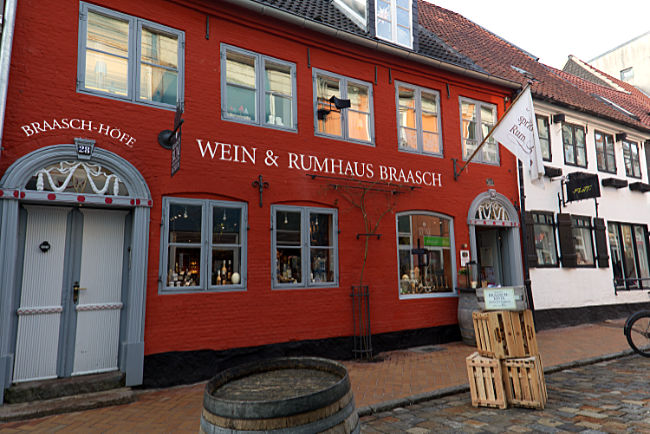
Flensburg on the Baltic Sea
On the Förde at the border to Denmark
"The True North" - that is how the northernmost federal state rightfully markets its unique charms. When "fresh air" is promoted as "the best thing about the North," it is hard to disagree once you are actually here. Fresh breezes blow across the Baltic on the east coast and the North Sea on the west, with roughly 70 kilometers of flat, sparsely populated land stretched between them. With just under 100,000 residents, Flensburg is the third-largest city in Schleswig-Holstein, following the state capital Kiel and the "Pearl of the Hanseatic League," Lübeck.
read more about Flensburg ...
A stroll through Kiel
Sights in the fjord city and a visit to Laboe
A good starting point for exploring the city today, decades after the end of the war, is the centrally located main train station. On Sophienblatt, the main street running in front of the building, all major bus lines converge, and many sights can also be easily reached on foot during a multi-hour stroll.
read more about Kiel ...

Emden in East Frisia
Where East Frisians make jokes and serious art thrives
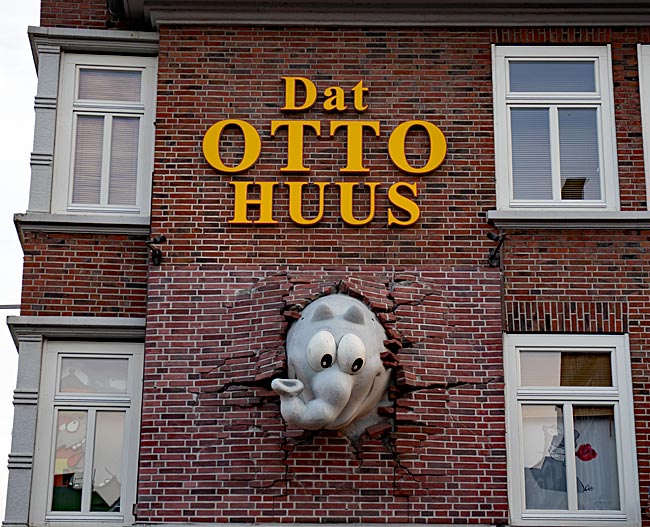
What do Henri Nannen, the journalist and founder of the print magazine STERN, director Wolfgang Petersen (e.g., Das Boot), and comedians Karl Dall and Otto Waalkes have in common? They were all born in Emden. "The Men of the Emden" (a film) not necessarily, but that's a different story. And of course, women have also been born in this city of around 50,000 inhabitants, the largest in East Frisia, such as former boxing world champion Heidi Hartmann - naturally mentioned only as a representative of all others.
read more about Emden ...
Norden-Norddeich in East Frisia
At the north Sea
At first glance, one might get the impression that this North Sea resort is merely a transfer station for vacationers heading in droves to the islands. Not only do several ferry docks dominate the harbor, but large parking lots and multi-story garages belonging to the Frisia shipping company right behind the dike offer hundreds of parking spaces for island visitors who don’t want or can’t take their cars with them - Juist is car-free after all. But beyond that, Norddeich reveals itself as a far less hectic and manageably small coastal resort. In this state-recognized North Sea spa, tourism has only been promoted since the second half of the last century, apparently with success, as more than 1 million overnight stays per year show.
read more about Norden-Norddeich ...