

DISTANT PLACES
Travel tips by Bremen sehenswert far from the Hanseatic City of Bremen
Hanseatic City of Rostock - A Travel Guide
Museums in Rostock and Warnemünde
Documentation and Memorial Site at the Former Stasi Detention Center
A visit to the Documentation and Memorial Site at the former Stasi detention center can be quite somber. The prison, built between 1958 and 1960 with 50 cells, was completely cut off from the outside world. Until 1989, around 4,900 prisoners—mostly political detainees—spent days or even years of their lives in these cramped cells. Since 1998, the site has been part of the "Documentation Center for Victims of German Dictatorships" in Mecklenburg-Vorpommern. A guided tour through the original cells provides insight into how the imprisoned individuals must have felt. The justified fear of prisoners regarding Stasi methods is documented by a permanent exhibition on the State Security Service.
Adress:
Hermannstraße 34b (access via Augustenstraße/Grüner Weg)
18055 Rostock
Phone: +49 (0)381 / 4985651/-52
Opening Hours:
March to October: Tuesday - Friday 10:00 AM – 6:00 PM, Saturday 10:00 AM – 5:00 PM
November to February: Tuesday - Friday 9:00 AM – 5:00 PM, Saturday 10:00 AM – 5:00 PM
(Closed on Sundays, Mondays, and public holidays)
Admission: Free
Geschichtswerkstatt Rostock e.V.
The association aims to bring the history of the Hanseatic city of Rostock closer to its residents and visitors. In the rooms of Kröpeliner Tor, which the Geschichtswerkstatt has used since 2005, you can find a permanent exhibition on the history of Rostock's city fortifications, as well as special exhibitions and events. Additionally, there is a library on regional history and a small reading café. The association also organizes city tours.
Adress:
Geschichtswerkstatt Rostock e.V. im Kröpeliner Tor
18055 Rostock
Phone: +49 (0)381 / 1216415
Email: kontakt@geschichtswerkstatt-rostock.de
Opening Hours: daily 10:00 AM – 6:00 PM, closed on puplic holidays
Website: www.geschichtswerkstatt-rostock.de
Heimatmuseum Warnemünde
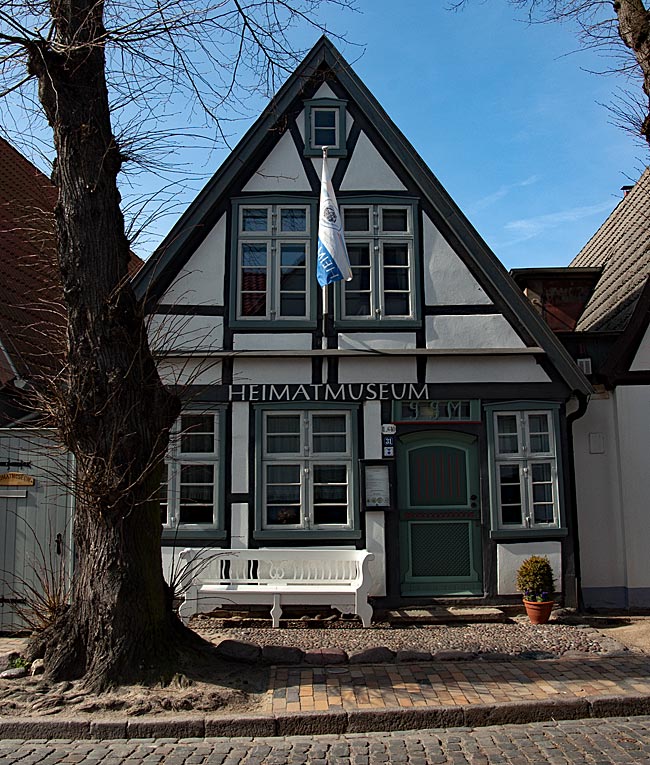
Housed in a former fisherman's house built in 1767, the Heimatmuseum covers maritime themes such as the history of fishing and seafaring, pilotage, and sea rescue. It also documents the unusual life story of Stephan Jantzen (1827–1913), a pilot commander and sea rescuer born and died in Warnemünde. Visitors gain insight into living conditions in Warnemünde at the end of the 19th century through original reconstructions of a parlor, kitchen, hallway, and bedroom, showing how domestic life has changed over time. The museum also covers Warnemünde's development from a small fishing village to a popular seaside resort. In addition to permanent exhibitions, there are regular special exhibitions.
Adress:
Heimatmuseum Warnemünde
Alexandrinenstraße 30/31
18119 Seebad Warnemünde
Phone: +49 (0)381 / 52 667
Email: kontakt@heimatmuseum-warnemuende.de
Opening Hours: Wednesday to Sunday 10:00 AM – 5:00 PM
Website: www.heimatmuseum-warnemuende.de
Kempowski Archive Rostock
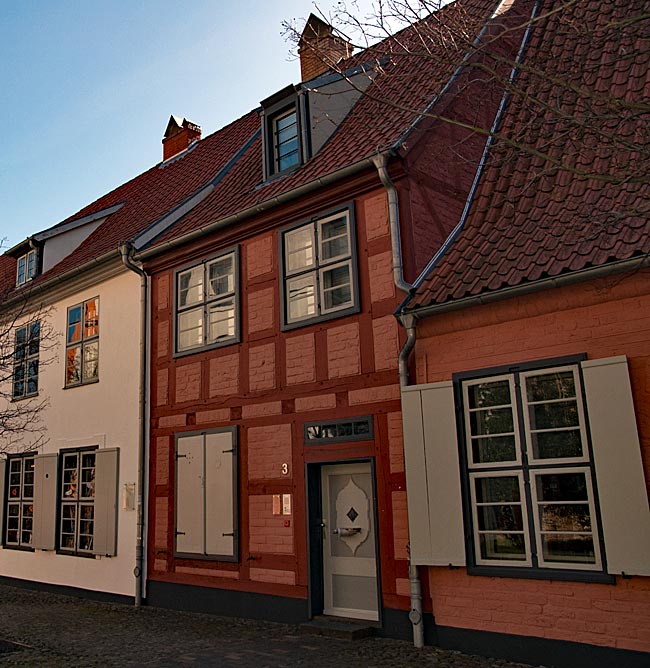
Since 1993, part of the literary archive of Walter Kempowski (1929–2007), an award-winning writer born in Rostock, has been housed in buildings of the Abbey of the Holy Cross. On display are Kempowski's reconstructed parental library, family items, and exhibits documenting his imprisonment as well as that of his mother and brother in Bautzen. A study with his original desk and other exhibition pieces is also set up. In an audio room, you can listen to readings of his works. Additionally, part of his Mecklenburg Library and the Rostock Authors Archive are available, featuring books thematically or authorially connected to Rostock.
Adress:
Kempowski-Archiv-Rostock -
Ein bürgerliches Haus
Klosterhof Haus 3
18055 Rostock
Phone: +49 (0)381 / 2037540
Email: kempowski-archiv-rostock@t-online.de
Opening Hours: Tuesday to Sunday 2:00 PM – 6:00 PM, Thursday 9:30 AM – 12:00 PM
Website: www.kempowski-archiv-rostock.de/files/aktuell.htm
Culture History Museum
Founded in 1859, the Culture History Museum is housed in the historic Abbey of the Holy Cross. Its collection of cultural and art history objects is among the largest and most significant in Mecklenburg-Vorpommern. Particularly extensive and unique is the collection of objects and documents on the history and culture of the Hanseatic city from the Middle Ages to modern times. If you want to learn about the history of Rostock, this museum is a great place to start.
Adress:
Culture History Museum
Klosterhof 7
18055 Rostock
Phone: +49 (0)381 / 203590
Email: kulturhistorisches.museum@rostock.de
Opening Hours: Tuesday to Sunday 10:00 AM – 6:00 PM, Monday closed
Admission: Free (except for special exhibitions)
Webiste: www.kulturhistorisches-museum-rostock.de
Kunsthalle Rostock
The Kunsthalle was built in 1969 on a green strip by the Schwanenteich pond in the Reutershagen district. Primarily until the fall of the Berlin Wall in 1989, this square building housed a collection of East German art spanning from the DDR era back to before 1920, with a focus on art from Mecklenburg-Vorpommern. Today, the collection includes over 500 paintings, 6,000 graphics, and 200 sculptures.
Adress:
Kunsthalle Rostock
Hamburger Straße 40
18069 Rostock
Phone: +49 (0)381 / 3817000 (Office), +49 (0)381 / 3817008 (Box Office)
Email: kunsthalle@rostock.de
Opening Hours: Tuesday to Sunday 11:00 AM – 6:00 PM, Monday closed
Website: www.kunsthallerostock.de
Shipbuilding and Maritime Museum Rostock
The museum, located in the IGA Park, advertises itself as Germany’s largest floating museum. When you see the former 10,000-ton freighter moored on the banks of the Warnow River, it’s easy to believe. Inside the ship, you can explore numerous original restored spaces, including the engine room, steering gear room, bridge, radio station, ship hospital, and crew cabins. Other rooms document the history of the ship as well as shipbuilding from its beginnings up to the DDR era. Maritime topics are also covered, with information on passenger shipping in the DDR, the development of marine radio, and ocean research in the Baltic Sea region. A steam tugboat, the concrete ship CAPELLA, and a lifting vessel are also part of the museum, along with an open-air exhibition featuring anchors, propellers, winches, and signal buoys. From May to September, you can even get hands-on experience at a historic boatyard. In addition to permanent exhibitions, there are regular special exhibitions and events for children.
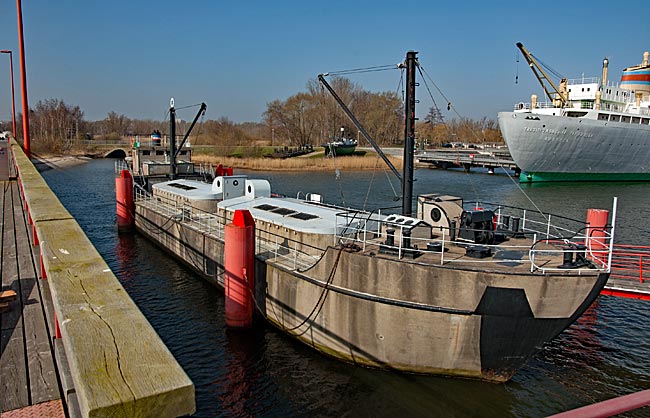
Concrete ship CAPELLA, with the stern of the traditional ship in the background
Adress:
IGA Rostock 2003 GmbH
Shipbuilding and Maritime Museum
Schmarl-Dorf 40
18106 Rostock
Phone: +49 (0)381 / 12831364
Email: info@schifffahrtsmuseum-rostock.de
Opening hours: November to March: Tuesday to Sunday 10:00 AM – 4:00 PM, April to October: Tuesday to Sunday 10:00 AM – 6:00 PM
Website: www.schifffahrtsmuseum-rostock.de
Historic Boatyard
Workshop Hours: May to September 10:00 AM – 4:00 PM, Closed on Mondays
Contact via the Shipbuilding and Maritime Museum Rostock
Phone: +49 (0)381 / 12831364
Societät Rostock maritim e.V.
Originally built as a social club for citizens of Rostock, half a century later it became a museum under city ownership, including serving as the Maritime Museum from 1968 to 2003. Since 2006, the building has been used by the association as an information, education, and meeting center, hosting both permanent and special exhibitions on maritime themes.
Adress:
Societät Rostock maritim e.V.
August - Bebel - Str. 1
18055 Rostock
Phone: +49 (0)381 8 57 97 11
Website: www.srm-hro.de
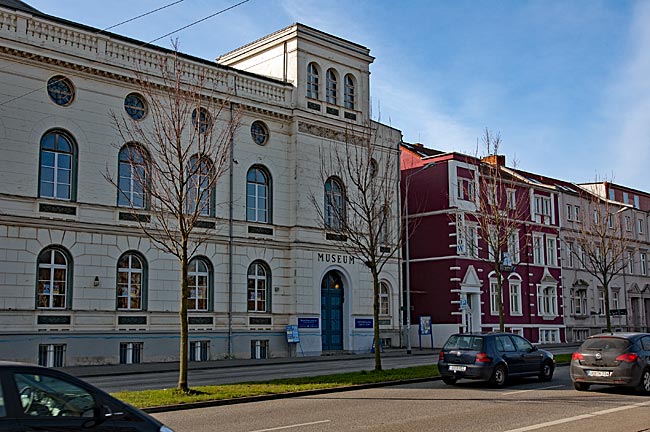
Zoological Collection of the University of Rostock
Founded in 1775, the Zoological Collection has been housed in the former Reichskammergericht at Universitätsplatz since 1880. The extensive collection is internationally significant for research and teaching in biodiversity and evolutionary studies. Guided tours of the historic collection area require advance booking. A ground-floor exhibition room is freely accessible.
Adress:
Institute of Biosciences, Chair of General & Special Zoology
Universitätsplatz 2
18055 Rostock
Phone: +49 (0)381 / 4986261
Opening Hours:
Schaumagazin (second floor) and exhibition room (ground floor): Monday to Friday 10:00 AM – 4:00 PM
Website: www.zoologie.uni-rostock.de/zoologische-sammlung/schausammlung/
previous page
 next page
Read more about Rostock: The table of contents
Map
Rügen by the Baltic Sea
Active holiday featuring cycling and hiking
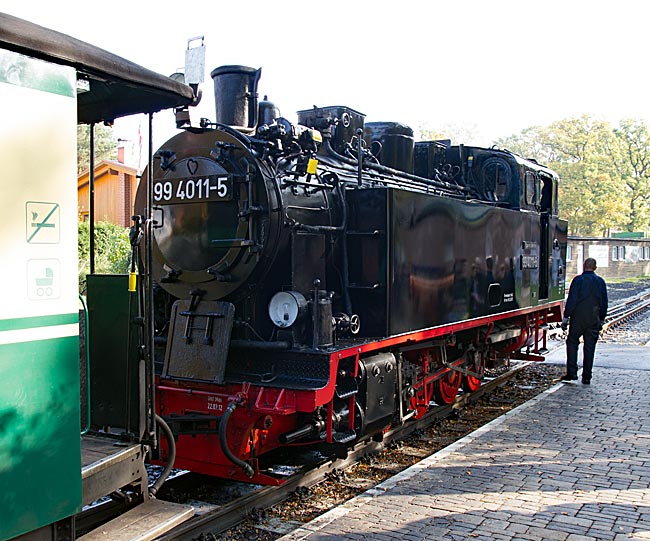
Enjoy an active holiday featuring cycling and hiking along the Baltic coast in Mönchgut on the island of Rügen. Long sandy beaches, rolling hills, and lush forests provide a varied and beautiful setting for your getaway. Often, the only thing breaking the peace is the distant whistle of the historic 'Rasender Roland' steam train. Despite its name (which suggests something "racing" or fast), it’s actually quite the opposite. A journey by train is simply part of the holiday experience.
read more about Rügen ...
In the Probstei in late summer
Schönberger Strand and sea and more
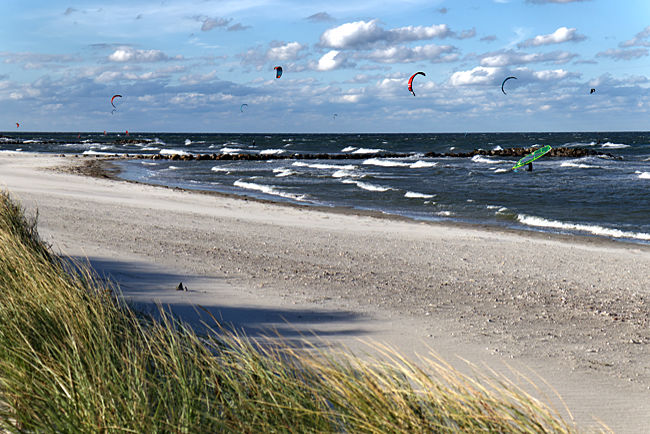
Can you walk or ride a bike from Brasilien (Brazil) to Kalifornien (California) in just a few minutes, always with a view of the water? No, not with your finger on the globe or map, but in person. You’ll have to forgo Copacabana and the Sunset Strip with the Angels in Los Angeles (Spanish for "The Angels"). Instead, you get Germany’s "True North" with all its bright sides. Of course, there are sometimes shadows here too, but they belong only on the margins of this story.
read more about Schönberger Strand ...
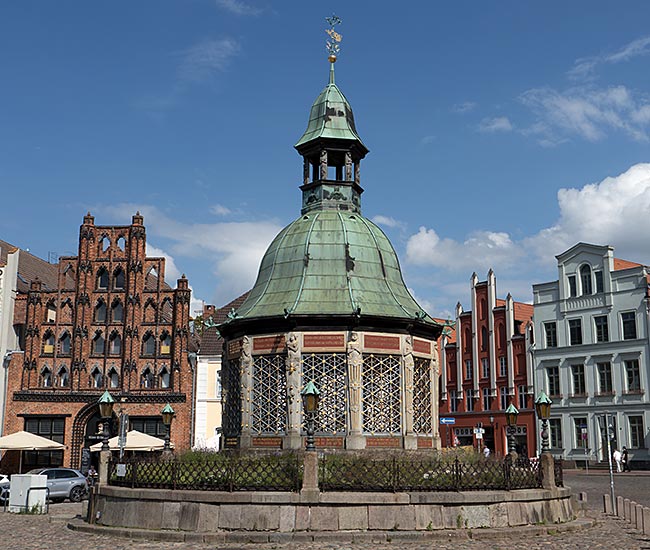
Wismar
The Hanseatic City on the Baltic Sea and its UNESCO World Heritage
The World Heritage House is a building with a stone front house and an attached timber-framed Kemladen on a foundation of loose fieldstones from a medieval predecessor building. This beautifully restored small building complex visually illustrates and provides information via text panels about the lives of past generations in the hall houses typical for Wismar, along with their outbuildings. Additionally, there is extensive information about the city’s history and numerous protected buildings in the old town - there are 1,754 in total, with 306 designated as individual monuments. In the old town, one is right in the middle of Wismar’s UNESCO World Heritage Site.
read more about Wismar ...
Crabs, dikes and the Wadden Sea
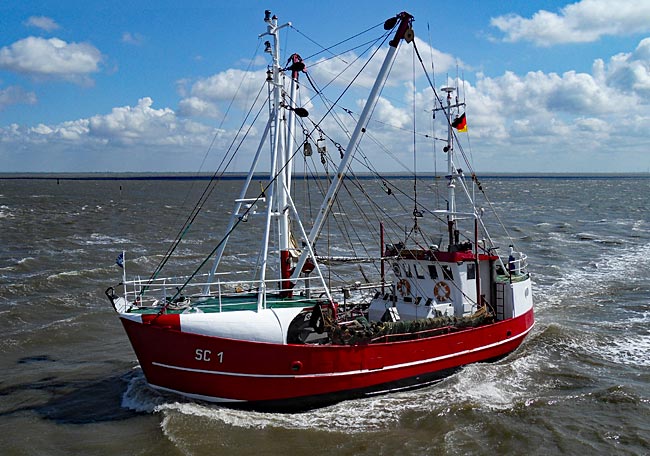
The North Sea spa town of Büsum
Once an island, Büsum was repeatedly threatened by the "Blanken Hans". When the greatest flood of the last century struck in 1962, Büsum was already long connected to the mainland - since 1585. Today, this town of around 5,000 residents, part of the Dithmarschen district, is one of the most important holiday destinations along Schleswig-Holstein's North Sea coast. Since 1985, the sea in front of Büsum has been protected as the Schleswig-Holstein Wadden Sea National Park, and since 2009, it has also been listed as a UNESCO World Heritage Site.
read more about Büsum ...
A stroll through Kiel
Sights in the fjord city and a visit to Laboe
A good starting point for exploring the city today, decades after the end of the war, is the centrally located main train station. On Sophienblatt, the main street running in front of the building, all major bus lines converge, and many sights can also be easily reached on foot during a multi-hour stroll.
read more about Kiel ...
Emden in East Frisia
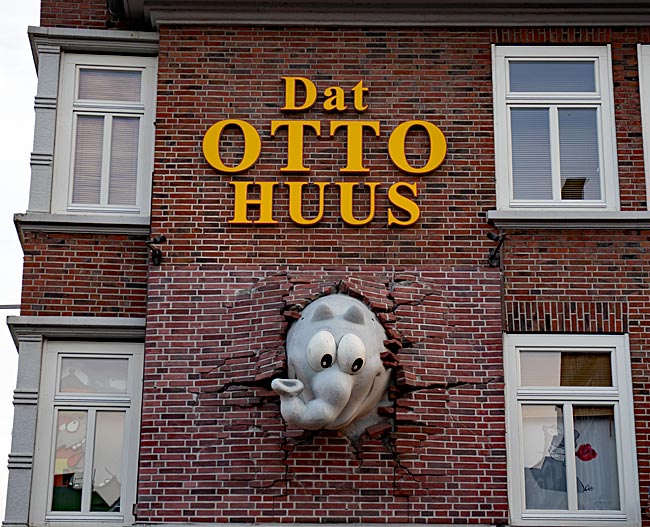
Where East Frisians make jokes and serious art thrives
What do Henri Nannen, the journalist and founder of the print magazine STERN, director Wolfgang Petersen (e.g., Das Boot), and comedians Karl Dall and Otto Waalkes have in common? They were all born in Emden. "The Men of the Emden" (a film) not necessarily, but that's a different story. And of course, women have also been born in this city of around 50,000 inhabitants, the largest in East Frisia, such as former boxing world champion Heidi Hartmann - naturally mentioned only as a representative of all others.
read more about Emden ...
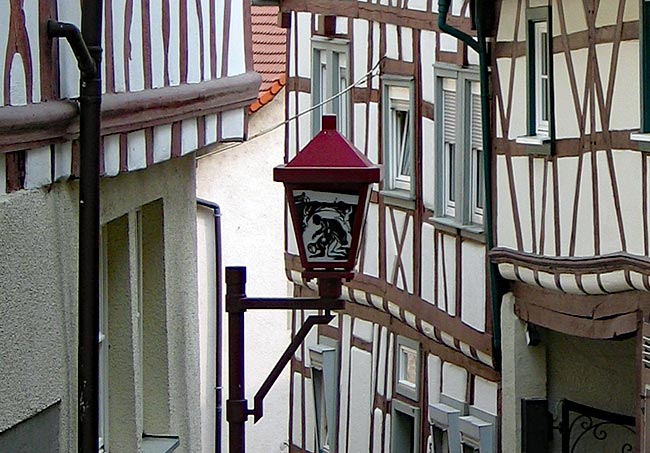
A short visit to the historic old town of Heppenheim
Half-timbering, a false dome, and legendary lanterns
The skyline of Frankfurt, Germany's financial capital with its office towers in the banking district, is still within sight when the train to Darmstadt and Bensheim pulls into the small station of Heppenheim. In 2010, the city was on everyone’s lips after native son Sebastian Vettel left all competition behind in his Red Bull car and became the youngest Formula 1 double world champion of all time. In 2011, he added another title to his collection, as did he in 2012 and finally in 2013 for a fourth time. However, we are not following in Vettel’s footsteps but rather those of history in the picturesque old town with its timber-framed houses.
read more about Heppenheim ...