


DISTANT PLACES
Travel tips by Bremen sehenswert far from the Hanseatic City of Bremen
Hanseatic City of Rostock - A Travel Guide
St. Peter's Church (Petrikirche)
Among the three remaining city churches of Rostock, St. Peter's is the oldest, with its predecessor built around 1300 on this site. The uneven color of the stones and partial use of granite in the construction of that church are still visible today in some areas of the side aisles of the current triple-aisled basilica, which was erected in the middle of the 14th century - down to the base of the arches (capitals). Around 1500, the sacred building received its first tower, which was, however, so severely damaged by a lightning strike in 1543 that a new tower had to be built in 1578. With its height of 117 meters at the time - and still today - including the spire (steeple), it is not only a widely visible landmark of Rostock but was also an orientation point from land and sea, like many other tall structures of their time elsewhere.
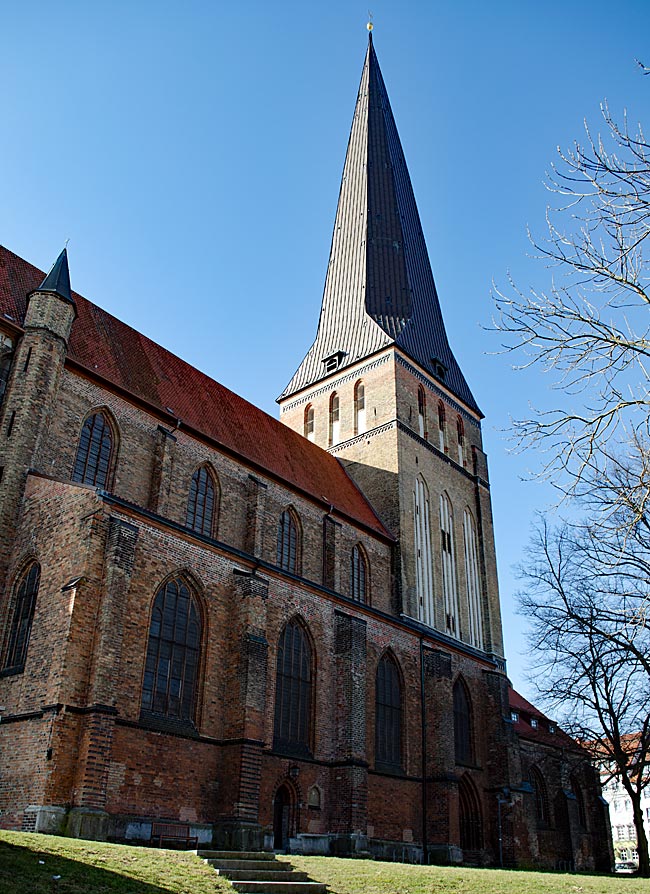
St. Peter's Church
The extensive renovation work in 1902 was undone in 1942 when the church suffered severe damage during the bombing raids by the Royal Air Force. The church lost not only the copper roof of its tower but also the vaults of the central aisle and the southern side aisle collapsed, while the baroque altar, the Renaissance-era pulpit, and much more burned in the flames. Due to the extent of the destruction, the reconstruction of the collapsed vault sections was abandoned during the restoration work, meaning that today only the cross-ribbed vault in the northern side aisle remains intact. It was not until 1994 that the tower regained its spire, clad with 2000 square meters of copper plates, financed by the city and state, donations, and heritage conservation organizations thanks to urban development funding. On this occasion, an observation platform was also installed. Depending on one's physical condition, one can either walk up the 195 steps or take the elevator to enjoy a wide view over Rostock from a height of 45 meters on a clear day.
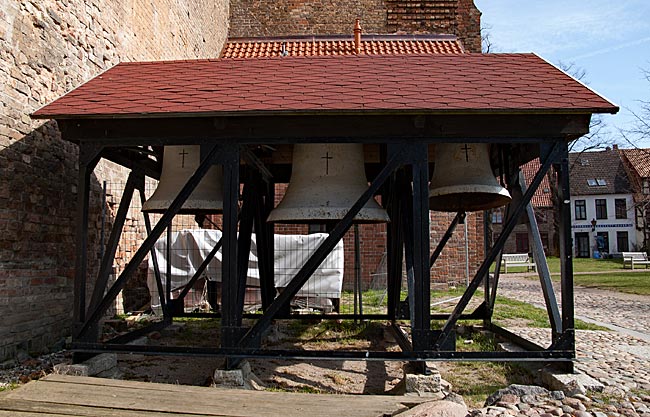
The bells of St. Peter’s, cast in 1964 using the Hartguß process, sound in the tones A, B♭, and F♯.
The scenes from the life of Saint Peter visible on the high choir windows were created by the artist Lothar Mannewitz, who passed away in Rostock in 2004. He designed them in 1963 and was also involved in restoration work on other historic buildings in the city, such as the town hall and the Steintor.
The hill on which the church and adjacent streets are located is, by the way, the first settlement area of Rostock - the old town. An embedded plaque in the old city wall behind the church refers to the destruction of a West Slavic (also called Elbe Slavs) settlement on the other side of the river in 1160 and the founding of the city of Rostock about forty years later by German merchants on this hill along the Warnow River. Appropriately, a pub across from the church is named "Ursprung" ("Origin").
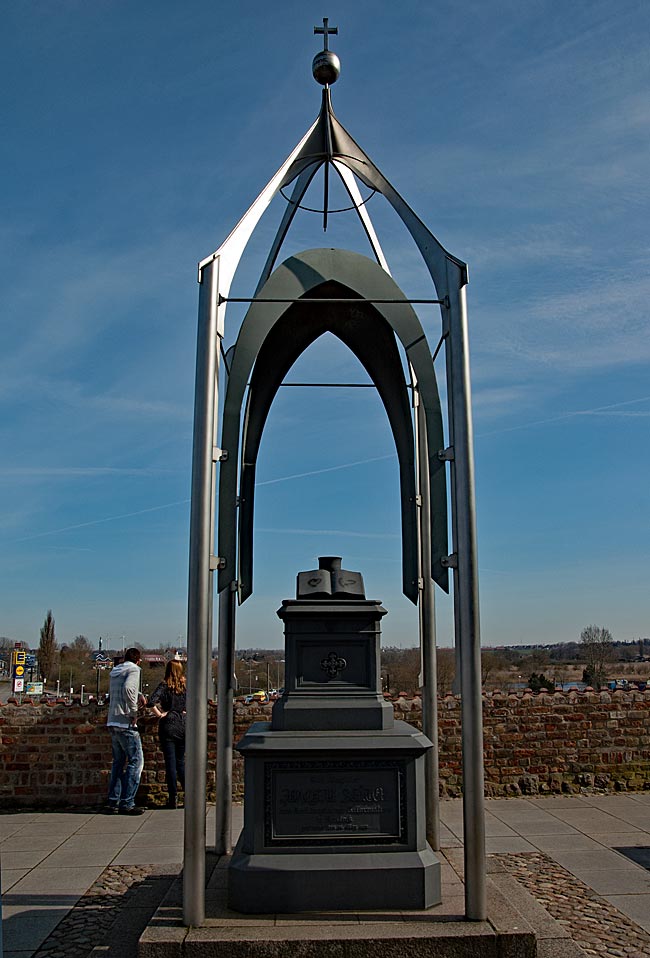
The Slüter Monument
Next to St. Peter's Church, directly in front of the city wall, stands a monument honoring Joachim Slüter. The son of a ferryman from Dömitz became the chaplain of the St. Peter’s congregation in 1523. In addition to the oldest known Low German hymnal, which he published two years later, he released Luther's "Kluges Gesangbuch" in Low German in 1531, with a section he added himself. It played a significant role in Rostock becoming evangelical that same year and Slüter died in May 1532. In 1862, a monument was erected on his grave at the former St. Peter’s cemetery, and the street behind the old city gate was renamed Slüterstraße (Slüter Street). The current monument is, however, a modernized version.
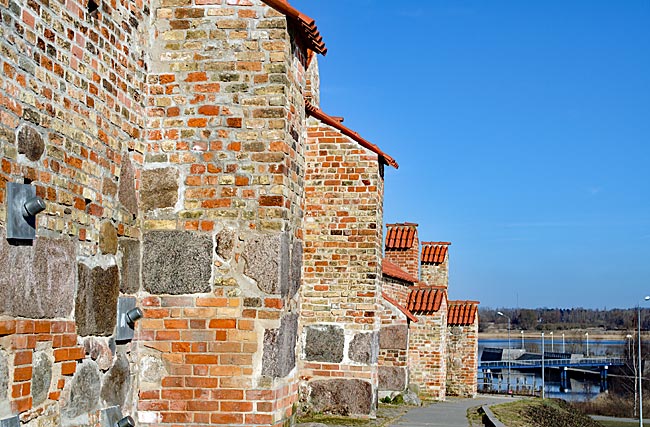
Behind St. Peter's Church, the historic city wall ends, with the Warnow River flowing in the background
previous page
 next page
Read more about Rostock: The table of contents
Map
Rügen by the Baltic Sea
Active holiday featuring cycling and hiking
Enjoy an active holiday featuring cycling and hiking along the Baltic coast in Mönchgut on the island of Rügen. Long sandy beaches, rolling hills, and lush forests provide a varied and beautiful setting for your getaway. Often, the only thing breaking the peace is the distant whistle of the historic 'Rasender Roland' steam train. Despite its name (which suggests something "racing" or fast), it’s actually quite the opposite. A journey by train is simply part of the holiday experience.
read more about Rügen ...
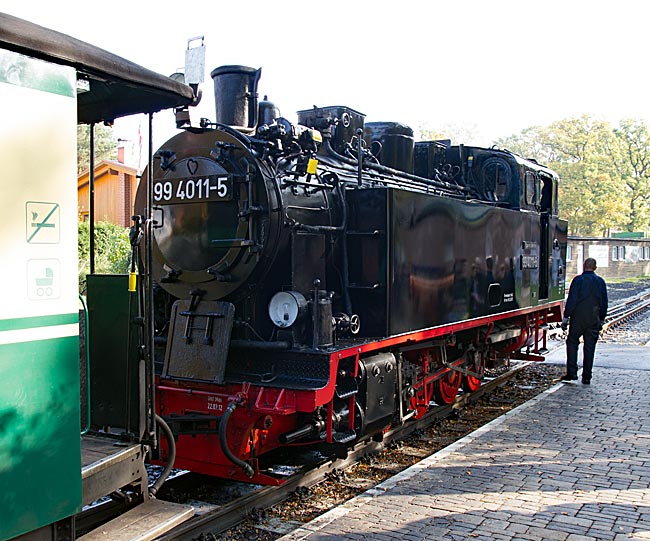
In the Probstei in late summer
Schönberger Strand and sea and more
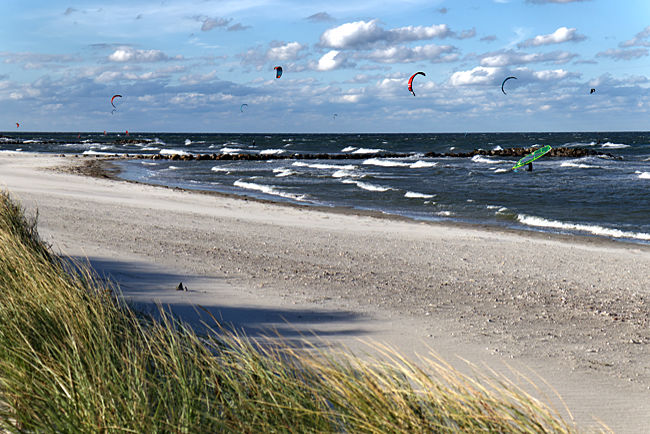
Can you walk or ride a bike from Brasilien (Brazil) to Kalifornien (California) in just a few minutes, always with a view of the water? No, not with your finger on the globe or map, but in person. You’ll have to forgo Copacabana and the Sunset Strip with the Angels in Los Angeles (Spanish for "The Angels"). Instead, you get Germany’s "True North" with all its bright sides. Of course, there are sometimes shadows here too, but they belong only on the margins of this story.
read more about Schönberger Strand ...
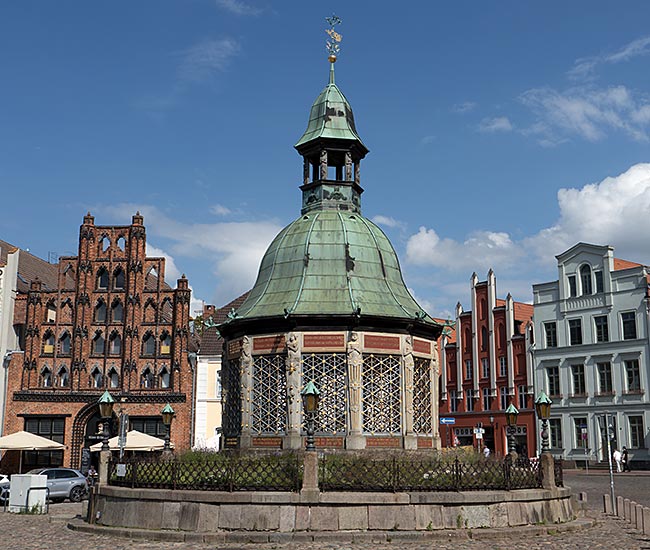
Wismar
The Hanseatic City on the Baltic Sea and its UNESCO World Heritage
The World Heritage House is a building with a stone front house and an attached timber-framed Kemladen on a foundation of loose fieldstones from a medieval predecessor building. This beautifully restored small building complex visually illustrates and provides information via text panels about the lives of past generations in the hall houses typical for Wismar, along with their outbuildings. Additionally, there is extensive information about the city’s history and numerous protected buildings in the old town - there are 1,754 in total, with 306 designated as individual monuments. In the old town, one is right in the middle of Wismar’s UNESCO World Heritage Site.
read more about Wismar ...
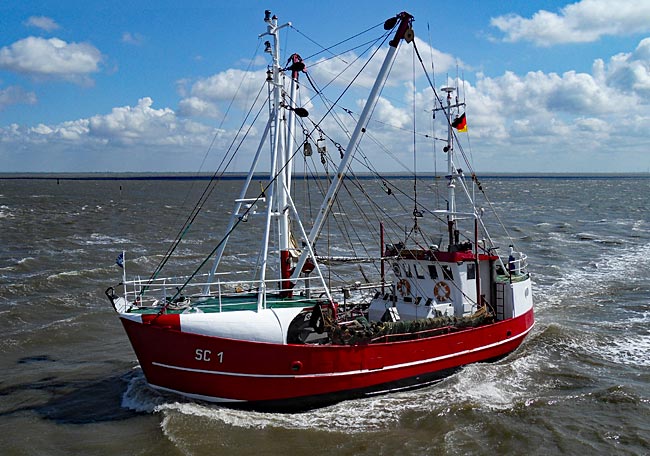
Crabs, dikes and the Wadden Sea
The North Sea spa town of Büsum
Once an island, Büsum was repeatedly threatened by the "Blanken Hans". When the greatest flood of the last century struck in 1962, Büsum was already long connected to the mainland - since 1585. Today, this town of around 5,000 residents, part of the Dithmarschen district, is one of the most important holiday destinations along Schleswig-Holstein's North Sea coast. Since 1985, the sea in front of Büsum has been protected as the Schleswig-Holstein Wadden Sea National Park, and since 2009, it has also been listed as a UNESCO World Heritage Site.
read more about Büsum ...
A stroll through Kiel
Sights in the fjord city and a visit to Laboe
A good starting point for exploring the city today, decades after the end of the war, is the centrally located main train station. On Sophienblatt, the main street running in front of the building, all major bus lines converge, and many sights can also be easily reached on foot during a multi-hour stroll.
read more about Kiel ...