

DISTANT PLACES
Travel tips by Bremen sehenswert far from the Hanseatic City of Bremen
Hanseatic City of Rostock - A Travel Guide
IGA Park Rostock
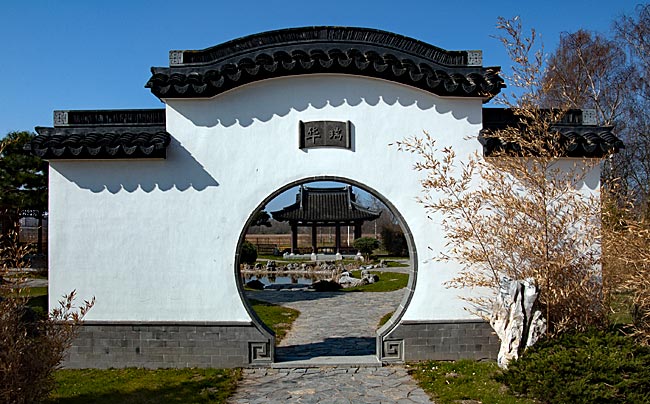
Nationengarten ( Garden of Nations)
Approximately halfway between the city center and Warnemünde, at the height of the districts Schmarl and Lütten Klein, lies the IGA Park, a park bordering the Warnow River that spans around 100 hectares. The name derives from the International Horticultural Exhibition, abbreviated as IGA (in german), which took place on this site in 2003. Both the park and the simultaneously constructed exhibition center were developed at the time for nearly a three-digit million-euro investment. At the same time, the toll-charged Warnow Tunnel was built nearby. In 2003, 32 nations presented their plant and landscape worlds across the expansive park grounds and in the exhibition halls.
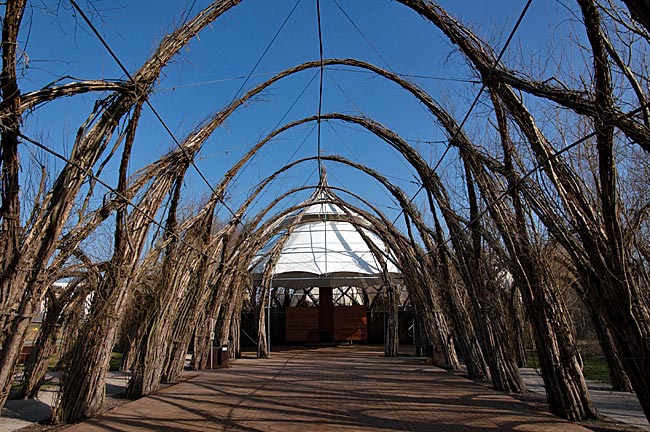
Leafless willow dome in spring
In addition to the green spaces, some national gardens, such as the Japanese Garden, remain today, along with the Willow Dome designed by architect Marcel Kalberer. Construction of this 15-meter-high and 52-meter-long living dome began in 2001 and involved 650 volunteers from 13 European countries. The park stage is still regularly used for events and concerts featuring renowned artists. Not far from the park stage, visitors feel like Gulliver in Lilliput among the roses, as miniature versions of historical buildings from Mecklenburg-Vorpommern - such as Jagdschloss Granitz or Boizenburg Town Hall - stand among the thorny flowers.
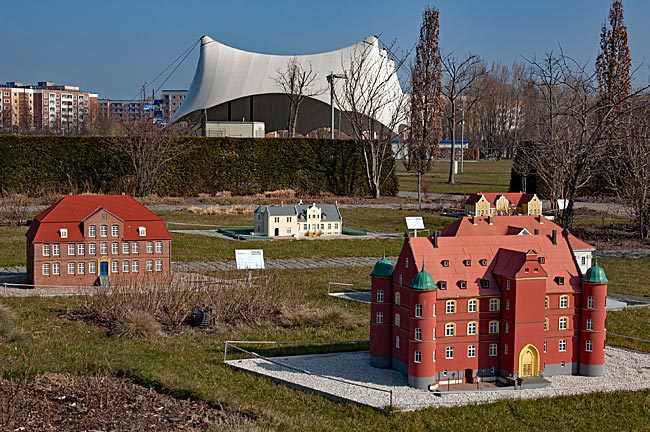
Miniature houses in the rose garden, with the park stage in the background
Water is not only a central theme within the park through the gravel pond and Klostergraben but especially along the Warnow Riverbank in the eastern part of the area. Here, the integrated Shipbuilding and Maritime Museum features a historical boatyard, an open-air exhibition with anchors, ship propellers, signal buoys, and other maritime objects, as well as museum ships docked at a pier, such as the 1943-built concrete ship Capella. However, the most impressive exhibit is the Traditionsschiff Typ Frieden, where visitors can learn more about the shipbuilding history of the Baltic Sea coast for an admission fee. The former Dresden, built in 1956/57, sailed primarily on routes to Asia, Latin America, and Africa until a mechanical failure took it out of service in 1969. Since 1970, it has been a museum ship.
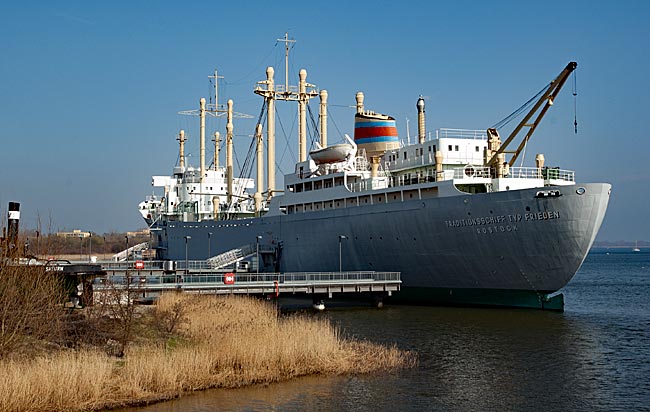
Traditionsschiff Typ Frieden (Traditional Ship Type Peace)
IGA Rostock 2003 GmbH
Schmarl-Dorf 40
18106 Rostock
Phone: +49 381 / 12831300
Email: info@iga2003.de
www.iga-park-rostock.de
previous page
 next page
Read more about Rostock: The table of contents
Map
Rügen by the Baltic Sea
Active holiday featuring cycling and hiking
Enjoy an active holiday featuring cycling and hiking along the Baltic coast in Mönchgut on the island of Rügen. Long sandy beaches, rolling hills, and lush forests provide a varied and beautiful setting for your getaway. Often, the only thing breaking the peace is the distant whistle of the historic 'Rasender Roland' steam train. Despite its name (which suggests something "racing" or fast), it’s actually quite the opposite. A journey by train is simply part of the holiday experience.
read more about Rügen ...
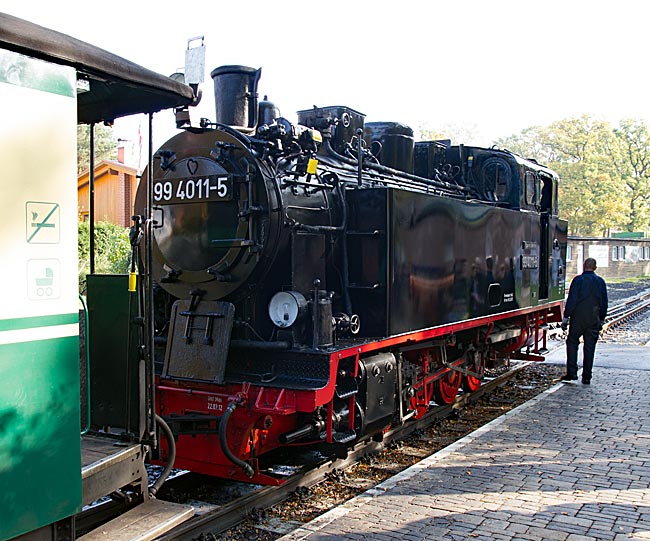
In the Probstei in late summer
Schönberger Strand and sea and more
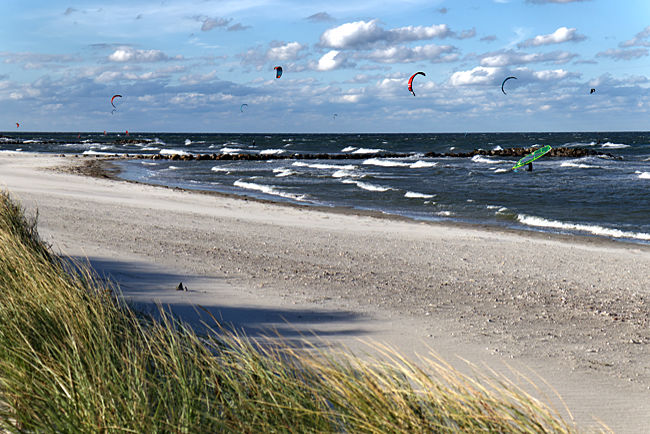
Can you walk or ride a bike from Brasilien (Brazil) to Kalifornien (California) in just a few minutes, always with a view of the water? No, not with your finger on the globe or map, but in person. You’ll have to forgo Copacabana and the Sunset Strip with the Angels in Los Angeles (Spanish for "The Angels"). Instead, you get Germany’s "True North" with all its bright sides. Of course, there are sometimes shadows here too, but they belong only on the margins of this story.
read more about Schönberger Strand ...
Wismar
The Hanseatic City on the Baltic Sea and its UNESCO World Heritage
The World Heritage House is a building with a stone front house and an attached timber-framed Kemladen on a foundation of loose fieldstones from a medieval predecessor building. This beautifully restored small building complex visually illustrates and provides information via text panels about the lives of past generations in the hall houses typical for Wismar, along with their outbuildings. Additionally, there is extensive information about the city’s history and numerous protected buildings in the old town - there are 1,754 in total, with 306 designated as individual monuments. In the old town, one is right in the middle of Wismar’s UNESCO World Heritage Site.
read more about Wismar ...