

DISTANT PLACES
Travel tips by Bremen sehenswert far from the Hanseatic City of Bremen
Hanseatic City of Rostock - A Travel Guide
New Market (Neuer Markt)
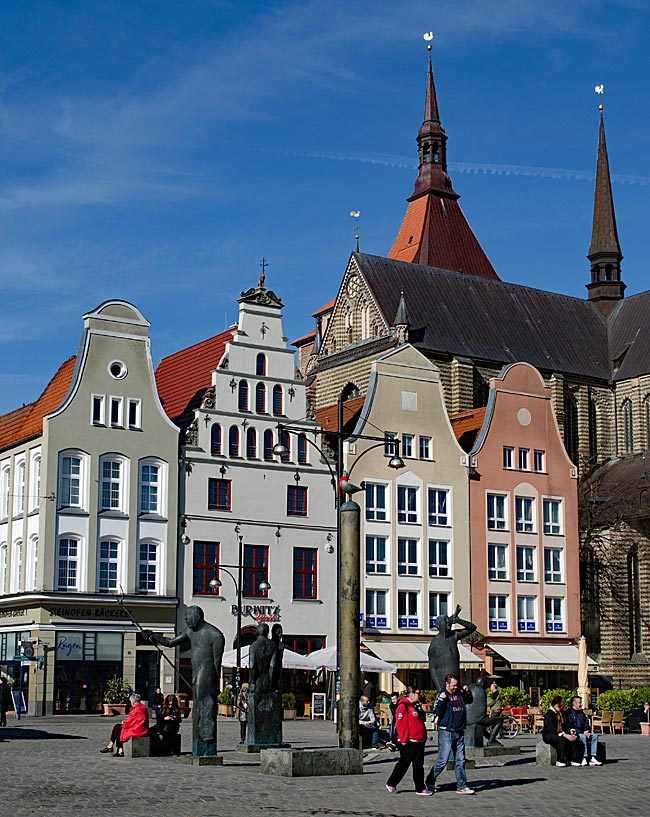
New Market with fountain, gabled houses and St. Mary's Church
After the first urban settlement on the territory of present-day Rostock in the transition from the 11th to the 12th century, and a boom in trade and craftsmanship in this first city area - the Altstadt - around the churches of St. Peter and St. Nicholas, a second urban settlement developed: the Mittelstadt. This independent city district already had its own market, town hall, and St. Mary's Church by 1232. After the Neustadt (New Town) was established in 1252 as another city area, all three districts were finally merged into one city under a single administration between 1262 and 1265. The seat of government became the market of the Mittelstadt - the New Market.
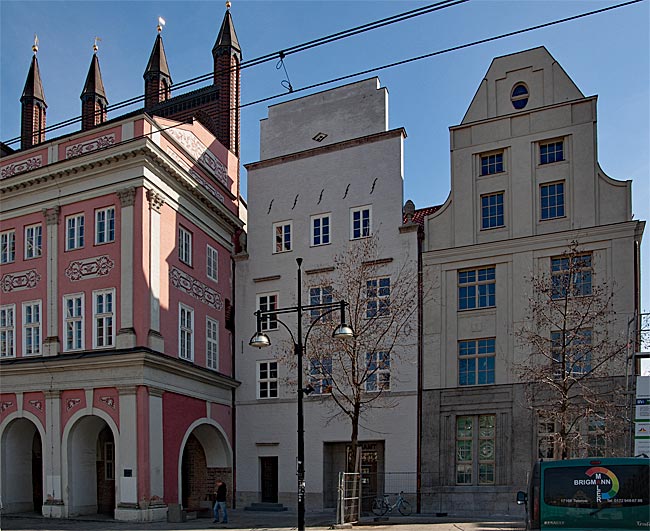
Part of the town hall is visible on the left side of the image
Primarily merchants shaped the fate of the city, but only the wealthiest could afford a gabled house directly on the New Market. Those who had succeeded in settling here sought to express their prosperity and power through an architecture distinct from others. The gabled houses on the western side of the square, opposite the town hall, still hint at this, even though their facades are much younger than the buildings themselves. The comparatively wide white house with the number 12, featuring a classicist-style facade from 1874, is medieval in its core, just like the adjacent building housing the Ratsapotheke (Town Pharmacy), which has been located here since 1789 and boasts a late Baroque exterior.
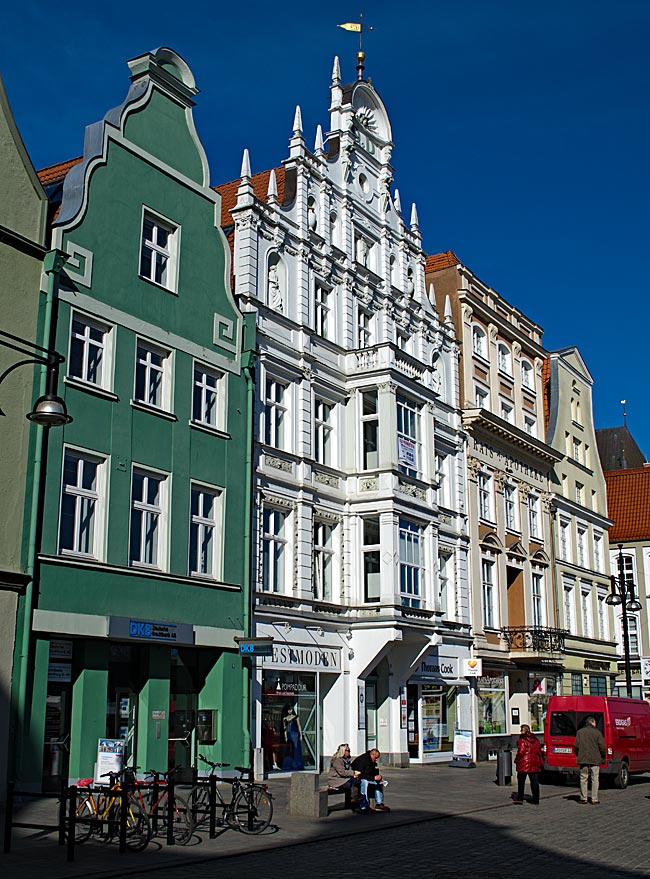
House No. 12 and the Ratsapotheke
As early as 1600, the house with the number 16 received its Renaissance facade with a volute gable - a lion perched on top - and thus has the oldest gable in the row of houses. This building is also medieval at its core and dates back to around 1280, making it only slightly younger than the town hall across the street. After suffering severe damage during the British Royal Air Force's four-night bombing raid at the end of April 1942, it was fully restored in 1965. Since 1936, it has been known in the Hanseatic city as "Burwitz" and still houses a tavern by that name today. Just a few steps in front of the house, an unassuming red stone with an engraved cross is embedded in the pavement. Such "cross stones" were often erected or set into the ground as legal monuments at locations where people had died in accidents or at the hands of others. Here, a newlywed couple was attacked on their way from the nearby St. Mary's Church by a spurned suitor.
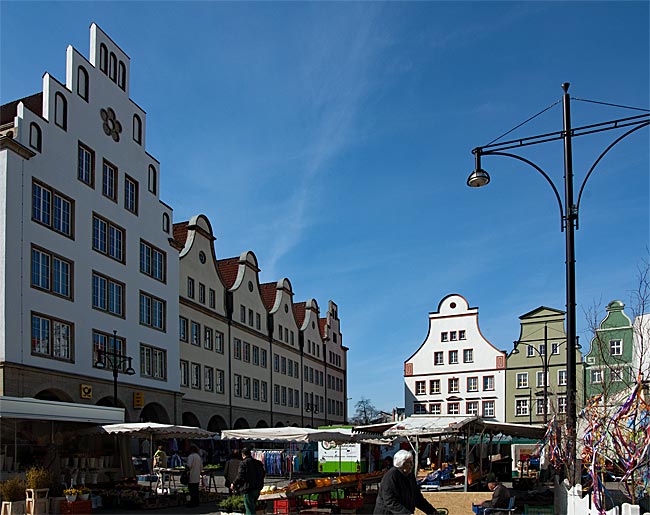
Southern side of the New Market.
One striking feature of the square is that one side remains open. All the houses on the northern side were completely destroyed during the aforementioned bombing in 1942, and it was decided not to rebuild them. In contrast, on the opposite side, three houses survived the aerial attack. Here, the row was completed in 1950 with a new building that blends harmoniously into the overall picture of the New Market thanks to its gables and arcades.
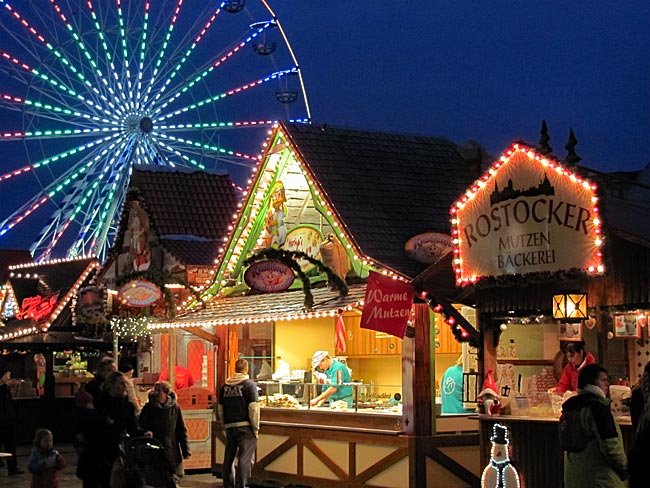
Christmas market in Rostock © Marc Poels
As it was then, bustling market activity takes place on the square today. From Tuesday to Saturday, vendors offer their goods at the weekly market near Waldemar Otto's Möwenbrunnen (Seagull Fountain). Around Easter and during the pre-Christmas season, they share the space with showmen and their carousels when the stalls and booths of the Easter Market or Christmas Market attract more people than usual to the city center, stretching from Kröpeliner Straße to the New Market.
previous page
 next page
Read more about Rostock: The table of contents
Map
Rügen by the Baltic Sea
Active holiday featuring cycling and hiking
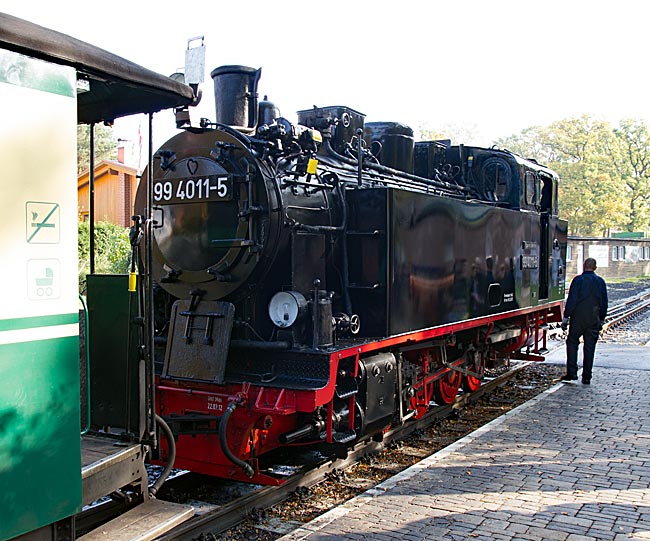
Enjoy an active holiday featuring cycling and hiking along the Baltic coast in Mönchgut on the island of Rügen. Long sandy beaches, rolling hills, and lush forests provide a varied and beautiful setting for your getaway. Often, the only thing breaking the peace is the distant whistle of the historic 'Rasender Roland' steam train. Despite its name (which suggests something "racing" or fast), it’s actually quite the opposite. A journey by train is simply part of the holiday experience.
read more about Rügen ...
In the Probstei in late summer
Schönberger Strand and sea and more
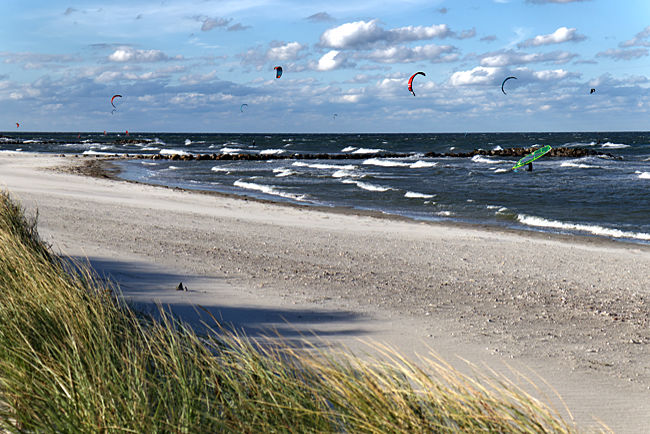
Can you walk or ride a bike from Brasilien (Brazil) to Kalifornien (California) in just a few minutes, always with a view of the water? No, not with your finger on the globe or map, but in person. You’ll have to forgo Copacabana and the Sunset Strip with the Angels in Los Angeles (Spanish for "The Angels"). Instead, you get Germany’s "True North" with all its bright sides. Of course, there are sometimes shadows here too, but they belong only on the margins of this story.
read more about Schönberger Strand ...
Wismar
The Hanseatic City on the Baltic Sea and its UNESCO World Heritage
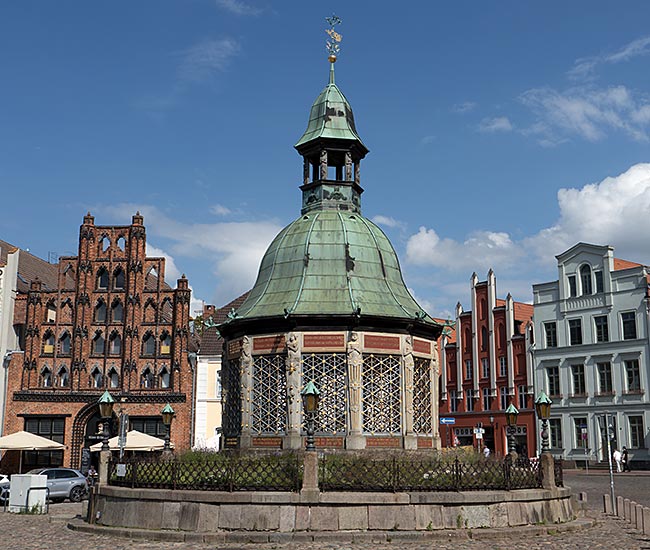
The World Heritage House is a building with a stone front house and an attached timber-framed Kemladen on a foundation of loose fieldstones from a medieval predecessor building. This beautifully restored small building complex visually illustrates and provides information via text panels about the lives of past generations in the hall houses typical for Wismar, along with their outbuildings. Additionally, there is extensive information about the city’s history and numerous protected buildings in the old town - there are 1,754 in total, with 306 designated as individual monuments. In the old town, one is right in the middle of Wismar’s UNESCO World Heritage Site.
read more about Wismar ...
Crabs, dikes and the Wadden Sea
The North Sea spa town of Büsum
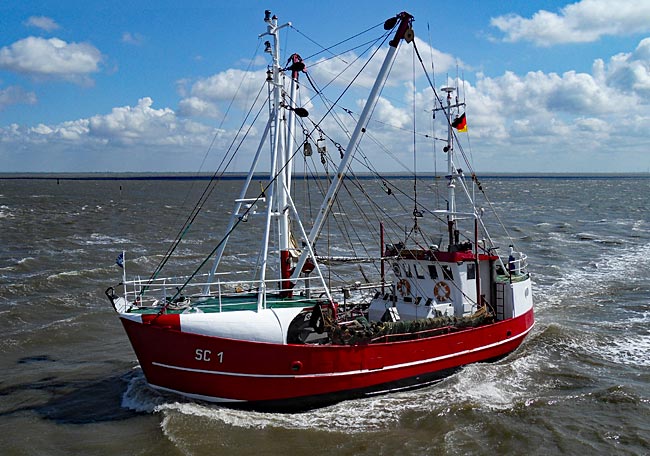
Once an island, Büsum was repeatedly threatened by the "Blanken Hans". When the greatest flood of the last century struck in 1962, Büsum was already long connected to the mainland - since 1585. Today, this town of around 5,000 residents, part of the Dithmarschen district, is one of the most important holiday destinations along Schleswig-Holstein's North Sea coast. Since 1985, the sea in front of Büsum has been protected as the Schleswig-Holstein Wadden Sea National Park, and since 2009, it has also been listed as a UNESCO World Heritage Site.
read more about Büsum ...
A stroll through Kiel
Sights in the fjord city and a visit to Laboe
A good starting point for exploring the city today, decades after the end of the war, is the centrally located main train station. On Sophienblatt, the main street running in front of the building, all major bus lines converge, and many sights can also be easily reached on foot during a multi-hour stroll.
read more about Kiel ...
Emden in East Frisia
Where East Frisians make jokes and serious art thrives
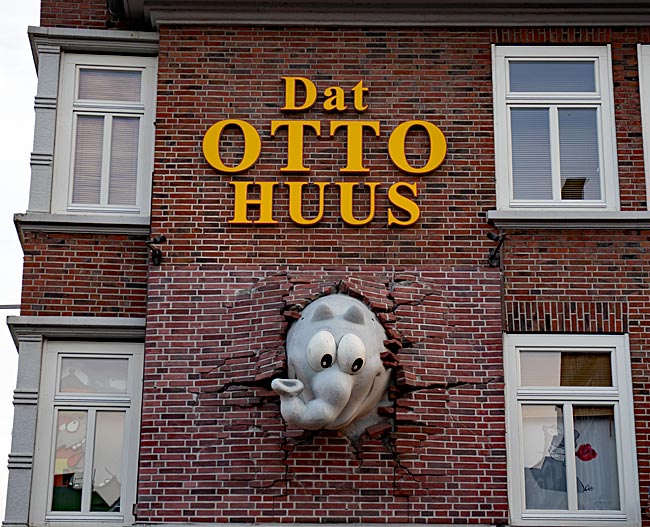
What do Henri Nannen, the journalist and founder of the print magazine STERN, director Wolfgang Petersen (e.g., Das Boot), and comedians Karl Dall and Otto Waalkes have in common? They were all born in Emden. "The Men of the Emden" (a film) not necessarily, but that's a different story. And of course, women have also been born in this city of around 50,000 inhabitants, the largest in East Frisia, such as former boxing world champion Heidi Hartmann - naturally mentioned only as a representative of all others.
read more about Emden ...