

DISTANT PLACES
Travel tips by Bremen sehenswert far from the Hanseatic City of Bremen
Hanseatic City of Rostock - A Travel Guide
Kröpeliner Straße and Universitätsplatz
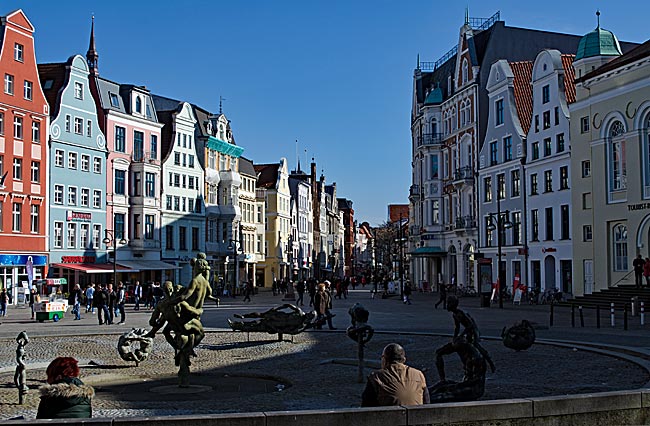
View of Kröpeliner Straße from Universitätsplatz
Kröpeliner Straße is the bustling shopping street with modern shops, cafés, and restaurants in the heart of Rostock’s city center. Until the 1960s, not only cars but also trams (until 1960) passed through here. A stroll through today’s pedestrian zone is also a journey through the city’s history, beginning with the imposing Kröpeliner Tor from the 13th century at one end of the street and ending with the New Market, its historic townhouses, and the Gothic Town Hall at the other.
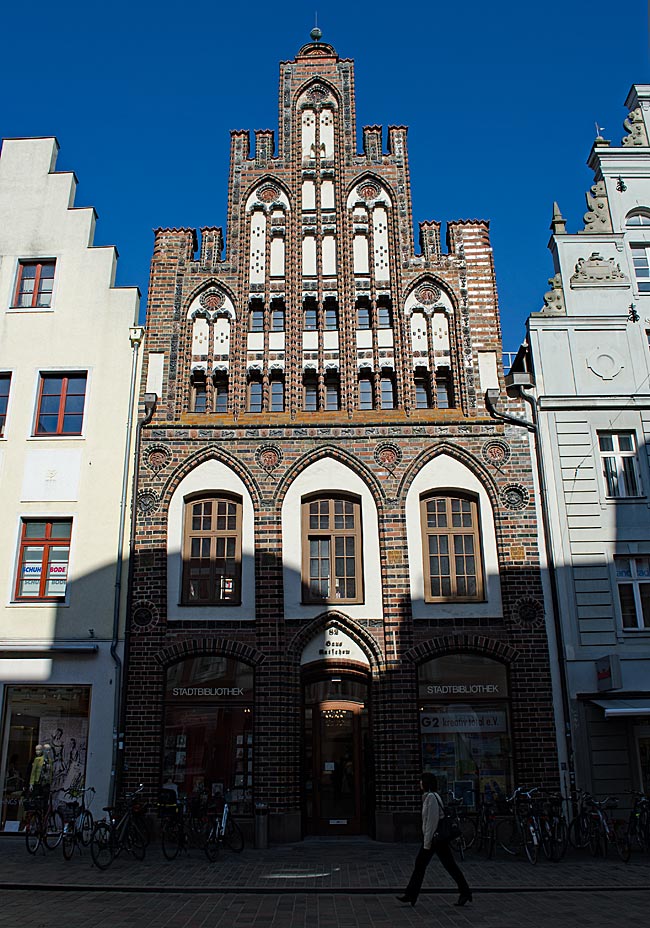
The current city library
Kröpeliner Straße was not spared by the air raids of 1942, but today it presents a successful blend of newer buildings - such as the Five-Gable House with its carillon, completed in 1986 - and numerous historic gabled houses restored since the fall of the Berlin Wall. One of the most striking historical buildings is the house at number 82. This townhouse, featuring a crenellated step gable typical of Rostock’s Gothic architecture, was built in the late 15th century and boasts one of the city’s most beautiful Gothic facades. The gable is richly decorated with numerous terracotta medallions, glazed bricks, and horizontal and vertical bands of relief tiles - a common feature in Late Gothic architecture. However, inside, history lives on primarily through books, as the building now houses the city library.
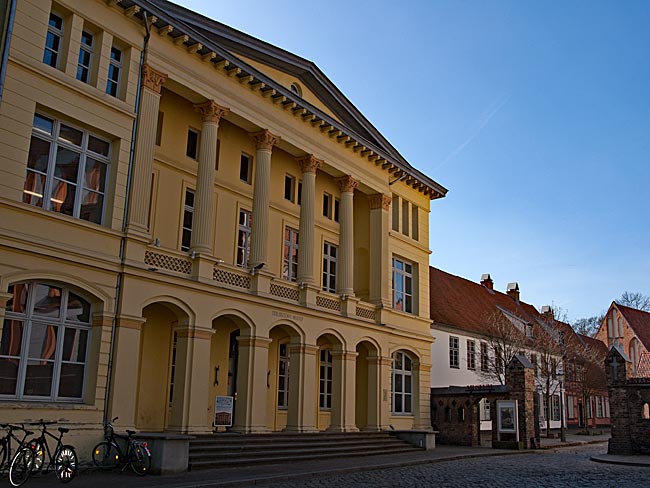
The former Supreme Court of Appeal, adjacent the Abbey of the Holy Cross
Diagonally opposite stands the Grand Ducal Palace, built in 1714 and located at what has been called Universitätsplatz since 1961. The grand dukes of Mecklenburg-Schwerin resided in these rooms behind the light, simple Baroque facade whenever they were in Rostock. In 1750, Duke Christian Ludwig II - the successor to the palace’s builder - had what is perhaps the most magnificent Baroque hall in Northern Germany constructed right next door. Even after its last renovation in 2010, the festive hall’s design remains nearly original. Today, the ground floor houses the tourist information center.
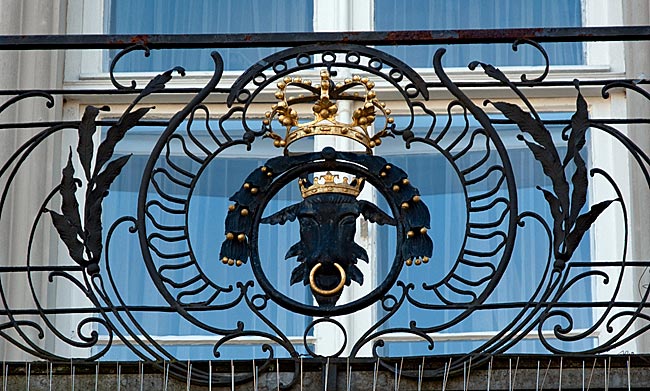
Balcony railing at Universitätsplatz
In close proximity stands the radiant yellow “Neue Wache” (New Guardhouse), built in 1823 as the main guardhouse next to the command post. The neoclassical building with six broad Doric columns, designed by architect Carl Theodor Severin, was also meant to represent the grand ducal claims to power. Today, the university uses the building, just like the former Supreme Court of Appeal, painted in pale yellow and built between 1841 and 1842, which has housed the university’s zoology department since 1880. The former ducal buildings survived World War II unscathed.
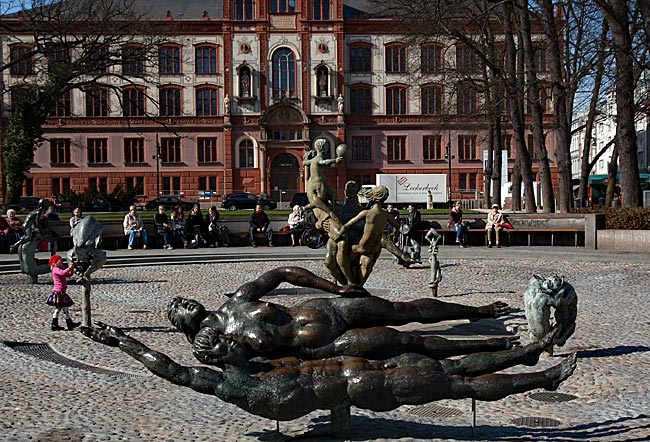
Fountain of Joy, with the main university building in the background
Between the palace and the Five-Gable House on the opposite side stands the “Fountain of Joy,” designed by sculptors Jo Jastram and Reinhard Dietrich since 1985. Due to the bronze sculptures depicting partially nude figures, the fountain is colloquially known as the “Porn Fountain.” In the semicircle facing the university, numerous benches are usually occupied on sunny days.
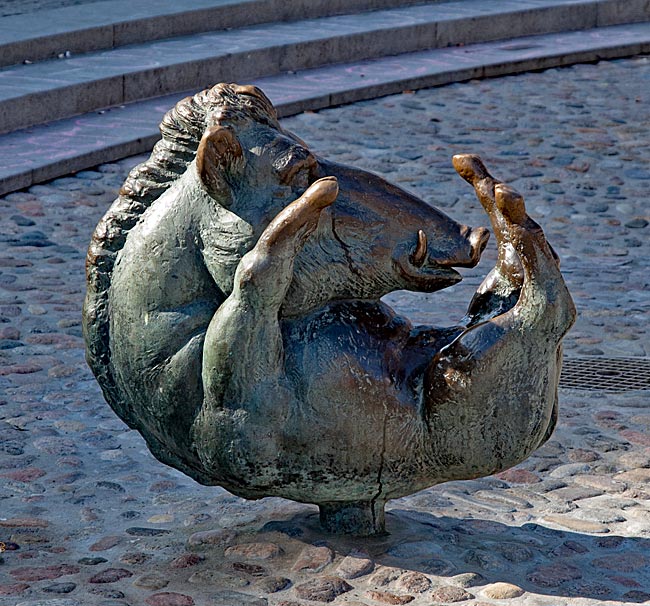
Fountain of Joy: a wild boar
When there’s no water in the fountain, children sometimes repurpose the sculptures as play equipment. Not only this fountain but also the entire ambiance makes the central square on Kröpeliner Straße a popular meeting spot. It’s pleasant to sit in the nearby outdoor cafés under the sun, enjoying the bustle and occasionally accompanied by a carillon from a neighboring house wall.
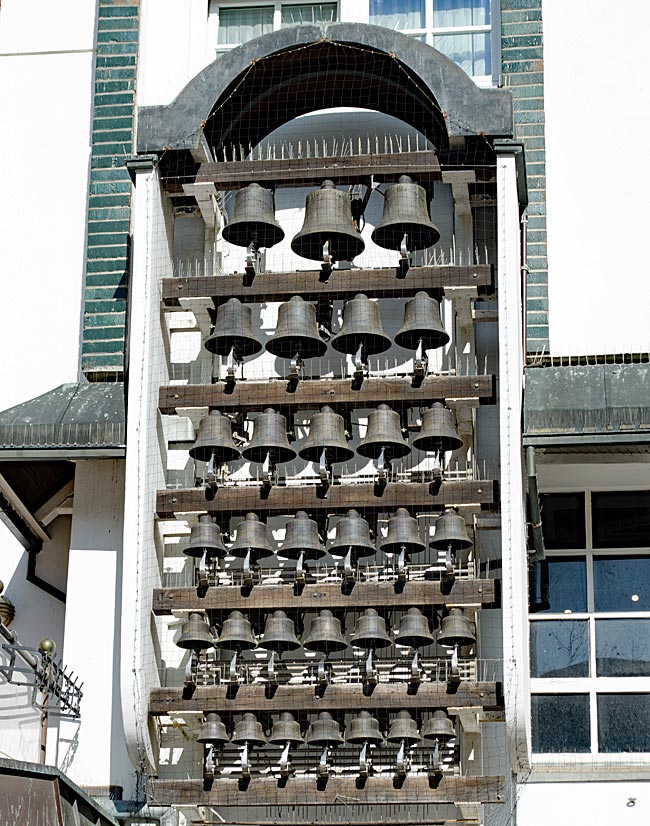
The carillon at Universitätsplatz regularly plays
All of this takes place under the watchful eyes of Gebhard Leberecht von Blücher. The Prussian field marshal, born in Rostock, significantly contributed to the success against Napoleon’s troops during the Wars of Liberation through his military leadership. In 1821, a life-sized copper statue was erected in his honor in front of the university building.
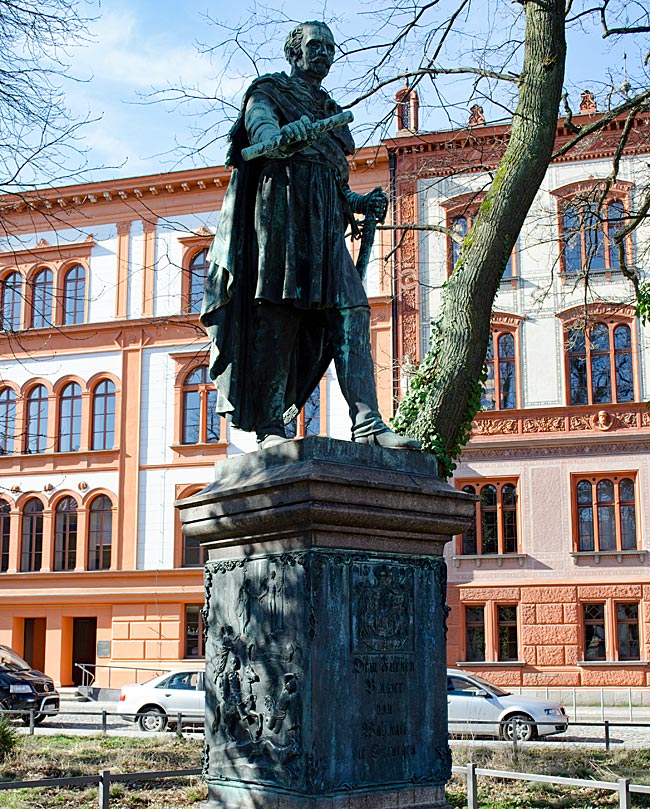
Blücher Monument
previous page
 next page
Read more about Rostock: The table of contents
Map
Rügen by the Baltic Sea
Active holiday featuring cycling and hiking
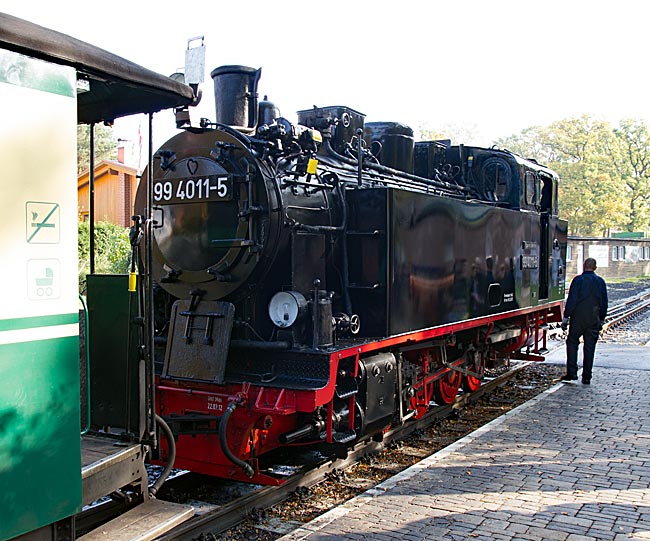
Enjoy an active holiday featuring cycling and hiking along the Baltic coast in Mönchgut on the island of Rügen. Long sandy beaches, rolling hills, and lush forests provide a varied and beautiful setting for your getaway. Often, the only thing breaking the peace is the distant whistle of the historic 'Rasender Roland' steam train. Despite its name (which suggests something "racing" or fast), it’s actually quite the opposite. A journey by train is simply part of the holiday experience.
read more about Rügen ...
In the Probstei in late summer
Schönberger Strand and sea and more
Can you walk or ride a bike from Brasilien (Brazil) to Kalifornien (California) in just a few minutes, always with a view of the water? No, not with your finger on the globe or map, but in person. You’ll have to forgo Copacabana and the Sunset Strip with the Angels in Los Angeles (Spanish for "The Angels"). Instead, you get Germany’s "True North" with all its bright sides. Of course, there are sometimes shadows here too, but they belong only on the margins of this story.
read more about Schönberger Strand ...
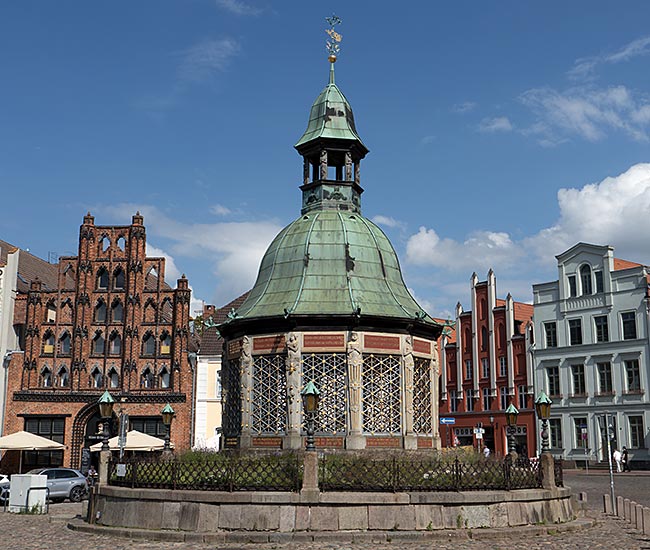
Wismar
The Hanseatic City on the Baltic Sea and its UNESCO World Heritage
The World Heritage House is a building with a stone front house and an attached timber-framed Kemladen on a foundation of loose fieldstones from a medieval predecessor building. This beautifully restored small building complex visually illustrates and provides information via text panels about the lives of past generations in the hall houses typical for Wismar, along with their outbuildings. Additionally, there is extensive information about the city’s history and numerous protected buildings in the old town - there are 1,754 in total, with 306 designated as individual monuments. In the old town, one is right in the middle of Wismar’s UNESCO World Heritage Site.
read more about Wismar ...
Crabs, dikes and the Wadden Sea
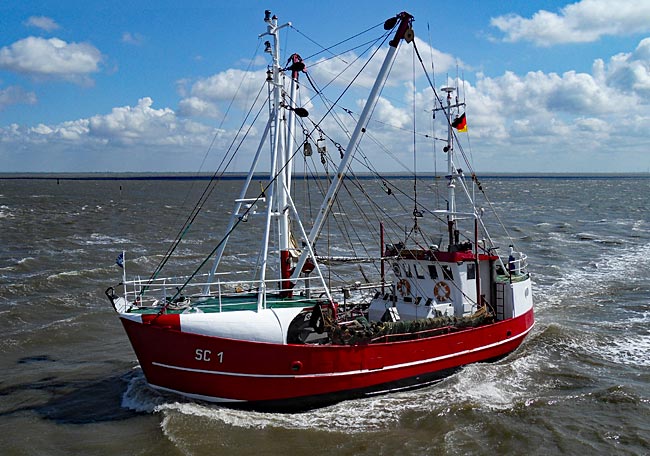
The North Sea spa town of Büsum
Once an island, Büsum was repeatedly threatened by the "Blanken Hans". When the greatest flood of the last century struck in 1962, Büsum was already long connected to the mainland - since 1585. Today, this town of around 5,000 residents, part of the Dithmarschen district, is one of the most important holiday destinations along Schleswig-Holstein's North Sea coast. Since 1985, the sea in front of Büsum has been protected as the Schleswig-Holstein Wadden Sea National Park, and since 2009, it has also been listed as a UNESCO World Heritage Site.
read more about Büsum ...
A stroll through Kiel
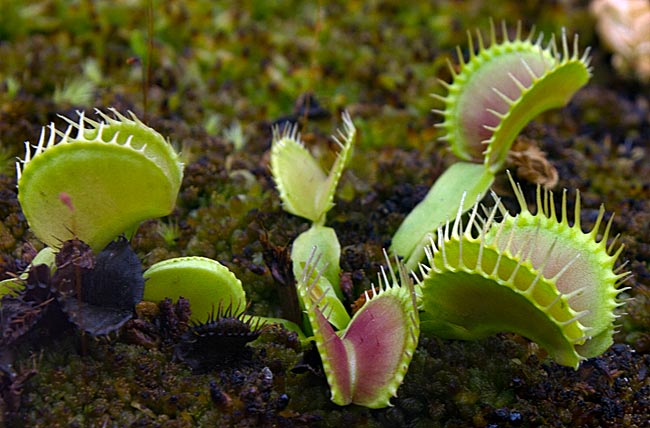
Sights in the fjord city and a visit to Laboe
A good starting point for exploring the city today, decades after the end of the war, is the centrally located main train station. On Sophienblatt, the main street running in front of the building, all major bus lines converge, and many sights can also be easily reached on foot during a multi-hour stroll.
read more about Kiel ...
Emden in East Frisia
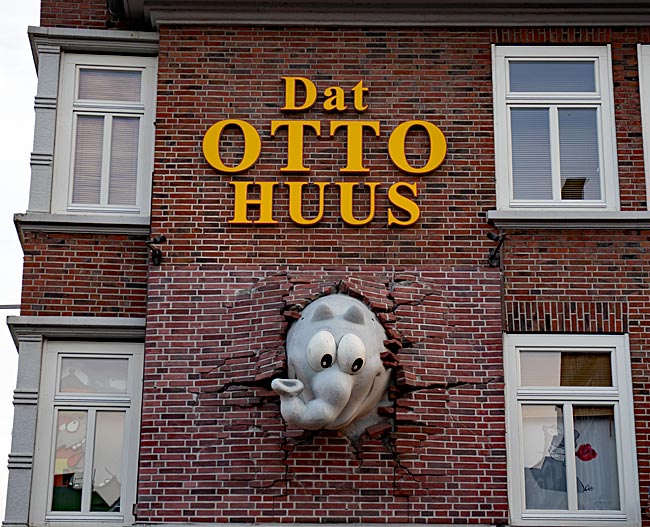
Where East Frisians make jokes and serious art thrives
What do Henri Nannen, the journalist and founder of the print magazine STERN, director Wolfgang Petersen (e.g., Das Boot), and comedians Karl Dall and Otto Waalkes have in common? They were all born in Emden. "The Men of the Emden" (a film) not necessarily, but that's a different story. And of course, women have also been born in this city of around 50,000 inhabitants, the largest in East Frisia, such as former boxing world champion Heidi Hartmann - naturally mentioned only as a representative of all others.
read more about Emden ...
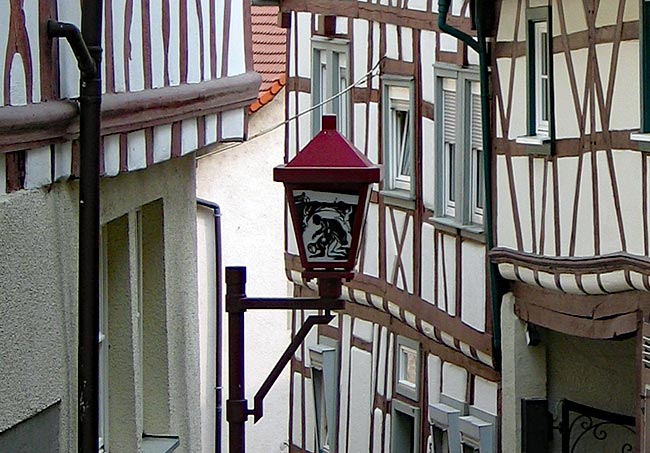
A short visit to the historic old town of Heppenheim
Half-timbering, a false dome, and legendary lanterns
The skyline of Frankfurt, Germany's financial capital with its office towers in the banking district, is still within sight when the train to Darmstadt and Bensheim pulls into the small station of Heppenheim. In 2010, the city was on everyone’s lips after native son Sebastian Vettel left all competition behind in his Red Bull car and became the youngest Formula 1 double world champion of all time. In 2011, he added another title to his collection, as did he in 2012 and finally in 2013 for a fourth time. However, we are not following in Vettel’s footsteps but rather those of history in the picturesque old town with its timber-framed houses.
read more about Heppenheim ...