
 exploring Bremen & its surrounding areas
 You are here: attractions in the city center
 Wallanlagen (2/2)
A short distance up the street "Am Wall," one encounters Heinrich Wilhelm Olbers - though the doctor and astronomer has been dead since 1840, he remains present as a statue by sculptor Carl Steinhäuser since 1850. The discoverer of the asteroids Pallas and Vesta, who also formulated the Olbers Paradox, was followed in the Hanseatic city by others. Today, they are active in the Olbers Society at the Walter-Stein Observatory and the Olbers Planetarium in Neustadt district. The association was founded in 1920.
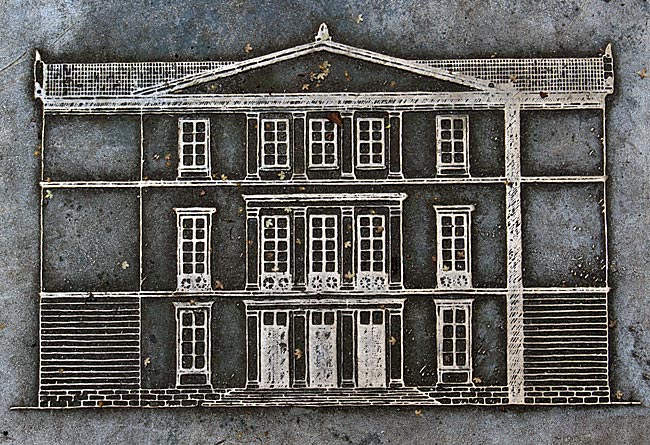
This is how it likely appeared: Bremen's second theater as a relief in the theater garten
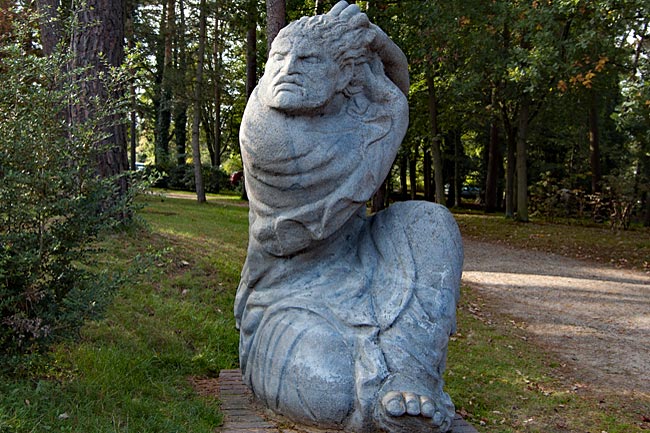
Three years after Olbers' burial at Riensberg Cemetary in Schwachhausen district, construction began on Bremen’s second city theater on the Bischofsnadel-Bastion. The theater was owned by the city from 1855 until its destruction in 1944. Today, only the theater garden remains as a testament to its existence, which one encounters further along toward Herdentor. It was laid out in 1966 at the former site of the theater and reopened on May 18, 2001, after renovation for the Wall Jubilee. A relief of the theater building was embedded into the paving at the upper entrance of the terraced garden with numerous benches. Since 1968, in the lower part of the complex, alongside the Bremen Town Musicians, one encounters another work by sculptor Gerhard Marcks: his sculpture Ägina.
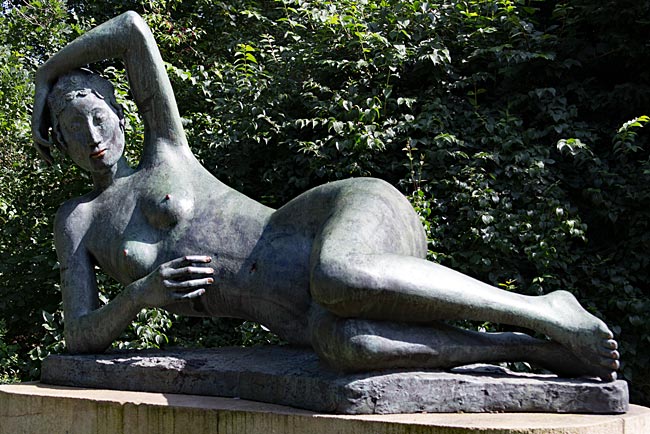
Sculpture of Ägina by Gerhard Marcks in theater garden
Of the former city gates, Bischofsnadel - originally "Natel," a term for a narrow passage in the wall - still gives the most vivid impression of a city gate, specifically the Bishop’s Gate. A small bridge crosses the moat, flanked by wrought-iron barriers and gate wings on sandstone pillars (today replicas), with a gatehouse directly behind. However, this ensemble is younger than the 17th-century fortification. The bridge was built with a simple gate starting in 1814; the wrought-iron work, lanterns on the pillars, and the gatehouse were added in 1838, based on designs by architect Friedrich Moritz Stamm. Since the revolution of 1848, the gate has remained open day and night, becoming a bottleneck for pedestrians and cyclists during peak times, much like the narrow tunnel under "Am Wall" street leading to Domshof just a few meters away. Today, no one needs to pay to pass through the gate. Since its permanent opening, the classical-style gatekeeper’s house has housed a shop.
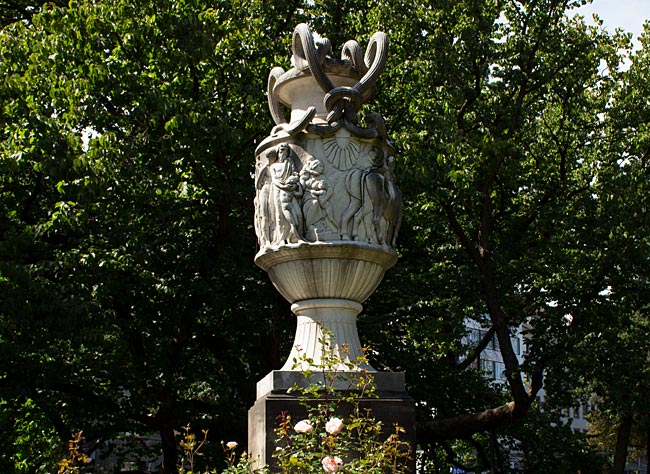
Steinhäuser Vase near Herdentor
Within sight of "Herdentor" street, another sculpture by Bremen sculptor Carl Steinhäuser can be found: the eponymous Steinhäuser Vase. The monumental marble work was completed in 1855 and has been located in the Wallanlagen since the following year. The surrounding relief evokes a slightly Mediterranean feel, though the depiction of people with oxen is inspired by the so-called Kloster Ochsenzug (Monastery Ox Procession). This Bremen tradition ended in 1871, after over 200 years, coinciding with German unification. Each year during the Bremer Freimarkt, a procession of festively decorated oxen took place through the city, followed by an auction of the animals to benefit the Franciscan monastery St. Johannes, which stood next to today’s St. Johann Church in the Schnoor district and operated Bremen’s first hospital and asylum before the mid-16th century. The vase and church have been protected monuments since 1973. While opinions on the aesthetics of the flowerless vase may vary, the tree hazel beside it is undoubtedly an impressive natural wonder. With over 200 years of age, it is one of the oldest trees in the city and has required support for some time to preserve it.
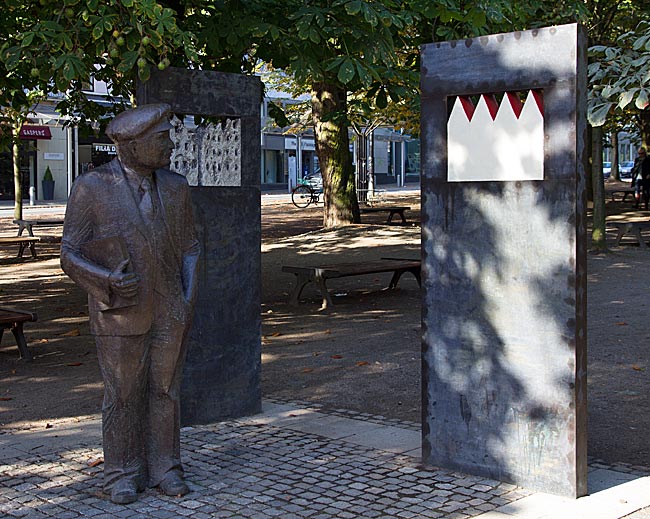
Wilhelm Kaisen Monument at Herdentor
The man honored by Bremen residents with a monument at Herdentor was also quite old - 92 - when he died in 1979. The monument was unveiled on May 22, 2012, marking the 125th birthday of the former mayor. The work is by sculptor Christa Baumgärtel, who also created the bronze whale jaw sculptures in Vegesack. Born in Hamburg, SPD politician (Carl) Wilhelm Kaisen had been a senator for welfare in Bremen during the Weimar Republic after 1919 and was otherwise politically active. After the war in 1945, he was asked by American occupiers to take on political responsibility again. They soon appointed him president of the Senate. Under his leadership as president and mayor until 1965, Bremen’s reconstruction succeeded, the economy recovered, and the city reaffirmed its independence. The two bronze plates of the monument symbolize Bremen’s destruction and rebuilding. Kaisen’s gaze is directed toward the latter, in keeping with his motto: "Don’t look into a mousehole, look at the sun!" In other words, never give up.
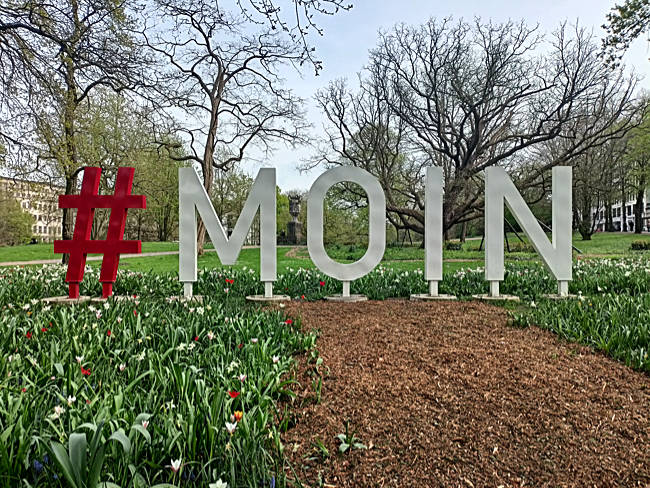
Moin – a greeting in the Wallanlagen at Herdentor to all who pass by
Until well into the new millennium, Kaisen houses - named after him - stood in allotment gardens across the city. Due to post-war housing shortages, people were allowed to build permanent homes on these plots. The initial space restriction of 20 square meters was later expanded to 60. However, under Germany’s federal allotment garden law - which yes, exists - permanent residence in garden sheds is prohibited. Thus, the regulation for Kaisen houses is unique but ends with the departure or death of the original occupants.
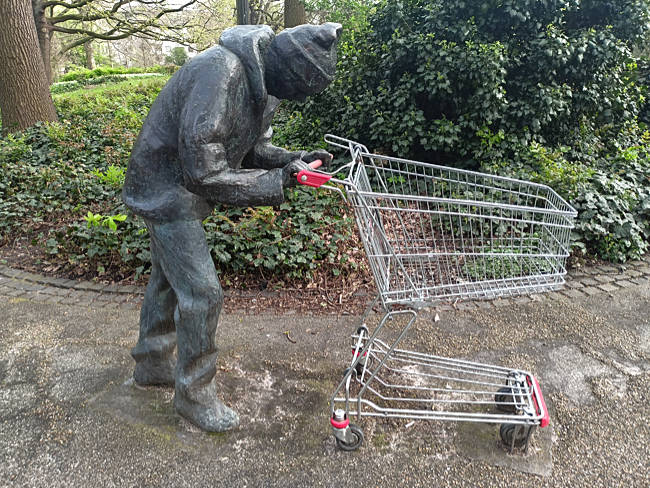
Just a few meters from the "Moin" greeting, an as-yet-unknown artist installed this bronze sculpture in May 2020
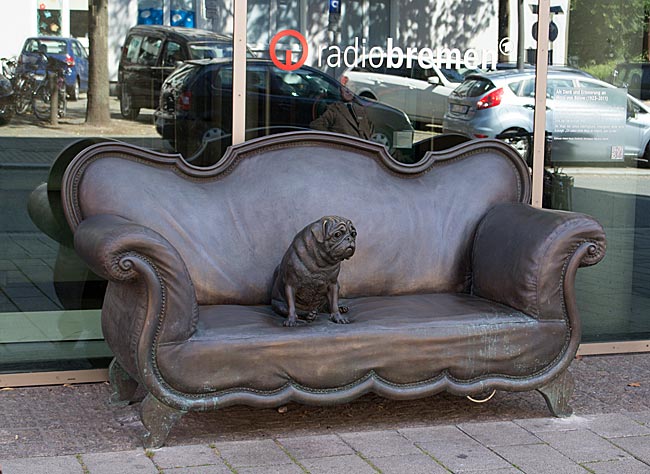
A short distance further at Loriotplatz, another prominent figure is commemorated: the late Loriot (d. 2011). Many will remember his sketches in Germany, which seemed plucked straight from real life. While his television sofa - featuring a pug - from a six-part series in the mid-1970s stands in bronze outside Radio Bremen’s building in Stephani district, here one of his otherwise drawn figures sits life-sized on a park bench.
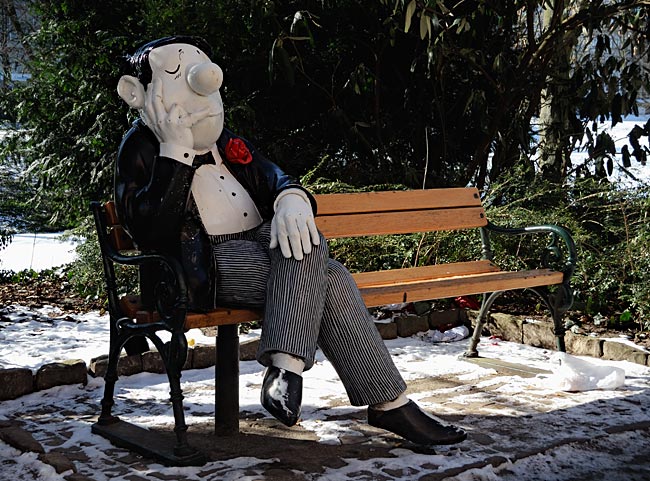
One of Loriot's figures in life size
Gardening activities also bring to life one of Bremen’s most beloved photo subjects each year: the Herdentorswallmühle (Herdentor Wall Mill). Along with the mill in Oberneuland, it is among the last remaining mills in Bremen and part of the "Lower Saxon Mill Road." The five-story gallery-style Dutch windmill was erected in 1833 on the former slightly elevated Gießhausbastion and operated as a grain mill for over 100 years until 1947. The mill, whose lower octagonal section is made of red brick, has been damaged by fire, wartime effects, or simply time’s passage. Thus, repairs and restoration work have repeatedly been necessary, sometimes extensive, such as in 1998.
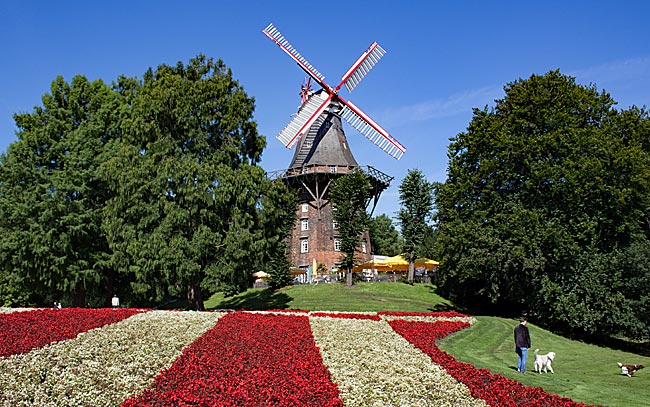
Not just on sunny days: a magical sight – the Herdentorswallmühle
Since then, with its four red-and-white jalousie shutters, it has been an undeniable eye-catcher along this heavily trafficked route between the train station and city center. It is also a popular meeting spot, as the two lower floors house a restaurant, and on nice days guests can enjoy outdoor seating surrounded by blooms. Unfortunately, the rustling sound does not come from the Wallgraben’s water.
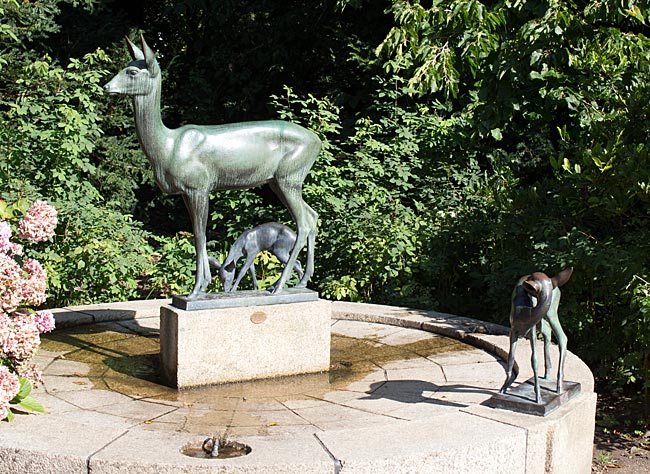
Rehbrunnen (Deer Fountain) with four bronze sculptures (Ernst Gorsemann, 1933) on a granite base near the mill. The protected monument is also known as the Hildebrandbrunnen (Hildbrand Fountain) and was donated by friends and acquaintances of Bremen politician Hermann Hildbrand for his 80th birthday.
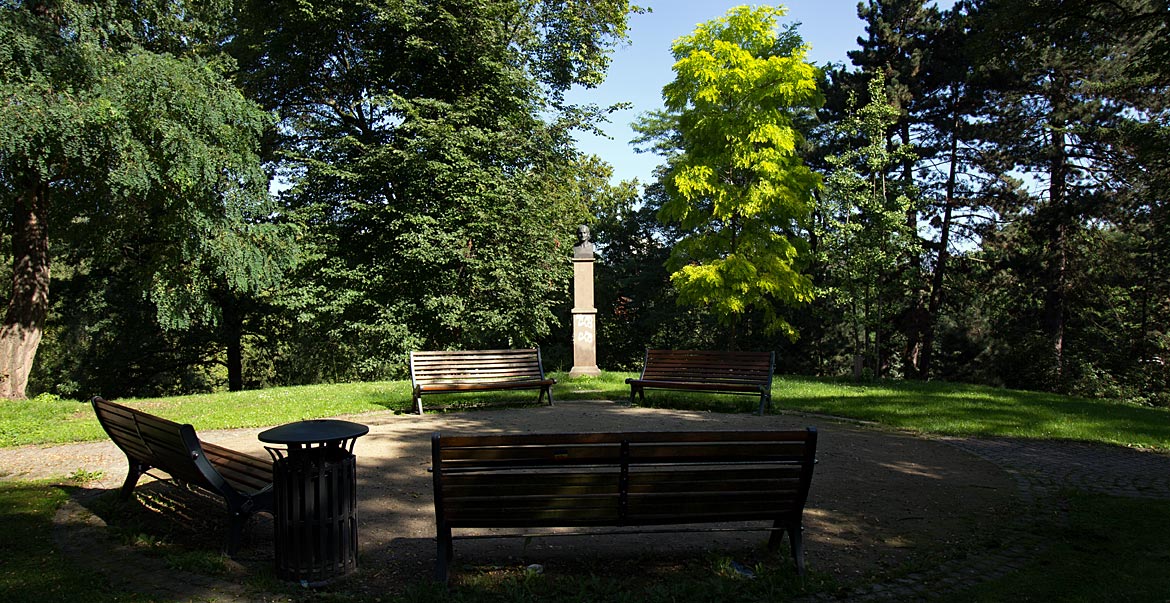
After crossing Bürgermeister-Smidt-Straße, you encounter the previously mentioned monument to "the creator of the WALLanlagen," Isaak Altmann (photo above). Four benches form a circle on the elevated former bastion.
And then? Not much remains, as urban development measures have somewhat severed the Wallanlagen here. The attempt to reconnect via Focke Garden in Stephani district is not entirely convincing.
Crossing Stephani Bridge into Neustadt district, you’ll find remnants of Bremen’s old defensive wall in the Neustadtswallanlagen - Hohentorspark, Justitiapark, central area, and Leipnitzplatzpark.
previous page
 next page
Observatory & Planetarium
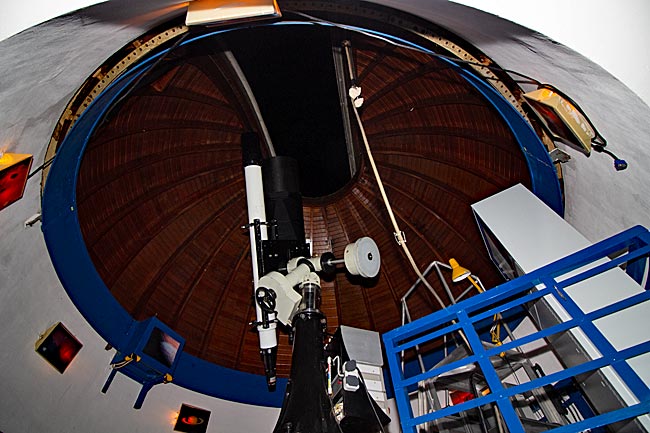
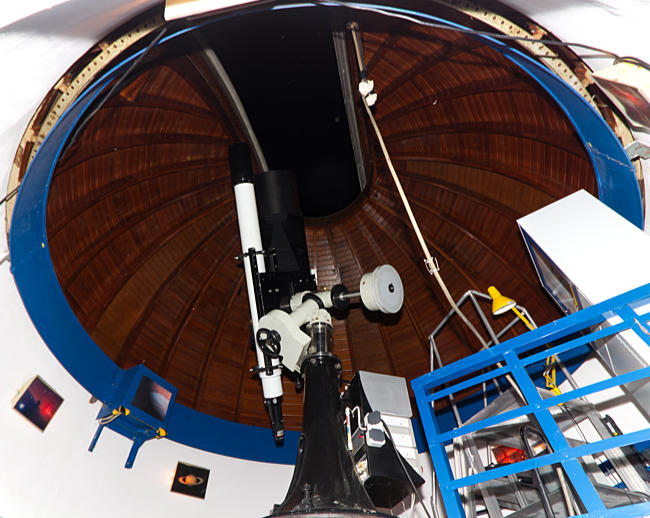
On selected days, visitors can also look through the large stationary and smaller mobile telescopes of Walter-Stein Observatory, which are set up on the terrace for the occasion. In the Olbers-Planetarium in the same building, members of the society give lectures on varying topics. Opened in 1952, the Olbers-Planetarium features a dome with a diameter of 6 meters, making it one of the smaller planetariums. It offers 35 seats (including wheelchair-accessible options) for visitors.
read more ...
Riensberg Cemetary
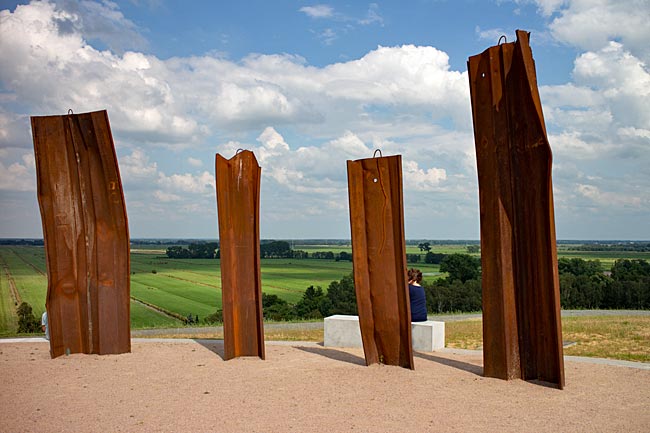
The Riensberg Cemetary, located within view of the Focke Museum, was established between 1872 and 1875 simultaneously with the Waller Cemetery as a replacement for two abandoned cemeteries elsewhere. The park cemetery, which today covers an area of about 28 hectares, is situated on the lands of the former Riensberg estate. The landscape gardener and garden architect Wilhelm Benque was commissioned to design the landscaping; he had previously been responsible for the garden art layout of Bürgerpark and, among others, Knoops Park in Lesum.
read more
...
The Bremen Town Musicians
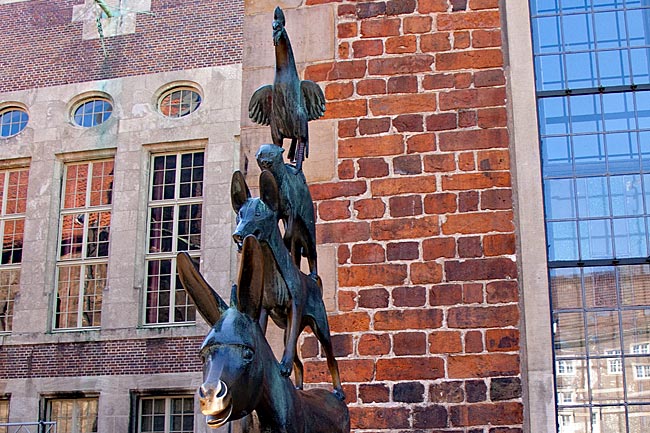
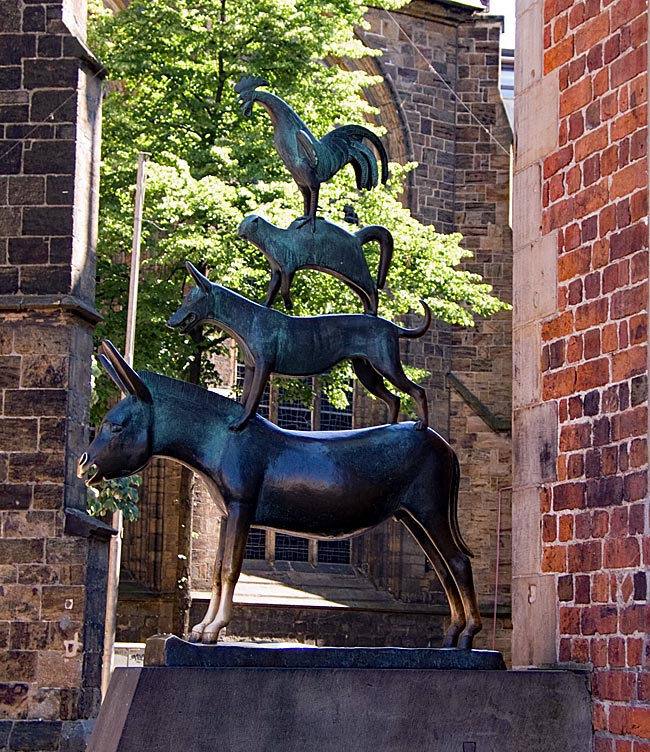
On the left broad side of the Old Town Hall, next to the entrance to the lower town hall hall, stand four bronze-cast heroes of a world-famous fairy tale - the Bremen Town Musicians. However, it remains a contentious point whether these mismatched four - donkey, dog, cat, and rooster - actually made it all the way to Bremen, as the fairy tale does not provide a clear answer on this matter. But perhaps that is not so important, for what truly matters is the message conveyed in the fairy tale.
read more ...
Domshof
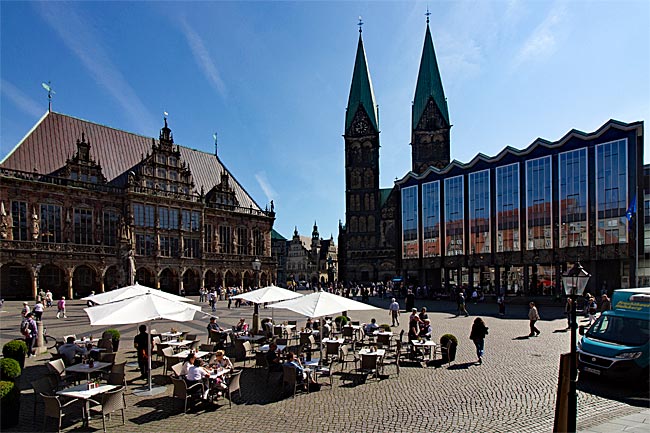
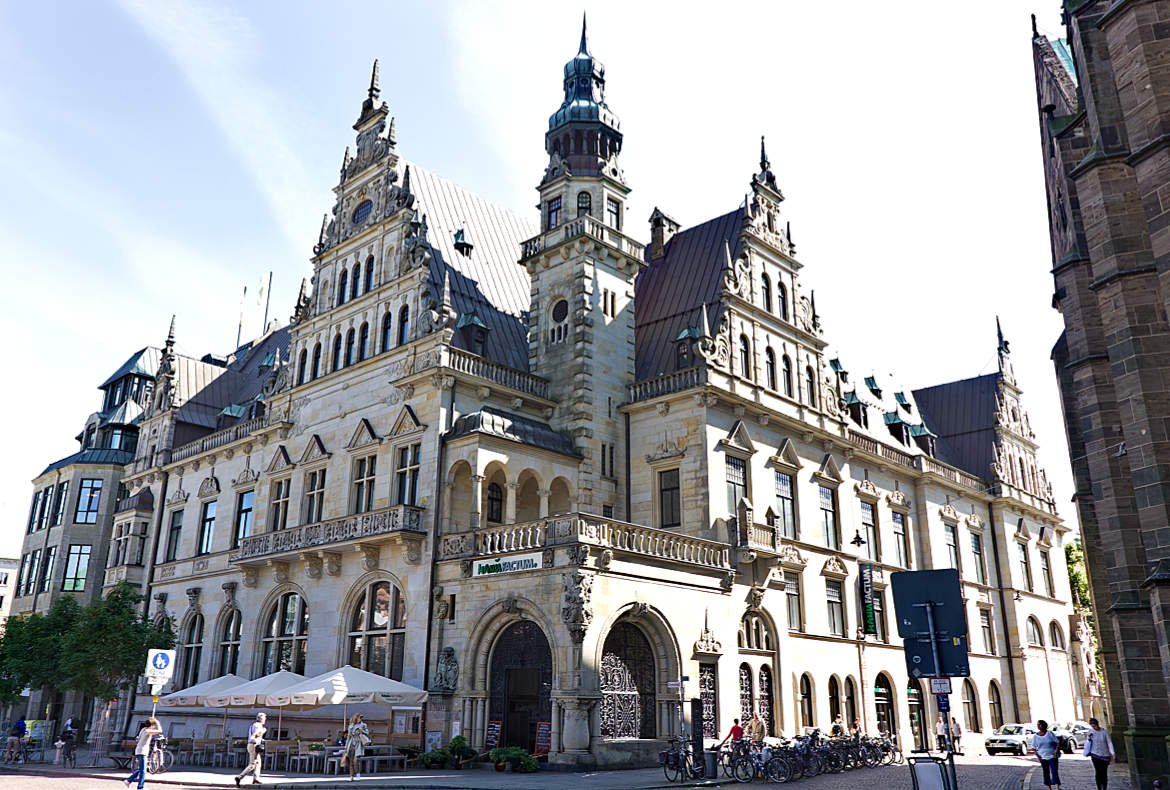
In the shadow of the cathedral stretches the Domshof. Until 1803, the cathedral district - and thus the large square - belonged to the respective bishops, Sweden, and later the Electorate of Hanover, who ruled Bremen at times. The buildings, including townhouses, and the planting of numerous trees made the Domshof one of the most beautiful squares in the Hanseatic city during the 18th and 19th centuries.
read more ...
Freimarkt
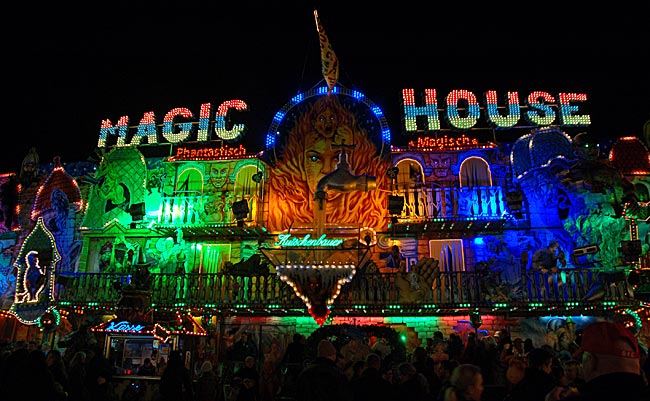
What some might simply call a fair or a large amusement park is, for others, an event of equal importance to Christmas. However, the fact remains that for most residents of Bremen, the Freimarkt is considered the "fifth season" and an unshakable Bremen tradition. This isn't surprising, as Bremers can look back on nearly a thousand years of history for their festival - and with that, the Freimarkt is Germany's oldest folk festival.
read more ...
Stephani district
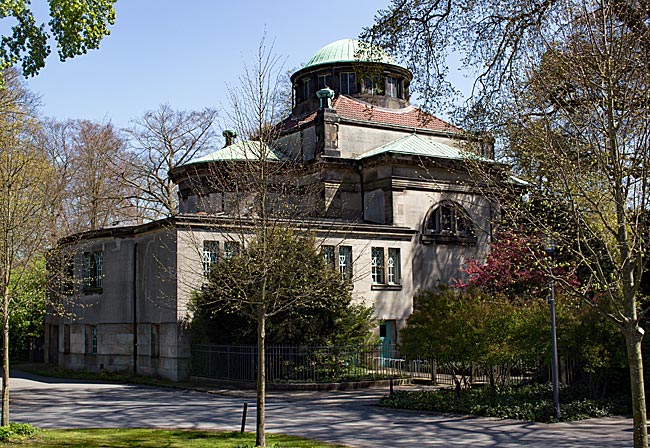
The Stephani district forms the western end of Bremen's Old Town and is considered the birthplace of the city, making it one of its oldest districts. As early as 1050, Archbishop Adalbert I founded a priory in honor of Saint Stephen. The priory, located on a dune, was called Steffensberg (mons sancti Stephani) in German translation. Adalbert's episcopal successors established a parish and built the first church in what was then also known as Steffensstadt (Stephen’s City).
read more ...
Schnoor
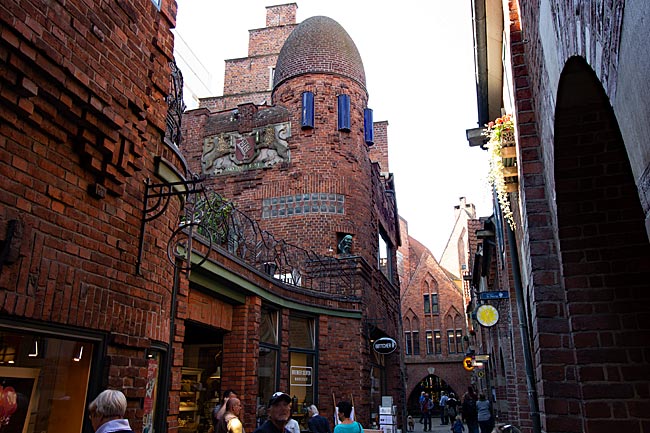
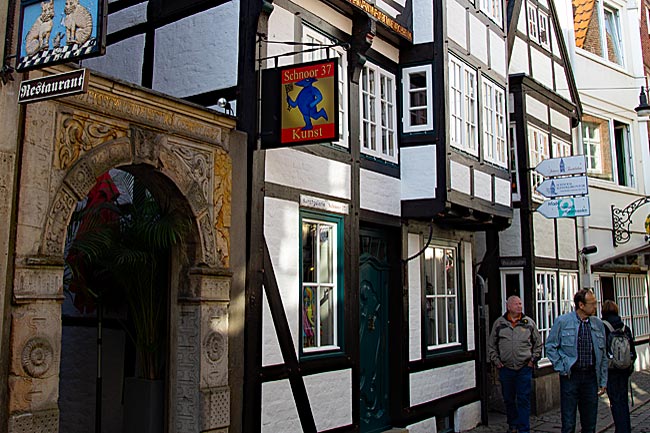
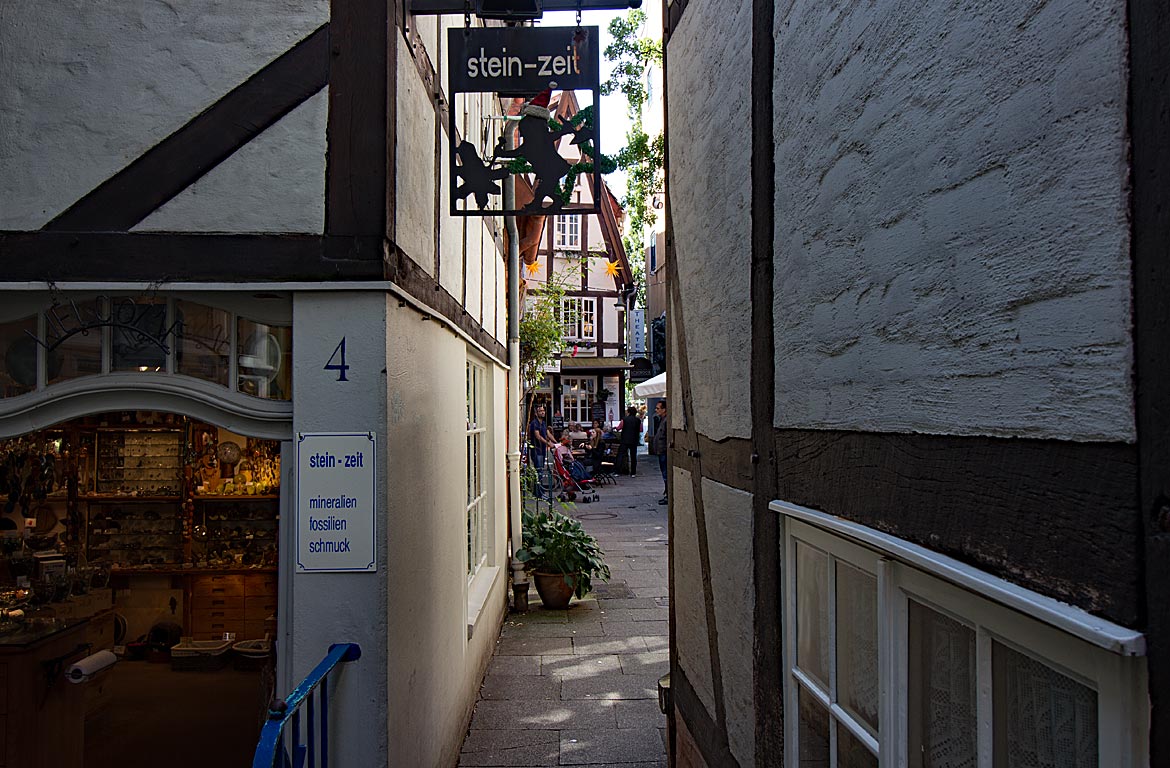
Bremen's oldest preserved neighborhood is the Schnoor. In earlier times, this area was primarily inhabited by fishermen and sailors, as it was here that the Balge - a tributary of the Weser - ran, and one of Bremen's first harbors was located. Many of the small houses date back to the 17th century or have been reconstructed based on historical models. The house at No. 15 in Schnoor Lane, built in 1402 on medieval foundations, is one of the oldest structures in the Schnoor, alongside the Packhaus (1401).
read more ...
City Center: the main shopping streets
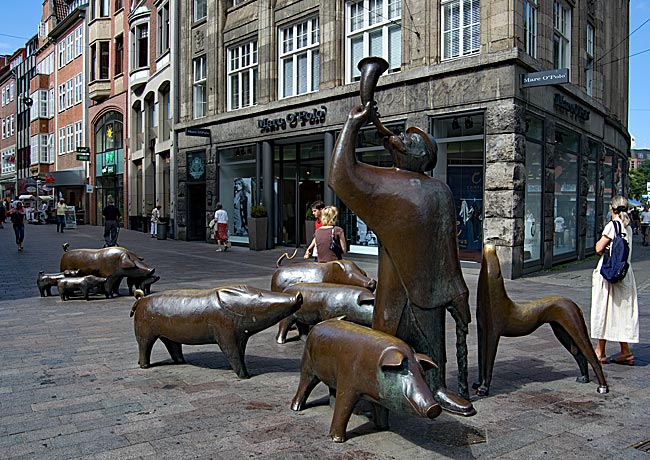
Another traditional café can be found at Sögestraße 42/44. The Knigge confectionery was established in 1889 and offers a variety of baked goods, chocolates, and ice cream, making it well-known throughout the city. Diagonally across from the café, branching off from the row of shops, is the glass-covered Katharinen-Passage, which - with an interruption - leads into the Domshof-Passage, ending at the Domshof. On this site, which now houses retail stores and a parking garage, once stood the namesake St. Katharine's Monastery.
read more ...
Kunsthalle
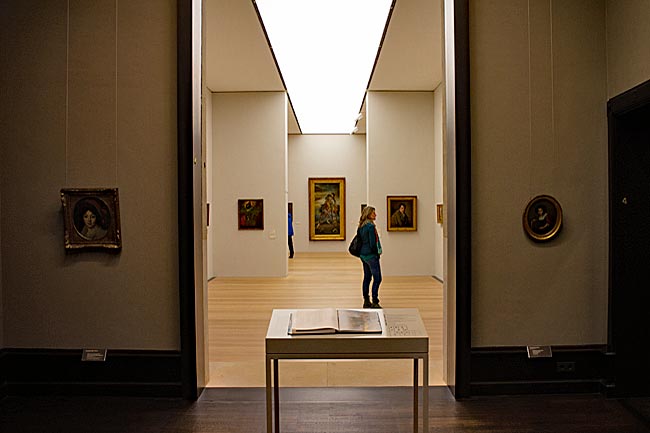
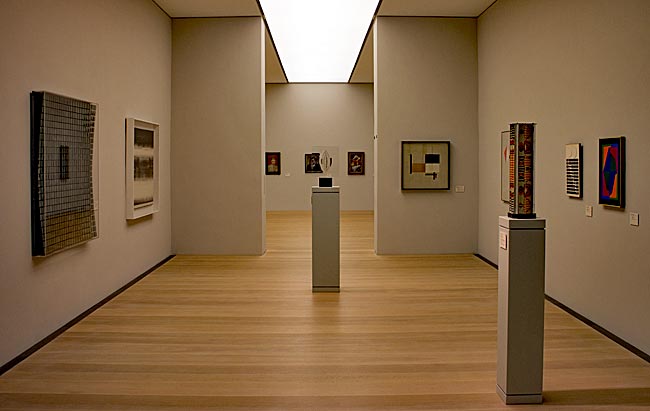
The core of the Kunsthalle's collection represents European painting from the Middle Ages to the present day. A particular focus lies on French painting of the 19th and 20th centuries, primarily showcased through one of the largest collections of Delacroix's works. German Impressionism is another key highlight, featuring works by artists such as Liebermann, Corinth, and Slevogt. The collection also includes painters from the renowned Worpswede artist colony near Bremen, such as Heinrich Vogeler and Otto Modersohn.
read more ...
A stroll through the Neustadt
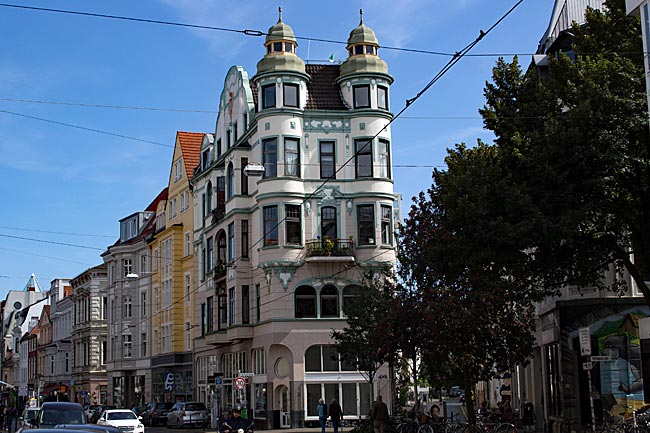
The Alte Neustadt, as part of today's neighborhood, was only established in the 17th century. The planned expansion of the city was also prompted by the increasing threat posed by the development of offensive weapons. Remnants of the fortifications built at that time are still present today as parks, but there is much more to discover, such as the "Kleine Roland".
read more ...
Through Woltmershausen to Lankenauer Höft
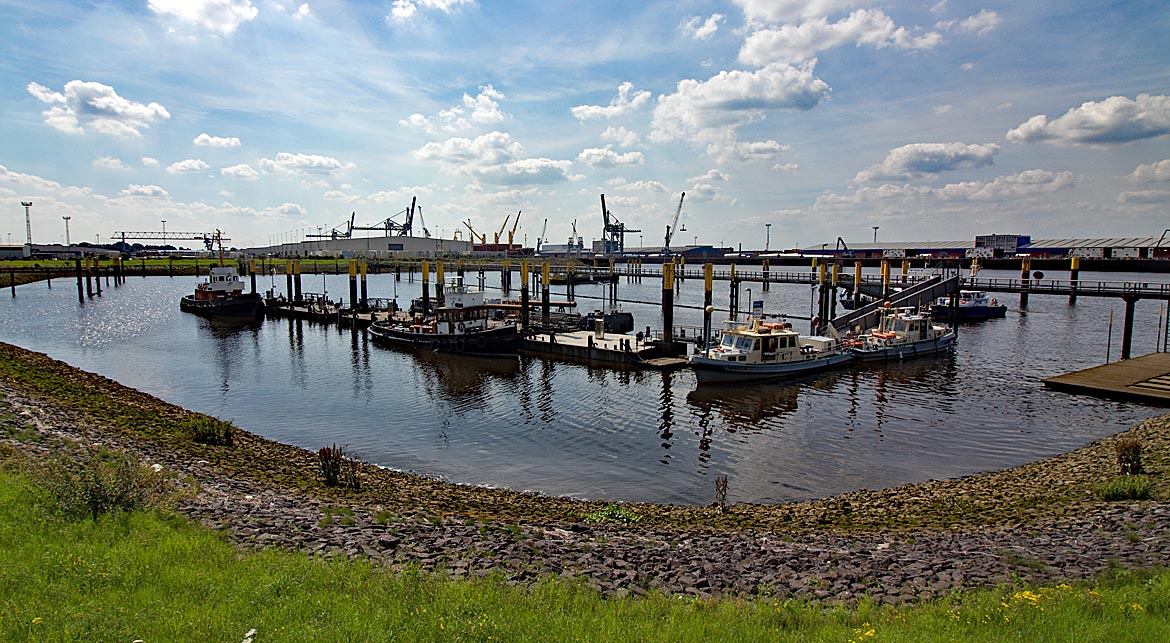
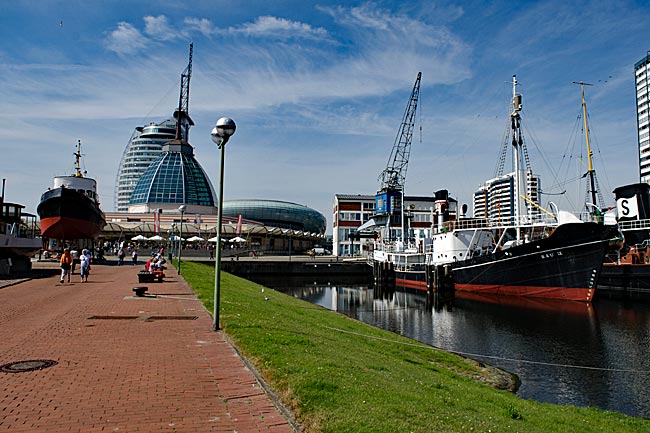
A truly maritime bike tour takes you from the Stephani Bridge through Hohentorshafen and Woltmershausen all the way to Lankenauer Höft, which is almost entirely surrounded by water. Behind the Höft, several ships, including the 1957-built tugboat Greif, are moored in an unrestricted section of Neustädter Harbor. This view of the harbor marks the end of this tour.
read more ...