
 exploring Bremen & its surrounding areas
 You are here: worth seeing in the surroundings
 Fischerhude - a peasant village & artists' colony (1/2)
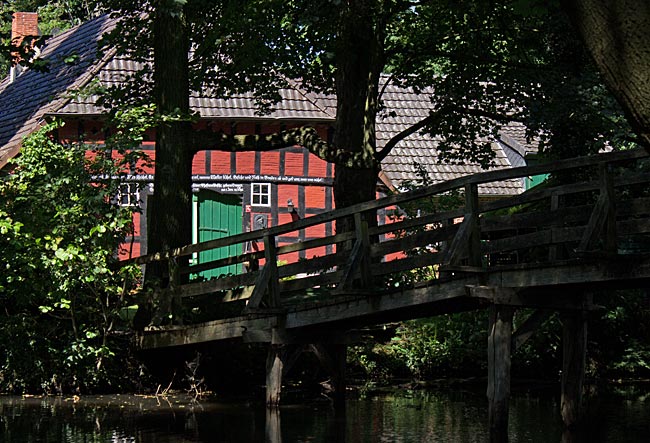
Rural Tradition by the Wümme in Fischerhude
A beautiful day trip destination from Bremen is the village of Fischerhude, which has belonged to the municipality of Ottersberg in Lower Saxony since 1972. From the Bremen districts of Borgfeld, Horn, and Oberneuland, one can easily cover the approximately 15-18 kilometer route by bike, first along the Hollerdeich, then its continuation Hodenbergerdeich, and finally through the Fischerhude Wümme valley, if you don’t want to drive. Just like the Wümme meadows in Borgfeld, the adjacent "Fischerhude Wümme Meadows," spanning around 750 hectares, have been under nature conservation since July 1, 2006. The mostly green landscape with abundant water is traversed by a low-traffic route until you reach Fischerhude.
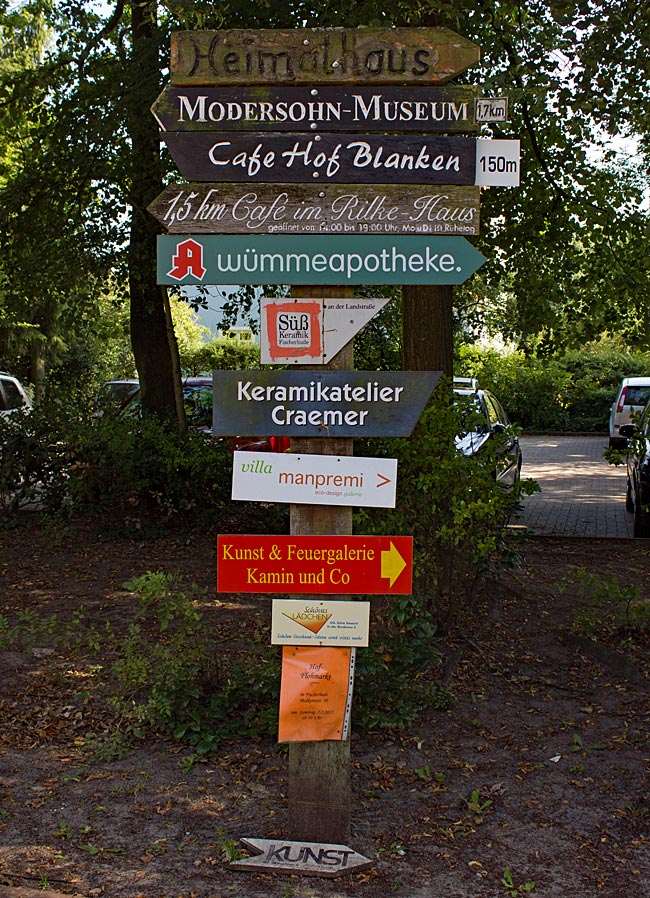
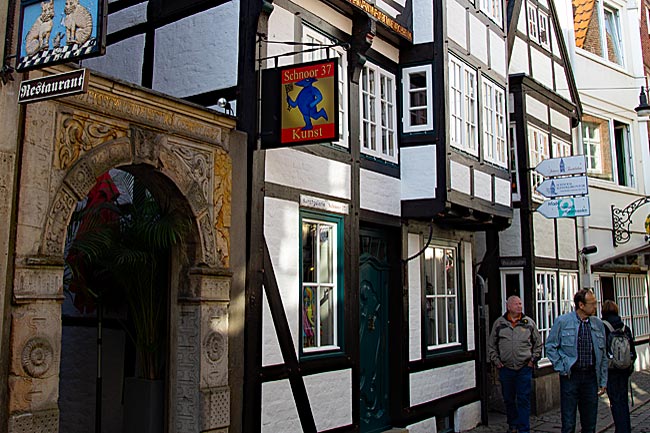
Art (Kunst) on the ground, too heavy?
Signposts make it clear to every previously unaware visitor that this place differs significantly from other traditionally agricultural villages. While in some places, clocks seem to have slowed down time considerably over decades, Fischerhude is vibrant. Numerous cafés and restaurants, ceramics studios, art galleries, a local history museum, the Modersohn Museum, and more vie for the favor of an audience that regularly strolls through Fischerhude in large numbers - sometimes more, sometimes less interested in art.
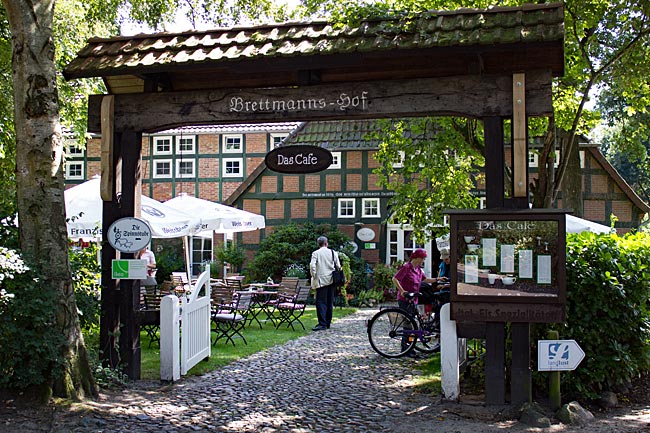
Inviting atmosphere
Yet, despite all the fascination with the unusual concentration of cultural offerings in a relatively small place, one should not overlook the fact that Fischerhude remains an active agricultural hub. This becomes apparent when heavy farming machinery roars past you, such as during harvest season when grain is transported from the fields, sometimes literally pitting breadless art against ripe corn. But is this really a contradiction? It doesn’t seem so to outsiders. Perhaps it’s because agriculture and livestock farming in the area are sometimes conducted under ecological standards up to certified organic labels like Demeter and Bioland, making the worldviews not as different as they might appear.
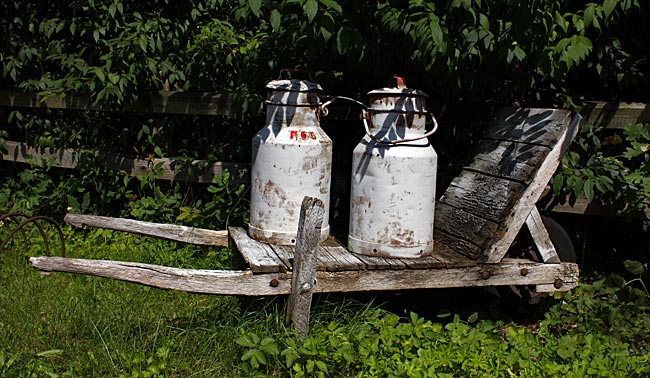
Milk transport from long ago
Fischerhude has a long history. The village, once part of the parish of Wilstedt and later belonging to the Grand Duchy of Oldenburg until the 19th century, was first mentioned in records in 1124. The numerous preserved, sometimes centuries-old, beautifully restored farmhouses testify to a significant rural prosperity that the (former) inhabitants earned not only on land but also on water. After all, those who think of fishing when hearing the name "Fischerhude" are not entirely wrong, in the past, eels were caught in large quantities in the many branches of the Wümme, especially at the southern edge of the village. In fact, the farms were connected by waterways, and hay and peat were also transported this way.
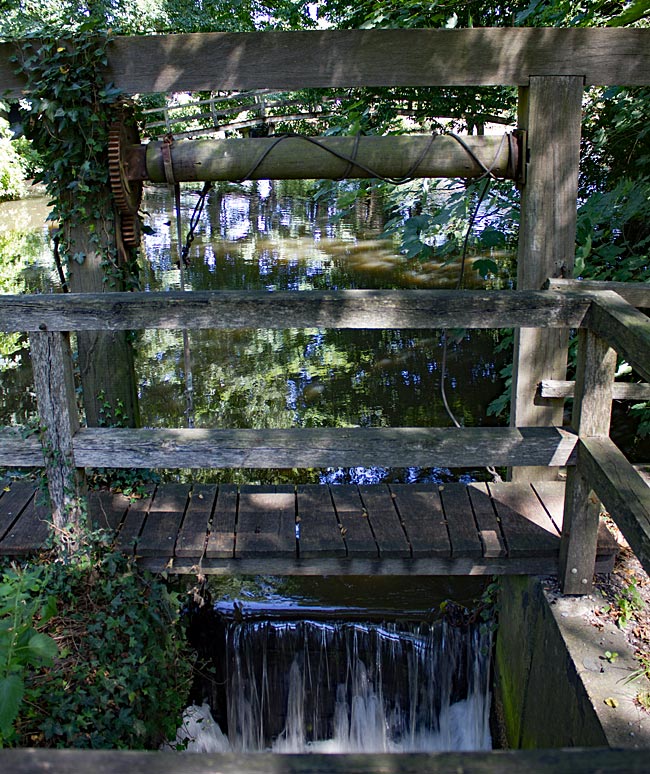
The Wümme at the southern border of Fischerhude
The development into an artists' colony began in 1892 when the painter Heinrich Breling settled in Fischerhude with his wife Amalie and six daughters after his studies elsewhere. He had spent his childhood here. The artist, who was once court painter to King Ludwig II of Bavaria, had been dead for six years when his daughter Olga married the ceramist, sculptor, and dancer Jan Bontjes van Beek in 1920. Two years later, he opened a ceramics workshop in Fischerhude with his sister-in-law Amalie, who was not only a teacher in Hanover but also a painter, sculptor, and ceramist. Their work soon established the regionally famous brand "Fischerhuder Kunstkeramik."
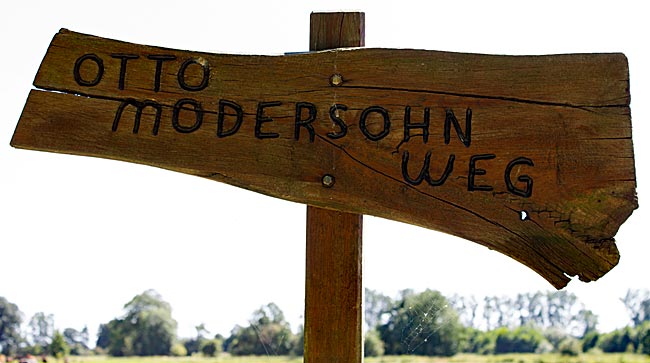
Following the artists' paths
Otto Modersohn, co-founder of the Worpswede artists' colony and a landscape painter, also lived in Fischerhude for a time. After the death of his second wife in 1907 - the renowned painter Paula Modersohn-Becker - he moved to Fischerhude and later married Louise, the second-oldest daughter of Heinrich Breling, a singer and painter. Some of his landscape paintings from his oeuvre can be viewed at the Otto-Modersohn-Museum in the village.
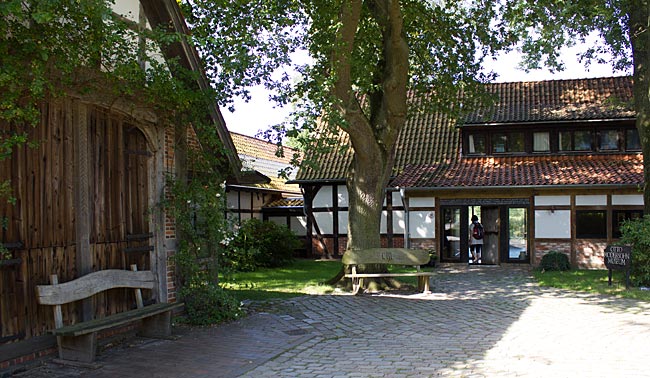
The Otto-Modersohn-Museum
previous page
 next page
Map
Further information
www.fischerhude.com
Otto-Modersohn-Museum
In der Bredenau 95
28870 Fischerhude
Phone: +49 (0)4293 328
Open: Daily from 10 AM - 6 PM
Email: info@modersohn-museum.de
www.modersohn-museum.de
Heimathaus Irmintraut
Kirchstraße 2
28870 Fischerhude
Phone: +49 (0)4293 7186
Open: March - October: Wednesday, Friday, Saturday, and Sunday from 11 AM - 1 PM and 3 PM - 5 PM; November - February: Saturday and Sunday from 11 AM - 1 PM and 3 PM - 5 PM
Kunstverein Fischerhude in Buthmanns Hof e.V
(Art Association)
Im Krummen Ort 2
28870 Fischerhude
www.kunstverein-fischerhude.de
Worpswede
In 1889, the painters Fritz Mackensen, Otto Modersohn, and Hans am Ende laid the foundation for this art center with their decision to work and live in the small, previously unknown village. They were quickly followed by other artists such as the painter Paula Becker, the poet Rainer Maria Rilke, Clara Rilke-Westhoff, Fritz Overbeck, Heinrich Vogeler, and later the sculptor, painter, and craftsman Bernhard Hoetger, after whose designs, among others, the Paula-Becker-Modersohn-House in Bremen's Böttcherstraße was built.
read more ...
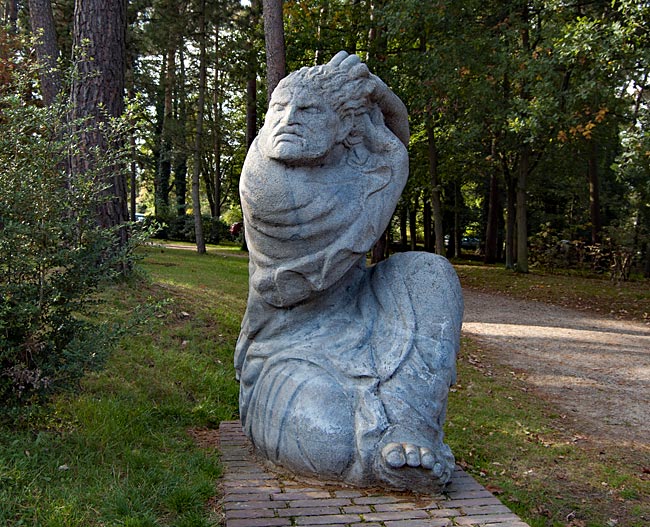
Impressions from Fischerhude
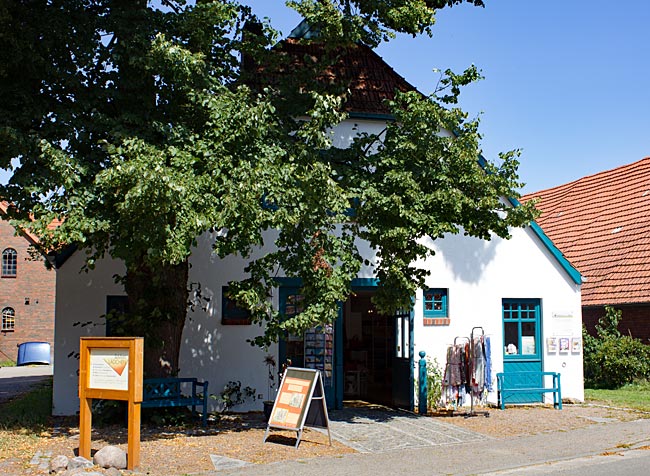
Shop in the street "In der Bredenau"
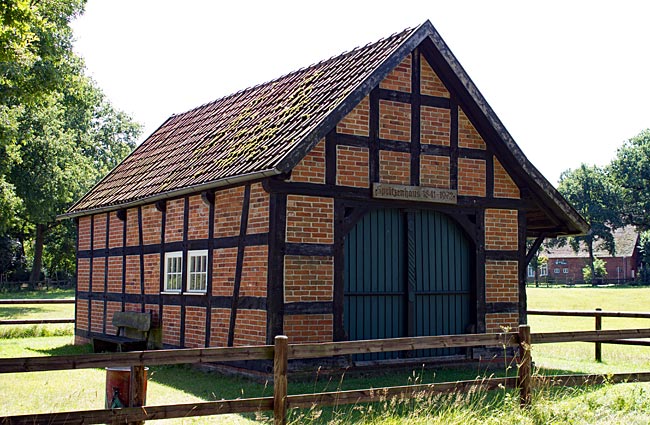
The former fire station of the village, built in 1841 and operational until 1972
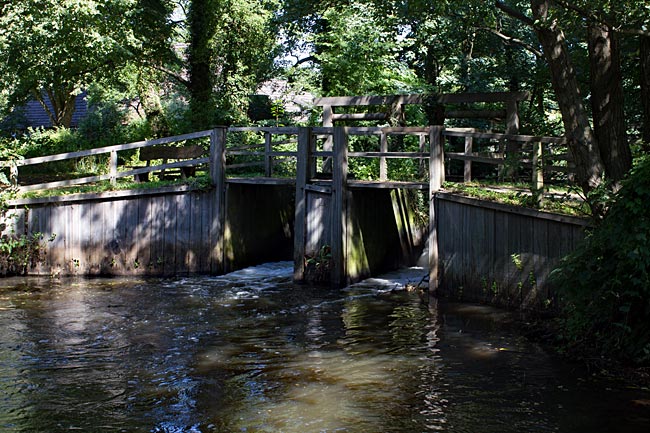
A small weir on one of the Wümme branches
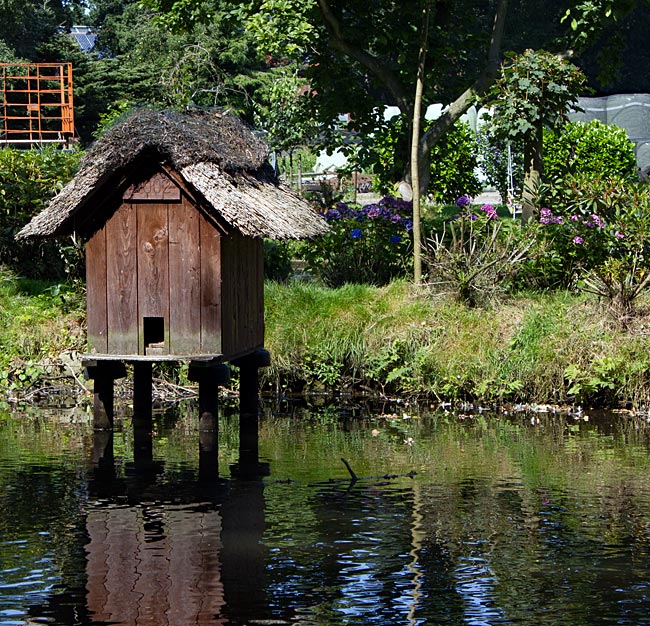
Typical for the area: small duck houses on the Wümme
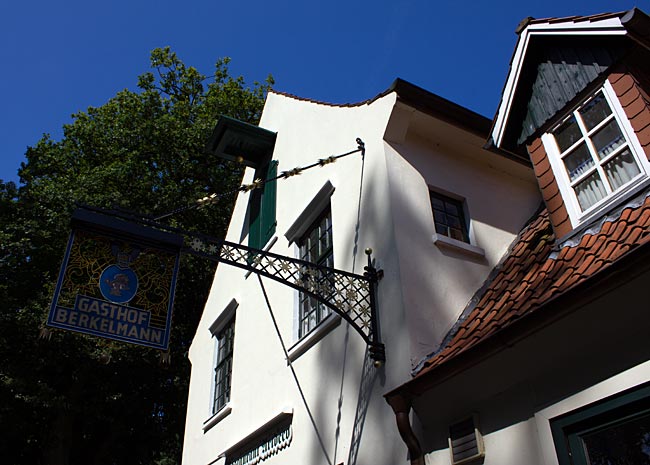
Berkelmann Inn
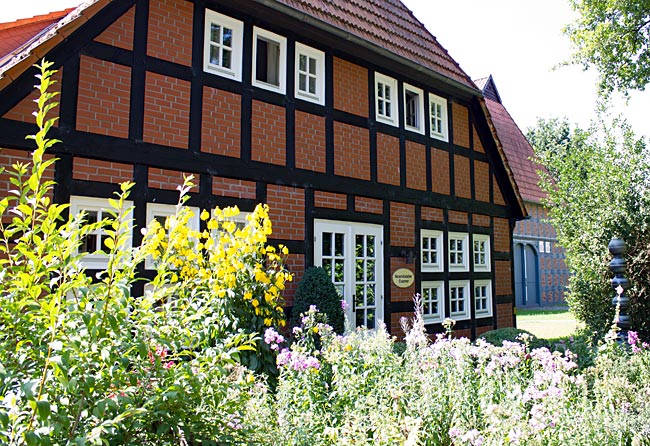
Here, the Craemer ceramics studio invites visitors to stop by
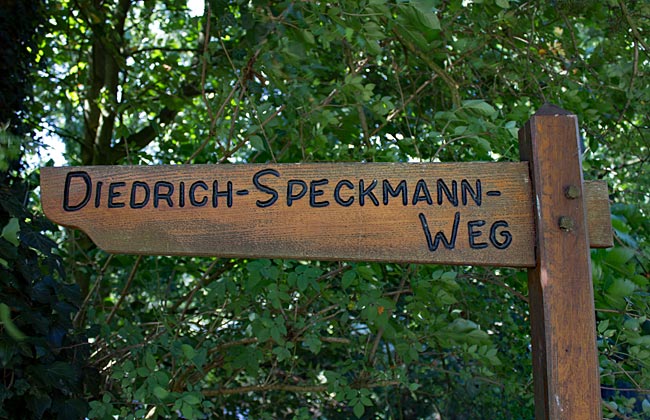
The "Heidedichter" (heath poet) Diedrich Speckmann died in Fischerhude in 1938
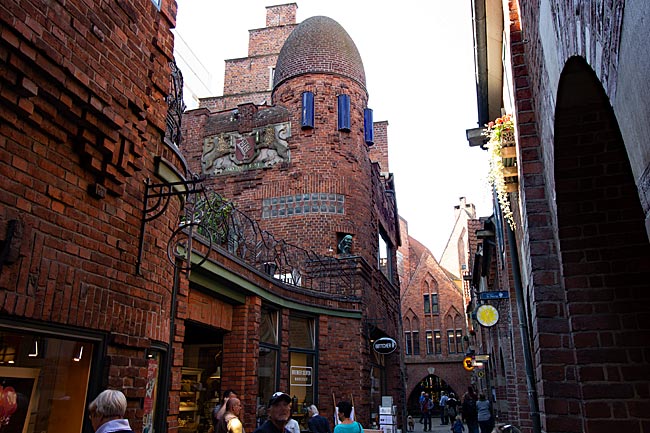
Bremen Böttcherstraße
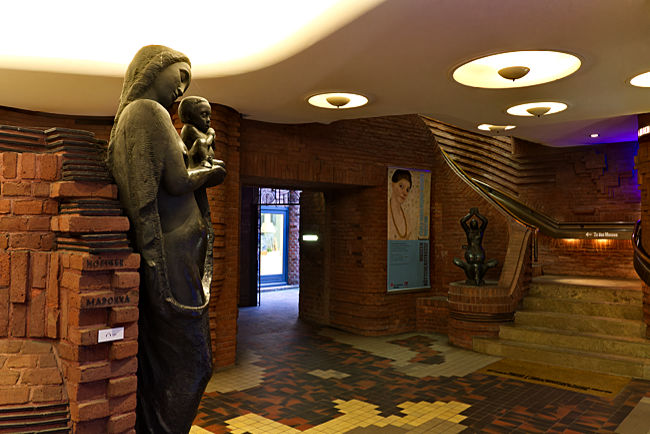
Ludwig Roselius' great affection for art is particularly evident in the Paula-Becker-Modersohn-House. It was not only the first museum dedicated to a female artist but also attracted worldwide attention due to its relief-like exterior walls designed by sculptor Bernhard Hoetger and its dynamically shaped interior spaces, sparking numerous discussions. Today, the museum in the 1926/27 building presents the most comprehensive collection of paintings by Paula Modersohn-Becker. More artworks by Bernhard Hoetger can be seen, among other places, at the Hötger-Hof next to the Roselius-House, where several bronze sculptures are on display.
read more ...