
 exploring Bremen & its surrounding areas
 You are here: worth seeing in the surroundings
 Fischerhude - a peasant village & artists' colony (2/2)
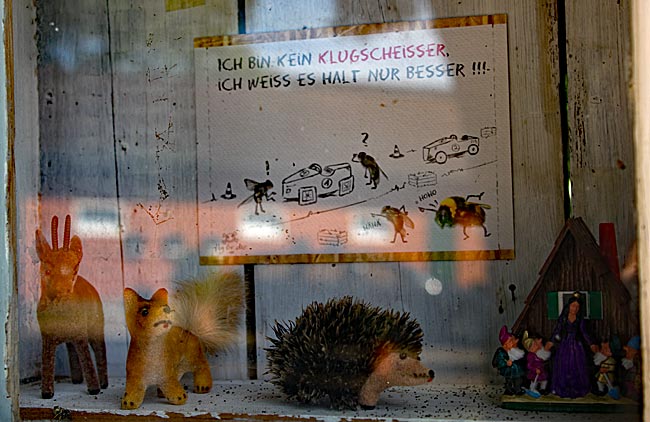
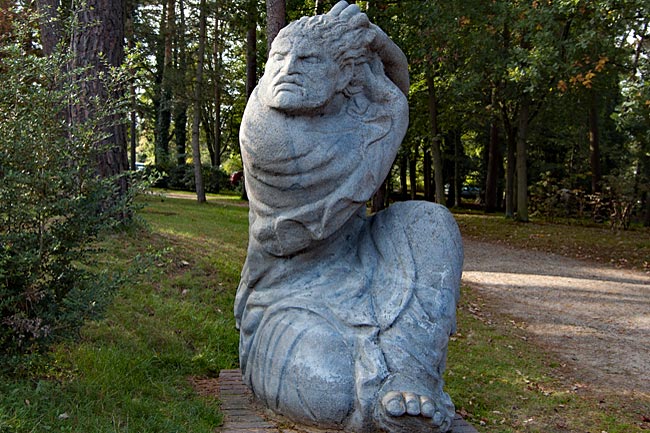
Hm, is that art or can it go? The sentence in english is: I'm not a know-it-all, I just know better.
Besides well-known figures like the sculptor and painter Clara Rilke-Westhoff - wife of the poet Rainer Maria Rilke - many lesser-known artists, craftspeople, and artisans have worked in Fischerhude. And they still do today. To introduce the local creatives and their works to a wider audience and generate income for the creators through potential sales, the Fischerhude art club regularly hosts exhibitions at the local cultural center, Buthmanns Hof. The chances of attracting enough interest are quite good, as many artists and art enthusiasts live and work in the surrounding area beyond Fischerhude’s borders. One reason for this is the private "Hochschule für Künste im Sozialen" (University of Arts in Social Work) founded in 1967 in nearby Ottersberg, where students study art therapy and pedagogy, theater pedagogy, fine arts, and art and theater in social contexts.
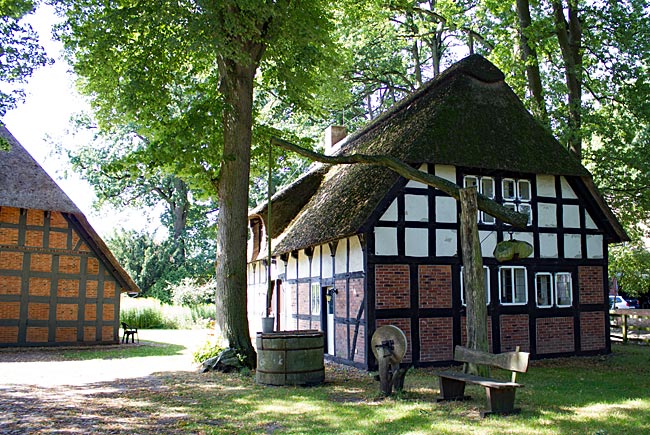
Building of the Museum Heimathaus Irmintraut
Sometimes, it’s also an art to shape one’s own life, and how that looked in a large farming family is shown at the Museum Heimathaus Irmintraut. A cooking and fire pit was the central gathering place within the building. On display are utensils and tools for household chores as well as craftwork, sleeping areas, and much more. Most of the exhibition pieces were donated by local residents. The name of the museum comes from the first name of Irmintraut Schloen, the young daughter of a teacher couple who bought the former farmstead in 1933 and opened the museum in 1934. The Heimathaus Irmintraut is actually a building complex that includes not only the main museum house (a two-aisle house) but also a bakehouse, a grain store, and a boat shed. Since 1984, a foundation has taken care of preserving the museum. But the former Tietjen family farm, built in 1764, is not just a museum, it’s also an event venue and meeting place for local clubs.
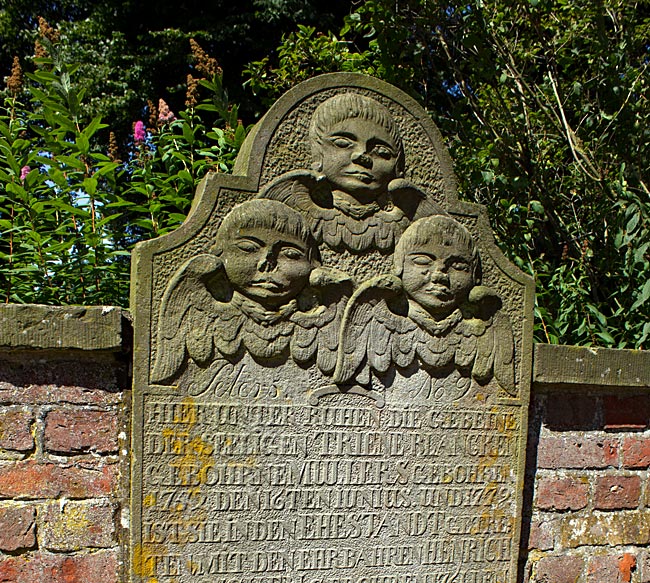
Gravestone from the 18th Century
Many of the gravestones surrounding the Liebfrauenkirche, right next to the Heimathaus, also date back to the 18th century. There are 39 of them, the oldest having been brought from Wilstedt in 1859. For a long time, the deceased from Fischerhude were buried there on the churchyard of the responsible parish until their own cemetery was established in 1825. However, the small church we see today didn’t exist yet, it was only built in 1841 and later received its tower and apse.
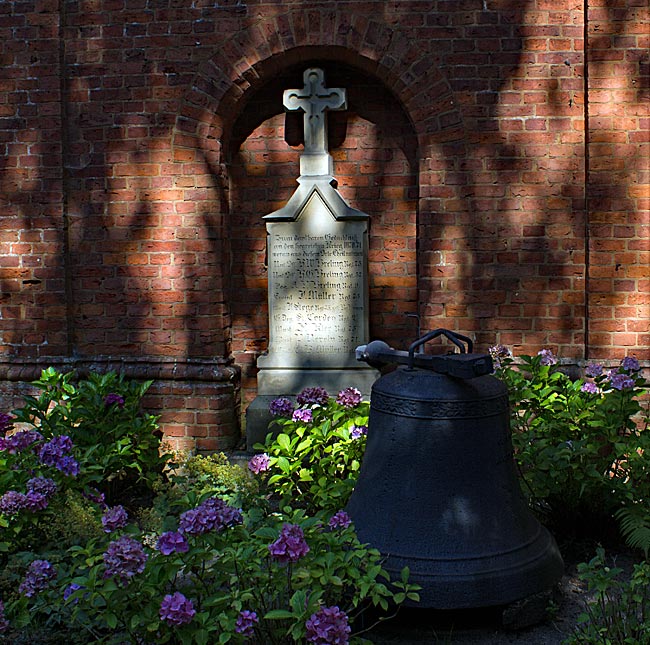
At the Liebfrauenkirche
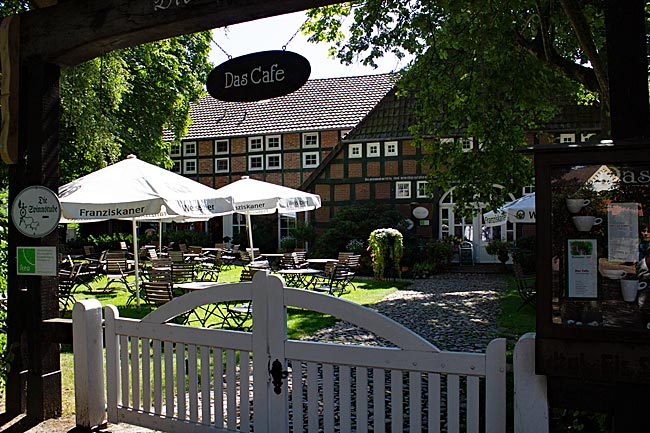
If it’s not a day of rest, you can indulge in culinary delights in Fischerhude, often even outdoors if the weather is nice. Whether an ice cream cone, cake, or something more substantial, numerous cafés and restaurants offer something for every palate. One such café is located on the way to the Modersohn Museum on "In der Bredenau" street in the Rilke House.
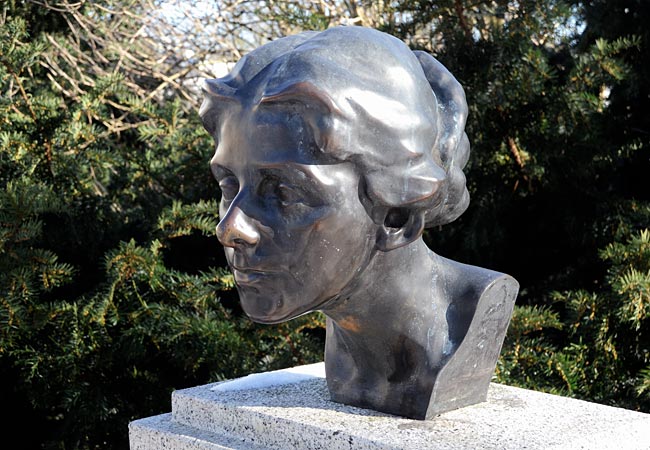
A work by Clara-Rilke-Westhoff: bronze bust of painter Paula Modersohn-Becker in Bremen’s Wallanlagen behind the Kunsthalle (art hall)
The artist, who had also been a student of Auguste Rodin in Paris at times, lived here until her death in 1954. After her daughter, the last resident, passed away in 1972 and was buried - like her mother and other relatives - in Fischerhude’s cemetery, the house stood empty for several years before it came into its current ownership.
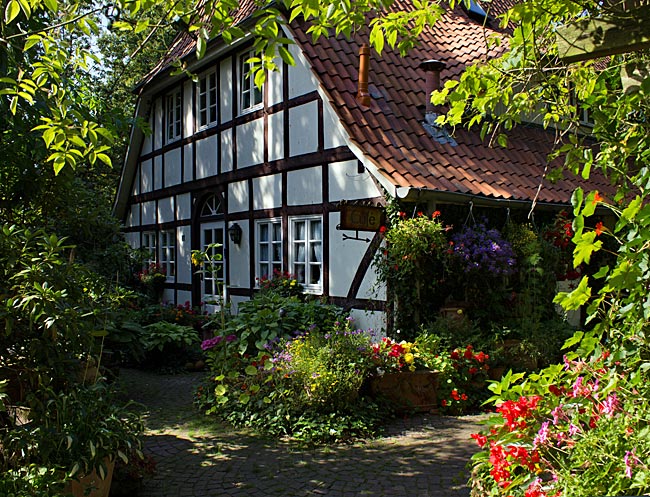
The "Old Rilke House" with Café
The operators feel a sense of duty to preserve history and have kept much of the house in its original state or restored it faithfully. For guests, they use tables and chairs from the region featuring typical wood carvings, including some with the famous tulip motifs of the late Worpswede artist Heinrich Vogeler, which are still produced today by his descendants based on the original designs.
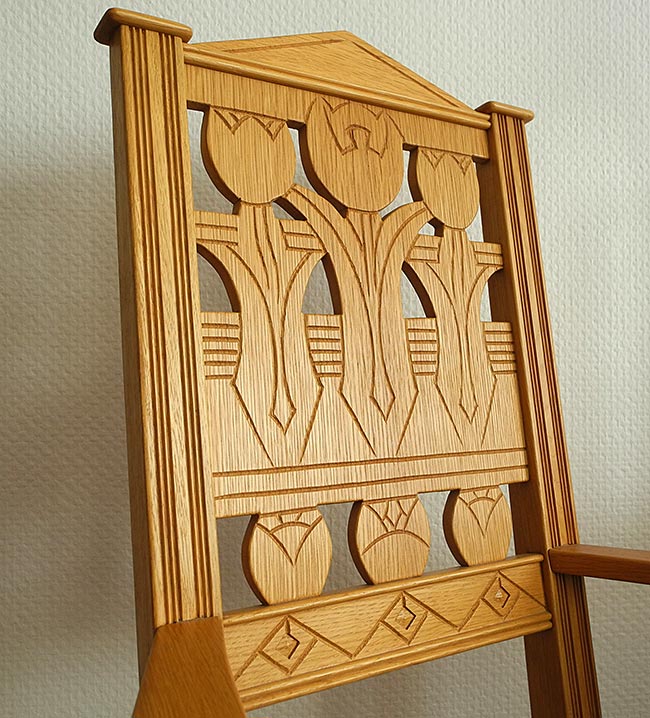
Tulip motifs inspired by Heinrich Vogeler on a Worpswede armchair
For millennia, people have harnessed the power of water where rivers and streams flow. In Fischerhude, this included a watermill whose history dates back to 1525. From early 2007 to 2014, restaurateurs operated a restaurant in the charming half-timbered building, which involved extensive renovations of the old, dilapidated structure. Since 2015, the former mill has been under new ownership, but without gastronomy.
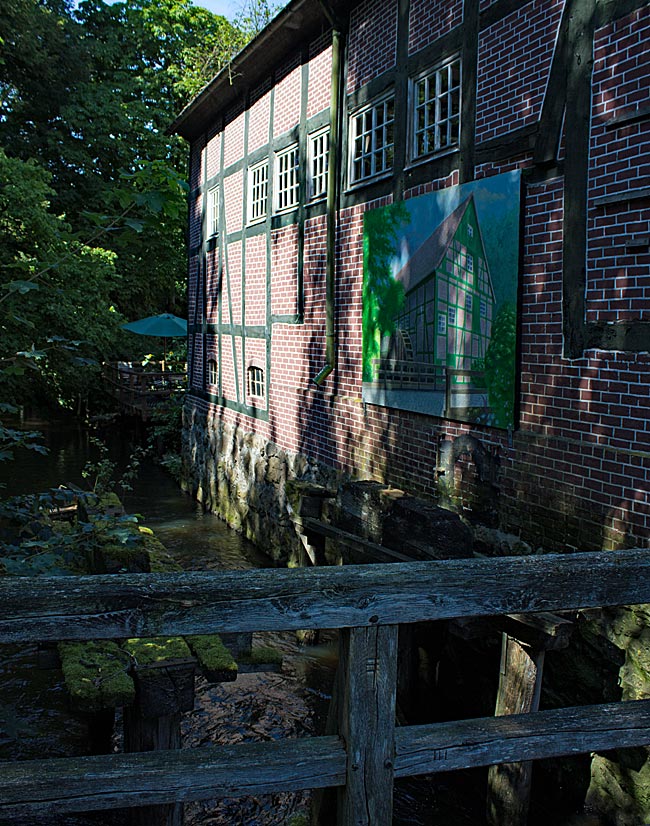
A good wheel is expensive, so the old watermill remains without
Those looking to celebrate will have to look elsewhere, and here’s a tip: the Christmas market with a children’s carousel, culinary delights, live music, handicrafts, and regional products. However, the duration of this pre-Christmas event is unusually short, as it is limited to just the third Advent every year.
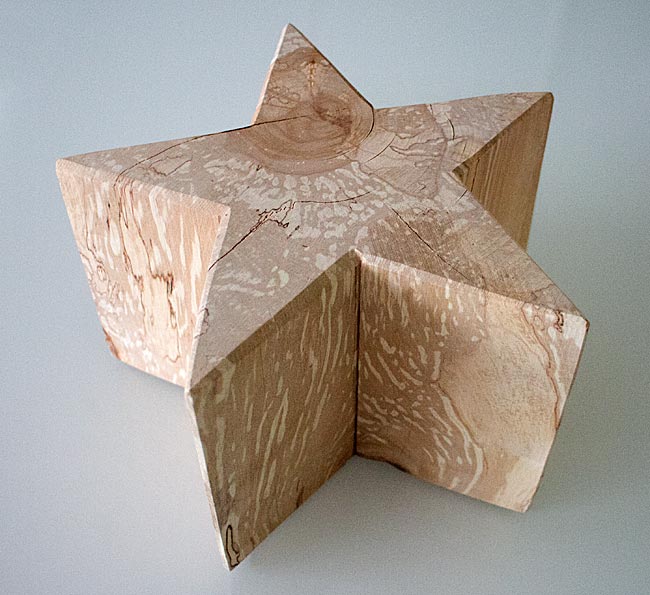
Wooden star from the Christmas market
previous page
 next page
Map
Further information
www.fischerhude.com
Otto-Modersohn-Museum
In der Bredenau 95
28870 Fischerhude
Phone: +49 (0)4293 328
Open: Daily from 10 AM - 6 PM
Email: info@modersohn-museum.de
www.modersohn-museum.de
Heimathaus Irmintraut
Kirchstraße 2
28870 Fischerhude
Phone: +49 (0)4293 7186
Open: March - October: Wednesday, Friday, Saturday, and Sunday from 11 AM - 1 PM and 3 PM - 5 PM; November - February: Saturday and Sunday from 11 AM - 1 PM and 3 PM - 5 PM
Kunstverein Fischerhude in Buthmanns Hof e.V
(Art Association)
Im Krummen Ort 2
28870 Fischerhude
www.kunstverein-fischerhude.de
Worpswede
In 1889, the painters Fritz Mackensen, Otto Modersohn, and Hans am Ende laid the foundation for this art center with their decision to work and live in the small, previously unknown village. They were quickly followed by other artists such as the painter Paula Becker, the poet Rainer Maria Rilke, Clara Rilke-Westhoff, Fritz Overbeck, Heinrich Vogeler, and later the sculptor, painter, and craftsman Bernhard Hoetger, after whose designs, among others, the Paula-Becker-Modersohn-House in Bremen's Böttcherstraße was built.
read more ...
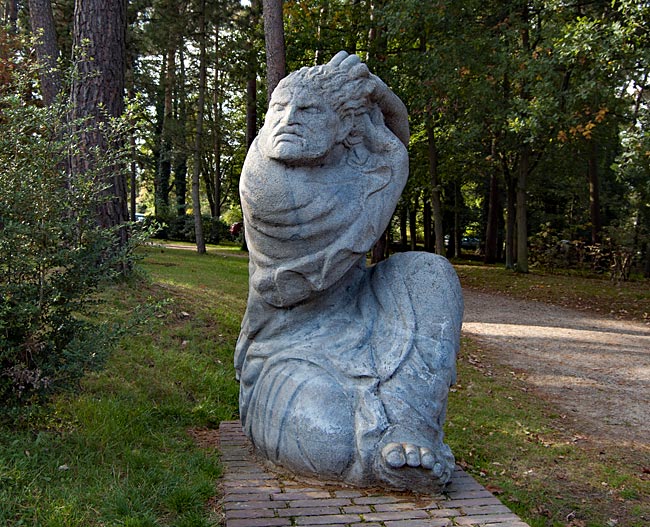
Impressions from Fischerhude
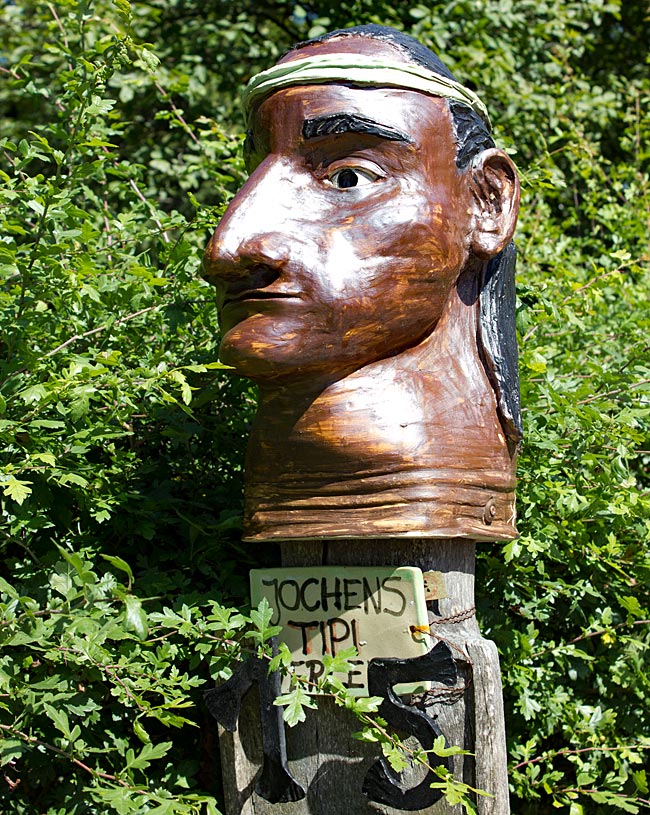
Indians in Fischerhude?
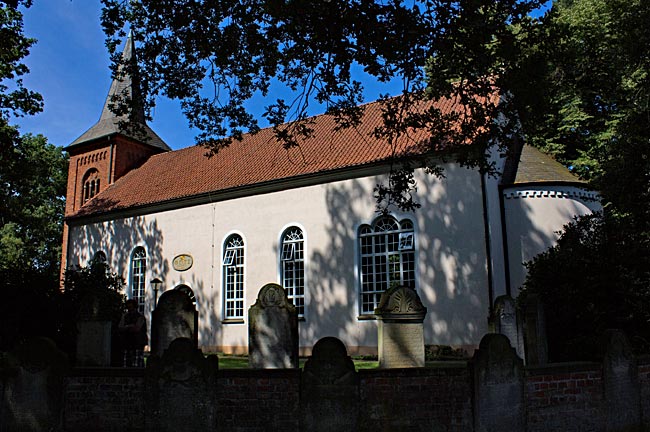
The Liebfrauenkirche with its surrounding gravestones
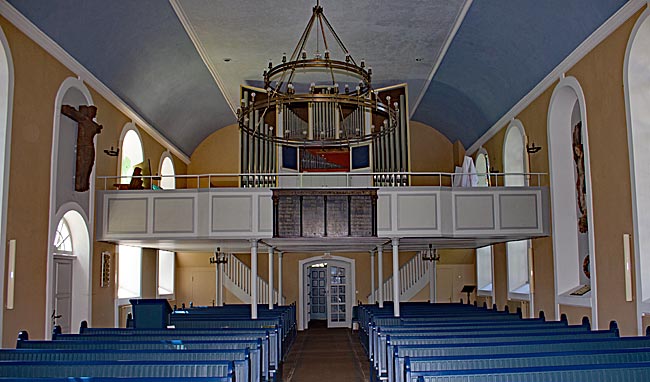
View inside the Liebfrauenkirche
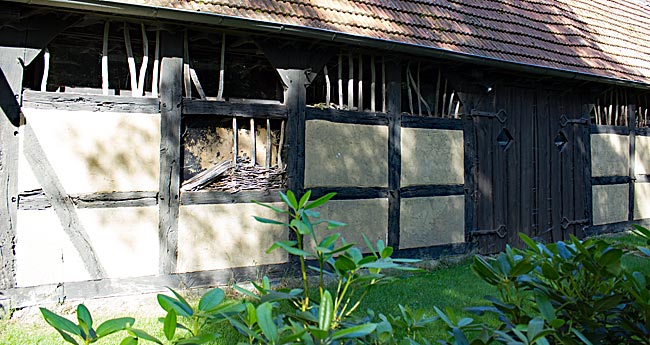
Old barn in half-timbered construction on "In der Bredenau" street
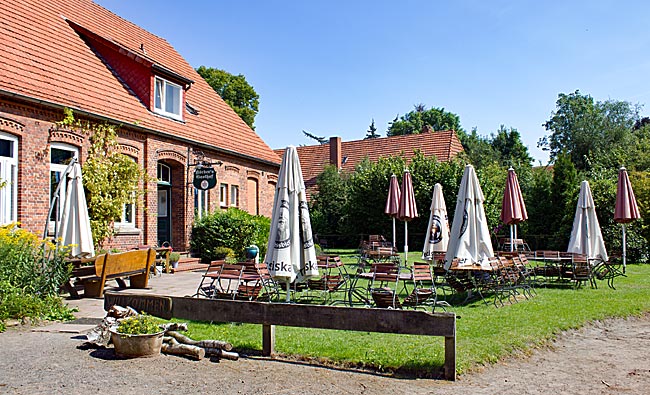
Körber's Gasthof
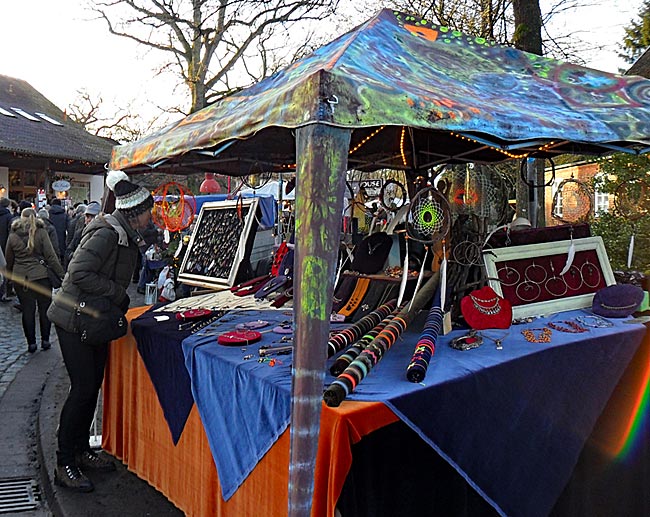
Colorful scenes at the Christmas market
Bremen Böttcherstraße
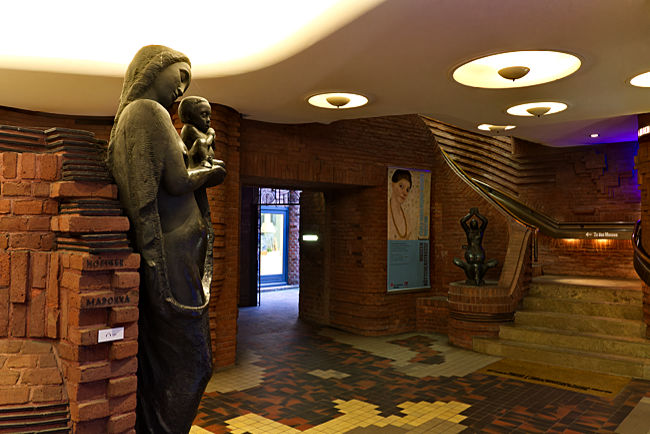
Ludwig Roselius' great affection for art is particularly evident in the Paula-Becker-Modersohn-House. It was not only the first museum dedicated to a female artist but also attracted worldwide attention due to its relief-like exterior walls designed by sculptor Bernhard Hoetger and its dynamically shaped interior spaces, sparking numerous discussions. Today, the museum in the 1926/27 building presents the most comprehensive collection of paintings by Paula Modersohn-Becker. More artworks by Bernhard Hoetger can be seen, among other places, at the Hötger-Hof next to the Roselius-House, where several bronze sculptures are on display.
read more ...
Kunsthalle Bremen
The core of the Kunsthalle Bremen's collection consists of European painting from the Middle Ages to the present day. A particular focus is on French painting of the 19th and 20th centuries, primarily represented by one of the largest collections of Delacroix's works. German Impressionism is another key area, featuring works by artists such as Liebermann, Corinth, and Slevogt. The collection also includes painters from the renowned Worpswede artist colony near Bremen, such as Heinrich Vogeler and Otto Modersohn.
read more ...
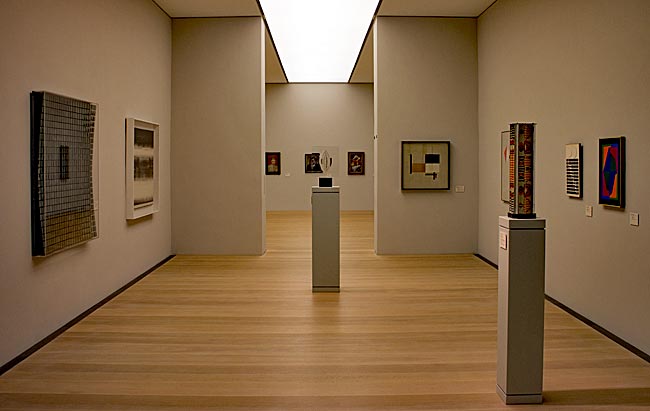
Focke-Museum in Bremen
Every city has its history, and in many cities, there is a museum that tells this story. In the Hanseatic city of Bremen, it is the Focke-Museum in the Riensberg district where the city's history is most vividly presented. The "Bremer State Museum for Art and Cultural History" was established in 1924 by merging two collections: the Gewerbemuseum, founded in 1884, and the Historisches Museum für bremische Altertümer (Historical Museum of Bremen Antiquities), founded six years later. The museum's name honors its founder, who passed away in 1922.
read more ...
Cycling to Lilienthal
It's about 11 kilometers from Bremen's city center to Lilienthal in Lower Saxony, just beyond the city limits. While tram line 4 connects both places, a bike tour is much more fun. Along the Jan-Reiners-Weg, you can cycle through a green landscape without car traffic, and even within Lilienthal itself, the route follows small paths along the Wörpe River with light traffic, leading to the historic city center.
read more ...