
 exploring Bremen & its surrounding areas
 You are here: attractions in the city center
 The Schnoor (1/2)
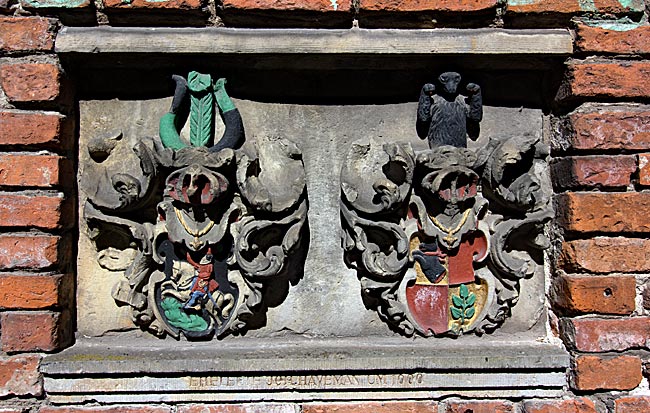
Coat of arms of the Havemann Couple from around 1600
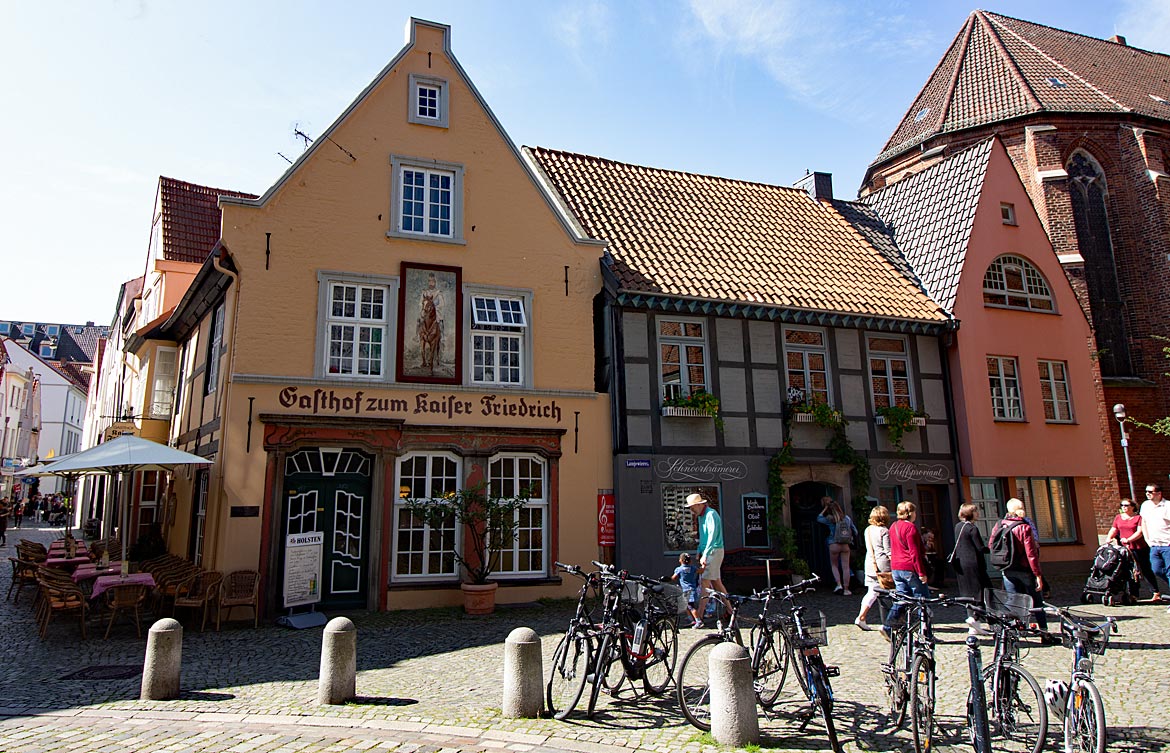
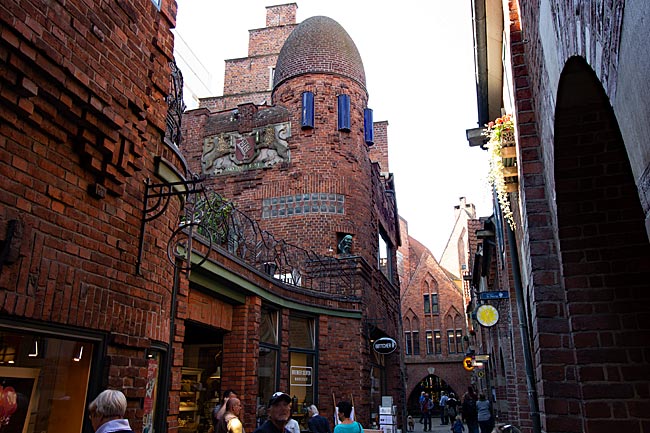
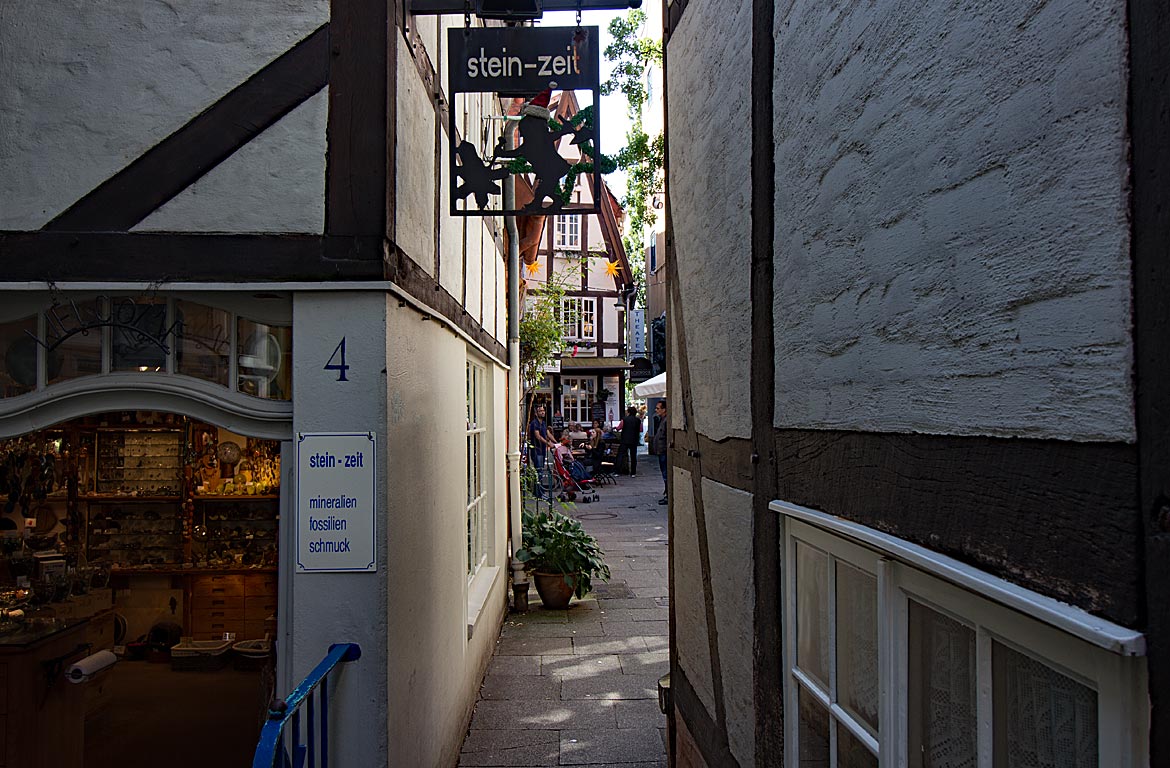
Bremen's oldest preserved neighborhood is the Schnoor. Like beads on a string, around 100 small houses line up along it, hence the name "Schnoor" (Low German for "string"). In earlier times, the district was mainly inhabited by fishermen and sailors, as the Balge, a tributary of the Weser, ran through here, and one of Bremen's first harbors was located here.
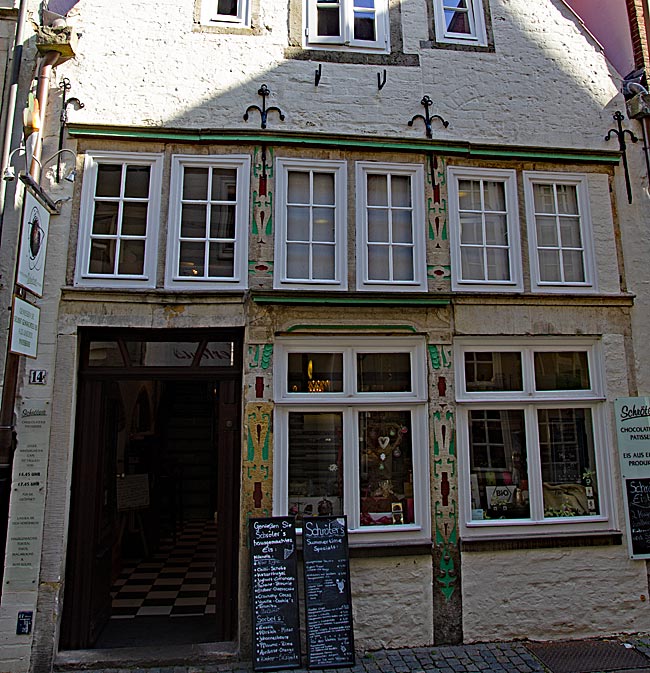
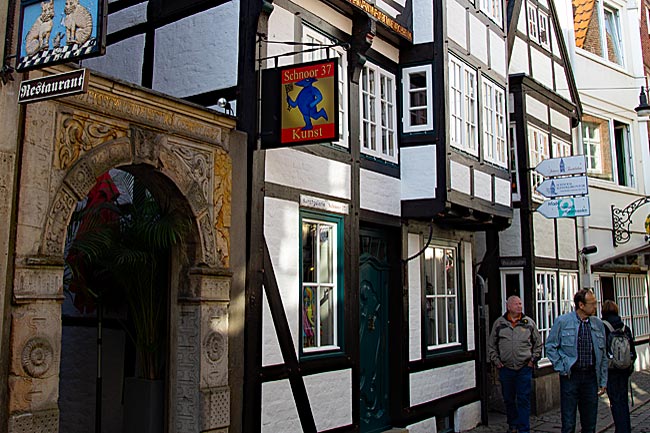
Restaurant Schröter's Leib & Seele (Archive Image)
Today, only the street names "Hinter der Balge" (behind the Balge) within the Schnoor and "Balgebrückstraße" at its edge remind us of the now-filled-in waterway. The sailors and fishermen have also disappeared, and since the 1950s, especially after the war when less affluent people lived here, many artisans, artists, cafés, and restaurants have moved into the maze of narrow, winding alleys, bringing life to this truly worth-seeing old quarter, which is still inhabited.
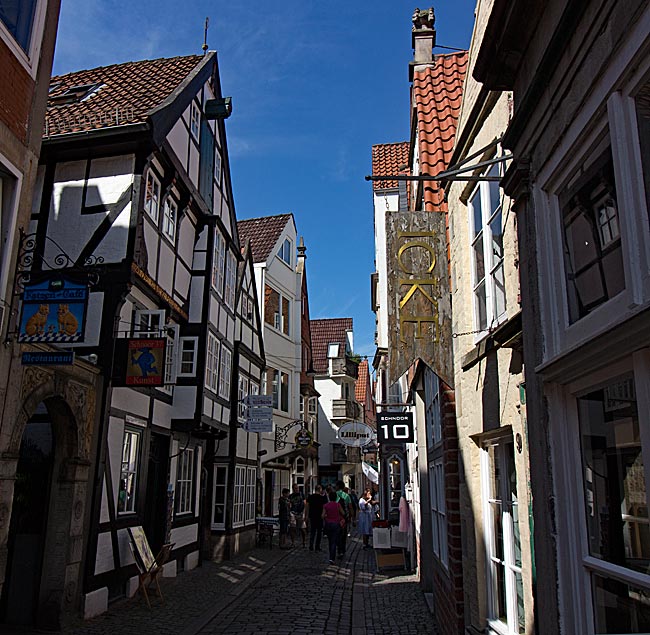
View into Schnoor Alley
Many of the small houses date back to the 17th century or were rebuilt according to historical models. The house at No. 15 in Schnoor Alley, built on medieval foundations in 1402, is one of the oldest buildings in the Schnoor alongside the Packhaus (1401). While the St. Johannis Church, built by Franciscans, still stands a few streets away - the Franciscan monastery has not existed since 1834 - only a memorial plaque at Kolpingstraße 4/6 reminds us of the synagogue. For 62 years, until SA men destroyed it in flames during the Reichspogromnacht from November 9 to 10, 1938, this was the spiritual center of the Jewish community. Since 1982, a black-painted concrete monument in front of the Landherrnamt has stood for the seven Jewish citizens of Bremen who met violent deaths that night.
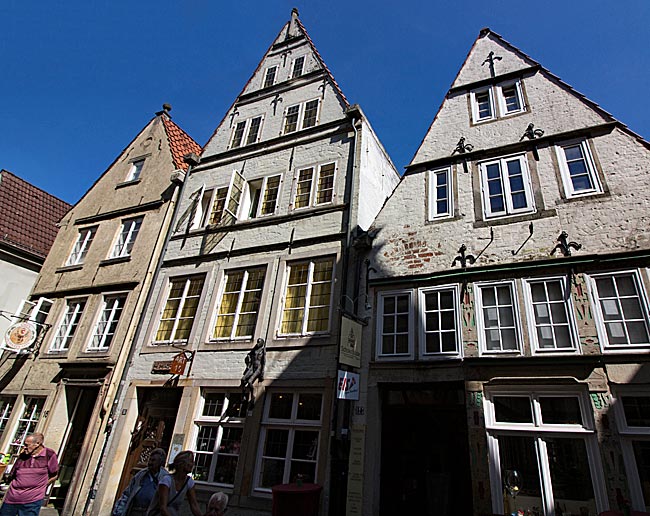
House No. 15 in the middle is one of the oldest houses in the Schnoor and today serves as "Artists' House Art 15," a place of creative work (art-15.de)
Heini Holtenbeen, to whom the Bremen sculptor Claus Homfeld erected a bronze monument in the Schnoor in 1990, once lived at No. 8 in the Schnoor. The man did not actually have a wooden leg, as his surname translated from Low German might suggest, nor was that even his real name - it was Jürgen Heinrich Keberle. This Bremen original was actually a tragic figure. Born in 1835, he suffered a mild brain injury and a leg injury during his apprenticeship after falling through a skylight, which left him limping for the rest of his life.
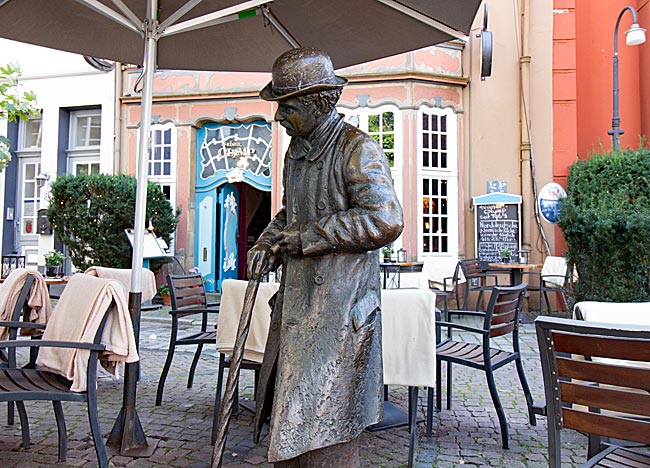
Standing among tables and chairs: Heini Holtenbeen in bronze by Claus Homfeld
As an errand runner, he carried out various tasks to earn his modest living. Later, he could be found every noon on the market square in front of the stock exchange, where he took unlit cigars from merchants entering (smoking was prohibited inside). Photos and depictions almost always show him wrapped in a worn-out coat, wearing a bowler hat and holding a cane in his right hand. His increasingly eccentric behavior and Low German sayings eventually made him famous throughout the city. Nevertheless, he remained poor all his life, accepting begged money only as "loans," as he always said, but never paid it back until his death in 1909.
previous page
 next page
Map
Further information
Bremen Stories House
Phone: +49 (0)421 33626-51
Email:
info@Bremer-geschichtenhaus.de
www.Bremer-geschichtenhaus.de
Open: Monday 12 AM - 6 PM, Tuesday - Sunday 11 AM - 6 PM, last tour each day at 5 PM
Wallanlagen
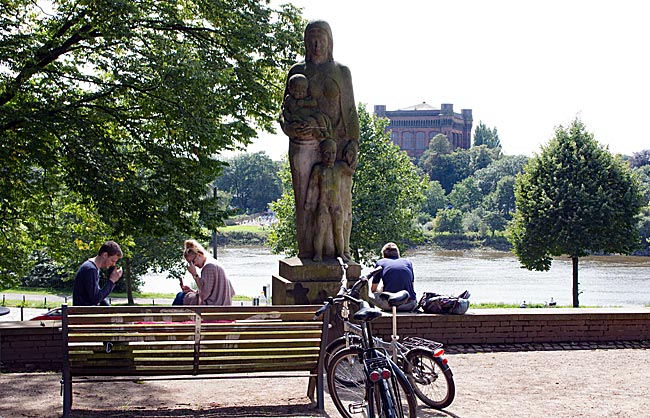
Almost entirely encircling the old town is a zigzagging park landscape featuring a moat. These remnants are the last visible traces of the fortifications that once surrounded the old town and parts of the new town until the early 19th century. The transformation into a garden landscape began in 1802 with the first section between the Weser River and Herdentor.
read more ...
Domsheide
However, despite the bustling activity that often prevails here, there are also notable sights to discover: prison, commerce, and art. For the prison, there is the imposing courthouse, built in the historicist style after its foundation stone was laid in 1891. Constructed between 1893 and 1895 according to designs by architects Ludwig Klingenberg and Hugo Weber, the building has been under monument protection since 1992. It survived World War II almost completely unscathed.
read more ...
Kunsthalle
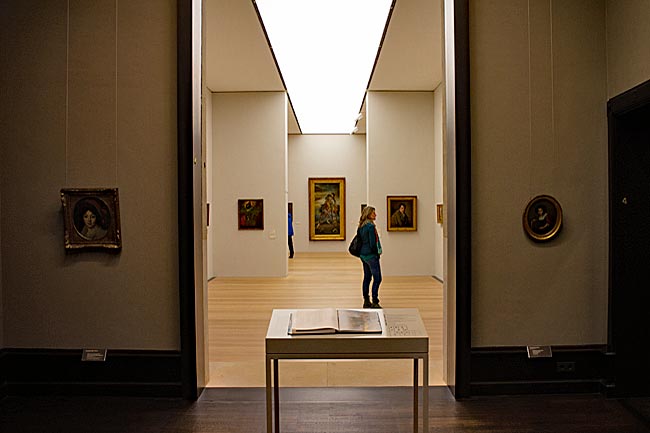
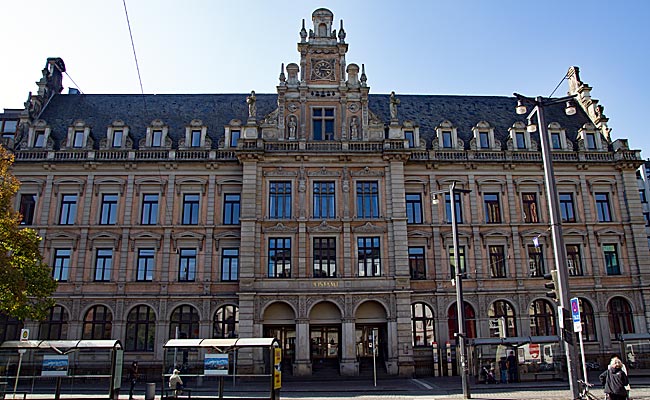
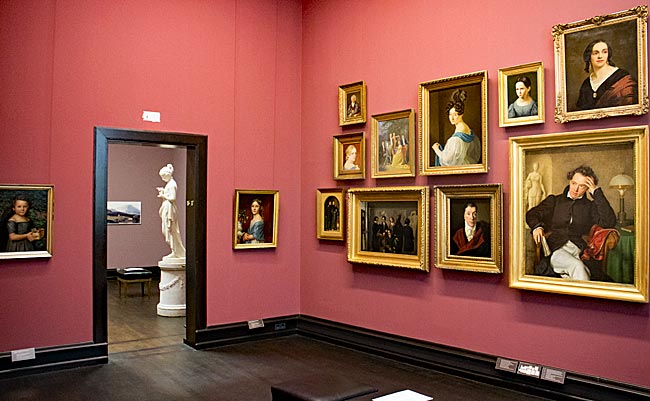
The core of the Kunsthalle's collection consists of European painting from the Middle Ages to the present day. A particular focus is on French painting of the 19th and 20th centuries, represented primarily by one of the largest collections of Delacroix's works. German Impressionism is another key highlight, featuring works by artists such as Liebermann, Corinth, and Slevogt. The collection also includes painters from the renowned Worpswede artist colony near Bremen, such as Heinrich Vogeler and Otto Modersohn.
read more ...
Das Viertel (The Quarter)
Although the area around the two main streets and their many small side streets partly belongs to the Mitte district and partly to the Eastern Suburb, the locals simply call this quarter "the Viertel." It is loved, hated, feared, and much more. Perhaps in no other neighborhood of the Hanseatic city have contrasts been so openly and sometimes even violently evident over decades as they have been in the Viertel.
read more ...

Round trip: from the city center to the Weser weir & back
Starting from Tiefer or Altenwall, the section of the Weser riverbank in front of Schnoor and diagonally opposite the DGzRS (German Maritime Search and Rescue Service), the Planetarium, and the Observatory on the other side of the river, a beautiful path for pedestrians and cyclists runs directly along the water upstream towards the Weser weir. After crossing the Weser weir, the return route takes you back via Stadtwerder.
read more ...