
 exploring Bremen & its surrounding areas
 You are here: attractions in the city center
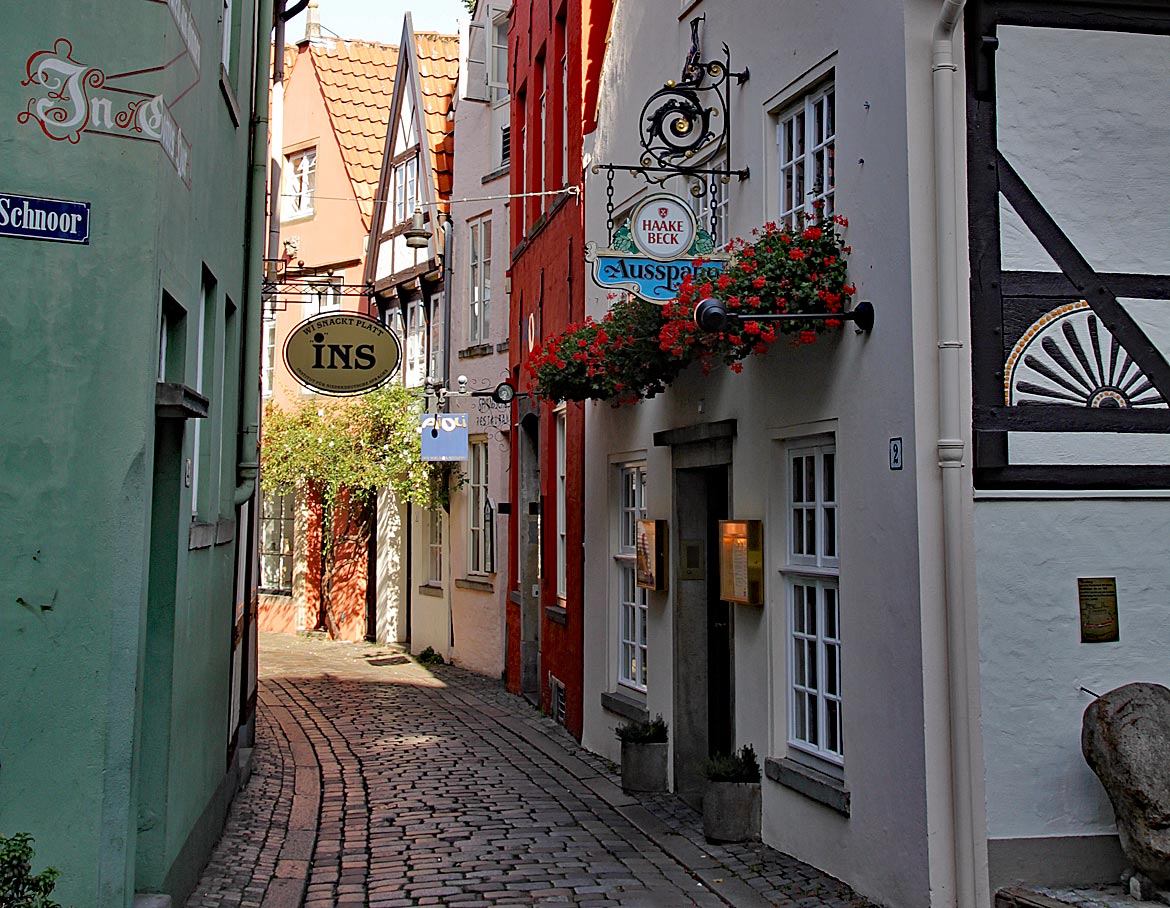
 The Schnoor (2/2)
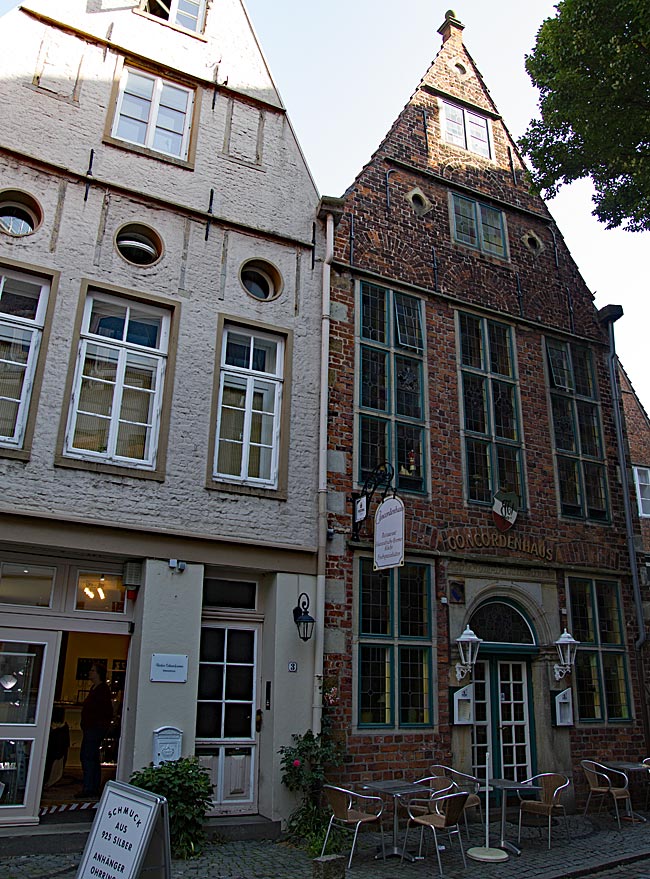
The Concorden House (right)
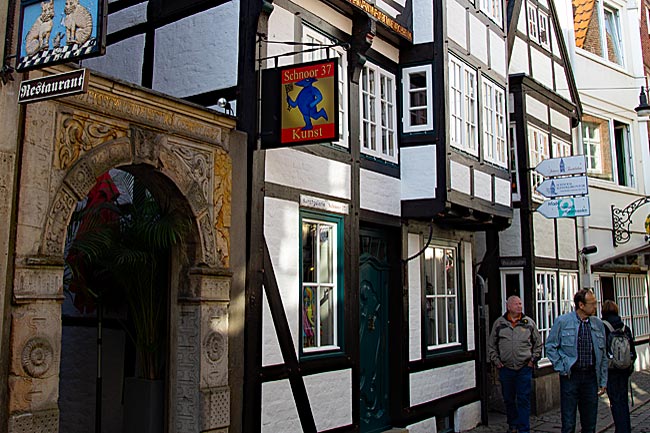
Not far from its bronze statue, on the street "Hinter der Holzpforte" (behind the wooden gate), you will find the Concorden House, originally built around 1630 but severely damaged during World War II. Its name comes from the non-violent student association "Technische Vereinigung Concordia," which acquired and rebuilt the Renaissance structure in 1951. On the brick facade, there is also a mark indicating the water level during the flood on March 31, 1881 - a flood that caused much more than just wet feet.
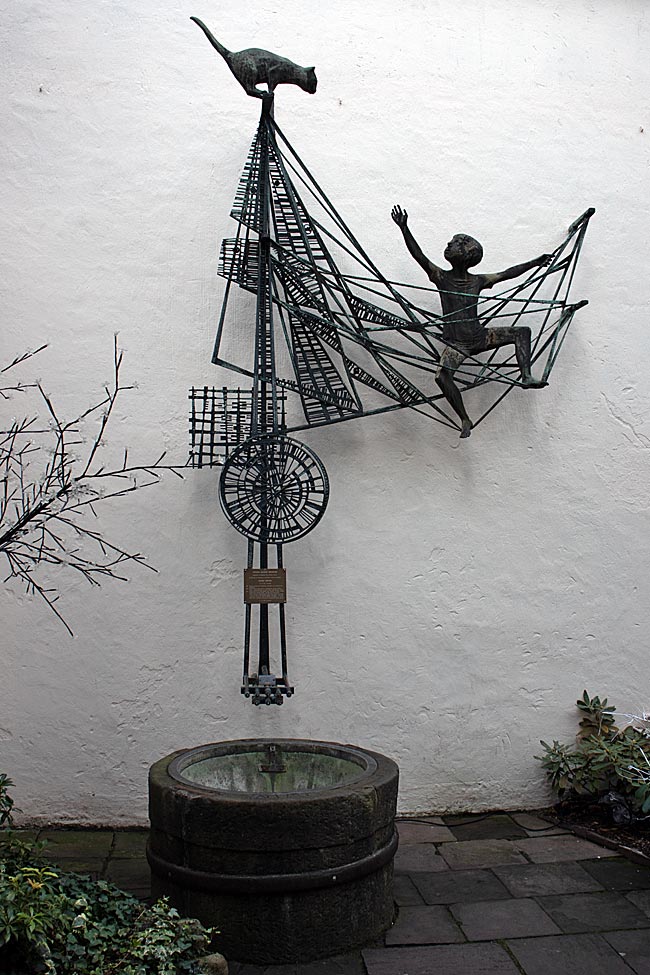
The Ottjen-Alldag sculpture and fountain have been under monument protection since 1973
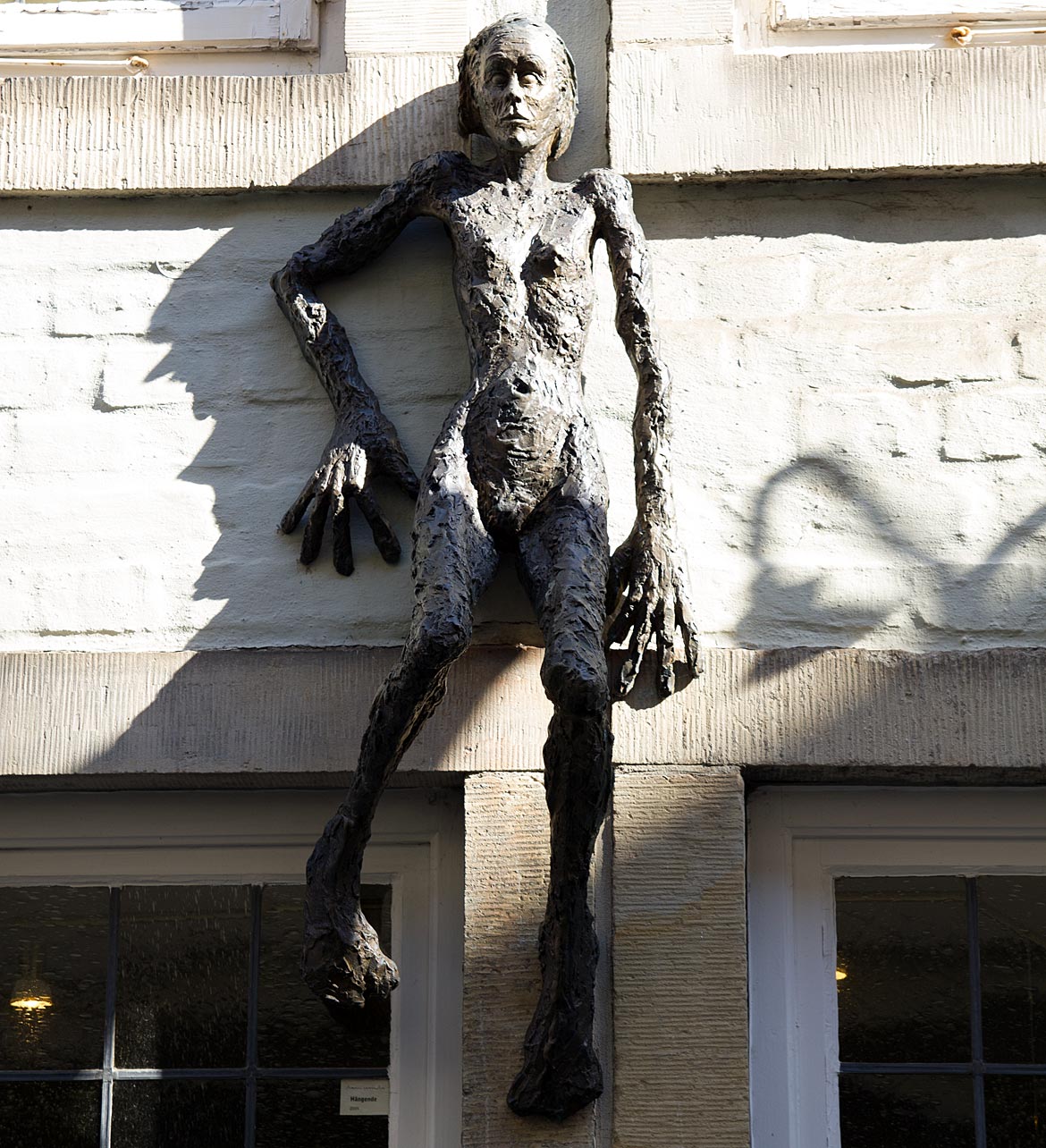
Water also flows at the Ottjen-Alldag Fountain, though not always, as the photo shows. The fountain's sculpture is also by Claus Homfeld. The figure of Ottjen Alldag comes from the eponymous novel trilogy by the Low German writer Georg Droste (1866-1935). The story of the boy, the author’s magnum opus, bears significant autobiographical elements. Next to the fountain, an excerpt from his literary work is displayed in letters on a house wall, commemorating the Bremen-born writer - in Low German, of course.
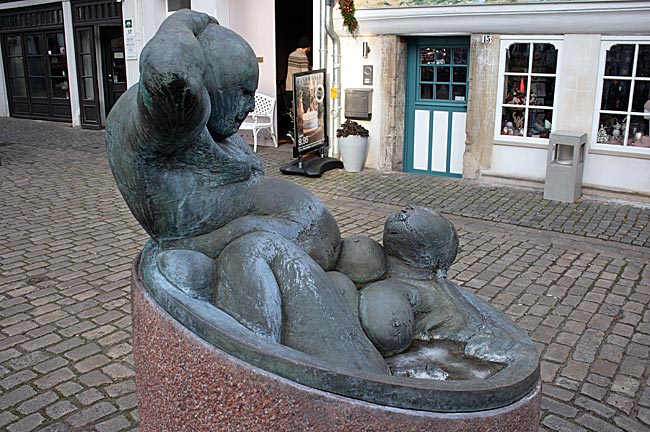
The fountain recalls the medieval bathhouses in Schnoor. The Schnoor Association Heini Holtenbeen e.V. donated the sculpture in 1986. Another work by Jürgen Cominotto, born in Bremen, can be found in the neighborhood with "Ottilie."
Water was also a theme in the bathhouses. The so-called Staven, which still appear in street names today, emerged in the Hanseatic city at the beginning of the 14th century - just as they did in Schnoor. Here, visitors not only washed off the dirt of medieval daily life but also sought entertainment and, if necessary, medical treatment from barbers who served as surgeons and wound doctors, primarily treating the lower classes.
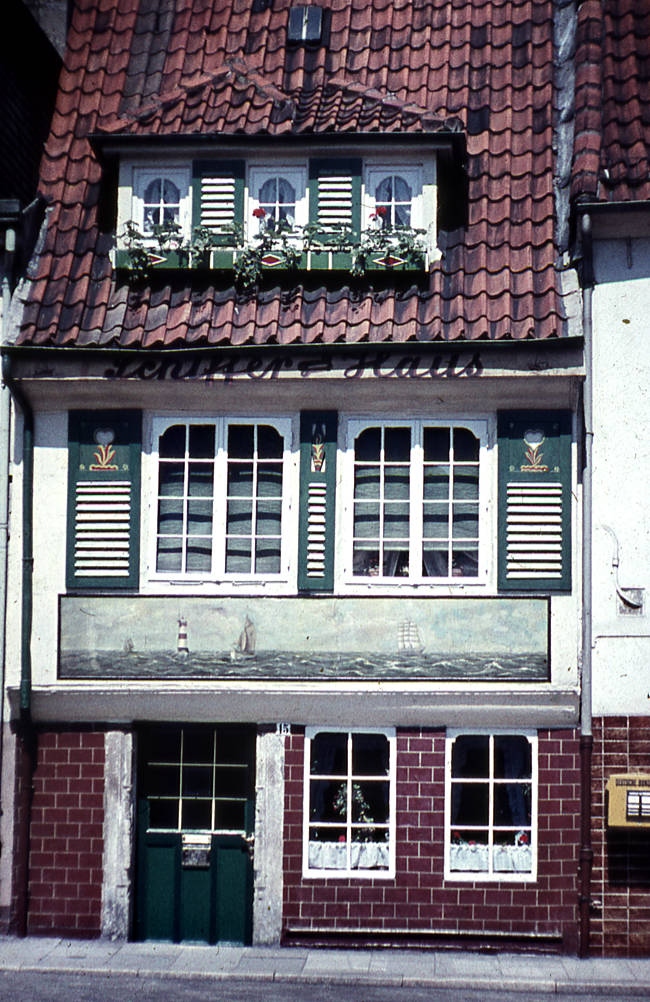
Next to the Ottjen-Alldag Fountain stands the centuries-old Schifferhaus, squeezed between newer buildings. Archive photo from 1959
At one of the most beautiful spots in the Schnoor district, Wüstestätte, you will find the Bremer Geschichtenhaus, where Bremen’s history is told and performed. Naturally, Heini Holtenbeen cannot be missing here.
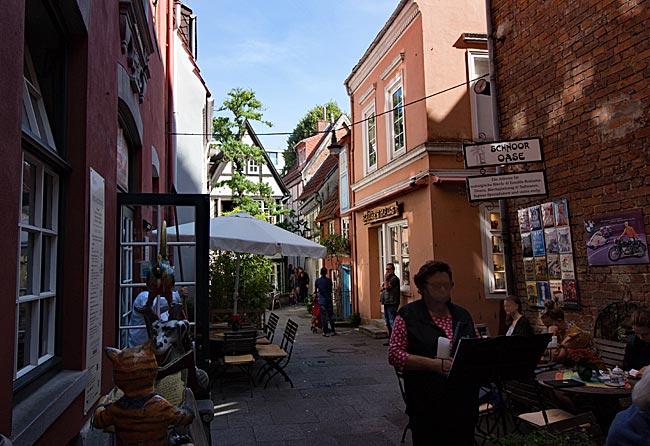
Wüstestätte is well-visited
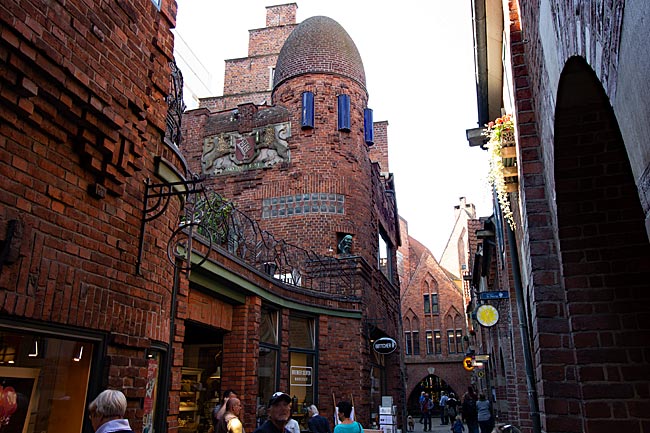
In the street "Marterburg," a variation of Mattenburg, where grain and flour were once delivered and stored, city history meets modern present. The foundations of half-towers from the historic city wall can be found in the unadorned houses at Marterburg 45 and 50, whose other side faces the Altenwall. In the part of the street bordering Ostertorstraße, you encounter the modern development of Schnoor. In the 1980s and 1990s, architects Goldapp and Klump built colorful residential and commercial buildings here in a modern yet interesting architecture that still integrates into the old quarter. More houses can be found on Komturstraße, running parallel to Marterburg, as well as on Kolpingstraße and Ostertorstraße.
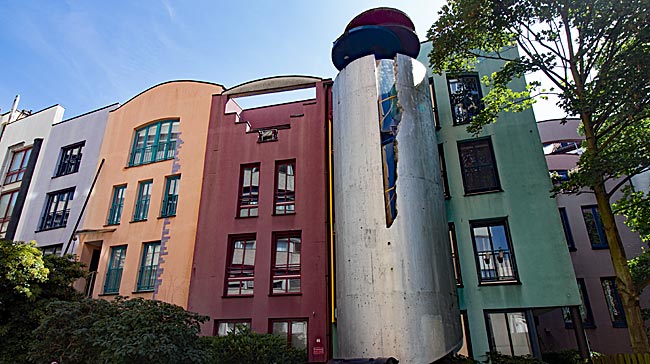
Modern development in Komturstraße in Schnoor
previous page
 next page
Map
Further information
Bremen Stories House
Phone: +49 (0)421 33626-51
Email:
info@Bremer-geschichtenhaus.de
www.Bremer-geschichtenhaus.de
Open: Monday 12 AM - 6 PM, Tuesday - Sunday 11 AM - 6 PM, last tour each day at 5 PM
Kunsthalle
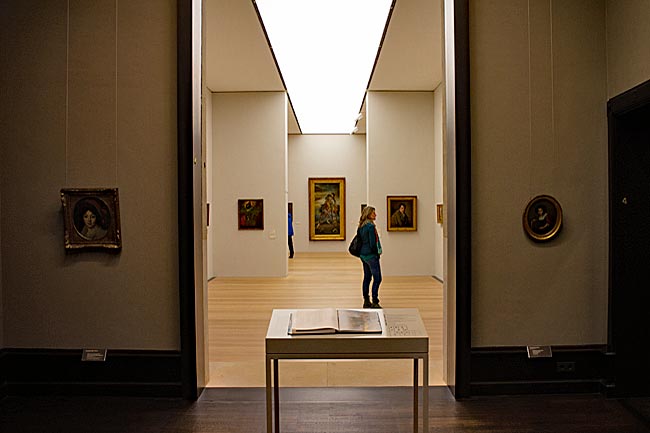
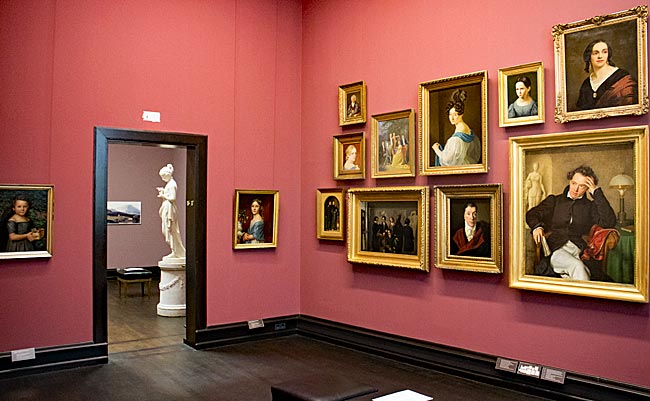
The core of the Kunsthalle's collection consists of European painting from the Middle Ages to the present day. A particular focus is on French painting of the 19th and 20th centuries, represented primarily by one of the largest collections of Delacroix's works. German Impressionism is another key highlight, featuring works by artists such as Liebermann, Corinth, and Slevogt. The collection also includes painters from the renowned Worpswede artist colony near Bremen, such as Heinrich Vogeler and Otto Modersohn.
read more ...
Das Viertel (The Quarter)
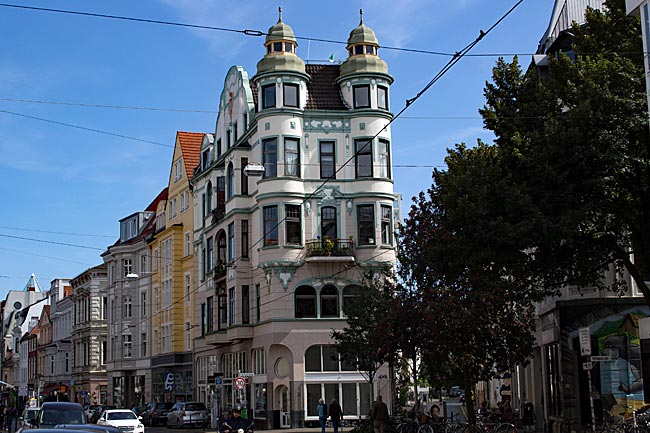
Although the area around the two main streets and their many small side streets partly belongs to the Mitte district and partly to the Eastern Suburb, the locals simply call this quarter "the Viertel." It is loved, hated, feared, and much more. Perhaps in no other neighborhood of the Hanseatic city have contrasts been so openly and sometimes even violently evident over decades as they have been in the Viertel.
read more ...
Round trip: from the city center to the Weser weir & back
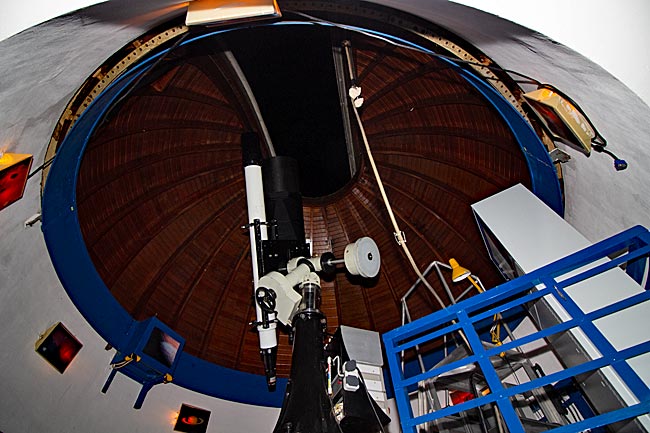
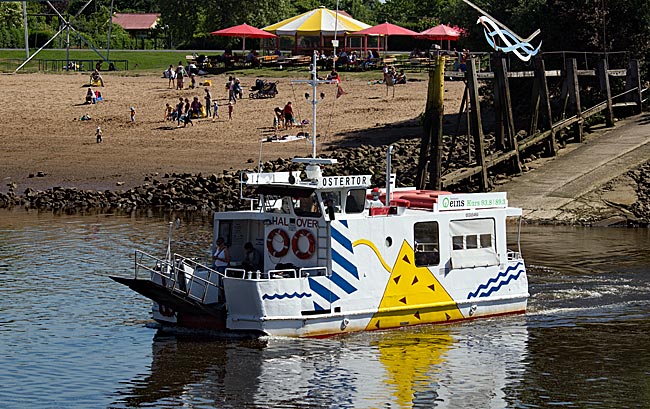
Starting from Tiefer or Altenwall, the section of the Weser riverbank in front of Schnoor and diagonally opposite the DGzRS (German Maritime Search and Rescue Service), the Planetarium, and the Observatory on the other side of the river, a beautiful path for pedestrians and cyclists runs directly along the water upstream towards the Weser weir. After crossing the Weser weir, the return route takes you back via Stadtwerder.
read more ...
Roland statue
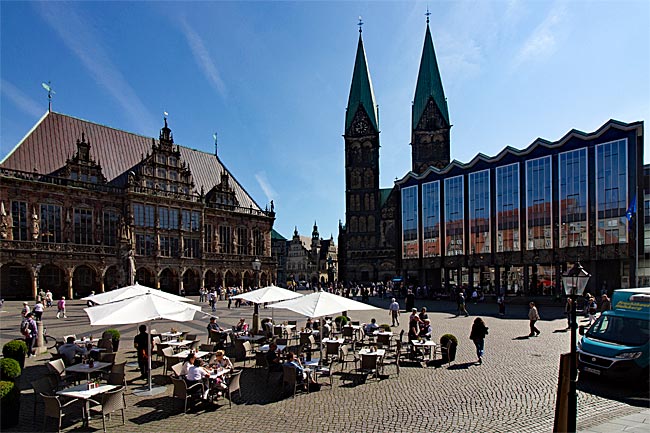
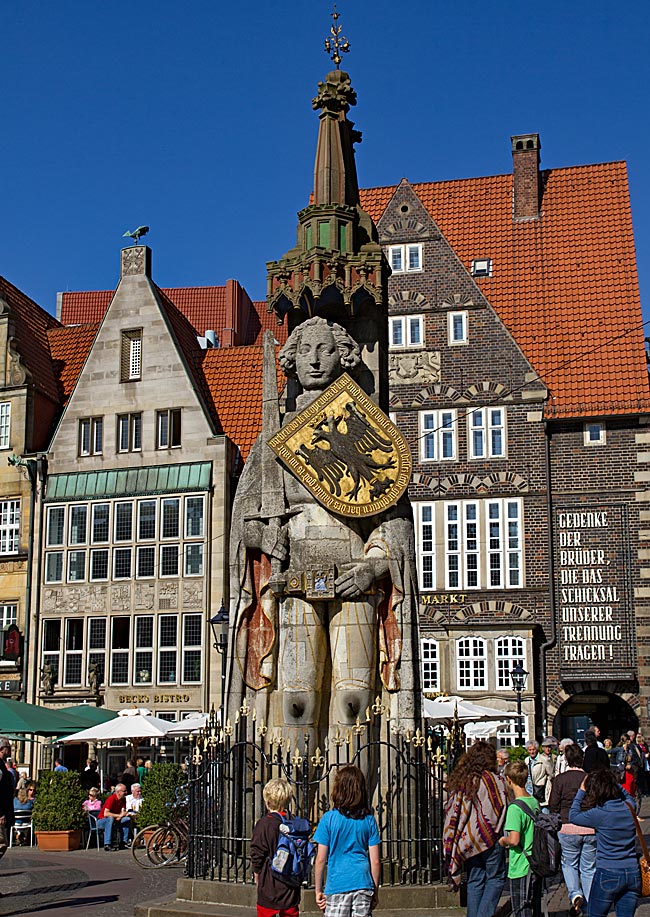
The Roland statue stands on the market square in front of the town hall and has been there since 1404. It is a 5.55-meter (10.21-meter total) tall sandstone figure of a knight with a drawn sword and shield in front of his chest. Like in many other European cities, the Roland in Bremen symbolizes the city's freedom, which historically stemmed from market rights and its own jurisdiction.
read more ...
The Bremen Town Musicians
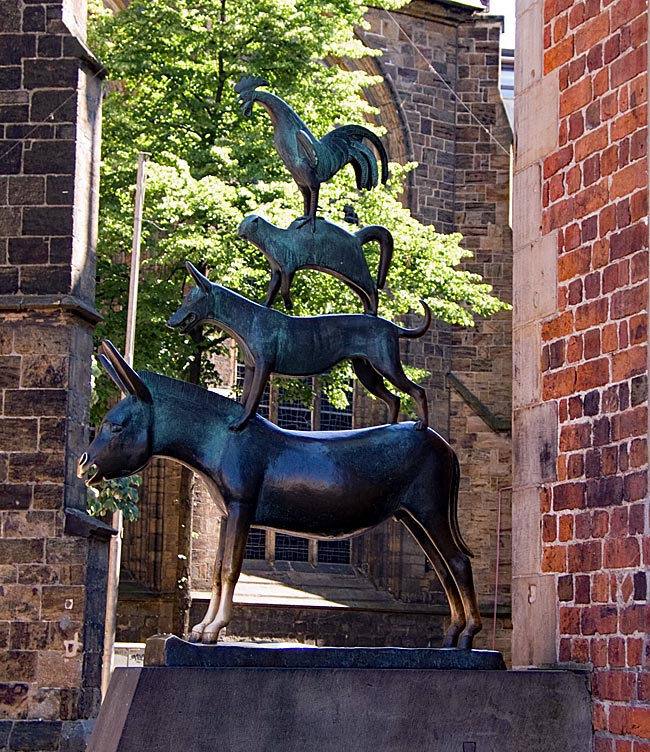
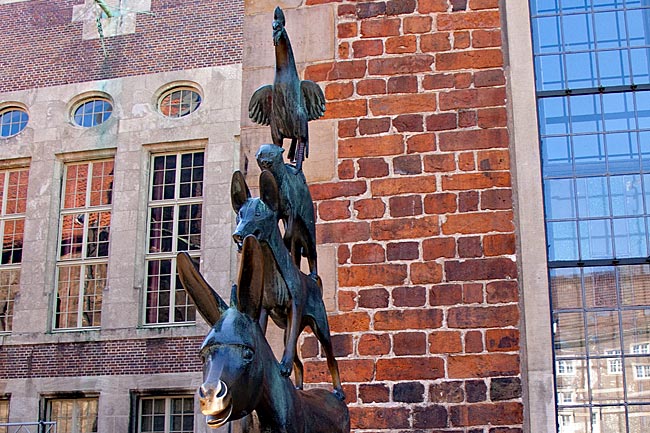
On the left broad side of the Old Town Hall, next to the entrance to the lower town hall hall, stand four bronze-cast heroes of a world-famous fairy tale - the Bremen Town Musicians. However, it remains a contentious point whether these mismatched four - donkey, dog, cat, and rooster - actually made it all the way to Bremen, as the fairy tale does not provide a clear answer on this matter. But perhaps that is not so important, for what truly matters is the message conveyed in the fairy tale.
read more ...