
 exploring Bremen & its surrounding areas
 You are here: attractions in the city center
 The Viertel (2/2)
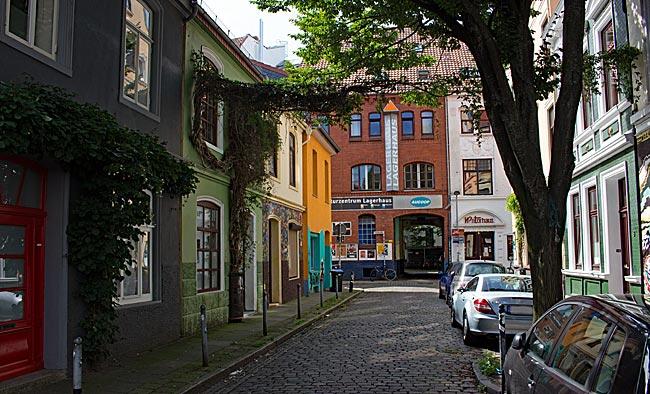
Colorful diversity in Bernhardstraße. In Bernhardstraße, people are drawn not only to music at the "Lila Eule" but also to the neighboring Lagerhaus cultural center and the adjacent Kontorhaus with its theater and literature cellar.
As early as the late 1960s, alongside street unrest in the district, there were the first squats, which reached their peak in the transition to the 1980s. Alternative individuals, leftists, artists, musicians, theater people, homosexuals, and others gathered in the area, developing a culturally and politically highly agile scene. The Lagerhaus cultural center on Weberstraße dates back to this time. However, this "constant hotbed of unrest" was an eyesore for the ruling authorities at City Hall, leading to plans to "modernize" the district - but the residents successfully resisted.
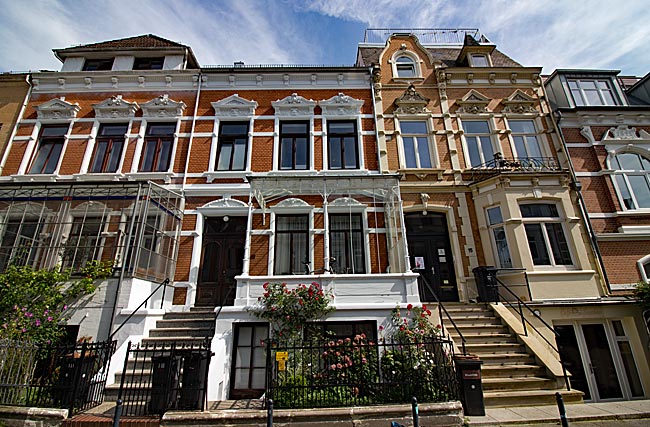
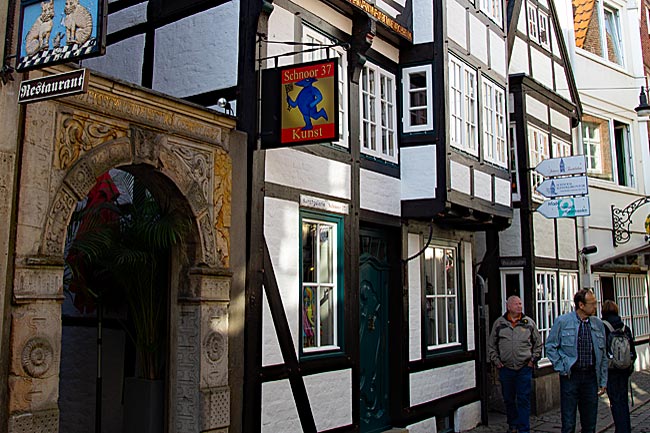
Part of Bremen's building culture: Old Bremen Houses in the district
Today, most of the utopias from back then have given way to bourgeois reality. The struggle on the streets today is between drivers, pedestrians, and cyclists who remarkably peacefully vie for the limited space on narrow roads and paths. Well-off middle-class residents, including many teachers, bought and renovated the old so-called "Bremen houses" or "Old Bremen Houses" in the district during the 1980s and later, quickly growing tired of stumbling over used syringes and heavily intoxicated addicts in front of their homes, in their gardens, and on children's playgrounds. While the drug problem is not solved, the drug scene is no longer as massively concentrated here, and the Sielwall intersection has also been architecturally upgraded.
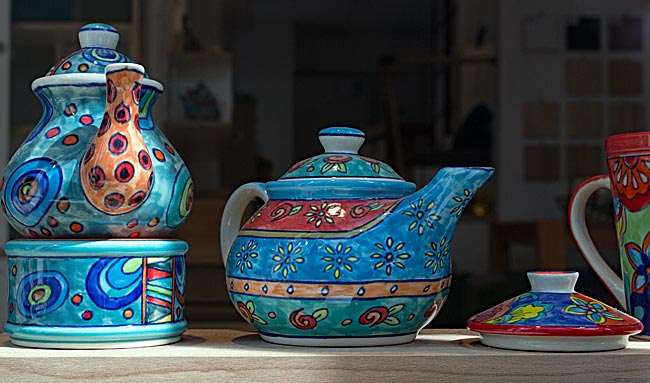
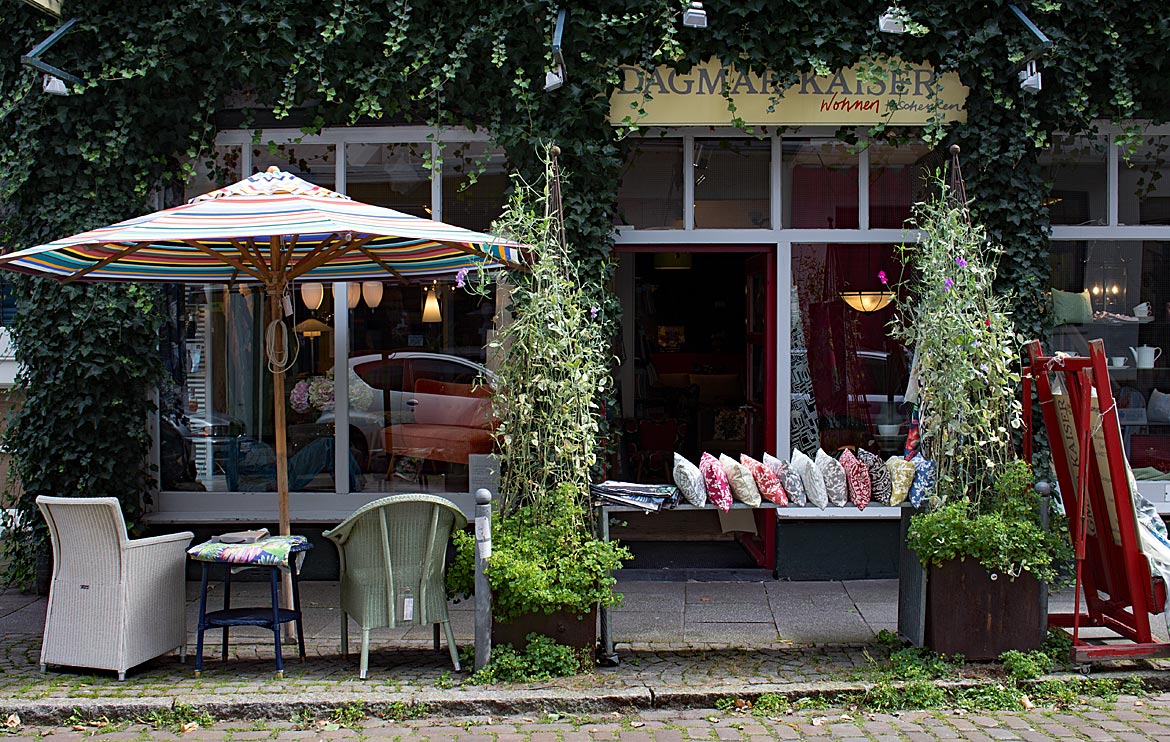
View into a shop window on a side street
Two cinemas with cafés - Cinema Ostertor and the Schauburg cultural center - remain, offering programs beyond mainstream cinema. The Lagerhaus cultural center attracts visitors with its diverse and colorful cultural program as well as a café. Additionally, numerous small shops with unique and unusual offerings make strolling through the district worthwhile. One example was Holtorf, a colonial goods store opened in 1874 and under monument protection. It appears in many Bremen travel guides because its interior is truly worth seeing, though the shop owners can't profit much if visitors only come to look.
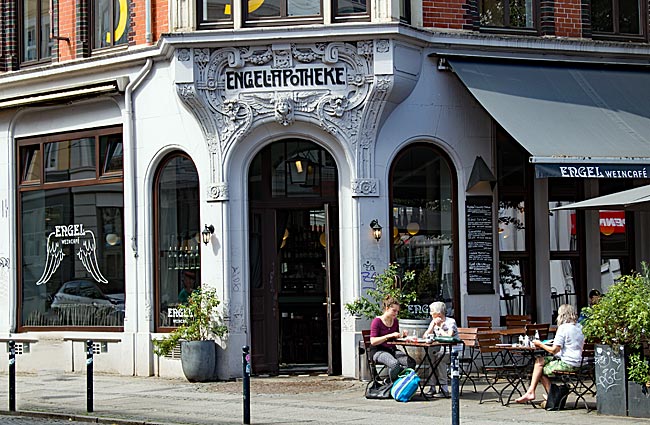
The "Angel" in Ostertor has tradition. The wine café with elegant furnishings in a former pharmacy has existed for a long time, and the Spanish restaurant across the street is also very popular.
Many cafés and pubs on main and side streets invite visitors to enjoy both indoor and outdoor seating, offering culinary delights from around the world. It's all about keeping your eyes open or simply letting your nose guide you.
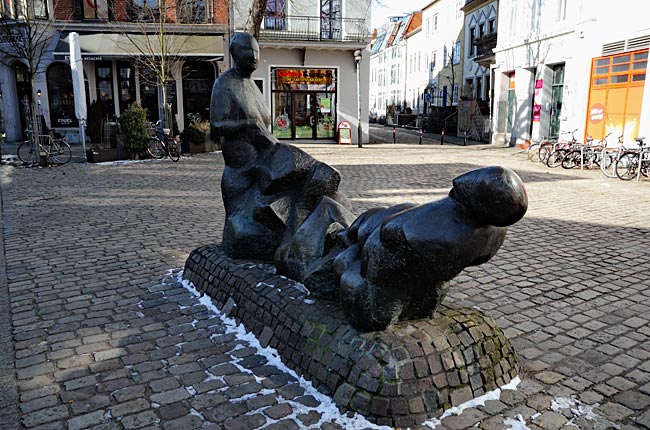
Bronze Sculpture "Ottilie" (1987) at Ulrichsplatz in Ostertor. The artwork by Jürgen Cominotto was donated by the German Women's Association for Alcohol-Free Culture, whose founder (in 1900) was the educator Ottilie Hoffmann.
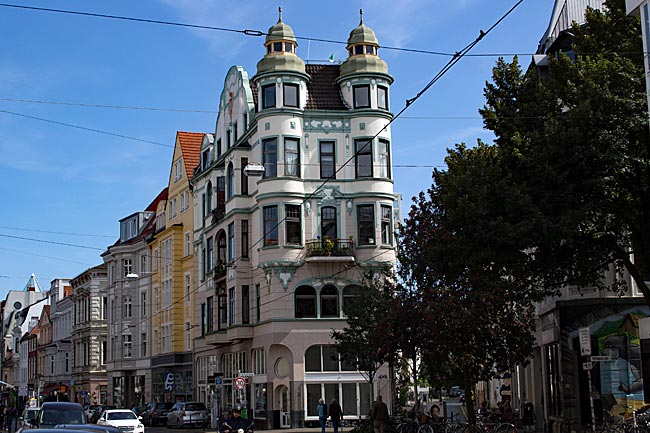
While some may feel the district has lost much of its past charm, the city’s pulse still beats differently here. Even between the well-kept houses and street sections, there are run-down corners where life is lived by different standards. The unique architecture - mixing Classicism, Historicism, and Art Nouveau in row house stretches - the "Old Bremen House" built from the mid-19th century to the 1930s with its high ceilings and wooden floors, the old granite paving in many side streets, the cultural and commercial offerings, and the often openly displayed lifestyle create a special atmosphere that still attracts many people. People of seemingly all nationalities, different skin colors, rich and poor, and especially many young individuals.
However, due to luxury renovations of old buildings - primarily by commercial operators - the square meter prices in recent years have now exceeded those of many other Bremen districts, making the district increasingly a residential area for people with well-filled wallets.
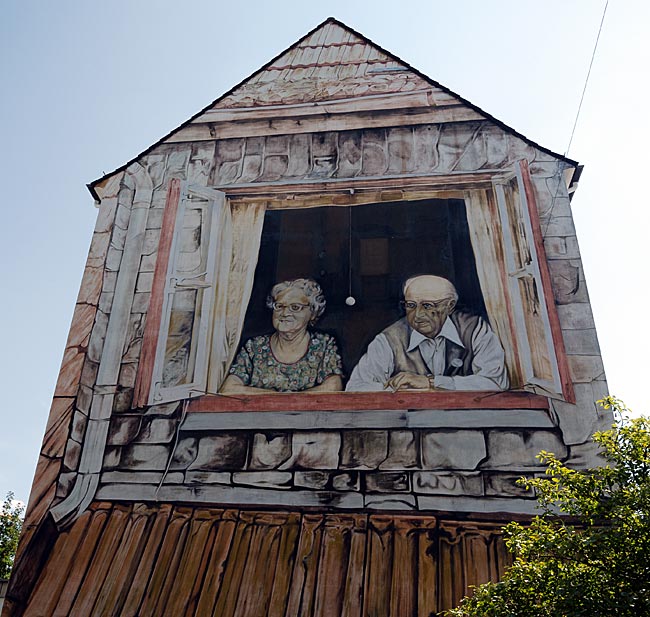
Eye-catcher and popular photo motif on the district's edge at Rembertiring: mural "View from the Window" by Sculptor P.K.F. Krüger (1976)
In many streets of the district, such as Fesenfeld and Feldstraße, entire rows of houses are listed as protected groups. In Achimer Straße and Henriettenstraße, it is the residential buildings constructed between 1904 and 1905 by architect Hermann Schelb. A particularly beautiful ensemble can be seen in Mathildenstraße. Just as architect Wilhelm Blanke later shaped Schwachhausen’s cityscape, Lüder Rutenberg did so here in Östliche Vorstadt decades earlier. The street named after his wife Mathilde since 1867 was built according to his plans, with the houses constructed between 1869 and 1871. Except for 12 house numbers between 1 and 101, all buildings were placed under monument protection in 1973.
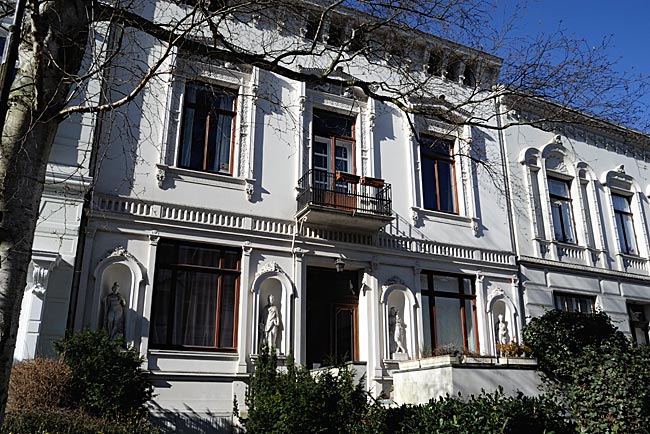
One of the numerous monument-protected houses on Mathildenstraße
The master builder and architect born in Bremen in 1816 also created the similarly listed group monuments in neighboring Besselstraße. He built his own house for himself and his family not far from there as early as 1864 at Dobben, the same year a 1.3-kilometer-long body of water - formed from a Weser tributary - was filled in here. This marks the boundary between the Mitte and Östliche Vorstadt districts. While the two-story Villa Rutenberg, in municipal ownership since 1920, is not architecturally interesting, its ceiling and wall paintings are noteworthy; they were uncovered in some rooms of the house in 1977 and restored by 1979.
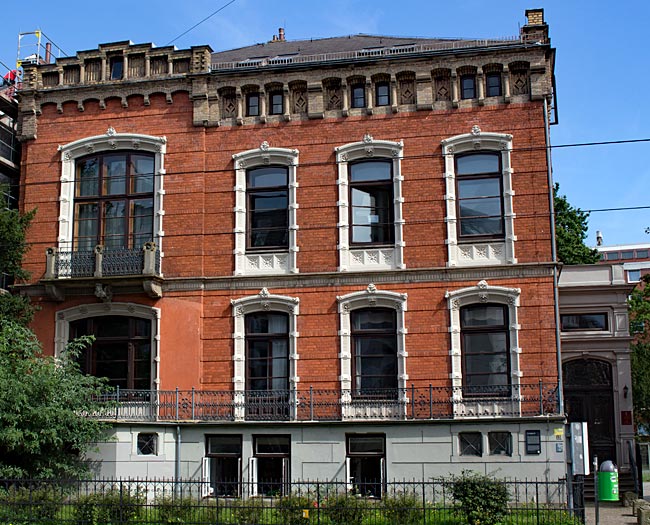
Villa Rutenberg, Dobben 91
Rutenberg died in Bad Harzburg in 1890 but was buried in Bremen at Riensberg Cemetary. There, he and his family had a mausoleum built for their son Christian, who was murdered on Madagascar in 1878. On the roof of this building directly by Riensberger See stands a life-sized statue by Bremen sculptor Diedrich Samuel Kropp depicting the deceased doctor.
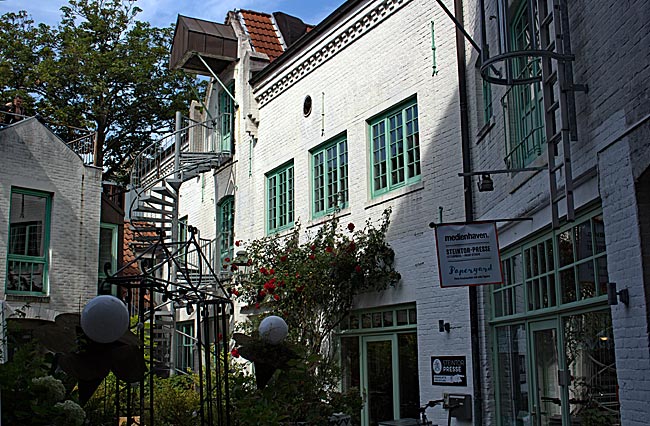
Atrium with charm on "Vor dem Steintor" Street
previous page
 next page
Map
Further information
https://dasviertel.de
tischlerei museum
Köpkenstraße 18
28203 Bremen
https://tischlerei-museum-bremen.de
Phone: +49 (0)421 171703
Kulturzentrum Lagerhaus Bremen e.V.
Schildstraße 12-19
28203 Bremen
Phone: +49 (0)421 701000-10
Email:info@kulturzentrum-lagerhaus.de
https://www.kulturzentrum-lagerhaus.de
Kino: https://www.Bremerfilmkunsttheater.de/site/aktuell.html
Town Hall
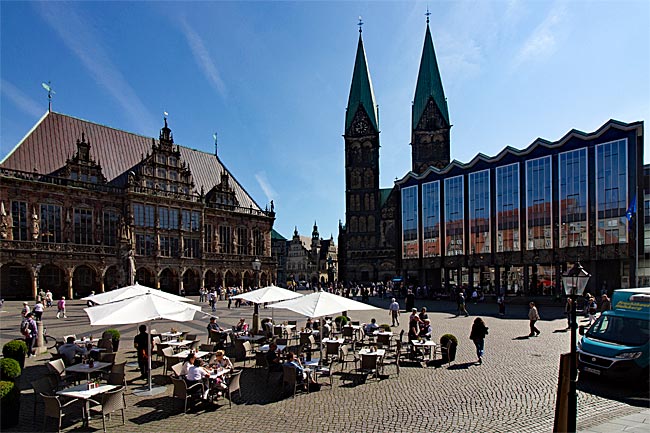
The original Old Town Hall on the market square was built between 1405 and 1412. Little remains today of this rather plain late Gothic brick building. The Renaissance façade that gives the UNESCO-protected structure its distinctive appearance was erected by Lüder von Bentheim between 1608 and 1614. Particularly above the arcades, it is lavishly adorned with various depictions from ancient mythology, which uniquely blend with Christian symbolism, Bremen city symbols, and other representations.
read more ...
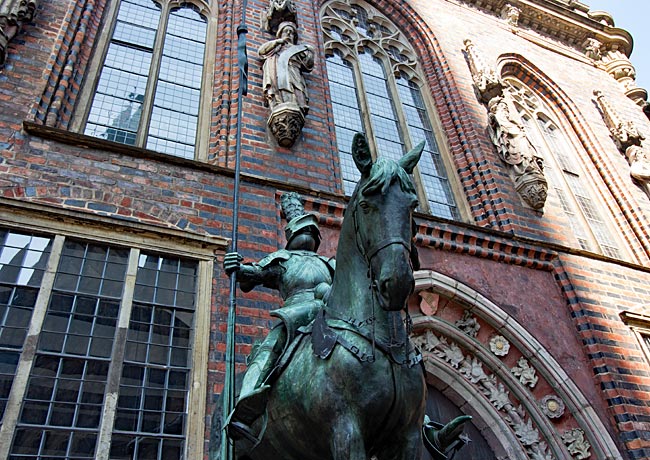
Domshof
In the shadow of the cathedral stretches the Domshof. Until 1803, the cathedral district - and thus the large square - belonged to the respective bishops, Sweden, and later the Electorate of Hanover, who ruled Bremen at times. The buildings, including townhouses, and the planting of numerous trees made the Domshof one of the most beautiful squares in the Hanseatic city during the 18th and 19th centuries.
read more ...
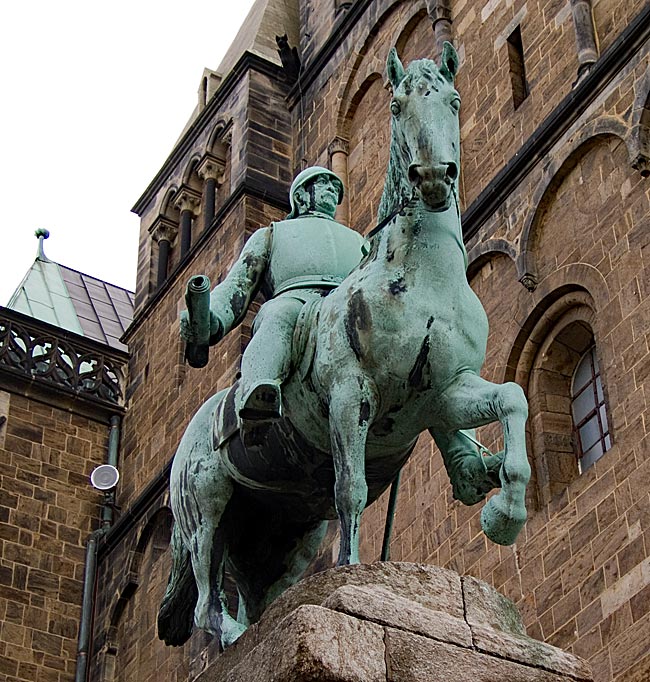
Round trip: from the city center to the Weser weir & back
Starting from Tiefer or Altenwall, the section of the Weser riverbank in front of Schnoor and diagonally opposite the DGzRS (German Maritime Search and Rescue Service), the Planetarium, and the Observatory on the other side of the river, a beautiful path for pedestrians and cyclists runs directly along the water upstream towards the Weser weir. After crossing the Weser weir, the return route takes you back via Stadtwerder.
read more ...
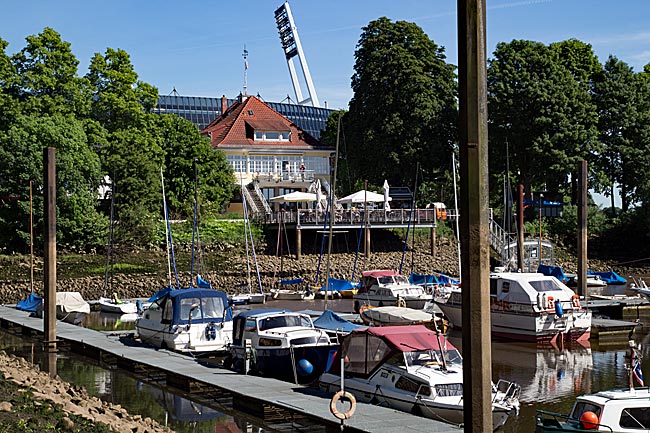
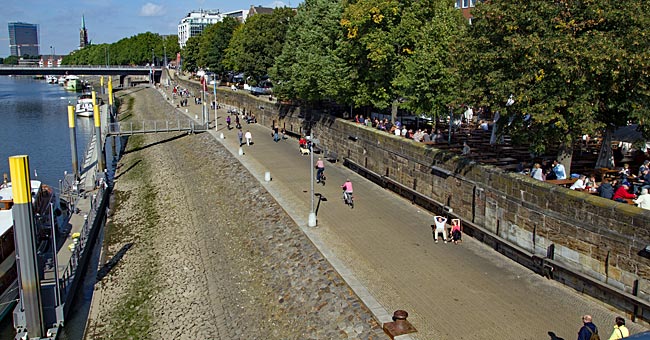
Schlachte
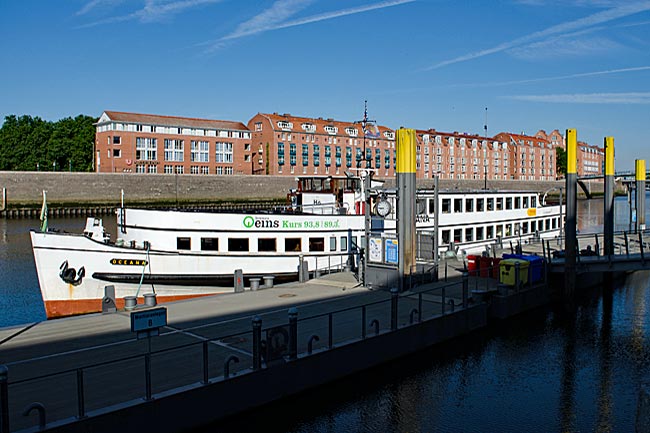
Between the Wilhelm-Kaisen Bridge and the Stephani Bridge, a promenade with a boulevard, ship docks, and numerous dining establishments offering something for every palate was created between 1993 (start of construction) and its grand opening on May 27, 2000. The project cost over €20 million, primarily funded by the EU, and features 60 trees and ample granite paving.
read more ...
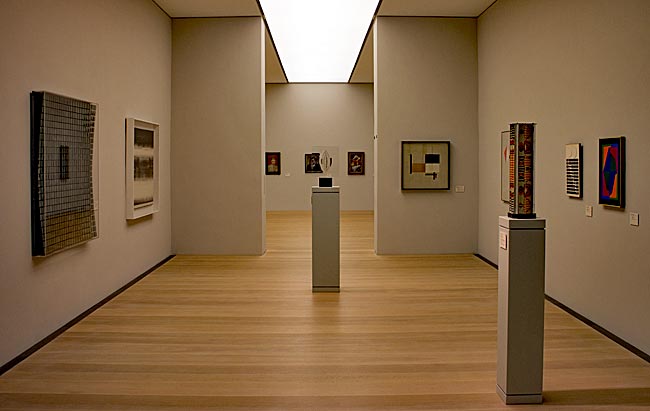
Kunsthalle
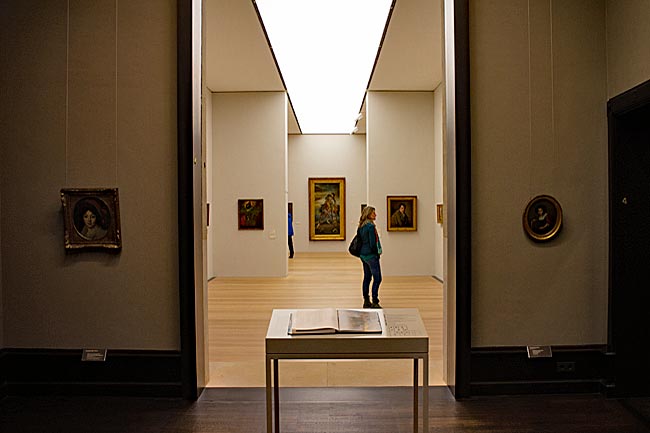
The core of the Kunsthalle's collection represents European painting from the Middle Ages to the present day. A particular focus lies on French painting of the 19th and 20th centuries, primarily showcased through one of the largest collections of Delacroix's works. German Impressionism is another key highlight, featuring works by artists such as Liebermann, Corinth, and Slevogt. The collection also includes painters from the renowned Worpswede artist colony near Bremen, such as Heinrich Vogeler and Otto Modersohn.
read more ...
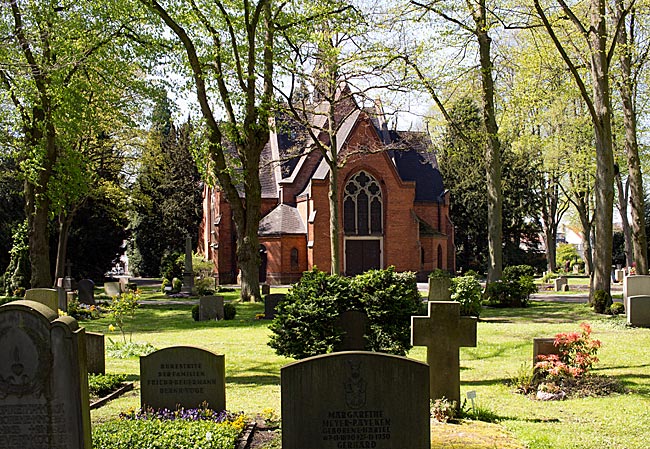
Riensberg Cemetary
The Riensberg Cemetary, located within view of the Focke Museum, was established between 1872 and 1875 simultaneously with the Waller Cemetery as a replacement for two abandoned cemeteries elsewhere. The park cemetery, which today covers an area of about 28 hectares, is situated on the lands of the former Riensberg estate. The landscape gardener and garden architect Wilhelm Benque was commissioned to design the landscaping; he had previously been responsible for the garden art layout of Bürgerpark and, among others, Knoops Park in Lesum.
read more
...
Schwachhausen district
Built in 1913 at the central station, the Lloyd Railway Station served as a waiting area for emigrants who departed Europe from Bremerhaven aboard ships of the North German Lloyd. From here, their journey initially continued by train. After merging with the shipping company HAPAG, the company became HAPAG-Lloyd, headquartered in Hamburg. Directly across the street stands the anti-colonial monument "Elephant."
read more ...
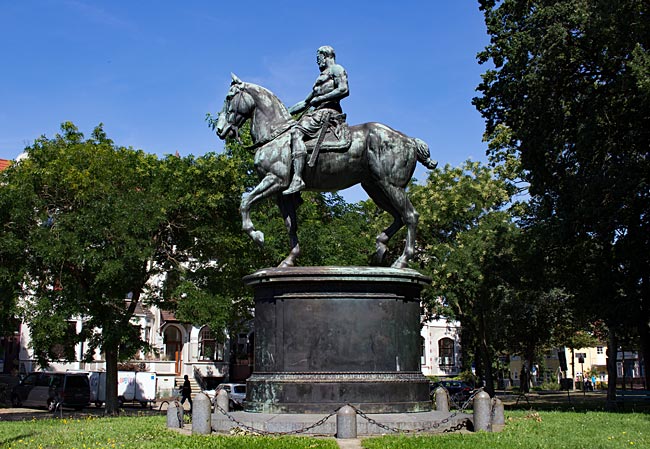
A stroll through the Neustadt
The Old Neustadt was only properly established as part of the district in the 17th century. One reason for this planned expansion of the city was the increasing threat posed by advancements in weaponry. Remnants of the defensive walls built at that time still exist today as parks, but there is much more to discover, such as the Little Roland.
read more ...