
 exploring Bremen & its surrounding areas
 You are here: attractions in the city center
 Schlachte & Teerhof (1/2)
By the Weser: the Schlachte
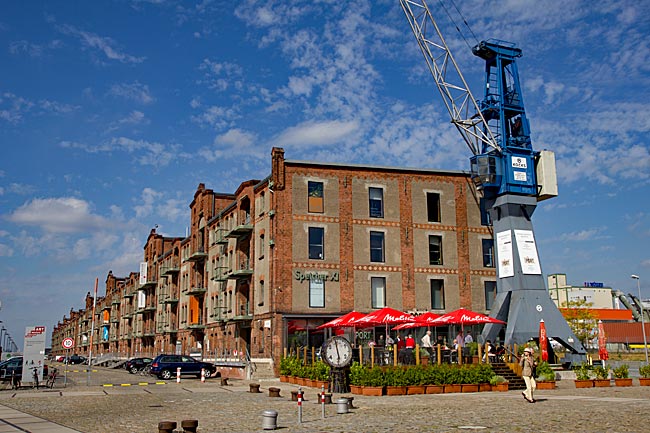
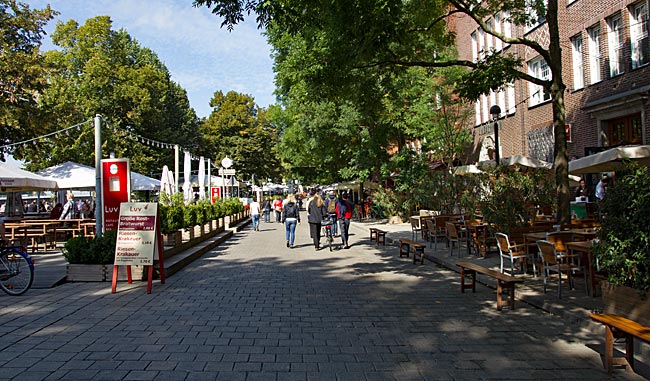
Where today, during the warm seasons, beer glasses clink and visitors enjoy the sun on the benches of the boulevard while looking out over the Weser, medieval laborers once toiled. Back then, this area along the Schlachte was Bremen’s harbor. The name "Schlachte" comes from the Low German word "slait" meaning "to strike," referring to the wooden stakes driven into the Weser shore where merchants' ships and boats were moored.
However, even before the Thirty Years' War (1618), the Weser had silted up so much that seagoing vessels could no longer reach the city’s harbor. As a result, the first artificial harbor was built downstream in what is now Vegesack (north Bremen). This led to the Schlachte gradually losing its importance. Since the late 19th century, most maritime trade has been conducted further downstream - 60 kilometers away - in the ports of Bremerhaven.
The streets "Erste ..", "Zweite ..", and "Letzte Schlachtpforte" still recall the once nighttime-locked entrances to the Schlachte, where warehouses and merchant offices were located. Small guarded gates, such as today’s Heimlichenstraße - the continuation of the Teerhof Bridge toward the city center - remained open for latecomers like sailors.
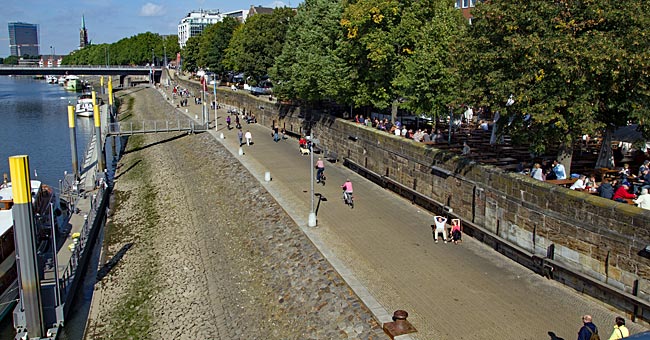
Ships visible from the beer garden
It wasn’t until the late 1980s that Bremen’s city fathers rediscovered the Weser shoreline near the city center. Under the slogan "City by the River," an urban development program was launched to enhance the Schlachte and better connect it to the inner city. Alongside Bremen’s citizens, the booming city tourism industry was a key focus.
Thus, between 1993 and its grand opening on May 27, 2000, a promenade with a boulevard, ship docks, and numerous dining options took shape - costing over €20 million, mostly funded by the EU. The result: a 60-tree-lined, granite-paved leisure strip offering something for every palate.
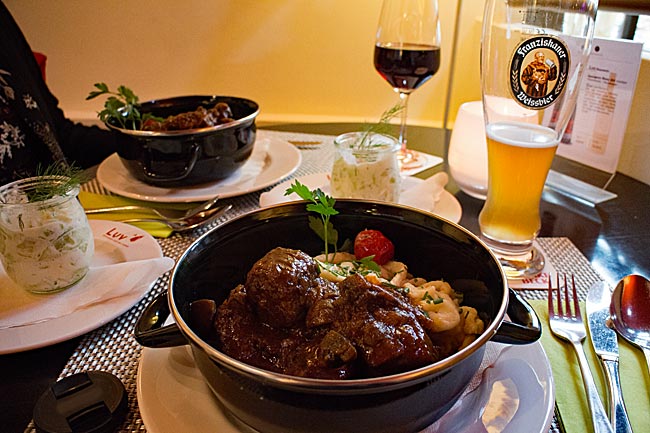
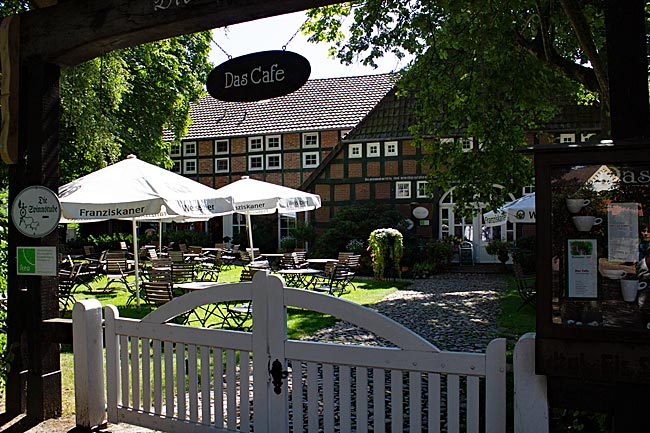
Delicious: goulash with cucumber salad - and bavarian beer
With views of the Weser, enjoying beer and snacks brings a true maritime vibe. The atmosphere becomes even more special as dusk falls and the promenade lights come on.
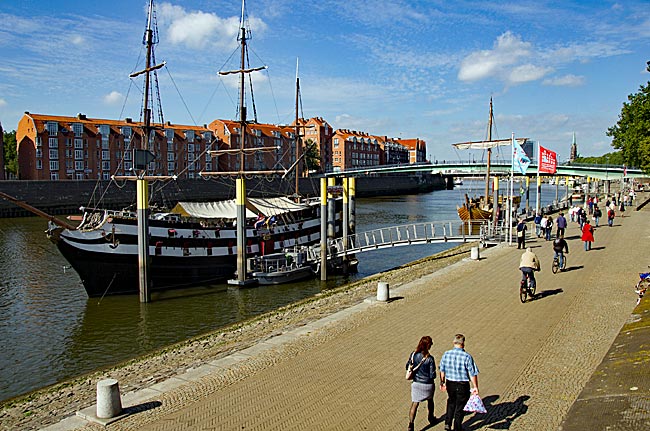
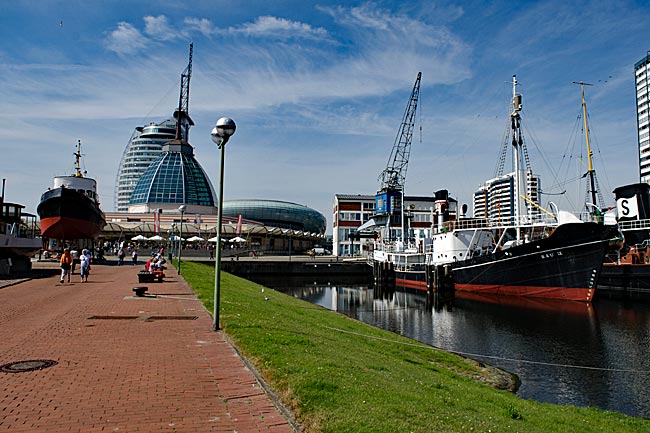
The Pannekoekschip Admiral Nelson and the Kogge Replica, with Teerhof and Teerhof Bridge in the background
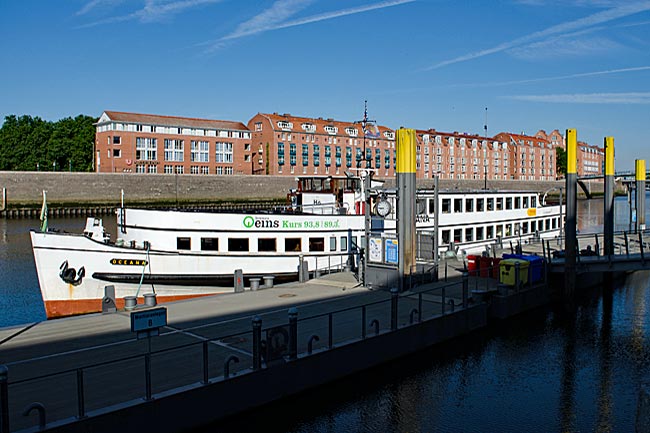
Among other historical ships, such as a paddle steamer from the Hal Över shipping company (based at the Schlachte), one highlight was the Admiral Nelson, an exact replica of a frigate that participated in the 1805 Battle of Trafalgar under Admiral Nelson. Another was the "Roland von Bremen." The replica of the "Bremer Hansekogge from 1380" was completed just before the Schlachte’s opening in 2000.
In 1962, during dredging work near Woltmershausen on the Weser, well-preserved remains of a Hanseatic cog were discovered - over 2,000 pieces. Since little was known about this ship type at the time, the find was a sensation for researchers. While the reconstructed cog spent decades in a conservation bath at the German Maritime Museum in Bremerhaven, shipbuilders from Bremer Bootsbau Vegesack (BBV) used the new insights to rebuild the peculiar vessel using traditional methods.
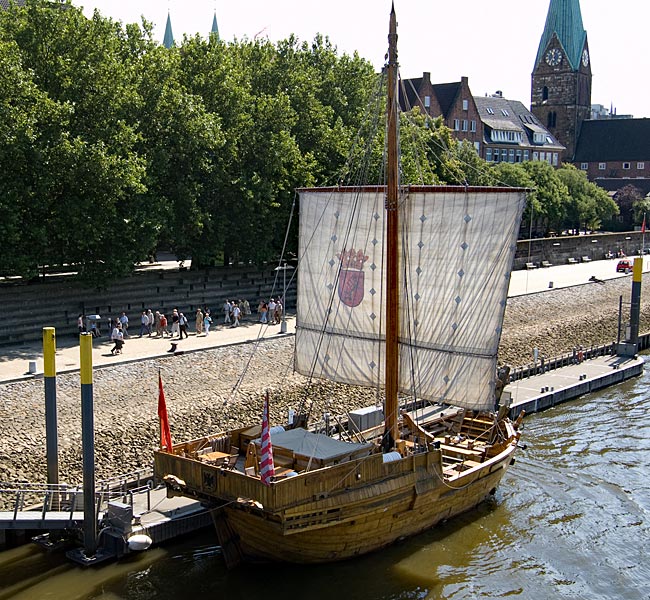
Replica of the Bremen Cog. Cogs were seaworthy and could be armed with cannons against pirate attacks. The Hanseatic League used these merchant ships from the 12th century until the late 14th century
The 23-meter-long, nearly 8-meter-wide ship - built using 90 tons of oak wood - looks like a nutshell by today’s standards. While the replica provides a vivid impression of the once-dangerous adventure of seafaring, the now fully conserved original in Bremerhaven exudes the scent of a relic from centuries of Bremen’s history.
As mentioned, the cog replica was a highlight, but it shared its predecessor’s fate: it sank in the Weser’s waters. A defective sea valve turned the ship into a renovation case by late January 2014, and for a long time, it was unclear whether the wreck - long propped up in the Hohentorshafen - would ever sail again. However, restoration work by unemployed laborers under professional guidance had progressed enough by 2021 that on March 20, the wooden ship was successfully craned back into the Weser under the tense gaze of participants and other interested parties. Further refurbishment will take several more months and is being carried out elsewhere.
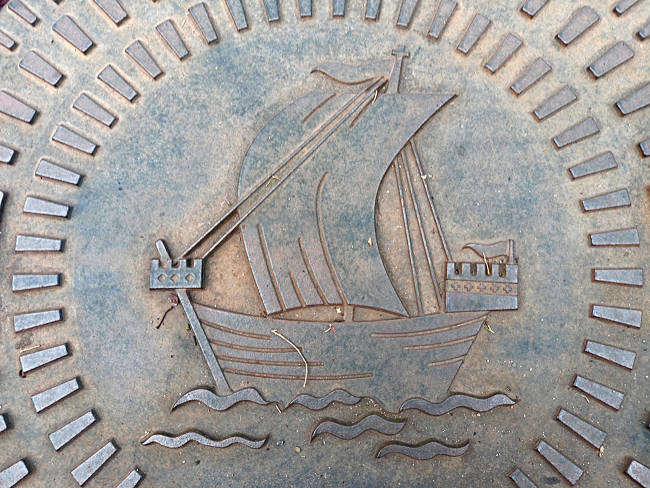
A Cog? Normally, the Bremen Key adorns the manhole covers in the Hanseatic city
previous page
 next page
Map
Further information
www.schlachte.de
www.admiral-nelson.de
https://alex-das-schiff.de
www.weserburg.de
www.hal-oever.de
Bremerhaven in general
Bremerhaven was only founded in 1827. To secure Bremen's status as a port city amid the threat of the Weser - Bremens lifeline - silting up, Bremen acquired 342 acres (morgen) of land from the Kingdom of Hanover for 74,000 talers under then-mayor Johann Smidt. About 60 km downstream from Bremen, this land became home to the first urgently needed seaport built by Bremen: the so-called Old Harbor, completed by 1830.
read more ...
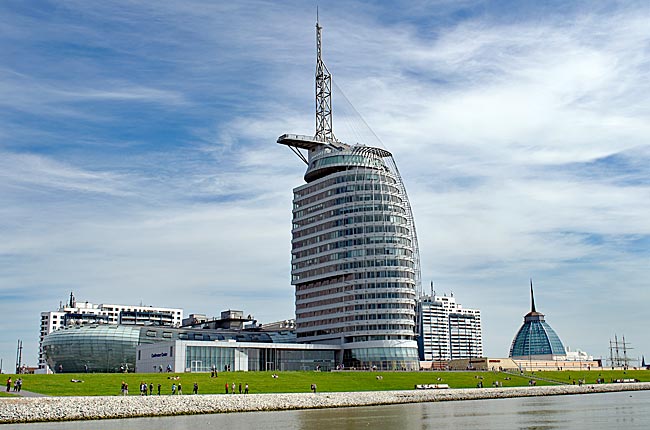
Überseestadt (Overseas City)
When the Overseas Port required renovation, the decision was made in 1991 to simply close off the basin instead. In 1998, the Overseas Port was finally filled with sand obtained from dredging operations in the Outer Weser. Alongside the also decommissioned but still existing Europa Harbor basin, this formed the foundation for the conceptual development and creation of today's Überseestadt (Overseas City).
read more ...
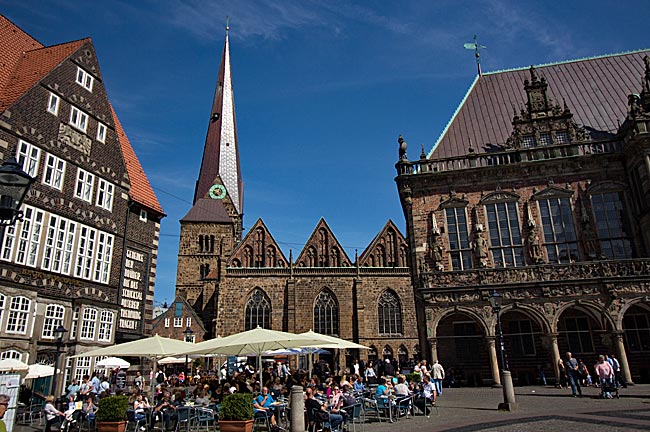
Market Square
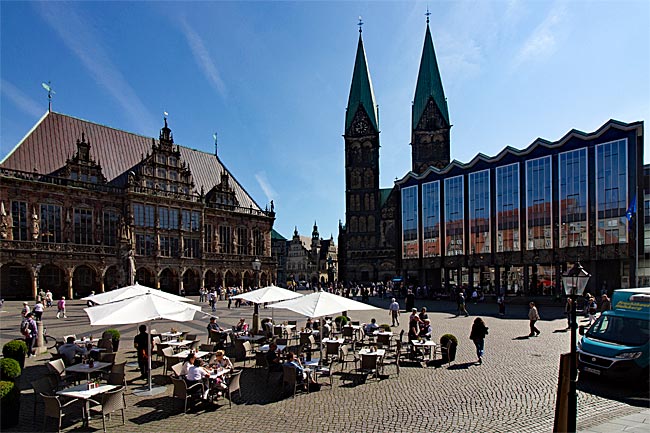
As it was in the past and as it is today, market square is the political center of Bremen and also a major attraction for thousands of tourists, undoubtedly due to its unique architectural atmosphere. Almost unobtrusively and modestly, the Bürgerschaft (Bremen's parliament) stands next to the magnificent Old Town Hall.
read more ...
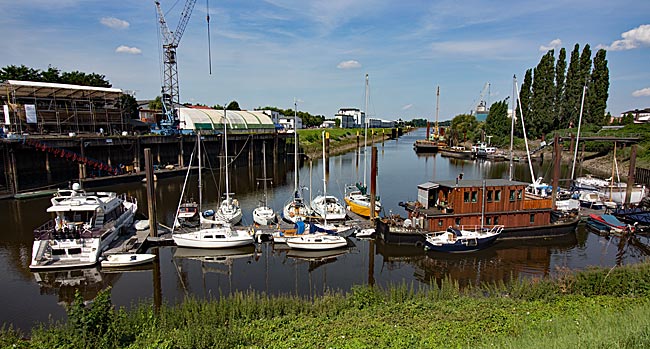
Through Woltmershausen to Lankenauer Höft
A truly maritime bike tour takes you from the Stephani Bridge through Hohentorshafen and Woltmershausen all the way to Lankenauer Höft, which is almost entirely surrounded by water. Behind the Höft, several ships, including the 1957-built tugboat Greif, are moored in an unrestricted section of Neustädter Harbor. This view of the harbor marks the end of this tour.
read more ...
Observatory & Planetarium
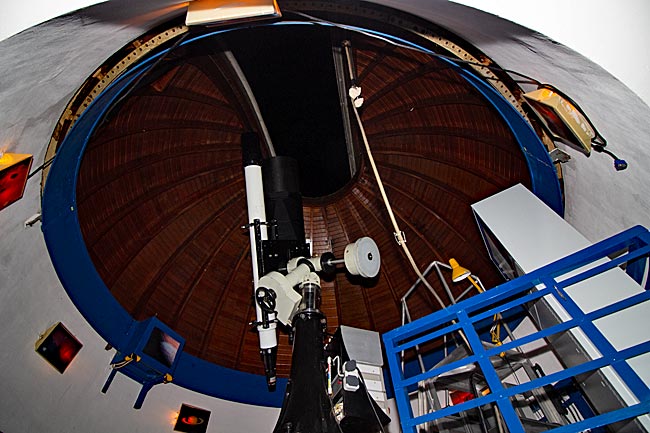
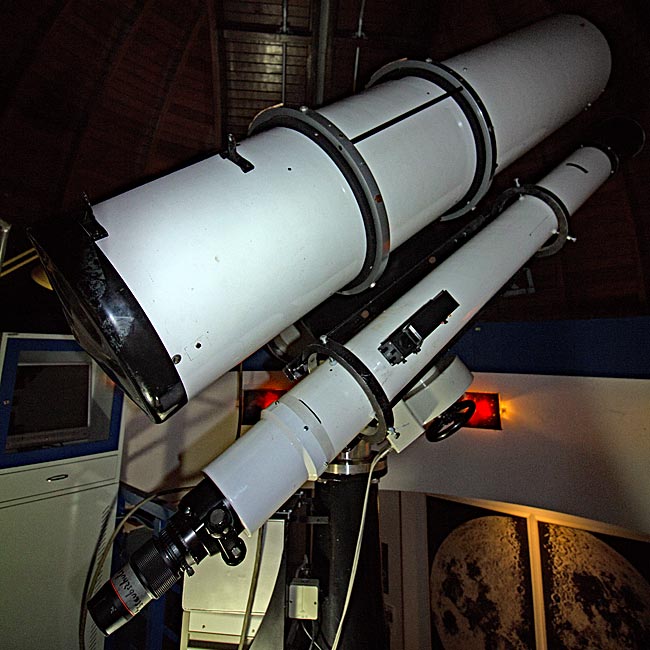
On selected days, visitors can also look through the large stationary and smaller mobile telescopes of Walter-Stein Observatory, which are set up on the terrace for the occasion. In the Olbers-Planetarium in the same building, members of the society give lectures on varying topics. Opened in 1952, the Olbers-Planetarium features a dome with a diameter of 6 meters, making it one of the smaller planetariums. It offers 35 seats (including wheelchair-accessible options) for visitors.
read more ...
A stroll through the Neustadt
The Old Neustadt was only properly established as part of the district in the 17th century. One reason for this planned expansion of the city was the increasing threat posed by advancements in weaponry. Remnants of the defensive walls built at that time still exist today as parks, but there is much more to discover, such as the Little Roland.
read more ...