
 exploring Bremen & its surrounding areas
 You are here: worth seeing in Neustadt district
 Neustadt district (1/2)
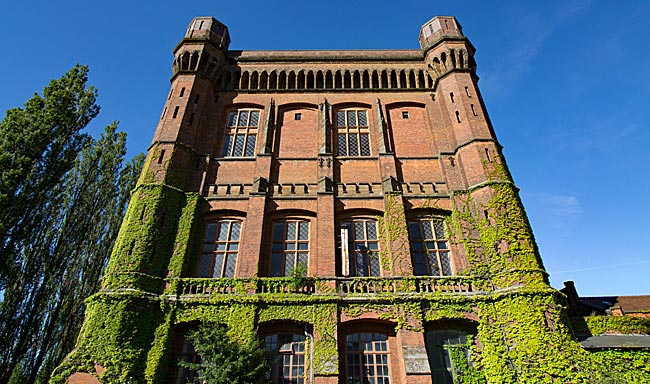
The most striking building in Neustadt: the old water tower, also known as the "upside-down commode." This historic monument was built between 1871 and 1873. More about this ...
Neustadt - it sounds a bit dull, as if the city's residents couldn't come up with anything better for a newly established settlement. One could certainly make jokes with other neighborhood or district names, such as Schwachhausen: "better to live (hausen) strong than weakly (schwach)." Well, it might not be a riot, but Neustadt? Historically speaking, it fits.
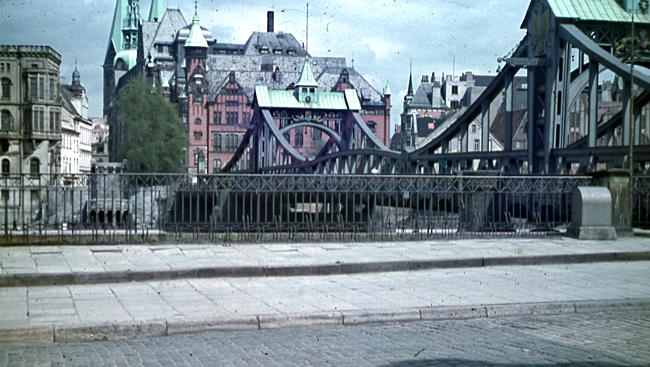
The "Große Weserbrücke" (Great Weser Bridge) with a view from Neustadt to the city center in 1944. The bridge and most of the buildings did not survive the war. Archive photo
Bremen's founding dates back to the 8th century, when settlement began at what was called Bremer Düne, roughly where St. Peter's Cathedral stands today. For a long time, the current Old Town made up the city of Bremen. Although there were earlier settlements on the opposite side of the Weser and a wooden Great Weser Bridge first mentioned in documents in 1244 (which lasted until 1839), paved roads were also laid out, such as the one leading to the bastion built in 1522 as an entrance to the Old Town on the peninsula called Teerhof (formerly Herrlichkeit) between the Weser and Kleine Weser at the level of the medieval harbor, today's Schlachte. In addition to a wall, there was a so-called "Braut" (a 30-meter-wide defensive tower), the Herrlichkeitszwinger, which was later used as a powder tower and spectacularly exploded on September 22, 1739, after being struck by lightning, setting parts of the Old Town on fire.
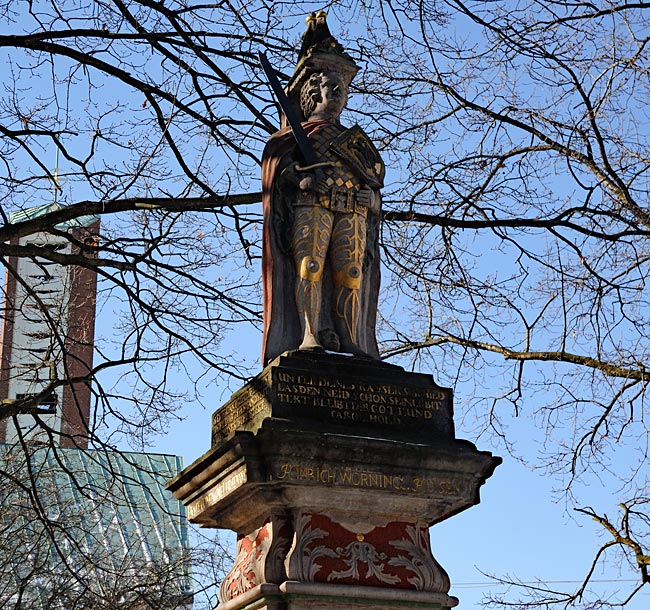
The Little Roland (Roland Fountain): The statue designed by Baroque sculptor Theophilus Wilhelm Frese from Obernkirchen sandstone (Bremer stone) was originally donated in 1737 as part of a fountain in the Pferdegang in Osterstraße by the 1st Neustadt Citizen Company. Since 1899, it has stood on the New Market, initially at the north end and now at the south end
However, the Old Neustadt as today's part of the district was not properly established until the 17th century. The reason for this planned expansion of the city was also the increasing threat posed by the development of offensive weapons. The city, especially the almost unprotected western bank, needed better protection against external enemies. The Dutch engineer Johan van Valckenburgh took action in 1623, and by 1664, the work on the ramparts was completed.
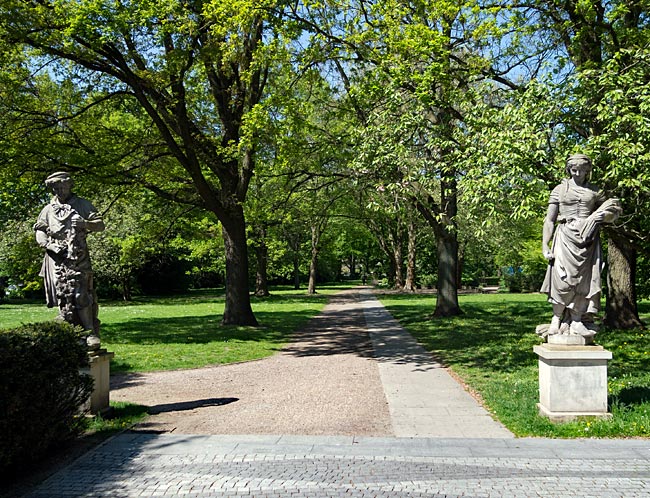
The Schnitterin (Reaper) and the Hopfenbrauer (Hop Brewer) are two sculptures created in 1890 that flank the entrance to the park in the direction of Woltmershausen district
What remains of the old fortifications on this side of the Weser is the "Neustadt Wallanlagen." Since 1998, this green space has been enhanced through extensive measures and today lies in the heart of the district, divided by four main roads. In 2012, Hohentorspark, as part of the wall fortifications, received its current appearance after its initial construction in 1951/52. The Hohentor was one of two city gates on this side of the Weser in the 17th century; it was built when bastions were constructed in Neustadt. The ornate gatehouse built around 1630 was demolished in 1823. The statue of Justitia in the nearby Justitiapark is said to be a remnant of this gatehouse.
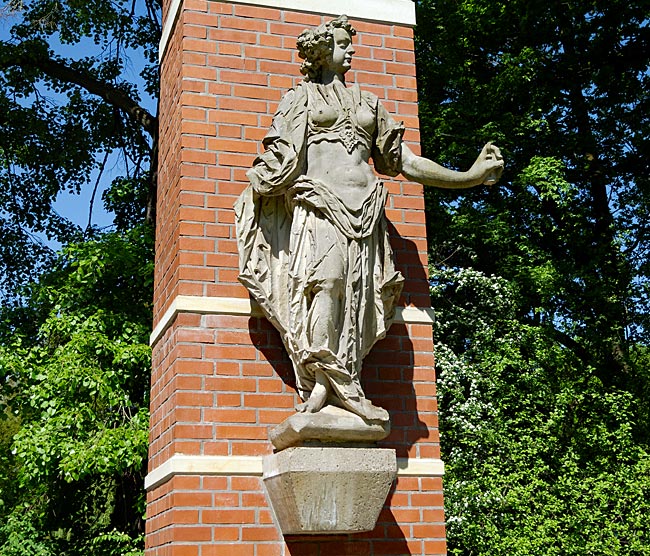
The sculpture of Justitia in Justitiapark. Between this park, popular with university students, and Hohentorspark lies only Hohentorstraße
Today, the central area makes up most of the green strip. This area also houses Bremen University of Applied Sciences. From 2018 to 2020, a €2.4 million grant from the federal government's Climate Protection Fund was used to create the Fahrradmodellquartier (Bicycle Model Quarter), a pilot project promoting cycling that won the German Bicycle Prize in 2018 before implementation. The bicycle zone, featuring Germany’s first traffic sign of its kind, includes 12 streets spanning 2.5 kilometers where cars are allowed but bicycles have priority.
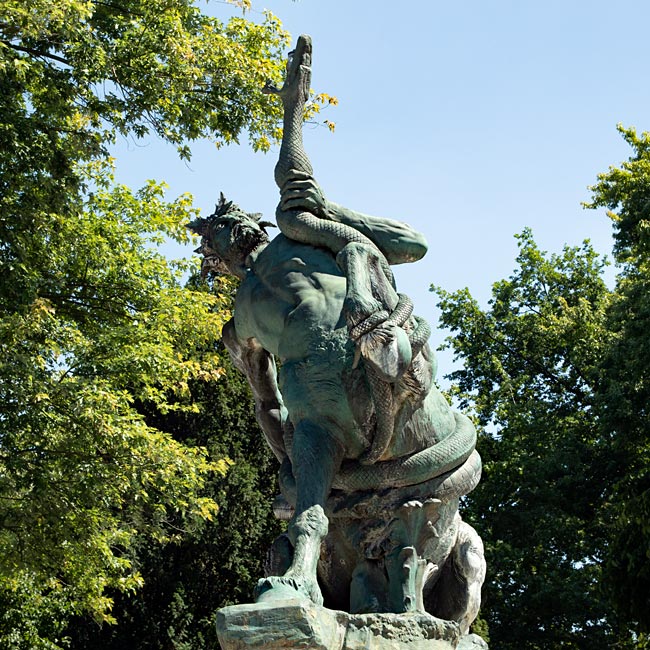
The fountain figure of the Centaur Fountain
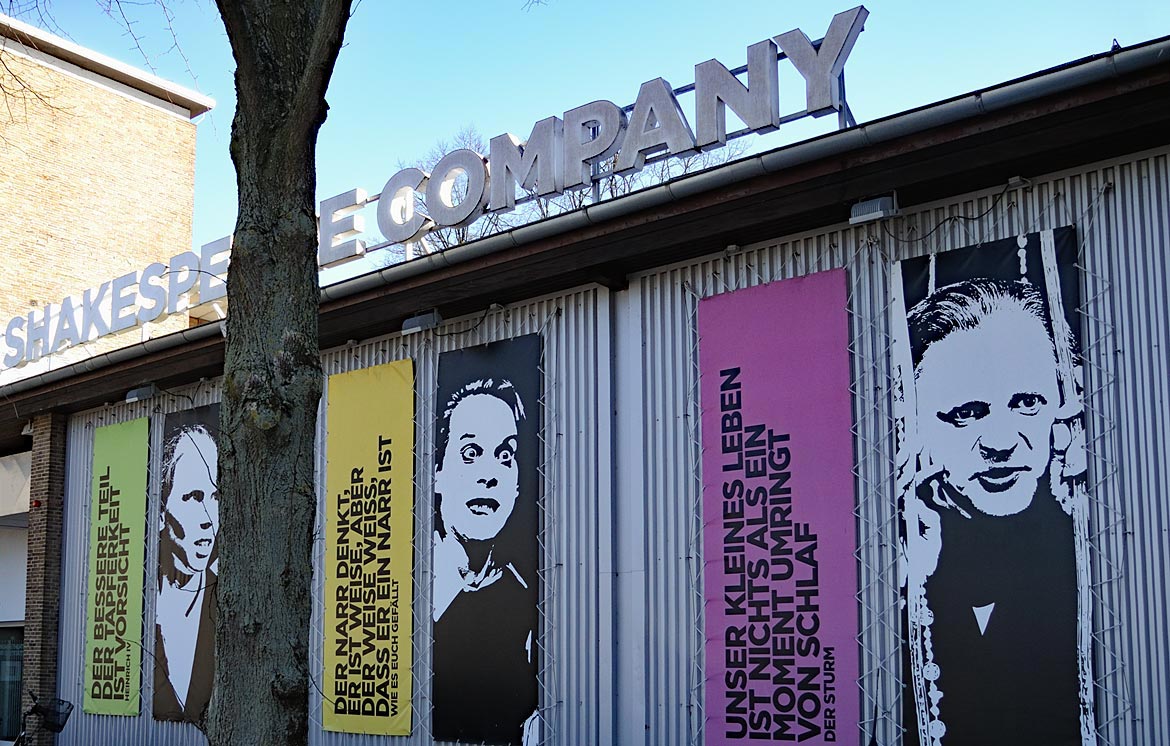
Leibnizplatzpark borders almost on Kleine Weser. Worth seeing is the Centaur Fountain, which was initially installed in Schwachhausen district in 1890 but moved here in 1958. The structure, designed by architect Eduard Gildemeister, was executed by sculptor August Sommer. The fountain was donated by merchant Heinrich August Gildemeister. Across from it is not only a high school but also the home of the Bremer Shakespeare Company at Theater am Leibnizplatz since 1989. Founded in 1983, this self-managed theater collective primarily performs works by William Shakespeare, who died in 1616, as well as original productions. The ensemble is known beyond the region and collaborates with numerous other cultural and scientific institutions in the city. Before the performance begins, you can meet some of the actors and actresses in the foyer. This theater is also different from others and definitely worth a visit.
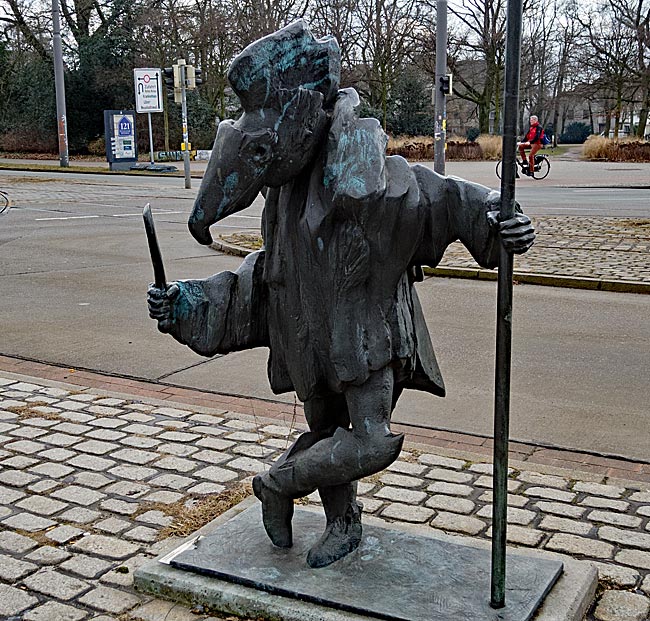
Its location couldn't be more fitting: the Gaukler (Jester) (1991) by Worpswede sculptor Christoph Fischer stands on a traffic island at Leibnizplatz in front of the building complex where the Shakespeare Company entertains its audience. He holds up a mirror to himself and a pole with a copy of his head at the end.
previous page
 next page
Map
Further information
Round trip: from the City Center to Weser weir & back
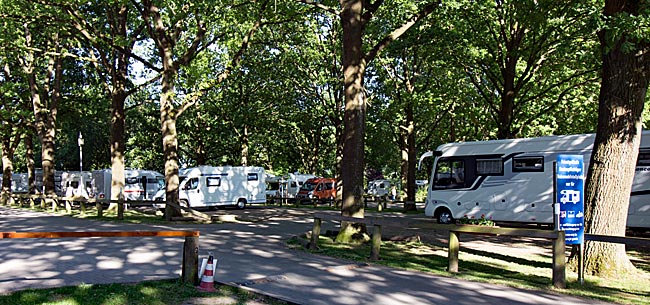
On the way back towards the city center, you pass by sports facilities, Café Sand with its small beach, as well as a motorhome parking area with over 70 spaces surrounded by many trees right on the Weser River. With your mobile home, you couldn't be in a better spot - by bike, you're just a few minutes away from the Neustadt district and the city center. Not far from the parking area stands a red-brick building that the people of Bremen affectionately call the "upside-down commode." Upon closer inspection, this comparison isn’t entirely unfounded.
read more ...
Schlachte & Teerhof
In the Middle Ages, anyone entering the city had to pass by the Teerhof, as it was home to the only bridge over the river. In the 14th century, as maritime trade grew in importance - Bremen had been a member of the Hanseatic League since 1260 (with occasional interruptions) - shipyards and craft businesses were established at the Teerhof. The name "Teerhof" comes from the widespread use of tar (Teer) to seal gaps and planks in shipbuilding or repairs, as well as for preserving ropes and cables.
read more ...
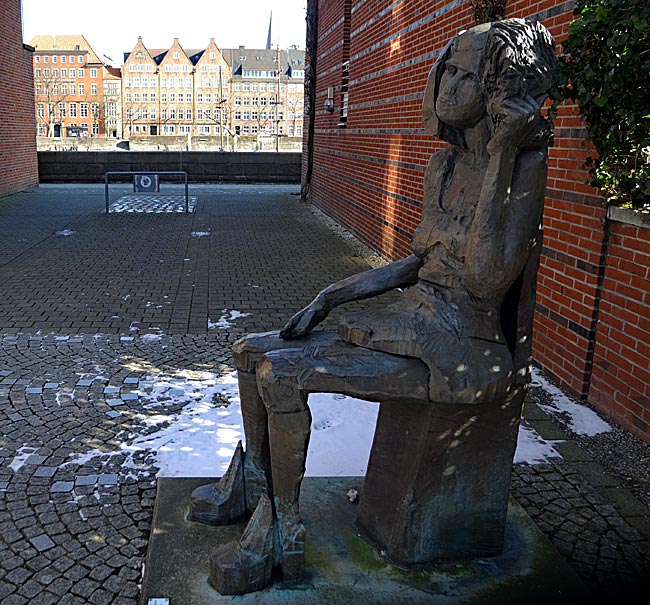
Wallanlagen
Almost entirely surrounding the old town is a zigzagging park landscape with a moat. These are the last visible remnants of the fortifications that enclosed the old town and parts of the new town until the early 19th century. The transformation into a garden landscape began in 1802 with the first section between the Weser River and Herdentor Gate.
read more ...
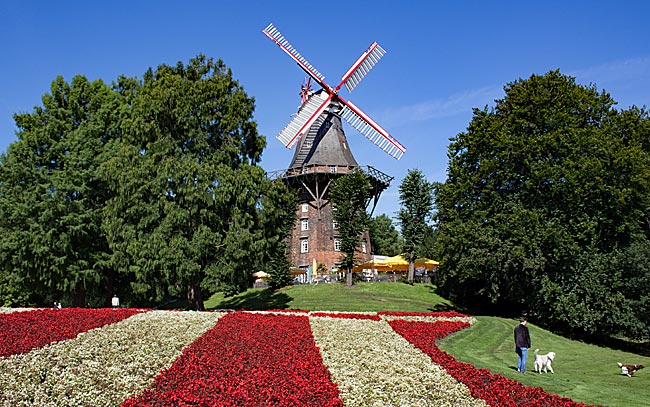
Cycling in Bremen and surroundings
The Free Hanseatic city of Bremen is connected to numerous neighboring towns via the Weser Bike Trail and the Unterweser Circular Route. On both sides of the Weser River, cycling routes lead, for example, to Brake with its Harriersand island or Bremerhaven and onward to Cuxhaven. In 2017, the Weser Bike Trail was named an ADFC-Quality Bicycle Route (4 stars) by the German Cyclists' Association (ADFC) at ITB. According to a travel analysis, it is the second most popular long-distance cycling route in Germany.
read more ...
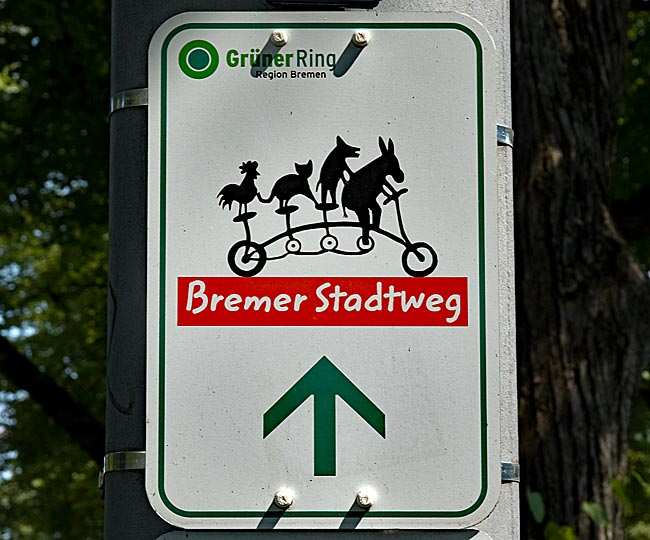
Worpswede
In 1889, the painters Fritz Mackensen, Otto Modersohn, and Hans am Ende laid the foundation for this art center with their decision to work and live in the small, previously unknown village. They were quickly followed by other artists such as the painter Paula Becker, the poet Rainer Maria Rilke, Clara Rilke-Westhoff, Fritz Overbeck, Heinrich Vogeler, and later the sculptor, painter, and craftsman Bernhard Hoetger, after whose designs, among others, the Paula-Becker-Modersohn-House in Bremen's Böttcherstraße was built.
read more ...
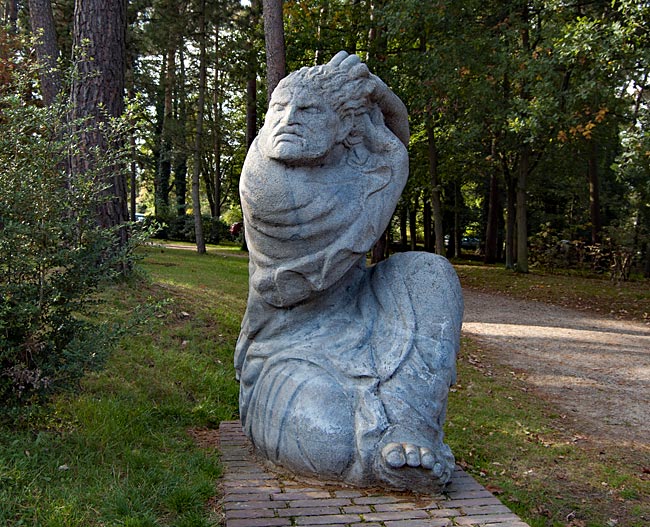
Bürgerpark
A green oasis near the city center and a popular recreational area, the Bürgerpark is a park initiated by the citizens themselves. In the early 19th century, the old defensive structures of the city had already been dismantled, transforming the ramparts into a landscaped park. However, as the city rapidly expanded throughout the century, demands for more green spaces grew louder.
read more ...