
 exploring Bremen & its surrounding areas
 You are here: worth seeing in the surroundings
 Weser cruise from Bremen to Bremerhaven (1/2)
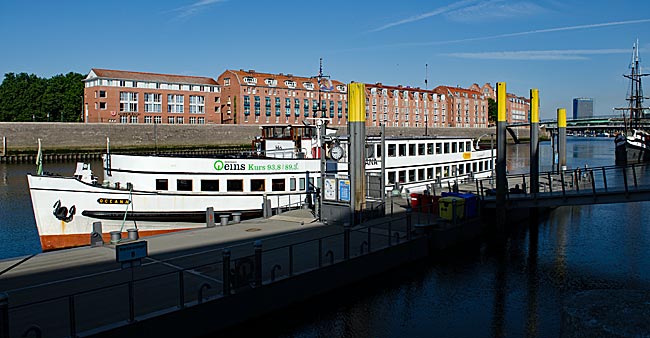
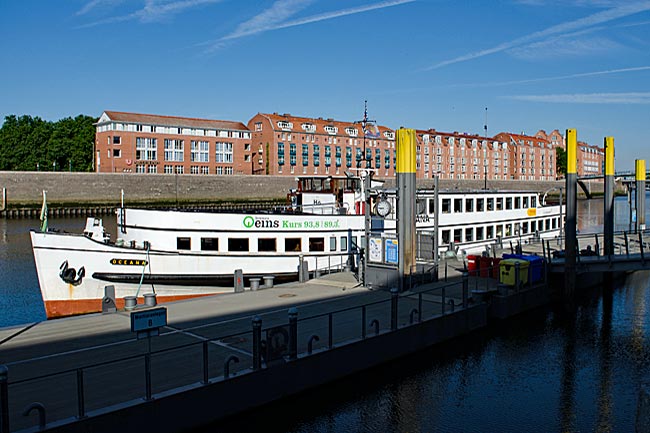
The passenger ship "MS Oceana" at the Martinianleger with the backdrop of Teerhof
Of course, you can take a car from Bremen to visit Bremerhaven or board the regional train at the main station. With a pre-booked Niedersachsenticket, using buses and trams in both cities is even included - quite practical. But with good weather and enough time, it's more interesting to cover the route on the Weser. Hal över operates the connection from May to September. The ship departs from the Martinianleger near the city center at Schlachte. If you wish, you can even bring your bicycle along, and you can also pre-book breakfast onboard. Since the ship makes several intermediate stops during its journey, you can board at one of the docking points - for example, at Pier 2/Waterfront in Gröpelingen, the first stop.
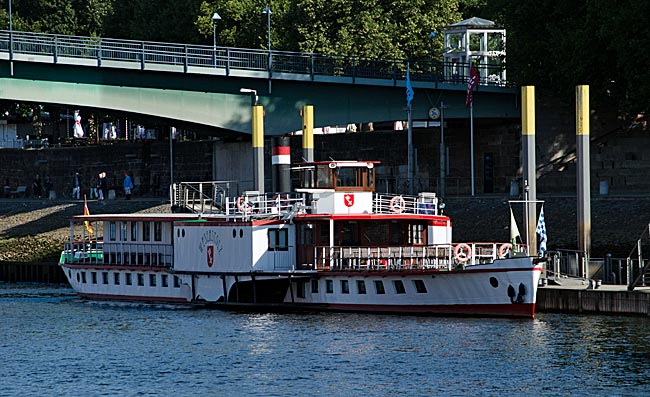
The paddle steamer "Weserstolz" at Teerhof Bridge on Schlachte
After setting off from Martinianleger and performing a turning maneuver downstream, the white passenger ship begins its journey along Schlachte, where numerous ships are moored, and adds the finishing touch to the maritime atmosphere. Near Stephani district, the ship passes under Stephani Bridge and the adjacent railway bridge - the last Weser crossings of this kind before reaching the North Sea. If you wish to continue toward Bremerhaven from one bank to the other, you must take one of the ferries or the privately operated, also toll-based Wesertunnel completed in 2004.
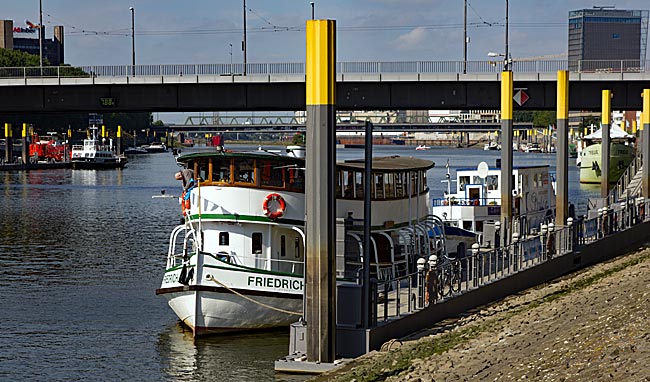
Built in 1880, in Bremen since 1918, and named "Friedrich" since 1925. Today operated by the association "Bremische Gesellschaft zur Erhaltung der Großen Hafenrundfahrt MS Friedrich e.V."
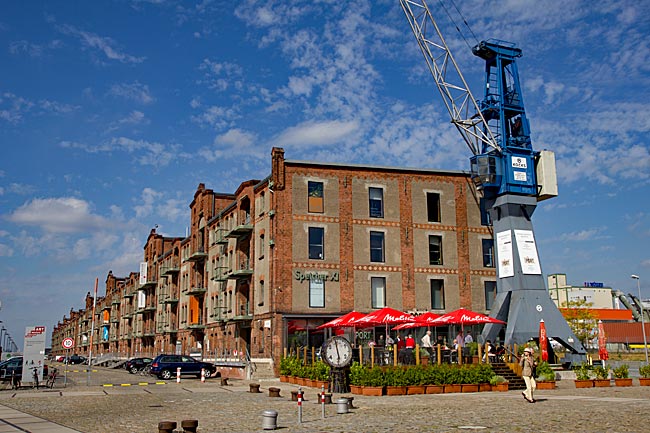
Beyond the bridges, the Überseestadt begins on the right bank. Once a bustling harbor district where goods from around the world were delivered, transferred, or shipped out. With the relocation of maritime trade to Bremerhaven, the (harbors Europe and over seas) Europa- and Überseehafen lost their significance, and the latter was finally filled in 1998. Only in the adjacent Tinder and Factories Harbor does shipping traffic persist today, and goods are still unloaded. Many old warehouses have been restored and integrated into the new development of the area. In addition to numerous office spaces, new apartments have also arisen in Überseestadt, resulting in an interesting mix. Particularly noteworthy is the area around Europahafen with Schuppen Eins.
Opposite Überseestadt on the left Weser bank lies the district of Hohentorshafen, where primarily metal semi-finished products and timber are traded. Where the warehouses end, a green strip begins that partly extends as a park along the water up to Lankenauer Höft. The route is well-suited for a bicycle excursion, as you can read here.
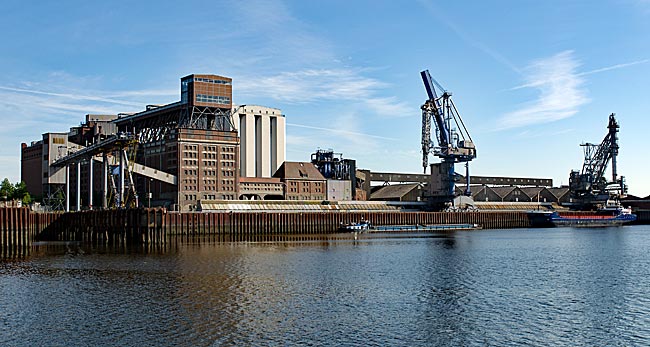
View of the unloading facilities in grain harbor at PIER 2 and Waterfront in the district Häfen
After the passenger ship has made its first stop against the backdrop of the protected historic grain-handling facility at PIER 2, the journey continues past the still-active industrial harbors. Shortly before the expansive harbor facilities, a detour leads into the small Kap-Horn Harbor. At its end stands the former U-boat bunker "Hornisse". The concrete structure was primarily built by forced laborers during World War II as a construction dock for the shipyard "AG Weser", but the U-boat segments were never assembled or constructed here, as the conversion to a U-boat bunker was never completed. Since such structures inherently resist even massive violence, the costly project was abandoned, and instead, the bunker roof served in 1968/69 as a solid foundation for a new office building. The bunker with its two chambers in a U-shape was even featured on October 22,2017 as one of the crime scenes in the Bremen episode of the ARD series "Tatort" titled "Zurück ins Licht" (back to light). And indeed, the "victim" was recovered from the water inside this unsightly structure. And the perpetrator was ... well, you decide for yourself.
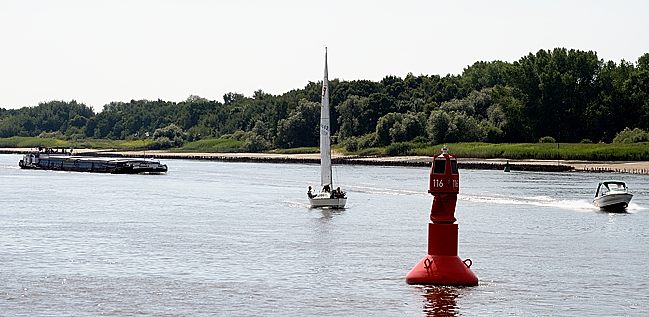
A waterway and a lot of traffic on the Weser
Just a few meters downstream from the harbors, iron ore has been processed since 1908. The ore primarily came from Sweden, and the coal from the Ruhr region. However, during World War II,aerial bombs put an end to steel production, the plant was destroyed. In 1954, the Klöckner conglomerate purchased the abandoned site and planned a new facility with storage areas. For this, two villages had to be relocated. In 1955, Osterort disappeared from reality and maps, and in 1957, Mittelsbüren followed. However, one of the old thatched-roof farmhouses was carefully dismantled and reconstructed true-to-original on the Riensberg estate of Focke-Museum. The house Mittelsbüren now conveys rural life in bygone times within its interiors.
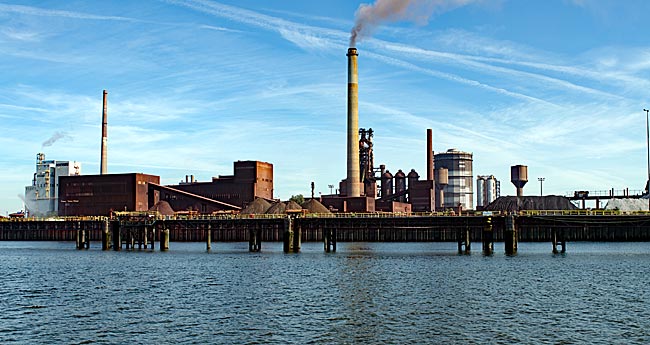
Workplace of the steelworkers
After the first two blast furnaces were ignited in 1959 and ’61, respectively, a third blast furnace was commissioned in 1973 in a second facility erected in 1967. Overall, the plant was well-equipped for steel production with cold and hot rolling mills as well as a hot wide strip mill. However, business became difficult in the 1980s, and a global crisis set off a wave of consolidation. The ownership structure changed hands multiple times. Since the merger of the steel conglomerates Arcelor and Mittal in 2007, the plant has operated under ArcelorMittal Bremen GmbH. Until early 2011, you could particularly see the steelworks from afar at night when converter gas from raw steel production burned on the so-called flare. Since then, the gas released during the oxygen blowing process used in production is recycled back into the process.
From Mittelsbüren in the district of Burglesum, only the Moorlose Church remains standing, where the passenger ship also docks. The brick building in Neo-Gothic style was constructed in 1846/47 according to plans by architect Anton Theodor Eggers and has been under monument protection since 1973. A dilapidated predecessor structure had been demolished in 1845. The history of a church at this location likely dates back to the 13th century. Equally unclear is the meaning of the name. Does its origin relate to the moorland surrounding the parish church characterized by wet meadows? After all, a drainage ditch in the marshy river valley is called a "Moorlöse". Another interpretation could be the church as "motherless", since the mother church of the congregation stood, separated by the Weser, in Altenesch in the municipality of Lemwerder. The restaurant "An der Moorlosen Kirche", the church, and the ship docking point make this location a nice excursion destination - for example, for cyclists on weekends and sunny days.
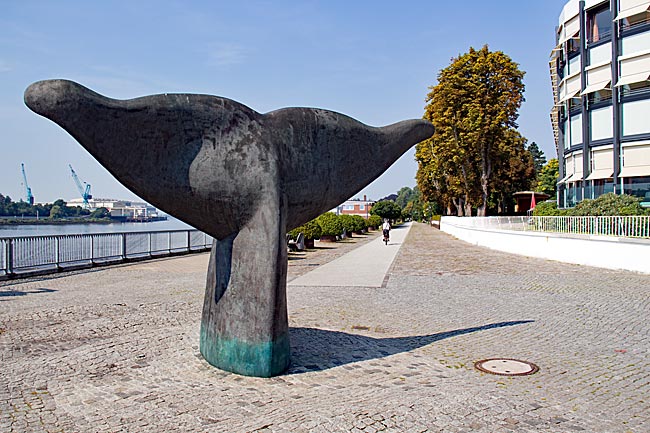
Whale fluke at the ferry dock in Vegesack, behind which extends Stadtgarten
Once, Vegesack in northern Bremen was an independent city, from which not only Germany’s temporarily largest herring fishing fleet set sail for fishing trips, but also whalers headed toward Greenland. This is commemorated by, among other things, a bronze whale fluke at Stadtgarten, where the passenger ship docks. Vegesack with its aforementioned Stadtgarten, Utkiek,and Museum Harbor - which are part of the maritime mile - is absolutely worth seeing. You can also easily cycle back to Bremen from here via the Lesum and Wümme dikes (approximately 25 kilometers).
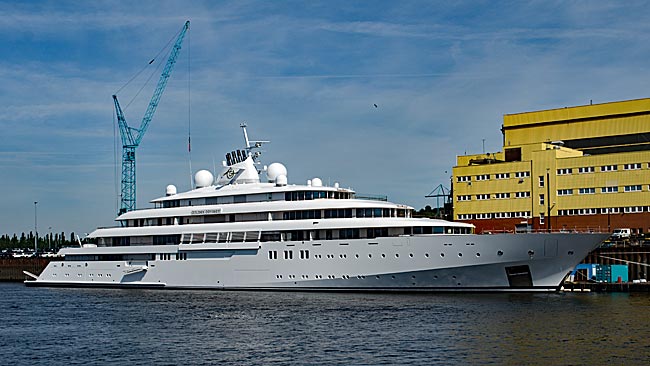
Luxury yacht at the pier of Lürssen
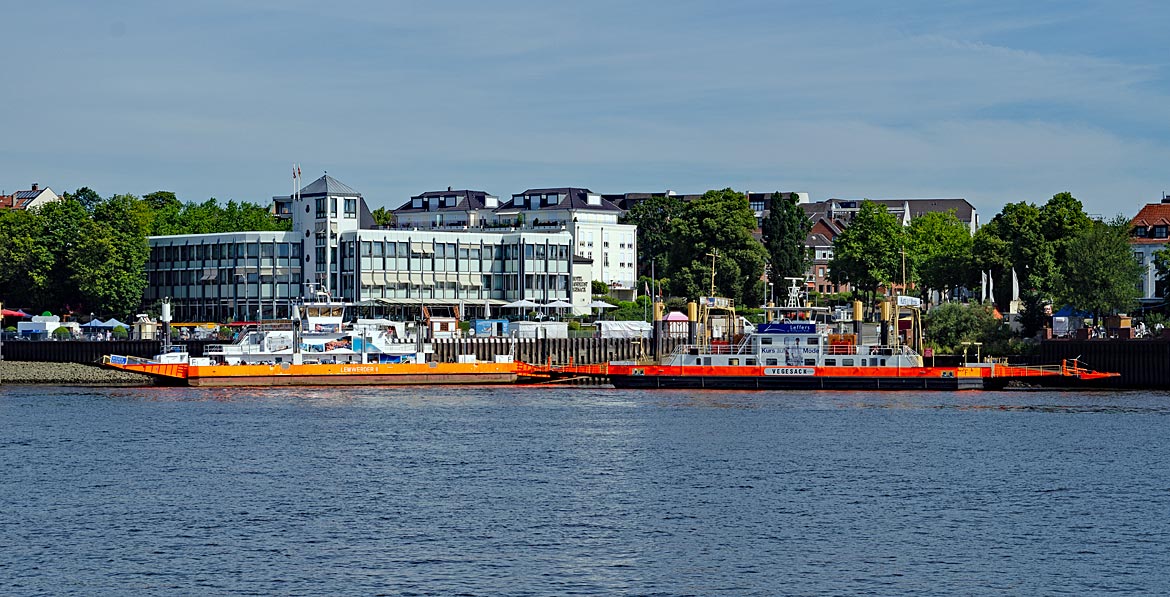
While waiting for departure on deck next to the ferry service, which provides an important connection between Vegesack and Lower Saxony’s Lemwerder, someone might let their gaze wander over there beside the docking point. The halls of the local shipyard Abeking & Rasmussen are closed like an oyster when new buildings are under construction behind the walls, but they will eventually see the light of day and then lie at the yard’s own quay as floating luxury accommodations for the world’s super-rich. From provincial ... This also applies to Lürssen Shipyard, which has a production site on the former Vulkan property in Vegesack. That shipbuilding for civilian purposes does not exclusively take place on some of the surrounding shipyards is certainly unsettling to some, after all, Germany remains one of the world’s largest arms exporters and naval ships are part of that.
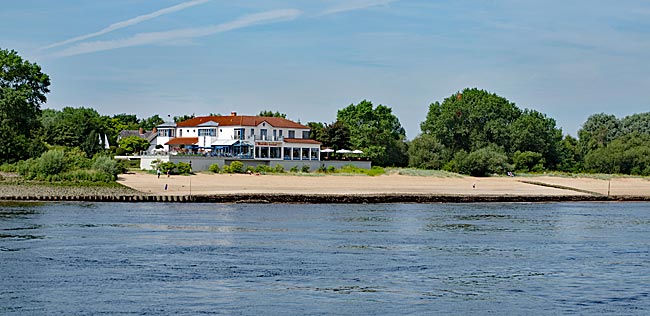
The name says it all: Restaurant "Weserblick" at the ferry Berne–Farge
previous page
 next page
Further information
www.hal-oever.de
www.focke-museum.de
www.an-der-moorlosen-kirche.de
www.denkort-bunker-valentin.de
www.u-boot-wilhelm-bauer.de
www.strandhalle-harriersand.de
Bremerhaven in general
Bremerhaven was founded only in 1827. To secure its importance as a port city amid the threat of silting up of the Weser River - the lifeline of Bremen - Bremen acquired 342 morgen (approximately 850 acres) of land at the mouth of the Weser from the Kingdom of Hanover for 74,000 talers in 1827 under then-mayor Johann Smidt. About 60 km downstream from Bremen, the first urgently needed seaport for Bremen, known as the Alte Hafen (Old Harbor), was established there by 1830.
read more ...
Schlachte
From the start of construction in 1993 until the ceremonial opening on May 27th, 2000, a promenade with a boulevard, docking areas for boats and numerous restaurants offering something for every taste was created between the Wilhelm-Kaisen Bridge and Stephani Bridge for over 20 million euros, mostly funded by the EU, featuring 60 trees and plenty of granite.
read more ...
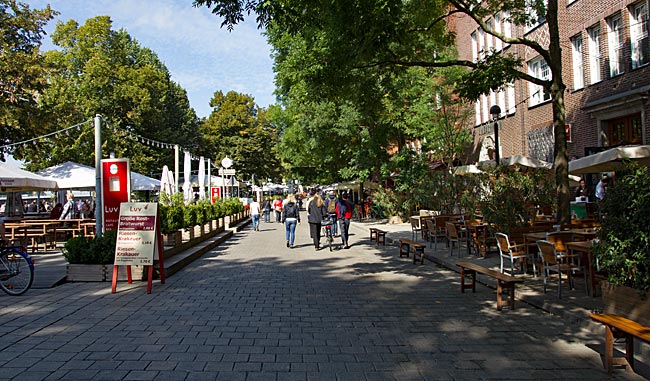
Stephani district
The Stephani district forms the western end of Bremen's Old Town and is considered the birthplace of the city, making it one of its oldest districts. As early as 1050, Archbishop Adalbert I founded a priory in honor of Saint Stephen. The priory, located on a dune, was called Steffensberg (mons sancti Stephani) in German translation. Adalbert's episcopal successors established a parish and built the first church in what was then also known as Steffensstadt (Stephen’s City).
read more ...
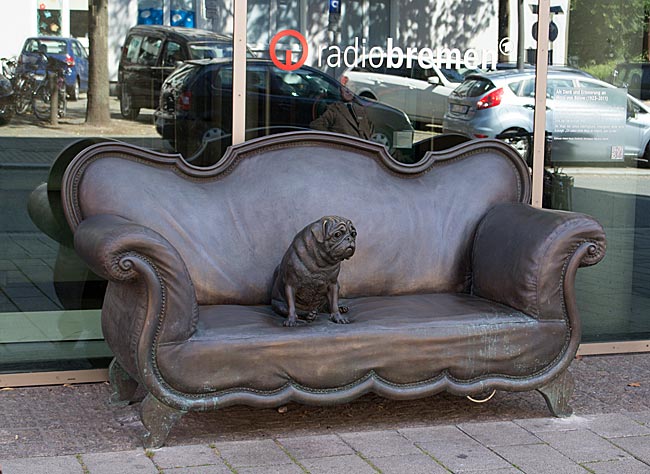
Überseestadt (Overseas City)
When the Overseas Port required renovation, the decision was made in 1991 to simply close off the basin instead. In 1998, the Overseas Port was finally filled with sand obtained from dredging operations in the Outer Weser. Alongside the also decommissioned but still existing Europa Harbor basin, this formed the foundation for the conceptual development and creation of today's Überseestadt (Overseas City).
read more ...
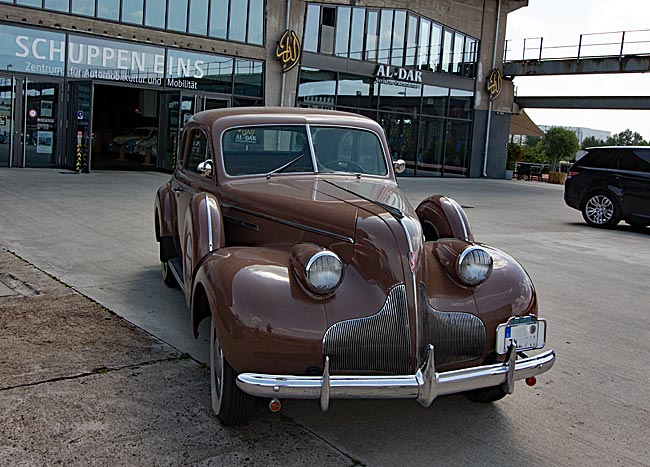
Focke-Museum
Every city has its history, and in many cities, there is a museum that tells this story. In the Hanseatic city, it is the Focke Museum in the Riensberg district, where urban history is presented most vividly. The "Bremer State Museum of Art and Cultural History" was established in 1924 by merging two collections: the Gewerbemuseum, founded in 1884, and the Historisches Museum für bremische Altertümer (Historical Museum for Bremen Antiquities), founded six years later. The museum's founder, who passed away in 1922, also gave it his name.
read more ...
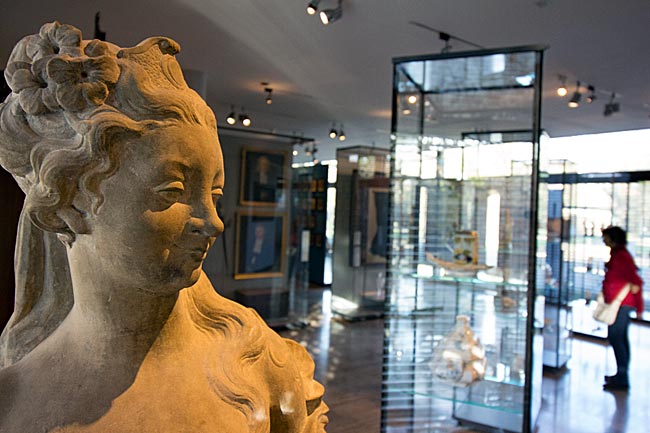
Vegesack
Storage facilities, museum harbor with ships, Utkiek with whale jaws and more are part of Vegesack's Maritime Mile, which extends for slightly over one nautical mile (about 1.8 kilometers) to the former site of the „Bremer Vulkan“ shipyard that went into insolvency in 1996. This also includes the Stadtgarten, which stretches almost from the ferry terminal to the former „Vulkan“ site.
read more ...
Bremerhaven - Überseehafen (Overseas Port)
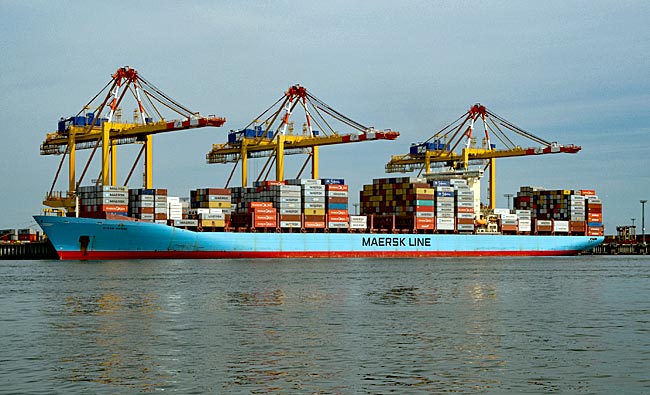
In addition to the Old Harbor (now the Museum Harbor), which was the first to be built, other ports were later added. Adjacent to the New Harbor lies Kaiserhafen I, the first in a series of additional harbor basins. Even a glance into this initial section of the expansive port area reveals a different world of maritime activity - one of large ships. And we will see even larger ones along the five-kilometer-long quay on the Weser.
read more ...