
 exploring Bremen & its surrounding areas
 You are here: worth seeing in northern Bremen
 Vegesack in northern Bremen (1/2)
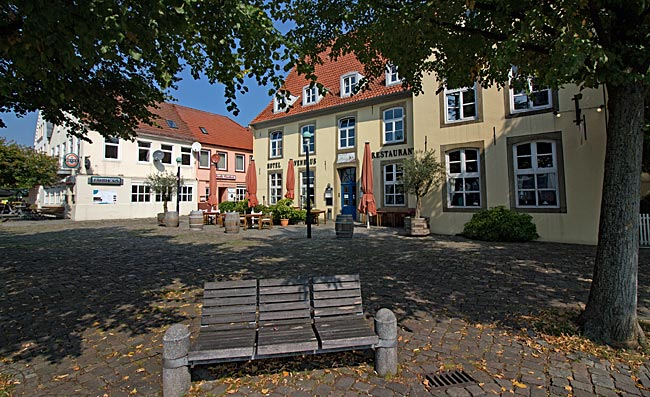
The Havenhaus next to the harbor entrance has a long tradition
When listening to some (city) women and men of Bremen talk about the northern, downstream districts of the Hanseatic city, an outsider might get the idea that northern Bremen is an independent city that just happens to have the same name. And a glance at the map shows that the Lesum River actually seems like a border between the northern and southern districts - but only appears to be so. Burglesum and the districts that line up adjacent to the right bank of the Lesum all the way to the Weser and along it still belong to the city of Bremen.
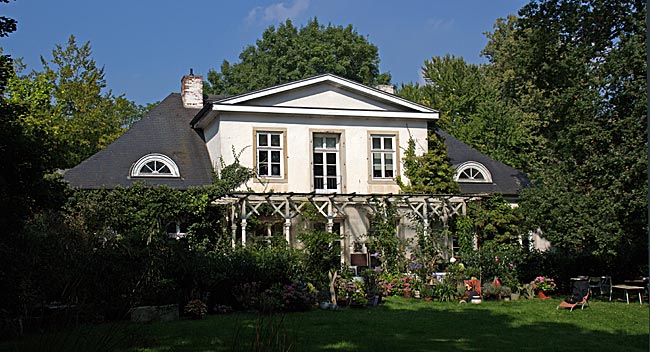
The 1814-built classical-style country house "Haus Lesmona" has been under monument protection since 1973
Apart from the beautifully laid-out 65-hectare Knoops Park in Burglesum, named after the Bremen merchant Ludwig Knoop who died in 1894, and Schloss Schönebeck in Schönebeck, a water castle built in the 17th century that now houses a local history museum, for visitors to Bremen, Vegesack is perhaps the most interesting district in the north. Those visiting Bremen in August are recommended the "Summer in Lesmona," a three-day classical event with picnics under the open sky in Knoops Park that has been held since 1994, making a visit to the northern districts particularly worthwhile.
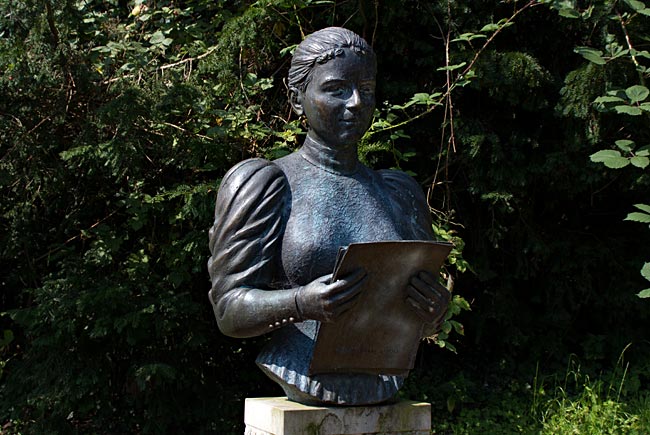
Magdalene-Pauli monument on the path through the park
"Summer in Lesmona" was the title of a book published in 1951 and became a great success. The author was Magdalene Melchers, who married the future art hall (Kunsthalle) director Pauli in 1896 and wrote under the pseudonym Marga Berck. Lesmona referred to the place Lesum with the Lesum River, which did not yet belong to Bremen at that time, and the setting of the story was Knoops Park as well as "Haus Lesmona" on the edge of the park. The merchant Hermann Melchers had acquired the classical-style country house named after its builder Heinrichsburg in 1882 for himself and his family. His niece Magdalene spent the summers from 1893 to 1896 there and fell in love. Unfortunately, the love remained unfulfilled, about which she maintained an extensive correspondence with her cousin, which eventually became the content of the epistolary novel. Magdalene Pauli died in 1970, but in 2001 the Knoops Park support association donated the Magdalene-Pauli monument in her honor. The bronze bust on a sandstone pedestal was created by the sculptor Claus Homfeld.
The fastest way to get there is by car via the A27 towards Bremerhaven and by DB local train to northern Bremen, but sometimes the shortest way is not the best. The approximately 25-kilometer bike tour to Vegesack takes much longer but is also very beautiful.
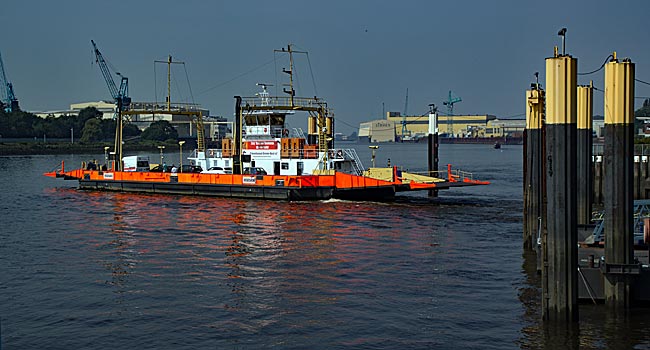
And again it's off with the ferry across the Weser to Lemwerder in Lower Saxony, in the background the shipbuilding halls of the Lürssen shipyard
The most interesting area of Vegesack extends around the ferry terminal, where the frequently used car ferries between Vegesack and the Lower Saxon Lemwerder operate. From the seats in the outdoor areas of the nearby cafés and restaurants, including the 350-year-old Havenhaus, you can almost watch the ferry operations. In front of the square bordering the Weser, the massive lower jaws of a blue whale rise up. The bones of the animal, which was 26 meters long in life, were 7.1 meters long, up to 1 meter wide, and weighed 1.2 tons. The port town received them as a gift in 1961 from the Norwegian shipowner Anders Jahre in memory of the whalers who also set sail from here with their ships towards Greenland. The originals were replaced by a bronze cast in 1987, which is no less impressive.
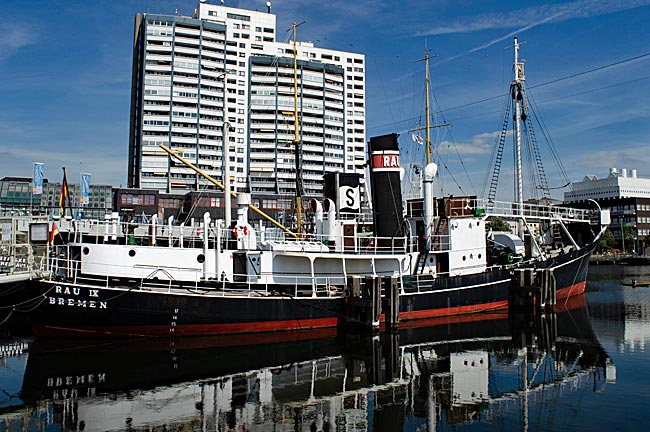
The whaling ship "Rau IX," commissioned by the company Walter Rau, was launched in 1939 just before the start of the war and never saw service under the German flag as such. The ship now lies in the museum harbor in Bremerhaven
Germany was even briefly the world's largest whaling nation. However, in the early 1930s, it was recognized that the marine mammals had been slaughtered beyond measure, and an international agreement was reached in 1931 to limit the hunt with a catch quota. The agreement came into force in 1935 but did not prevent companies such as Walter Rau or Henkel from sending large fleets of whaling ships to the North Atlantic until the beginning of World War II, as they needed parts of the animals for margarine and detergent production. After the war, Germans were banned from hunting whales, yet they found ways to circumvent this ban.
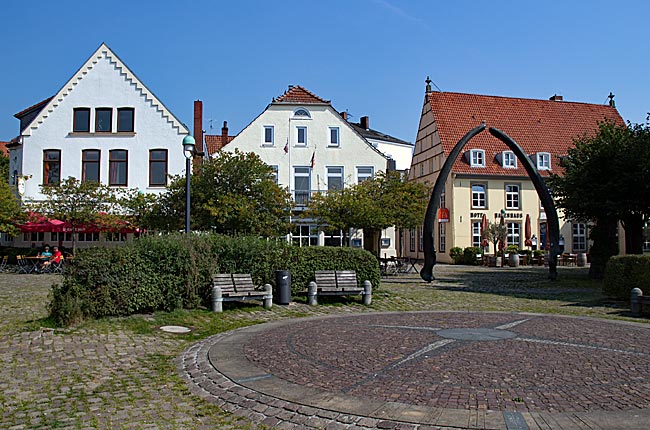
Like an inviting gate, the whale jaw bones rise up as a bronze cast, behind them the old yellow-plastered Havenhaus
But not only whalers set out on their hunting trips from here, for once Vegesack was the home port of the largest European herring fishing fleet, which belonged to the Bremen-Vegesacker Fishery Society. But in 1969, 74 years after the society's founding, herring fishing ships, known as loggers, set sail from the harbor for the last time. The fishing grounds had been overfished with reckless abandon.
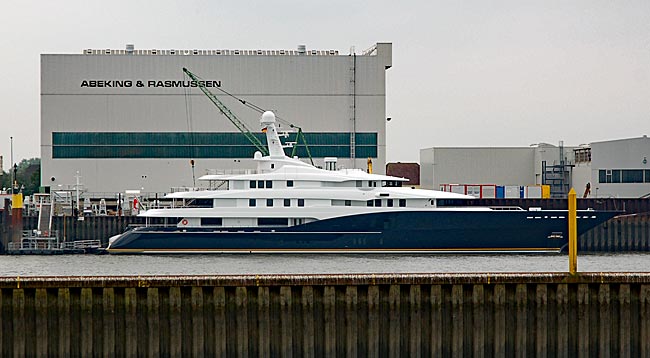
At the quay of Abeking & Rasmussen, a luxury yacht is getting the final touches
It is also interesting to take a look across the river at the quay of the shipyard Abeking & Rasmussen located next to the ferry terminal in Lemwerder, as depending on the order situation, luxury yachts of the higher price class for customers from all over the world with the necessary money in their pockets are sometimes moored here and attract attention.
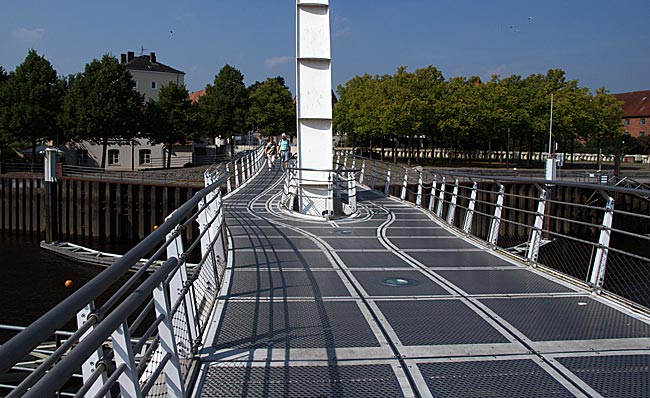
Pedestrians and cyclists shared this bridge over the harbor until 2025; the structure became dilapidated
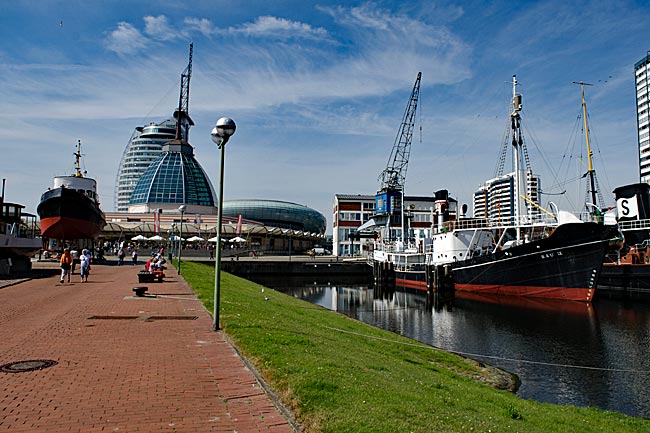
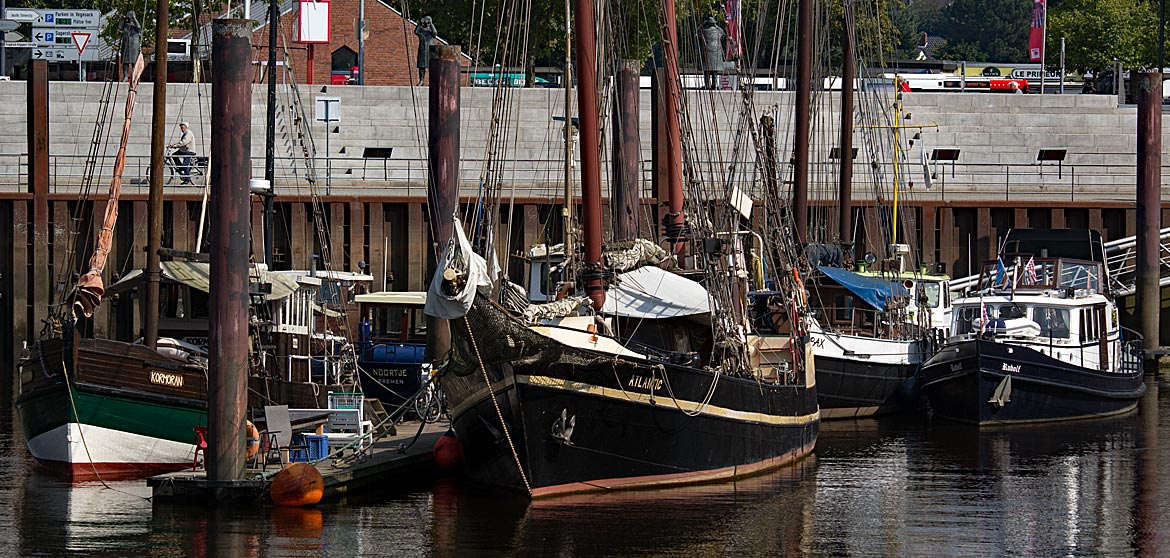
Today, no fishing fleets are based in the Vegesacker Harbor, which was established between 1618 and 1622/23. Instead, numerous traditional ships such as the historical rescue cruiser "Bremen," which was restored to its original condition in 2017 by the boatyard Maleika in the Hohentorshafen, the first of the Bremen-based Society for the Rescue of Shipwrecked, as well as the former steam-powered tugboat "Geo. Gleistein," launched in 1926, the "Verandering," built in 1898 in the Dutch Raamsdonkveer, or the Weser barge "Franzius," to name just a few, are moored in the basin spanned by a stylish 42-meter-long foldable pedestrian bridge.
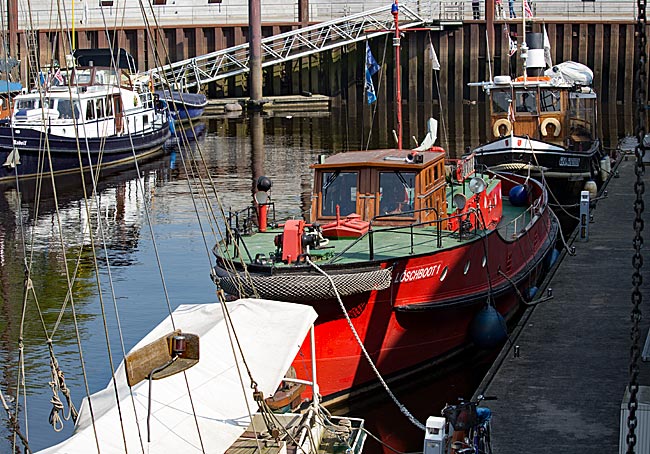
Traditional ships in the Vegesacker Harbor; information boards provide extensive information
The fact that work began on a larger scale at the confluence of the Schönebecker Aue and the Lesum with the start of the Thirty Years' War is due to the silting up of the Weser, which Bremen's shipowners and merchants had been struggling with since the Middle Ages. The location, already used as a harbor site due to its favorable position, offered itself for a larger harbor near the city. However, the Bremer flag, known as the Speckflagge, did not always fly over the harbor town. Until the beginning of the 19th century, Vegesack repeatedly fell under foreign rule, whether by the Swedes, Danes, or French. After the latter withdrew with the collapse of the Napoleonic regime, it took only about two decades for Vegesack, which was then an independent city, to become nearly insignificant as a harbor site for Bremen, as Bremerhaven was founded in 1827 and became Bremen's harbor site for overseas trade. As late as 1799, nearly 1,000 ships from other countries around the world had still called at the harbor in northern Bremen.
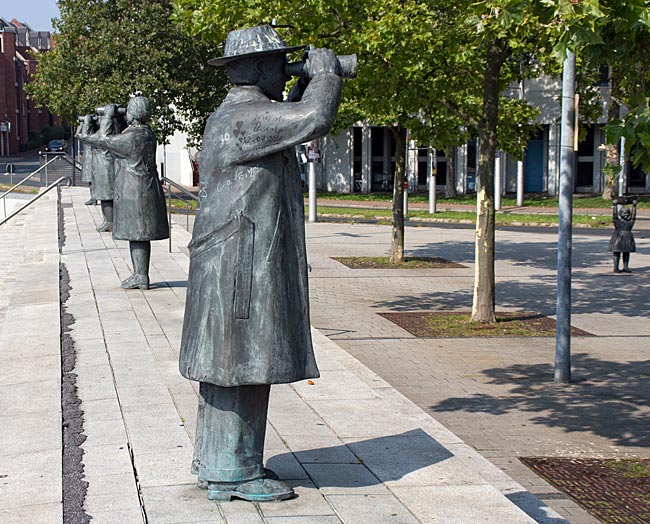
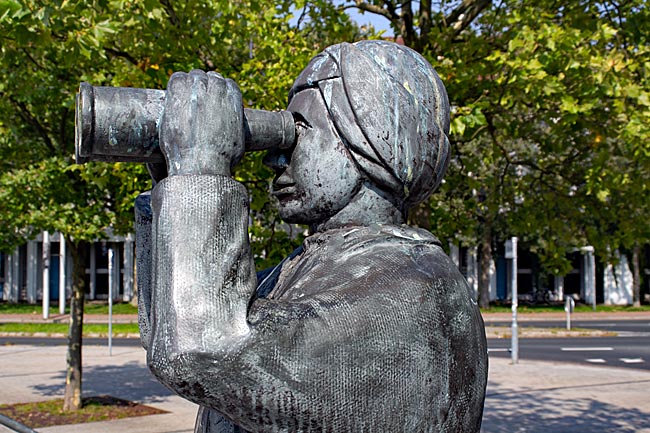
With a view to the horizon: the sculpture ensemble "Ankunft und Abschied" (arrival and farewell) at the north quai
At the north quai, where the stepped flood protection wall offers a seating area with a view of the harbor next to the inflow of the Schönebecker Aue, the 7-piece bronze sculpture ensemble "Ankunft und Abschied," (arrival and farewell) nicknamed "Reckers Familie" (Reckkers family) due to its creator Thomas Recker, has stood since 2001. The occasion for the installation of the figures was the renovation of the harbor. In fact, however, only three women looking through binoculars and a man are standing on the top level of the protection wall, another man and two children are located on the Vegesacker train station square behind it.
Several times a year, such as during the Logger Festival at Pentecost or the Vegesacker Harbor Festival in June, the bear dances around the harbor with live music.
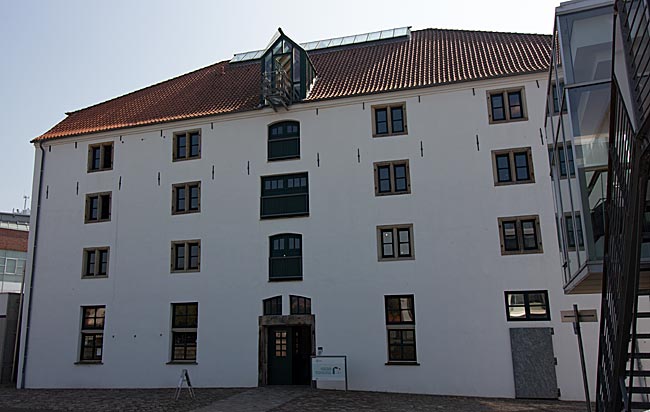
Well-groomed: the old warehouse with the Geschichtenhaus
On the site between the inflow of the Schönebecker Aue and the Lesum estuary stands a classical warehouse as a relic of the long non-existent shipyard of the whaling shipbuilder Johann Lange, which already stood here in the 1820s, as contemporary historical documents show. The fact that the four-story, listed since 1997 storage building presents itself so well-groomed is due to the comprehensive renovation completed in 1999 by the city, which has owned the building since the '90s. Today, the building houses, among other things, the Geschichtenhaus (house of stories), where Vegesack's city history comes back to life.
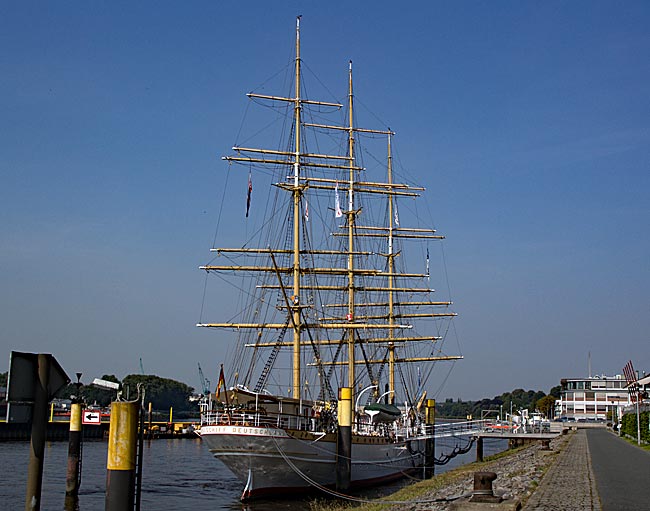
The school ship at its new berth in the New Harbor in Bremerhaven for SAiL
Although no ships are built on the former shipyard site today, the Lürssen shipyard, which operates its shipbuilding facilities only a short distance downstream, has its administration here. Not only the employees in the building looked through their office windows on one side at the floating cultural monument (recognized in 1995), which was moored firmly at the Lesum estuary from 1996 to the end of August 2021, that or the "Schulschiff Deutschland". The three-masted tall ship was launched in 1927 at the Tecklenborg shipyard in Geestemünde - today a district of Bremerhaven - and was the last one built at the shipyard, which closed a year later. In contrast to the full-rigged ship, the four-masted bark "Kruzenshtern", also built at the shipyard the year before as "Padua" and now Russian, is still under sail. After an eventful history, the 86-meter-long training ship with a white hull is owned by the German Schulschiff-Verein and serves as a restaurant and hotel ship with facilities for conferences, parties, or similar events and is incidentally a real eye-catcher. Once a month, couples wishing to marry can also get married on the sailer if they manage to get an appointment. Unfortunately, the association found the mooring at the Lesum too unprofitable, so they decided to move to Bremerhaven in the New Harbor, much to the delight of the local tourism board.
previous page
 next page
Map
Further information
https://www.vegesack.de
https://vegesacker-geschichtenhaus.de
https://stadtgarten-vegesack.de
Overbeck-Museum
Verein der Freunde des Overbeck-Museums e.V.
(Friends of the Overbeck Museum Association (e.V.)
Altes Packhaus Vegesack
Alte Hafenstraße 30
28757 Bremen
Phone: +49 (0)421 663 665
Email: info@overbeck-museum.de
www.overbeck-museum.de
Verein Burg Blomendal (Blomendal Castle Association)
Auestraße 9A
28779 Bremen
Phone: +49 (0)421 608358
www.burgblomendal.de
By bike from central station to Vegesack
Starting at central station, the route takes you past Bürgerweide, with its distinctive Stadthalle (City Hall), Congress Center, and exhibition halls, before continuing through Findorff along the Torfkanal. This canal, which runs along the edge of Bürgerpark and Stadtwald, was constructed between 1817 and 1826 to transport peat from Teufelsmoor near Worpswede to Bremen using peat barges.
read more ...
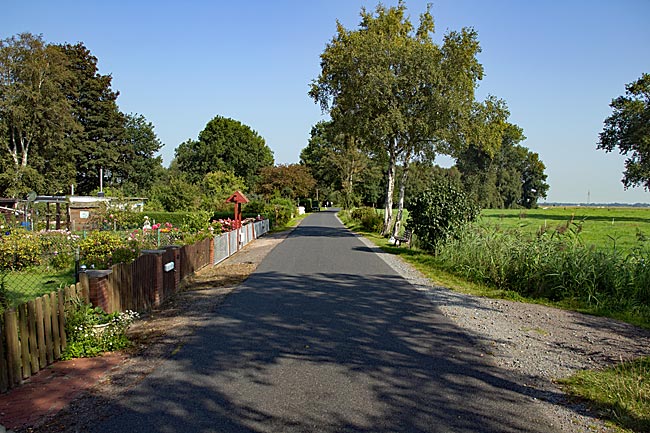
Bremerhaven in general
Bremerhaven was founded only in 1827. To secure its importance as a port city amid the threat of silting up of the Weser River - the lifeline of Bremen - Bremen acquired 342 morgen (approximately 850 acres) of land at the mouth of the Weser from the Kingdom of Hanover for 74,000 talers in 1827 under then-mayor Johann Smidt. About 60 km downstream from Bremen, the first urgently needed seaport for Bremen, known as the Alte Hafen (Old Harbor), was established there by 1830.
read more ...
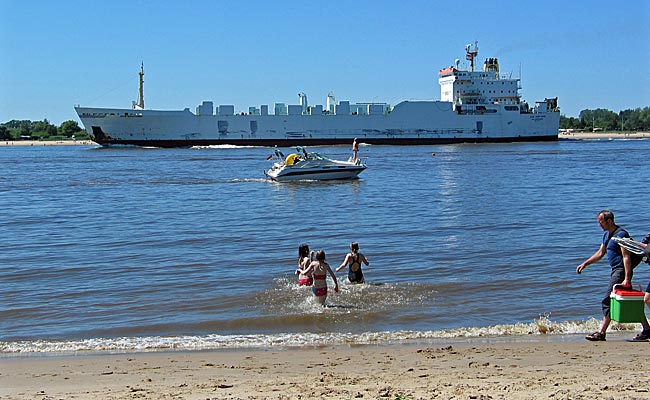
Brake & the River Island of Harriersand
As soon as spring arrives and the temperatures reach around 20 degrees, many Northern Germans are drawn to the North Sea coast. The main attraction? A beach to lie in the sun and sand for children to dig and build castles. This also draws many people from Bremen to the highways heading north on warm weekends, equipped with bags packed and picnic baskets ready for a day of seaside relaxation. But why travel far when the nearest beach is just around the corner? A visit to Brake and Harriersand proves that.
read more ...
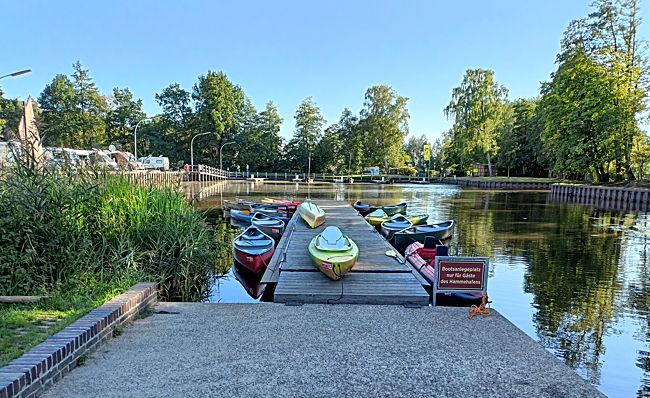
Neu-Helgoland (New Heligoland) / Hamme Harbor Worpswede
From April to October, the Hamme Harbor in Worpswede attracts many day visitors, weekend trippers, cyclists, and campers. The campsite operators run not only a bistro & beer garden with waterside seating but also rent out kayaks and canoes. Those who don’t want to paddle on the Hamme themselves can instead book an excursion trip aboard one of the Adolphsdorf Peat Boats. Food and drinks are also available just a few meters from the harbor at "Hamme Hütte Neu Helgoland." Tip: A great bike trip destination from Bremen!
read more ...
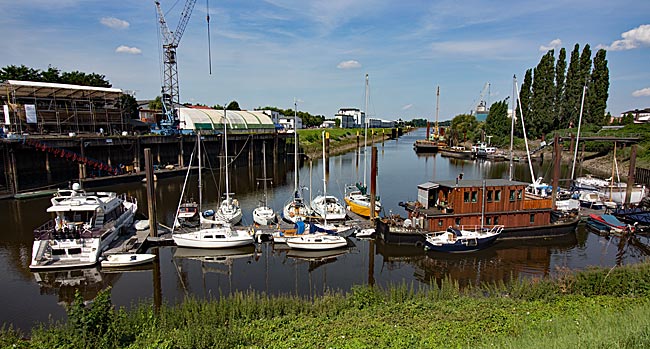
Through Woltmershausen to Lankenauer Höft
A truly maritime bike tour takes you from the Stephani Bridge through Hohentorshafen and Woltmershausen all the way to Lankenauer Höft, which is almost entirely surrounded by water. Behind the Höft, several ships, including the 1957-built tugboat Greif, are moored in an unrestricted section of Neustädter Harbor. This view of the harbor marks the end of this tour.
read more ...
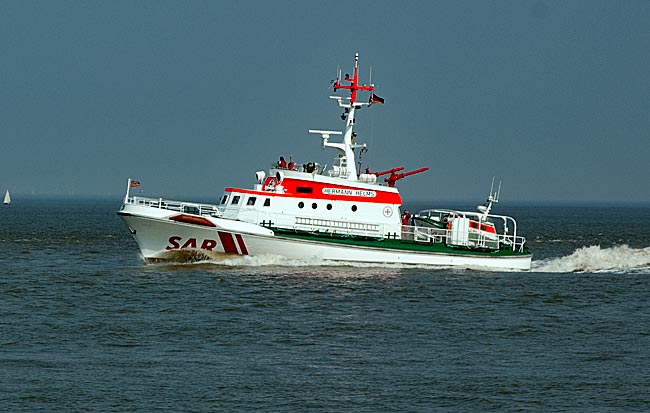
DGzRS - The Maritime Rescuers
Anyone in distress at sea today has far better chances of receiving help, even out on the open water, thanks to modern technology and professionals who take care of it. Along Germany’s North and Baltic Sea coasts, these are primarily the approximately 1,000 full-time and volunteer men and women of the DGzRS (German Maritime Search and Rescue Service), also known as "The Maritime Rescuers." In 2020 alone, they conducted 1,720 operations and rescued 357 people. Since its founding, the organization has helped 86,000 individuals.
read more ...
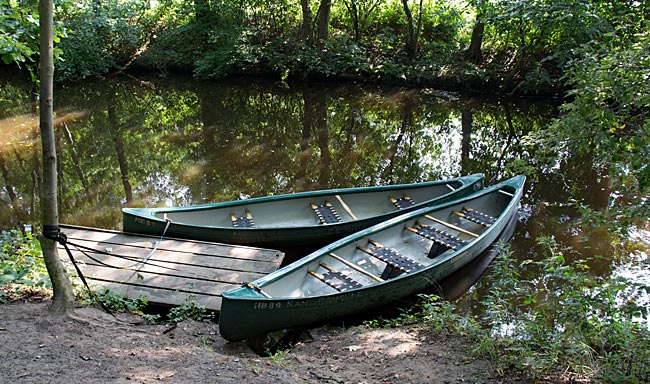
Water based activities
Since not everyone owns a boat, it's convenient that you can easily rent canoes and kayaks, for example at Torfhafen in the Findorff district, which borders Bürgerpark, or just beyond the city limits at Kanu-Scheune in Lilienthal, where you can comfortably reach by tram line 4.
read more ...
Cycling in Bremen and surroundings
The Free Hanseatic city of Bremen is connected to numerous neighboring towns via the Weser Bike Trail and the Unterweser Circular Route. On both sides of the Weser River, cycling routes lead, for example, to Brake with its Harriersand island or Bremerhaven and onward to Cuxhaven. In 2017, the Weser Bike Trail was named an ADFC-Quality Bicycle Route (4 stars) by the German Cyclists' Association (ADFC) at ITB. According to a travel analysis, it is the second most popular long-distance cycling route in Germany.
read more ...
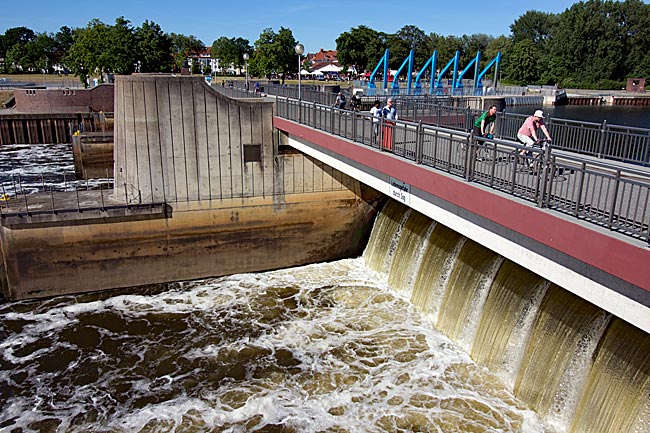
Round trip: from the city center to the Weser weir & back
Starting from Tiefer or Altenwall, the section of the Weser riverbank in front of Schnoor and diagonally opposite the DGzRS (German Maritime Search and Rescue Service), the Planetarium, and the Observatory on the other side of the river, a beautiful path for pedestrians and cyclists runs directly along the water upstream towards the Weser weir. After crossing the Weser weir, the return route takes you back via Stadtwerder.
read more ...
Cycling to Lilienthal
It's about 11 kilometers from Bremen's city center to Lilienthal in Lower Saxony, just beyond the city limits. While tram line 4 connects both places, a bike tour is much more fun. Along the Jan-Reiners-Weg, you can cycle through a green landscape without car traffic, and even within Lilienthal itself, the route follows small paths along the Wörpe River with light traffic, leading to the historic city center.
read more ...
Bremerhaven - Überseehafen (Overseas Port)
In addition to the Old Harbor (now the Museum Harbor), which was the first to be built, other ports were later added. Adjacent to the New Harbor lies Kaiserhafen I, the first in a series of additional harbor basins. Even a glance into this initial section of the expansive port area reveals a different world of maritime activity - one of large ships. And we will see even larger ones along the five-kilometer-long quay on the Weser.
read more ...