
 exploring Bremen & its surrounding areas
 your are here: activities
 From Bremen central station to
Vegesack in northern Bremen by bike
From Bremen central station to
Vegesack in northern Bremen by bike
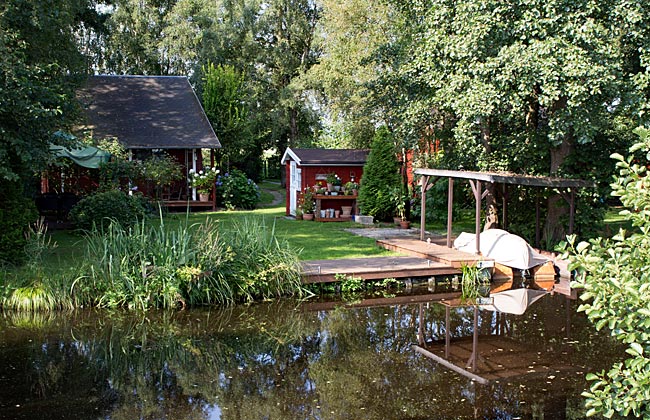
A peaceful waterfront leisure escape
A trip to the northern districts of the Hanseatic city can easily be turned into a full-day excursion if you cycle there. While the journey may not become the destination, it certainly becomes part of it, as the route mostly passes through green landscapes and invites you to take one or two breaks along the way.
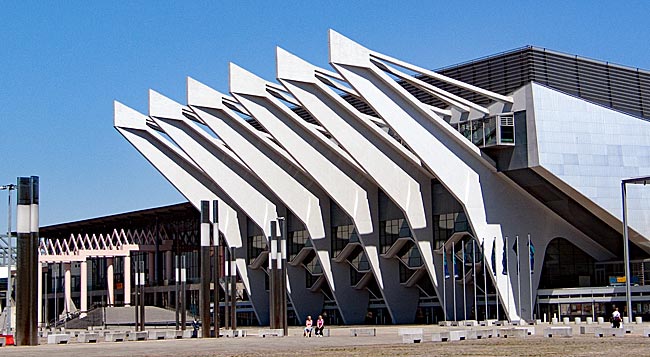
The Stadthalle, built in the first half of the 1960s, has been called the ÖVB-Arena since 2011
Starting from Bremen central station, the route takes you past Bürgerweide, the striking ÖVB-Arena, Congress Centrum, and the exhibition halls, then through Findorff district along the Torfkanal (peat canal). This canal, which runs along the edge of Bürgerpark and Stadtwald, was constructed between 1817 and 1826 to transport peat - such as that from the Teufelsmoor near Worpswede in Lower Saxony - to Bremen on peat barges.
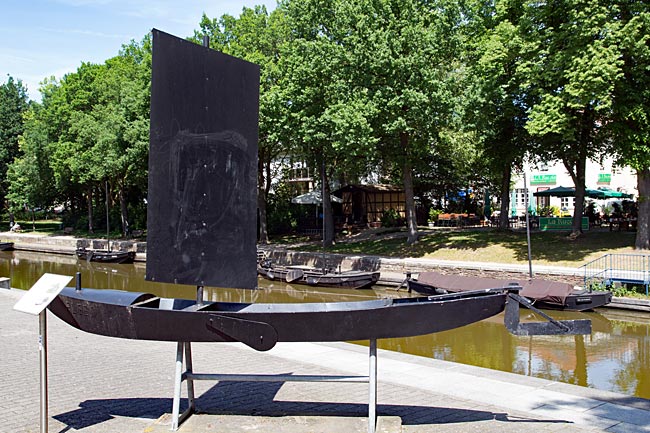
At Torfhafen (peat harbor) in the Findorff district
Today, you can book excursion trips on the characteristic black wooden boats. If you follow the Torfkanal and stay to the right of the waterway, you’ll cycle past Stadtwald and Stadtwaldsee as well as the animal shelter on Blocklander Hemmstraße, heading straight into Blockland. Just behind the highway underpass, winter fun begins on the Semkenfahrt - the first stop for ice skating, if it’s cold enough.
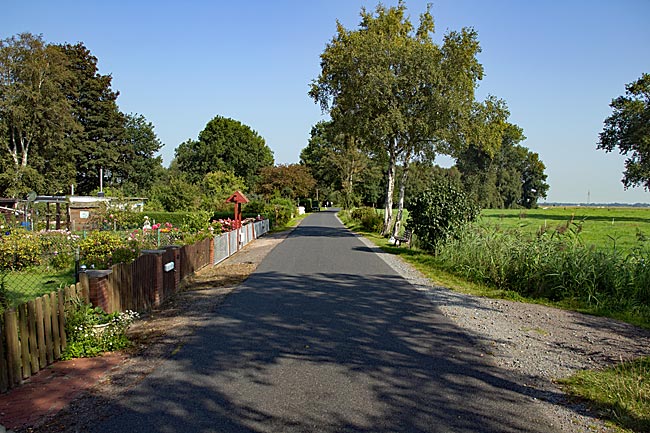
Road through Blockland, with allotments between the road and water at the start
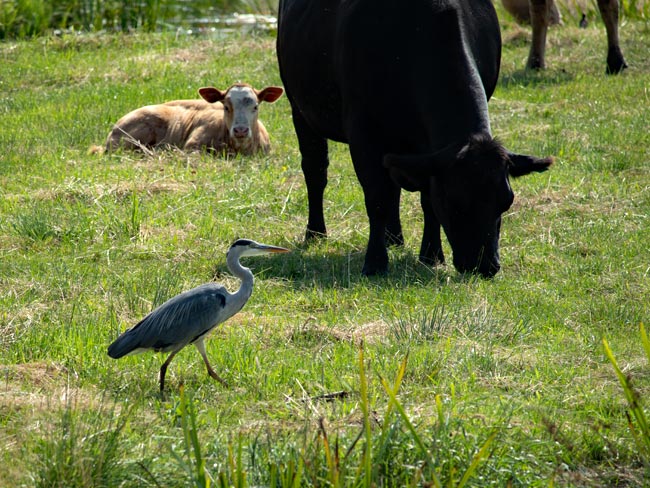
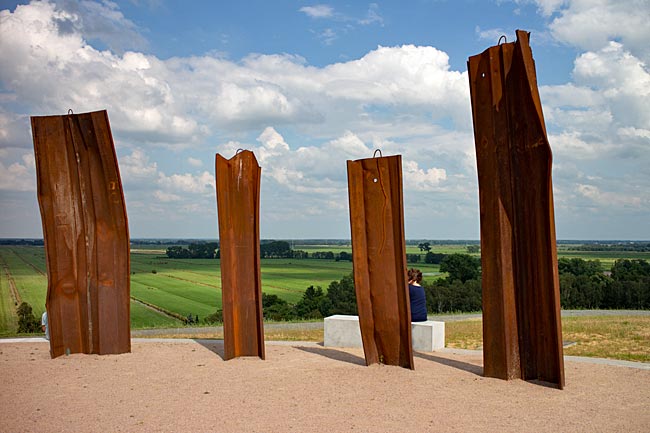
Blockland is a landscape of around 2,900 hectares, predominantly characterized by meadows. Cows and horses graze on the drained moor and marshland. A view across the expansive fields gives an idea of how the name Blockland originated. The numerous drainage ditches dug during medieval land cultivation divided the area into blocks, so the name is to be taken literally. Until the mid-19th century, large parts of the landscape were regularly flooded by the Wümme overflowing its banks, making settlement difficult. In the Middle Ages, some villages even had to be abandoned entirely because the river’s water level had risen significantly. More effective drainage and raising of the dikes from the mid-19th century finally put an end to the flooding, but Blockland remains sparsely populated to this day. Since 1991, the area outside the Wümme dike has even been designated a nature reserve. As motor traffic is largely restricted to residents, you can cycle along the asphalted, winding road beside the Kleine Wümme in a relaxed manner. But it’s not just cycling that’s enjoyable by the water - those who like to paddle with a canoe or kayak will find good conditions for a short or long trip on the Kleine Wümme (more about water sports opportunities here). The route also passes Bremen’s highest point, the landfill, which since 2021 has offered a fantastic view from its observation platform - Metalhenge at 40 meters above the city and Blockland.
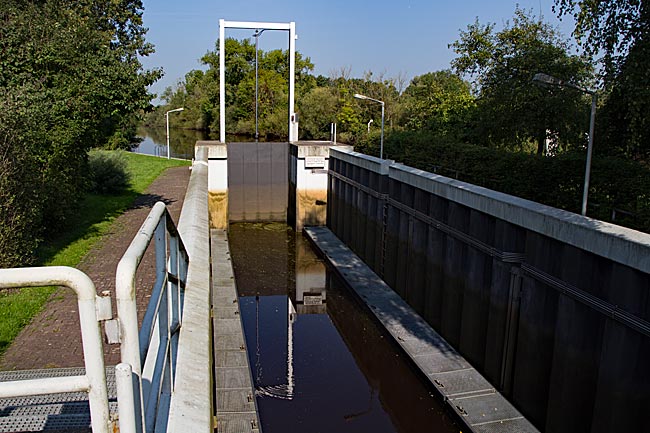
Lock in the dike between Kleine Wümme and Wümme
At Dammsiel, the Kleine Wümme meets the Wümme. A lock has separated the two waterways since 1896. The current structure, measuring 41 meters long and 6 meters wide, is the largest lock in the dike. Especially during the summer months, the nearby establishment Dammsiel is a popular spot for an outdoor rest and refreshment. If you’re lucky, you might also be able to watch leisure or sports boats being locked through. In the past, peat from Lower Saxon moors was transported to Bremen at this point, leading to the establishment of an inn where travelers would stop for a drink - or more.
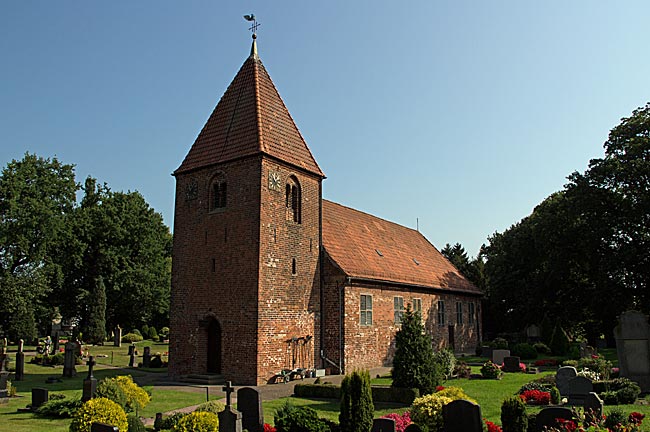
Simple brick construction: the church on the cemetery in Wasserhorst
In Wasserhorst, your bike rattles over cobblestones. This old village in Blockland is where the Wümme and Hamme rivers meet, sometimes causing the water level to rise significantly - hence the name, which refers to its six-meter-high protective hill. On this hill stands an old evangelical Baroque church that has changed little since its renovation in 1743.
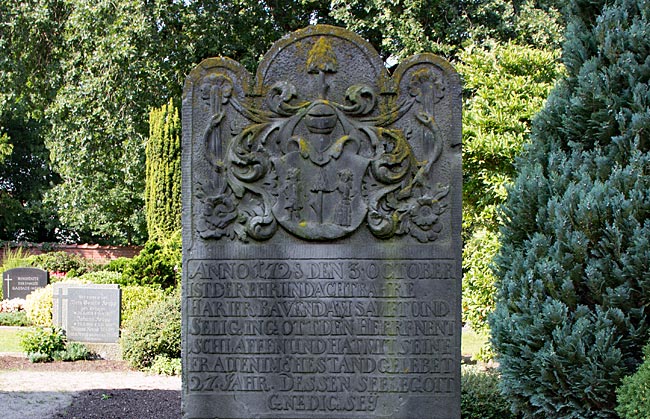
Gravestone from 1750 on the cemetery in Wasserhorst
Even amid the surrounding gravestones - the oldest dating back to the 17th century - those who are not yet aware of their fleeting life may be reminded by an inscription on the church tower clock face: "One is your last," it reads in all four corners. The cast bell in the tower, incidentally, dates back to 1475.
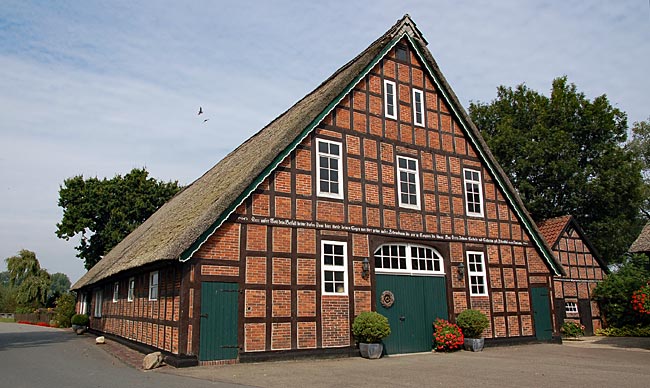
Beautifully restored old farmhouse on the dike from 1878
Your bike then rolls smoothly along the asphalted Wümmedeich past some old thatched-roof farmhouses. Behind Wasserhorst, you pass the Wasserhorster Siel. Here, between 1862 and 1864, the first large steam-powered pumping station was built. The construction of the Blocklander Drainage Plant for 120 years drained water masses from Blockland into the Lesum. A building section as well as some decommissioned machine parts, such as a "retractable runner of a vertically arranged casing pump" from 1964, serve here on the dike as a small industrial monument.
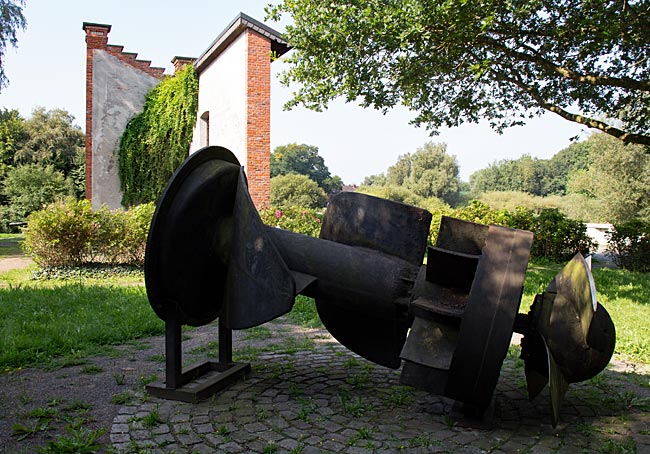
Casing pump, with the last remaining part of the operational buildings in the background
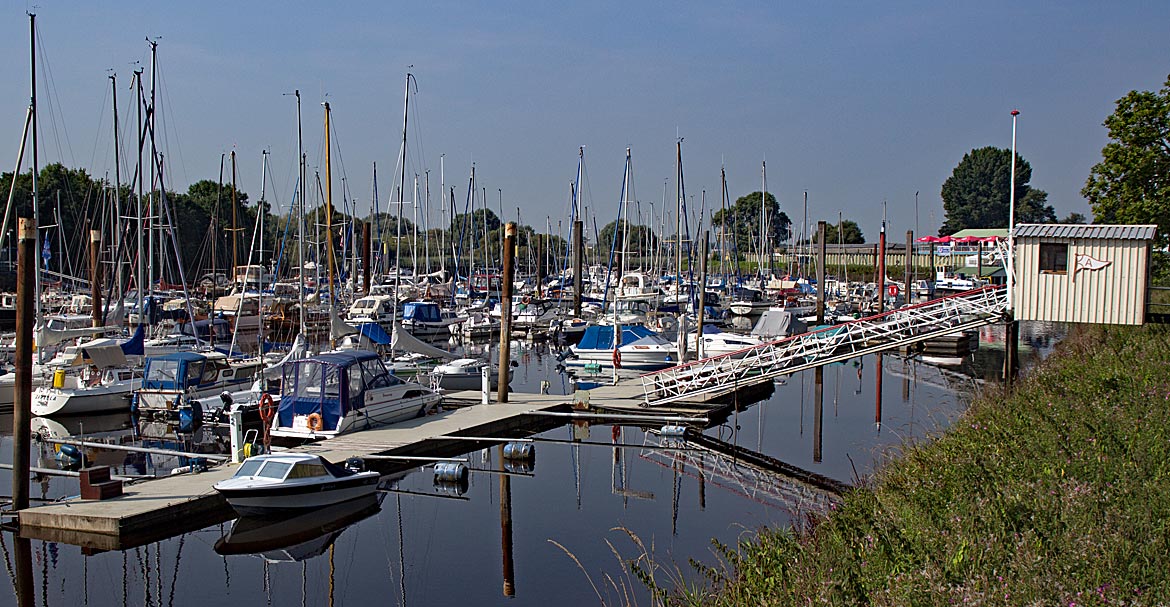
After passing under Highway 27, you continue along the Lesum River toward Vegesack. Near Grohn district, the path finally leads over the Lesum Barrage across the river, which flows into the Weser a few kilometers further on in Vegesack. On the other side of the river, cycling through green spaces comes to an end as urban development resumes. The route continues along the Lesum past the marina.
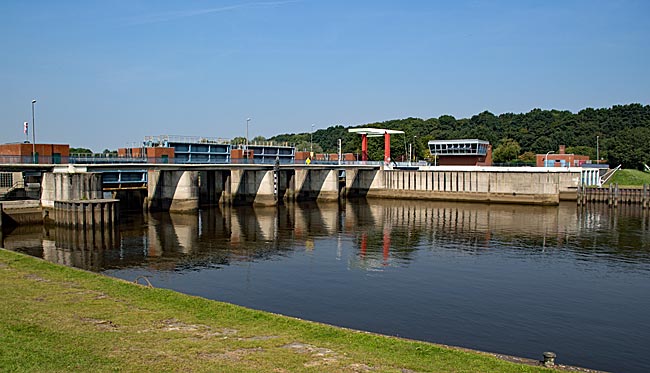
The Lesum Barrage: a mighty structure protecting the hinterland from flooding
To return to the starting point of your bike tour, you can either cycle back over the Lesum Barrage onto the dike or take the ferry to Lemwerder and head toward Bremen’s city center on the other side of the Weser. However, this route is several kilometers longer and follows the road. Incidentally, Lemwerder hosts an annual dragon festival in August with a rich program that is well worth seeing.
Those who don’t want to cycle back can also take their bike for a fee on public transport or on a ship operated by Reederei Hal Över. However, this requires good planning ahead.
previous page
 next page
Stadtwald & Stadtwaldsee (urban forest & lake)
Stadtwald & Stadtwaldsee. The design of the Bürgerpark is attributed to Wilhelm Benque, who served as its director from 1866–1870 and again from 1877–1884. Carl Orth succeeded him in this role, and under his plans, construction of the Stadtwald began in 1907. The 66.5-hectare site north of the railway tracks had been donated to the Bürgerpark Association by the Bremen merchant Franz E. Schütte one year earlier.
read more ...
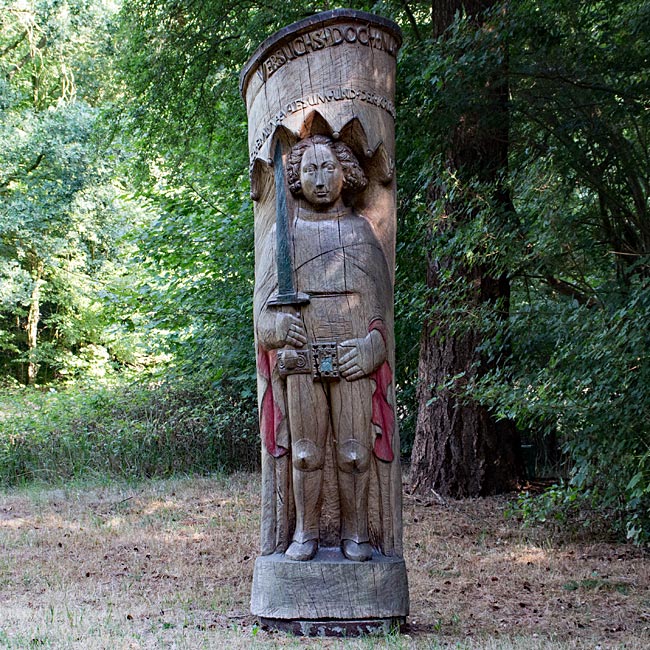
Bürgerpark (Citizens' Park)
A green oasis near the city center and a popular recreational area is the Bürgerpark. This extensive park, which adjoins today's Bürgerweide behind the train station, was initiated by the citizens themselves. In the early 19th century, the old defensive structures of the city had already been dismantled, transforming the ramparts into a landscaped park. However, as the city rapidly expanded throughout the century, demands for more green spaces grew louder and louder.
read more ...
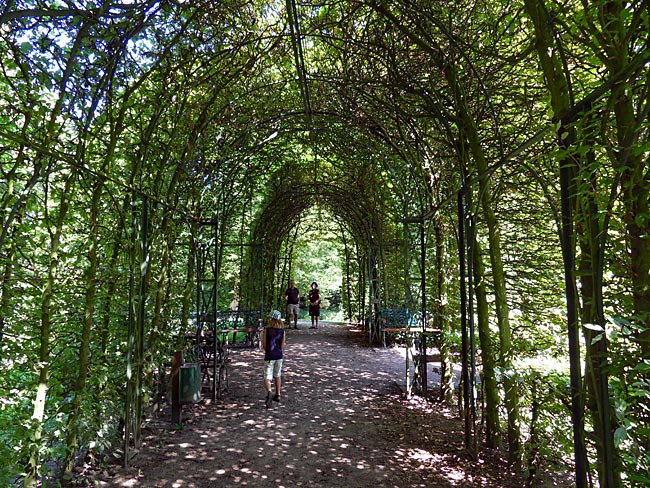
Findorff district
The history of the Findorff district is closely tied to the moors of Lower Saxony's surrounding countryside. In 1819, the so-called "Torfkanal" (Peat Canal) was dug to transport peat as fuel, particularly from Teufelsmoor, by waterway to Bremen. Even today, the second peat harbor, built in 1873, exists in a smaller form within the district, with traditional peat barges still moored there. However, peat transportation no longer plays any role.
read more ...
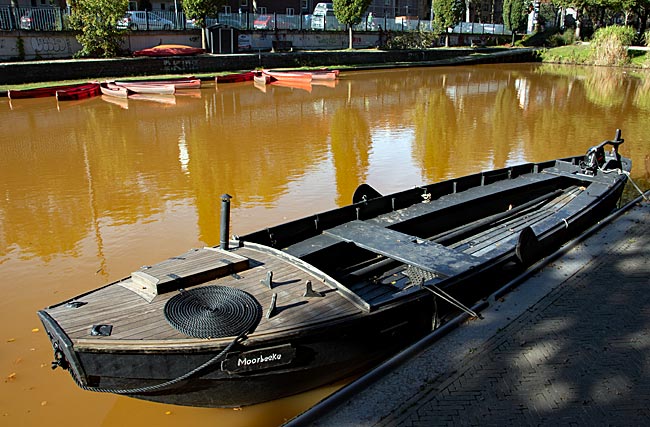
Worpswede
In 1889, the painters Fritz Mackensen, Otto Modersohn, and Hans am Ende laid the foundation for this art center with their decision to work and live in the small, previously unknown village. They were quickly followed by other artists such as the painter Paula Becker, the poet Rainer Maria Rilke, Clara Rilke-Westhoff, Fritz Overbeck, Heinrich Vogeler, and later the sculptor, painter, and craftsman Bernhard Hoetger, after whose designs, among others, the Paula-Becker-Modersohn-House in Bremen's Böttcherstraße was built.
read more ...
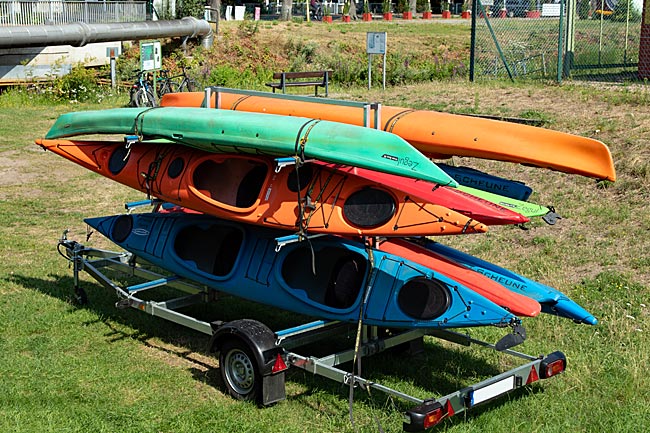
Water-based activities in and around Bremen
In a city on a major river with numerous lakes, it's natural to extend sporting or leisure activities from land to water. The most family-friendly water activity is certainly taking a rowboat ride on the canals of Bürgerpark. But there are also more options outside the city limits.
read more ...
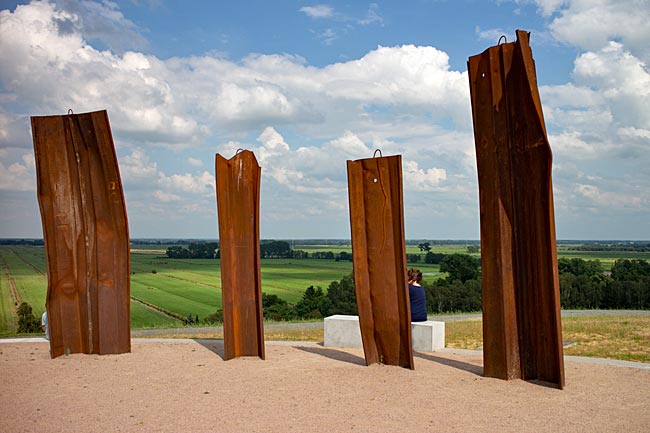
Metalhenge
In 2021, an observation platform was opened on the first decommissioned and surface-renovated section of the landfill in Blockland. At a height of 40 meters, the barrier-free Planet Path leads visitors along. Planets? Yes, the Metalhenge structure, inspired by the famous Stonehenge, is positioned on the circular observation platform according to selected astronomical aspects. Information about this can be accessed via QR code on your smartphone. Even for those not particularly interested, the view stretches approximately 23 km across Bremen on one side and Blockland on the other.
read more ...
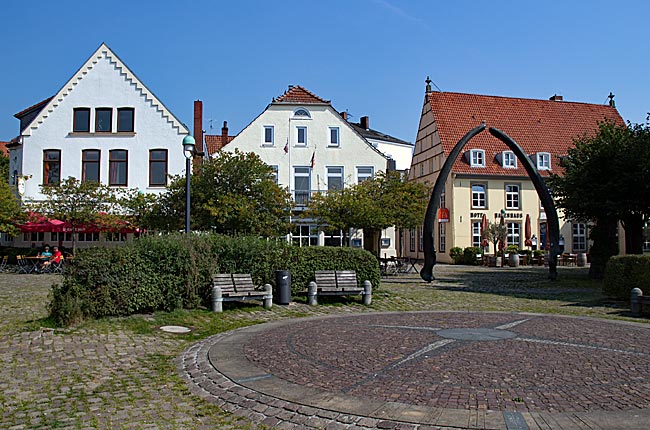
Vegesack
The most interesting area extends around the ferry terminal. From the seats of the nearby cafés and restaurants, you can almost watch the ferry operations. In front of the square stand the enormous lower jaws of a blue whale. Measuring 7.1 meters long, up to 1 meter wide, and weighing 1.2 tons, these bones belonged to a 26-meter-long animal that the port town received as a gift in 1961.
read more ...
Cycling in Bremen and surroundings
The Free Hanseatic city of Bremen is connected to numerous neighboring towns via the Weser Bike Trail and the Unterweser Circular Route. On both sides of the Weser River, cycling routes lead, for example, to Brake with its Harriersand island or Bremerhaven and onward to Cuxhaven. In 2017, the Weser Bike Trail was named an ADFC-Quality Bicycle Route (4 stars) by the German Cyclists' Association (ADFC) at ITB. According to a travel analysis, it is the second most popular long-distance cycling route in Germany.
read more ...
Neu-Helgoland (New Heligoland) / Hamme Harbor Worpswede
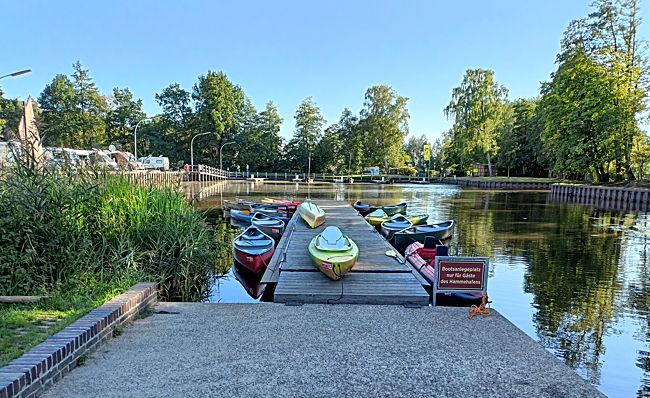
From April to October, the Hamme Harbor in Worpswede attracts many day visitors, weekend trippers, cyclists, and campers. The campsite operators run not only a bistro & beer garden with waterside seating but also rent out kayaks and canoes. Those who don’t want to paddle on the Hamme themselves can instead book an excursion trip aboard one of the Adolphsdorf Peat Boats. Food and drinks are also available just a few meters from the harbor at "Hamme Hütte Neu Helgoland." Tip: A great bike trip destination from Bremen!
read more ...
Cycling to Lilienthal
It's about 11 kilometers from Bremen's city center to Lilienthal in Lower Saxony, just beyond the city limits. While tram line 4 connects both places, a bike tour is much more fun. Along the Jan-Reiners-Weg, you can cycle through a green landscape without car traffic, and even within Lilienthal itself, the route follows small paths along the Wörpe River with light traffic, leading to the historic city center.
read more ...