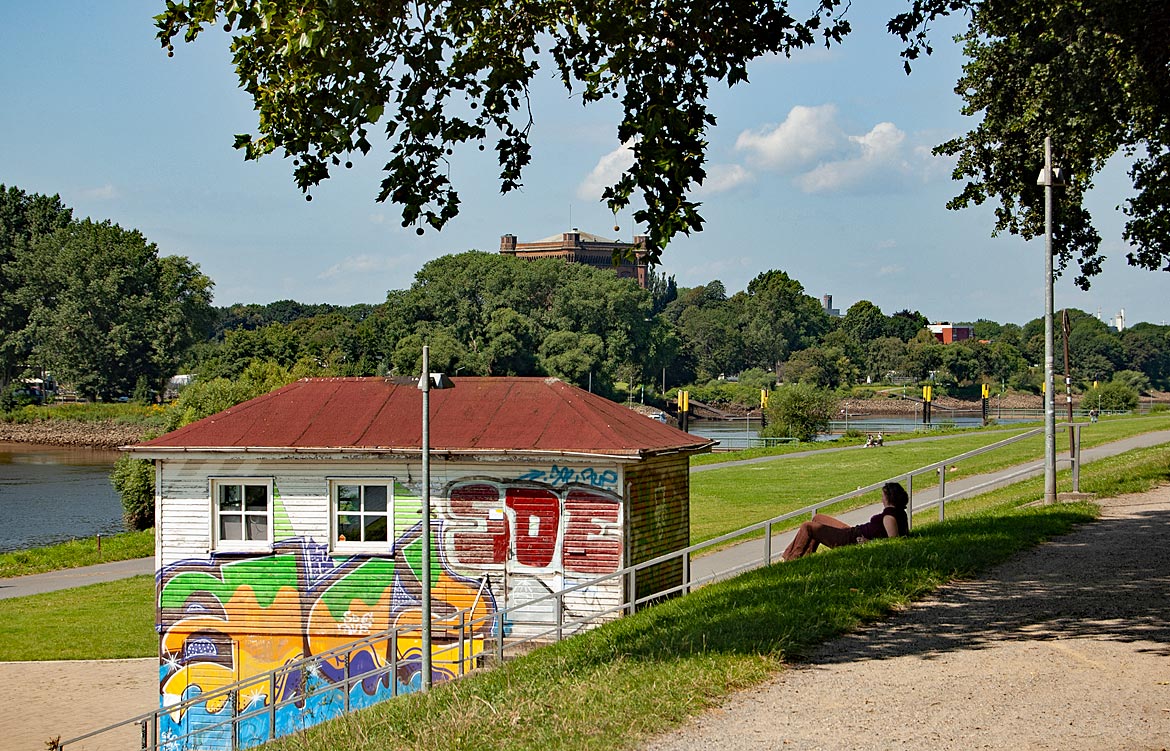

 exploring Bremen & its surrounding areas
 You are here: tours through the city
 Round trip:
from the city center to Weser weir & back (1/3)
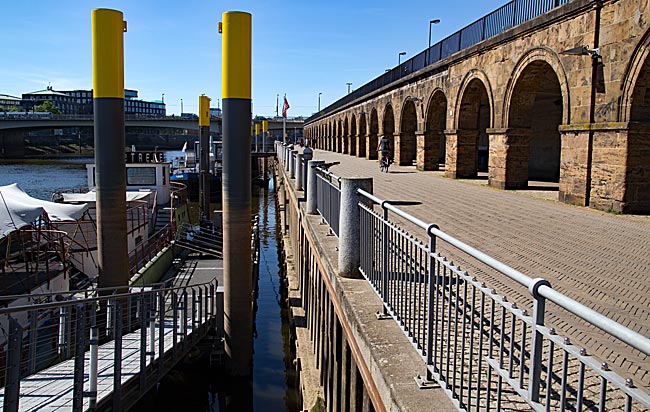
Street Tiefer, here at the dolphins lie the theater ship and concrete ship "MS Treue", on which events often take place
From Tiefer or the Altenwall, the Weser riverbank section in front of the Schnoor district, and diagonally opposite the DGzRS (German Maritime Search and Rescue Service), the Olbers Planetarium, and the Walter-Stein Observatory on the other bank, a beautiful path for pedestrians and cyclists runs directly along the water upstream towards the Weser weir.
Before we begin, let’s take a look at Bremen’s dark history. A suitable location for the 'Aryanization' memorial was sought for a long time; it was eventually found at the Tiefer and inaugurated on September 10, 2023. Looking through the diagonally arranged windows into the small room, one can see the outlines of furniture pieces carved into the concrete - objects that no longer exist. The company Kühne & Nagel, which maintains its headquarters nearby, represents many companies that profited from the politically motivated, systematic looting and 'utilization' of Jewish property during the Nazi dictatorship. Very few items have been returned since the end of the Second World War.
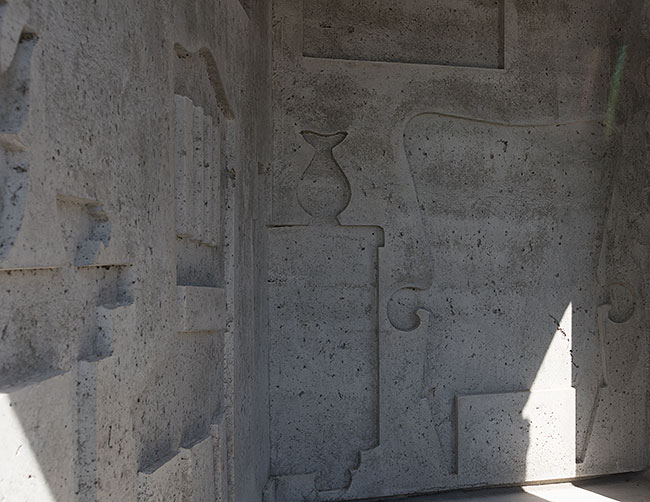
View into the room
En route. The path initially follows an asphalted route at the foot of the undeveloped side of the Osterdeich, which stretches past the neighboring districts of Ostertor, Steintor, Peterswerder, all the way to Hastedt - a district that has only belonged to Bremen since 1803 - along the eastern bank of the Weser. The dike was constructed between 1850 and 1893 after previous dikes repeatedly broke, causing widespread flooding. On March 13, 1881, during a severe flood, almost the entire city temporarily sank under the waters.
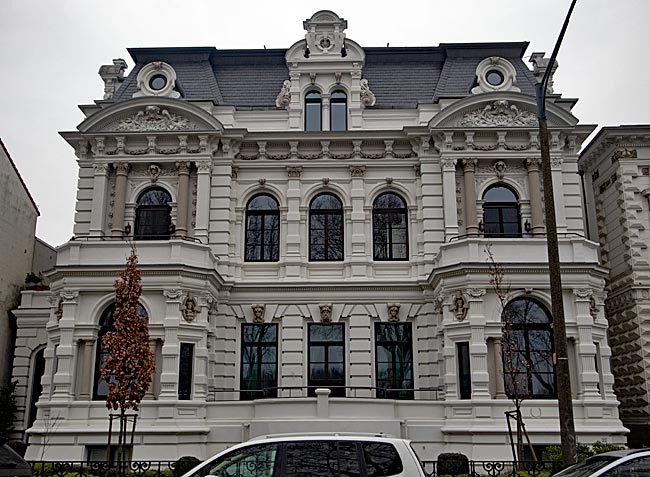
Since 1973, the Villa Frerichs on Osterdeich has been a protected monument. Built between 1882 and 1884 in the Historicist style according to plans by Johann Georg Poppe for the wealthy cotton merchant Adolf Frerichs, it stands as an example of grand bourgeois architecture
Since approximately the mid-19th century, the dike crest has been passable, and soon afterward, trees were planted. Wealthy citizens built villas here, and the avenue developed into a kind of promenade. After the road was expanded in 1930, traffic today is almost constantly heavy, as the two-lane route serves as an important connection for inner-city traffic and regionally to the A1 highway. Most drivers have little regard for the remaining notable houses along Osterdeich.
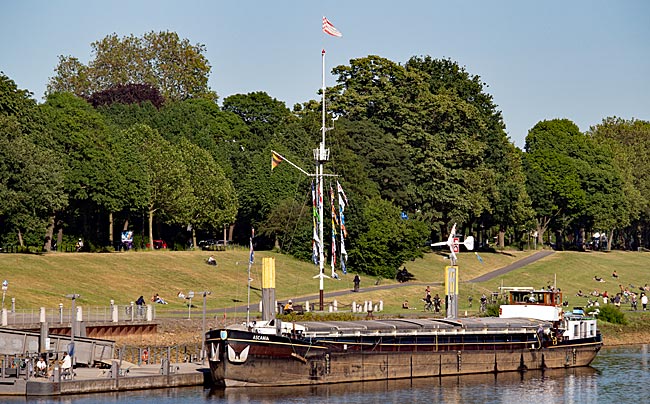
View from Franzius-Eck in Neustadt district over the inner-city section of Osterdeich behind Kunsthalle Bremen, with the flagpole of Bremer shipping companies and inland waterway vessels
Below, in the green space of the dike, it is comparatively quiet, and one soon reaches the small ship landing at the height of the Sielwall. A siel refers to a passage in a dike that can be opened and closed to regulate the water level behind it. Indeed, in the area where today’s Sielwall street runs almost at a right angle to Osterdeich, as well as along the adjacent Dobben street, there was once a body of water - likely an old tributary of the Weser. The heavily trafficked Dobben was filled in 1864, and only the name remains of the siel that regulated it. At the end of Sielwall, one stands right in the middle of the picturesque so-called Viertel district.
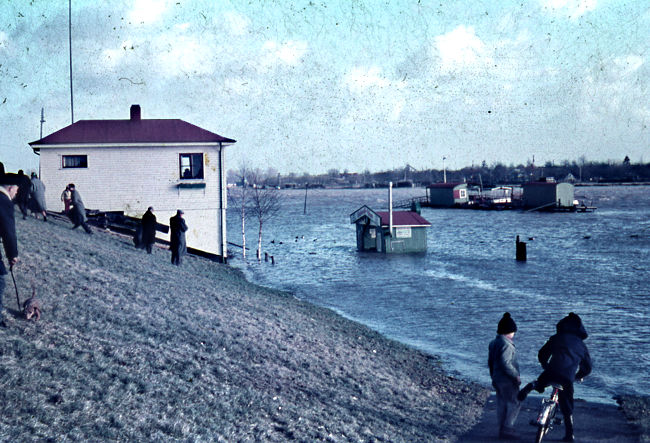
The Punkendeich with the flooded ferry landing of the Sielwallfähre during the storm surge on February 17, 1962. (Archive photo)
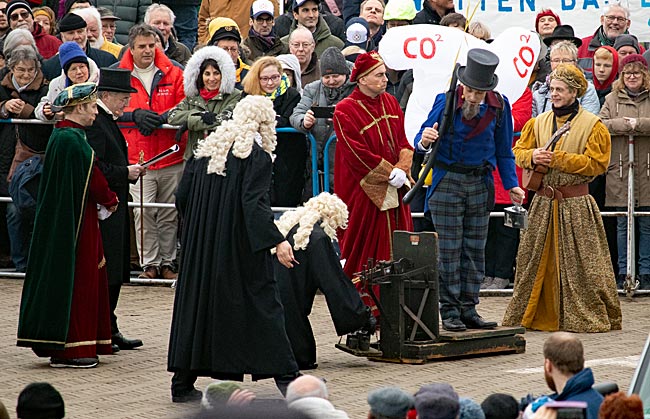
The name for the section of Osterdeich from the Wall, where the old city wall once ran, remains as Punkendeich or Punkenwall (the photo shows this section during the 1962 flood). The now obsolete term "Punke" comes from the Bremen dialect and referred to a prostitute. In the 18th century, they were forbidden from practicing their trade within city limits, which is why they did so at this location just outside the gates. The ladies have long since found other places for their profession, but every year on Epiphany (January 6), Punkendeich near the small ferry landing becomes a stage for a somewhat curious but well-attended performance - a tradition since 1829 or 1928: the Ice Trial. Each year, the question is whether the Weser River is frozen solid or not, but read on yourself ...
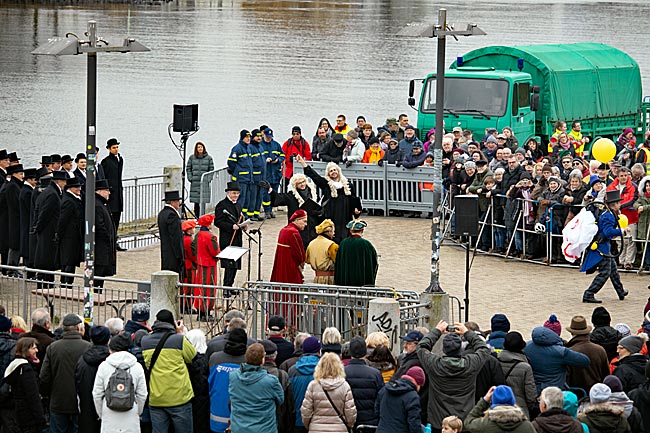
The Ice Trial at Punkendeich in 2020 was particularly focused on climate change
This question is not asked by Bremer Fahrgastgesellschaft Hal över, which operates the Sielwall ferry, as it does not run in winter. "Hal över," translated from Low German, was the call to summon the ferryman to pick up passengers for a crossing from the opposite shore. Today, this call is unnecessary, as the small passenger ferry operates on a schedule between March and October. A ferry connection across the Weser at this point has existed since 1736.
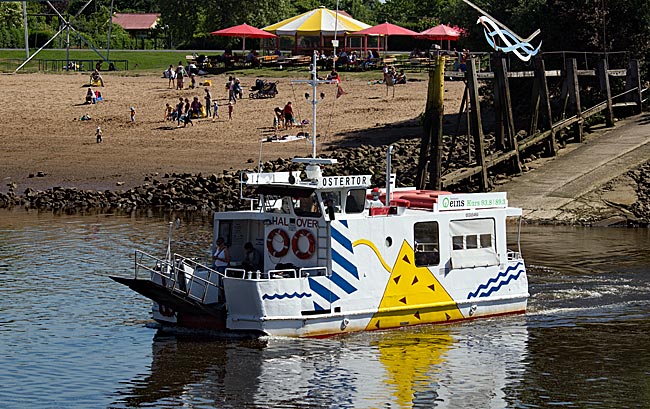
The Sielwall ferry "Ostertor" (built in 1972) shortly after departure from Café Sand
From Osterdeich, the ferry crosses to Stadtwerder, a peninsula between the Weser and Werdersee or the Kleine Weser. The landing is right next to Café Sand. The name of this simple, bright glass structure is fitting, as adjacent to it lies the only sandy beach along this stretch of the Weser. Especially on warm, sunny days, this spot is bustling, accessible by car and bicycle alike. In addition to drinks, the café offers cakes and more rustic fare.
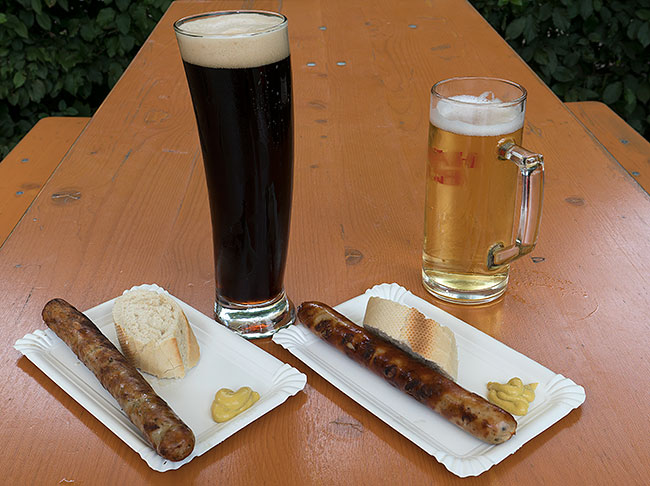
Bratwurst (grilled sausage) is an absolute classic
Another inviting stop is found along Osterdeich between the ferry landing and the stadium: the Bürgerhaus Weserterrassen. One of several community centers hosting year-round courses, meetings, and events, it also features Café and Bistro "ÜberBlick," serving food including breakfast. The summer garden offers 250 seats under trees with a view of the Weser.
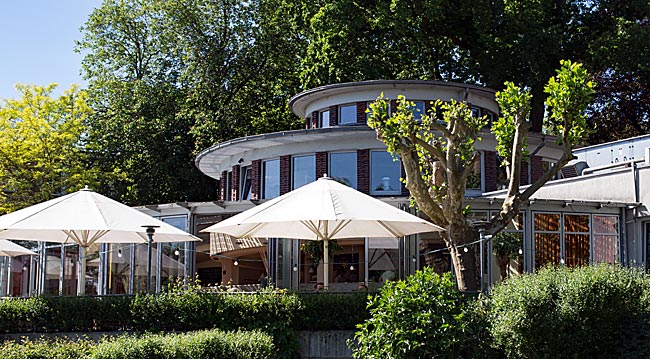
A striking building: Beck's Ambiente
Another great vantage point over the Weser is from neighboring Beck's Ambiente, designed by architect Anton Karst. It is one of nine former Ottilie-Hoffmann Houses that existed in the city during the 20th century. Ottilie Hoffmann (1835–1925), a Bremen-born educator and social politician, was a driving force behind Germany's temperance movement, which saw abstinence from alcohol as a solution to many health, social, and societal problems. She founded the "Deutscher Bund abstinenter Frauen" (German League of Abstinent Women), which opened and operated alcohol-free dining establishments in Bremen starting in 1900, bearing her name. Renamed the "Deutscher Frauenbund für alkoholfreie Kultur" (German Women's Federation for Alcohol-Free Culture) in 1924, the organization commissioned the construction of today’s restaurant, completed in 1929 - though Hoffmann never saw it, as she died in 1925. The public debate on alcohol consumption and its consequences remains relevant.
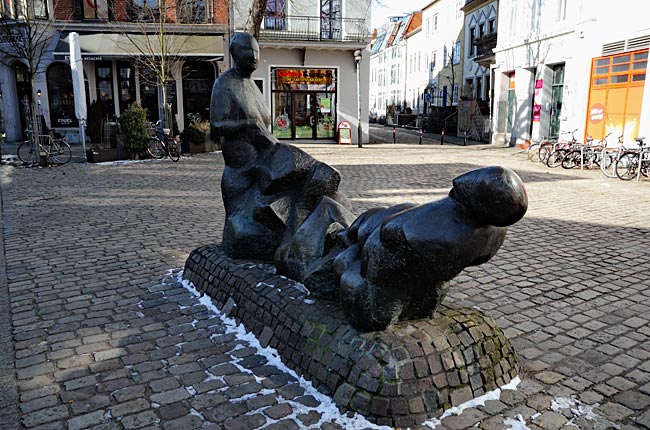
Bronze sculpture "Ottilie" (1987) honoring the educator at Ulrichsplatz in Ostertor. The artwork by Jürgen Cominotto was donated by the German Women's Federation for Alcohol-Free Culture
The nearby Weser Stadium, built in 1947, has also seen changes. Flying bottles, overly intoxicated spectators, and even larger bags or backpacks are now prohibited, with strict enforcement. The fanbase of SV Werder Bremen, founded in 1899, is considered one of the most loyal in the Bundesliga - "Lifelong Green-White." Perhaps also one of the most resilient, as the four-time German champions and multiple cup winners have tested their green-and-white supporters' nerves with severe performance fluctuations and even battles for survival. After the 2021 season, their performance was no longer sufficient to remain in the top tier - until May 15 of the following year, just after 5 p.m., typical Werder fashion. Green-and-white chaos erupted on the streets around the stadium; even the sometimes gruff northern Germans know how to celebrate.
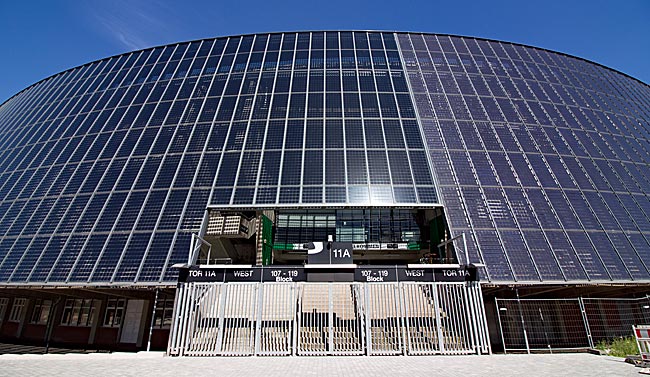
The Weser Stadium clad in solar panels
During storm "Xaver" in autumn 2013, water from the Weser nearly flooded the stadium - renovated between 2007 and 2009 to hold around 42,000 spectators. The structure features a rooftop photovoltaic system and sits in Pauliner Marsch, designated both as a recreational area and flood zone for the still tide-dependent river. Just 6 cm higher, and the then 5.5-meter-high protective dike would have been breached. Afterward, the stadium operators and the Senate's economic department invested millions to raise the dike at the south stand by one meter, install a ground drainage system, and add a mobile sheet piling system up to 2.10 meters high.
In the 1990s, the stadium temporarily became a concert arena for international stars like U2, Bon Jovi, Bryan Adams, and Michael Jackson. Those who couldn’t or didn’t want to enter sat nearby along Osterdeich, listening from there or elsewhere. Unfortunately, it seems unlikely that concerts will return to the arena in the future.
Those interested in the history of the sports club can visit the "Wuseum," the team's own museum, which has been open since 2004 on the north side of the stadium.
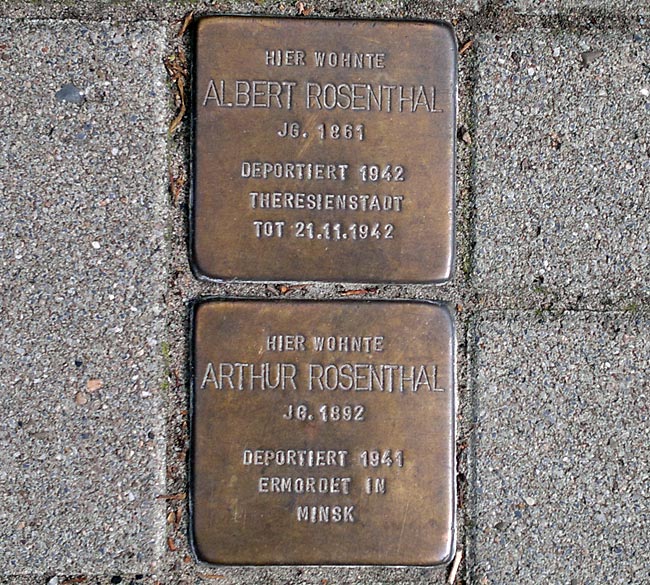
Two of nearly 700 Stolpersteine in Bremen
The Nazi era brought deadly seriousness for Jewish citizens in Bremen as well. The Reichspogromnacht from November 9 to 10, 1938 - during which seven Jewish residents were violently killed and the synagogue burned in Bremen's Schnoor district - was only the beginning. Walking from the stadium toward Osterdeich, you encounter two of Bremen’s 759 (as of 2022) Stolpersteine ("stumbling stones"), commemorating the deportation and murder of Jewish citizens - and others - during the Third Reich. "The Stolpersteine are meant to combat forgetting," states the website of the project's organizers, Verein "Erinnern für die Zukunft e.V." in cooperation with the Bremen State Center for Political Education and the Initiative Group Stolpersteine Bremen. The site also lists all stones set in the Hanseatic city, sorted alphabetically by victims' last names and street addresses. Let us remember the past to shape a better future.
previous page
 next page
Further information
www.cafe-sand.de
www.hal-oever.de
https://becksambiente.de
www.weserterrassen.com
www.werder.de/fankurve/stadionerlebnis/wuseum/
www.Bremer-baeder.de
www.juergenshof.com
www.sportgarten.de
www.derkuhhirte.de
www.stellplatz-bremen.de
Schnoor
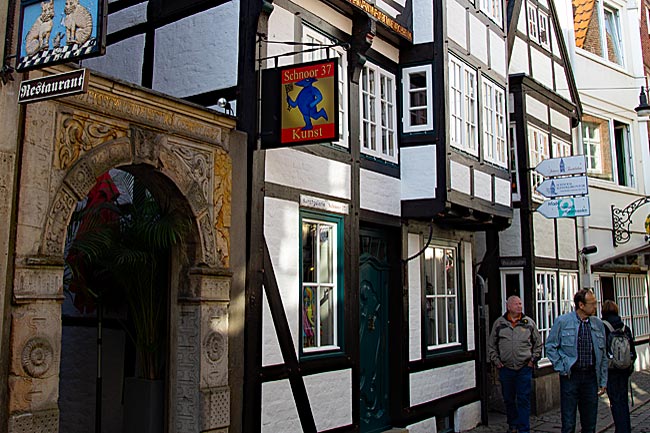
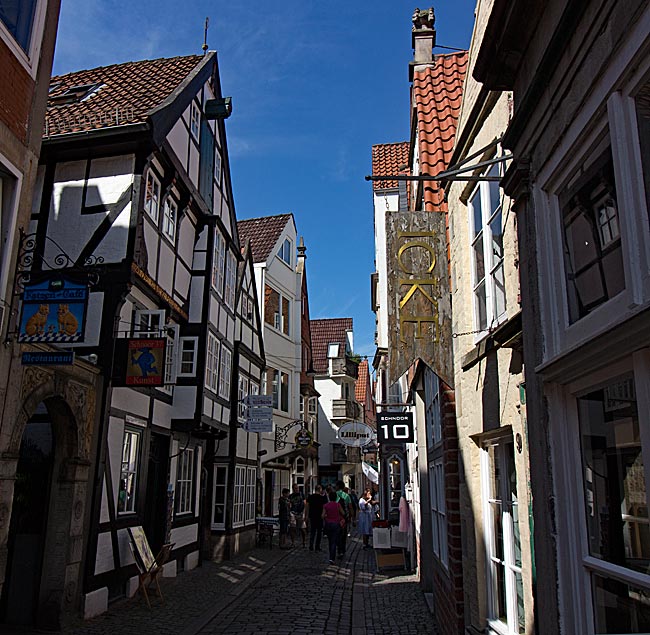
Bremen's oldest preserved neighborhood is the Schnoor. In earlier times, this area was primarily inhabited by fishermen and sailors, as it was here that the Balge - a tributary of the Weser - ran, and one of Bremen's first harbors was located. Many of the small houses date back to the 17th century or have been reconstructed based on historical models. The house at No. 15 in Schnoor Lane, built in 1402 on medieval foundations, is one of the oldest structures in the Schnoor, alongside the Packhaus (1401).
read more ...
DGzRS - The Maritime Rescuers
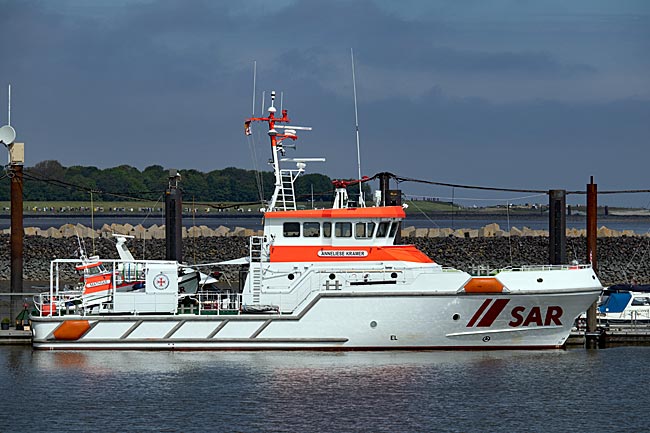
Anyone in distress at sea today has far better chances of receiving help, even out on the open water, thanks to modern technology and professionals who take care of it. Along Germany’s North and Baltic Sea coasts, these are primarily the approximately 1,000 full-time and volunteer men and women of the DGzRS (German Maritime Search and Rescue Service), also known as "The Maritime Rescuers." In 2020 alone, they conducted 1,720 operations and rescued 357 people. Since its founding, the organization has helped 86,000 individuals.
read more ...
Observatory & Planetarium
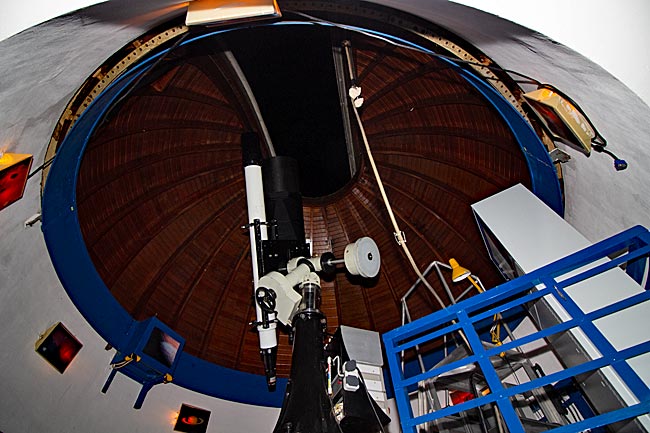
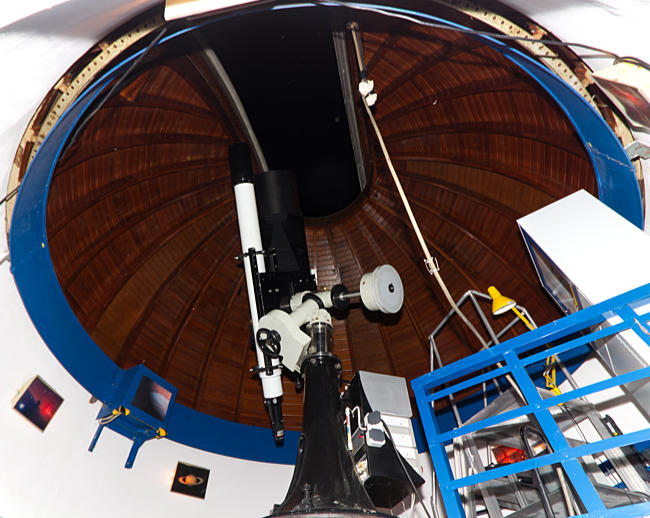
On selected days, visitors can also look through the large stationary and smaller mobile telescopes of Walter-Stein Observatory, which are set up on the terrace for the occasion. In the Olbers-Planetarium in the same building, members of the society give lectures on varying topics. Opened in 1952, the Olbers-Planetarium features a dome with a diameter of 6 meters, making it one of the smaller planetariums. It offers 35 seats (including wheelchair-accessible options) for visitors.
read more ...
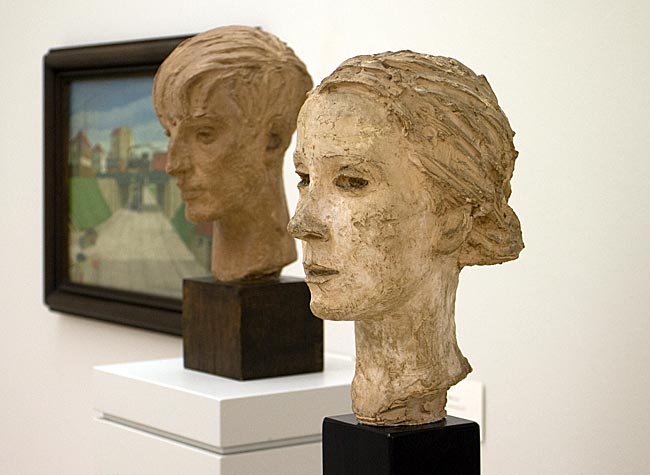
Kunsthalle
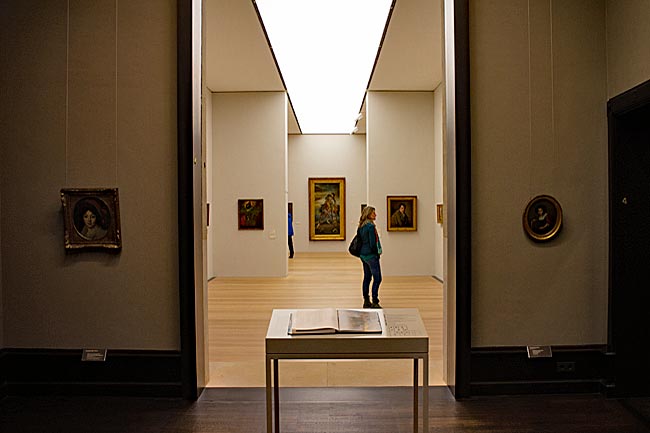
The core of the Kunsthalle's collection consists of European painting from the Middle Ages to the present day. A particular focus is on French painting of the 19th and 20th centuries, which is primarily represented by one of the largest collections of Delacroix's works. German Impressionism is another key highlight, featuring works by artists such as Liebermann, Corinth, and Slevogt. The collection also includes painters from the renowned Worpswede artist colony near Bremen, such as Heinrich Vogeler and Otto Modersohn.
read more ...
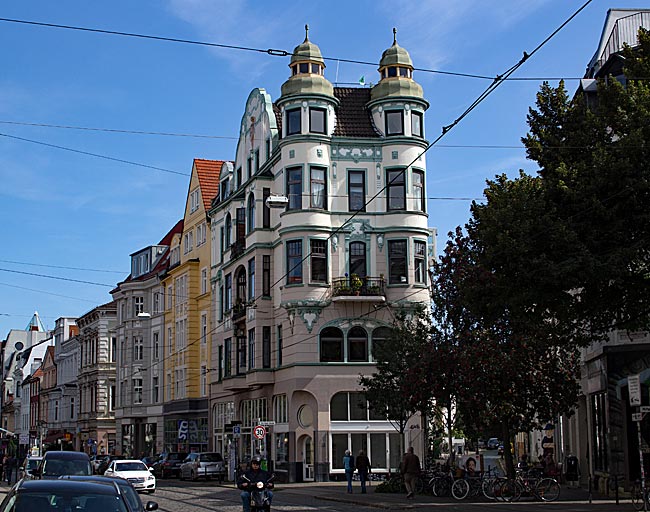
Das Viertel (The Quarter)
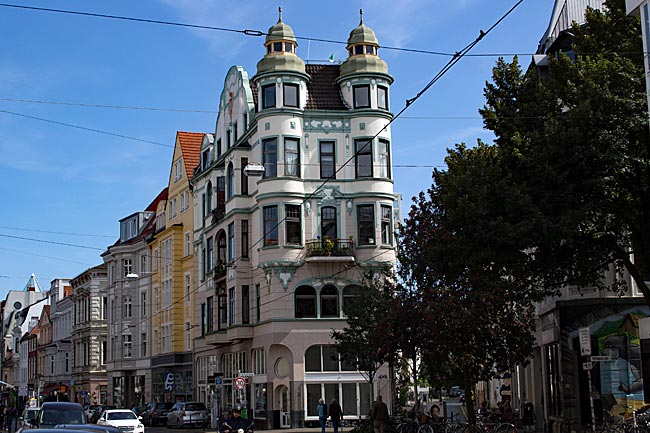
Although the area around these two main streets and their many small side streets technically belongs partly to the Mitte district and partly to the Östliche Vorstadt, Bremen residents simply call it "das Viertel." It is both loved and hated, feared and much more. Few other neighborhoods in this Hanseatic city have displayed such stark - and at times violent - contrasts over decades as the Viertel has.
read more ...
Eiswettprobe & Eiswette (Ice Trial & Ice Wager)
The prize for the contest - a "patriotic brown cabbage (kale) with accompaniments" -was likely not a particularly significant reward for the 18 well-to-do gentlemen involved, given that each had staked one taler in 1828. None of them could have anticipated that their wager -whether the Weser River would freeze over by dawn on January 4th of the following year or not - would spark a tradition lasting into the next millennium.
read more ...
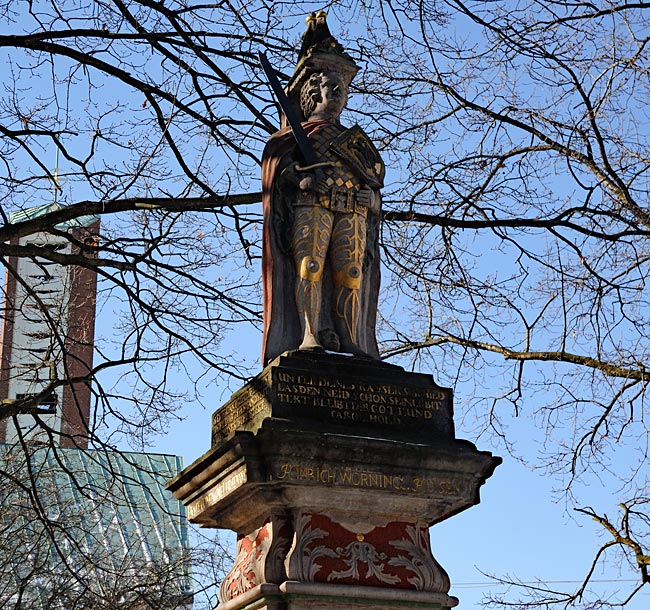
A stroll through the Neustadt
The Old Neustadt was only properly established as part of the district in the 17th century. One reason for this planned expansion of the city was the increasing threat posed by advancements in weaponry. Remnants of the defensive walls built at that time still exist today as parks, but there is much more to discover, such as the Little Roland.
read more ...
The Weser weir
After the old Weser weir from 1911, one of seven weirs on the Weser, had become dilapidated, a newly built Weser weir was put into operation in 1993. To make navigation possible at all, the weirs are equipped with locks. In the chambers up to 225 meters long, inland vessels with a maximum width of 11.45 meters are locked through. The difference in water levels ranges between approximately three and a half and six and a half meters. As in the past, electricity is still generated by hydropower today. The weir is accessible to pedestrians and cyclists. There is something to see here.
read more ...
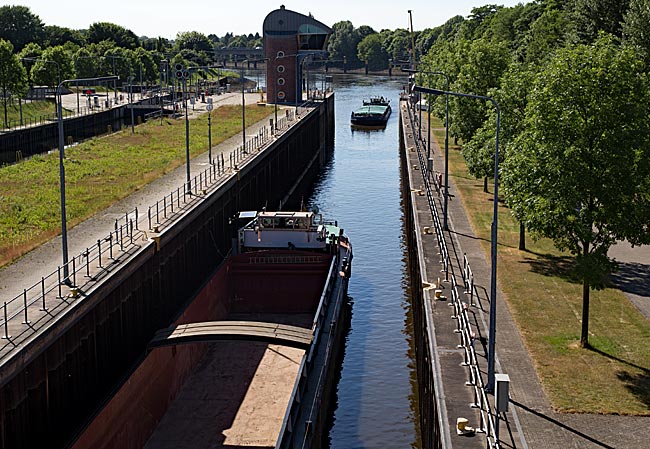
From the Weser weir through Hemelingen Harbor to the marina and to the beach
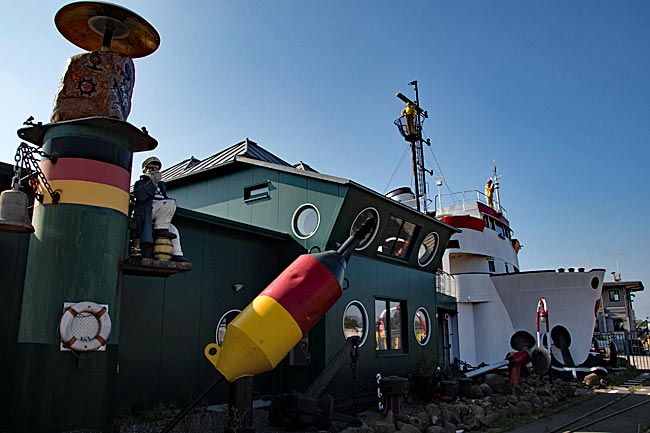
By bike from the Weser Weir in the Hastedt district through Hemelingen Harbor to the marina and the public Hemelingen beach, a small idyll in an industrially shaped environment. Hemelingen Harbor was first put into operation in 1903, and since then, much has changed. Nevertheless, harbor life still holds a certain charm if one is open to it.
read more ...
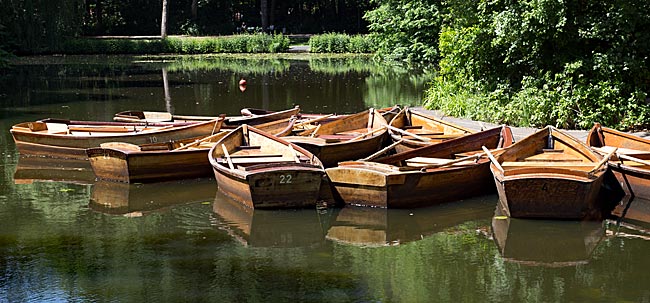
Water-based activities in Bremen
Given that Bremen is a city on a major river with numerous lakes, it makes sense to extend sports or other personal water-related activities from land to water. The most family-friendly activity on the wet element is certainly taking a rowboat ride along the canals of Bürgerpark.
read more ...
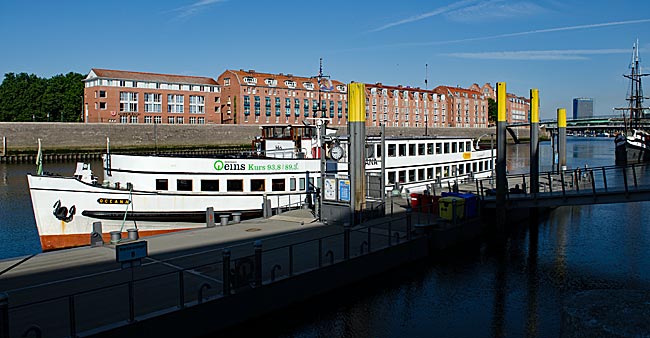
Weser cruise from Bremen to Bremerhaven
Of course, you can take a car for a visit to Bremerhaven from Bremen or board the regional train at the main station. However, with suitable weather and enough time, it is more interesting to cover the route on the Weser by ship. The shipping company "Hal över" operates the connection from May to September. The ship departs from the Martinianleger near the city center along the Schlachte. Those who wish can even take their bicycle with them; additionally, you can pre-book a breakfast onboard.
read more ...
Bremerhaven - Überseehafen (Overseas Port)
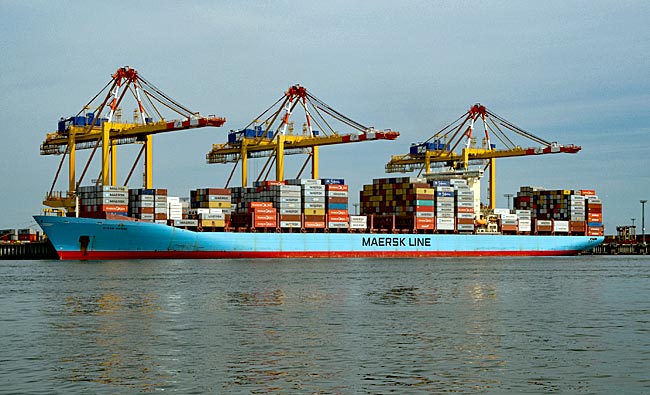
In addition to the Old Harbor (now the Museum Harbor), which was the first to be built, other ports were later added. Adjacent to the New Harbor lies Kaiserhafen I, the first in a series of additional harbor basins. Even a glance into this initial section of the expansive port area reveals a different world of maritime activity - one of large ships. And we will see even larger ones along the five-kilometer-long quay on the Weser.
read more ...
Through Woltmershausen to Lankenauer Höft
A truly maritime bike tour takes you from the Stephani Bridge through Hohentorshafen and Woltmershausen all the way to Lankenauer Höft, which is almost entirely surrounded by water. Behind the Höft, several ships, including the 1957-built tugboat Greif, are moored in an unrestricted section of Neustädter Harbor. This view of the harbor marks the end of this tour.
read more ...