
 exploring Bremen & its surrounding areas
 You are here: attractions in the city center
 Stephani district (2/2)
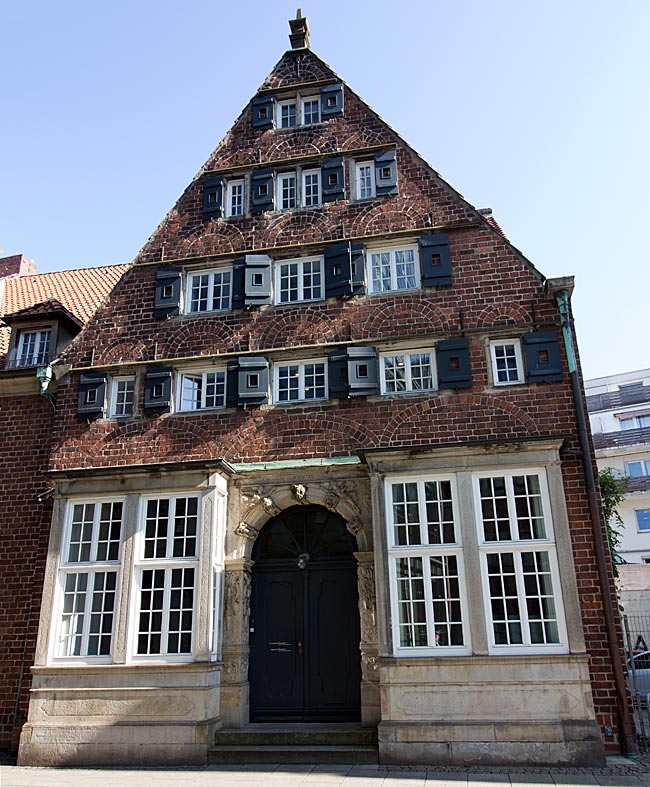
A beautiful sight among a row of more modern buildings is the Renaissance façade of the House of the Architects' Association, built in 1625
Also worth seeing is the House of the Architects' Association. The Renaissance building from 1625 can be found on Geeren Street, which runs parallel to Faulenstraße. At house number 24, coffee lovers can take a peek into the shop of the August Münchhausen coffee roastery, which has been located here since 1938 - coffee beyond the mainstream in a refined setting. Geeren Street crosses Diepenau Street, where Radio Bremen has had its broadcasting headquarters since 2007. Unusual and a popular photo motif is the bronze monument from the workshop of sculptor Herbert Rauer next to the main entrance, depicting Loriot's sofa with a pug sitting on it. Since 2013, this has honored the late humorist Vicco von Bülow (Loriot), who passed away in 2011. Radio Bremen produced a six-part television series with him starting in 1976. The green sofa, from which Loriot and Evelyn Hamann hosted these highly entertaining shows - now considered cult classics - also became famous. The original has been on display in the broadcaster's foyer since 2011.
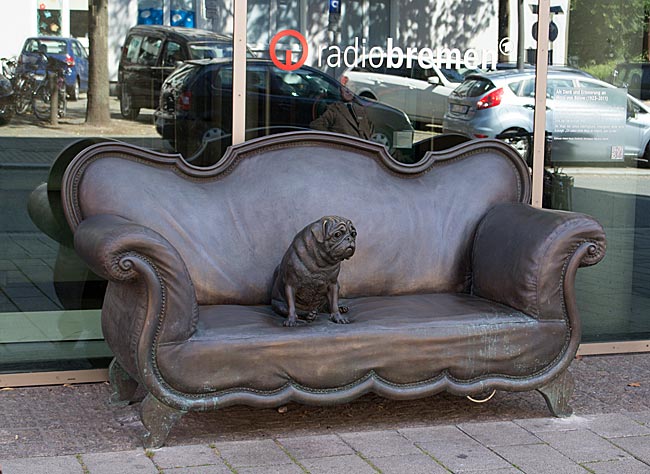
"Life without a dachshund is possible, but pointless," Loriot once said.
It’s rarely quiet in the Stephaniviertel. Almost all day long, car traffic rushes and trams run through Faulenstraße, among other destinations, toward Überseestadt or to Stephani Bridge, one of Bremen's most important crossings over the Weser River.
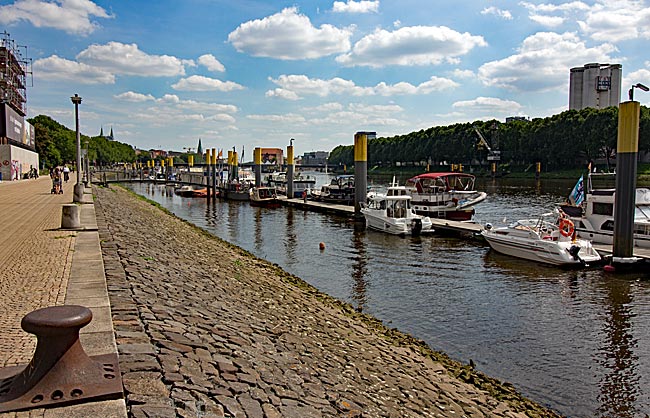
Marina at Stephanitor on Untere Schlachte
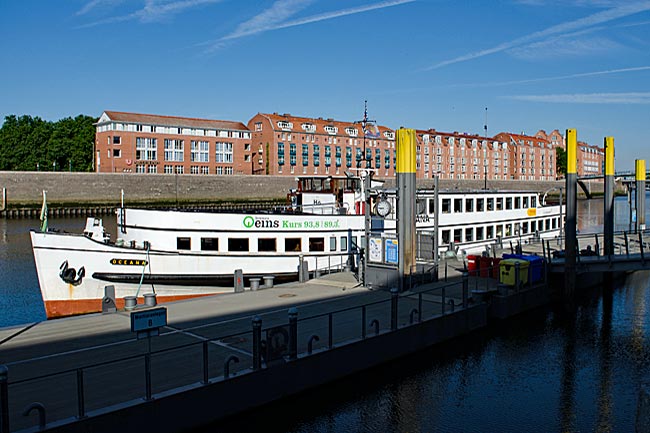
By contrast, it’s much quieter by the water. The wide pedestrian and cycling path along Untere Schlachte, which extends into Überseestadt, is frequently used for relaxation by many people on sunny days, thanks to numerous benches. Within sight of Stephani Bridge, sports boats are moored at Marina Bremen, and river traffic on the Weser is often busy.
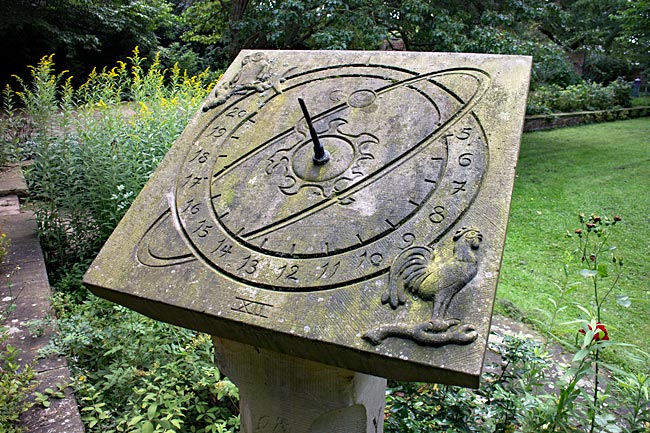
Sundial in the unremarkable Focke-Garden near Stephani Bridge
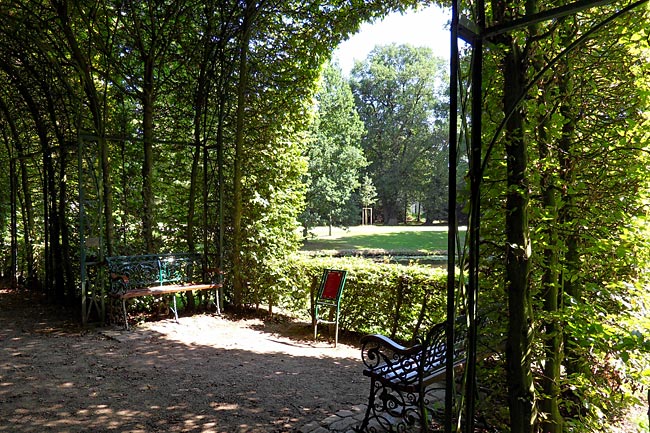
When passing under Stephani Bridge, the adjacent one-hectare Focke-Garden stretches out. The name comes from the fact that from 1912 until World War II, the Focke Museum was located here. The museum was not spared by the bombing and later moved to Gut Riensberg in the Schwachhausen district. On the old site along the Weser, a garden connected to the Wallanlagen was created in the 1950s, but it soon fell into obscurity due to its location next to Stephani Bridge and Federal Highway B6, built in the 1960s, and was consequently neglected.
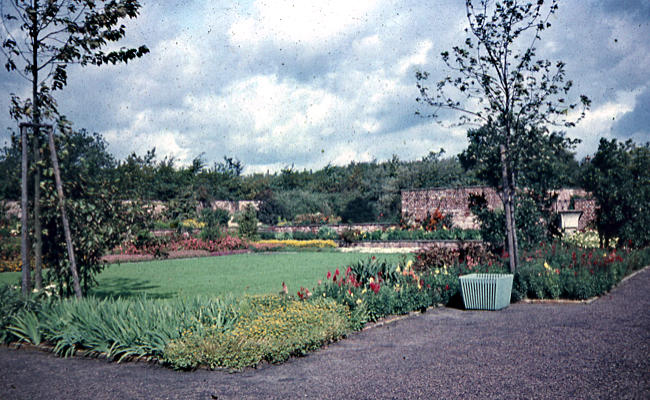
Focke-Garden in August 1957. Archive image
It wasn’t until the renovation of Schlachte for the millennium that Focke-Garden came back into focus, especially as some buildings emerged nearby with the development of Überseestadt, such as the GOP Variety Theater.
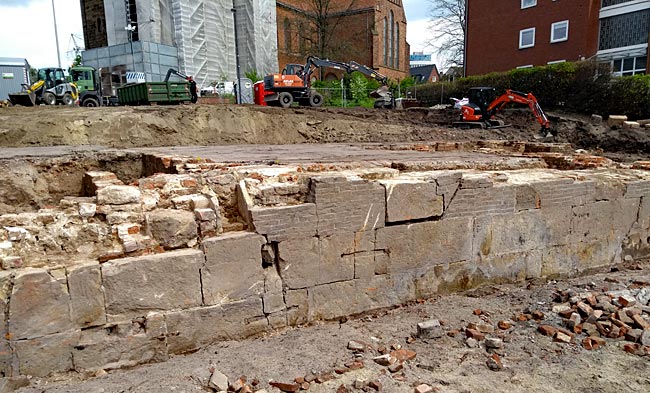
During a major residential construction project in Stephani district on the Weser, historical foundations were uncovered during preliminary work, attracting the attention of state archaeologists. In 2018, further excavation revealed parts of the 16th-century city and quay walls, along with more recent foundations of warehouses belonging to wine importer Eggers & Franke.
On its premises at Stephanitor once stood a massive bastion that jutted halfway into the Weser. The 40-meter-high tower, named "Bräutigam" (Groom) in reference to the largest bastion on today's Teerhofinsel ("Braut" or Bride), with its conical roof as seen in a contemporary painting at Focke-Museum, was built between 1525 and 1534 as part of the city fortifications. Although it withstood a siege of the city some two decades later, it could not resist the natural force of lightning on August 4, 1647, which struck the octagonal tower and detonated six tons of gunpowder inside. The massive explosion destroyed not only the tower with its five-meter-thick walls but also numerous surrounding buildings.
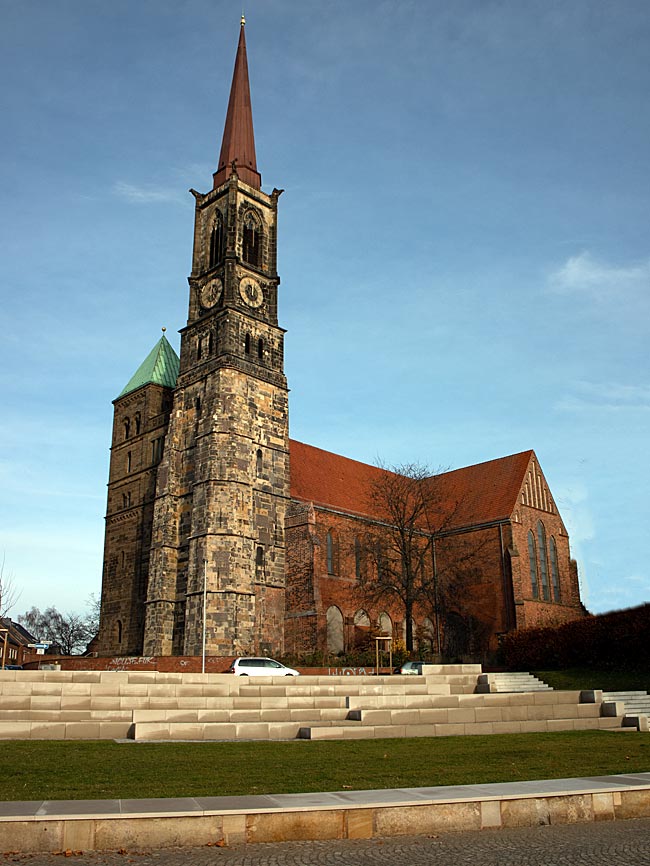
Parts of the old city and quay walls (lower row) have been integrated into the Stephani Terraces, completed at the end of 2018, offering views of the Weser, with Stephani Church in the background
previous page
 next page
Map
Überseestadt (Overseas City)
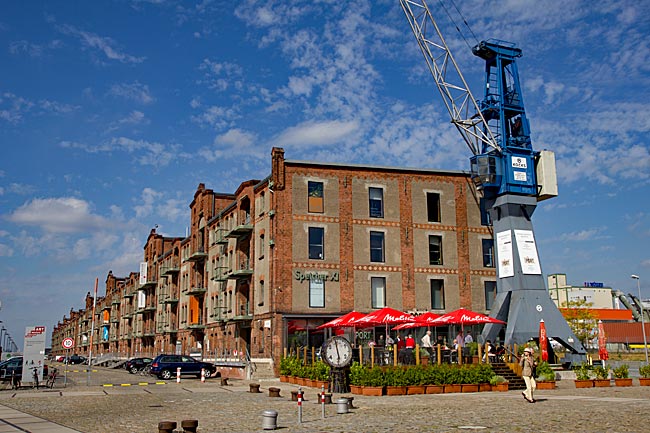
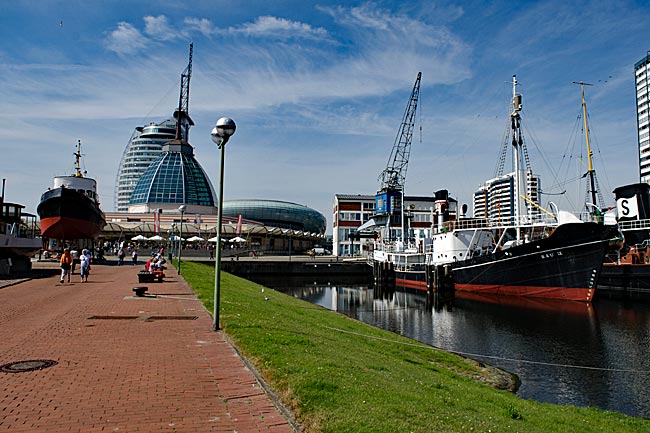
When the Overseas Port required renovation, the decision was made in 1991 to simply close off the basin instead. In 1998, the Overseas Port was finally filled with sand obtained from dredging operations in the Outer Weser. Alongside the also decommissioned but still existing Europa Harbor basin, this formed the foundation for the conceptual development and creation of today's Überseestadt (Overseas City).
read more ...
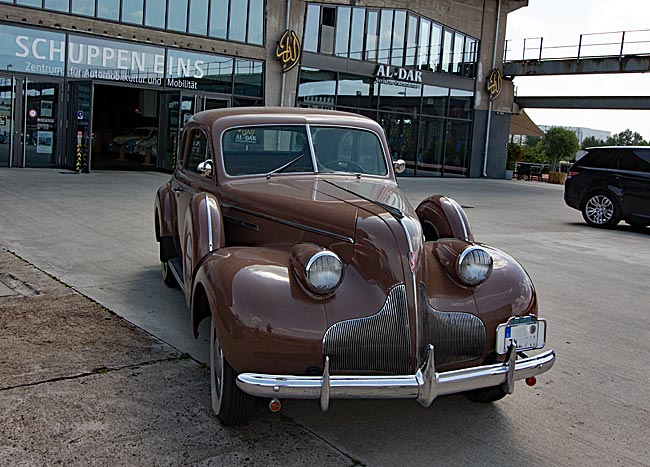
Through Woltmershausen to Lankenauer Höft by bike
A truly maritime bike ride to Lankenauer Höft. This scenic cycling route begins at the Stephani Bridge, passing through Hohentorshafen and Woltmershausen before reaching Lankenauer Höft, which is almost entirely surrounded by water. Behind the Höft, several ships - including the 1957-built tugboat Greif - are moored in an unrestricted part of the harbor. This picturesque view of the harbor marks the end of this tour.
read more ...
Schlachte
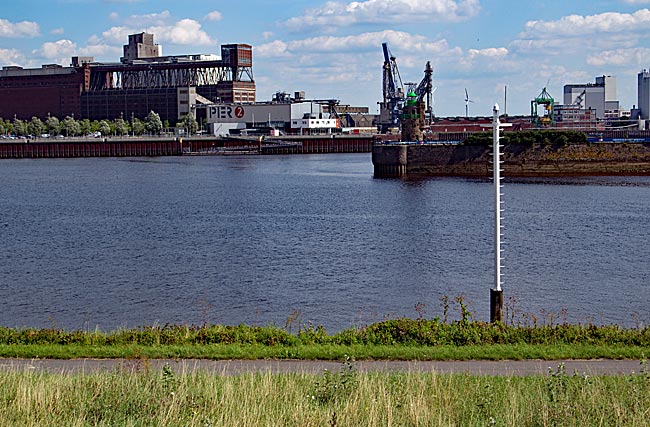
From the start of construction in 1993 until its grand opening on May 27, 2000, a promenade with a boulevard, ship docks, and numerous dining establishments offering something for every palate was created between the Wilhelm-Kaisen Bridge and the Stephani Bridge. This project cost over 20 million euros, largely funded by the EU, and featured 60 trees and ample granite paving. Today, this area - where medieval harbor workers once worked hard - has been transformed into a vibrant leisure destination.
read more ...
City Center: the main shopping streets
Another traditional café can be found at Sögestraße 42/44. The Knigge confectionery was established in 1889 and offers a variety of baked goods, chocolates, and ice cream, making it well-known throughout the city. Diagonally across from the café, branching off from the row of shops, is the glass-covered Katharinen-Passage, which - with an interruption - leads into the Domshof-Passage, ending at the Domshof. On this site, which now houses retail stores and a parking garage, once stood the namesake St. Katharine's Monastery.
read more ...
Focke-Museum
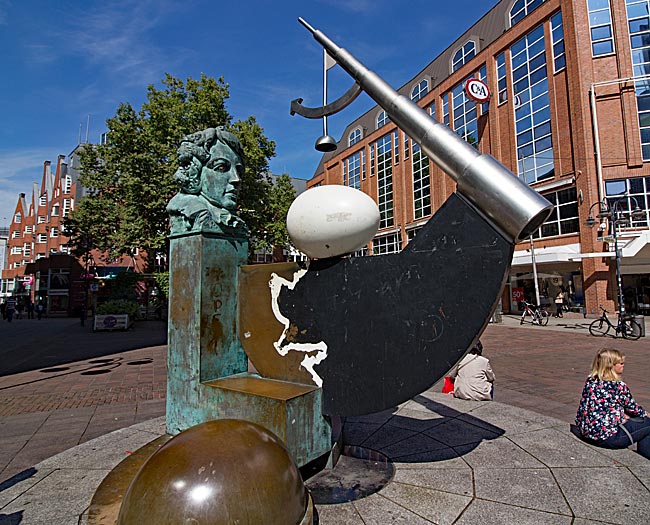
Every city has its history, and in many cities, there is a museum that tells this story. In the Hanseatic city, it is the Focke Museum in the Riensberg district, where urban history is presented most vividly. The "Bremer State Museum of Art and Cultural History" was established in 1924 by merging two collections: the Gewerbemuseum, founded in 1884, and the Historisches Museum für bremische Altertümer (Historical Museum for Bremen Antiquities), founded six years later. The museum's founder, who passed away in 1922, also gave it his name.
read more ...
St. Peter's Cathedral
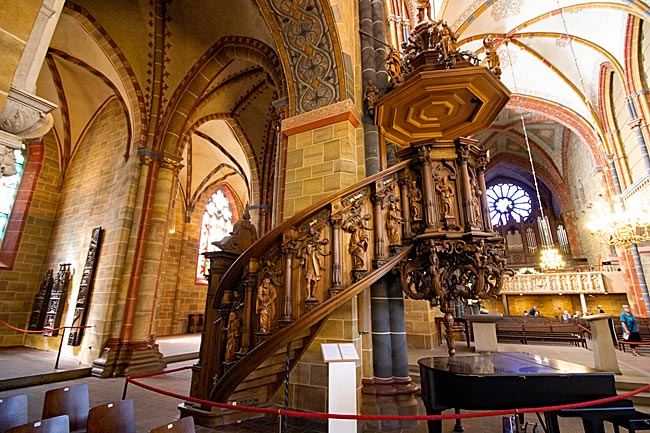
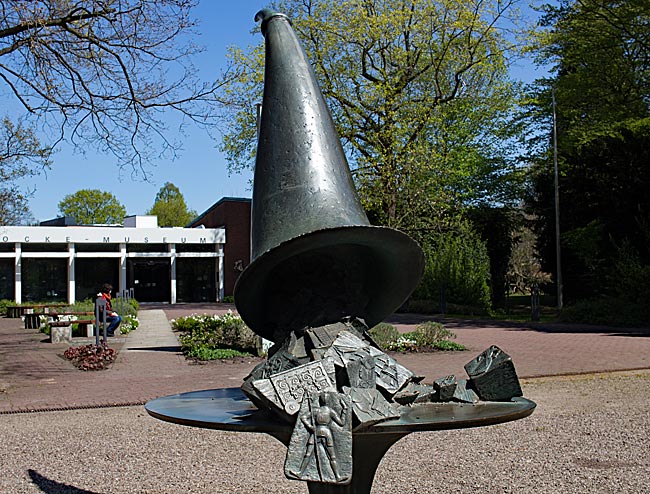
The history of the cathedral, Bremen's oldest church, begins with the Christianization of the region - originally settled by the Saxons - by Charlemagne in the 8th century. While it is uncertain exactly when the first cathedral was built on the highest point of the so-called Bremer Düne (Bremen Sandhill), it was likely destroyed by invading Vikings from Denmark in 858. The subsequent Romanesque structure, begun in 1041 and completed with its two towers in the 13th century, was later remodeled in the Gothic style during the 16th century.
read more
...