
 exploring Bremen & its surrounding areas
 You are here: worth seeing in the surroundings
 Oldenburg [Oldb] (1/5)
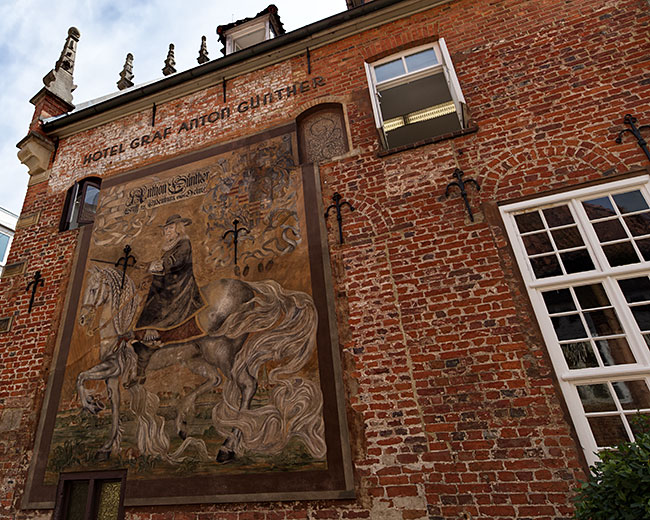
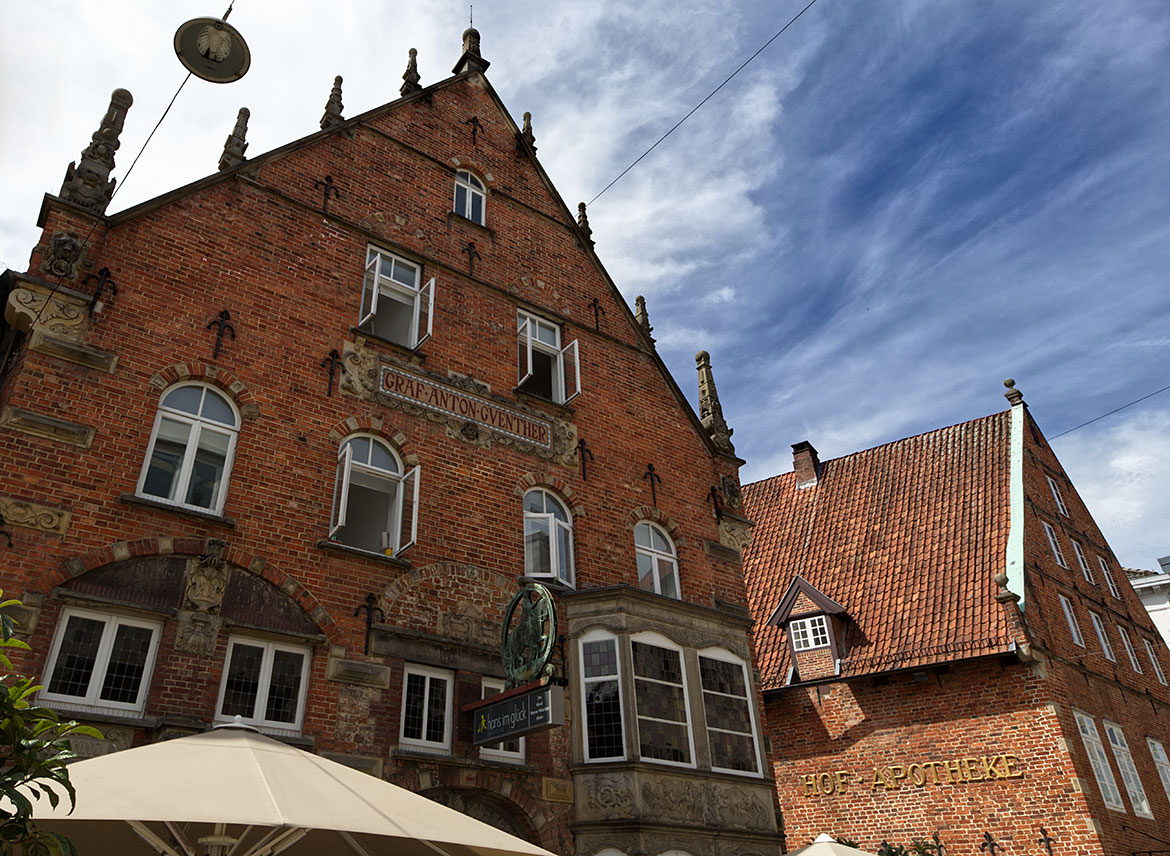
Hotel Graf Anton Günther in the city center. The count was indeed a historical figure in the history of Oldenburg
"Next stop: Oldenburg in Oldenburg," echoes through the train's speakers just before the regional train pulls into the station. Oldenburg in Oldenburg? Yes, where else? In Holstein. Today the third-largest city in Lower Saxony was once the seat and capital of ruling counts, dukes, and grand dukes, later a free state and state capital. And it actually came briefly under the rule of a duke from the House of Holstein-Gottorp - that was in 1773, so long ago.
The city, which was first mentioned in documents in 1108 under the name Aldenburg, had many rulers over the centuries - thanks in part to the patchwork of small states. Among them were some that were less welcome, such as the French under Napoleon I., who annexed Oldenburg along with numerous other cities at the beginning of the 19th century for several years.
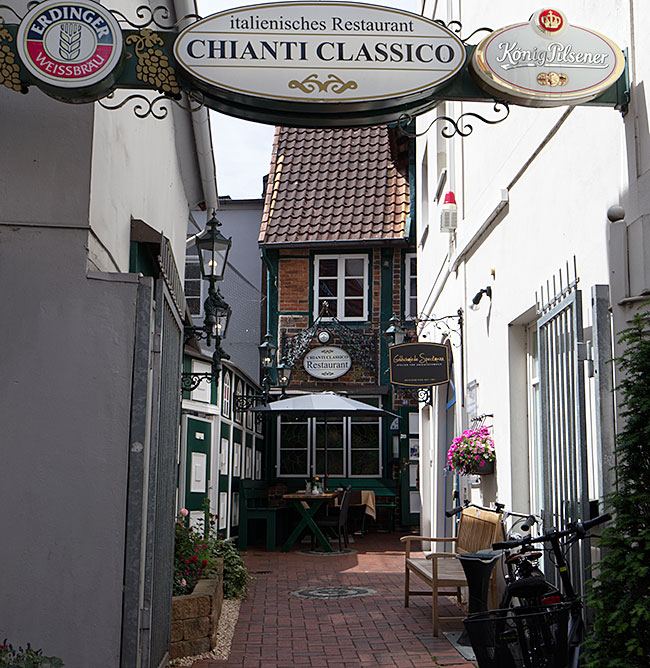
Restaurant in the pedestrian zone
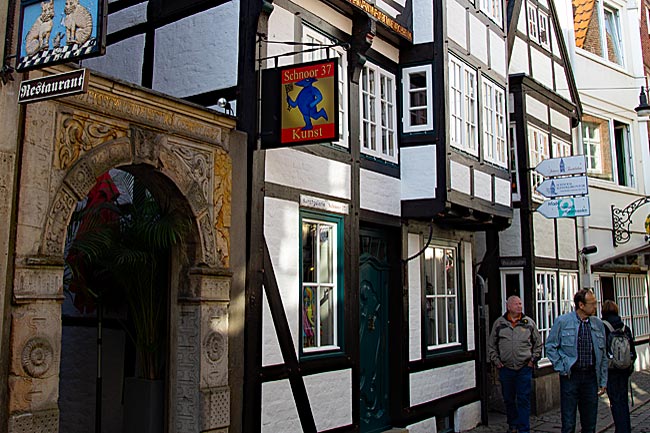
Today, the city is only "stormed" by outsiders with peaceful intentions, especially people from Bremen. They find here what the Hanseatic city has failed to achieve politically for years: an extensive pedestrian zone in the old town with everything needed for a long stroll and a successful shopping trip. Bremen has interesting areas in its old town with the Schnoor, Böttcherstraße, and Schlachte, as well as the adjacent quarter (Viertel) - but what’s missing is an overall concept that connects everything and keeps cars largely out.

Schirrmann's Wok & Bowl in the restaurant in the youth hostel near the EWE Arena
However, Oldenburg also started early to implement its own plans. Even before the 1967-begun renovation of the old town was completed, those in charge could certainly see themselves in a pioneering role, for such a pedestrian zone - or any at all - had existed in almost no German city up to that point. It was definitely not a mistake.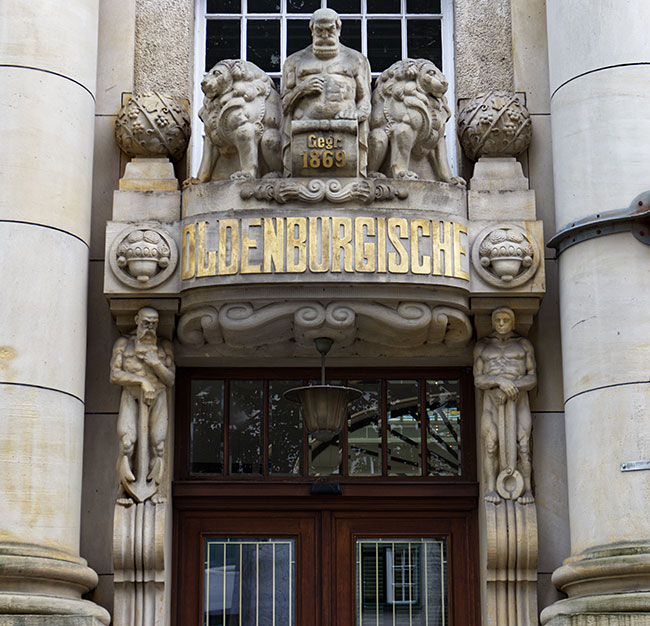
Still a bit of cash from Oldenburgische Landesbank at the Old Harbor for the shopping tour through the Lower Saxon city on the Hunte?
Well then, think many people from Bremen and hop on the regional train that runs twice hourly. Ischa nich weit (It's not far). In fact, you’re there in half an hour, and from the station, the old town is just a few minutes' walk away.
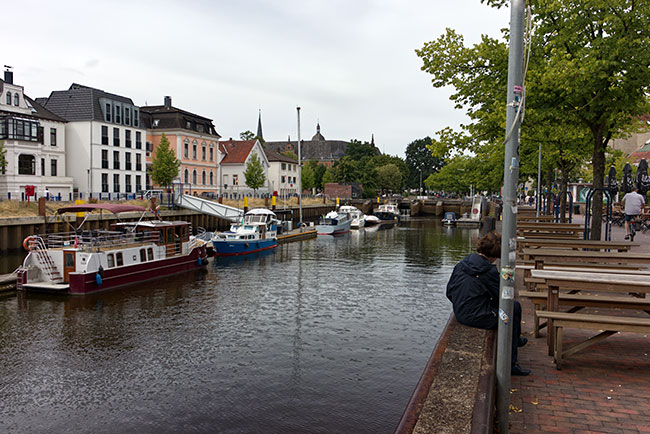
Ols brewery at the Old Harbor, at the end of the basin, the Haaren flows into the Hunte
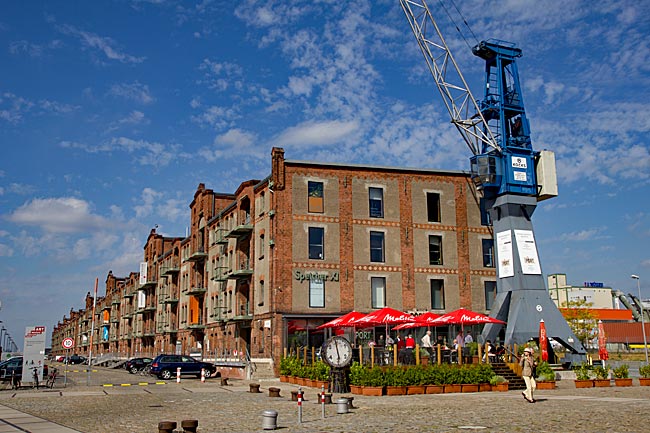
However, a detour to the harbor is recommended beforehand - more precisely, to the Old City Harbor, as it lies right on the way. The route leads directly straight ahead from the train station square through Kaiserstraße. The harbor, which was significant in past centuries, is fed by the Old Hunte, into which the Haaren also flows here - a 24-kilometer-long tributary of the Hunte. As early as 2008, the city presented a development plan with the "Zielkonzept Innenstadt 2008," which aims to strengthen the inner city, among other things, as a residential quarter.
Through the coastal canal dug between 1921 and 1935 up to the Dortmund-Ems Canal, Oldenburg is connected to the German inland waterway network
On former railway operations, industrial, and slaughterhouse areas bordering the harbor, new buildings were constructed starting in 2013 or old buildings renovated. After the company Rhein-Umschlag relocated its bulk cargo handling from the Old Harbor to the East Harbor in 2016, the area at the mouth of the Hunte into the roughly 70-kilometer-long coastal canal - which begins here - was redesigned.
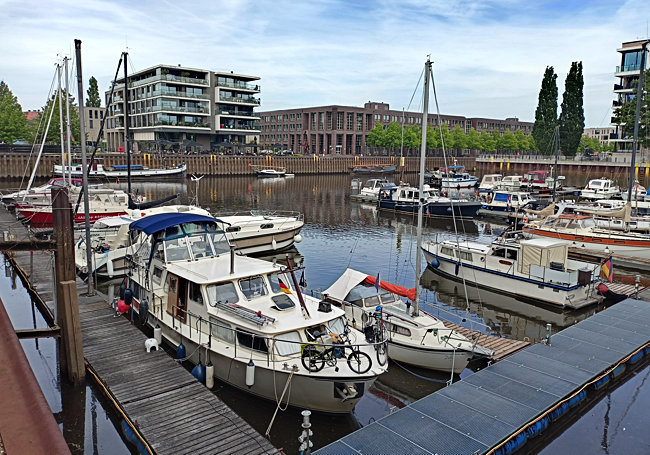
View from the southern bank across the marina onto part of the harbor promenade
For example, a marina was created. The Old Harbor is also intended to be a recreational stay, which has been quite successful, as you can sit in the first row right by the water on the terraces of the gastronomy businesses along the harbor promenade.
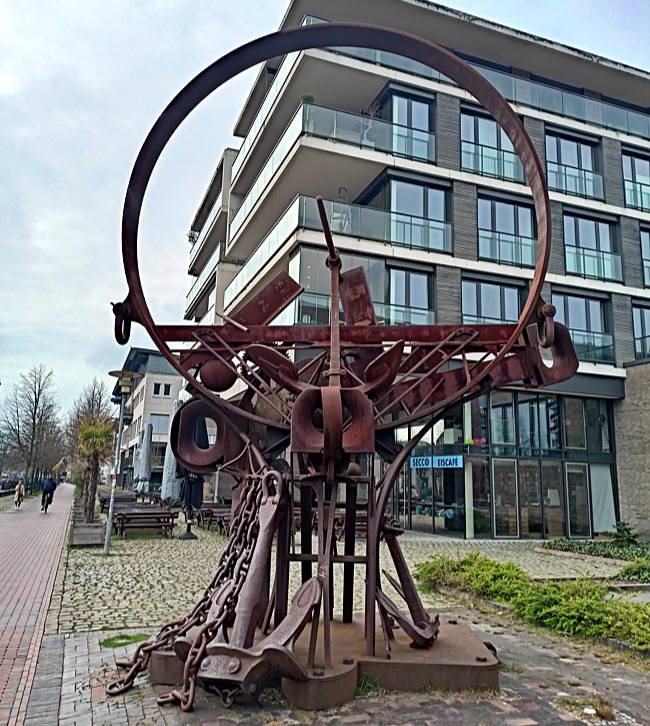
Maritime art on the harbor promenade
Nevertheless, commercial shipping still takes place in Oldenburg; even seagoing vessels reach the Lower Saxon city from Elsfleth via the Lower Hunte over 23.5 kilometers. Primarily bulk goods such as building materials are handled here. In 2021, a new turning basin was put into operation, allowing ships up to 110 meters long to enter and - especially through a possible turning maneuver - also leave the city's harbor.
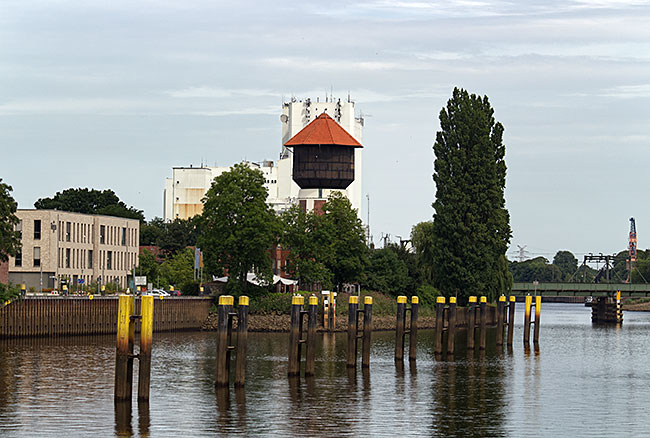
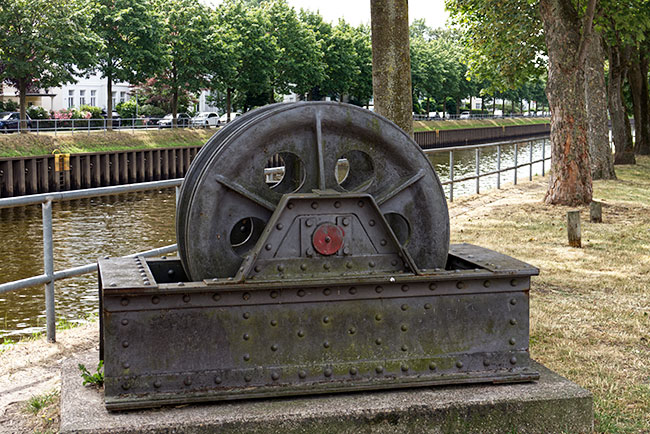
Formerly, the water tower built in 1908 at the railway swing bridge supplied steam locomotives; 500 m² of water were available at maximum. Beyond the bridge, goods are handled in the harbor
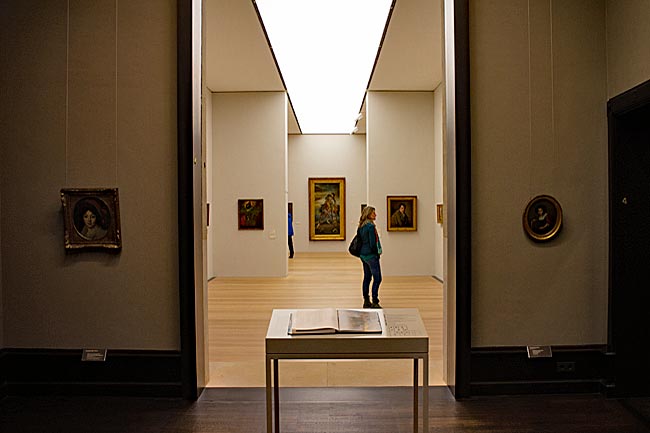
But now let’s leave the water and head into the city center - and back to the water again, to the Old Hunte here called Mühlenhunte, which flows past the expansive castle garden. If you take the route from the coastal canal via the street "Damm," you pass by the originally 1836-opened State Museum for Nature and Man. Originally, because due to lack of space, a new building was already necessary between 1876 and 1879 at this very location.
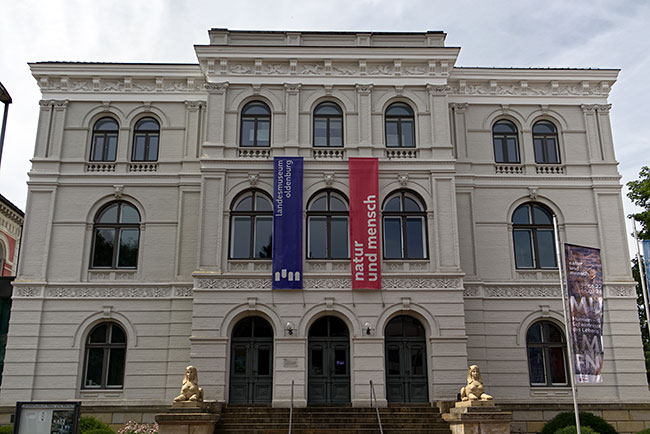
The old building of the State Museum for Nature and Man
The museum displays collections in the departments of archaeology, natural history, and ethnology. The core collection at its opening was a private collection - mostly of prepared animals - that Grand Duke Paul Friedrich August had recently acquired, which is why the institution was initially called the "Naturhistorisches Museum Oldenburg" when it first opened its doors. Later, other focal points and collections such as the grand ducal "Naturalien-Cabinett" were added. Once again, growing space problems were solved in 1971 by directly connecting the former premises of the state library. From the museum, it’s only a few minutes' walk to the castle garden.
previous page
 next page
Map
Further information
Oldenburg Tourism
Lange Straße 3
26122 Oldenburg
Phone: +49 (0)441 36161366
Email: info@oldenburg-tourist.de
Opening hours of Oldenburg-Info in Lappan: Monday - Friday 10 AM - 5 PM, Saturday 10 AM - 4 PM
www.oldenburg-tourismus.de
State Museum for Art and Cultural History
Damm 1
26135 Oldenburg
Phone: +49 (0)441 40570400
Email: info@landesmuseum-ol.de
www.landesmuseum-ol.de
Open: Tuesday - Sunday 10 AM - 6 PM, closed on Mondays, Holidays as per website
Locations:
Schloss (Castle), Schlossplatz 1, 26122 Oldenburg
Prinzenpalais, Damm 1, 26135 Oldenburg
Augusteum, Elisabethstr. 1, 26135 Oldenburg
State Museum of Nature and Man
Damm 38-46
26135 Oldenburg
Phone: +49 (0)441 40570300
Email: museum@naturundmensch.de
www.naturundmensch.de
Open: Tuesday - Friday 9 AM - 5 PM, Saturday and Sunday 10 AM - 6 PM, closed on Mondays
Oldenburg City Museum
Am Stadtmuseum 4-8
26121 Oldenburg
Phone: +49 (0)441 2352881
www.stadtmuseum-oldenburg.de
The museum is closed for demolition and reconstruction until further notice: www.museum-findet-stadt.de
Horst Janssen Museum
Am Stadtmuseum 4-8
26121 Oldenburg
Phone: +49 (0)441 2352885
Email: info@horst-janssen-museum.de
www.horst-janssen-museum.de
Open: Tuesday - Sunday from 10 AM - 6 PM, closed on Mondays
Dangast
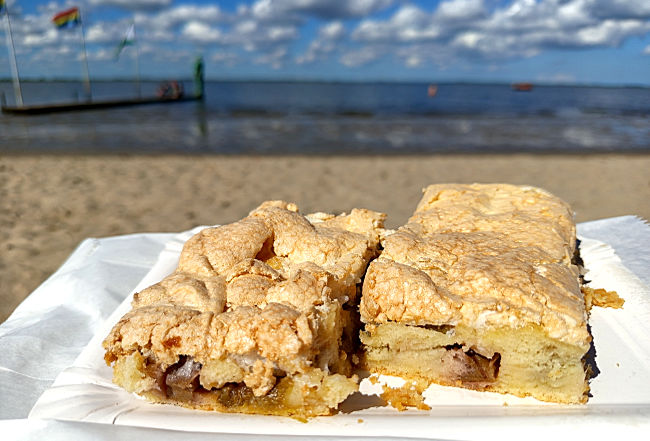
Dangast is located on the Jadebusen, a 190 km² sea bay at the North Sea created by storm surges. The town, which belongs to Varel, is a popular holiday and excursion destination. Campers will find two campsites right by the water here, and cyclists have excellent conditions for tours in the surrounding area. The rhubarb cake in the picture is a classic with a rich tradition at the old spa house, which has been run by a family business for several generations.
read more ...
Cuxhaven - a day trip
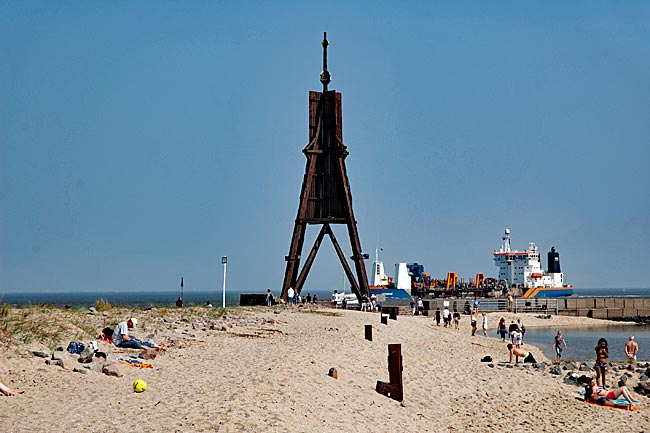
Many people from Bremen consider the seaside resorts of Cuxhaven to be "their home beach." The coastal city at the mouth of the Elbe is easily accessible from Bremen by car via the A27, which passes by Bremen and Bremerhaven before ending in Cuxhaven. By train, the journey takes a bit longer with a transfer in Bremerhaven. However, even in the off-season, Cuxhaven with its seaside resorts is a great destination for an outing - for example, by bicycle.
read more ...
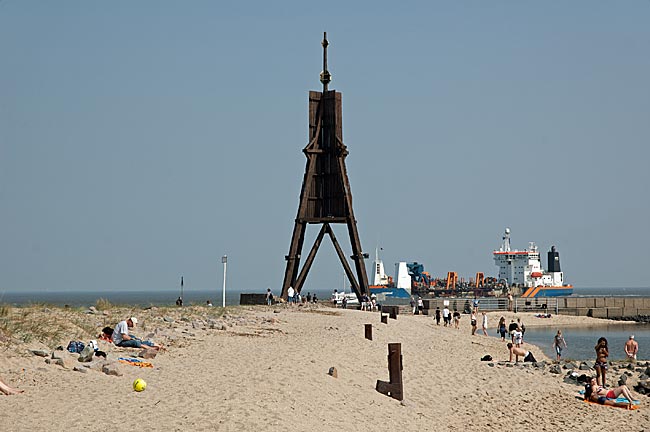
The East Frisian Island Wangerooge
Among the inhabited East Frisian Islands, Wangerooge is the second smallest (7.94 km²) after Baltrum and car-free, making a stroll through town much more pleasant compared to other islands, especially since distances can easily be covered on foot. From the small train station, you're just a few steps away from the heart of the village, quickly finding yourself in front of the unmistakable Old Lighthouse, which now houses the island museum. From 1856 to 1969, this lighthouse served as a maritime navigation aid, guiding ships safely along their routes. Just how far its light could be seen becomes clear when you climb the 149 steps to the lantern room—from there, you can step out onto the surrounding gallery and enjoy a sweeping view of the island and the North Sea.
read more ...
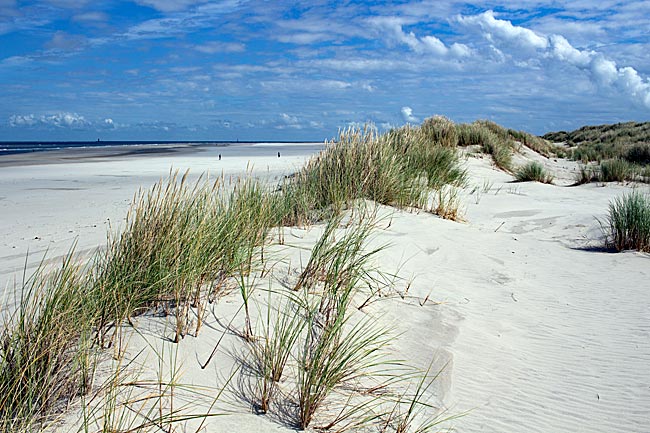
Weser cruise from Bremen to Bremerhaven
Of course, you can take a car for a visit to Bremerhaven from Bremen or board the regional train at the main station. However, with suitable weather and enough time, it is more interesting to cover the route on the Weser by ship. The shipping company "Hal över" operates the connection from May to September. The ship departs from the Martinianleger near the city center along the Schlachte. Those who wish can even take their bicycle with them; additionally, you can pre-book a breakfast onboard.
read more ...
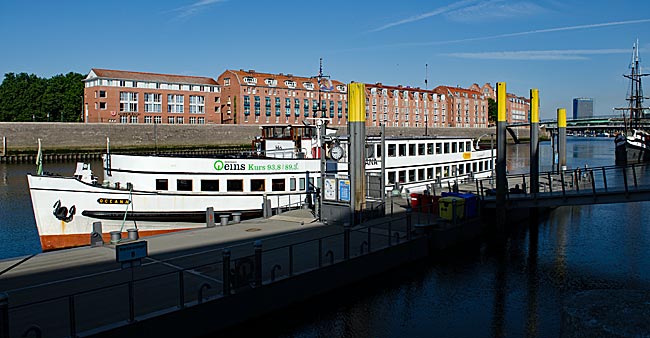
Brake & the River Island of Harriersand
As soon as the sun shines in spring and temperatures reach around 20 degrees, many Northern Germans are drawn to the North Sea coast for some water fun. The main thing is having a beach to lie on in the sun and sand for the kids to dig and build castles. That's why many people from Bremen also head north on warm weekends via the highway, packed with bags and picnic baskets ready for a day of beach vacation. But why travel far when the nearest beach is just around the corner - as a visit to Brake and Harriersand demonstrates.
read more ...
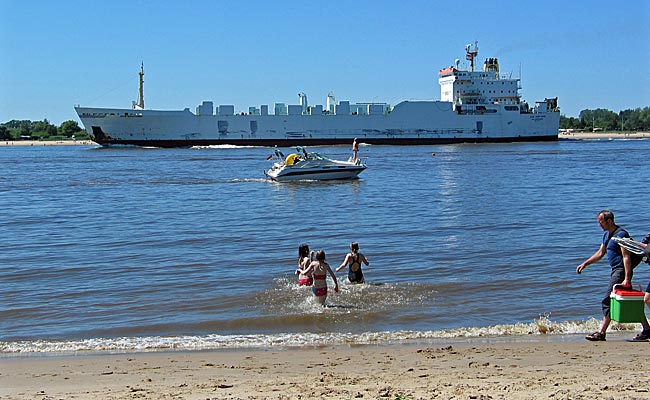
Bremerhaven - Überseehafen (Overseas Port)
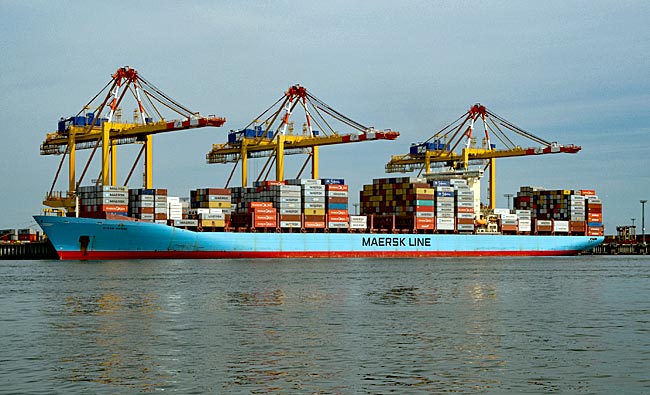
In addition to the Old Harbor (now the Museum Harbor), which was the first to be built, other ports were later added. Adjacent to the New Harbor lies Kaiserhafen I, the first in a series of additional harbor basins. Even a glance into this initial section of the expansive port area reveals a different world of maritime activity - one of large ships. And we will see even larger ones along the five-kilometer-long quay on the Weser.
read more ...
Wilhelmshaven – Seaside City on the Jadebusen
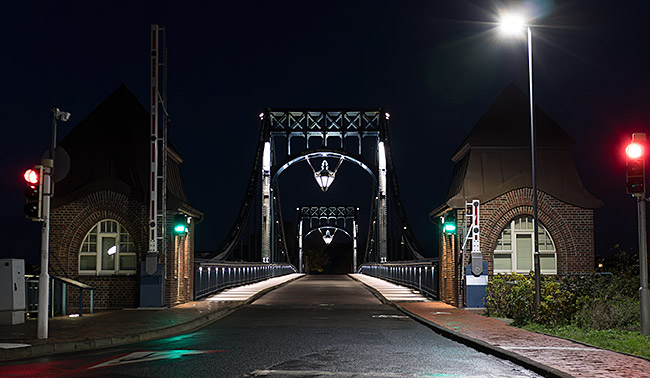
It's hard to imagine Wilhelmshaven without its naval presence, as the city only developed after a naval base was built in the 19th century. Even today, the German Armed Forces (Bundeswehr) maintain a large base here with several squadrons. Yet, there is much more to discover in this port city beyond its military significance.
read more ...
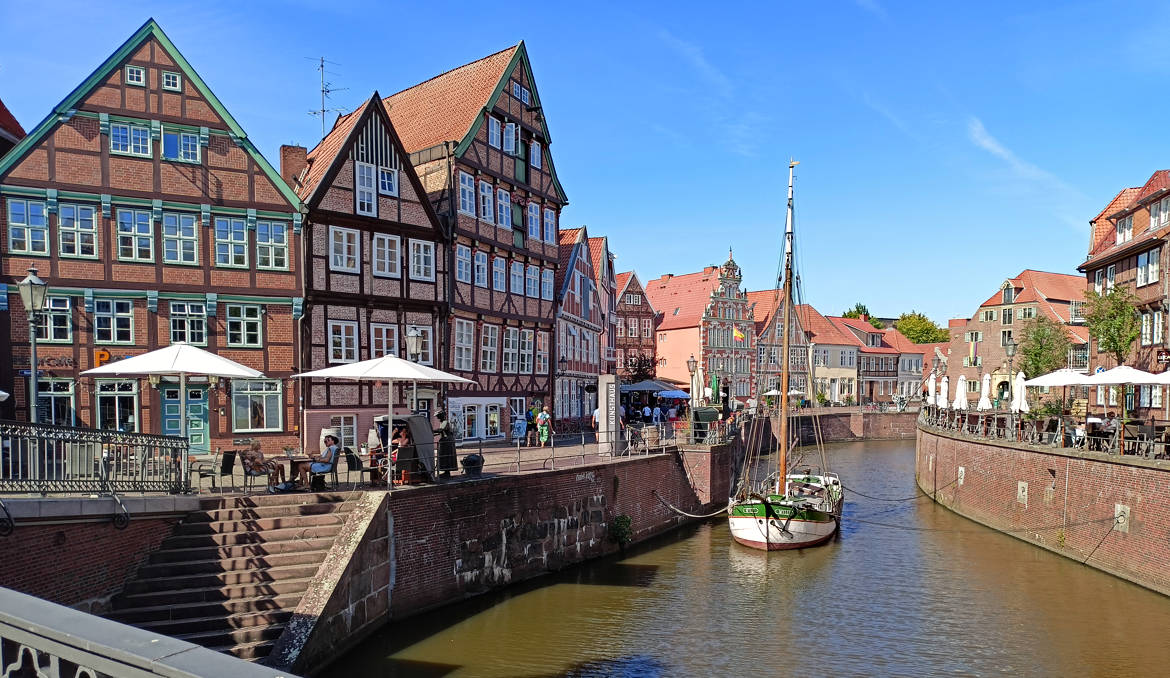
Stade - on the banks of the Schwinge River
Do you know Stade? No? What a shame! Then feel free to read on if you'd like to learn about this smaller Hanseatic city on the Elbe, neighboring the much larger Elbe metropolis of Hamburg. As is often the case, the tourist's gaze doesn't fall on the entire city but rather focuses here on the historic city center and a bit of its surroundings. In our opinion, Stade is a beautiful and worthwhile destination for a short visit or even a few extra days.
read more ...