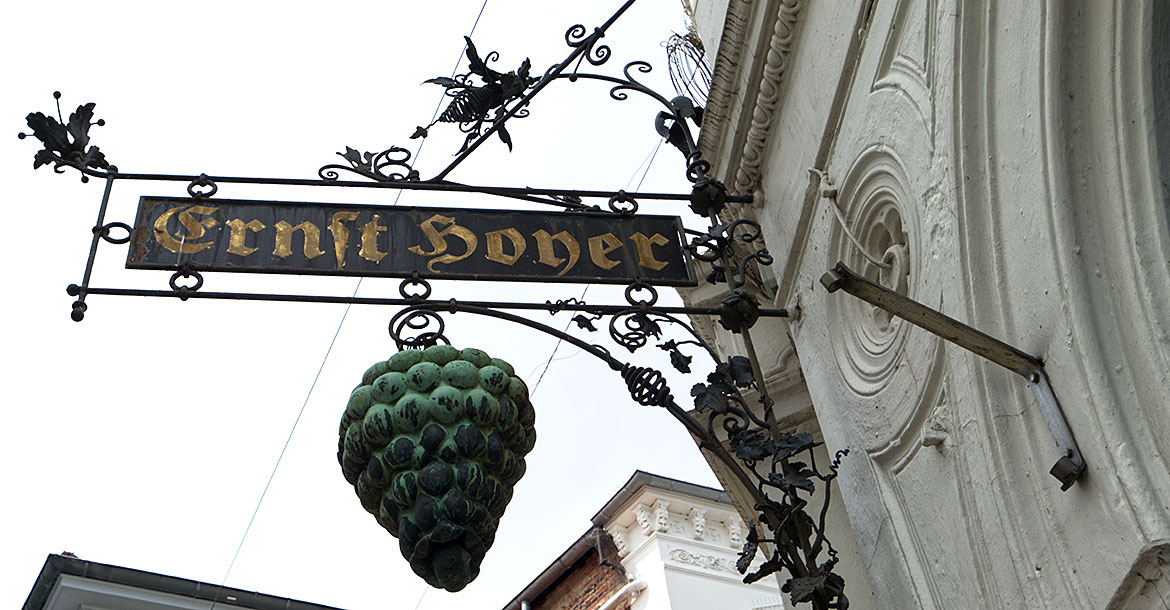

 exploring Bremen & its surrounding areas
 You are here: worth seeing in the surroundings
 Oldenburg [Oldb] (2/5)
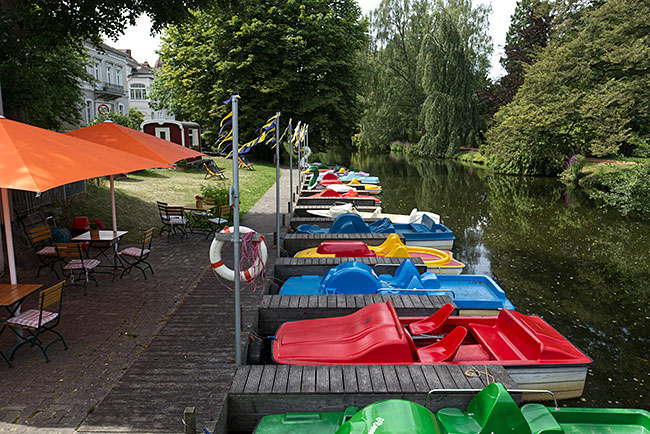
Boat rental on the Mühlenhunte next to the Augusteum; to the right stretches the Schlossgarten
The park, originally planned as an English landscape garden, began its realization in 1803 when Duke Peter Friedrich Ludwig started purchasing the necessary lands for the project. To this day, buildings erected on the site by 1814, such as a court gardener’s house and a former horse and cow stable, have been preserved.
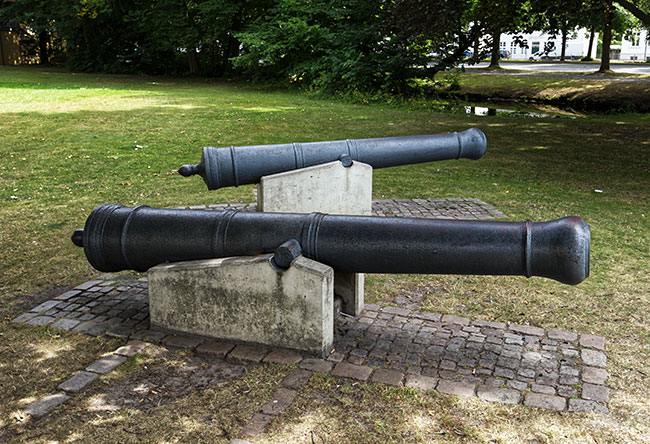
They too brought death, but are almost "harmless" in comparison to the increasingly perverted warfare equipment used worldwide today
Until that time, it was hardly possible in this region and many others to create a park of this size near a castle or fortress. Cities were heavily fortified for the protection of their inhabitants as well as for the self-evident purpose of safeguarding and maintaining the power of those in authority, making spatial expansion nearly impossible.
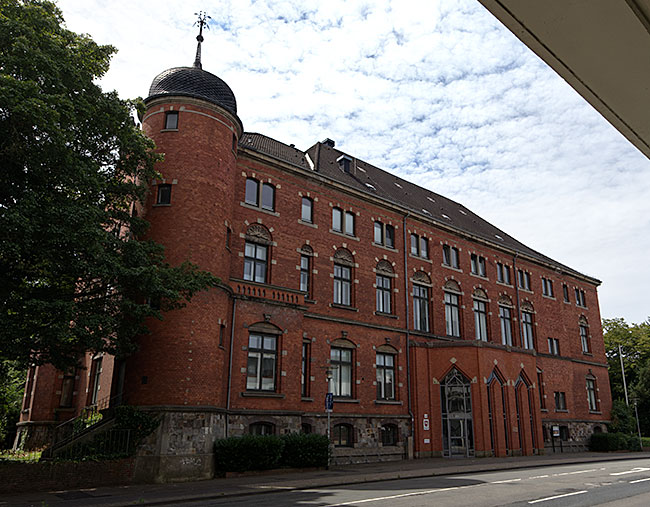
The Elisabeth-Anna-Palais (1894-96), built in the Neo-Renaissance style on Schlosswall, was once the duke’s residence and is now home to the Social Court. It stands on an elevated section of the demolished fortifications
High walls armed with cannons surrounded the cities, where rural populations could also seek refuge during wartime. Additionally, moats were dug in front of these walls, filling with water to create a buffer zone. However, advancements in military technology rendered these defensive measures obsolete over time, rendering them useless. Thus, at the end of the 18th century, efforts began to dismantle and level the fortifications.
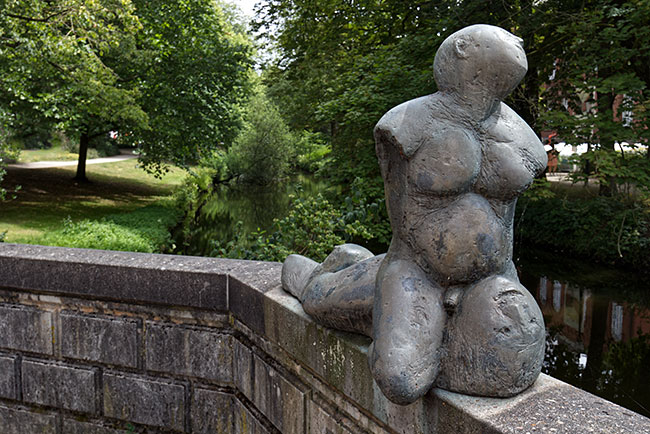
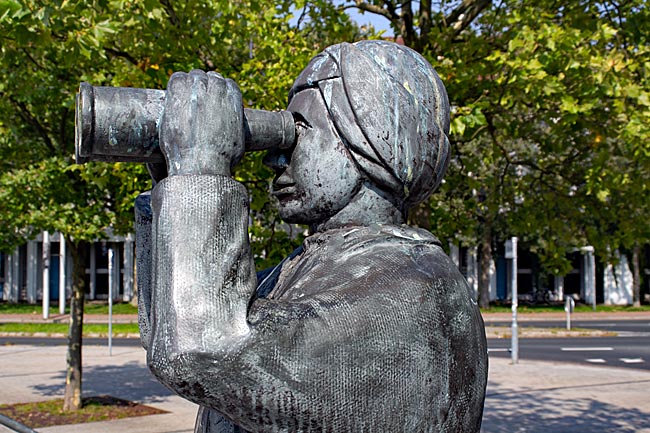
Bronze sculpture on a bridge next to the State Theater on Theaterwall
Not only in the Hanseatic city of Bremen were parts of these fortifications intentionally converted into parks - such as the Wallanlagen there - but also in Oldenburg. For example, the Schlossteich in the Schlossgarten is a remnant of the former defensive moat. Street names like Paradewall, Schlosswall, Theaterwall, Heiligengeistwall, Am Festungsgraben, and others still refer to the former defensive structures.
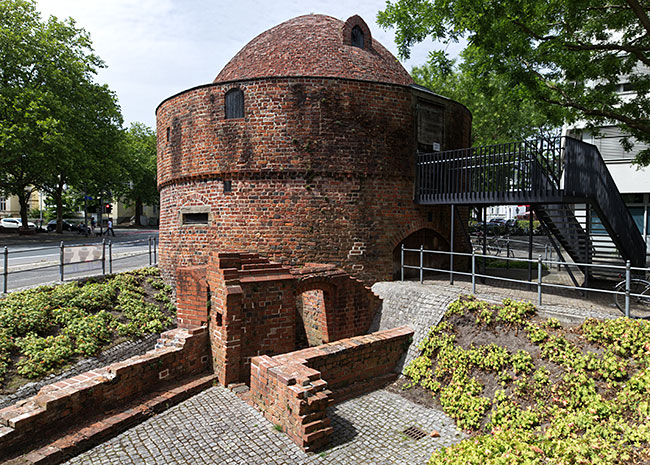
Powder Tower
One relic from this era that has been preserved is the Powder Tower, which has been a protected monument since 1966. The "Great Zwinger before the Eversten Gate," one of the city’s five former gates, was likely built in 1529 according to historical records. The originally flat turret above an arched vault was probably expanded to its current size and given a conical roof in the 17th century - this is at least documented for the year 1625. When the Danes used Oldenburg as a fortress between 1730 and 1765, they stored gunpowder in this structure, hence its name, Powder Tower. Since the tower passed into state ownership in 1964, it has undergone multiple restorations and now serves as a space for culture and art.
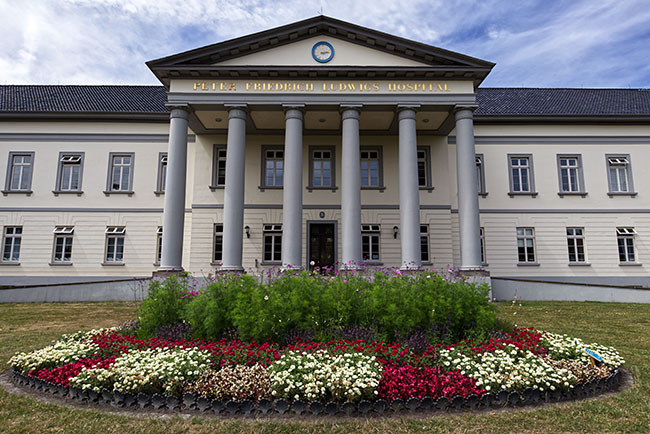
Anyone walking or sitting by the Haaren River at Heiligengeistwall, while traffic rushes past above on the asphalt, can also see the Peter Friedrich Ludwig Hospital (1838-1841). The duke who initiated its construction did not live to see its opening; however, culture and literature have long since taken up residence there
And why the Danes? With the death of Count Anton Günther, the diplomatically skilled ruler and breeder of the "Oldenburg" horses - still known today as the Oldenburg horse breed - the noble line ended in 1667 due to the lack of legitimate heirs. The next male relative was the Danish king, which is why Oldenburg came under the rule of the Danish crown. Thus, it happened without war, death, misery, and devastation. However, under the Danish flag, the city was transformed into a fortress with massive defensive walls. A glance at a city map or Google Maps clearly shows the course of the wall around the historic old town and reveals many adjacent undeveloped green spaces today - small oases. This is good because automobile traffic must go somewhere if the inner city is car-free, so it hums along the Wallring, including public transportation.
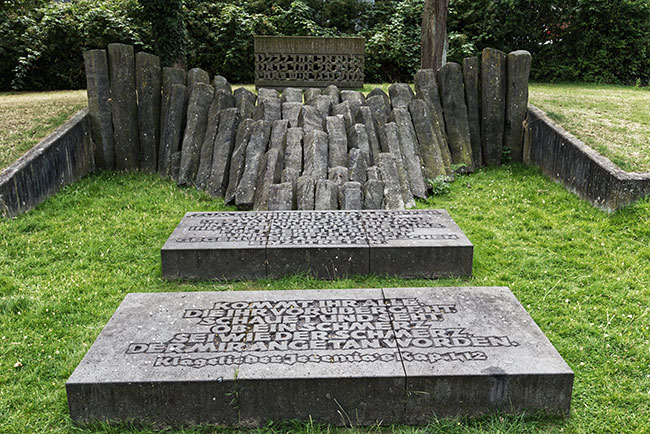
This also belongs to Oldenburg’s history: Memorial site in remembrance of the victims of National Socialist terror at Peterstraße


Map
Further information
Oldenburg Tourism
Lange Straße 3
26122 Oldenburg
Phone: +49 (0)441 36161366
Email: info@oldenburg-tourist.de
Opening hours of Oldenburg-Info in Lappan: Monday - Friday 10 AM - 5 PM, Saturday 10 AM - 4 PM
www.oldenburg-tourismus.de
State Museum for Art and Cultural History
Damm 1
26135 Oldenburg
Phone: +49 (0)441 40570400
Email: info@landesmuseum-ol.de
www.landesmuseum-ol.de
Open: Tuesday - Sunday 10 AM - 6 PM, closed on Mondays, Holidays as per website
Locations:
Schloss (Castle), Schlossplatz 1, 26122 Oldenburg
Prinzenpalais, Damm 1, 26135 Oldenburg
Augusteum, Elisabethstr. 1, 26135 Oldenburg
State Museum of Nature and Man
Damm 38-46
26135 Oldenburg
Phone: +49 (0)441 40570300
Email: museum@naturundmensch.de
www.naturundmensch.de
Open: Tuesday - Friday 9 AM - 5 PM, Saturday and Sunday 10 AM - 6 PM, closed on Mondays
Oldenburg City Museum
Am Stadtmuseum 4-8
26121 Oldenburg
Phone: +49 (0)441 2352881
www.stadtmuseum-oldenburg.de
The museum is closed for demolition and reconstruction until further notice: www.museum-findet-stadt.de
Horst Janssen Museum
Am Stadtmuseum 4-8
26121 Oldenburg
Phone: +49 (0)441 2352885
Email: info@horst-janssen-museum.de
www.horst-janssen-museum.de
Open: Tuesday - Sunday from 10 AM - 6 PM, closed on Mondays
Dangast
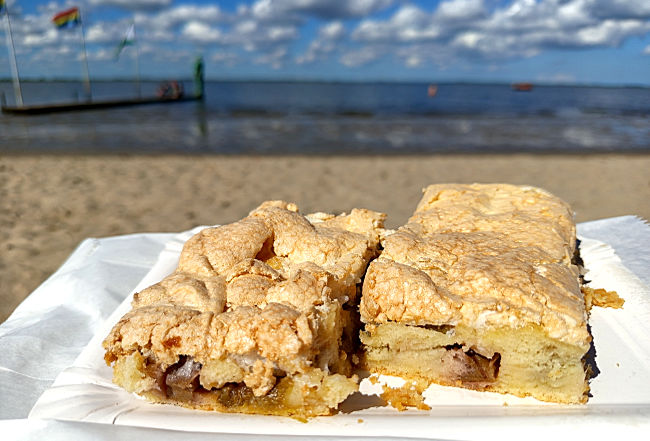
Dangast is located on the Jadebusen, a 190 km² sea bay at the North Sea created by storm surges. The town, which belongs to Varel, is a popular holiday and excursion destination. Campers will find two campsites right by the water here, and cyclists have excellent conditions for tours in the surrounding area. The rhubarb cake in the picture is a classic with a rich tradition at the old spa house, which has been run by a family business for several generations.
read more ...
Cuxhaven - a day trip
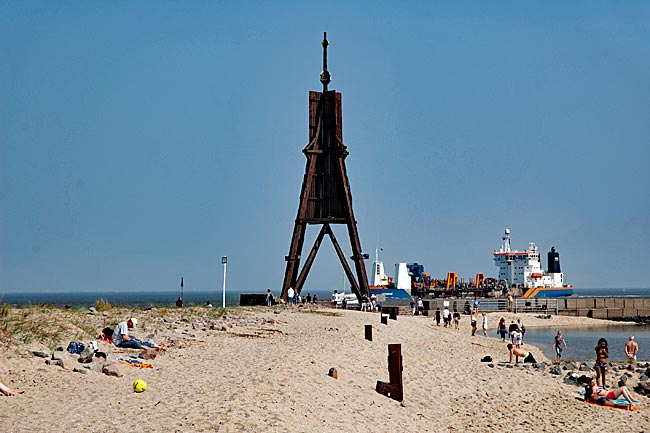
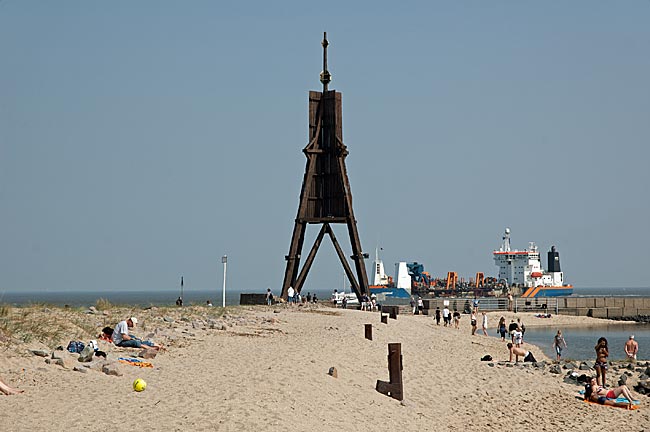
Many people from Bremen consider the seaside resorts of Cuxhaven to be "their home beach." The coastal city at the mouth of the Elbe is easily accessible from Bremen by car via the A27, which passes by Bremen and Bremerhaven before ending in Cuxhaven. By train, the journey takes a bit longer with a transfer in Bremerhaven. However, even in the off-season, Cuxhaven with its seaside resorts is a great destination for an outing - for example, by bicycle.
read more ...
Heligoland - a day trip
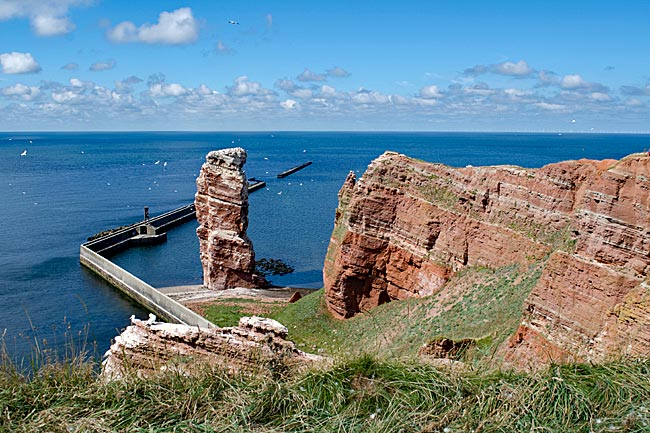
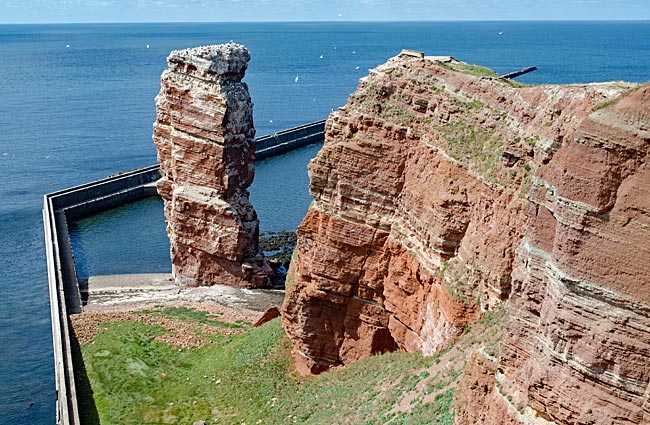
Germany's only supposed high-seas island is visited each year by thousands of tourists, most of them day-trippers in the warmer months. And yes, admittedly, Heligoland isn't located right in the vicinity of Bremen. However, it can be reached as a day trip from Bremerhaven and Cuxhaven - which is why we decided to visit.
read more ...
The East Frisian Island Wangerooge
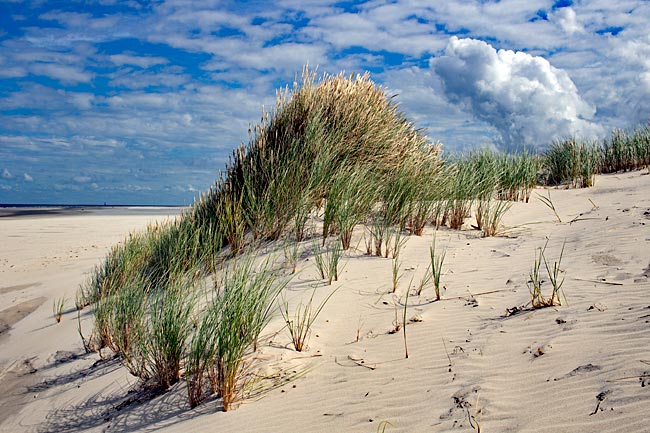
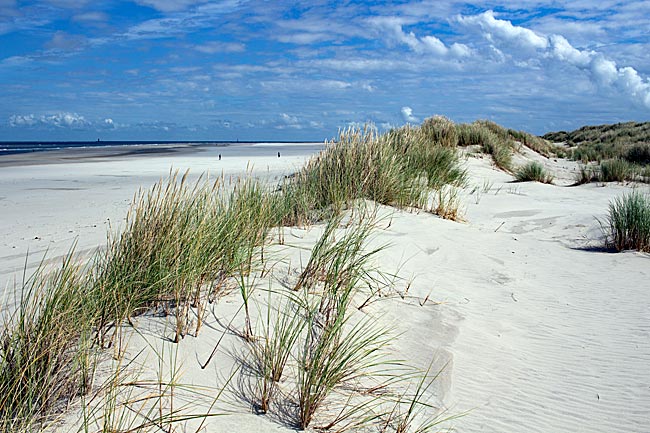
Among the inhabited East Frisian Islands, Wangerooge is the second smallest (7.94 km²) after Baltrum and car-free, making a stroll through town much more pleasant compared to other islands, especially since distances can easily be covered on foot. From the small train station, you're just a few steps away from the heart of the village, quickly finding yourself in front of the unmistakable Old Lighthouse, which now houses the island museum. From 1856 to 1969, this lighthouse served as a maritime navigation aid, guiding ships safely along their routes. Just how far its light could be seen becomes clear when you climb the 149 steps to the lantern room—from there, you can step out onto the surrounding gallery and enjoy a sweeping view of the island and the North Sea.
read more ...
Wilhelmshaven – Seaside City on the Jadebusen
It's hard to imagine Wilhelmshaven without its naval presence, as the city only developed after a naval base was built in the 19th century. Even today, the German Armed Forces (Bundeswehr) maintain a large base here with several squadrons. Yet, there is much more to discover in this port city beyond its military significance.
read more ...