
 exploring Bremen & its surrounding areas
 You are here: worth seeing in the surroundings
 Stade - on the banks of the Schwinge (1/6)
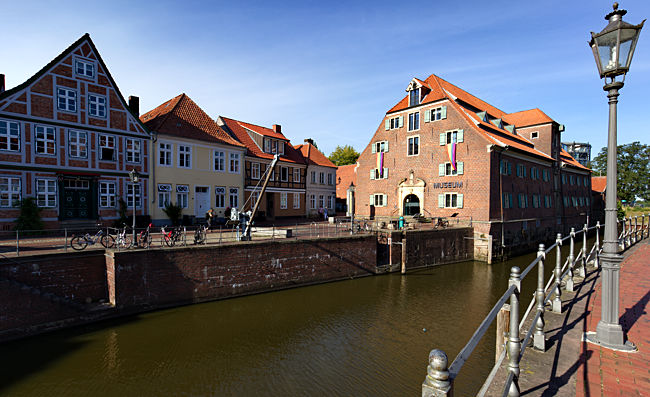
The tourist heart of Stade beats strongest at the Hansehafen (Hanseatic harbor)
Do you know Stade? No? What a shame! If you'd like to learn about this smaller Hanseatic city on the Elbe, near the much larger Elbe metropolis of Hamburg, then please read on. The Hanseatic city of Bremen is also nearby, and Stade is easily and quickly reachable from there, which is why it appears here as a day-trip tip. Additionally, both cities share a small part of their history. And, as is often the case, the tourist gaze does not fall on the entire city but rather, in this instance, on the historic city center and a bit of the periphery. For a short visit lasting one or a few days, Stade is a beautiful and worthwhile destination, in our opinion - but judge for yourself.
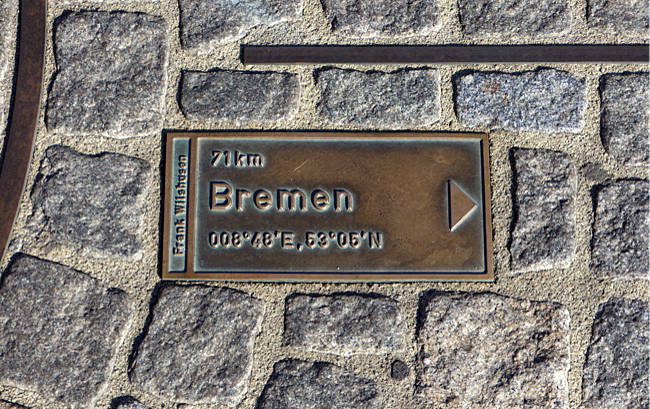
On the occasion of the celebration of 1000 years of Stade, embedded in the plaster of the Pferdemarkt (horse market), the distance between the cities has remained, but today travel is faster
That visitors - and of course the residents themselves - can experience the remarkable inner city in its current form is largely due to the establishment of larger industrial operations on the nearby Elbe in the last 20-30 years of the 20th century and the associated tax revenues. For, in the 1960s, a far-reaching demolition was already in prospect; many of the old buildings were in need of renovation, and - as is so often the case -the necessary funds for preservation were lacking. One of the industrial operations, by the way, was the Stade Nuclear Power Plant (AKW Stade), which can be seen from Hansestraße at Stadthafen if you look along the Schwinge River toward the Elbe. The reactor, which went online in May 1972, has been out of operation since 2003. The invested tax revenues should have paid off for the city of Stade in a sustainable way, given the tourist response.
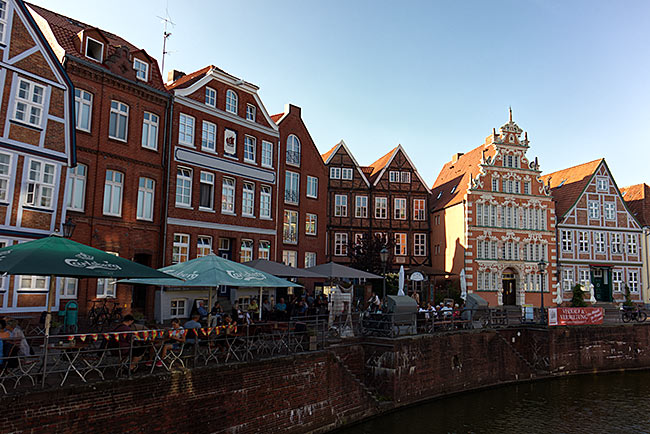
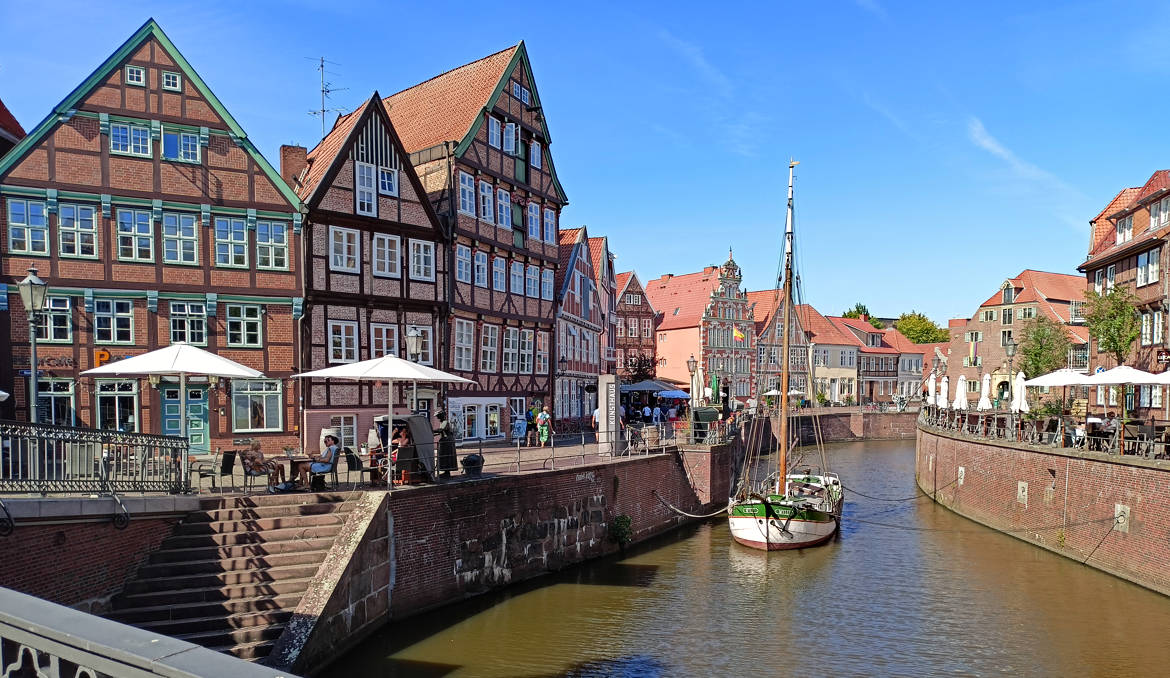
Whoever secures a seat by the water on a nice day is truly in the front row
“And who invented it? Ricol...” No, they weren’t!
The history of the city dates back to 994 AD according to written documents, at that time still designated as the trading post “Sethu” with a harbor on the Schwinge. Is today’s name Stade derived from Gestade (bank)? Finds from the Neolithic and Bronze Ages even allow conclusions about an earlier human settlement. Contacts with Vikings, proven by objects unearthed during the inner city renovation starting in 1977, could be dated to before 994. The not infrequently brutal and bloody raids of the Vikings from Scandinavia on North and Western European trading posts between 800 and the mid-11th century were infamous and feared. But the skilled sailors with their nimble boats did not only raid and murder; they also settled in distant lands and engaged in trade.
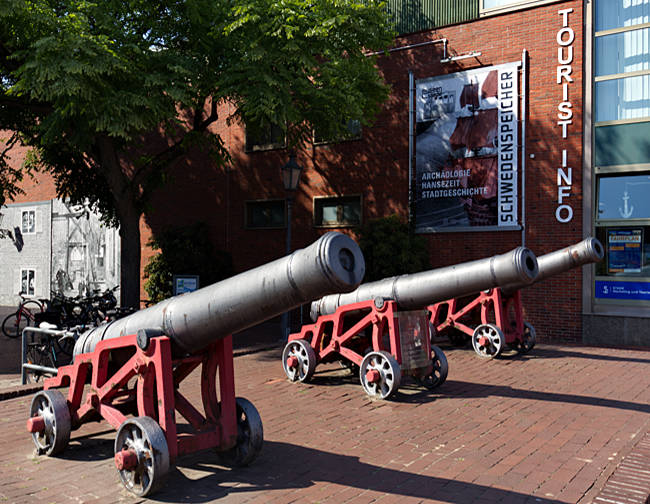
"Three cannons for a hallelujah," in reference to a 1971 (german) film title, and the Vikings fled? Uh, no. Since 1682, during storm surge warnings, three cannons have been fired as a signal for all city residents. These cannons from the 18th century stood until 1850 on the Burgbastion (castle bastion) and then on the Schwingedeich (Schwinge dike). The devastating storm surge of February 16/17, 1962, was their last deployment. A memorial stone next to the cannons commemorates the men who lost their lives in the floodwaters during that time.
And Stade? Stade was such a trading post, initially only lightly fortified. Animal products from the north passed through the harbor on their way to the Frankish Empire, which had grown strong and prosperous under Charlemagne in the 8th century, and in return, craft products from there found buyers in the north.
Stade becomes a city...
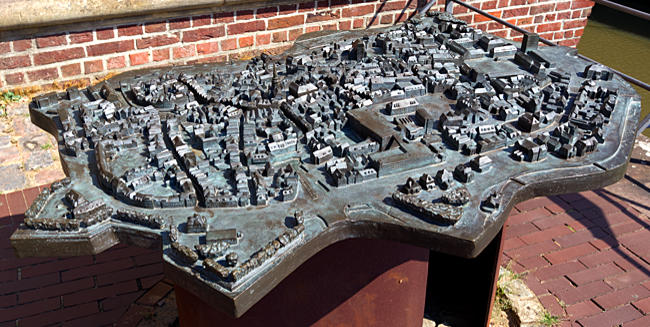
Stade inner city in miniature; it was much smaller in the Middle Ages
Anyone who climbs Spiegelberg today stands not only next to the Pferdemarkt (Horse Market) on one of the highest points of the medieval city but also at one of the central points of urban development. While the first castle at this location had been plundered by Vikings, a new one was built around the year 1017 and likely renovated or expanded again in 1154. Ten years earlier, after the death of Count Rudolf II of Stade, a violent conflict had broken out between the Archdiocese of Bremen and Henry the Lion, Duke of Saxony, over the rule of Stade, which ended in 1236 in favor of the archbishops of Bremen.
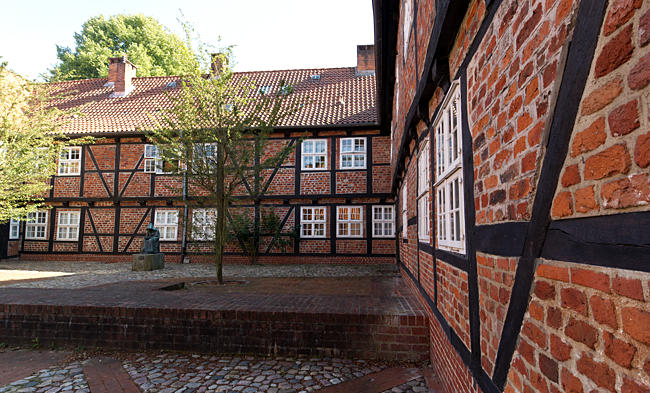
No castle, but "my home is my castle" may have been the thought of people who found shelter in the former St. Johanniskloster (St. John’s Monastery), which already existed before 1236. During the Reformation, the convent dissolved. After the city fire, the U-shaped complex was rebuilt in 1672/1673.
But anyone who expects to find a ruin or even an elegant castle in Spiegelberg Street today is mistaken; instead, a stone tablet embedded in the masonry of a house provides information: Here stood the “magnificent castle” of the Counts of Stade and Henry the Lion. Here, the duke sought refuge in 1181; his son Heinrich resided here; the Hohenstaufen Agnes died here (1204). The citizens' sense of freedom destroyed the castle.
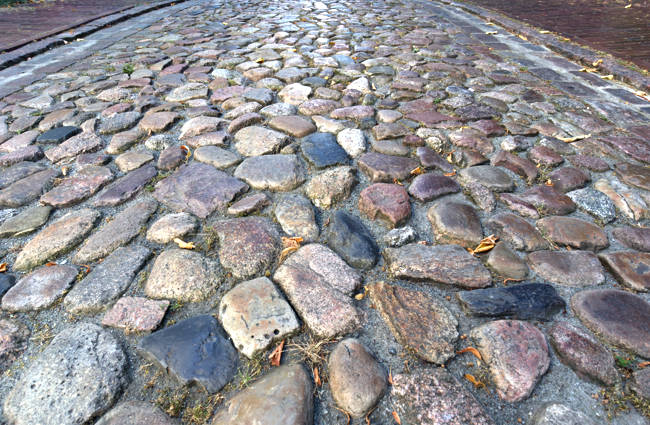
The medieval citizen street (Bürgerstraße) is complemented by cobblestone paving. Certainly not preserved in its original state, but authentic for that time
In fact, after the construction of the city fortifications around 1170, the castle lost its importance and is not mentioned at all in the first city book of Stade in the year 1286. Today, appropriately, the streets Spiegelberg, Burgstraße (Castle Street), and Bürgerstraße (Citizen Street) converge at the former location.
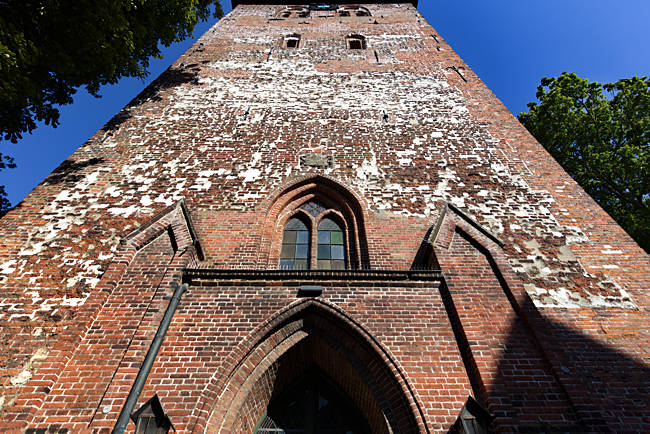
Extreme perspective: since the 13th century, the West Tower of St. Wilhadi Church has towered over Stade. Huge church buildings served not only to demonstrate clerical power outward but also to intimidate the faithful, to make them feel small - not only before God but also before his self-proclaimed representatives.
“The citizens' sense of freedom destroyed the castle” ... How so? After the victory, the archbishop was also lord of the castle, next to St. Wilhadi Church (named after Willehad, the first bishop of Bremen) with its market zone - a clerical symbol of power. In Bremen as well, the archbishops had their share of trouble with freedom-loving citizens; they came out on the short end and were eventually disempowered.
... and prosperous
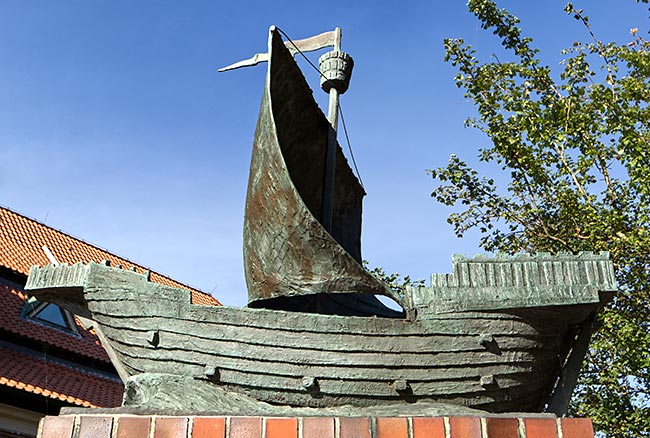
Created and donated on the occasion of the "1000 Years of Stade" celebrations: a model of a Hanseatic cog, for many years THE cargo ship of the Hanseatic League
The reason was, as in Bremen, also in Stade a strengthening bourgeois merchant class, for Stade became an important trading center of the Hanseatic League, that supra-regional association of merchants which began in the 12th century and, after its heyday between approximately 1250 and 1400, gradually lost importance again until its dissolution in 1669. But from the 13th to the 16th century, the city's merchants conducted a profitable trade with Flanders and Denmark, became wealthy, and thus politically and socially influential; on the other hand, the nobility and the church (clergy) increasingly lost power.
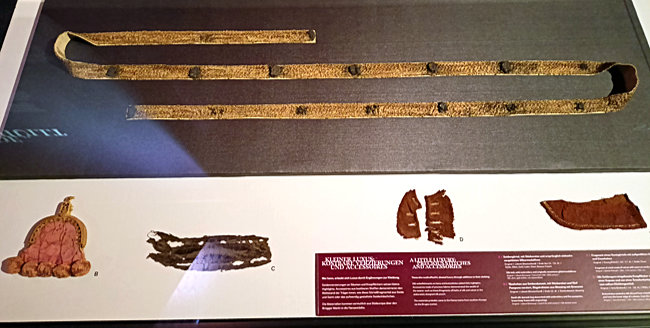
Preserved fabric remnants of clothing from the Hanseatic period in the special exhibition "Guter Stoff" (2023) at the Hansemuseum in the Hanseatic city of Lübeck
In 1587, Stade became the seat of the Merchant Adventurers, an association of English cloth merchants who had long been in conflict with the Hanseatic merchants due to trade disputes, including monopolies. Cloth production and, even more so, cloth trade were important and profitable economic factors at that time and perhaps a first market for mass consumption not only in northern European countries such as England and Flanders (the Netherlands). Although the settlement was closed and reopened several times for various reasons, it demonstrates the former importance of Stade.
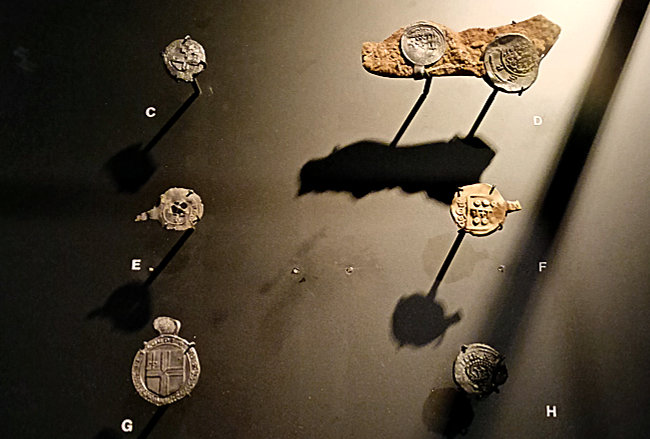
Fabric seals for marking branded goods in the cloth trade during the Hanseatic period, also at the Hansemuseum in Lübeck, the "capital" of the Hanseatic League
In 1601, the city was finally expelled from the Hanseatic League; trade with the arch-enemy of the trading alliance, Denmark, had eventually become too extensive. But 17 years later, the Thirty Years' War brought trade in the Holy Roman Empire - and thus largely in what is still the German-speaking region today - to a near standstill. Not only that, but in some regions, only one-third of the population survived the war and its subsequent consequences such as famines and plagues.
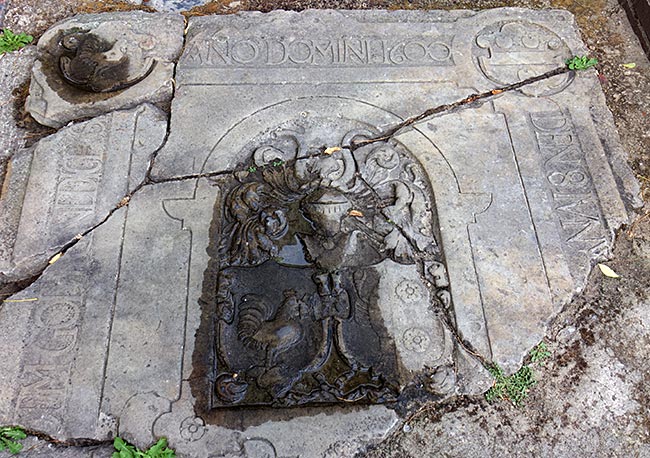
Parts presumably of a gravestone
previous page
 next page
Map
Further information
STADE Marketing and Tourism GmbH
Hansestraße 16
D-21682 Stade
Email: info@stade-tourismus.de
Website: www.stade-tourismus.de
Phone: +049 (0) 4141 77698-0
Tourist Information at the Harbor
Opening Hours: April to October: Mon–Fri 10 AM – 6 PM; Sat, Sun & Holidays 10 AM – 3 PM, November to March: Mon–Fri 10 AM – 5 PM, Sat 10 AM – 3 PM, Sun & Holidays closed
Schwedenspeicher
Wasser West 39
D-21682 Stade
Phone: +49 (0) 4141 79 773 0
Email: info@museen-stade.de
Website: www.museen-stade.de
Opening Hours: Tue–Fri 10 AM – 5 PM, Sat & Sun 10 AM – 6 PM
Kunsthaus
Wasser West 7
D-21682 Stade
Phone: +49 (0) 4141 79 773 20
Email: info@museen-stade.de
Website: www.museen-stade.de
Opening Hours: Tue, Thu, Fri 10 AM – 5 PM, Wed 10 AM – 7 PM, Sat & Sun 10 AM – 6 PM, closed during exhibition changes!
Verein Alter Hafen Stade e.V.
Phone: Gerd Becker +49 (0) 4141 4123255 or +49 (0)151 10974508
Email: becker1959@gmail.com
Website: www.greundiek.de
Kunstverein Stade e. V.
Website: www.kunstvereinstade.de
Heimatmuseum
Inselstraße 12
D-21682 Stade
Phone: +49 (0) 4141 79 773 40
Email:
info@museen-stade.de
Website:
www.museen-stade.de/heimatmuseum
Opening Hours: closed for renovation
SUP CLUB Stade: Rentals, courses, canoe, kayak, pedal boat, BBQ
Salztorswall 8
D-21682 Stade
Phone: +49 (0)1514 2898283
Arrival
The advantages of traveling by car from Bremen are limited. While there are several parking garages to park your vehicle near the city center, the train station is also just a five-minute walk from the city center. At the station, you need to change trains in Hamburg. The regional trains run more frequently, so you don't have to rely on specific connections. With a Niedersachsenticket (valid from 9 AM until 3 AM the next day), you can freely choose your connections for an entire day (round trip excluded IC and ICE). Buses and trams operated by Bremer Straßenbahn AG (BSAG) are also freely usable with the Niedersachsenticket.
Bremerhaven in general
Bremerhaven was only founded in 1827. To secure its status as a port city amid the threat of the Weser - Bremen's lifeline - silting up, Bremen purchased 342 acres of land at the mouth of the Weser from the Kingdom of Hanover for 74,000 talers under then-mayor Johann Smidt. About 60 kilometers downstream from Bremen, this became the site of the first urgently needed seaport built by Bremen, known as the Alter Hafen (Old Harbor), completed by 1830.
read more ...
Bremerhaven - Zoo am Meer (Zoo by the Sea)
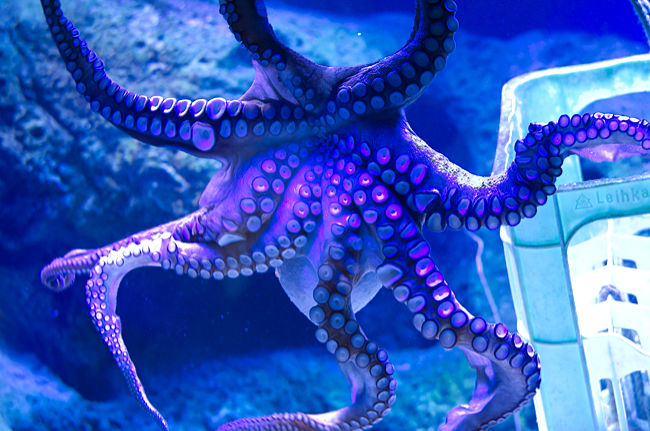
In addition to the 19th-century harbor facilities, the Zoo am Meer is the oldest attraction on the site between the Weser River and the pedestrian zone. It opened in 1928 under the name "Tiergrotten." The enclosures house polar bears, seals, penguins, various bird species such as gannets and keas, reptiles like turtles, raccoons, Arctic foxes, pumas, monkeys, and others - almost 50 animal species in total.
read more ...
Bremerhaven Havenwelten
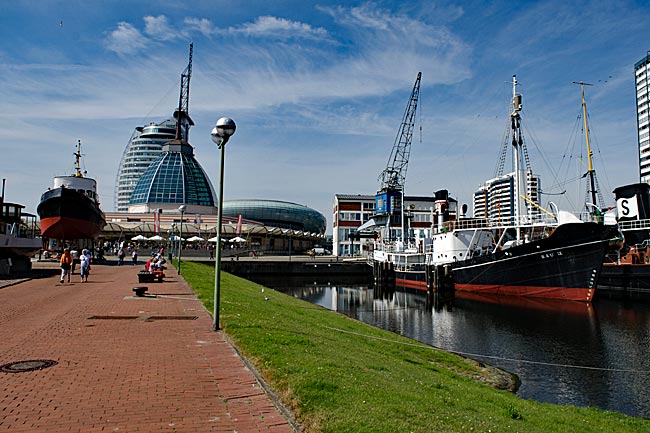
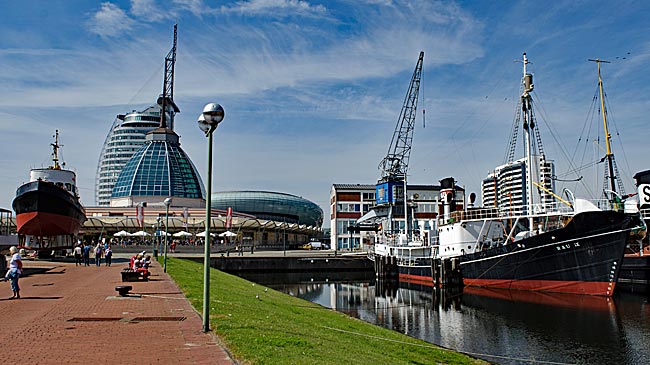
Since early 2008, Bremerhaven has not only had a new tallest building but also a new landmark in its Weser-side skyline with the ATLANTIC Hotel SAIL City, which rises 147 meters directly behind the Weserdeich. Architecturally, the structure perfectly embodies a maritime city - it stands like a powerful, rounded ship's superstructure. On the 20th floor, at a height of 77 meters, there is an observation deck (SAIL City) that is also accessible to non-guests.
read more ...
German Emigration Center Bremerhaven (Deutsches Auswandererhaus®)
Opened in 2005, the German Emigration Center® vividly and engagingly presents the history of emigration to America across five eras, spanning from 1830 to 1974. In total, 7.2 million people departed from Bremerhaven to seek a new home and build a new life beyond the Atlantic. For its emotionally compelling and historically grounded exhibition, the museum received the European Museum Award in 2007.
read more ...
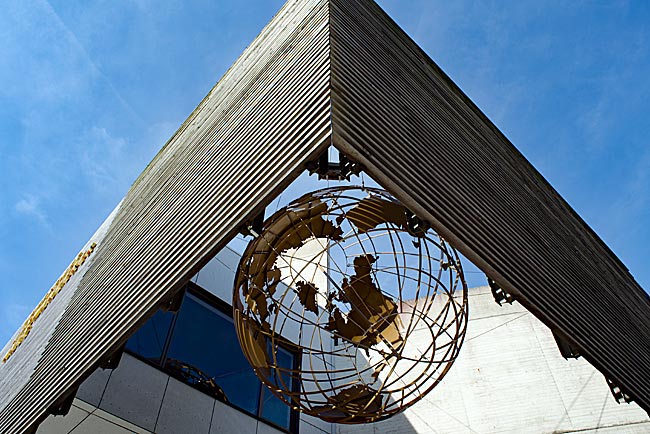
Bremerhaven - Überseehafen (Overseas Port)
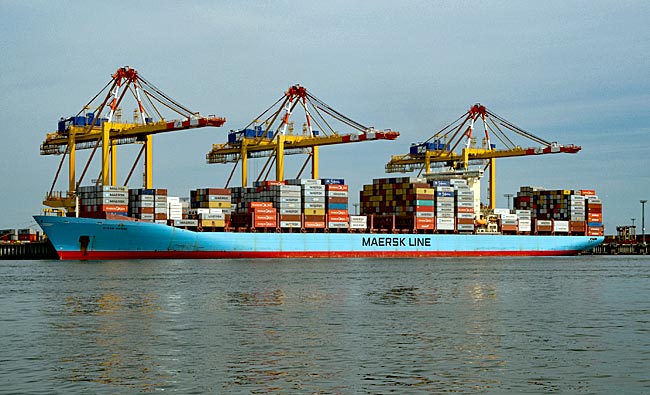
In addition to the Old Harbor (now the Museum Harbor), which was the first to be built, other ports were later added. Adjacent to the New Harbor lies Kaiserhafen I, the first in a series of additional harbor basins. Even a glance into this initial section of the expansive port area reveals a different world of maritime activity - one of large ships. And we will see even larger ones along the five-kilometer-long quay on the Weser.
read more ...
Bremerhaven - Schaufenster Fischereihafen (Fishery Harbor Showcase)
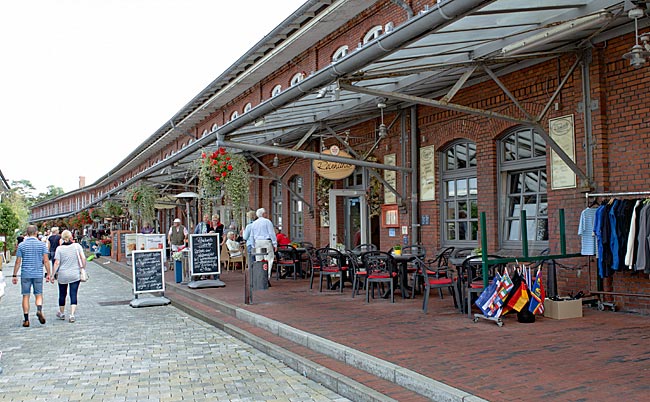
Away from the Havenwelten and older than both the Emigration Center and Klimahaus is the "Fishery Harbor Showcase." In fact, the Fishery Harbor was originally Geestemünde's deep-sea fishing harbor, built between 1891 and 1896. After a period of decline and decay - including partial demolitions - the idea emerged to transform the area into a maritime experience world. In 1990, efforts began to restore Fish Packing Hall IV, the oldest surviving hall, which had been slated for demolition just shortly before.
read more ...
Cuxhaven - a day trip
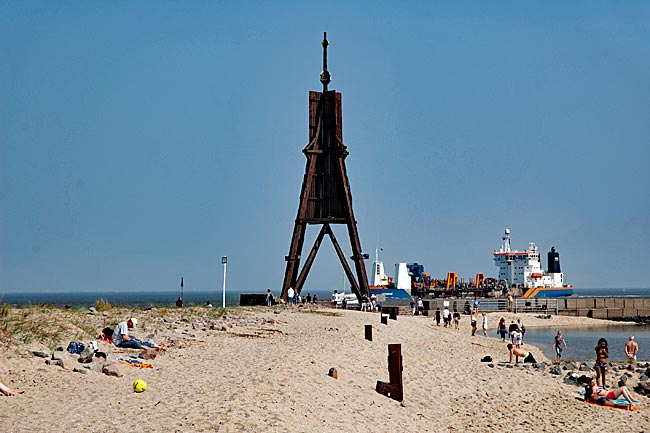
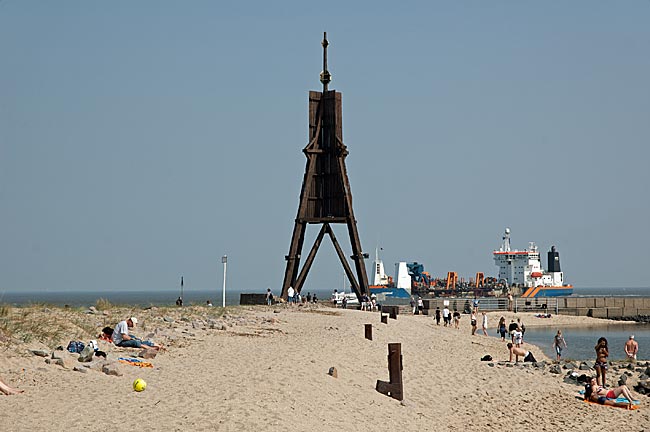
Many people from Bremen consider the seaside resorts of Cuxhaven to be "their home beach." The coastal city at the mouth of the Elbe is easily accessible from Bremen by car via the A27, which passes by Bremen and Bremerhaven before ending in Cuxhaven. By train, the journey takes a bit longer with a transfer in Bremerhaven. However, even in the off-season, Cuxhaven with its seaside resorts is a great destination for an outing - for example, by bicycle.
read more ...
Brake & the River Island of Harriersand
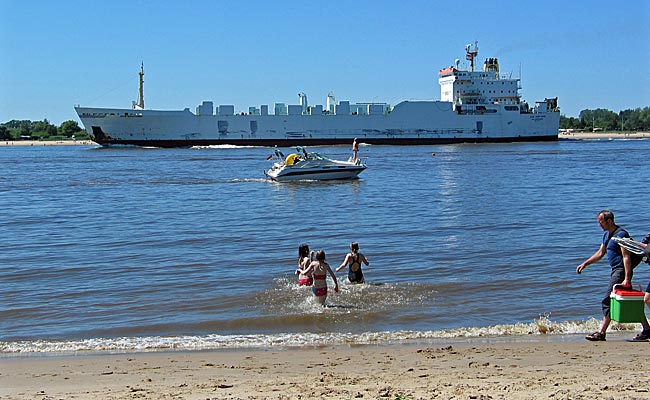
As soon as spring arrives and the temperatures reach around 20 degrees, many Northern Germans are drawn to the North Sea coast. The main attraction? A beach to lie in the sun and sand for children to dig and build castles. This also draws many people from Bremen to the highways heading north on warm weekends, equipped with bags packed and picnic baskets ready for a day of seaside relaxation. But why travel far when the nearest beach is just around the corner? A visit to Brake and Harriersand proves that.
read more ...
Walsrode World Bird Park
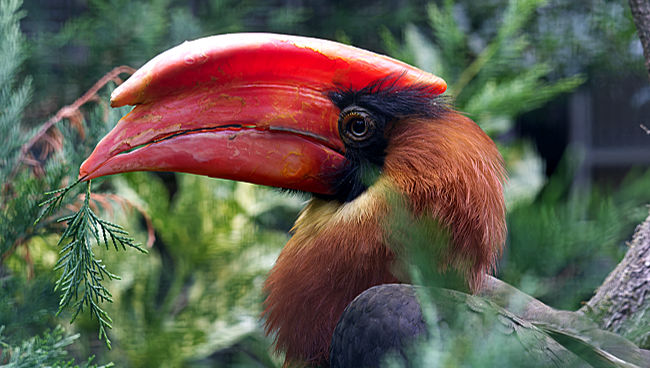
The name "Weltvogelpark" (World Bird Park) sounds ambitious, but in fact, the park in the Lüneburg Heath is the largest of its kind worldwide and has only carried the addition "Welt" ("World") since 2010. Over 4,000 birds, including many rare species, live on the 24-hectare site, representing around 650 different bird species from all continents. The bird park was founded in 1962 as a private breeding station and later expanded into a full-fledged park. It is highly recommended as a family-friendly day trip.
read more
...
Artists' colony & peasant village: Fischerhude
Signposts make it clear to every previously unaware visitor that this place differs significantly from many other traditionally agricultural villages. Fischerhude is hip. Numerous cafés and restaurants, ceramics studios, art galleries, a local history museum, the Modersohn Museum, and more vie for the favor of an audience that is sometimes more and sometimes less interested in art but regularly strolls through Fischerhude in large numbers.
read more ...