
 exploring Bremen & its surrounding areas
 You are here: worth seeing in
Horn-Lehe district
You are here: worth seeing in
Horn-Lehe district
 Exploring Horn-Lehe district (1/3)
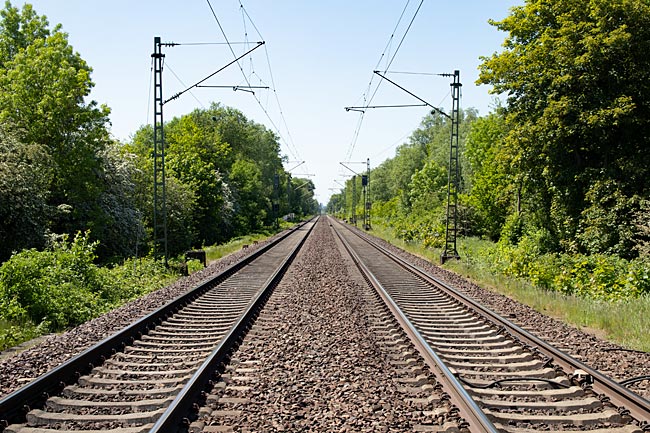
"Through this hollow lane he must come..." as the saying goes in William Tell, though here heavy machinery is expected and it arrives at times every minute
Anyone traveling by Stadtexpress or another train from Hamburg - just over an hour away - the Hanseatic city, passes not only through the district of Oberneuland but also Horn. This causes great annoyance to many people who want to cross the barriered level crossing daily. At certain times of day, the warning signal sounds every few minutes, and the red-and-white striped barriers shift from vertical to horizontal.
While a majority of emigrants during the major waves of emigration left the country for a more promising future via Bremen or Bremerhaven (the coastal city belonging to the state of Bremen), that was long ago. Today’s daily "escape" at quitting time is more about leaving work in the big city and temporarily: just getting away from here to the cozy home in the so-called commuter belt in the surrounding countryside of Lower Saxony.
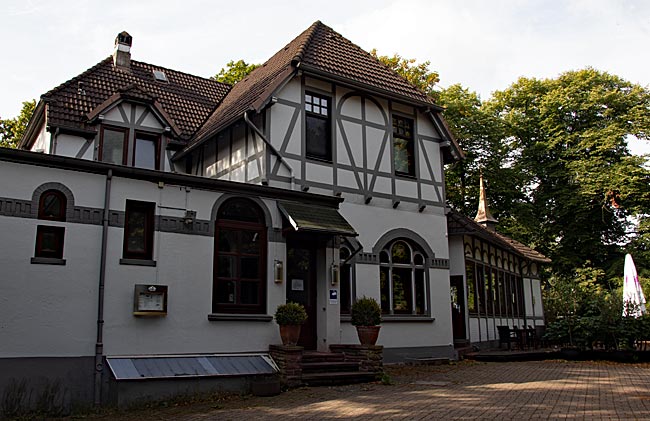
Even today, people wait at the former station of the "Bremen-Tarmstedt Light Railway," but not for the arrival of a train - rather, for food and drinks
But it’s not just commuters and travelers; goods also rumble along the tracks toward their destination. The overseas ports of Bremerhaven are located less than 70 kilometers downstream at the mouth of the Weser River. Via this second-largest German port on the coast (after Hamburg), containers and especially cars are handled - not only Mercedes models produced in Bremen.

And here it is: Pizza Ruchetta with Parma ham, the namesake crispy arugula, Parmesan, and a crust just as it should be
While trains today speed past this spot, back then they would stop according to schedule. Between 1900 and 1956, the "Bremen-Tarmstedt Light Railway" operated between Bremen and the moorland in the surrounding area, transporting peat as fuel into the city via this route, but also other goods and people traveled with the steam-powered narrow-gauge railway.
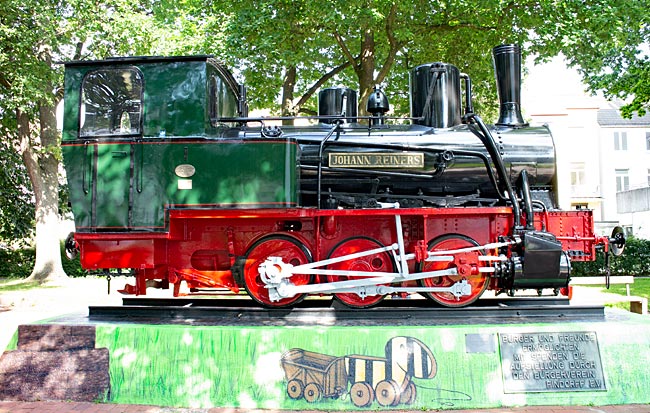
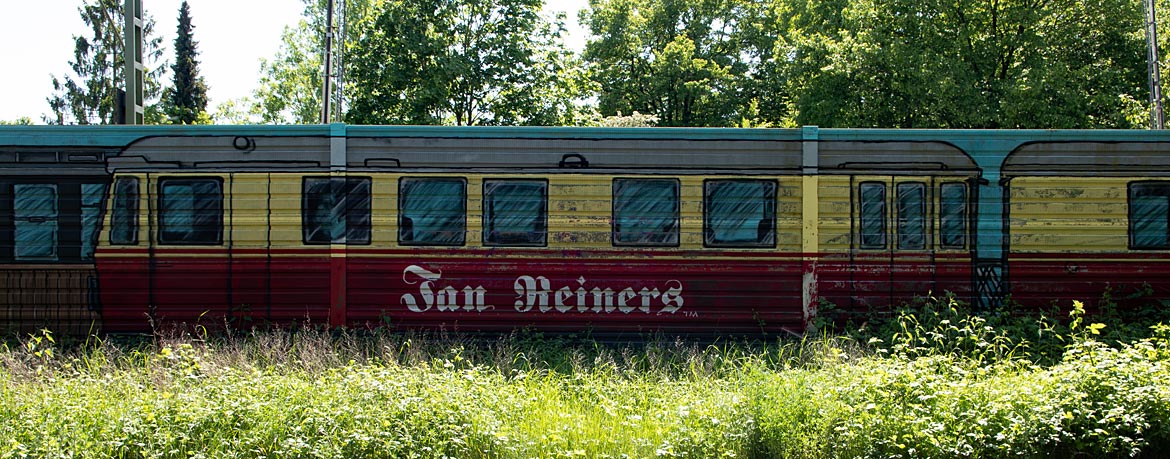
Restored in 2021 and set back on its pedestal: the steam locomotive Johann Reiners
While only one locomotive from the railway company has been preserved (beautifully restored today as a monument in the Findorff district at the corner of Hemmstraße/Fürther Straße), two of the 15 stops remain, including one right next to the level crossing on Herzogenkamp Street/Corner Helmer. For a long time now, an Italian family has operated a restaurant there - one that is absolutely worth visiting.
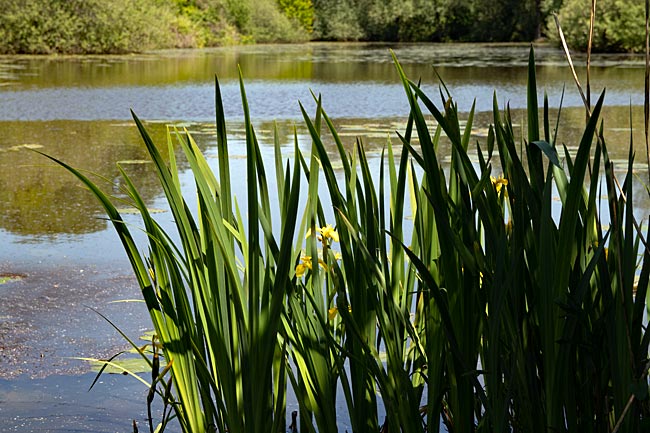
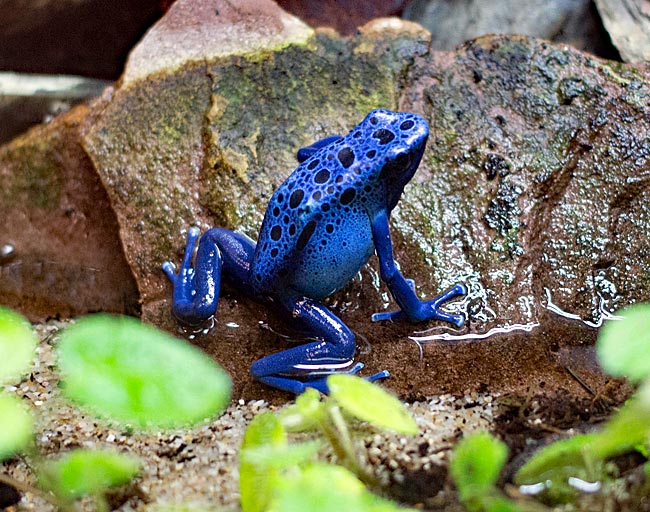
Small lakes, ponds, and drainage ditches can be found along much of the nearly straight Jan Reiners Path. At the appropriate time of year, frogs croak loudly and in great numbers here
Where once the railway ran, no steam engines puff today, but rather cyclists. The walking and cycling path named after the initiator of the light railway, Jan Reiners, begins at the end of Helmer on the other side and is a popular route to Lilienthal among others. Without car traffic and through green spaces, many day-trippers are out here on sunny days. On both sides of the path - such as in the Western Hollerland, reclaimed by Dutch settlers in the 12th century and now protected - and on fields and meadows, you can often observe deer and birds like birds of prey, gray herons, wild geese, etc..
Art on campus: Bust of Chilean poet and Nobel Prize winner for Literature (1971) Pablo Neruda. Donated by the Embassy of the Republic of Chile, the art foundry Fundicion Progreso from Chile, and Honorary Consul Reinhard Kütter in Bremen (2014)
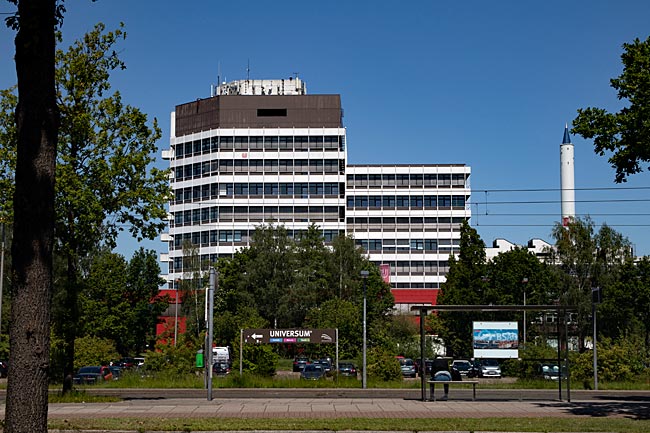
Many students also use this connecting path, as Bremen is a university city. Opened in 1971, the institution was considered a leftist training ground in the 1970s but was even temporarily designated an "Excellence University" until 2019 over 40 years later.
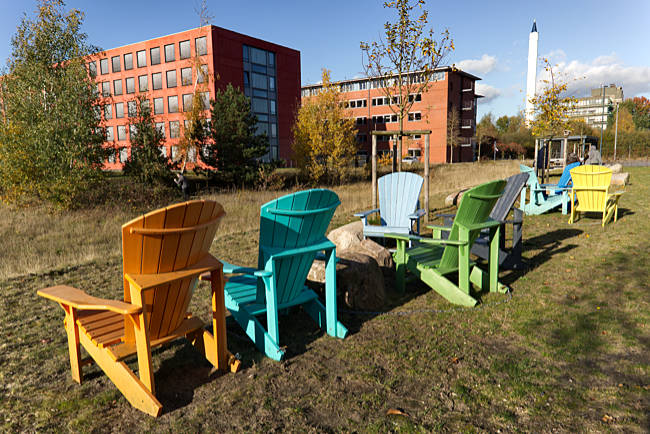
Thinking minds also need fresh air. Colorful chairs at the back of the Fraunhofer Institute for Digital Medicine MEVIS (see photo below) with a view of university buildings
Marine research and spaceflight are strong fields of research and activity in the state, represented by the Alfred Wegener Institute in Bremerhaven and OHB among others right next to the university, whose satellites frequently embark on journeys into outer space.
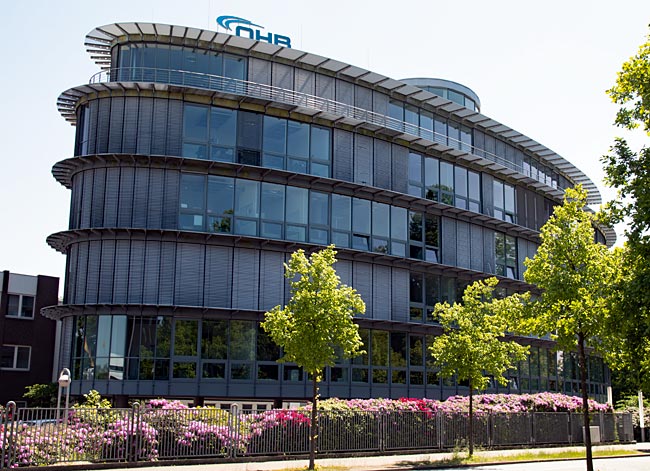
Not much can be seen at the somewhat scattered building complexes of OHB near the campus. High-tech wants to be protected from prying eyes and hackers. In principle, this administrative building could provide not only views but also insights, but in summery sunshine it remains rather buttoned-up here.
The 1985-founded research institute ZARM (Center for Applied Space Technology and Microgravity) has also attracted international attention. The most outwardly interesting laboratory of the university institute within view of the German Aerospace Center (DLR) is the so-called drop tower on Hochschulring Street. Since 1990, experiments have been conducted with and in weightlessness here. Initially, a state of weightlessness lasting only 4.74 seconds was created over an 110-meter stretch in the deployed capsules during free fall. A catapult system installed about 10 years later extended this time to 9.5 seconds. Short? Then take a look at your watch.
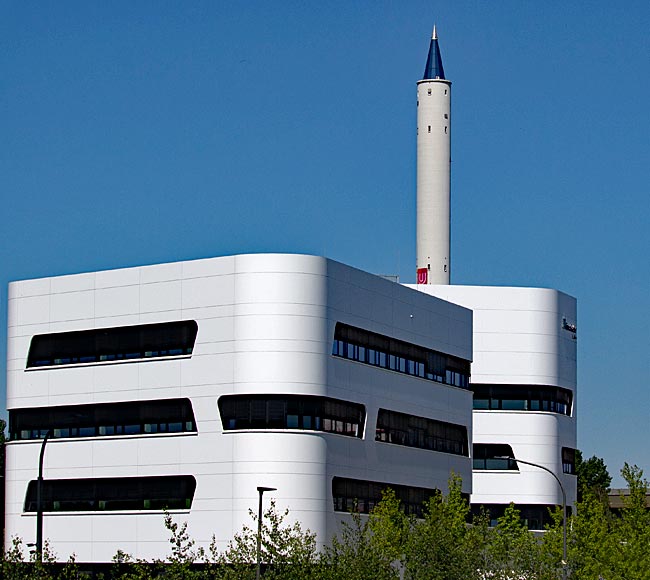
Seattle has "The Space Needle," Bremen has the drop tower. While it may appear somewhat delicate from a distance, it is impressively tall when standing in front of it. Futuristic in appearance, the building of the Fraunhofer Institute for Digital Medicine MEVIS inaugurated in 2021 stands in the foreground.
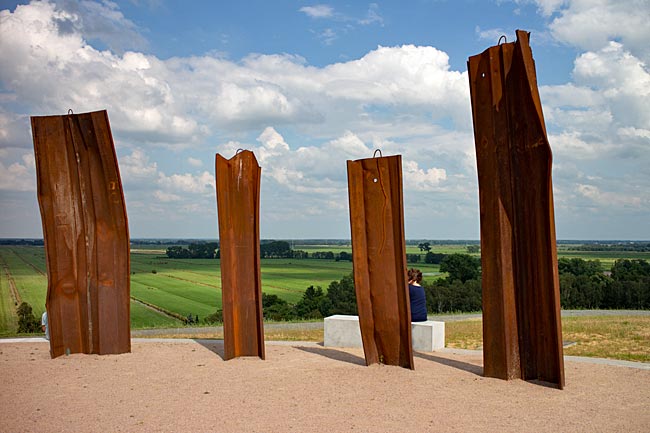
A short stretch further along, Kuhgrabenweg tunnels under Hochschulring. The obviously artificially constructed waterway serves only recreational boaters today but was an important transport route for goods exchange between the surrounding countryside (now Lower Saxony) and the Hanseatic city from the Middle Ages onward, as the ditch borders - since 1865 separated by a lock - the tide-dependent Wümme River flowing into the Weser, the border river between the states. By the way, you can take a detour to Metalhenge from Hochschulring by bike or car, an observation platform opened in 2021 at a height of 40 meters on a decommissioned and renatured part of the landfill. In addition to the view reaching over 20 kilometers, the site is also interesting for astronomy enthusiasts.
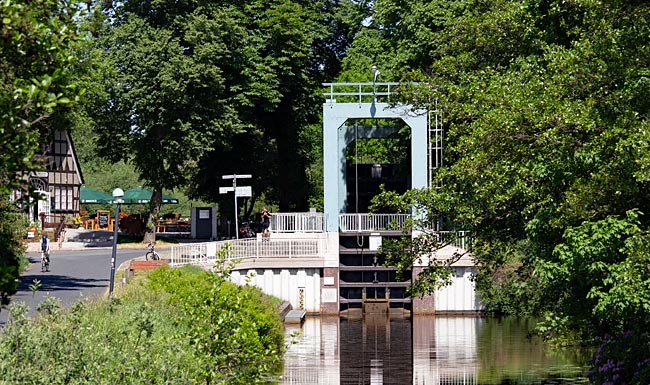
A lock separates Kuhgraben and Wümme at Kuhsiel; the restaurant right next door is a popular destination for day-trippers
previous page
 next page
Map
Further information
www.rhododendronpark-bremen.de
botanika GmbH
Deliusweg 40
28359 Bremen
Phone: +49 421 427066-65
Email: info@botanika-bremen.de
www.botanika-bremen.de
Landesverband der Gartenfreunde Bremen e. V. (Bremen Association of Garden Lovers)
Johann-Friedrich-Walte-Str. 2
28357 Bremen
Phone: +49 421 3365510
Email: bremen@gartenfreunde.de
https://gartenfreundebremen.de/floratrium/
Office hours:
Monday – Friday: 9 AM to 1 PM
Monday – Thursday: 2 PM to 4 PM
Appointments by arrangement
Educational and Experience Garden hours:
Monday – Wednesday: 8 AM to 4 PM
Thursday: 8 AM to 5:30 PM
Friday: 8 AM to 12:30 PM
Additional appointments by arrangement
Rhododendron Park photo tour during blooming season
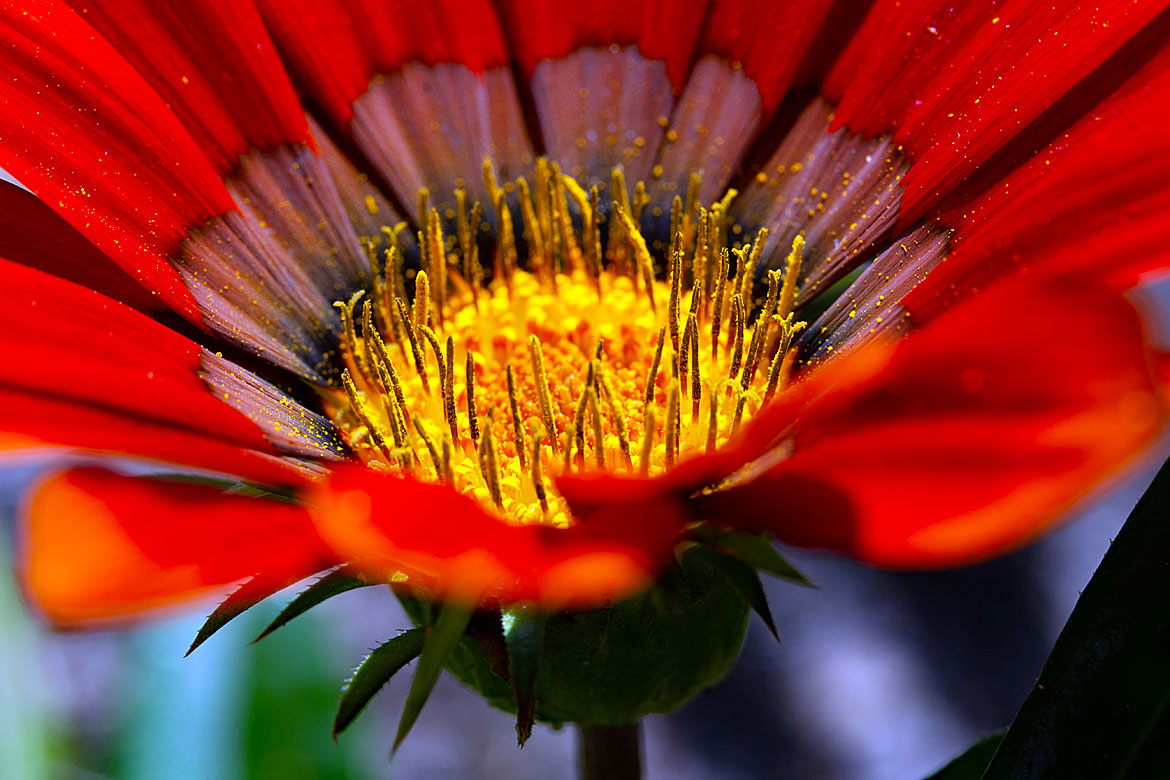
We are exploring the Rhododendron Park with our cameras during the blooming season and showcasing the most fascinating creations of nature.
read more ...
botanika
In the heart of Rhododendron Park, next to the café, is the botanika. Originally planned as a contribution to Expo 2000, various factors led to changes, and the largely glass structure was finally opened in 2003.
read more ...
Parks & Mill in Oberneuland district
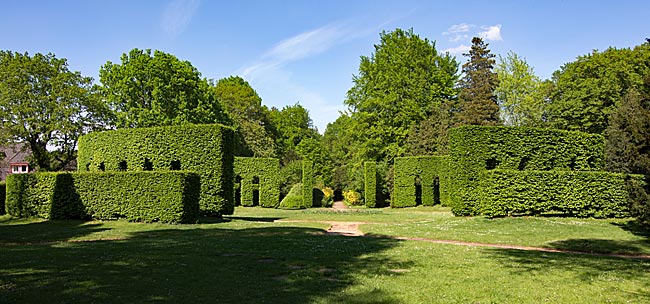
Its history and formerly rural structure are evident when you drive or walk down Oberneulander Landstraße. In summer, the greenery of old trees provides ample shade, while the pedestrian paths along the edges become uneven and so narrow due to tree roots that you almost end up walking on the road. On the side of the street near the state border, several gaps appear in the residential buildings, as three parks are located here - parks that invite visitors and are the very reason this article is about Oberneuland.
read more ...
Bremerhaven in general
Bremerhaven was only founded in 1827. To secure Bremen's status as a port city amid the threat of the Weser - Bremens lifeline - silting up, Bremen acquired 342 acres (morgen) of land from the Kingdom of Hanover for 74,000 talers under then-mayor Johann Smidt. About 60 km downstream from Bremen, this land became home to the first urgently needed seaport built by Bremen: the so-called Old Harbor, completed by 1830.
read more ...
Bremerhaven - Überseehafen (Overseas Port)
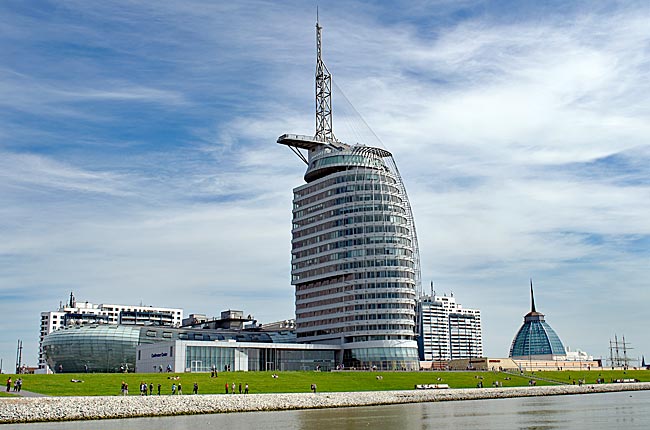
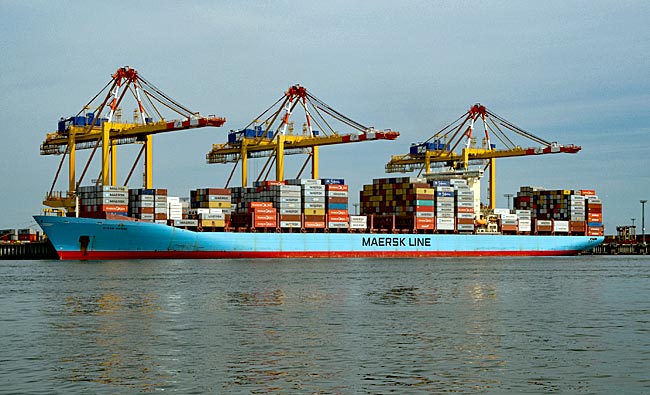
In addition to the Old Harbor (now the Museum Harbor), which was the first to be built, other ports were later added. Adjacent to the New Harbor lies Kaiserhafen I, the first in a series of additional harbor basins. Even a glance into this initial section of the expansive port area reveals a different world of maritime activity - one of large ships. And we will see even larger ones along the five-kilometer-long quay on the Weser.
read more ...
Findorff district
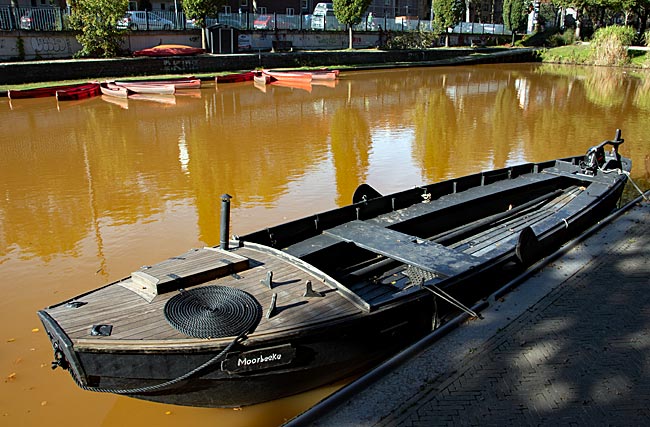
The history of the Findorff district is closely tied to the moors of Lower Saxony's surrounding countryside. In 1819, the so-called "Torfkanal" (Peat Canal) was dug to transport peat as fuel, particularly from Teufelsmoor, by waterway to Bremen. Even today, the second peat harbor, built in 1873, exists in a smaller form within the district, with traditional peat barges still moored there. However, peat transportation no longer plays any role.
read more ...
Cycling to Lilienthal
It's about 11 kilometers from Bremen's city center to Lilienthal in Lower Saxony, just beyond the city border. While tram line 4 connects both places, a bike tour is much more fun. On the Jan-Reiners-Weg, you cycle through a green landscape without car traffic, and even within Lilienthal itself, the route follows the Wörpe along quiet paths with little traffic, leading to the historic city center.
read more ...
Metalhenge
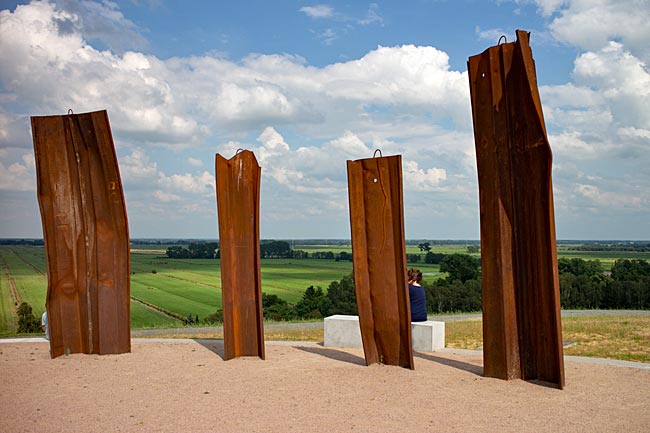
In 2021, an observation platform was opened on the first decommissioned and surface-renovated section of the landfill in Blockland. At a height of 40 meters, the barrier-free Planet Path leads visitors along. Planets? Yes, the Metalhenge structure, inspired by the famous Stonehenge, is positioned on the circular observation platform according to selected astronomical aspects. Information about this can be accessed via QR code on your smartphone. Even for those not particularly interested, the view stretches approximately 23 km across Bremen on one side and Blockland on the other.
read more ...
Water-based activities in Bremen
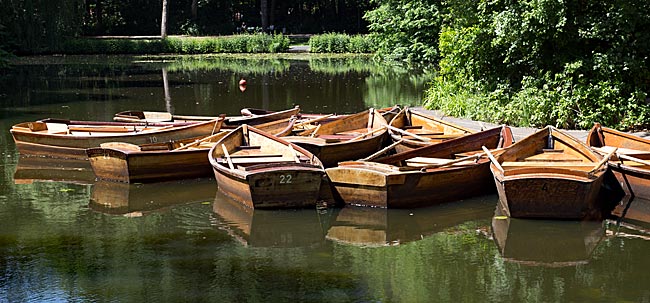
Given that Bremen is a city on a major river with numerous lakes, it makes sense to extend sports or other personal water-related activities from land to water. The most family-friendly activity on the wet element is certainly taking a rowboat ride along the canals of Bürgerpark.
read more ...