
 exploring Bremen & its surrounding areas
 You are here: attractions in the city center
 The Schütting and beyond (2/2)
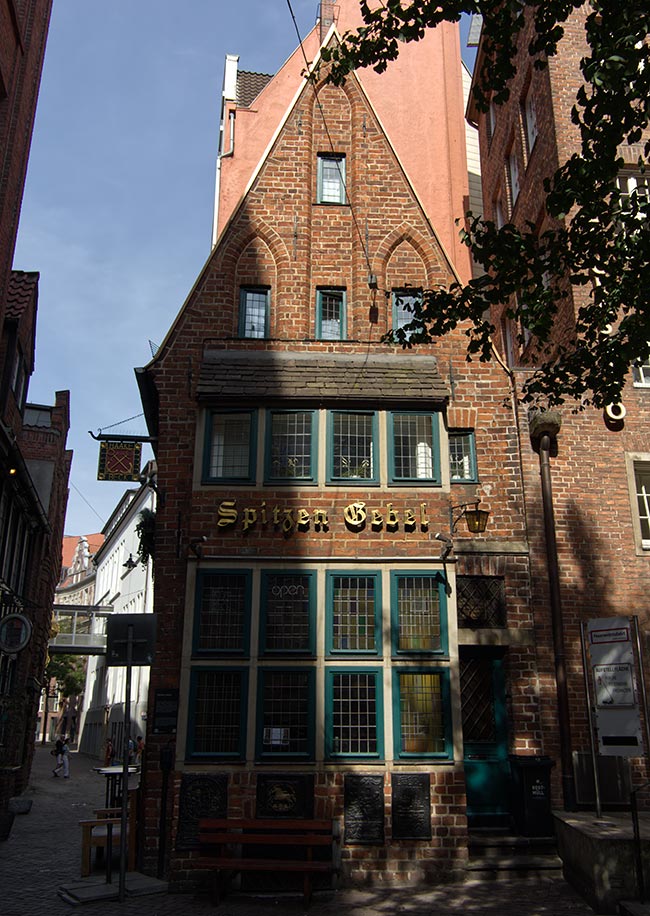
House Spitzen Gebel
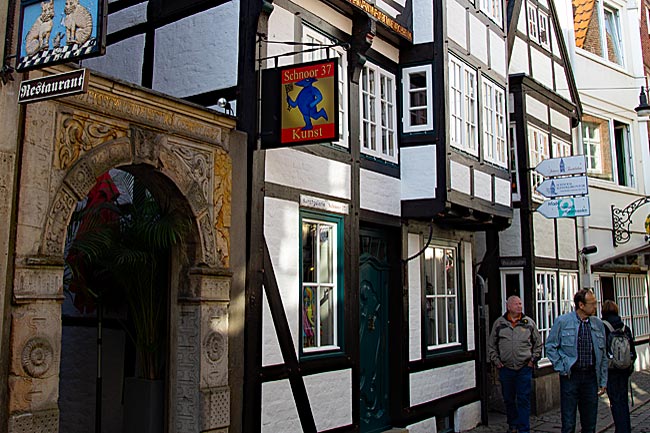
This is the location of the house "Spitzen Gebel." The building, which has been under monument protection since 1917, was likely originally constructed around 1400 and is the last medieval citizen's house in Bremen. However, it is a reconstruction, as the original structure was destroyed in 1944.
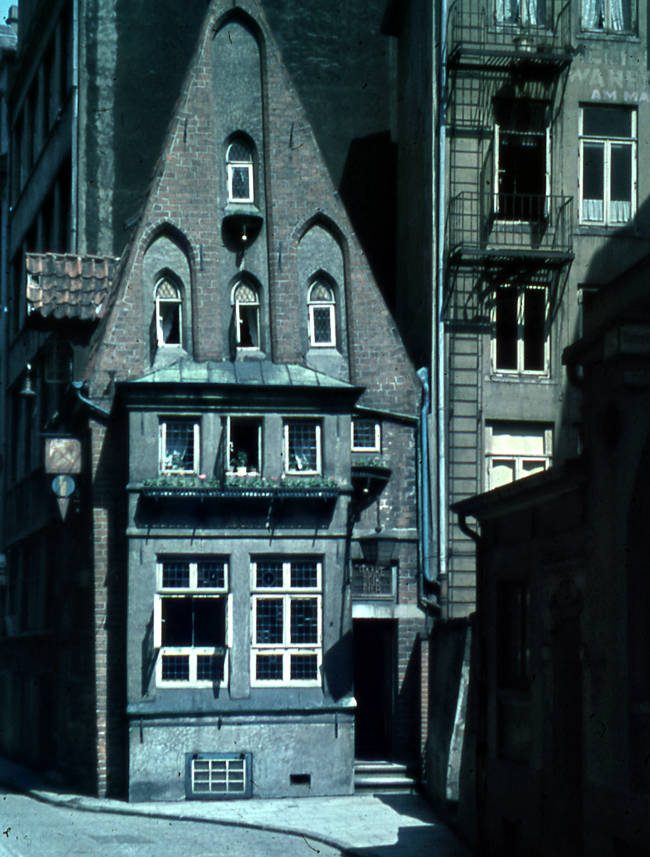
The original "Spitzen Gebel" house in 1944, shortly before its destruction. (Archive photo)
At the request of a brewery, the current building was completed by 1950 according to the plans of Bremen architect Bernhard Wessel. The namesake Gothic pointed gable is slightly lower than the original, the gable windows were modified, and the two-story oriel window (Auslucht or Utlucht) now has more windows.
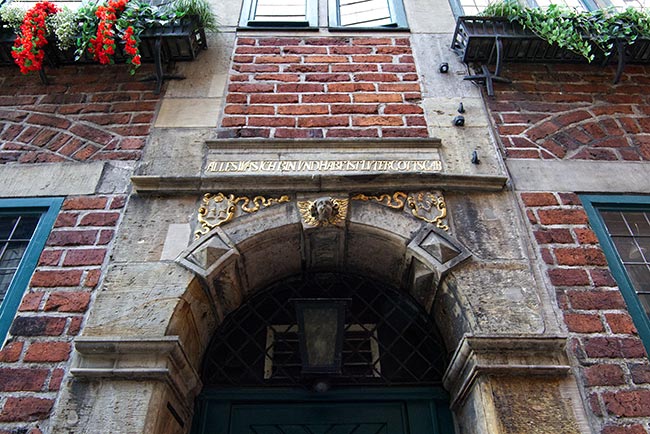
Entering the house
Inside, there is a restaurant that has established an over 100-year-old quirky tradition as a unique specialty: "The Sip from the Lantern" (Low German: Sluk ut de Lamp). In 1913, the heirs of beer merchant Adolf Ulbrich sold his beer hall to the United Piano Carriers, who used the building as an office. They were prohibited from drinking alcohol during work, but this did not deter them during waiting times. Since bottles would have been noticed, they repurposed a common lantern of the time into a container for a herbal schnaps made according to a Swedish doctor’s recipe. The idea apparently worked - high-proof!
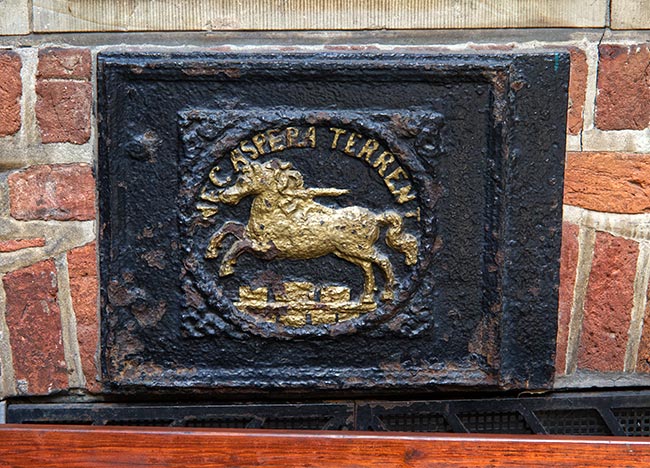
A detail on the facade: "Nec aspera terrent" translates to "Even unpleasant things do not deter." Perhaps this refers to the herbal schnaps ...?
The recipe for making the drink was long kept as a family secret but was eventually made public. However, whether the schnaps was responsible for the unusually high age of many members of the doctor’s family is another question. Well, faith can move mountains. In any case, in the restaurant, you can taste the "miracle cure" from the lantern, and when combined with the "Rusty Nail," guests leave with a certificate of their "Bremen Tavern Baptism" - if they wish. Of course, no one needs to know if you, as a tourist, had already enjoyed a beer or water elsewhere beforehand, meaning you were already quasi-baptized.
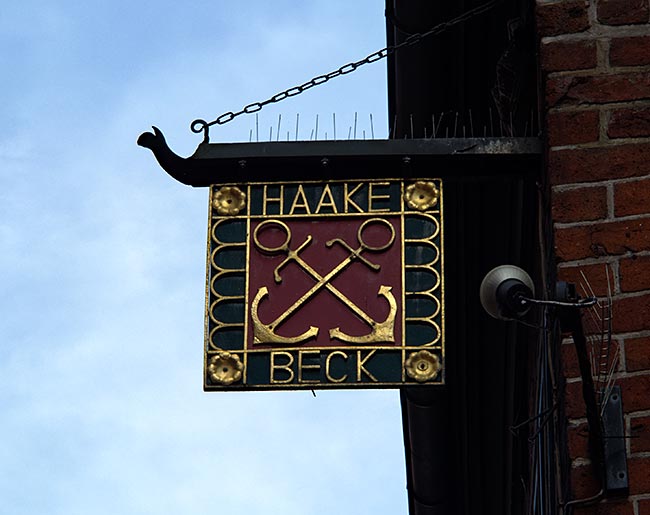
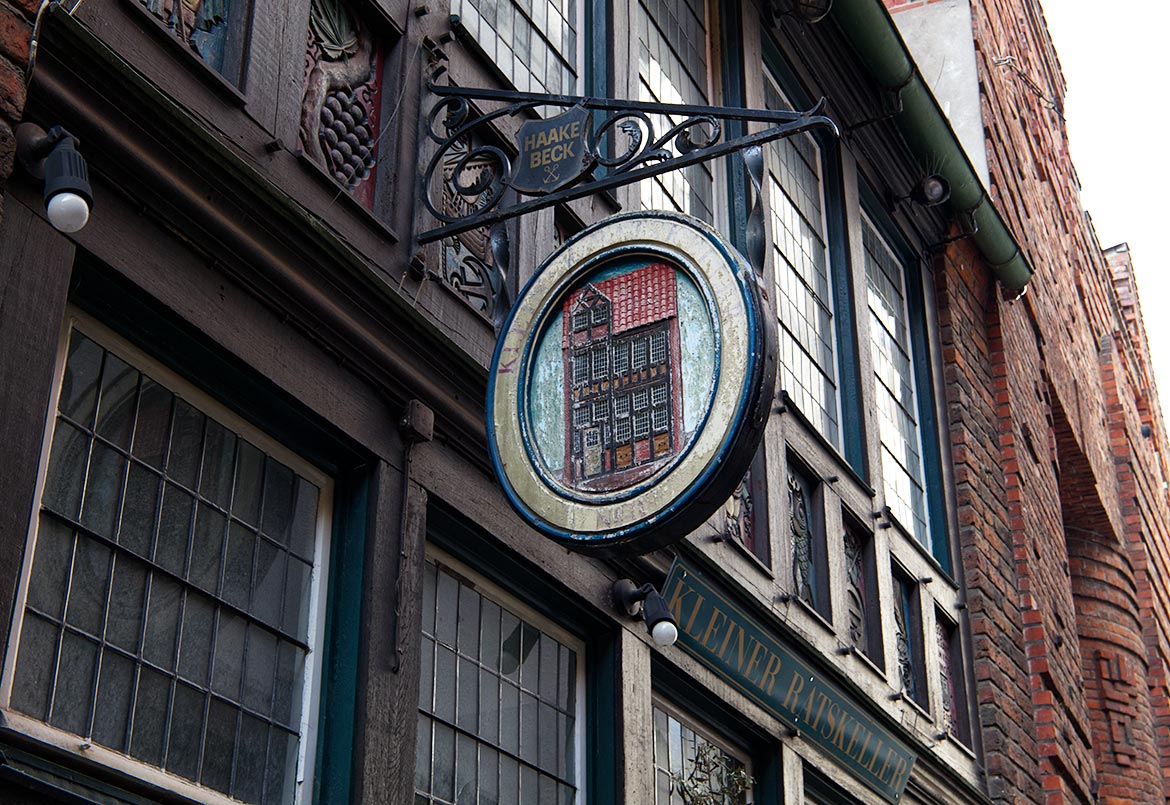
Not an unpleasant thing, but rather around 200 years of brewing at the Weser in Bremen. The C. H. Haake Brewery was founded in 1826. Today, the Haake-Beck brand is a product of Brauerei Beck GmbH & Co. KG.
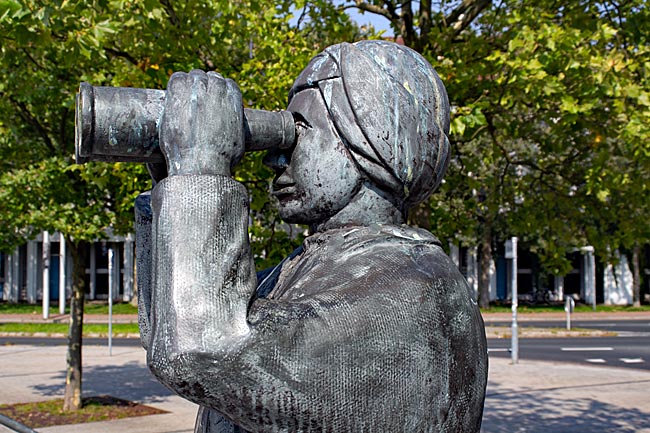
Speaking of water, since 2007, the bronze sculpture "Fietje Balge" has stood in front of the Spitzen Gebel house. Commissioned by a local bank, it was created by sculptor Bernd Altenstein, whose works can also be found elsewhere in Bremen, such as the fountain sculpture "Unser Planet" (Our Plante) on Domshof or "Vier Jahreszeiten" (Four Seasons) at Hollersee in Bürgerpark. The fishing boy Fietje (short for Friedrich) commemorates the Balge, an arm of the Weser that once flowed here and served as the access route for merchant ships to the city’s first harbor at the market square during the early and high Middle Ages. In the 13th century, due to larger ships requiring deeper water, the important long-distance trade shifted to the new harbor at Schlachte. Additionally, until Bremen acquired land and built Bremerhaven as its port at the Weser estuary for international overseas trade, there were constant issues with the silting of the Weser and its tributaries.
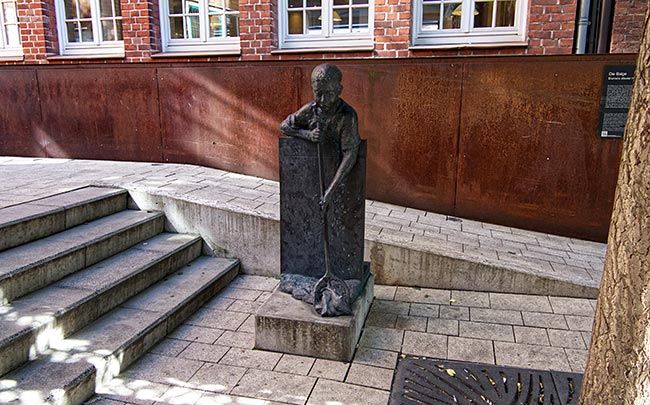
Fietje Balge in front of a stylized harbor bulkhead
The Balge has long disappeared - first canalized, then hidden underground, and finally filled in and built over. The sculpture also recalls the once bustling life by the river, where people earned their livelihoods through hard work, such as coopers (Böttcher), other craftsmen, and fishermen. Fish was long considered poor man’s food - there was plenty available, and fishermen only needed to take their small boats and nets onto the great river. However, with the transition from abundance to fluctuating conditions in the Weser, resulting in fewer or no fish, even the fishermen had to hang up their jobs.
previous page
 next page
Map
Town Hall
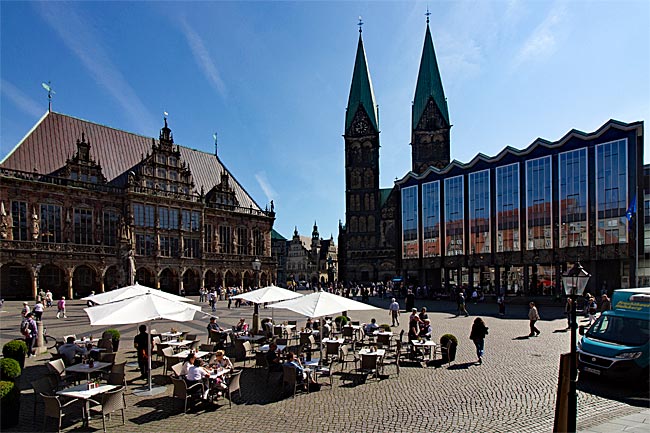
The original Old Town Hall on market square was built between 1405 and 1412. Little of this originally rather plain late Gothic brick structure remains today. The Renaissance façade, which gives the UNESCO-protected building its distinctive appearance, was constructed between 1608 and 1614 by Lüder von Bentheim. Above the arcades in particular, it is lavishly adorned with various depictions from ancient mythology, blending uniquely with Christian symbolism, Bremen city symbols, and other representations.
read more ...
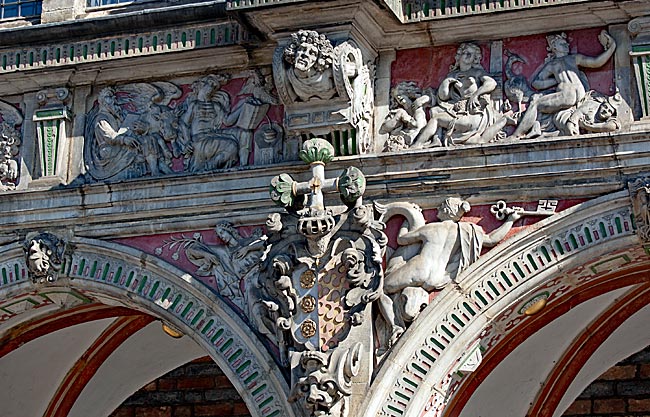
Böttcherstraße
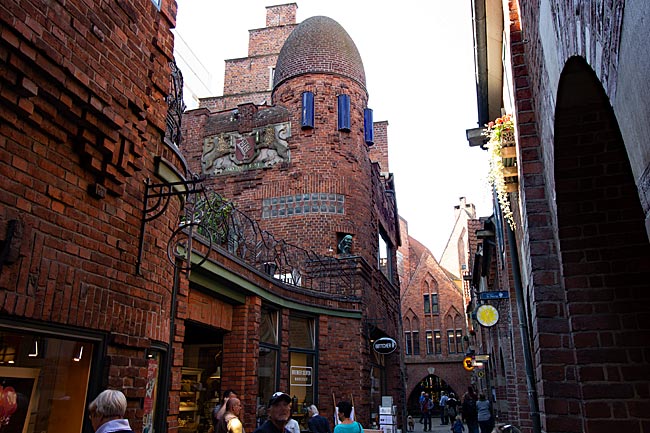
Since at least 1931, the name Böttcherstraße is no longer primarily associated with the scent of wood and the sound of coopers' hammers, but rather with a very special, almost enclosed ensemble of buildings. Over a length of just over one hundred meters, museums, open artist workshops, specialty retailers offering upscale goods, dining establishments, and a hotel create a unique atmosphere between brick and sandstone structures that is unparalleled in Bremen.
read more ...
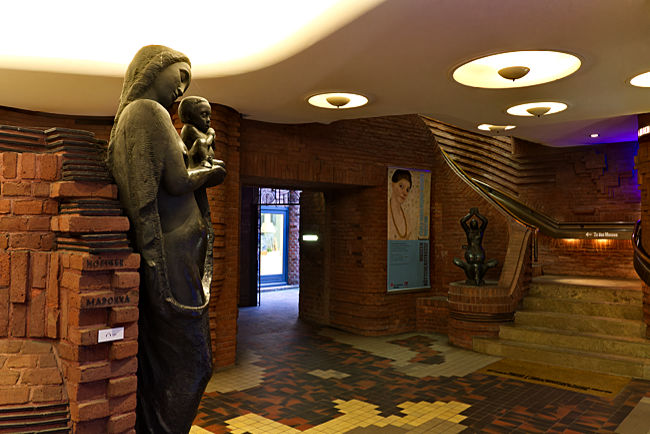
Domshof
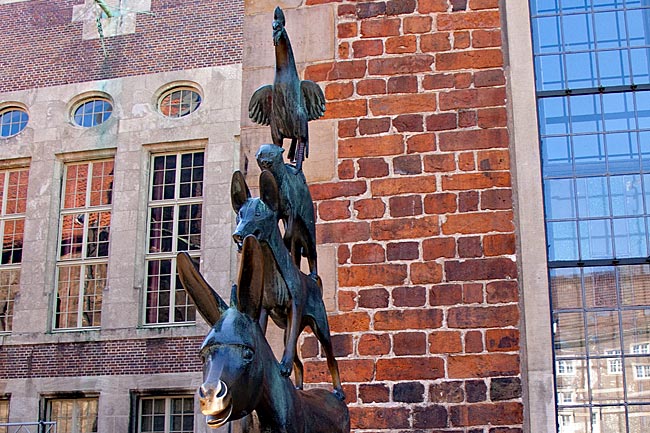
In the shadow of the cathedral (Dom) lies the Domshof. Until 1803, the cathedral precinct - and thus the large square - belonged to the respective bishops, then Sweden, and later the Electorate of Hanover, which ruled Bremen at times. The buildings, including merchant houses, along with the planting of numerous trees, made the Domshof one of the most beautiful squares in the Hanseatic city during the 18th and 19th centuries.
read more ...
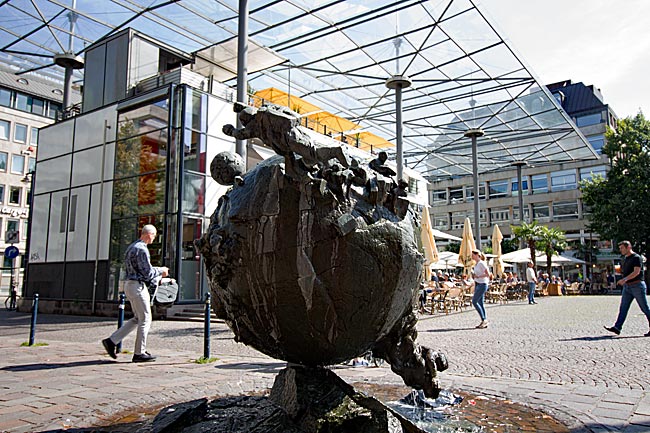
Bürgerpark (Citizens' Park)
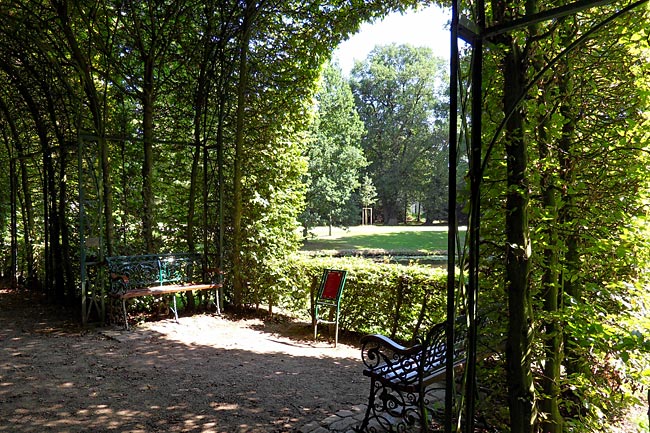
A green oasis near the city center and a popular recreational area is the Bürgerpark. This extensive park, which adjoins today's Bürgerweide behind the train station, was initiated by the citizens themselves. In the early 19th century, the old defensive structures of the city had already been dismantled, transforming the ramparts into a landscaped park. However, as the city rapidly expanded throughout the century, demands for more green spaces grew louder and louder.
read more ...
Schlachte
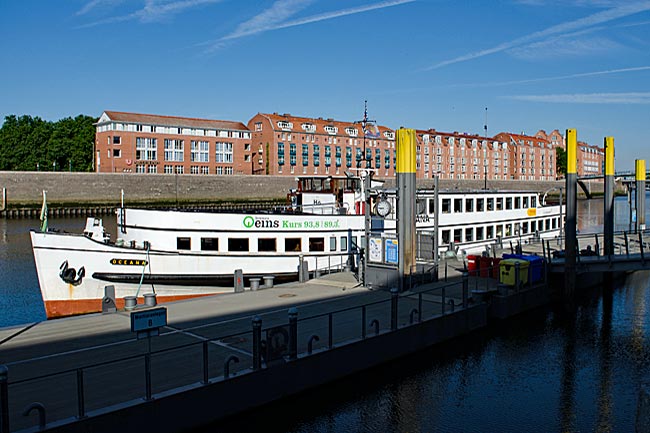
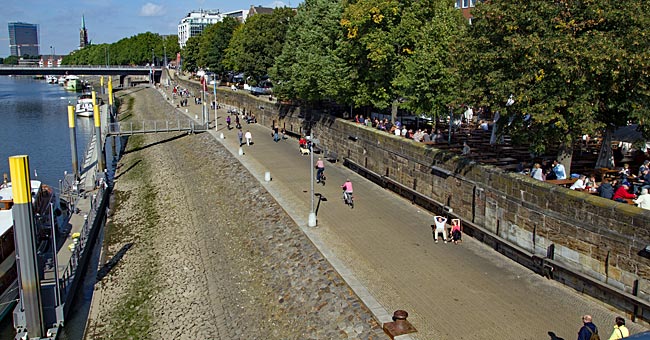
Between the Wilhelm-Kaisen Bridge and the Stephani Bridge, from the start of construction in 1993 to its grand opening on May 27, 2000, a promenade with a boulevard, ship docks, and numerous dining options was created for over €20 million (mostly EU-funded). This area, now lined with 60 trees and granite, offers something for every palate, where medieval harbor workers once toiled.
read more ...
Bremerhaven - Überseehafen (Overseas Port)
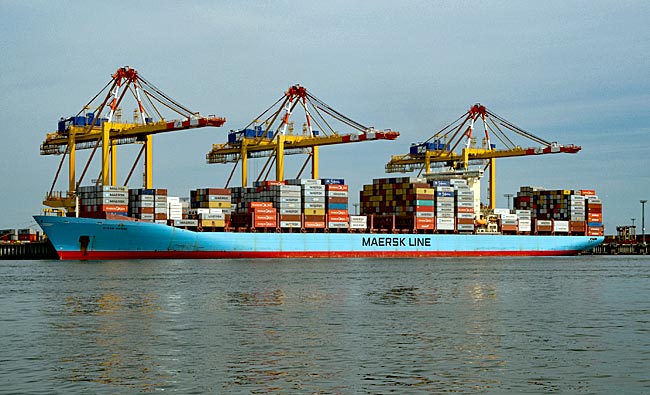
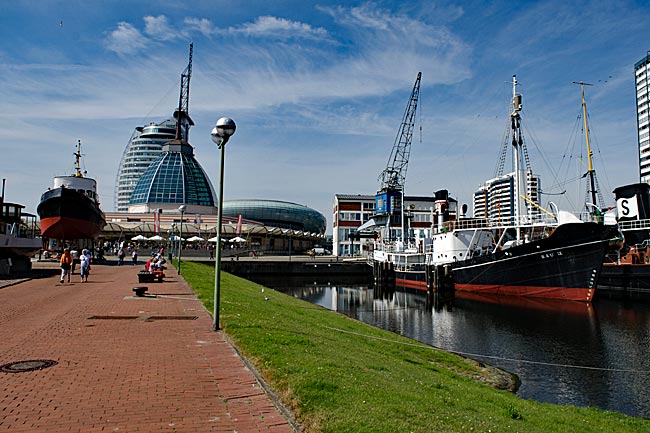
In addition to the Old Harbor (now the Museum Harbor), which was the first to be built, other ports were later added. Adjacent to the New Harbor lies Kaiserhafen I, the first in a series of additional harbor basins. Even a glance into this initial section of the expansive port area reveals a different world of maritime activity - one of large ships. And we will see even larger ones along the five-kilometer-long quay on the Weser.
read more ...