
 exploring Bremen & its surrounding areas
 You are here: attractions in the city center
 City Weighhouse
Located near the market square and close to the Schütting, the house of the merchant guild, stands the City Weighhouse in Langenstraße. During the Middle Ages, Langenstraße was one of Bremen’s main thoroughfares and is considered the city’s oldest merchants' street. The existence of a weighhouse on this street dates back to 1440. However, even before that - documented since 1330 - Bremen, like every major trading hub in the Middle Ages, had a city weighhouse.
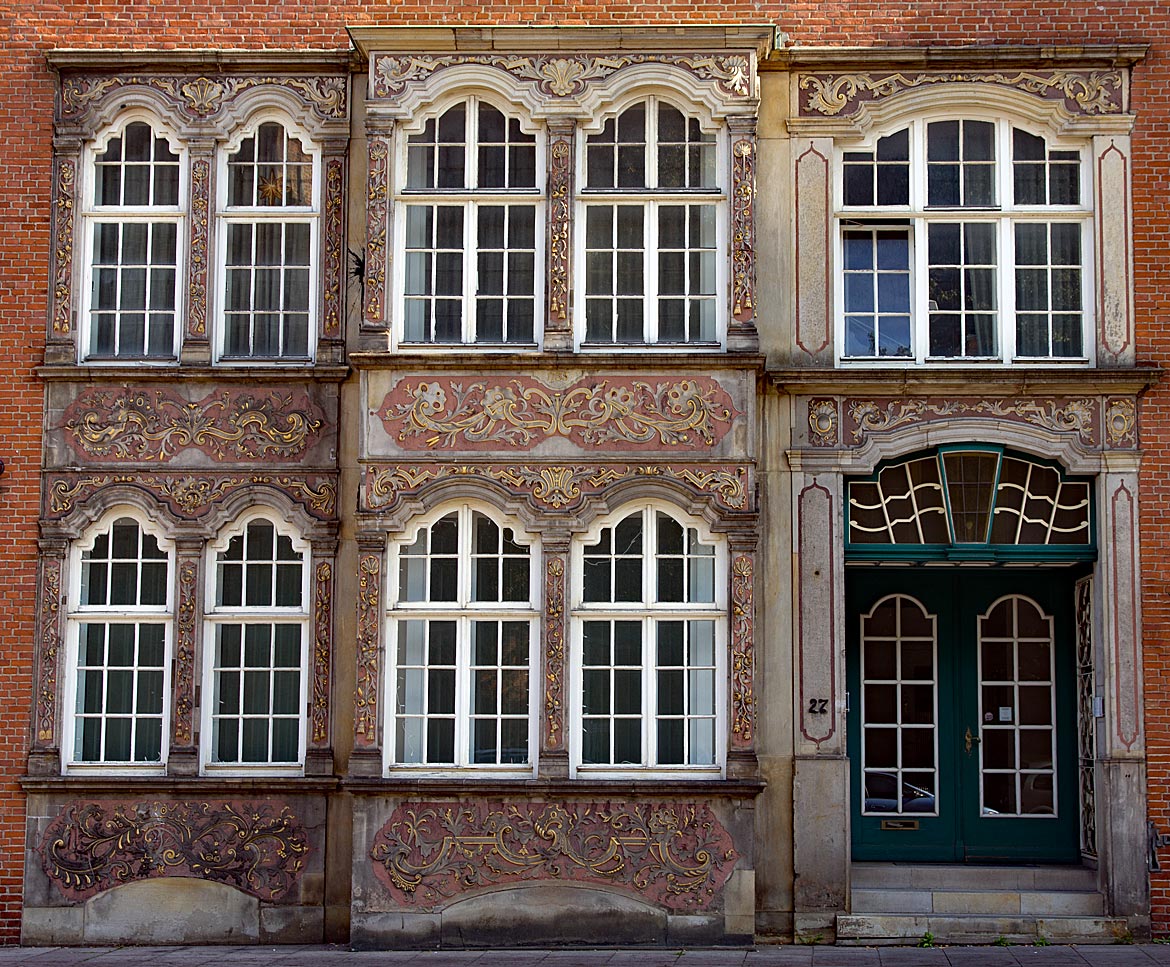
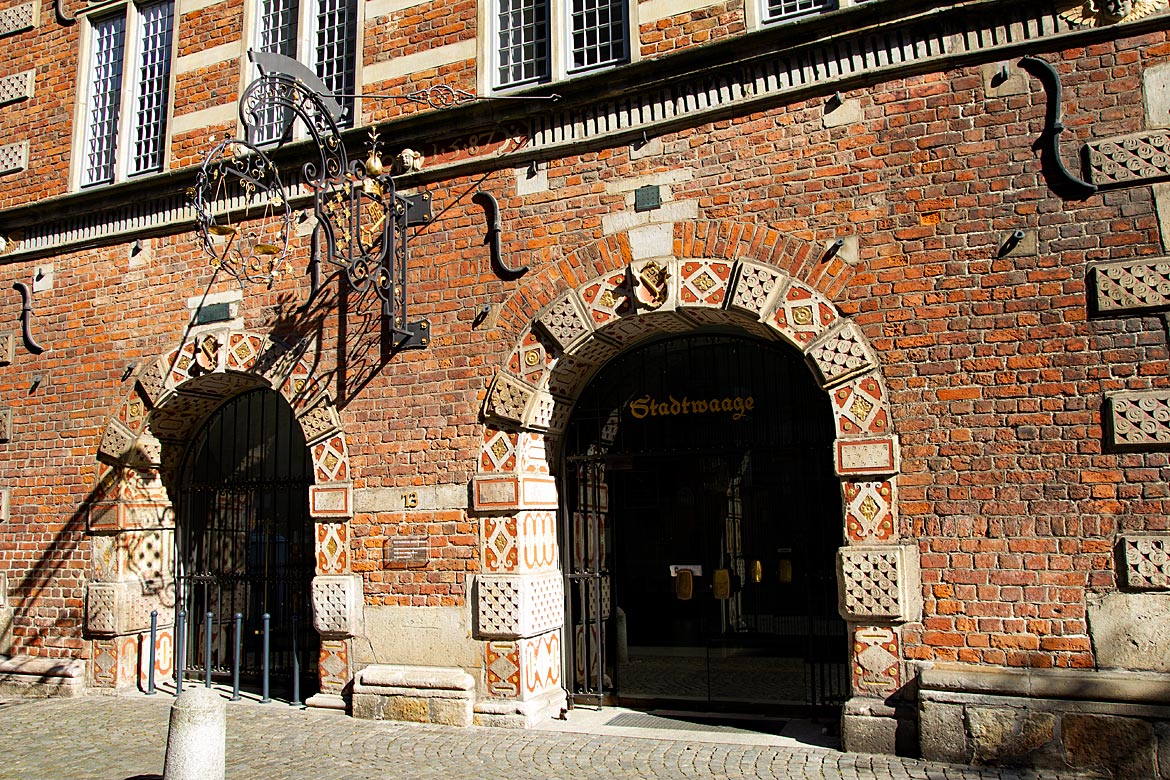
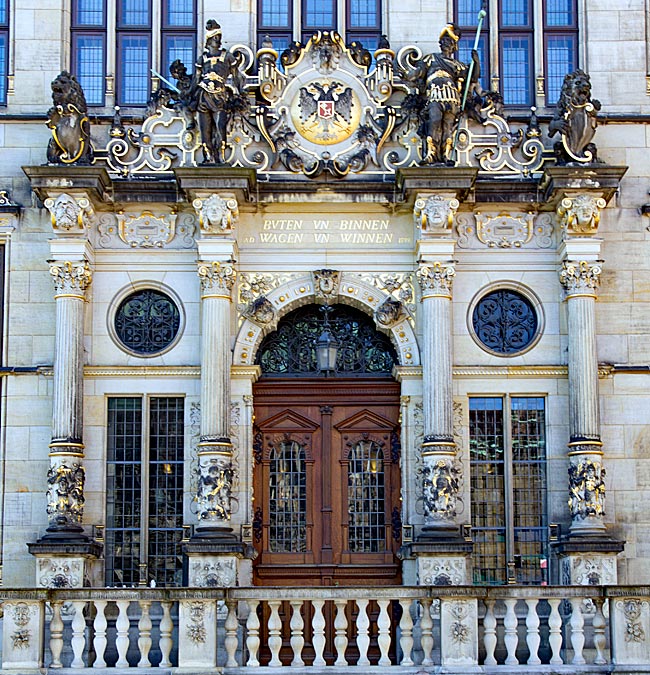
Ornate facade of the old City Weighhouse
For centuries, the City Weighhouse was the only reliable weighing option. Goods intended for sale at the market or imported by land and water had to be weighed here to protect merchants and customers from fraud or to determine and control taxes on goods.
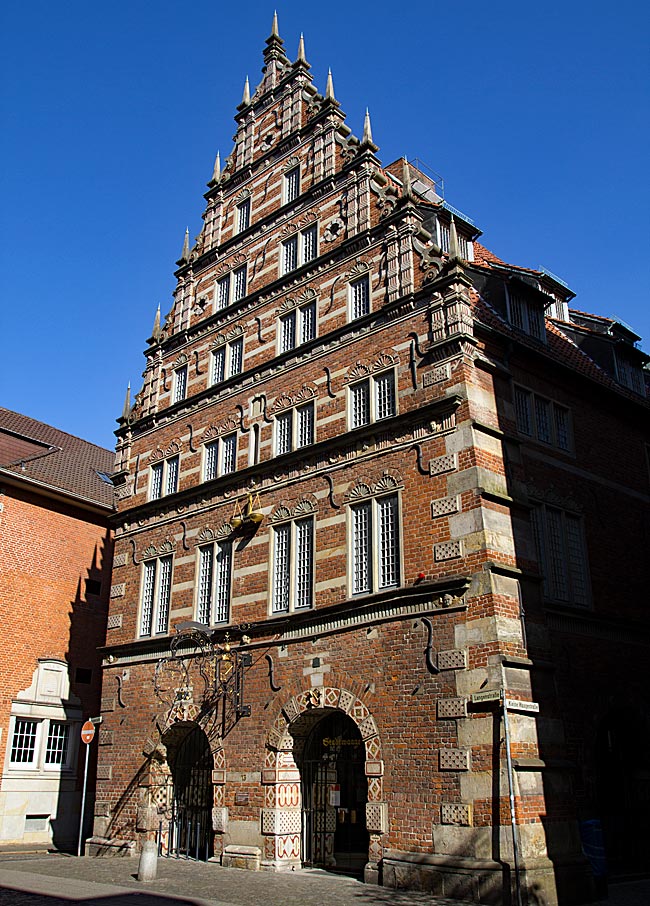
By the end of the 16th century, long-distance trade had grown to such an extent that a new weighhouse with greater capacity was needed. Thus, in 1587/88, a new City Weighhouse replaced the old one. The sandstone-adorned brick building featured a magnificent Renaissance facade with a voluted gable, designed by architect Lüder von Bentheim, who later created the still-admired facade of the formerly plain Gothic Town Hall around 20 years later.
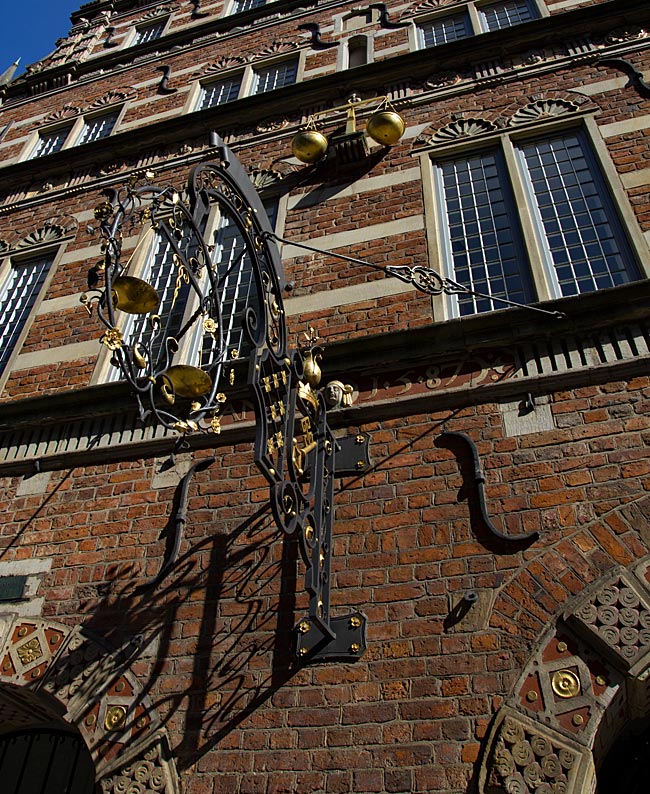
Detail view of the facade
As merchants increasingly owned their own scales in the 18th century, the importance of the City Weighhouse steadily declined until operations were eventually discontinued. By the second half of the 19th century, various residents moved into the building.
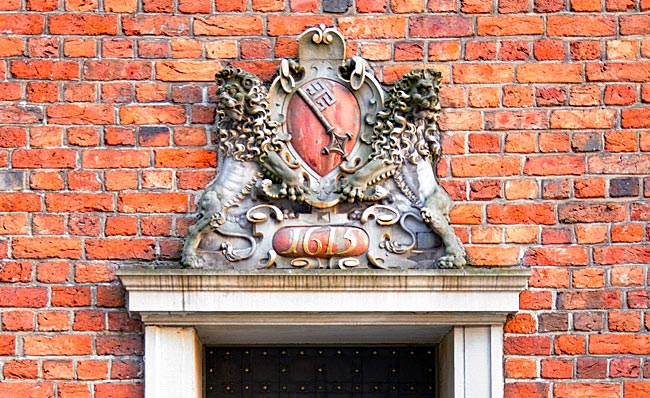
Above the side entrance
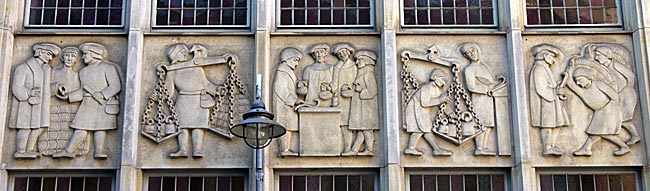
The free-standing structure appears much plainer from the sides and rear compared to its Langenstraße facade. While the front displays the construction year "1587" in golden letters above the two entrance portals, the side entrance on the right side of the house bears the date "1615" beneath Bremen’s coat of arms - held by two lions - and featuring the city key on a red background. This entrance was likely added later. A sandstone extension with a total of 25 windows (mostly glass) in five rows has been placed against the brick rear wall, which features suggested window arches and windows in the gable. The window area is interrupted by a five-part stone-carved depiction centered around weighing.
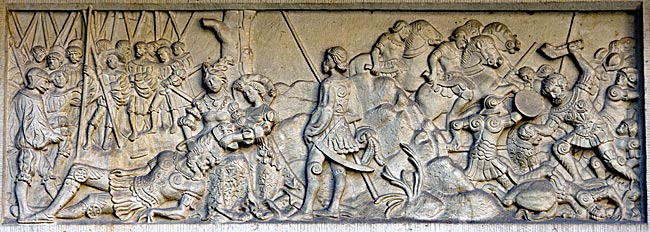
A smaller relief set into the masonry nearby depicts a story from the biblical Book of Judges, subtitled "Samson and Delilah, Samson Against the Philistines." It shows the defeat of the hero Samson by the Philistines after betrayal by Delilah, whom he loved. Unfortunately, there is no explanation for how this story relates to the building or the city of Bremen.
After severe damage from incendiary bombs in 1944, it was the Bremen Sparkasse that, with the help of the then-building conservator, restored the gable lovingly and faithfully in 1958. Walking around the building, you’ll find a small fountain at the rear left corner for watering animals.
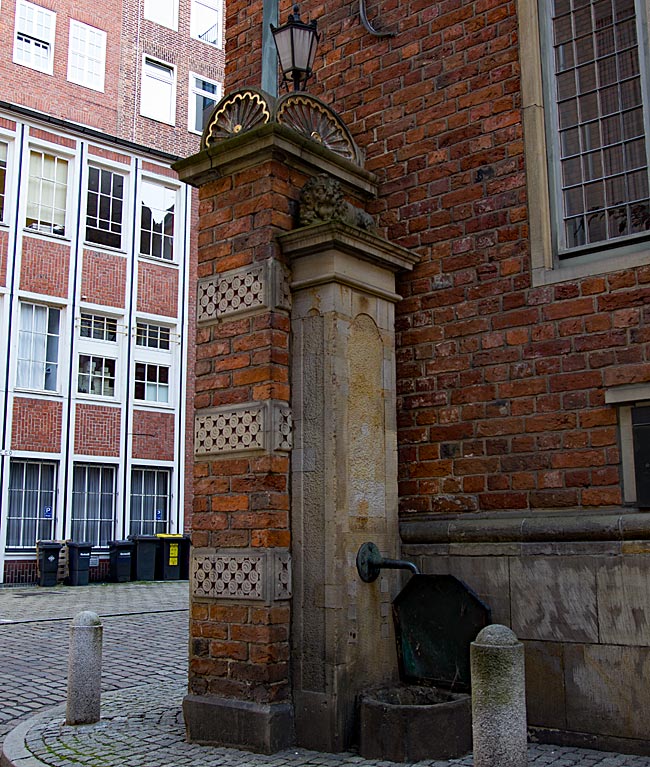
Animal watering trough at one of the rear house corners
previous page
 next page
Map
Market Square
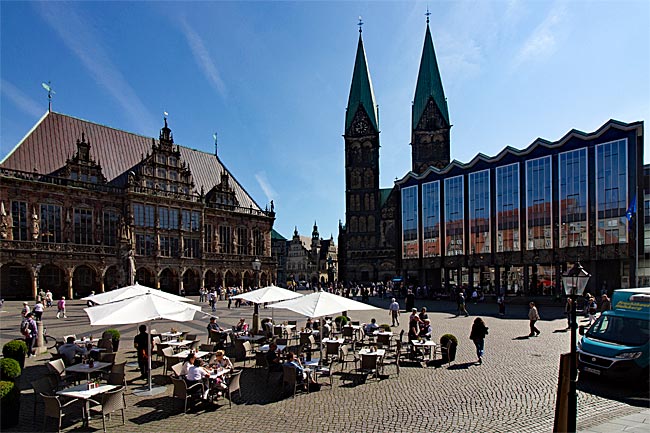
As it was in the past and as it is today, the market square is the political center of Bremen and also a major attraction for thousands of tourists, undoubtedly due to its unique architectural atmosphere. Almost unobtrusive and plain in appearance, the Bürgerschaft (Bremen's parliament) stands next to the magnificent Old Town Hall.
read more ...
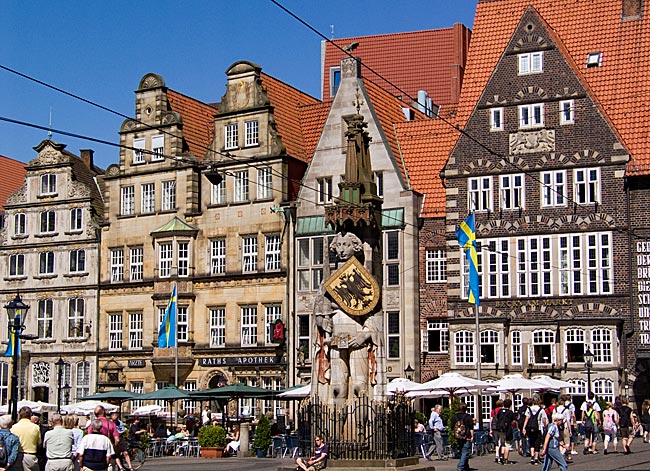
The Schütting
The Schütting, the house of the merchant guild, formerly a guild and banquet hall. Built between 1537 and 1538 by an Antwerp architect in the style of Flemish Renaissance, this structure is already the second Schütting to stand on this site. The east gable, created in 1565 by a Bremen stonemason, has remained almost entirely original to this day. A redesign of the market-facing façade in 1595 introduced stylistic changes toward Weser Renaissance.
read more ...
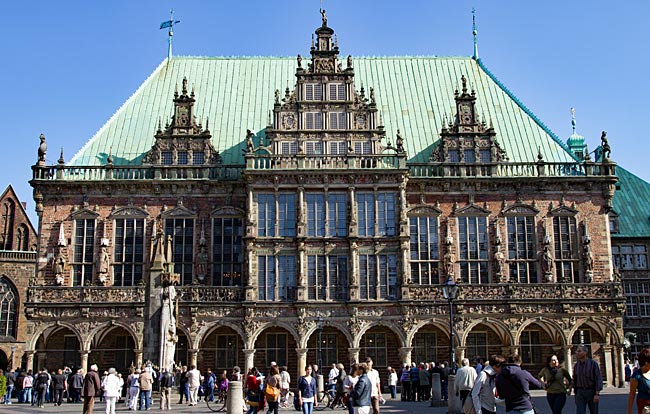
Town Hall
The original Old Town Hall on the market square was built between 1405 and 1412. Little remains of this rather plain late Gothic brick building today. The Renaissance façade that gives the UNESCO-protected structure its distinctive appearance was constructed between 1608 and 1614 by Lüder von Bentheim. Particularly above the arcades, it is lavishly decorated with various depictions from ancient mythology, which uniquely blend with Christian symbolism, Bremen city symbols, and other representations.
read more ...
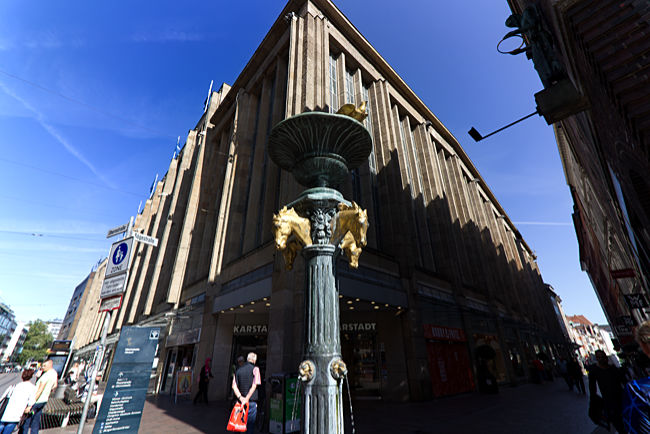
City Center: the main shopping streets
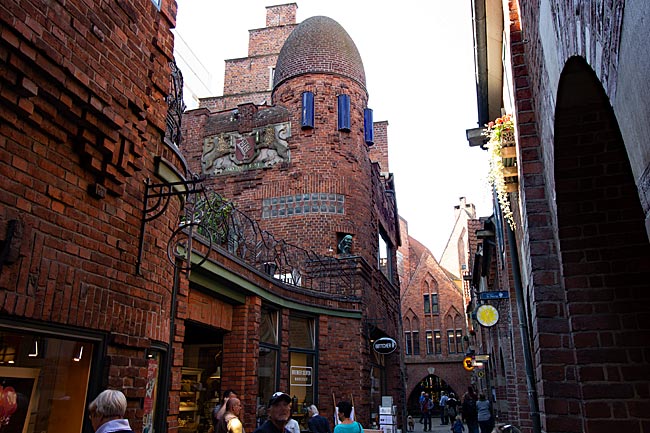
Even in the Middle Ages, Obernstraße was one of the most important main streets between Liebfrauenkirchhof and Stephani district, but not the only one. Running parallel to it is Langenstraße, which begins or ends at the market square. At the height of the old city scales, a staircase leads down from Obernstraße into Langenstraße, making it clear how Obernstraße got its name. The nearby cathedral was built on Bremer Düne, and Obernstraße was also laid out on the upper part of this dune. As early as 1374, the street is mentioned as „Overenstrate.“
Weiterlesen
Schlachte
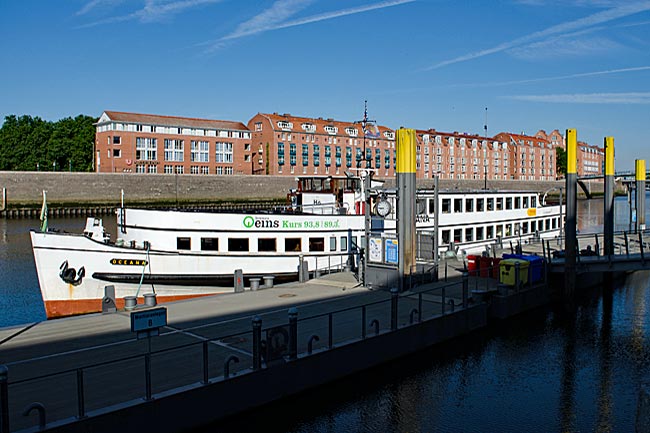
From the start of construction in 1993 until its grand opening on May 27, 2000, a promenade with a boulevard, ship docks, and numerous dining establishments offering something for every palate was created between the Wilhelm-Kaisen Bridge and the Stephani Bridge. This project cost over 20 million euros, largely funded by the EU, and featured 60 trees and ample granite paving. Today, this area - where medieval harbor workers once worked hard - has been transformed into a vibrant leisure destination.
read more ...