
 exploring Bremen & its surrounding areas
 You are here: worth seeing in Bremerhaven
 Klimahaus® Bremerhaven 8° Ost
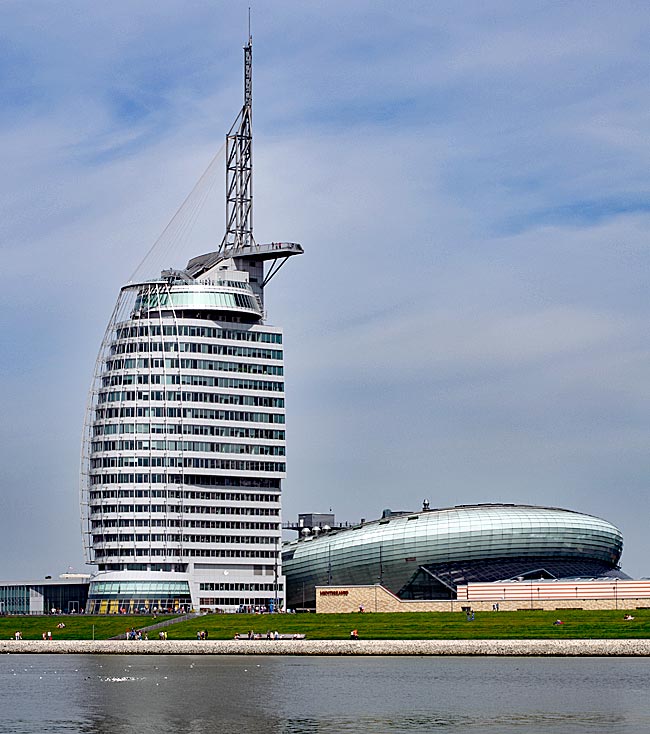
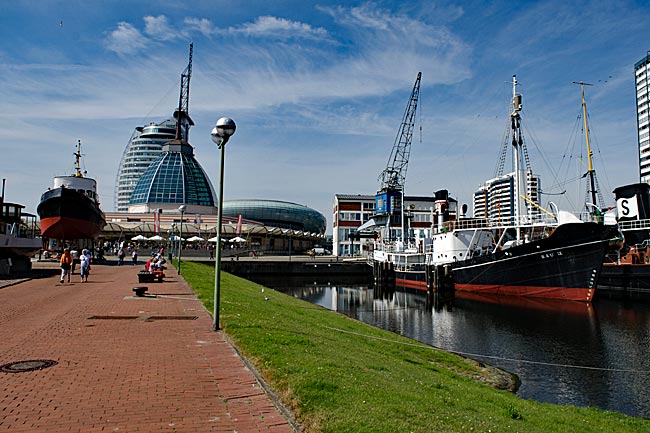
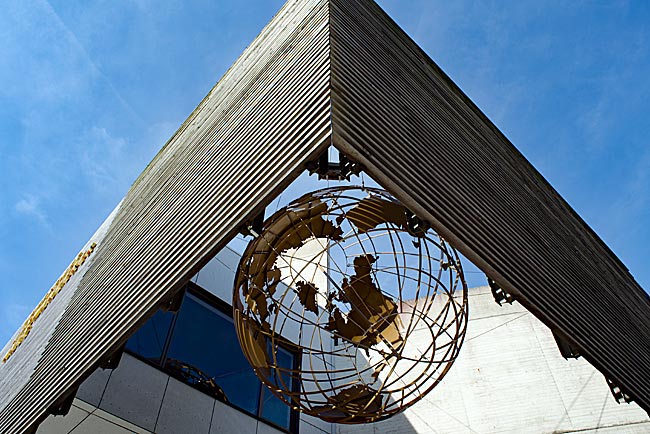
Like an oversized submarine, the Klimahaus Bremerhaven 8° Ost next to the ATLANTIK Hotel SAIL City looks from the Weser
2018. Summer in Germany. Temperatures rise even in the north of the country for extended periods, reaching record levels. Great, some think, while others look up at the sky with concern, as it simply won’t rain. In major rivers, water levels drop so much in places that you can almost wade through on foot, and shipping comes to a standstill. No water. Are these the consequences of the long-discussed climate change? Many wonder, not just in Germany but worldwide.
That seemingly simple questions can sometimes have complex answers is demonstrated by a tour of the Klimahaus® Bremerhaven 8° Ost at the Old Harbor.
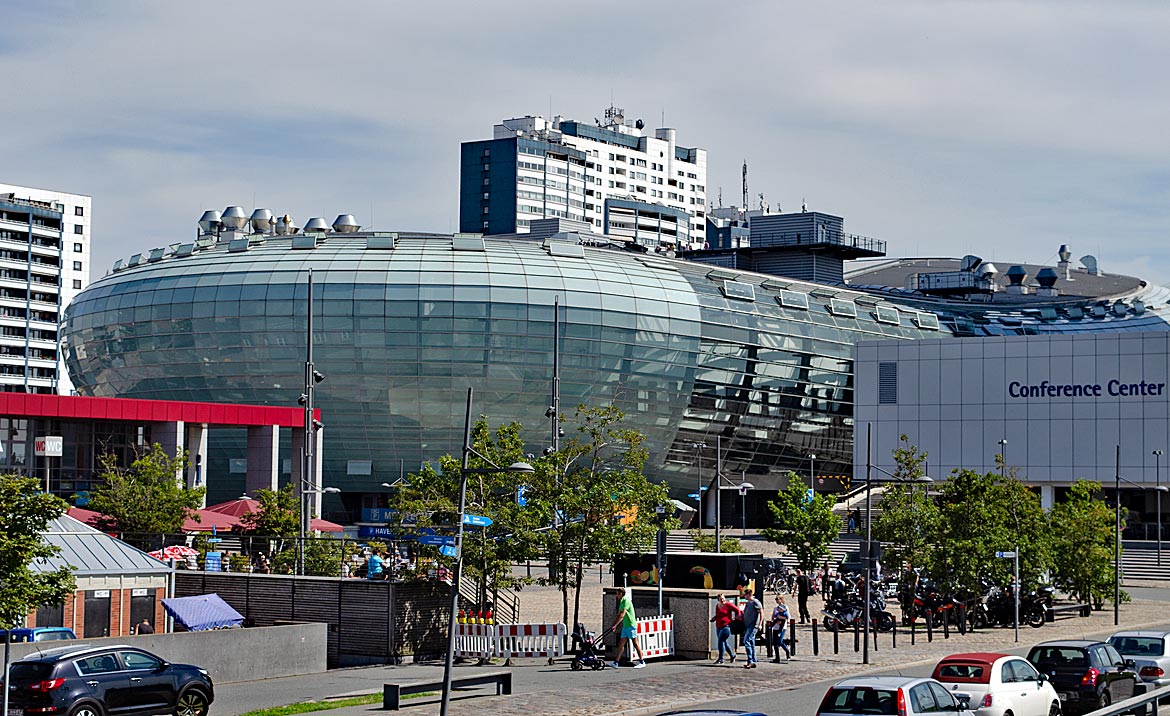
The architecturally most unusual building in the so-called Havenwelten was opened on June 26, 2009, as a scientific exhibition house. What sounds like dry material is actually entertaining, hands-on, and partly immediately physically and sensually experiential, especially on the journey around the globe, the main exhibition of the house covering 5,000 square meters. This journey follows the longitude 8° 34’ East from Bremerhaven initially heading south. As visitors, we follow in the footsteps of Axel Werner, whom we meet in a video before the trip begins, where he shares what awaits travelers. After packing his suitcase for this world tour and setting off himself, the doors open for us too, and we follow him on a railway track to Isenthal in Switzerland, the first stop.
Here, as at the other stops - Seneghe on Sardinia, Kanak in Niger, Ikenge in Cameroon, Queen Maud Land in Antarctica, Satitoa on Samoa, Gambell in Alaska, and the German Hallig Langeneß - areas of life reality for people in these places are staged. This includes replicas of regionally typical landscapes, such as the Swiss mountain world with many living plants and a walk through glacier ice, the dusty-dry expanse of the Sahara where the Tuareg live, the humid-warm green jungle of the tropics, the desolate snow-and-ice landscape of Antarctica, and the water-rich island world of Samoa. As visitors, we must move around quite a bit, as the journey spans several floors.
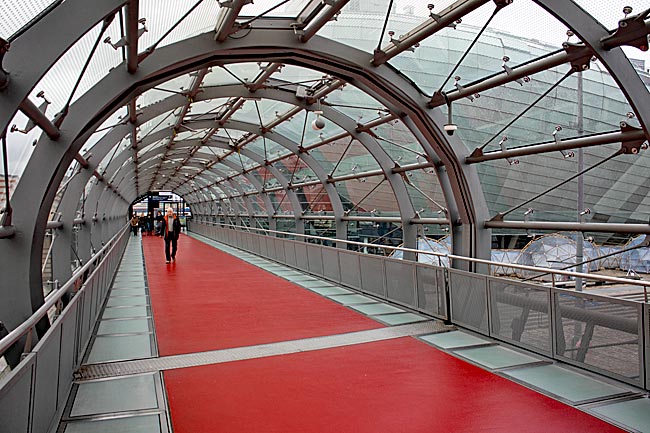
Via the covered rotating bridge Havenwelten, you can reach the Klimahaus Bremerhaven 8° Ost from the Columbus Center in the city center via the Old Harbor, among other places
Of course, there are explanatory information boards and display cases with interesting objects in the exhibition, but the locations come to life through many videos featuring people. In them, we repeatedly encounter Axel Werner, for example, in conversations with locals or playing with children. Headphones are available at each screen, providing the audio track in either German or English. This way, you learn much more and directly about the daily life, culture, rituals, and views of those people far from our homeland than static exhibits alone can convey.
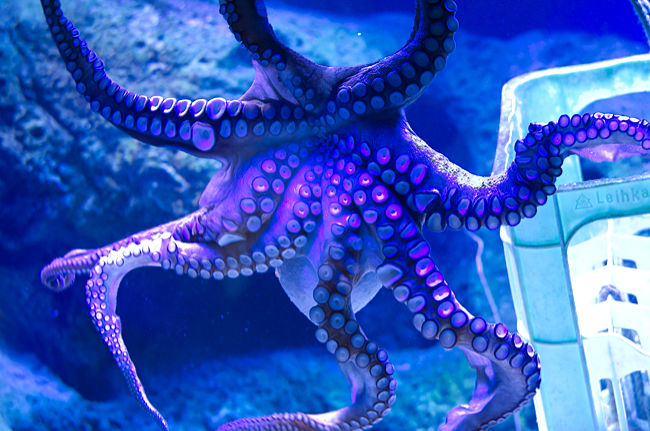
The created landscapes are further brought to life by numerous animals that have since made the Klimahaus their home. A significant portion of the fauna consists of fish living in the impressive aquariums at the Samoa station. You can also admire snakes, frogs, lemmings, and bushbabies behind glass.
So, is everything “peace, joy, and jelly sandwiches” and harmony in paradise? No. Melting land ice and liquefying glaciers due to rising temperatures are causing sea levels to rise worldwide. The pollution of the oceans by uncontrolled disposal of single-use packaging from our consumer products - now even filling shelves in the most remote corners of human settlements - is killing animals, as is our almost insatiable hunger for marine life. To name just a few examples. Our actions ensure that large parts of nature are changing sustainably and sometimes irreparably, animals are losing their habitats, conditions are falling out of balance, and weather patterns are consequentially altering. Many things are interconnected, which is why the famous sack of rice that tips over in China should not be indifferent to us Europeans either. All this naturally remains unmentioned in the Klimahaus, which itself operates energy-efficiently through structural measures, as you can read in the foyer.
After returning safely from the journey along the 8° longitude back to Bremerhaven, you’ll find facts and questions under the title “Perspectives” in the exhibition. For example, it addresses our energy needs, which we still meet today by burning fossil fuels like coal. And generally about climate history, which, among other things, has made coal possible in the first place. Projections for the future of the individual stations on our recently completed journey are shown as examples of global climate change caused by human intervention. Finally, on the spatially fourth level, the responsibility is clearly emphasized that we humans, especially those in wealthy industrial nations—bear, as we still consume the most resources.
Much of what the Klimahaus shows and conveys in terms of information may not be groundbreakingly new for people who already inform themselves through serious print media and appropriately selected television programs. However, this does not make a visit to the house any worse or unnecessary. The journey along the 8° longitude is well done both in content and execution and keeps you engaged. This is not only due to the aforementioned videos but also numerous interactive opportunities, such as balancing on a rope suspension bridge over water with fish below or, for children, getting another stamp at each station in the travel passport available in the house. In the “Offshore Center,” which focuses on the sea, wind, and energy, you can even climb into a helicopter cockpit and take off on a simulated flight, of course, only if visitor numbers are not too high. Participation is also encouraged in the “World Future Lab” under the motto “Shape Your Future.”
All this can be quite tiring. For a snack and refreshment in between or more the restaurant “Längengrad,” the café “südwärts,” and “Axels Bar” are available. If you later want to know how the weather will be or how it works at all, you can take a detour to the weather show in the weather studio on the top floor, which takes place at certain times. You can check what the weather is actually like right now from the freely accessible rooftop terrace, which also offers a wide view of parts of Bremerhaven, the harbor facilities, and the Outer Weser.
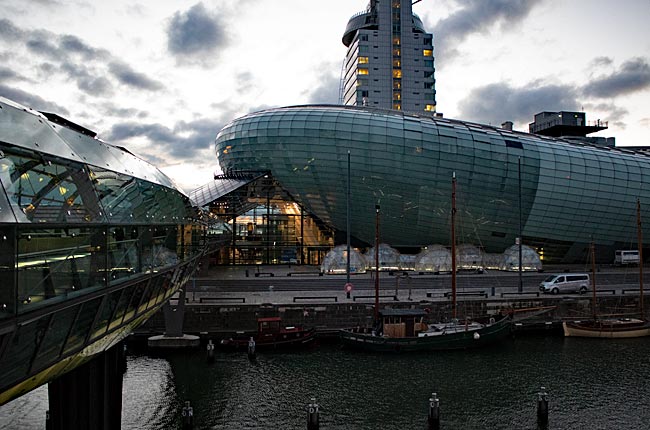
In the last light of an autumn day: The rotating bridge Havenwelten over the Old Harbor with the adjacent Klimahaus and the shared entrance to the Mein Outlet & Shopping Center Bremerhaven
Unlike institutions such as the German Emigration Center, which is located near the Klimahaus and primarily focuses on past events, specifically the major waves of emigration from Germany up to the 20th century, venues that address current events and contemporary issues have a greater responsibility to regularly update their offerings before declining visitor numbers reach an existence-threatening minimum. The Klimahaus thinks with a future-oriented approach, which is why in 2025, a 1,500-square-meter Extreme Weather Zone was opened, bringing weather extremes to life for 40 visitors at a time on a movable platform. The platform moves upward across three floors (8 meters) past digital screens. To make the projections as authentic as possible, wind and fog machines are used, quite traditionally. The project was approved in March 2019. What was originally planned to cost 10-12 million euros ultimately amounted to 14.6 million euros after extensive renovations and the laying of 50 kilometers of new cables. Of this total, the city of Bremen covered 11 million euros, with Bremerhaven funding the remainder.
One more note: We would also like to show you photos from the exhibition area. But despite written inquiries by email, we received no response from the Klimahaus. Incompetence or unwillingness either way, it’s actually an impertinence for an institution so heavily funded by taxpayer money. Too bad. Since we generally do not use official press photos, this results in the otherwise rather sparse illustration that is unusual for “Bremen sehenswert.”
previous page
 next page
Map
Further information
Klimahaus® Bremerhaven 8° Ost
Am Längengrad 8
27568 Bremerhaven
Phone: +49 (0)471 902030-0
Email: info@klimahaus-bremerhaven.de
www.klimahaus-bremerhaven.de
Open: April – August: Monday to Friday 9 AM – 7 PM, Saturday, Sunday & holidays 10 AM – 7 PM; September – March: Monday to Sunday & holidays 10 AM – 6 PM
Closed: December 24th, 25th, December 31st and January 1st
Bremerhaven - Deutsches Auswandererhaus® (German Emigration Center)
Opened in 2005, the German Emigration Center vividly and engagingly presents the history of emigration to America across five eras spanning from 1830 to 1974. In total, 7.2 million people departed from Bremerhaven to seek a new home and build a new life beyond the Atlantic. The emotionally compelling exhibition, backed by historically accurate research, earned the museum the European Museum Award in 2007.
read more ...
Bremerhaven - Zoo am Meer (Zoo by the Sea)
In addition to the 19th-century harbor facilities, the Zoo am Meer is the oldest attraction on the site between the Weser River and the pedestrian zone. It opened in 1928 under the name "Tiergrotten." The enclosures house polar bears, seals, penguins, various bird species such as gannets and keas, reptiles like turtles, raccoons, Arctic foxes, pumas, monkeys, and others - almost 50 animal species in total.
read more ...
Bremerhaven - Überseehafen (Overseas Port)
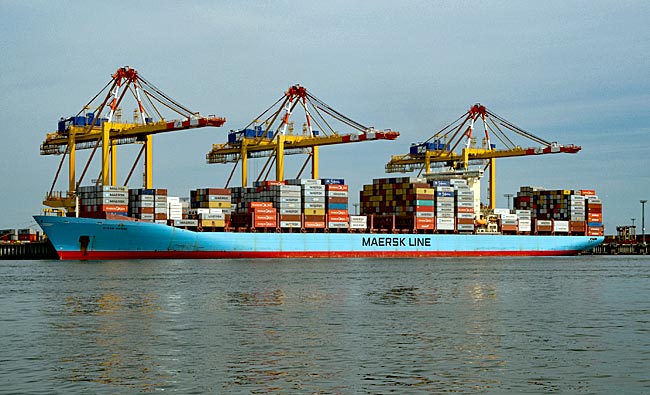
In addition to the Old Harbor (now the Museum Harbor), which was the first to be built, other ports were later added. Adjacent to the New Harbor lies Kaiserhafen I, the first in a series of additional harbor basins. Even a glance into this initial section of the expansive port area reveals a different world of maritime activity - one of large ships. And we will see even larger ones along the five-kilometer-long quay on the Weser.
read more ...
Bremerhaven - Schaufenster Fischereihafen (Fishery Harbor Showcase)
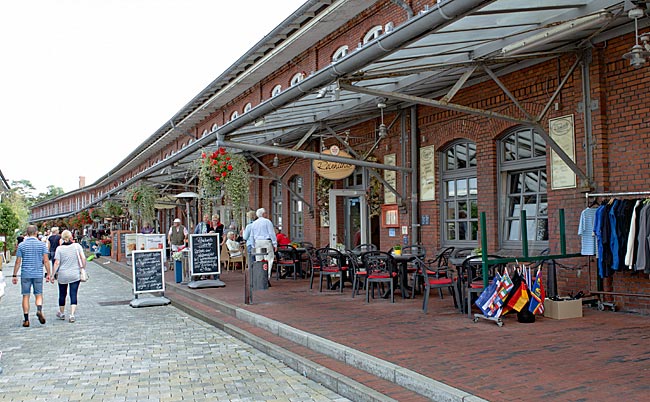
Away from the Havenwelten and older than both the Emigration Center and Klimahaus is the "Fishery Harbor Showcase." In fact, the Fishery Harbor was originally Geestemünde's deep-sea fishing harbor, built between 1891 and 1896. After a period of decline and decay - including partial demolitions - the idea emerged to transform the area into a maritime experience world. In 1990, efforts began to restore Fish Packing Hall IV, the oldest surviving hall, which had been slated for demolition just shortly before.
read more ...
SAiL Bremerhaven
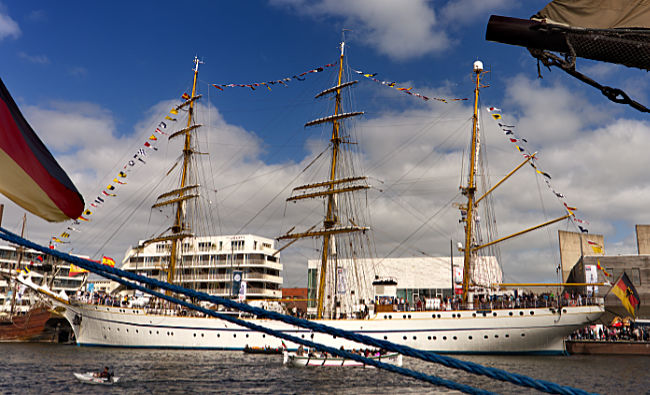
When SAiL Bremerhaven takes place, the port city becomes an even more international stage than it already is, both in terms of participants and visitors, who exceed ten million over the five days of the event. Unlike the usual focus on cargo ships at the container terminal and cruise ships at the cruise terminal, this time - true to its name - the spotlight shifts primarily to sailing ships. In total, 250 vessels were attracted or involved in the SAiL, which returned for the first time in ten years in 2025.
read more ...