
 exploring Bremen & its surrounding areas
 You are here: worth seeing in Schwachhausen district
 Focke-Museum (2/2)
Current: The main building and the exhibition magazine have been closed since November 20, 2023, due to an expansion of the exhibition space and renovation work for a new collection presentation until 2026.
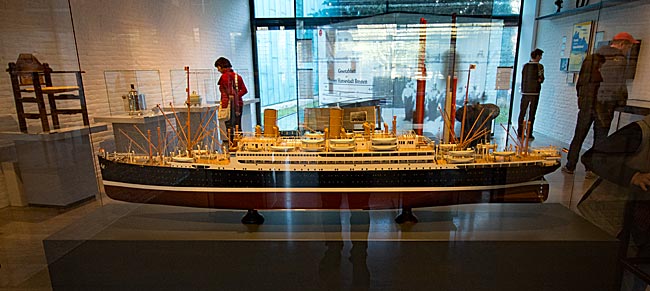
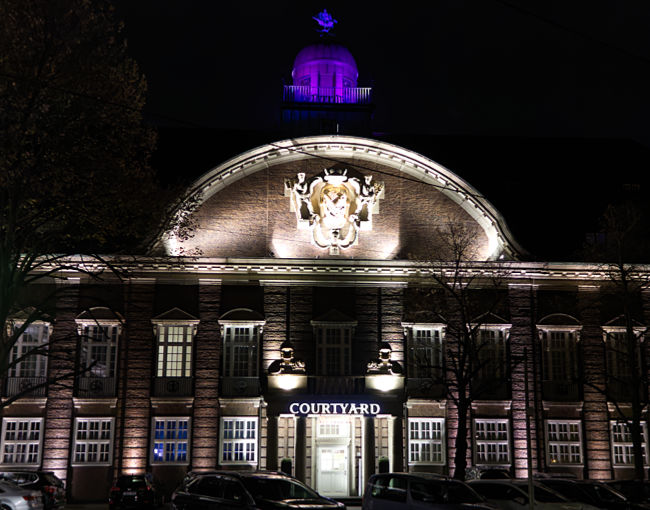
Model (on loan) of the 15,000 BRT passenger steamship "Berlin" of the Norddeutscher Lloyd, which was launched on March 24, 1925, at the "Bremer Vulkan" shipyard in Vegesack. Today, a hotel occupies the former company building of the Lloyd next to the central station; the original ship was scrapped in 1931
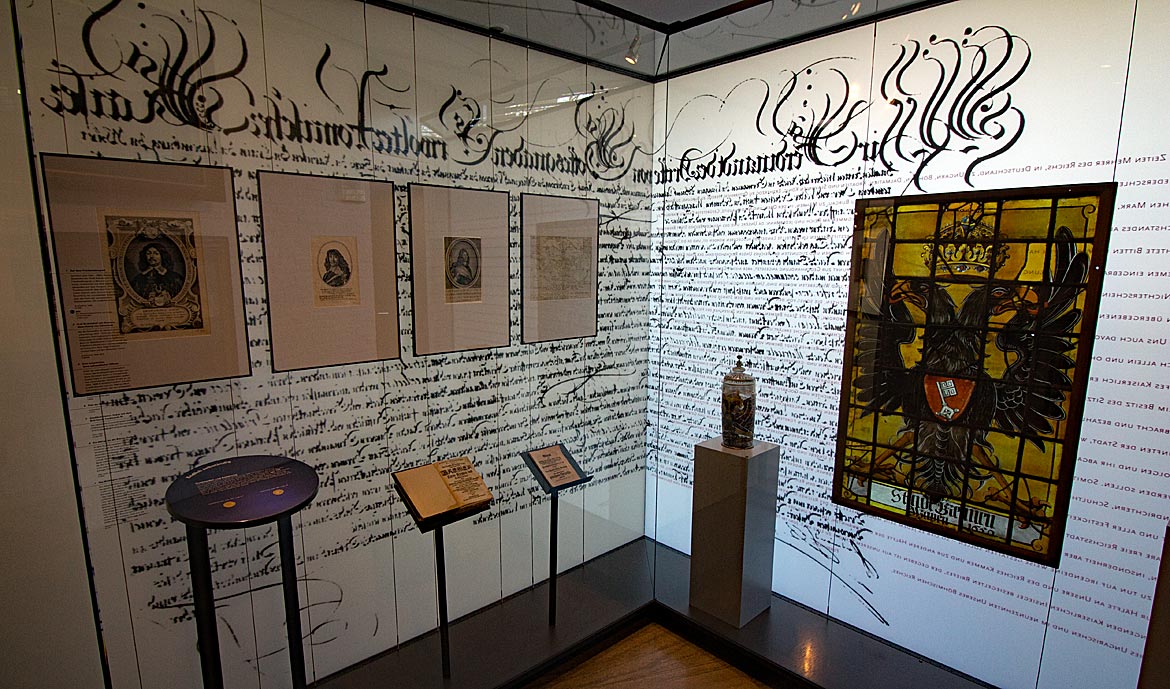
For centuries, Bremen merchants have traveled the world to export and import goods, as their motto shows: "buten un binnen, wagen un winnen" (abroad and at home, dare and win), which is inscribed above the portal of the Schütting, the guildhall of the merchant's association on the market square. Not even a temporary Swedish occupation in the 17th century could stop them. And the ships for global trade were built right there, including supertankers in the 1970s for Greek shipowners at the "AG Weser" shipyard. The museum showcases the prosperity of citizens over time, maritime history, and shipbuilding in the city with numerous objects and models. In an inner courtyard of the museum building, it hasn’t stopped at just one model—here lies the decommissioned sea rescue cruiser "Paul Denker" (built 1967) of the DGzRS on dry land.
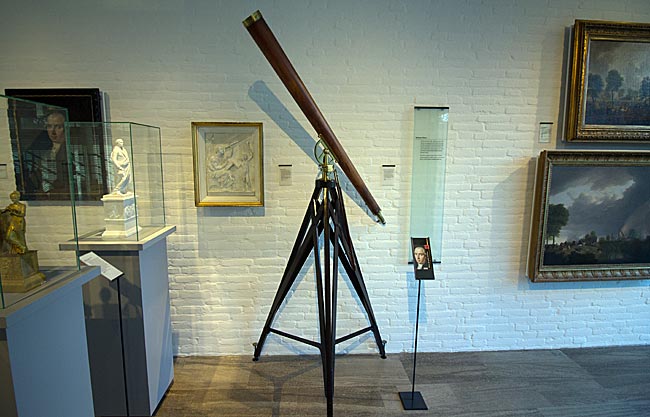
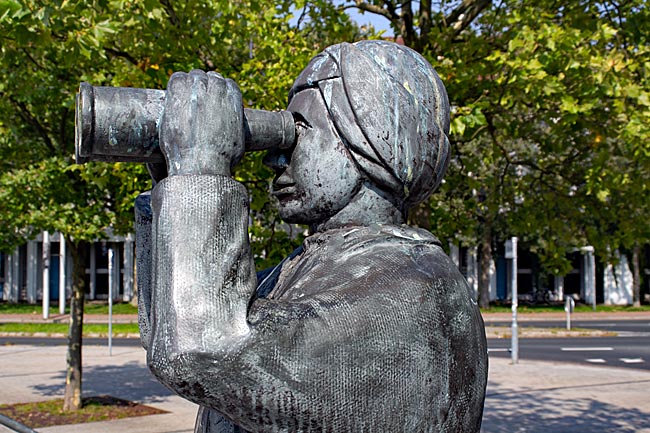
Heinrich Wilhelm Olbers' telescope from the 19th century. At the Walter-Stein Observatory in Neustadt, his legacy is still honored today, even with a larger "cannon
By land, by sea, and yes - the Fockes were mentioned - Bremers have long been interested in the sky as well. But before any of the aircraft or satellites built here took to the air, people first looked up. One of them was Heinrich Wilhelm Olbers, a physician and astronomer who worked in Bremen until 1840; his telescope can be seen at the Focke Museum today.
The upper floor houses the museum's special exhibition area. With the opening of the Schaumagazin in 2002, not only did its space expand, but in this cube with a patinated copper cladding, visitors can see on around 1,000 square meters, spread over two levels, much of what didn’t find a place in the permanent exhibition - and there is plenty. The museum also relies on multimedia support for the exhibition.
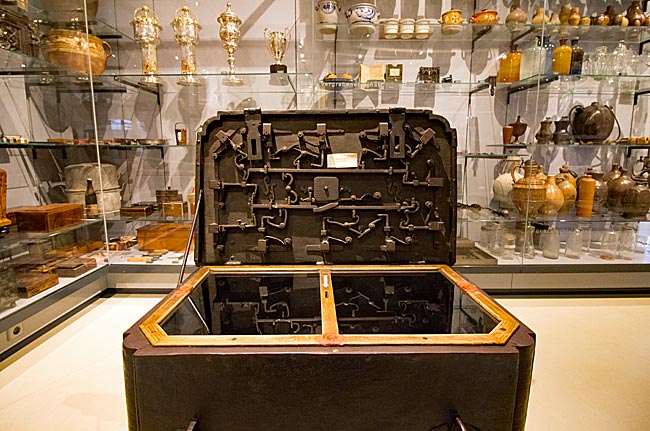
A historical strongbox repurposed into an oversized donation box for valuables in the cube
Actually, it should be called the permanent exhibitions, as the entrance fee includes visits to four additional buildings on the 4.5-hectare park-like grounds. A thatched-roof barn from Tarmstedt stands on the museum grounds. Originally built in 1803, as an inscription shows, the timber-framed structure was later dismantled and rebuilt here between 1973-74. The building showcases agricultural tools and the work associated with them. Next door, the house from Mittelsbüren provides a glimpse into rural life of the past. The village of Mittelsbüren lay downstream on the Weser until the 1950s when it had to make way for the construction of a steel plant that today belongs to the ArcelorMittal group.
The farmhouse, which has been under monument protection since 1973, was reconstructed on the grounds in 1964, the year the main building opened. The history of the house at its original location dates back to 1586. Upon entering through the front door, visitors must duck or risk a bump. On the one hand, people were generally shorter back then, and on the other hand, windows and doors were kept small to better regulate indoor temperatures. In winter, livestock was brought into the house and occupied a separate area. Despite the thatched roof, cooking was done over an open fire in the central room of the house, where daily life also unfolded - something visitors can learn about in detail.
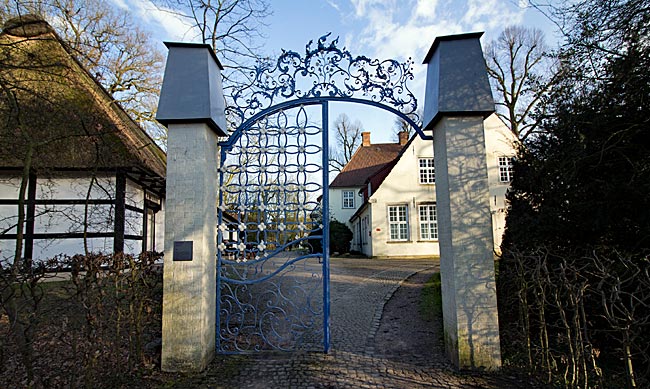
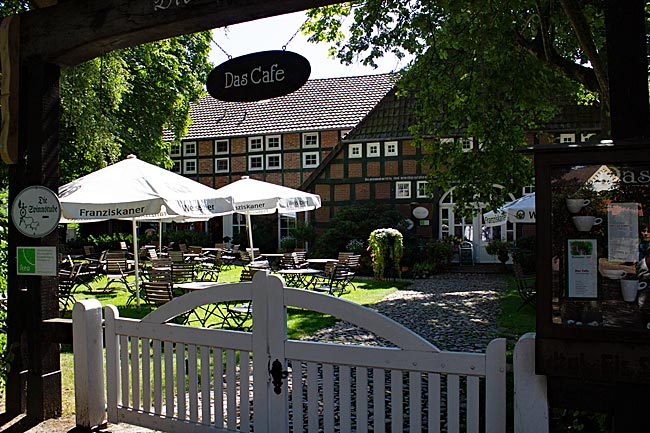
In the foreground is the Franzosentor, one of the entrances to Gut Riensberg. Behind it on the left is the Eichenhof and on the right the manor house
The other two houses belonged to Gut Riensberg, on whose grounds the Focke Museum stands today. In the Eichenhof, the former barn of the estate, visitors embark on a journey through the prehistoric and early history of the region up to the first millennium. Stone Age tools and jewelry made of precious metals can be found in the display cases alongside objects from the Bronze and Iron Ages, including weapons and everyday items. Notable is a bronze helmet with comb-like protrusions.
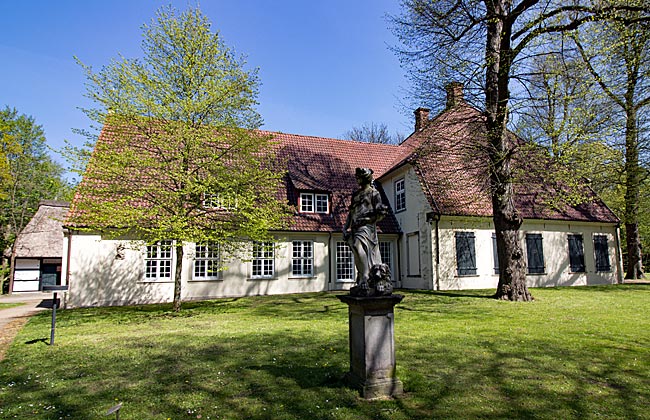
The two parts of the old manor house stand out distinctly. Terra, the Roman goddess of earth, sculpted by Giovanni Antonio Cybei from marble in 1766, was originally part of a quartet on the Heineken estate in present-day Oberneuland district
The history of the estate dates back to the 13th century, but the neighboring former manor house is not that old. The protected building actually consists of two parts, with the older one having formerly served as a stable and hayloft. Visitors see this part with the large door when they enter the grounds through the so-called Franzosentor, forged in the second half of the 18th century. The classical rear section of the house was added by the then estate owner in 1768. The building showcases European glass art and Bremen living culture with furniture from the 16th to the 20th century, including the "room of a young woman" designed by Heinrich Vogeler, an artist born in Bremen, in the German Jugendstil in 1909. In addition to living culture, the upper floor also houses the children's museum with a large toy collection spanning from the Middle Ages to today’s digital media. Visitors are even allowed to play here themselves.
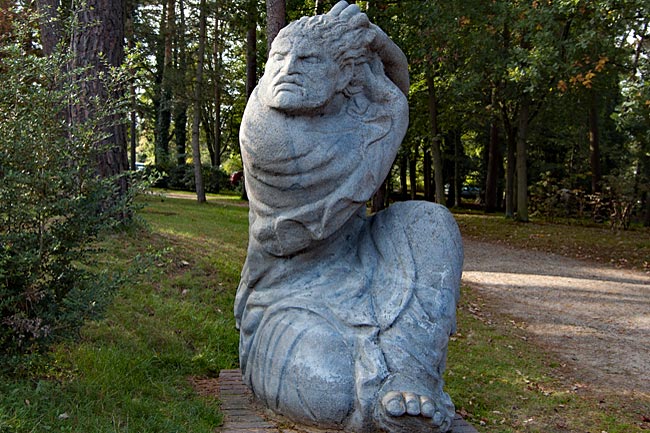
In addition to applied art in the museum, art can also be found in the park. Numerous sculptures populate the grounds. After an extensive visit to the museum with its wealth of objects, the bronze sculpture "Füllhorn" (Horn of Plenty) in front of the main building, designed by Bremer sculptor Paul Halbhuber in 1985, takes on a truly fitting meaning.
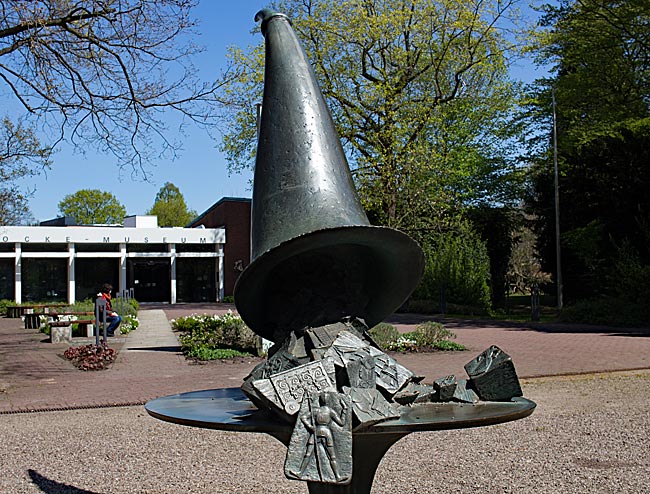
The bronze sculpture "Füllhorn" (Horn of Plenty) in front of the main building
Simultaneously with the museum's opening, adjacent to the Eichenhof, "Focke’s Café" opened, offering not only coffee and cake but also warm meals. For a post-meal stroll, the nearby Riensberger Friedhof (cemetery) is ideal; it was laid out between 1873 and ’75 on fields of Gut Riensberg and is the final resting place of many notable figures from the Hanseatic city.
previous page
 next page
Map
Further information
Focke-Museum
Bremen State Museum for Art and Cultural History
Public Foundation
Schwachhauser Heerstr. 240
28213 Bremen
Phone: +49 (0)421 699 600 - 0
Open: Tuesday 10 AM – 9 PM, Wednesday to Saturday 10 AM – 5 PM, Sunday 10 AM – 6 PM
Email: post@focke-museum.de
www.focke-museum.de
Friends of the Focke Museum Association (e.V.)
Schwachhauser Heerstraße 240
28213 Bremen
Phone: +49 (0)421 699 600 91
Email: ffm@focke-museum.de
Vegesack
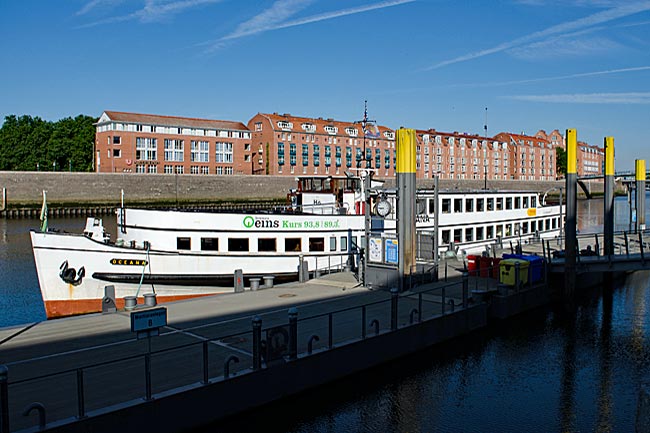
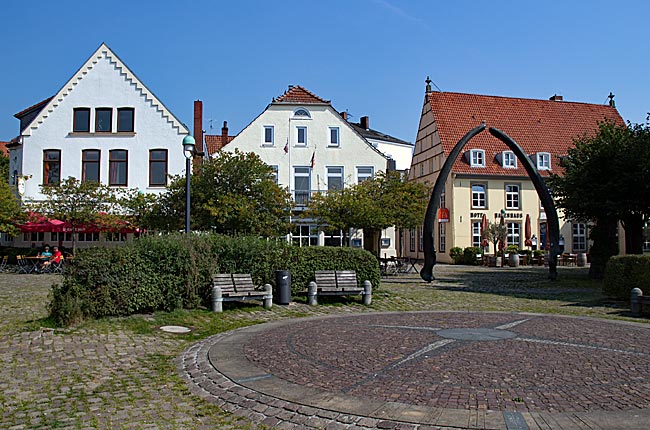
The most interesting area extends around the ferry terminal. From the seats of the nearby cafés and restaurants, you can almost watch the ferry operations. In front of the square stand the enormous lower jaws of a blue whale. Measuring 7.1 meters long, up to 1 meter wide, and weighing 1.2 tons, these bones belonged to a 26-meter-long animal that the port town received as a gift in 1961.
read more ...
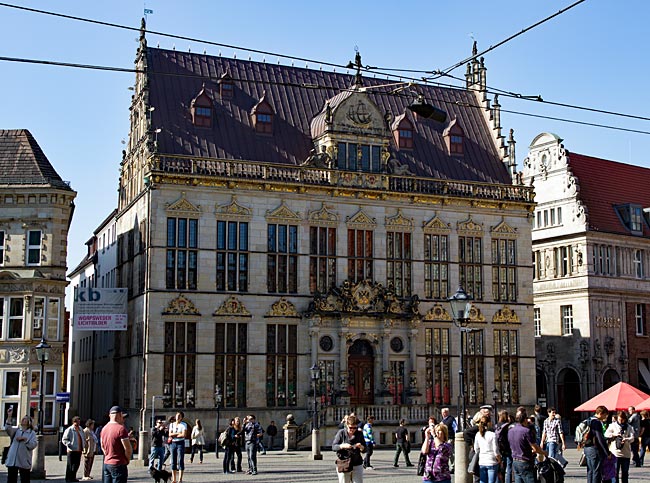
Schütting
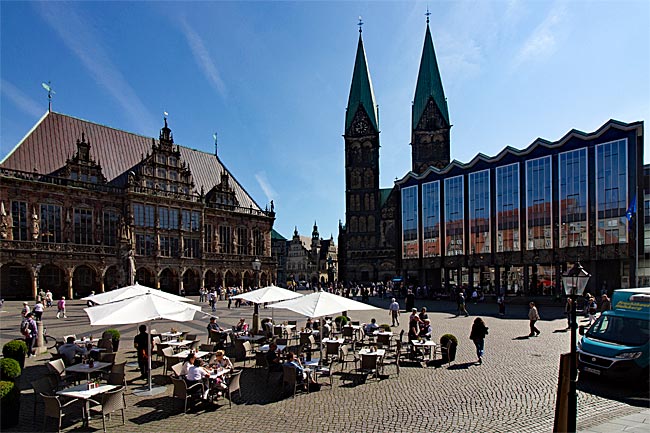
At the edge of the market square stands the Schütting, the house of the merchant guild, formerly a guild and banquet hall. Built between 1537 and 1538 by an Antwerp architect in the style of Flemish Renaissance, this structure is already the second Schütting at this location. The east gable, created in 1565 by a Bremen stonemason, has remained almost entirely original to this day. A redesign of the market-facing facade in 1595 introduced stylistic changes toward Weser Renaissance.
read more ...
Observatory & Planetarium
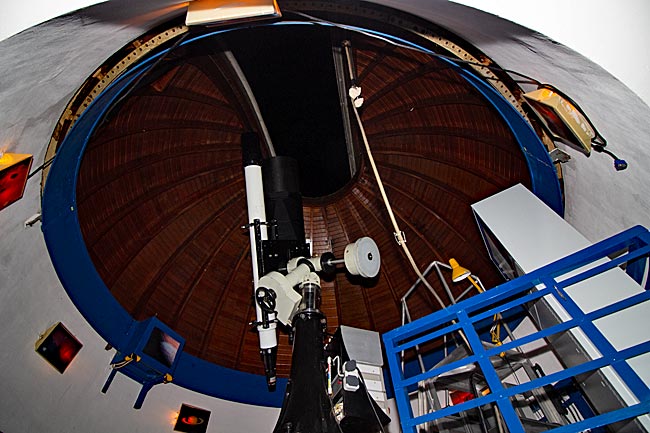
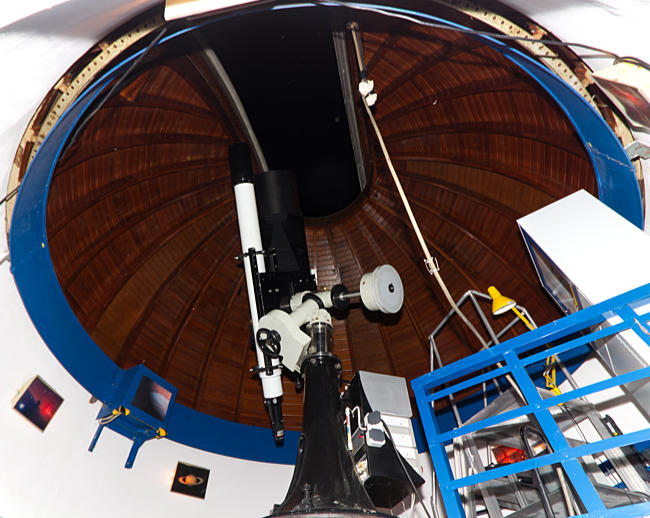
On selected days, visitors can also take a look through the large stationary and smaller mobile telescopes of the Walter-Stein Observatory, which are set up on the terrace. In the Olbers-Planetarium in the same building, members of the society give lectures on varying topics. The Olbers-Planetarium, opened in 1952, belongs to the small planetariums with its dome measuring 6 meters in diameter. A total of 35 seats (including accessible ones) are available for visitors.
read more ...
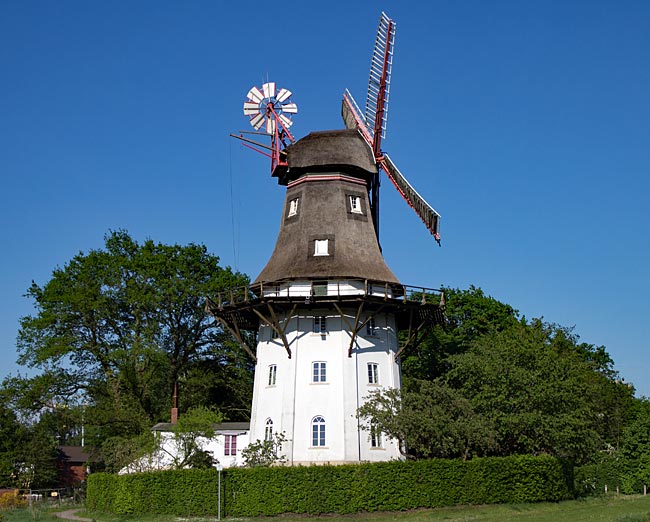
Parks & Mill in Oberneuland district
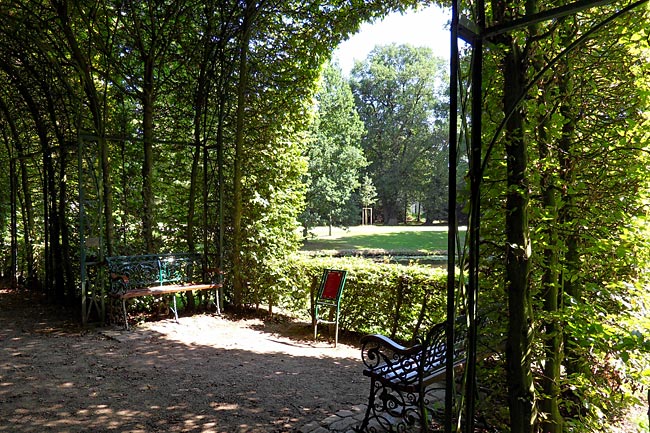
Its history and former village structure are evident when you drive or walk down Oberneulander Landstraße. In summer, the greenery of old trees provides ample shade. Along the street near the state border, several gaps appear in the residential buildings because three parks are located here, inviting visitors to explore them.
read more
...
Schwachhausen district
The Lloyd Railway Station, built in 1913 near Bremen's central station, served as a waiting area for emigrants who departed Europe from Bremerhaven aboard ships of the North German Lloyd. From here, their journey initially continued by train. The shipping company merged with HAPAG (Hamburg-America Line) to form HAPAG-Lloyd, headquartered in Hamburg. Directly across the street stands the anti-colonial monument "Elephant."
read more ...