

DISTANT PLACES
Travel tips for destinations far from the Hanseatic City of Bremen
Rügen by the Baltic Sea
Hiking, cycling & more in the southeast of the island
Page 4 of 8
Seaside resort tour on foot or by bike
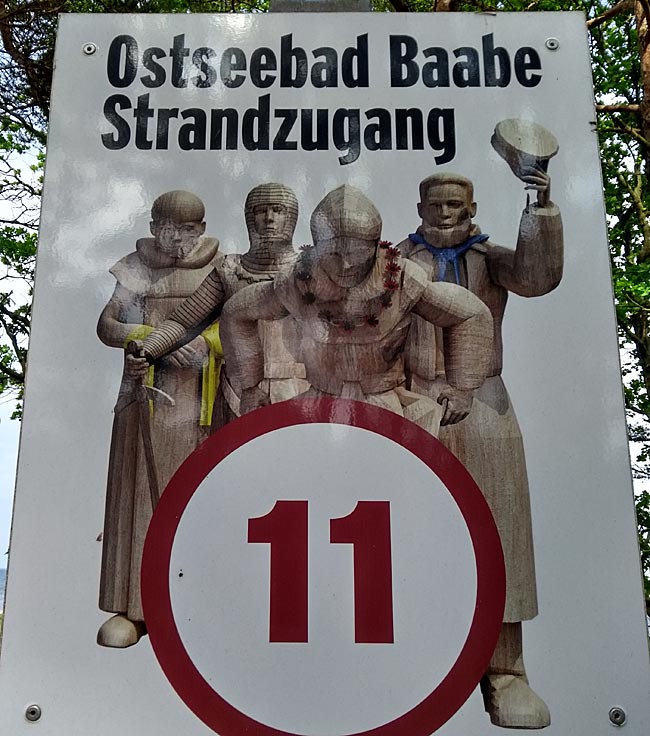
Sign at the promenade (beach access)
Back in Göhren. From the north beach in Göhren, the next seaside resort in the other direction is already within sight: Baabe. So you can simply stroll barefoot along the water or use the Amber Promenade as an equally direct route, though with a solid surface. Cyclists can also make good use of this and find it well-developed parallel to the promenade. A slightly bumpy and longer option is the combined cycling and hiking trail through the forest, connecting the two seaside resorts over 2.5 kilometers. Along the way, the track of the "Rasender Roland" (Racing Roland) railway crosses the path.
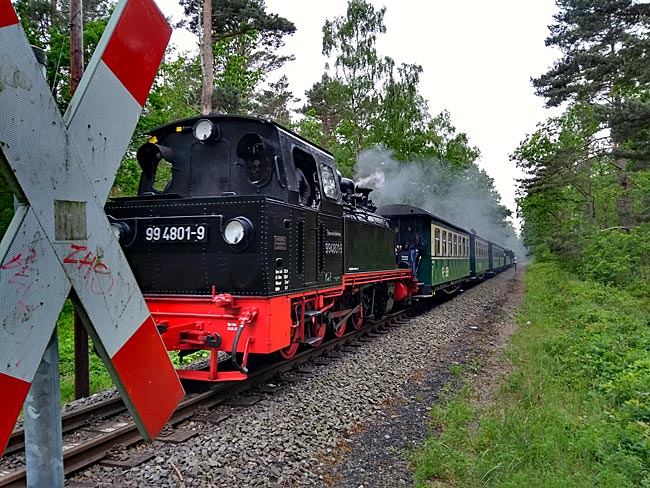
The "Rasender Roland" crosses the path from Göhren to Baabe in the forest
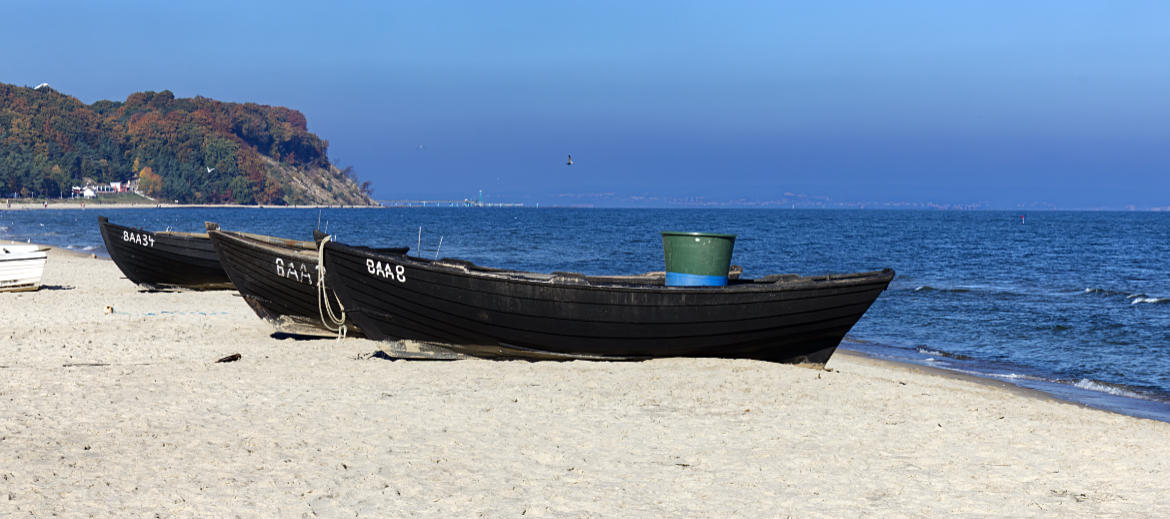
Although Baabe already accommodated bathers at the end of the 19th century, for many decades afterward, its inhabitants primarily relied on fishing and agriculture. That is no longer the case today, but the boats of the fishing cooperative still lie on the beach when they are not rocking on the waves of the Baltic Sea. Like Göhren, Baabe had a pier until 1942, which was destroyed by ice floes and has never been rebuilt since. Consequently, the excursion ships that shuttle between Göhren and Binz do not stop here either.
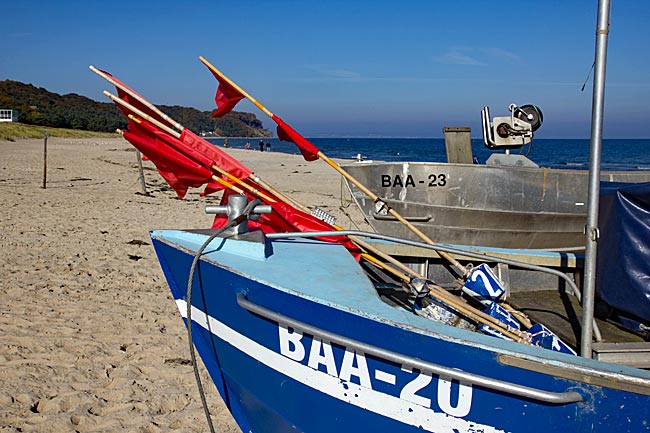
Fishing boats in Baabe
Leaving the beach and following the broad promenade-like beach road with its numerous shops through the town, turning right at its end leads to one of the stations of the "Rasender Roland." In view of the station directly on the tracks, a wooden gate spans the busy main road. Since the Middle Ages, this has been the boundary between Mönchgut and the northern part of the island adjacent to it. Next to the road, the transition continues in the inconspicuous remnants of the Mönchgraben.
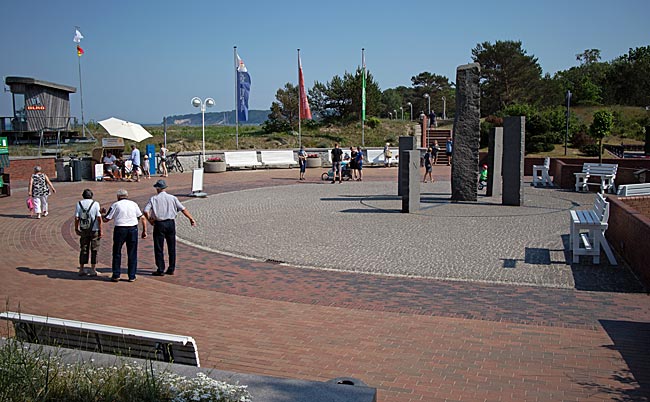
At this square with a granite compass directly behind the beach and near the spa park, Baabe's promenade ends
On the other side of the station, the view extends across to Sellin Lake, connected to the Baltic Sea bay of Having by a narrow strip of water: the Baaber Bollwerk. Following the signs, the path leads to a small ferry station that has existed since 1891. The manually operated boat transports pedestrians and bicycles over a stretch of just 38 meters, inviting cyclists to explore the sparsely populated landscape on the other shore all the way to Neuensiener See (Lake) with its natural harbor Seedorf at Lanckener Bek.
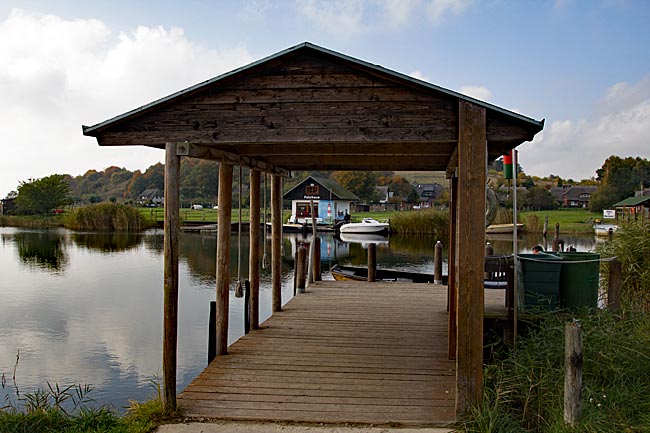
Ferry station at Baaber Bollwerk
Moritzdorf is the name of the tranquil town on the opposite shore, and behind the houses rises a larger hill that can also be reached by footpath: Moritzburg. Unlike in Saxon Moritzburg, where visitors can actually tour a hunting and Baroque palace, here in the north, after climbing up, they arrive only at an excursion locale. However, even without food and drink - offered here since 1901 - they have a beautiful viewpoint up there. And those who absolutely need a castle will find one further toward Binz in the forest: Jagdschloss Granitz. But more on that later.
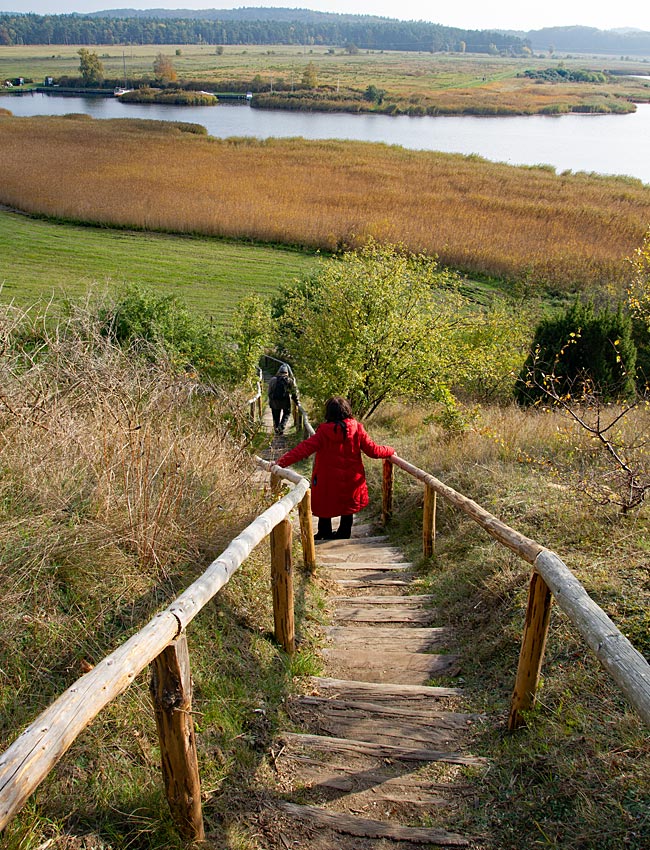
Autumn impression on the way back from Moritzburg
A bike trip form Baabe to Seedorf and to the seven megalithic tombs from the Stone Age near Lancken-Granitz
Anyone actually planning a bike trip to Seedorf is better off with an e-bike, preferably with a derailleur gear system, rather than a touring bike without electric motor assistance, as the landscape has slopes of up to 15% and is quite hilly.
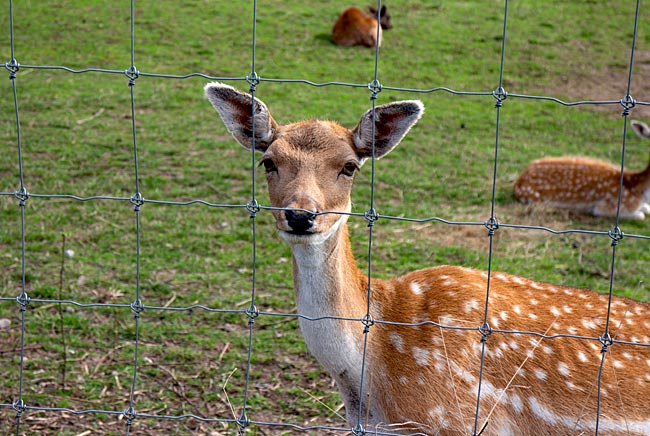
Surprising encounter after a steep climb
The paths are well-traveled, and unlike on the cleanly asphalted bike and footpath along the connecting road between Binz and the seaside resorts Sellin, Baabe, and Göhren, one can enjoy much more peace and quiet here, as car traffic is relatively light and the elevation changes offer beautiful views.
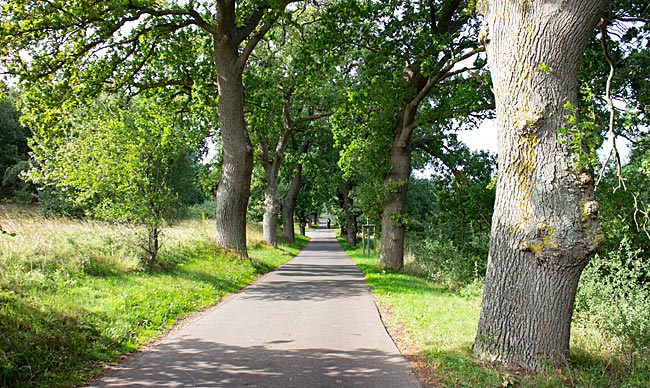
Countless avenues lined with old trees stretch through Rügen's landscapes, often visible far across fields and meadows
The charm of Seedorf lies primarily in its harbor: docks with moorings for many recreational boats along both shores of the inlet to Neuensiener See. Here, sailboats and motor yachts are safely anchored away from the sometimes rough seas of the Baltic Sea, yet their skippers can quickly reach it if needed.
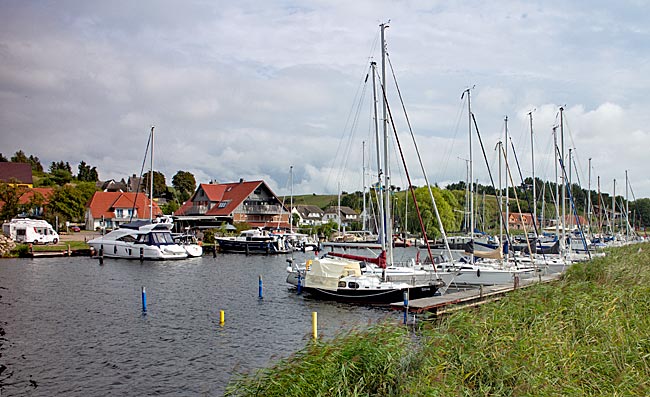
View of Seedorf
Tourist activity is concentrated in a small area with a roundabout featuring seating next to the boat docks. The public restroom on one side may delight some visitors as much as the opportunities on the opposite side to replenish lost liquids or solids, such as at a small fish shop offering more than just fish rolls.
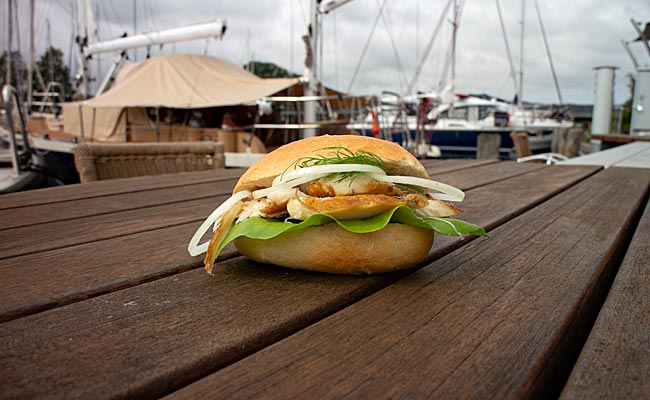
A mid-trip boost: a fish roll at Seedorf's harbor - delicious but unfortunately with far more bread than fish; it could be better
Having somewhat refreshed themselves, cyclists might consider taking a detour to the megalithic tombs near Lancken-Granitz. The distance to the seven megalithic tombs from the Stone Age is only about 3 kilometers from Seedorf. As always: the journey is the destination. And the path winds beyond the bridge at Seedorf, which visually separates the inlet from the lake, through a hilly cultural landscape, partly with fruit trees along the way and views of the tower of Jagdschloss Granitz emerging from the forest with its spiral staircase for the brave inside.
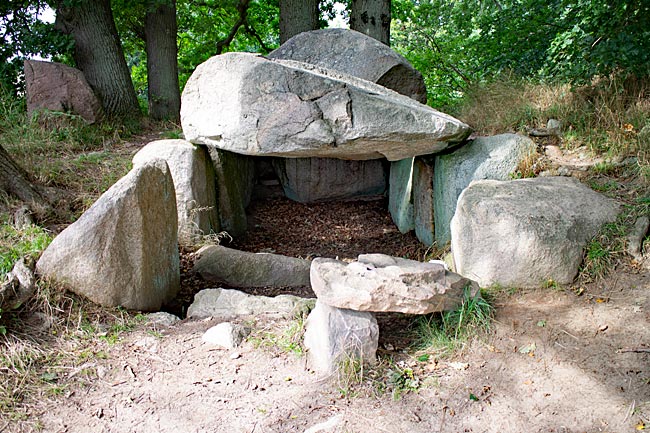
One of the megalithic tombs near Lancken-Granitz
Follow the signs to the tombs, as our ancestors' legacies are not so obviously presented. The best-preserved is the dolmen ("stone table") of the first approximately 19-meter-long grave. Two of what were likely three capstones still rest on the supporting stones. Seeing this, one cannot help but wonder: How did people manage that with their primitive tools? Especially since these stones had to be transported there first.
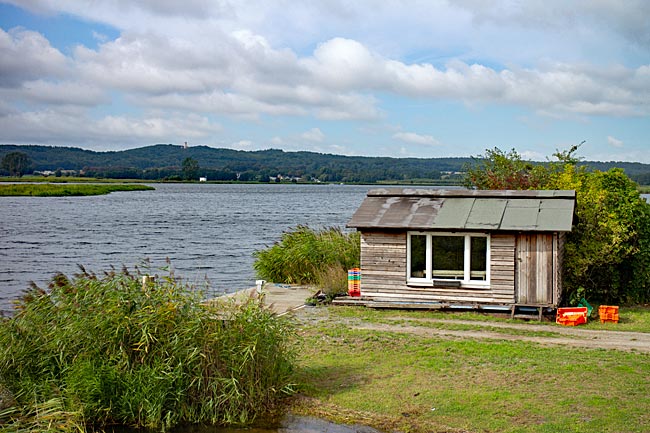
Fisherman's hut at Neuensiener See; in the distance, the tower of Jagdschloss Granitz rises above the treetops of the forest, which is also excellent for hiking with marked trails
Now back to the beach in Baabe for the seaside resort tour.
A seabridge and spa architecture in Sellin
You don’t have to leave the beach in Baabe to move forward, as the sandy shoreline stretches all the way to Sellin. Depending on water levels and weather conditions, you can hike along the steep coast, but for your own safety, it’s best to keep a safe distance - because the soil sometimes shifts, including the trees rooted in it. The steep coastline begins where Baabe’s wide beach ends, and that’s roughly where you’ll find Kaysa.
Created in 2014 by Rostock-born artist Thomas Jastram, this 168-centimeter-tall bronze sculpture of a young woman stands on a boulder in shallow water, delighting beachgoers.
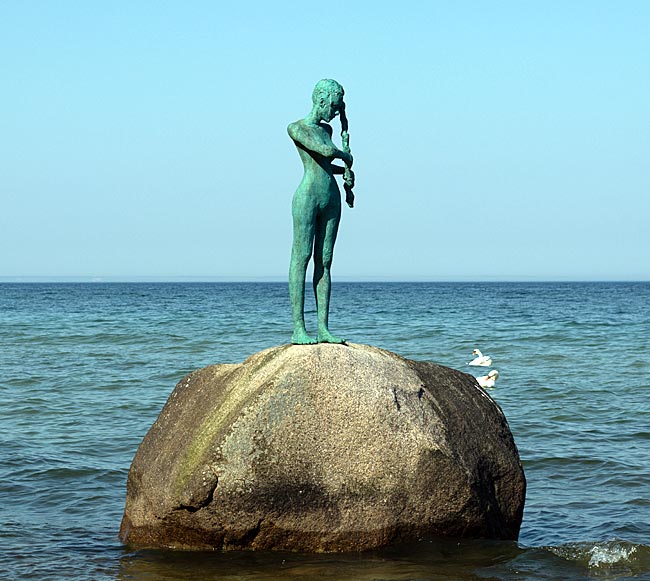
The sculpture "Kaysa" by Thomas Jastram
Long before reaching Sellin, you’ll spot the impressive 394-meter-long pier, which has a turbulent history dating back to the early 20th century. After ice floes destroyed the landing bridge in the winters of 1924 and ’42, the former dance hall on the pier had to be demolished in 1978 due to structural decay.
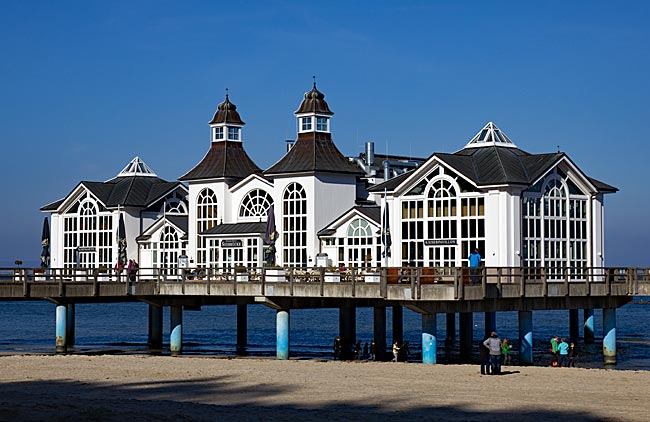
Pier house on Sellin’s seabridge
The landmark was finally rebuilt after the fall of the Berlin Wall in 1992. The design of the landing bridge drew inspiration from its historical predecessors of 1906 and ’25. A modern highlight is certainly the diving cabin at the end of the pier, which takes visitors dry to the bottom of the Baltic Sea.
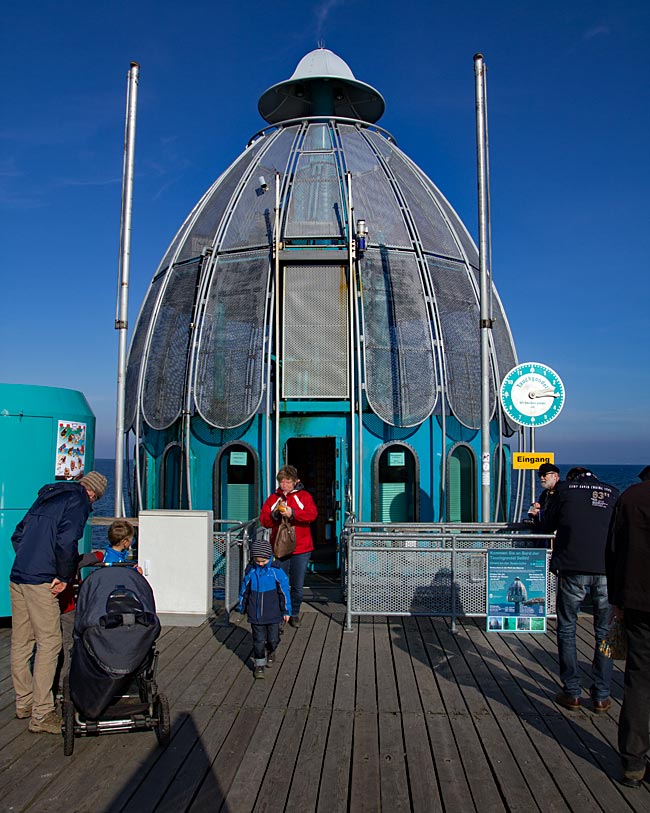
Diving cabin
But Sellin has more to offer than just the magnificent structure right on the beach. The so-called "Stairway to Heaven" leads up many steps to the high bluff, connecting the pier with Wilhelmstraße promenade - but this wide, steep staircase isn’t an insurmountable obstacle, as a small inclined elevator operates right next to it.
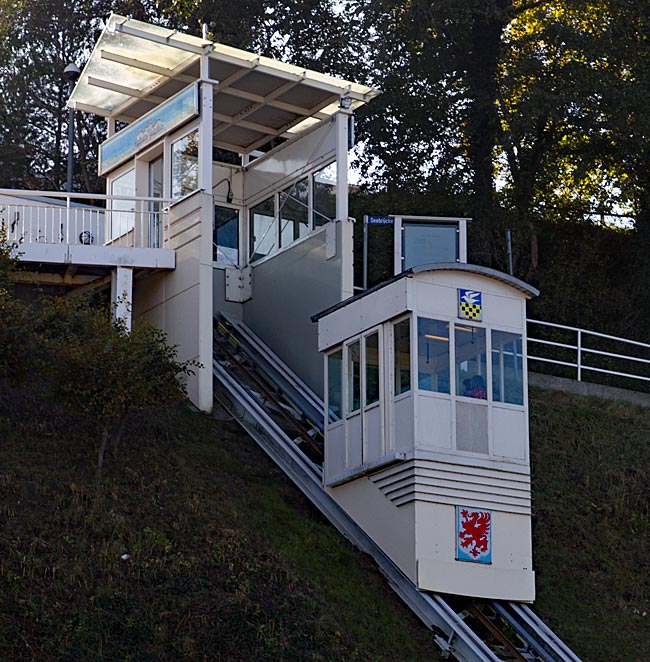
Inclined elevator next to the Stairway to Heaven
The alley and promenade above are lined with many historic buildings in the style of spa architecture. Shops invite you to stroll, while cafés and restaurants offer all kinds of delicacies - including local fish, although Baltic Sea fish stocks are declining. At the end of Wilhelmstraße, turning left takes you to a bus back to Göhren; crossing the street leads you, among other places, to the town’s spa park.
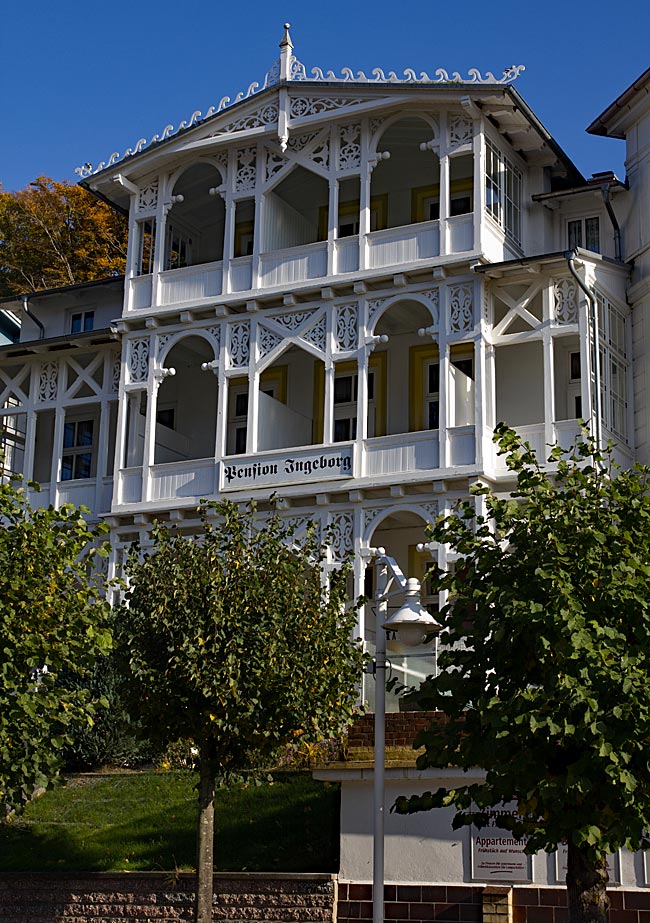
Fine example of spa architecture
If you cross through the park and the busy main road, you’ll reach Sellin Harbor or the water sports rest area between Bodden and the Baltic Sea in the municipality of Ostseebad Sellin. That description fits better, as the 2018 facility is more of a large dock for up to 80 recreational boats with appropriate infrastructure than a harbor for professional sailors. The only larger vessel operating here is the passenger ship "MS Sellin," which shuttles between the wide fixed landing stage and the towns of Baabe and Lauterbach.
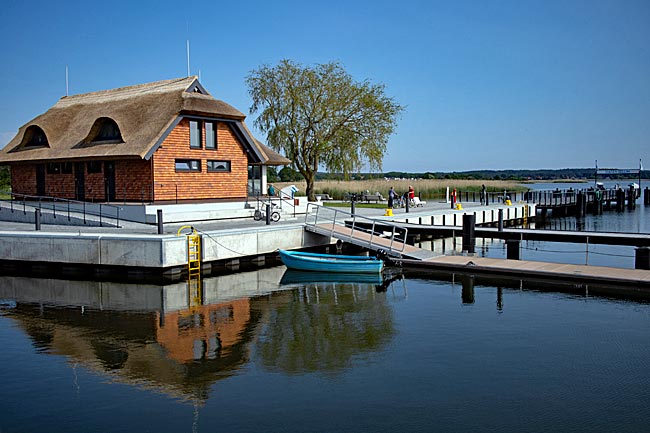
In Sellin harbor
Still, the location in the Southeast Rügen Biosphere Reserve and on the edge of a nature reserve is quite pleasant. On a converted inland vessel, there’s simple rustic dining, and from the tables on deck, you have a wide view over the water. Right by the harbor, a newly built section of the Baltic Coast Cycle Path passes by, and if you don’t want to take a cycling break here, a 2017-built tunnel conveniently leads you into town itself. Additionally, from the harbor, you can see the two trains of the "Rasender Roland" pass by, which stop at two stations in Sellin.
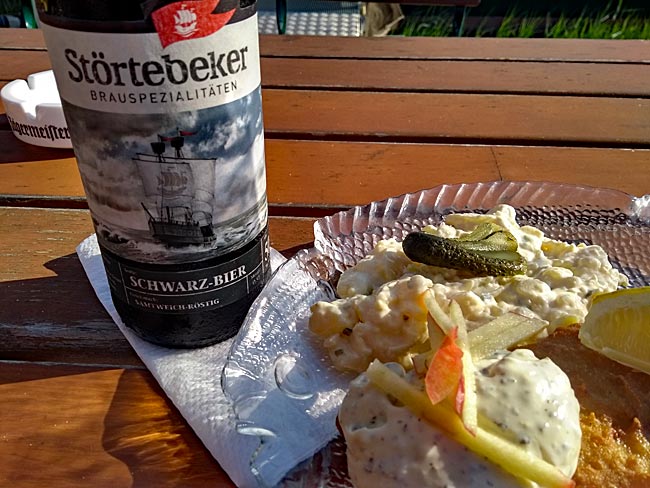
A quick bite


Map
1. Rügen by the Baltic Sea
Start
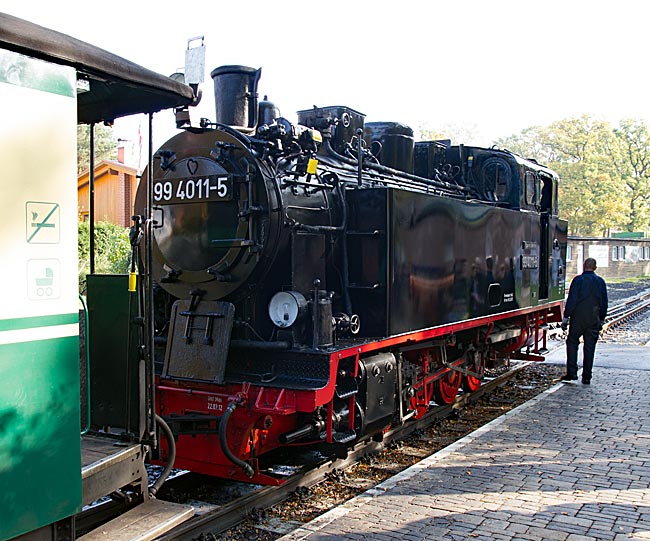
We are on our way to Göhren, where Nordperd, a forested cape with steep cliffs belonging to the eponymous municipality, marks the easternmost point of the island. The Intercity terminates in Binz, Rügen’s largest seaside resort, and from there you can continue by bus - but it’s more attractive to take the Rasende Roland all the way to Göhren.
Seaside Resort Göhren
The wide “Amber Promenade,” renovated in 2003 for the International Horticultural Exhibition, is one of the resort’s main meeting points with its cafés, restaurants, shops, mini-golf course, themed gardens, and play areas for children. Naturally, this is also because the long north beach, Göhren’s actual bathing beach, lies just behind it.
read more about Rügen ...
2. Rügen by the Baltic Sea
Nordperd: hiking through the forest to the cliff
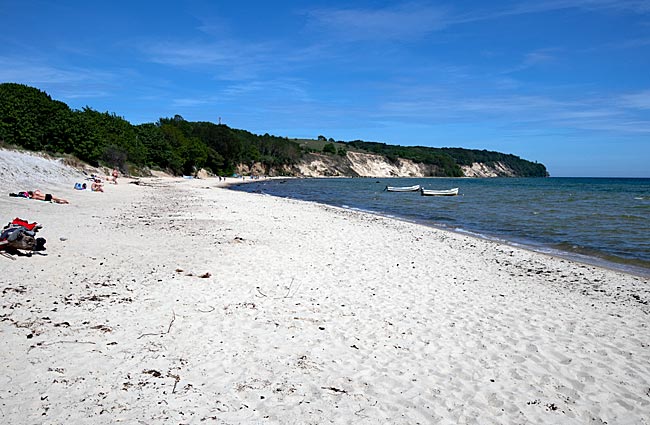
The mostly forested promontory - this is what the word Perd means in Slavic - is part of the Mönchgut Biosphere Reserve. And indeed, from the air, the area juts out like a green pointed triangle into the sea.
Along the beach to Thiessow and Klein Zicker
After a short museum visit, our path leads us through the sand of the Baltic Sea past the village of Lobbe to the end of the beach in Thiessow - a considerable distance for persistent hikers coming from Göhren, always with a salty breeze in their noses.
read more about Rügen ...
3. Rügen by the Baltic Sea
Cycling from Göhren to Reddevitzer Höft
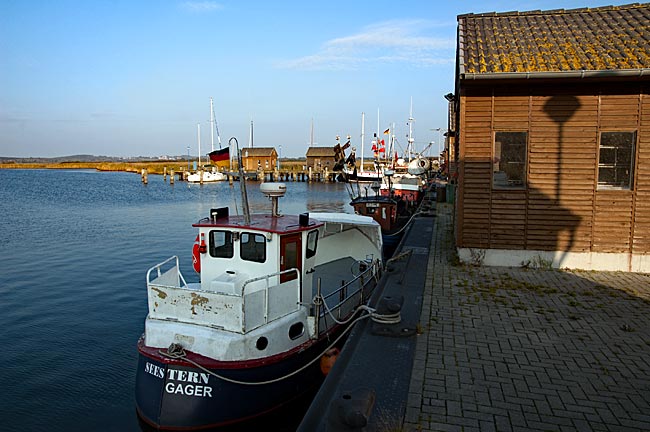
The farther you cycle along Reddevitzer Höft, the sparser the settlements become. Where no houses or trees obstruct the view, you can see the Rügischer Bodden with Having Bay on one side and Hagensche Wiek Bay on the other. This is especially true when you reach the 33-meter-high elevation at the end of the peninsula. From the cliff, you have a wide view across the water toward Vilm Island or the village of Gager with its small harbor.
read more about Rügen ...
4. Rügen by the Baltic Sea
actual page
5. Rügen by the Baltic Sea
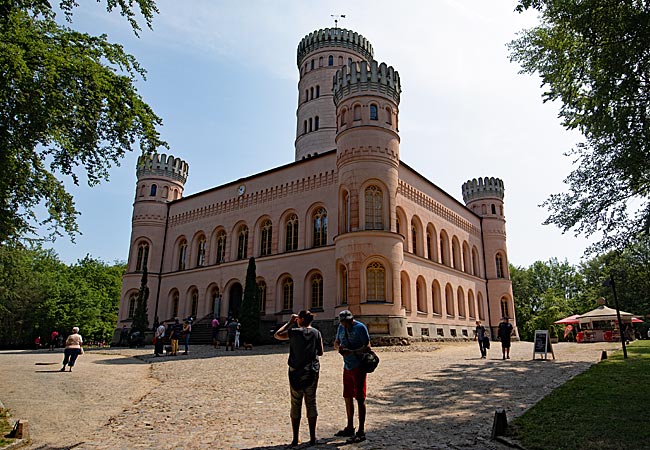
Through the forest to Jagdschloss Granitz
It's about 5 kilometers from Sellin through forest paths up to Jagdschloss Granitz. If you're on foot, you can initially take the cliff path through rough terrain at your own risk; by bike, there are additional better-developed paths. All paths eventually converge and lead well-signposted to the hunting lodge and Binz. The castle is also located along the route of the Rasender Roland, about one kilometer downhill to the station. In the other direction, it's about 3 kilometers through the forest to Binz.
Art and more in Binz, the largest seaside resort on Rügen
If you arrive as a visitor from the sea side, on the one hand, the size of the place in general and the 1890-opened Kurhaus as the unmistakably largest and most impressive building in particular catch your eye. Even in the off-season, Binz is much livelier and busier than the places in its immediate vicinity. Historical houses in the style of spa architecture can also be found here, whether directly on the beach promenade or in the shopping streets of the town. And regardless of whether you arrive by ship or by bus, you are immediately in the midst of the action.
read more about Rügen ...
6. Rügen by the Baltic Sea
From Binz to Sassnitz
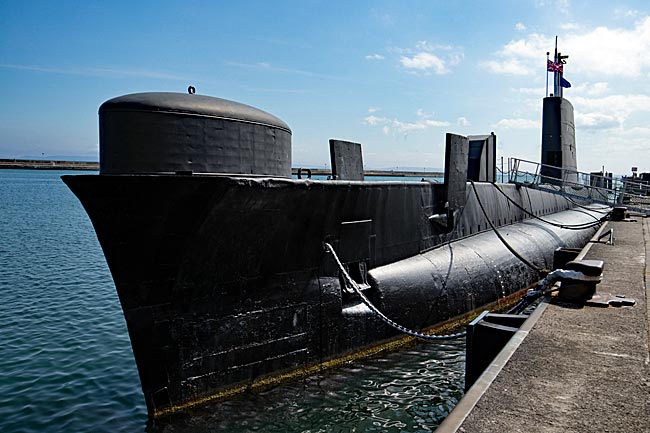
Since 2007, a 250-meter-long suspension bridge has allowed pedestrians to quickly reach the city harbor from the city center - offering a wide view of the harbor and the Baltic Sea. If you use the suspension bridge, you will immediately encounter the most unusual ship in the harbor: the H.M.S. Otus. This 90-meter-long British submarine of the Oberon class, built in 1962, has been decommissioned and is now a walkable museum.
To the chalk cliffs with the 118-meter-high Königsstuhl in Jasmund National Park
From Göhren, Sellin, Bilz, or Sassnitz, you can also book a trip to the chalk cliffs with the ships of Adler-Reederei, offering a view from below of the relics from the Cretaceous period, which began approximately 145 million years ago and ended around 66 million years ago, instead of the panoramic view from above.
read more about Rügen ...
7. Rügen by the Baltic Sea
By water to Lauterbach and Putbus
Sellin. The open Baltic Sea on one side, a lake, a bay, and a "shallow bay-like coastal water body" - the Bodden - on the other. This is where the ships of the White Fleet sail. From Lauterbach, a two-lane main road leads about two kilometers into the center of Putbus - getting lost on the green avenue is practically impossible. Thus, after the described walk, you first encounter the Circus. The model for the facility built between 1828 and ’45 was the Circus constructed a century earlier in the English spa town of Bath.
read more about Rügen ...
8. Rügen by the Baltic Sea
Travel Information
Many hopefully helpful pieces of information for the described part of Rügen. Unfortunately, not all websites are available in English yet. Nevertheless, I am sure you will have a wonderful time on Germany's largest island. Take care.
read more about Rügen ...
Wismar
The Hanseatic City on the Baltic Sea and its UNESCO World Heritage
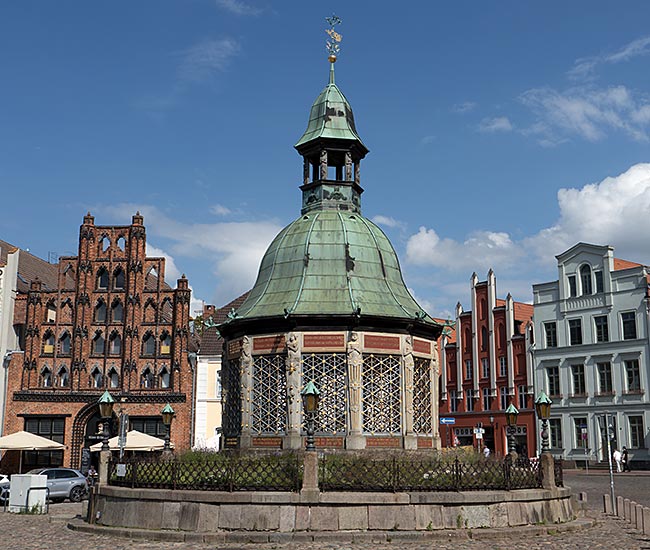
The World Heritage House is a building with a stone front house and an attached timber-framed Kemladen on a foundation of loose fieldstones from a medieval predecessor building. This beautifully restored small building complex visually illustrates and provides information via text panels about the lives of past generations in the hall houses typical for Wismar, along with their outbuildings. Additionally, there is extensive information about the city’s history and numerous protected buildings in the old town - there are 1,754 in total, with 306 designated as individual monuments. In the old town, one is right in the middle of Wismar’s UNESCO World Heritage Site.
read more about Wismar ...
Rostock and Warnemünde by the Baltic Sea
A travel guide
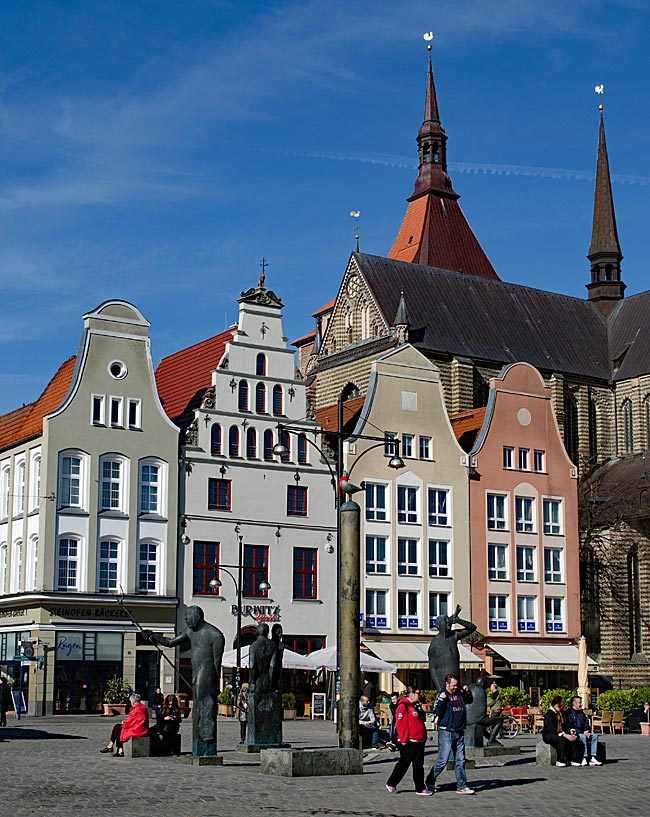
A mini-guide through the Hanseatic city of Rostock and its beautiful beach destination, Warnemünde. Home to one of the oldest universities in the Baltic region, the city boasts a rich history. Join us on a tour of discovery.
read more about Rostock ...
In the Probstei in late summer
Schönberger Strand and sea and more
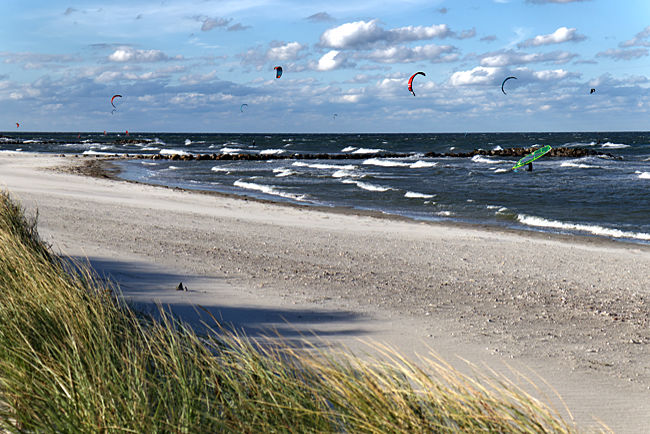
Can you walk or ride a bike from Brasilien (Brazil) to Kalifornien (California) in just a few minutes, always with a view of the water? No, not with your finger on the globe or map, but in person. You’ll have to forgo Copacabana and the Sunset Strip with the Angels in Los Angeles (Spanish for "The Angels"). Instead, you get Germany’s "True North" with all its bright sides. Of course, there are sometimes shadows here too, but they belong only on the margins of this story.
read more about Schönberger Strand ...
Crabs, dikes and the Wadden Sea
The North Sea spa town of Büsum
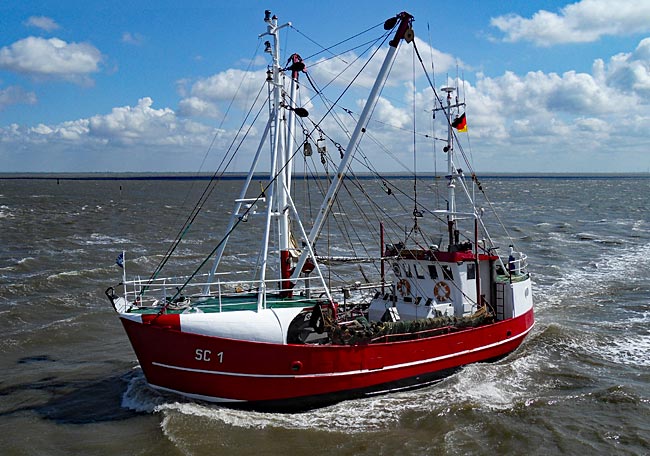
Once an island, Büsum was repeatedly threatened by the "Blanken Hans". When the greatest flood of the last century struck in 1962, Büsum was already long connected to the mainland - since 1585. Today, this town of around 5,000 residents, part of the Dithmarschen district, is one of the most important holiday destinations along Schleswig-Holstein's North Sea coast. Since 1985, the sea in front of Büsum has been protected as the Schleswig-Holstein Wadden Sea National Park, and since 2009, it has also been listed as a UNESCO World Heritage Site.
read more about Büsum ...
A stroll through Kiel
Sights in the fjord city and a visit to Laboe
A good starting point for exploring the city today, decades after the end of the war, is the centrally located main train station. On Sophienblatt, the main street running in front of the building, all major bus lines converge, and many sights can also be easily reached on foot during a multi-hour stroll.
read more about Kiel ...
Emden in East Frisia
Where East Frisians make jokes and serious art thrives
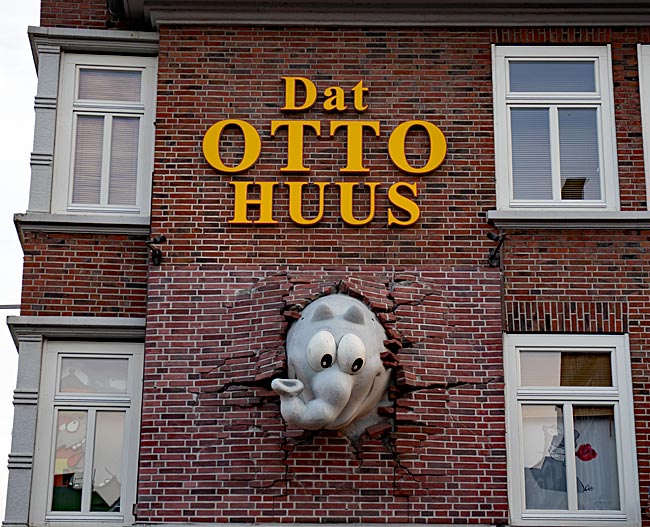
What do Henri Nannen, the journalist and founder of the print magazine STERN, director Wolfgang Petersen (e.g., Das Boot), and comedians Karl Dall and Otto Waalkes have in common? They were all born in Emden. "The Men of the Emden" (a film) not necessarily, but that's a different story. And of course, women have also been born in this city of around 50,000 inhabitants, the largest in East Frisia, such as former boxing world champion Heidi Hartmann - naturally mentioned only as a representative of all others.
read more about Emden ...
A short visit to the historic old town of Heppenheim
Half-timbering, a false dome, and legendary lanterns
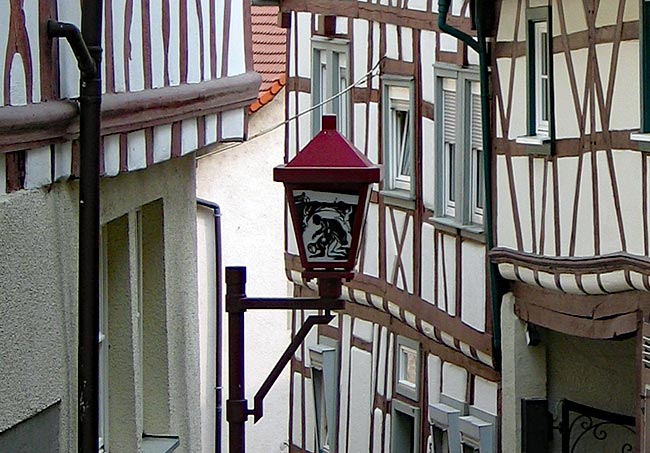
The skyline of Frankfurt, Germany's financial capital with its office towers in the banking district, is still within sight when the train to Darmstadt and Bensheim pulls into the small station of Heppenheim. In 2010, the city was on everyone’s lips after native son Sebastian Vettel left all competition behind in his Red Bull car and became the youngest Formula 1 double world champion of all time. In 2011, he added another title to his collection, as did he in 2012 and finally in 2013 for a fourth time. However, we are not following in Vettel’s footsteps but rather those of history in the picturesque old town with its timber-framed houses.
read more about Heppenheim ...
Norden-Norddeich in East Frisia
At the north Sea
At first glance, one might get the impression that this North Sea resort is merely a transfer station for vacationers heading in droves to the islands. Not only do several ferry docks dominate the harbor, but large parking lots and multi-story garages belonging to the Frisia shipping company right behind the dike offer hundreds of parking spaces for island visitors who don’t want or can’t take their cars with them - Juist is car-free after all. But beyond that, Norddeich reveals itself as a far less hectic and manageably small coastal resort. In this state-recognized North Sea spa, tourism has only been promoted since the second half of the last century, apparently with success, as more than 1 million overnight stays per year show.
read more about Norden-Norddeich ...
Flensburg on the Baltic Sea
On the Förde at the border to Denmark
"The True North" - that is how the northernmost federal state rightfully markets its unique charms. When "fresh air" is promoted as "the best thing about the North," it is hard to disagree once you are actually here. Fresh breezes blow across the Baltic on the east coast and the North Sea on the west, with roughly 70 kilometers of flat, sparsely populated land stretched between them. With just under 100,000 residents, Flensburg is the third-largest city in Schleswig-Holstein, following the state capital Kiel and the "Pearl of the Hanseatic League," Lübeck.
read more about Flensburg ...