

DISTANT PLACES
Travel tips for destinations far from the Hanseatic City of Bremen
Rügen by the Baltic Sea
Hiking, cycling & more in the southeast of the island
Page 7 of 8
By water to Lauterbach and Putbus
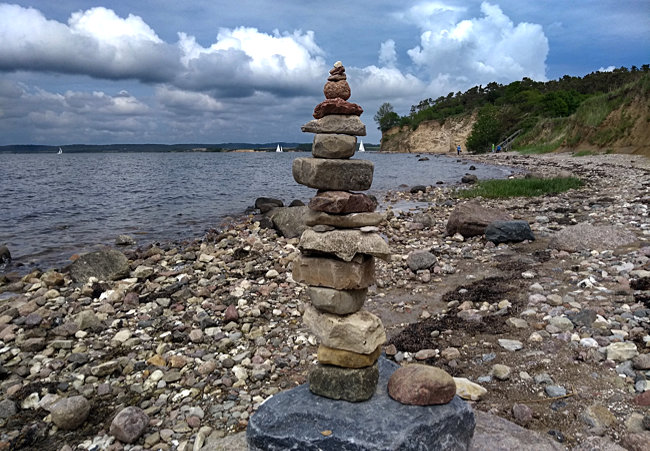
On the Greifswalder Bodden, just behind the high cliffs to the right, we enter the Havling
For another water shuttle, we change locations - just now Sassnitz, now Sellin - and with the Selliner See (lake), Havling, and the large Greifswalder Bodden, not only do we switch bodies of water but also their types. The open Baltic Sea on one side, a lake, a bay, and a "shallow bay-like coastal water body" - the Bodden - on the other. This is where the ships of the White Fleet sail. For shipping enthusiasts, both are recommended; for everyone else, perhaps a Bodden tour is the better choice at first because the water is calmer, and the ships sway less during the journey.
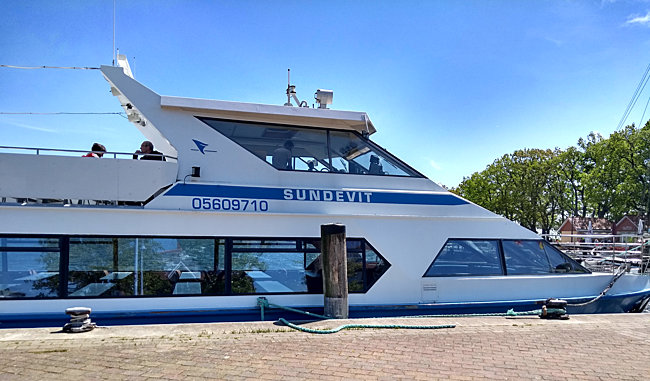
A passenger ship of the White Fleet at the dock in Lauterbach
Another advantage: Tourists pay for the trips with their resort fee and can book them for free. However, they still need to reserve the tour(s) via the website; otherwise, ships often remain at the docks because they are fully booked - a situation that even occurs relatively frequently in the off-season. The schedule includes connections between Sellin and Thiessow, which pairs well with a visit to the Rügen Market, as well as a connection from Sellin to Lauterbach.
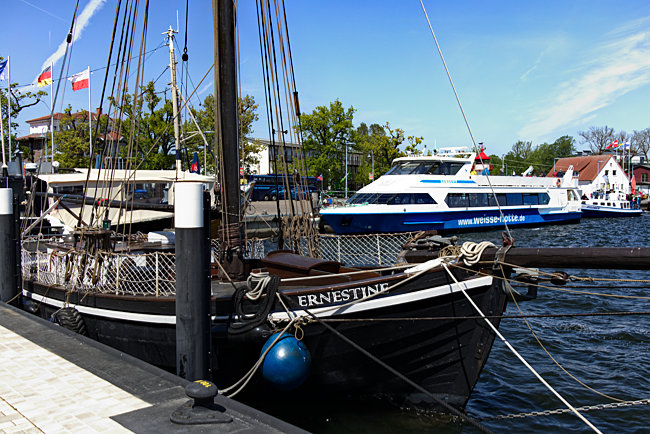
There's also bait available from the cutter in Lauterbach
Heiner? No, not him - when it comes to Lauterbach (Heiner Lauterbach, a german actor), even though the ship passes by the small uninhabited island of Vilm (associated with "film") on its way there. Rather, this 1816-founded district is Putbus' harbor and the oldest seaside resort on the island and in Pomerania. Besides the fun of the boat tour, however, the center of Putbus is our actual destination - not at all the former torpedo demagnetization facility from DDR times, which looks like a ghost ship and which the ship passes on its way to Lauterbach. Seabirds have nested in the now windowless rooms of the facility, and it's actually not a ship but rests on stilts.
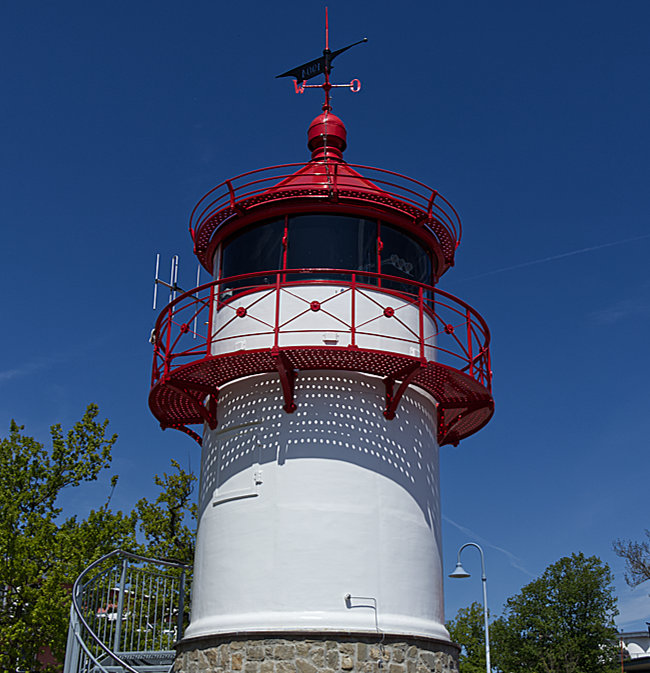
The lighthouse in Lauterbach harbor was commissioned in 1905
Based on personal observation, there are travelers who don't even leave Lauterbach after the boat tour but immediately take the next ship back. If this route is the goal, you can certainly entertain yourself during the interim in the tourist-developed harbor; numerous culinary providers vie for the favor of customers, with rustic offerings dominating. Beer, fish, and ...
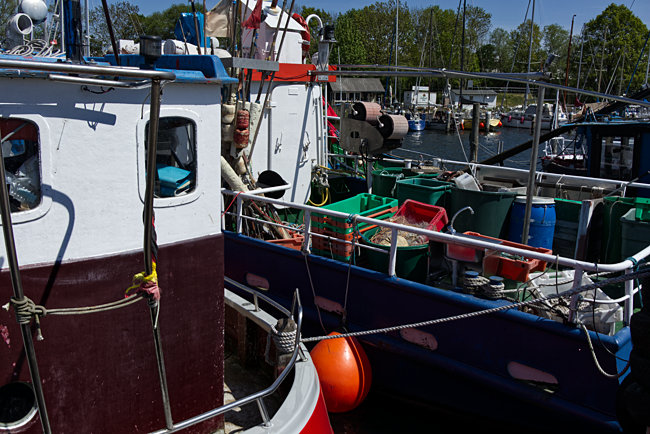
There are still cutters, like here in Lauterbach's harbor
Fresh locally caught fish is a huge problem on the island, as large areas of the Baltic Sea are fish-free for multiple reasons, which also affects the few remaining fishermen in the towns who are not big earners anyway. Nevertheless, the sea sometimes makes you crave fish if you're not vegetarian or vegan; you just need to be aware that the product may come from the North Atlantic or elsewhere. In any case, no blame can be placed on the local gastronomy unless the food is really bad.
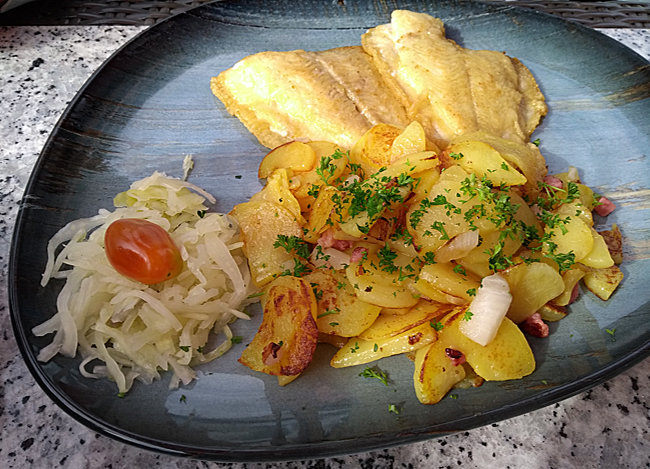
Plaice fillet with fried potatoes. Where the fish ended up is clear, but where it came from is less so
From Lauterbach, a two-lane main road leads about two kilometers into the center of Putbus - getting lost on the green avenue is practically impossible. The island's youngest city was founded in 1810 by Wilhelm Malte I., who had the city built next to his princely residence in the classical style. While the 75-hectare park with its orangery, castle church, and former stables (1824), now a gastronomy and festival venue, still exists, the castle was demolished in the first half of the 1960s. Little remains today of the once seat of the lords of Putbus.
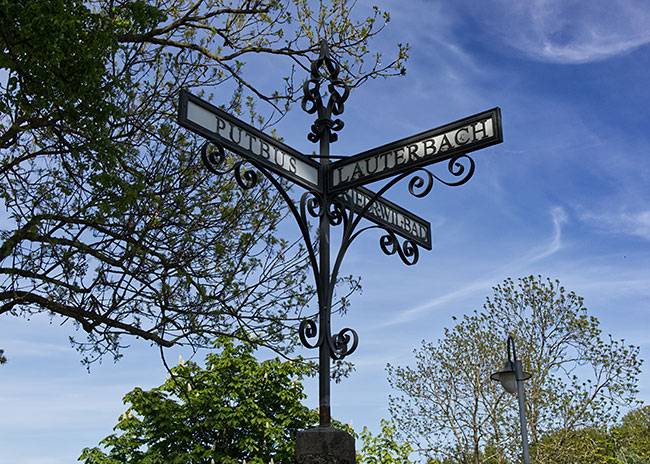
Signpost on the road from the harbor to Putbus
The buildings laid out according to plan are largely preserved, lining up along the main street (Alleestraße) that runs past the castle park, sometimes in groups. Thus, after the described walk, you first encounter the Circus.
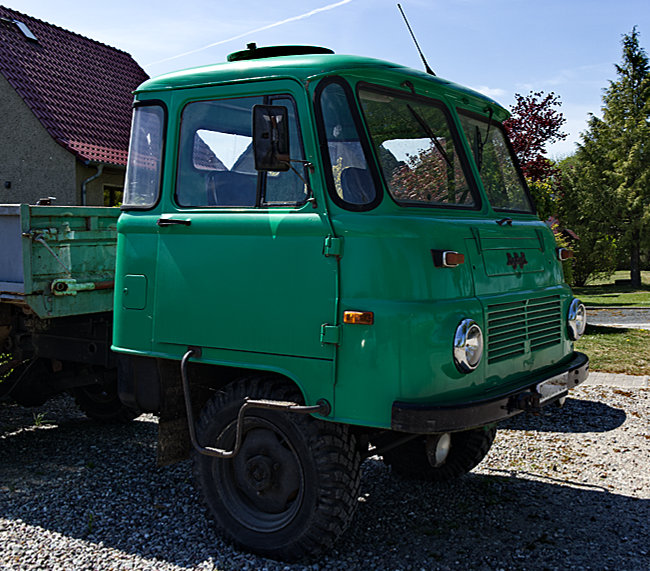
From GDR times: This Robur LO 3000 was produced by VEB Robur-Werke Zittau from 1973 to 1990
The model for the facility built between 1828 and ’45 was the Circus constructed a century earlier in the English spa town of Bath. Here, as there, houses surround a circular square enclosed by a road. The sound of horses' hooves and carriage wheels on the cobblestones has long been replaced by that of cars on asphalt. Nevertheless, it is comparatively quiet.
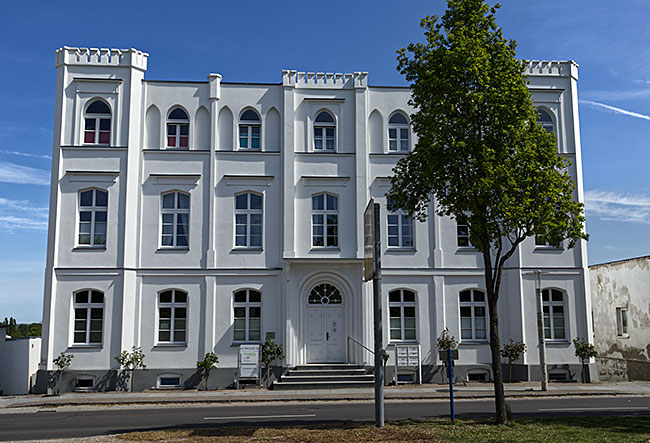
Classical building at the Circus
Eight paths flanked by hedges and trees lead to the center of the green, car-free inner circle surrounded by Italian poplars, where park benches around an obelisk invite you to sit if the weather permits.
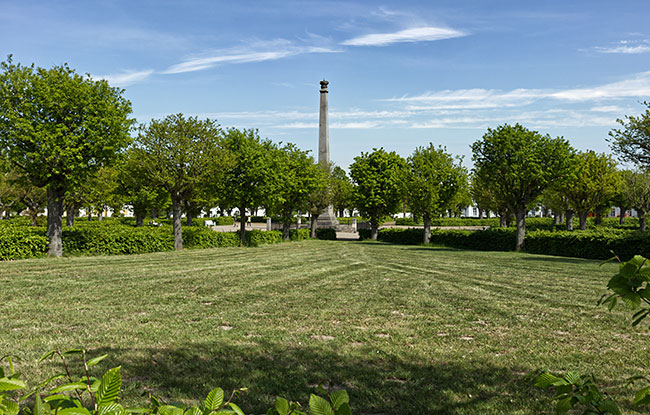
Lots of greenery in the center of the Circus
Each of the 16 classical buildings around the rondell square is architecturally unique. The largest structure is the Royal Pädagogium, which the prince had built from 1833 to 1836 according to the plans of Johann Gottfried Steinmeyer. In 1835, King Friedrich Wilhelm III. became the patron of this educational institution for sons of the nobility and bourgeoisie.
Notable is the uniform white paint of the buildings, and they are not the only ones, which is why Putbus is also called the "White City." It is also known as the "City of Roses," as the prince ordered extensive planting with roses, a tradition that has been preserved to this day.
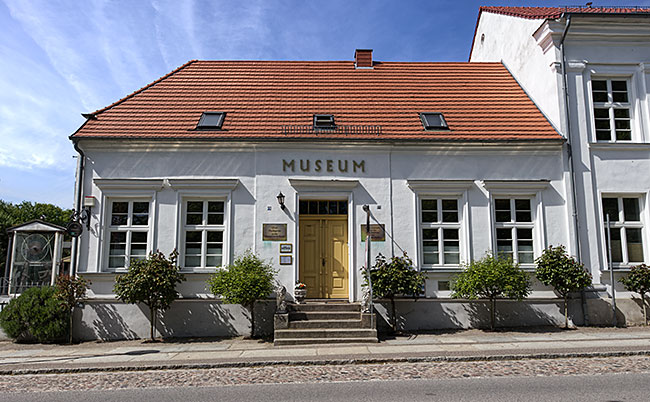
The first exhibit stands next to the clock museum
On Alleestraße, you come across the clock museum, which houses around 1000 exhibits in its collection - chronographs of various kinds from several centuries.
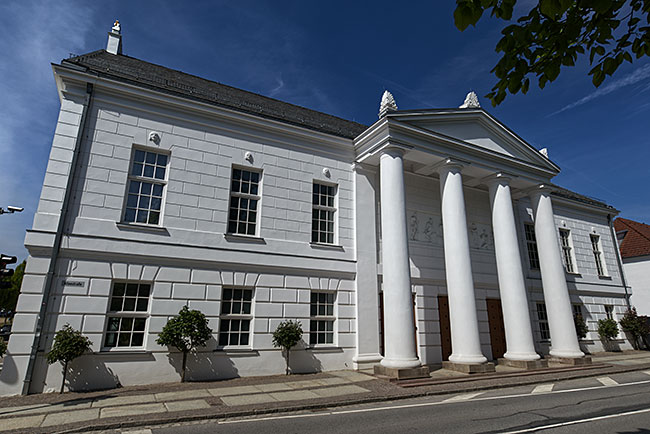
Theater Putbus
Time seems to have stood still at the theater a few meters further on. The building, completed in 1821 and reopened in 1998 after extensive reconstruction, is a corner house of the town hall square. The rather simple structure of the town hall can be found at the head of the rectangular market square. On the green square, a monument rises, commemorating the warriors from the county of Putbus who fell for "Emperor, King, and Fatherland" in the wars of 1864, 1866, and 1870/71.
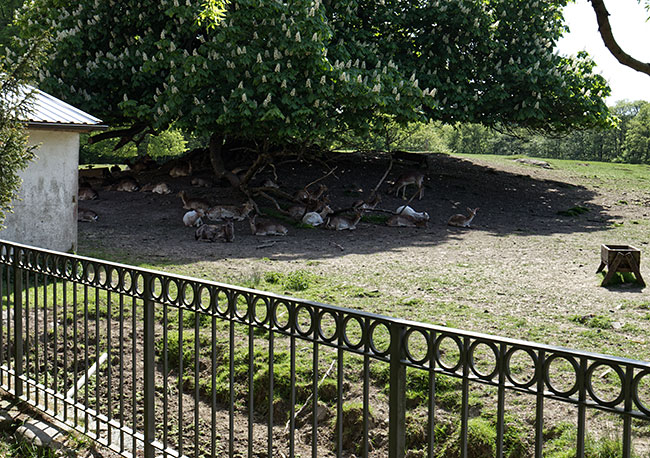
Next to the castle church, wildlife dozes in the shade of the trees within the enclosure
Opposite the square extends a landscape garden. Originally laid out as a Baroque garden in 1725, it was transformed into an English-style garden during the city's founding period and later expanded to the south and east. On the numerous branching paths, you encounter not only the preserved buildings of the castle complex but also a wildlife enclosure and unusually trees for the region such as sequoias, cedars, horse chestnuts, and tulip trees.
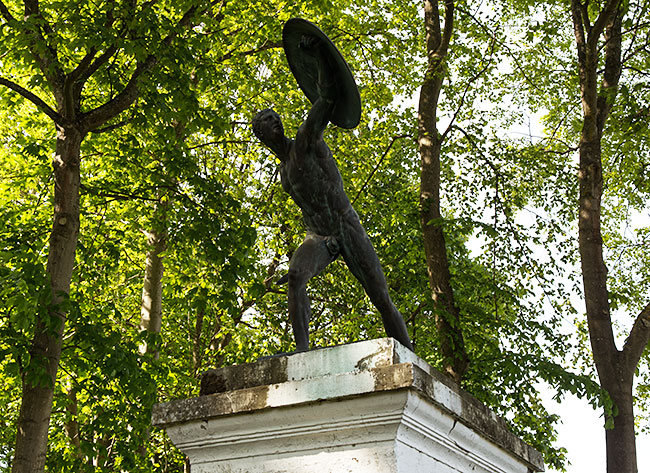
Probably overlooked by most visitors: one of two pedestal figures at a forgotten entrance
Back in Lauterbach, you can choose to return by ship or board the Rasender Roland, which has its second terminal here next to Göhren near the harbor facilities. However, you will then have to open your wallet again, as the resort card is not valid as a ticket here.


Map
1. Rügen by the Baltic Sea
Start
We are on our way to Göhren, where Nordperd, a forested cape with steep cliffs belonging to the eponymous municipality, marks the easternmost point of the island. The Intercity terminates in Binz, Rügen’s largest seaside resort, and from there you can continue by bus - but it’s more attractive to take the Rasende Roland all the way to Göhren.
Seaside Resort Göhren
The wide “Amber Promenade,” renovated in 2003 for the International Horticultural Exhibition, is one of the resort’s main meeting points with its cafés, restaurants, shops, mini-golf course, themed gardens, and play areas for children. Naturally, this is also because the long north beach, Göhren’s actual bathing beach, lies just behind it.
read more about Rügen ...
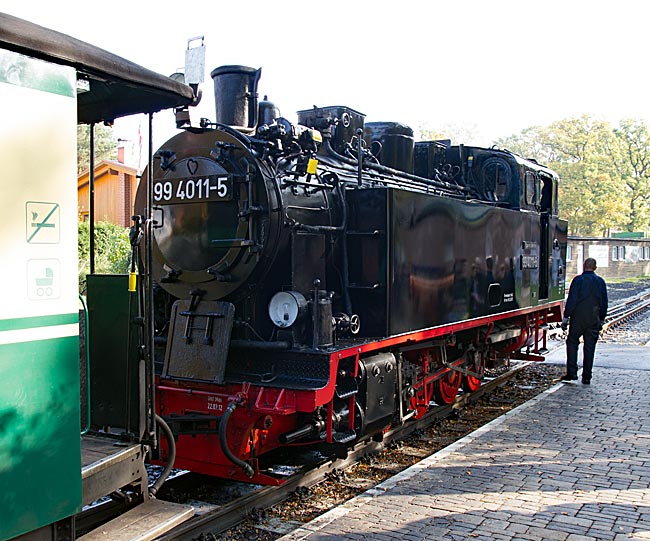
2. Rügen by the Baltic Sea
Nordperd: hiking through the forest to the cliff
The mostly forested promontory - this is what the word Perd means in Slavic - is part of the Mönchgut Biosphere Reserve. And indeed, from the air, the area juts out like a green pointed triangle into the sea.
Along the beach to Thiessow and Klein Zicker
After a short museum visit, our path leads us through the sand of the Baltic Sea past the village of Lobbe to the end of the beach in Thiessow - a considerable distance for persistent hikers coming from Göhren, always with a salty breeze in their noses.
read more about Rügen ...
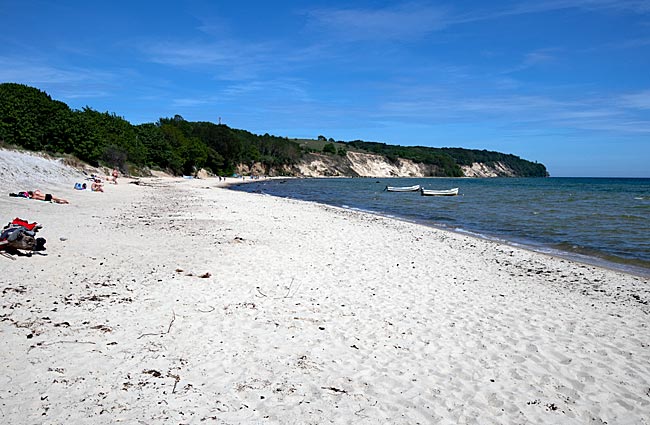
3. Rügen by the Baltic Sea
Cycling from Göhren to Reddevitzer Höft
The farther you cycle along Reddevitzer Höft, the sparser the settlements become. Where no houses or trees obstruct the view, you can see the Rügischer Bodden with Having Bay on one side and Hagensche Wiek Bay on the other. This is especially true when you reach the 33-meter-high elevation at the end of the peninsula. From the cliff, you have a wide view across the water toward Vilm Island or the village of Gager with its small harbor.
read more about Rügen ...
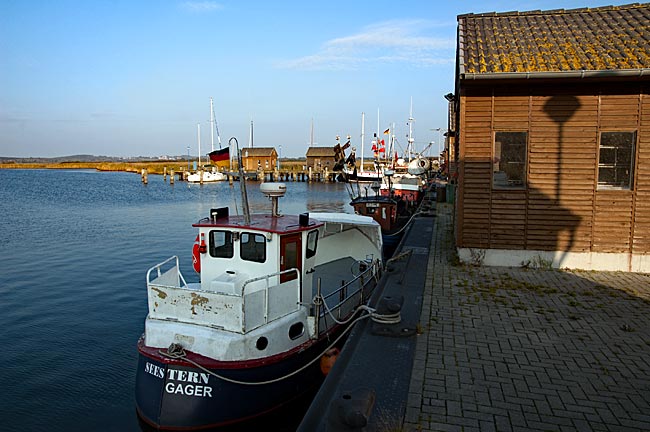
4. Rügen by the Baltic Sea
Seaside resort tour on foot or by bike
From the north beach in Göhren, the next seaside resort in the other direction is already within sight: Baabe. So you can simply stroll barefoot along the water or use the Amber Promenade as an equally direct route, though with a solid surface. Cyclists can also make good use of this and find it well-developed parallel to the promenade. A slightly bumpy and longer option is the combined cycling and hiking trail through the forest, connecting the two seaside resorts over 2.5 kilometers.
A bike trip form Baabe to Seedorf and to the seven megalithic tombs from the Stone Age near Lancken-Granitz
The charm of Seedorf lies primarily in its harbor: docks with moorings for many recreational boats along both shores of the inlet to Neuensiener See. Here, sailboats and motor yachts are safely anchored away from the sometimes rough seas of the Baltic Sea, yet their skippers can quickly reach it if needed.
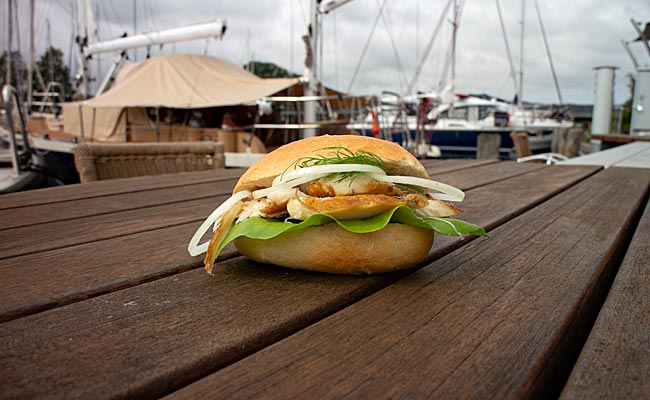
A seabridge and spa architecture in Sellin
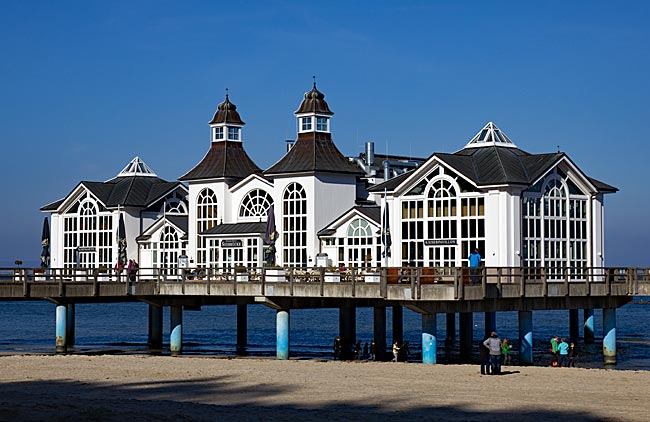
Long before reaching Sellin along the beach, you’ll spot the impressive 394-meter-long pier, which has a turbulent history dating back to the early 20th century.But Sellin has more to offer than just the magnificent structure right on the beach. The so-called "Stairway to Heaven" leads up many steps to the high bluff, connecting the pier with Wilhelmstraße promenade.
read more about Rügen ...
5. Rügen by the Baltic Sea
Through the forest to Jagdschloss Granitz
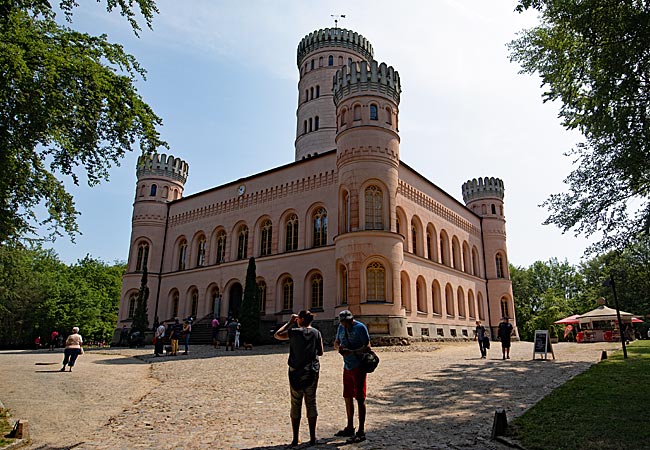
It's about 5 kilometers from Sellin through forest paths up to Jagdschloss Granitz. If you're on foot, you can initially take the cliff path through rough terrain at your own risk; by bike, there are additional better-developed paths. All paths eventually converge and lead well-signposted to the hunting lodge and Binz. The castle is also located along the route of the Rasender Roland, about one kilometer downhill to the station. In the other direction, it's about 3 kilometers through the forest to Binz.
Art and more in Binz, the largest seaside resort on Rügen
If you arrive as a visitor from the sea side, on the one hand, the size of the place in general and the 1890-opened Kurhaus as the unmistakably largest and most impressive building in particular catch your eye. Even in the off-season, Binz is much livelier and busier than the places in its immediate vicinity. Historical houses in the style of spa architecture can also be found here, whether directly on the beach promenade or in the shopping streets of the town. And regardless of whether you arrive by ship or by bus, you are immediately in the midst of the action.
read more about Rügen ...
6. Rügen by the Baltic Sea
From Binz to Sassnitz
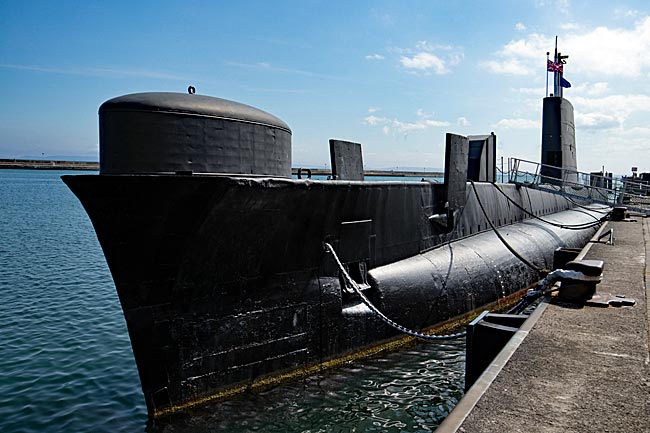
Since 2007, a 250-meter-long suspension bridge has allowed pedestrians to quickly reach the city harbor from the city center - offering a wide view of the harbor and the Baltic Sea. If you use the suspension bridge, you will immediately encounter the most unusual ship in the harbor: the H.M.S. Otus. This 90-meter-long British submarine of the Oberon class, built in 1962, has been decommissioned and is now a walkable museum.
To the chalk cliffs with the 118-meter-high Königsstuhl in Jasmund National Park
From Göhren, Sellin, Bilz, or Sassnitz, you can also book a trip to the chalk cliffs with the ships of Adler-Reederei, offering a view from below of the relics from the Cretaceous period, which began approximately 145 million years ago and ended around 66 million years ago, instead of the panoramic view from above.
read more about Rügen ...
7. Rügen by the Baltic Sea
actual page
8. Rügen by the Baltic Sea
Travel Information
Many hopefully helpful pieces of information for the described part of Rügen. Unfortunately, not all websites are available in English yet. Nevertheless, I am sure you will have a wonderful time on Germany's largest island. Take care.
read more about Rügen ...
Wismar
The Hanseatic City on the Baltic Sea and its UNESCO World Heritage
The World Heritage House is a building with a stone front house and an attached timber-framed Kemladen on a foundation of loose fieldstones from a medieval predecessor building. This beautifully restored small building complex visually illustrates and provides information via text panels about the lives of past generations in the hall houses typical for Wismar, along with their outbuildings. Additionally, there is extensive information about the city’s history and numerous protected buildings in the old town - there are 1,754 in total, with 306 designated as individual monuments. In the old town, one is right in the middle of Wismar’s UNESCO World Heritage Site.
read more about Wismar ...
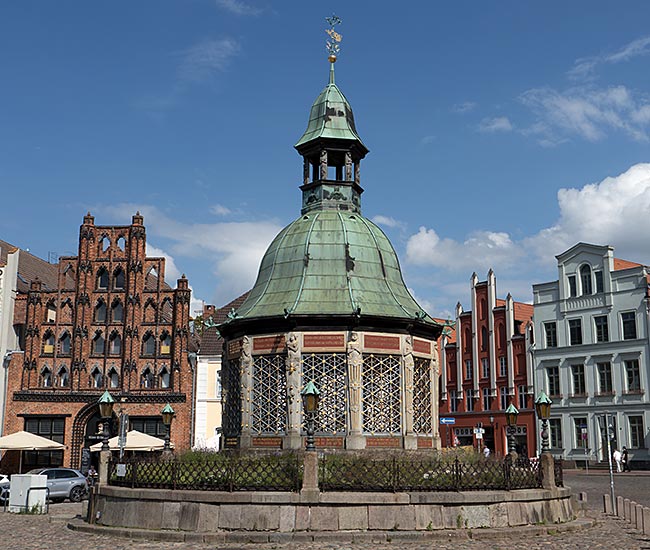
Rostock and Warnemünde by the Baltic Sea
A travel guide
A mini-guide through the Hanseatic city of Rostock and its beautiful beach destination, Warnemünde. Home to one of the oldest universities in the Baltic region, the city boasts a rich history. Join us on a tour of discovery.
read more about Rostock ...
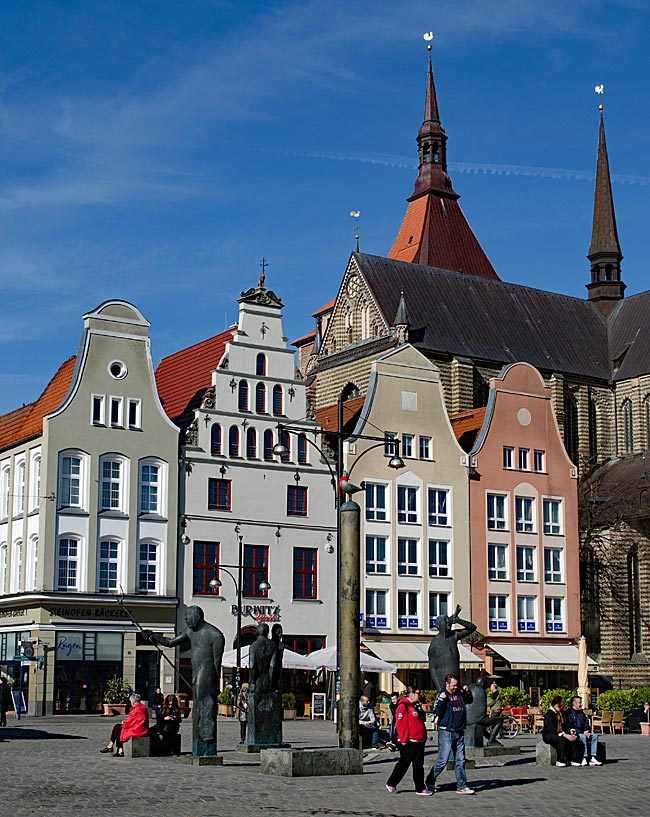
In the Probstei in late summer
Schönberger Strand and sea and more
Can you walk or ride a bike from Brasilien (Brazil) to Kalifornien (California) in just a few minutes, always with a view of the water? No, not with your finger on the globe or map, but in person. You’ll have to forgo Copacabana and the Sunset Strip with the Angels in Los Angeles (Spanish for "The Angels"). Instead, you get Germany’s "True North" with all its bright sides. Of course, there are sometimes shadows here too, but they belong only on the margins of this story.
read more about Schönberger Strand ...