

DISTANT PLACES
Travel tips for destinations far from the Hanseatic City of Bremen
Rügen by the Baltic Sea
Hiking, cycling & more in the southeast of the island
Page 2 of 8
Nordperd: hiking through the forest to the cliff
View of the Nordperd
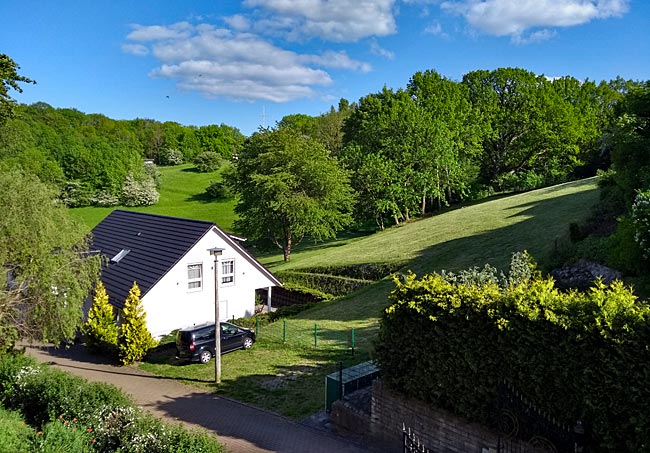
The mostly forested promontory - this is what the word Perd means in Slavic - is part of the Mönchgut Biosphere Reserve. And indeed, from the air, the area juts out like a green pointed triangle into the sea. Passing by the old water tower on Nordperdstraße, the path leads a few meters further up to the storm signal from the 1930s, today a technical monument, into the forested part.
Hiking in autumn on the Nordperd
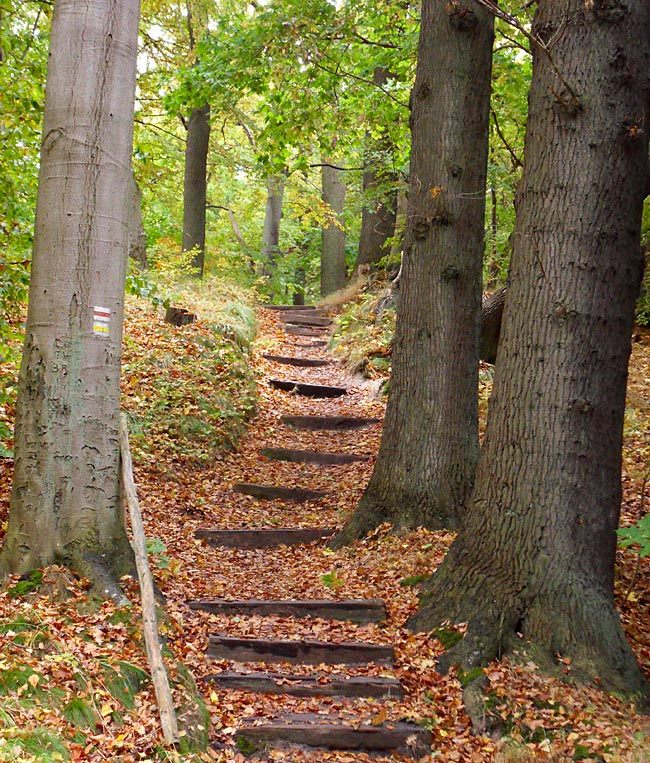
Many paths crisscross the hilly terrain, sometimes right up to the edges of the cliff. Since the Nordperd consists of glacial deposits like boulder clay and boulder loam, weather-related dangerous collapses and landslides occur at the steep coast. Hikers should therefore exercise extreme caution and take any warning signs very seriously. A hike is particularly attractive because from a safe distance on the cliff, you have a very wide view over the Baltic Sea and along the coast.
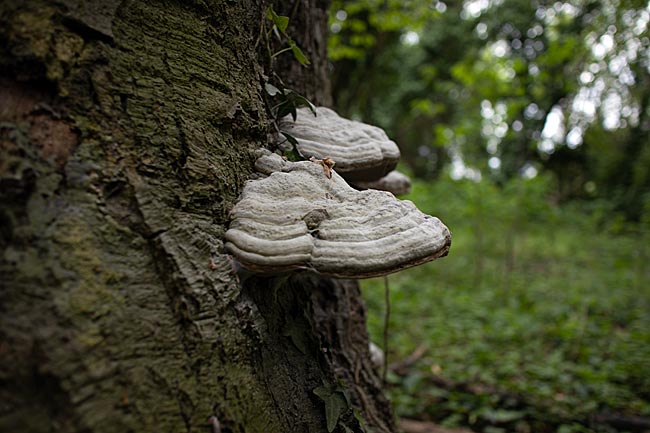
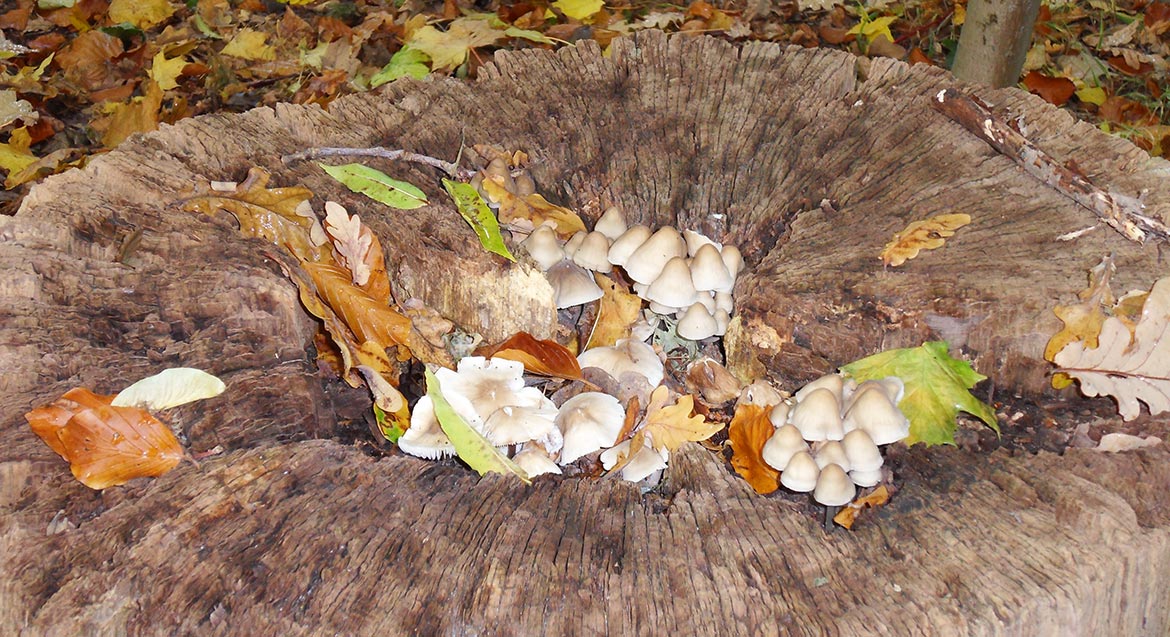
Tree fungi in the mostly untouched forest
One could almost say two coasts, as the pointed cape divides the beach into two parts: the already mentioned north beach with Germany’s largest boulder in the water, the Buskam, usually occupied by seabirds, and the south beach stretching several kilometers to Thiessow and the Südperd. The coastal area in between has been partially fortified with stone walls to at least slow down the erosion of the comparatively loose landmass.
Along the beach to Thiessow and Klein Zicker
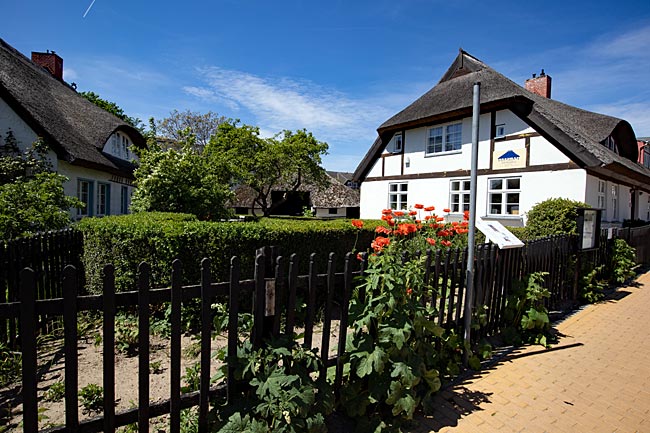
A pleasant ensemble with the Rookhus in the center in the background
For a beautiful hike by the water, we first pass the Rookhus and the "Luise" on Thiessower Straße before reaching the south beach. The Rookhus, built in 1720, is one of Rügen’s oldest buildings and a rarity - it has no chimney. Instead, smoke from the open hearth escaped through small "Uhlenlöcher" (owl holes) along the narrow ridge, preserving the oak timber structure like in a smoking oven. The mantle roof of the hall house is supported by two rows of posts. The inhabitants shared the cramped space under one roof with their animals and agricultural products. Life and work took place here, as was common in many farmhouses in other regions. An exhibition in the museum shows what life was like back then.
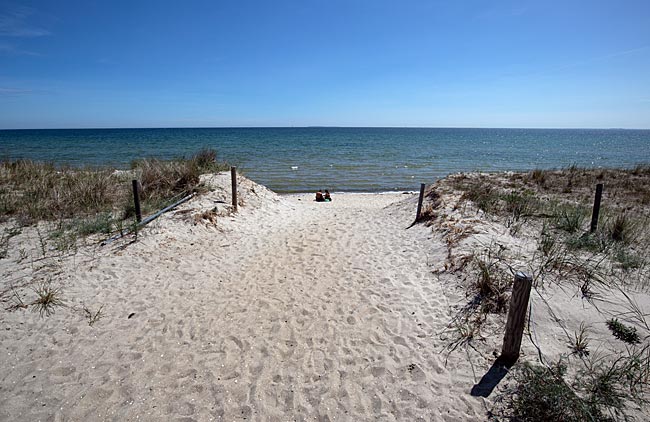
Museum ship "Luise" beach access
After this short museum visit, our path leads us through the sand of the Baltic Sea past the village of Lobbe to the end of the beach in Thiessow - a considerable distance for persistent hikers coming from Göhren, always with a salty breeze in their noses. Since opportunities for refreshments along the way are limited, bringing some provisions and drinking water is helpful, as is sun protection. The return journey is more comfortable by bus if your legs can’t carry you anymore.
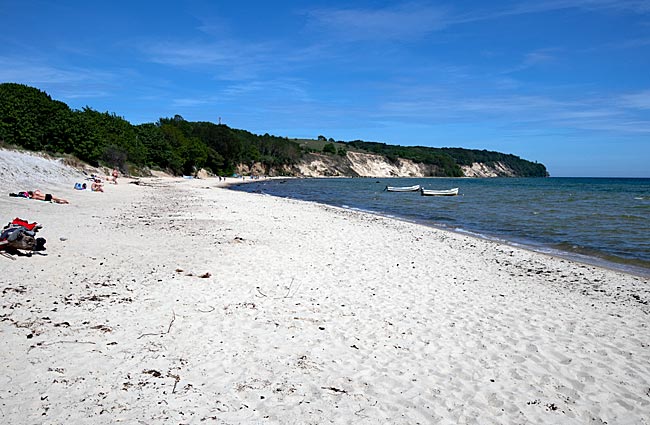
Beach between Göhren and Lobbe
On the way to Lobbe, you pass a small section of high cliff where, during breeding season from late April to late June, you might spot sand martins with luck. At around 12 cm in length, these extremely agile birds in flight belong to the smallest European swallow species. Like here, they often nest in broken-off cliffs made of sandy layers and dig tunnels about 70 cm deep into the earth below the cliff edge and vegetation layer as nesting sites. Although the actual nesting chamber is at the end of the tunnel, it’s a risky endeavor for the bird colony, as where material has already collapsed, more can slide away at almost any time due to gravity. This can be fatal - not just for the birds.
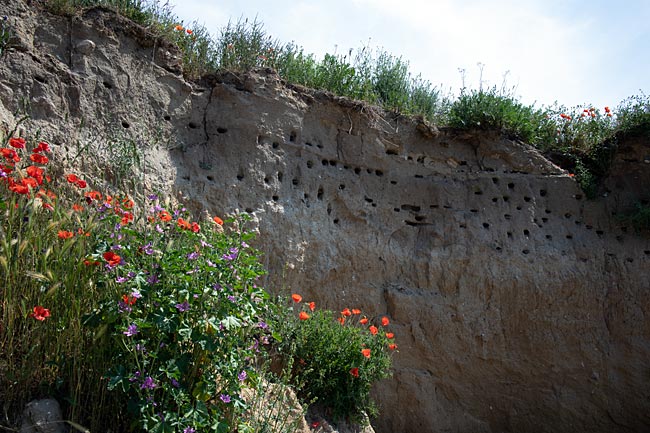
Sand martins nesting on the cliff
As elsewhere on Rügen, countless sea buckthorn bushes grow along the south beach near Lobbe. Also known as Haffdorn, Seedorn, red sloe, sandberry, or colloquially "the lemon of the north," these bushes can reach up to 6 meters in height. From early August onward, oval orange-red to yellow berries up to 6–8 mm in size grow on them. The fruits are not only part of the food supply for birds, especially in autumn, but also highly popular among larger two-legged creatures. The berries are quite rich in vitamin C and are processed into various products on the island, including juice.
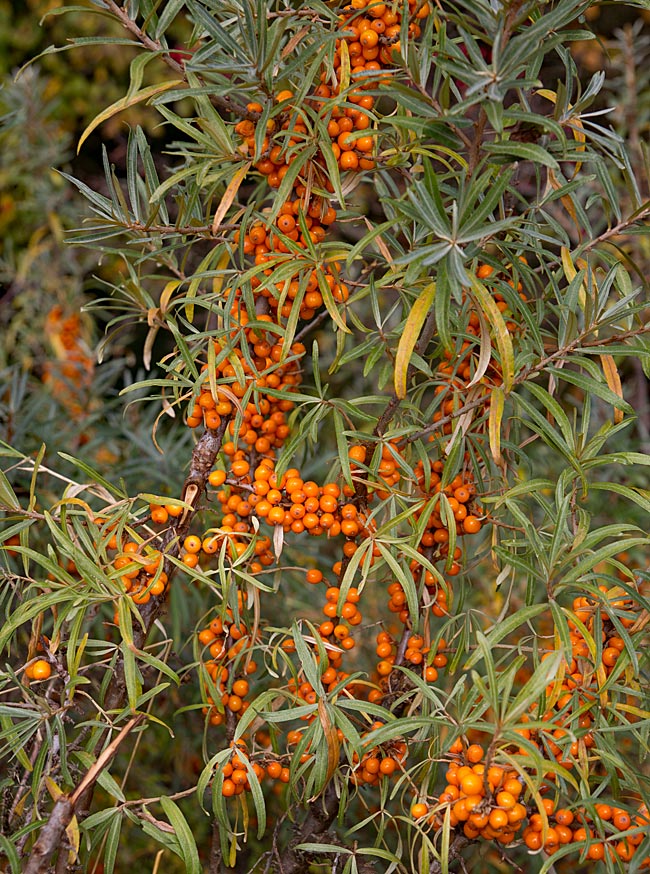
Sea buckthorn bushes at Lobbe
From Lobbe, it’s another five kilometers to the seaside resort of Thiessow. Parallel to the beach and between the beach and road runs the "Rügen Round Route" for cyclists, which spans the entire island and here is also part of the "Baltic Coastal Cycle Route." Part of the route lies in a forest.
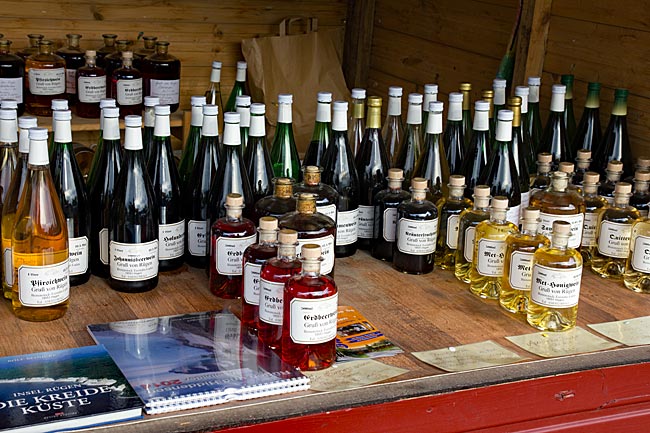
Stand at the Rügen Market
Tuesdays and Thursdays, from early May to late October, the picturesque Rügen Market takes place in Thiessow in the harbor area near the Zicker See camping site. Offerings include jewelry, textiles, handicrafts made of various materials, everyday items, and culinary delights in solid and liquid form - either to take away or enjoy on-site. Those who don’t want to come by bike or foot can alternatively take bus line 21.
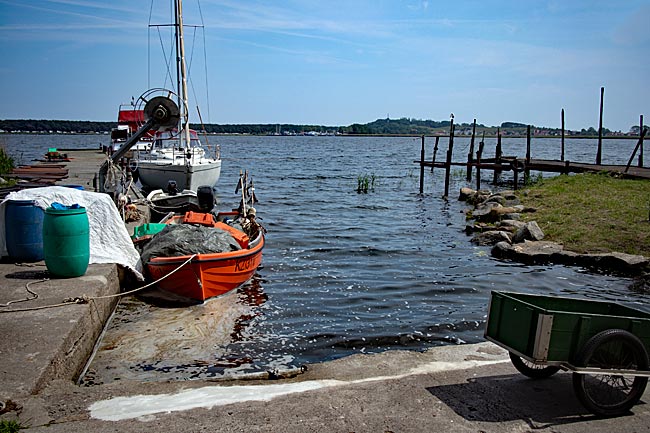
Boats in Klein Zicker with a view of the harbor in Thiessow in the background
From the harbor, you can walk through the protected salt marshes across the Klein Zicker peninsula to the village of the same name. This is also where the bus line ends. The main street straight through this small charming town leads to the steep coast on the west bank. From there, a roughly 1-kilometer circular hiking trail leads over the hilly landscape of the peninsula and back to the village at the bus line’s endpoint, where you can grab a bite at "Imbiss am Bodden" by the Bodden. :-)
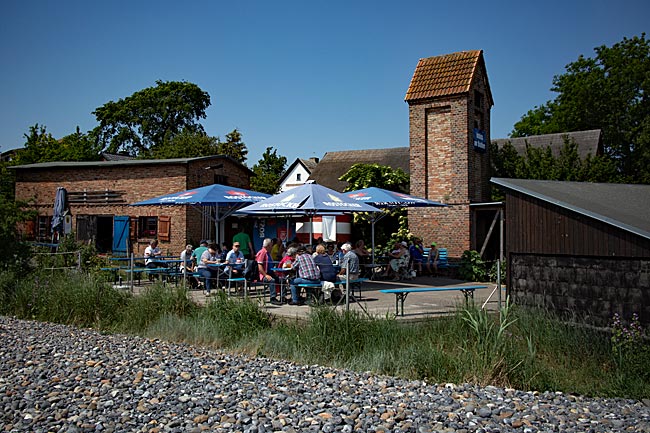
Snack at the Bodden in Klein Zicker
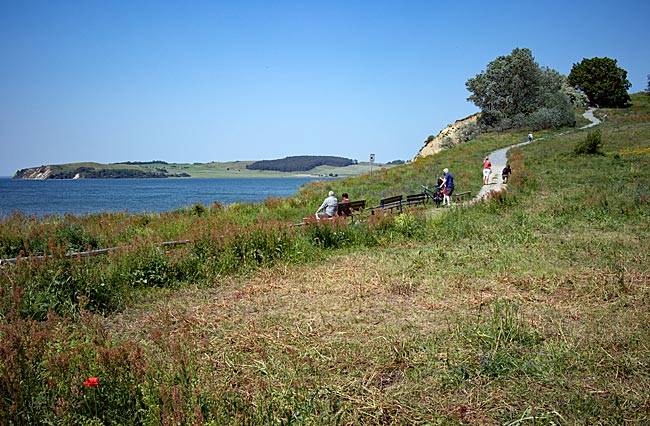
The circular hiking trail begins at the cliff, with the Zicker Mountains and the Zickersche Höft peninsula in the background
The highlight of this short hike is the beautiful view over the Greifswalder Bodden to the west and southwest, as well as across the Zicker See to the village of Groß Zicker and the 66-meter-high Zicker Mountains behind it, where the Zickersche Höft peninsula juts out. This carefree walk through nature was only made possible by extensive renaturation measures, as an information board on-site reveals.
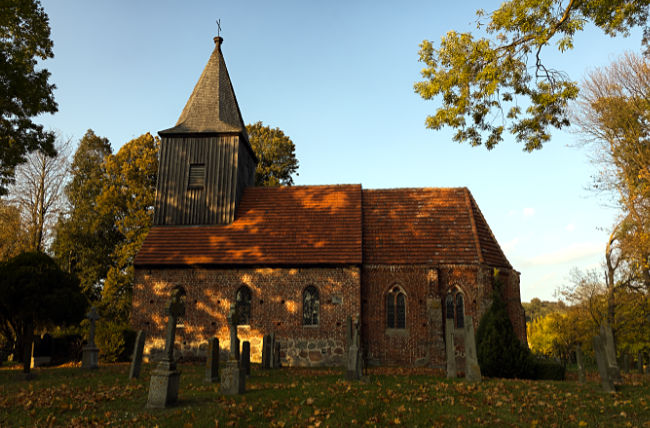
The small village church in Groß Zicker on a late autumn afternoon, built around 1360 and thus the oldest building on Mönchgut
While only insignificant remains are left of a Swedish fortification built at the beginning of the 18th century, the Soviet army’s radar station has been completely dismantled. From mid-1967 until their withdrawal on June 20, 1991, numerous residential and storage buildings as well as associated infrastructure stood on the site. After subsequent renaturation, during which 37,000 cubic meters of soil were moved, a dry and nutrient-poor grassland flora now characterizes the landscape.
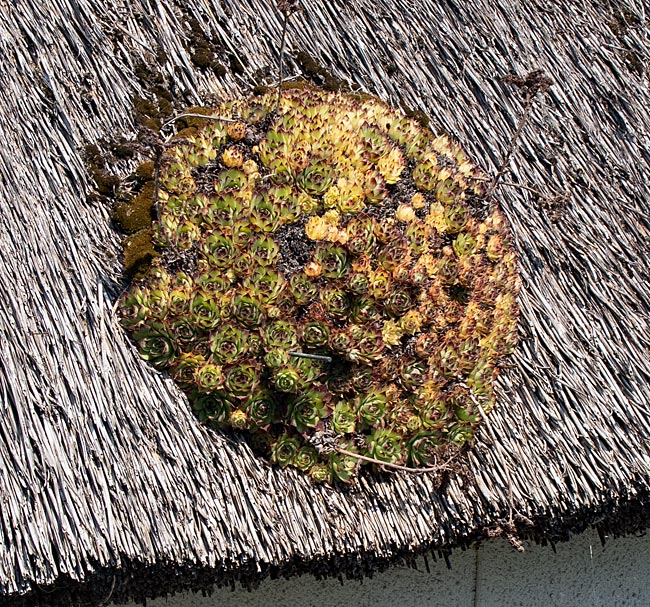
Succulents on a thatched roof


Map
1. Rügen by the Baltic Sea
Start
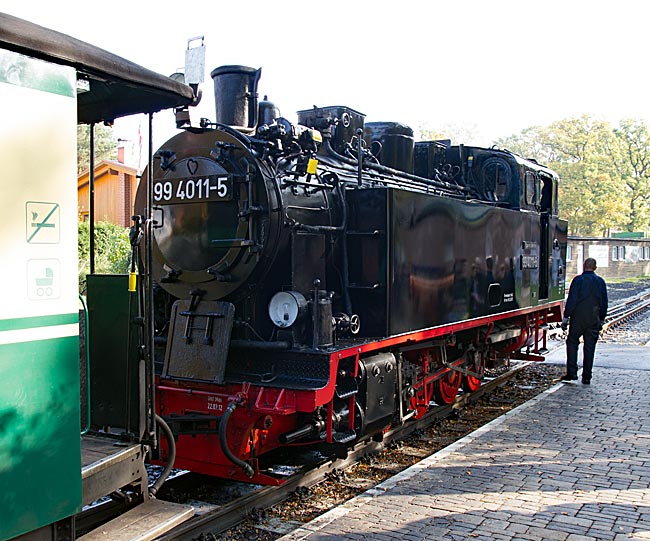
We are on our way to Göhren, where Nordperd, a forested cape with steep cliffs belonging to the eponymous municipality, marks the easternmost point of the island. The Intercity terminates in Binz, Rügen’s largest seaside resort, and from there you can continue by bus - but it’s more attractive to take the Rasende Roland all the way to Göhren.
Seaside Resort Göhren
The wide “Amber Promenade,” renovated in 2003 for the International Horticultural Exhibition, is one of the resort’s main meeting points with its cafés, restaurants, shops, mini-golf course, themed gardens, and play areas for children. Naturally, this is also because the long north beach, Göhren’s actual bathing beach, lies just behind it.
read more about Rügen ...
2. Rügen by the Baltic Sea
actual page
3. Rügen by the Baltic Sea
Cycling from Göhren to Reddevitzer Höft
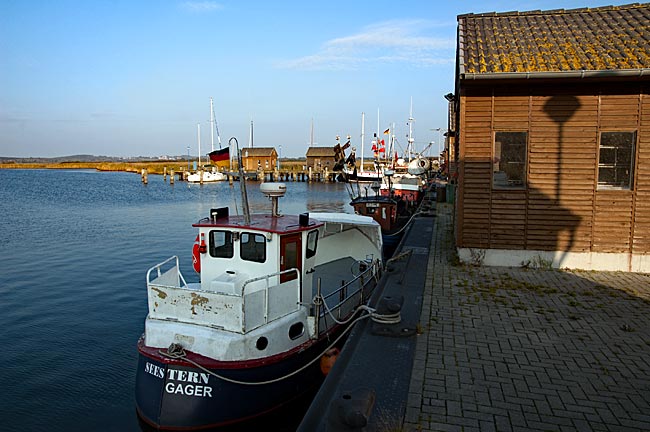
The farther you cycle along Reddevitzer Höft, the sparser the settlements become. Where no houses or trees obstruct the view, you can see the Rügischer Bodden with Having Bay on one side and Hagensche Wiek Bay on the other. This is especially true when you reach the 33-meter-high elevation at the end of the peninsula. From the cliff, you have a wide view across the water toward Vilm Island or the village of Gager with its small harbor.
read more about Rügen ...
4. Rügen by the Baltic Sea
Seaside resort tour on foot or by bike
From the north beach in Göhren, the next seaside resort in the other direction is already within sight: Baabe. So you can simply stroll barefoot along the water or use the Amber Promenade as an equally direct route, though with a solid surface. Cyclists can also make good use of this and find it well-developed parallel to the promenade. A slightly bumpy and longer option is the combined cycling and hiking trail through the forest, connecting the two seaside resorts over 2.5 kilometers.
A bike trip form Baabe to Seedorf and to the seven megalithic tombs from the Stone Age near Lancken-Granitz
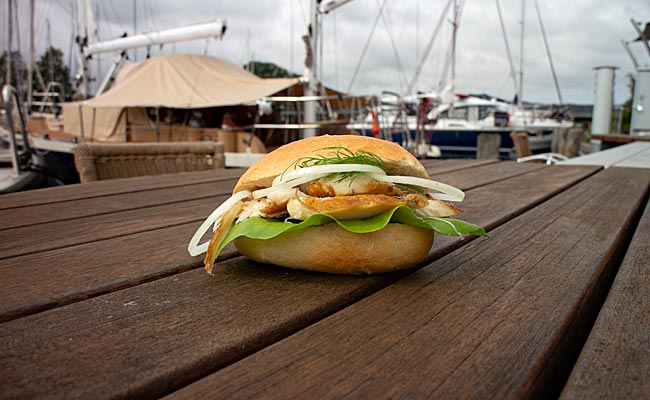
The charm of Seedorf lies primarily in its harbor: docks with moorings for many recreational boats along both shores of the inlet to Neuensiener See. Here, sailboats and motor yachts are safely anchored away from the sometimes rough seas of the Baltic Sea, yet their skippers can quickly reach it if needed.
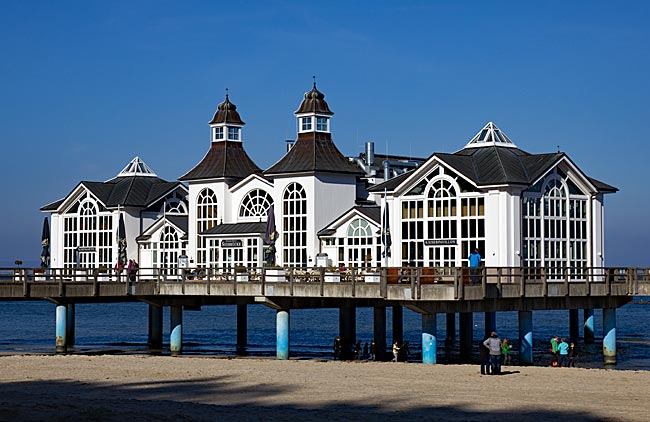
A seabridge and spa architecture in Sellin
Long before reaching Sellin along the beach, you’ll spot the impressive 394-meter-long pier, which has a turbulent history dating back to the early 20th century.But Sellin has more to offer than just the magnificent structure right on the beach. The so-called "Stairway to Heaven" leads up many steps to the high bluff, connecting the pier with Wilhelmstraße promenade.
read more about Rügen ...
5. Rügen by the Baltic Sea
Through the forest to Jagdschloss Granitz
It's about 5 kilometers from Sellin through forest paths up to Jagdschloss Granitz. If you're on foot, you can initially take the cliff path through rough terrain at your own risk; by bike, there are additional better-developed paths. All paths eventually converge and lead well-signposted to the hunting lodge and Binz. The castle is also located along the route of the Rasender Roland, about one kilometer downhill to the station. In the other direction, it's about 3 kilometers through the forest to Binz.
Art and more in Binz, the largest seaside resort on Rügen
If you arrive as a visitor from the sea side, on the one hand, the size of the place in general and the 1890-opened Kurhaus as the unmistakably largest and most impressive building in particular catch your eye. Even in the off-season, Binz is much livelier and busier than the places in its immediate vicinity. Historical houses in the style of spa architecture can also be found here, whether directly on the beach promenade or in the shopping streets of the town. And regardless of whether you arrive by ship or by bus, you are immediately in the midst of the action.
read more about Rügen ...
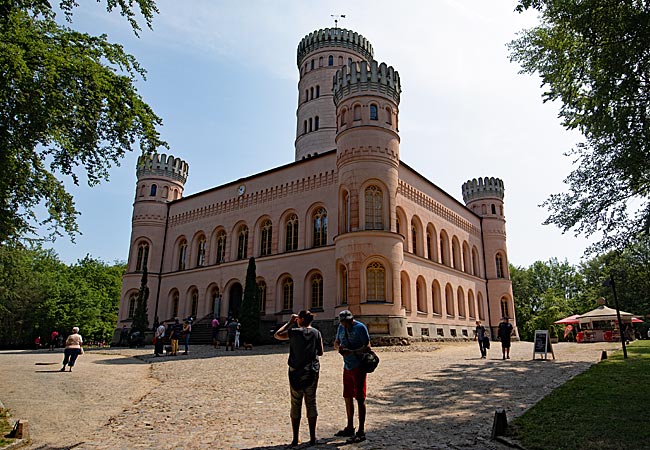
6. Rügen by the Baltic Sea
From Binz to Sassnitz
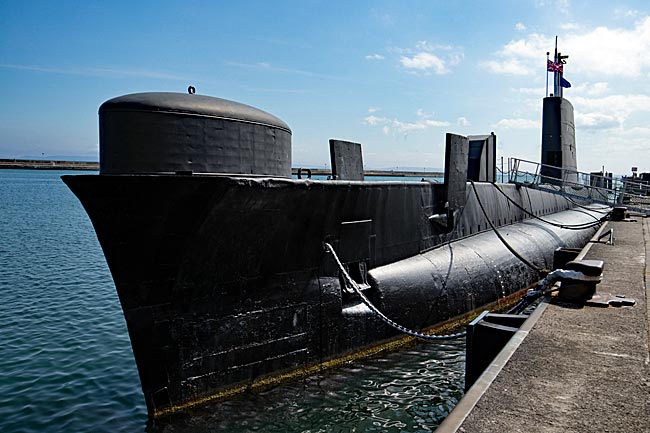
Since 2007, a 250-meter-long suspension bridge has allowed pedestrians to quickly reach the city harbor from the city center - offering a wide view of the harbor and the Baltic Sea. If you use the suspension bridge, you will immediately encounter the most unusual ship in the harbor: the H.M.S. Otus. This 90-meter-long British submarine of the Oberon class, built in 1962, has been decommissioned and is now a walkable museum.
To the chalk cliffs with the 118-meter-high Königsstuhl in Jasmund National Park
From Göhren, Sellin, Bilz, or Sassnitz, you can also book a trip to the chalk cliffs with the ships of Adler-Reederei, offering a view from below of the relics from the Cretaceous period, which began approximately 145 million years ago and ended around 66 million years ago, instead of the panoramic view from above.
read more about Rügen ...
7. Rügen by the Baltic Sea
By water to Lauterbach and Putbus
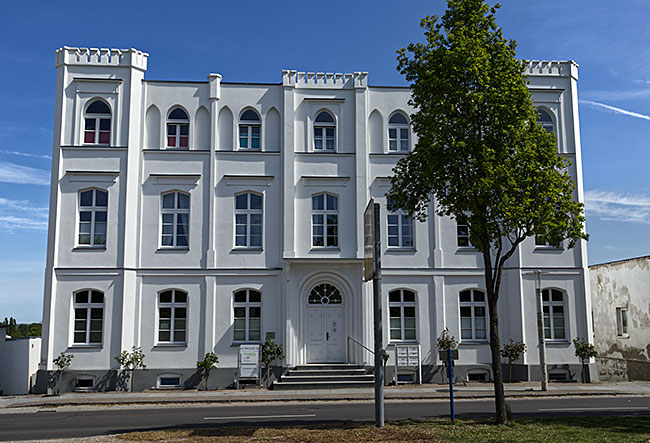
Sellin. The open Baltic Sea on one side, a lake, a bay, and a "shallow bay-like coastal water body" - the Bodden - on the other. This is where the ships of the White Fleet sail. From Lauterbach, a two-lane main road leads about two kilometers into the center of Putbus - getting lost on the green avenue is practically impossible. Thus, after the described walk, you first encounter the Circus. The model for the facility built between 1828 and ’45 was the Circus constructed a century earlier in the English spa town of Bath.
read more about Rügen ...
8. Rügen by the Baltic Sea
Travel Information
Many hopefully helpful pieces of information for the described part of Rügen. Unfortunately, not all websites are available in English yet. Nevertheless, I am sure you will have a wonderful time on Germany's largest island. Take care.
read more about Rügen ...
Wismar
The Hanseatic City on the Baltic Sea and its UNESCO World Heritage
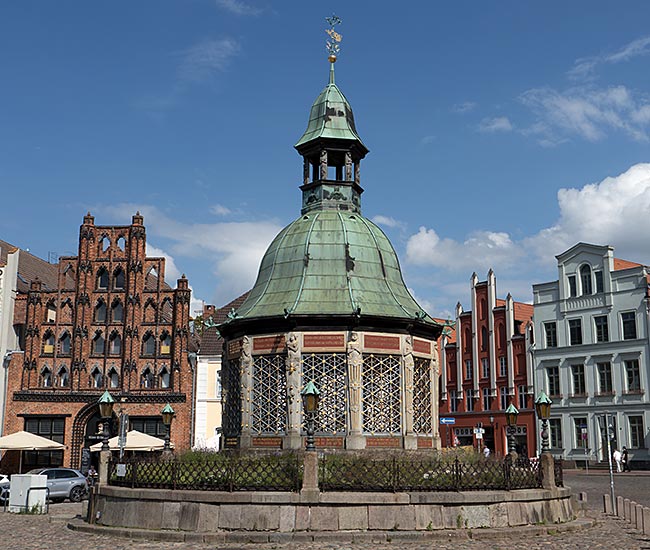
The World Heritage House is a building with a stone front house and an attached timber-framed Kemladen on a foundation of loose fieldstones from a medieval predecessor building. This beautifully restored small building complex visually illustrates and provides information via text panels about the lives of past generations in the hall houses typical for Wismar, along with their outbuildings. Additionally, there is extensive information about the city’s history and numerous protected buildings in the old town - there are 1,754 in total, with 306 designated as individual monuments. In the old town, one is right in the middle of Wismar’s UNESCO World Heritage Site.
read more about Wismar ...
Rostock and Warnemünde by the Baltic Sea
A travel guide
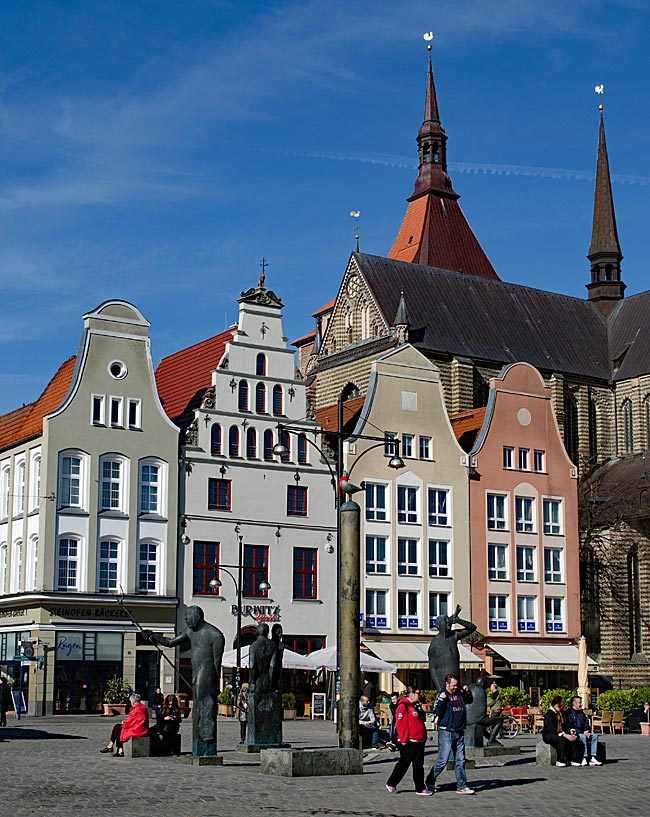
A mini-guide through the Hanseatic city of Rostock and its beautiful beach destination, Warnemünde. Home to one of the oldest universities in the Baltic region, the city boasts a rich history. Join us on a tour of discovery.
read more about Rostock ...
In the Probstei in late summer
Schönberger Strand and sea and more
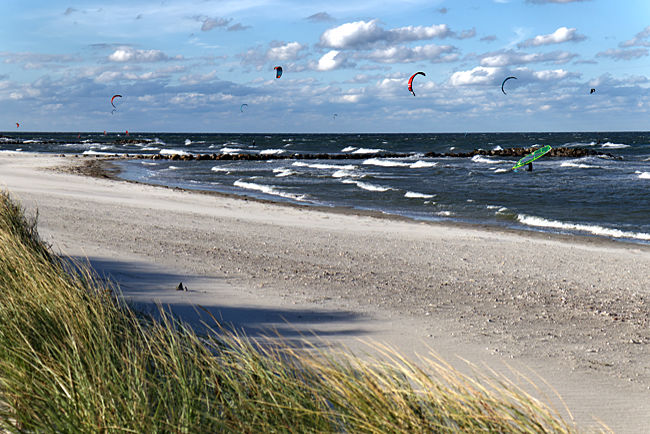
Can you walk or ride a bike from Brasilien (Brazil) to Kalifornien (California) in just a few minutes, always with a view of the water? No, not with your finger on the globe or map, but in person. You’ll have to forgo Copacabana and the Sunset Strip with the Angels in Los Angeles (Spanish for "The Angels"). Instead, you get Germany’s "True North" with all its bright sides. Of course, there are sometimes shadows here too, but they belong only on the margins of this story.
read more about Schönberger Strand ...
Flensburg on the Baltic Sea
On the Förde at the border to Denmark
"The True North" - that is how the northernmost federal state rightfully markets its unique charms. When "fresh air" is promoted as "the best thing about the North," it is hard to disagree once you are actually here. Fresh breezes blow across the Baltic on the east coast and the North Sea on the west, with roughly 70 kilometers of flat, sparsely populated land stretched between them. With just under 100,000 residents, Flensburg is the third-largest city in Schleswig-Holstein, following the state capital Kiel and the "Pearl of the Hanseatic League," Lübeck.
read more about Flensburg ...