

DISTANT PLACES
Travel tips for destinations far from the Hanseatic City of Bremen
Emden in East Frisia
Where East Frisians make jokes and serious art thrives
Page 3 of 3
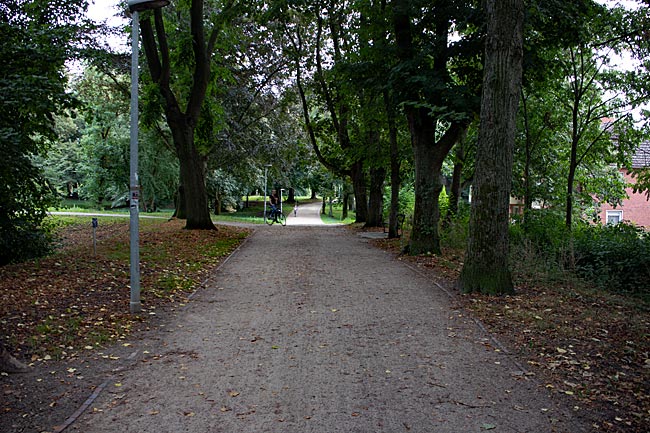
Walking path or popular cycling route: part of the Wall Promenades
The extensive green spaces and numerous waterways make strolls through the city truly delightful, provided you know which paths to take - especially to avoid traffic. However, those expecting a wealth of architectural highlights will be disappointed. The blame lies with the bombing raids in the final years of the war, which reduced 90% of the city center and 80% of Emden as a whole to rubble. Structures like the New Church, built in Baroque style and completed in 1648 after five years of construction, were rebuilt from the ground up after their destruction but only partially resemble the original design.
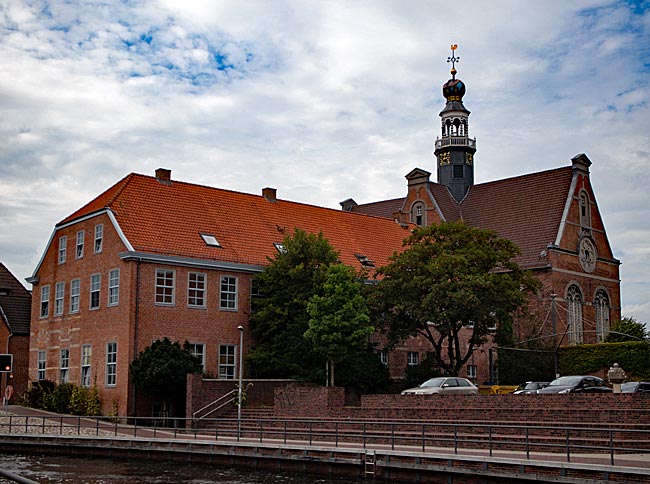
View of the New Church from Falderndelft; the building to the left is Gödenser Haus, erected in 1551. It once served as a barracks for the Brandenburg Navy, a prison, courthouse, and customs office. Today, it provides students with housing
The town hall, built between 1574 and 1576 by an Antwerp city architect with influences from his hometown, was reconstructed in 1962 but not faithfully to its original design - only certain stylistic elements were incorporated. The town hall once housed the city’s armory, which stored weapons and protective gear for the citizen militias. As their relevance faded, so did the armory’s importance, though its collection was expanded in later years. Today, parts of this impressive collection - both in quantity and quality - can be admired at the East Frisian State Museum in a wing of the town hall. The permanent exhibition primarily showcases objects from the 16th and 17th centuries.
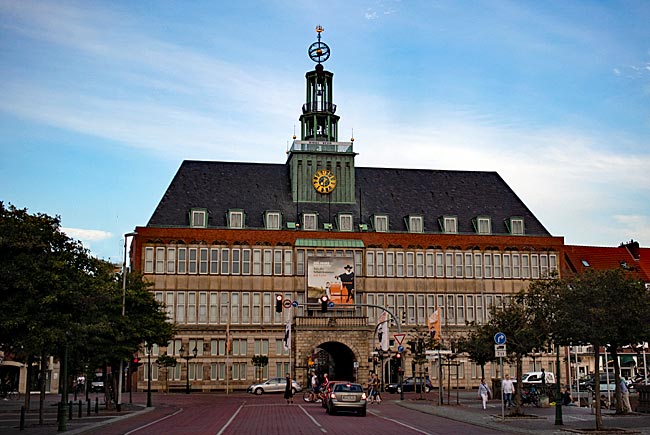
Emden Town Hall on Ratsdelft; behind the passageway lies the State Museum
Not particularly noteworthy due to its distance, but certainly worth listening to, is the carillon in the tower of the town hall. The cast work with 23 bells was donated by Brahms - not that one, but Emden citizen Bernhard Brahms. As a survivor of the air raids of ’44, he was likely overwhelmed by gratitude 56 years later at being able to experience the turn of the millennium. Thank you for this beautiful gift in G major, crafted in a bell foundry in the Netherlands. Fittingly, the largest bell bears the Latin inscription “To the joy of citizens and guests.”
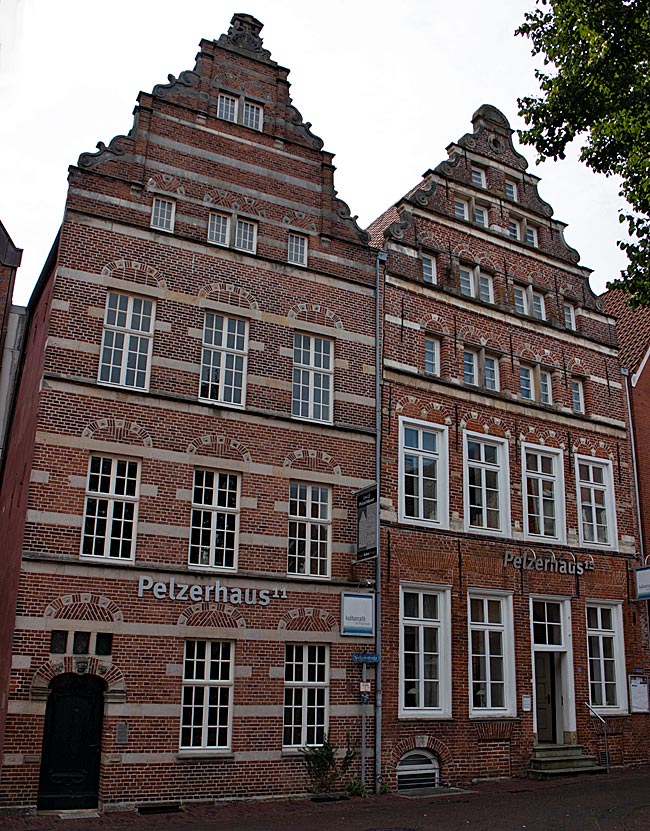
A glimpse into Emden’s architectural past
f passing by Pelzerstraße, take a moment to admire the Pelzer houses. The one on the left with house number 11 dates back to around 1570/80 and is likely one of the oldest preserved buildings in this East Frisian city. Naturally, renovations and restorations over time have altered its appearance, but it remains a sight to behold - offering a glimpse into what Emden by the Ems might have looked like in past eras, with narrow alleys and rough cobblestone streets.
Excursions
As previously mentioned, Emden is not the primary dream destination for North Sea vacationers, but its location makes it ideal for trips in many directions.
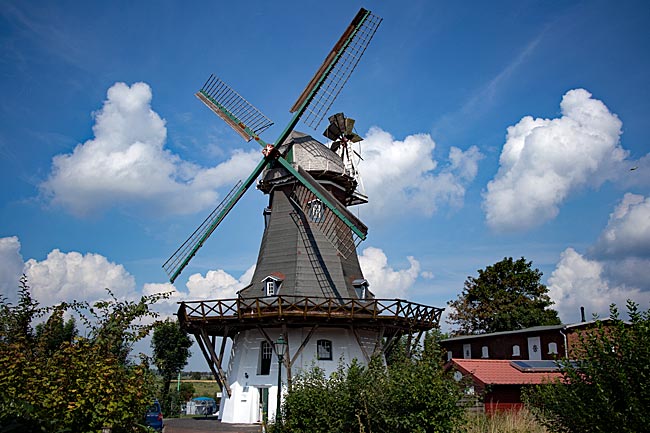
A beautifully restored windmill in the Larrelt district, built in 1732 and owned by the city since 1978
For those feeling up to it, a cycling excursion is recommended - perhaps along the “Lower Saxon Windmill Route” or directly along the Ems dike, passing through herds of sheep that compact the dike and keep the grass short. Treat yourself: rent an e-bike from a local shop; you’ll travel farther with ease.
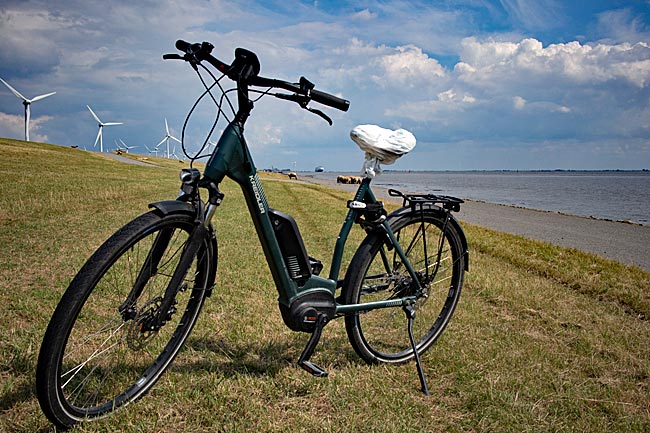
Cycling trip to the Ems with sheep herds on the dike. In the background, a RoRo ship leaves the harbor
A visit is worthwhile to the nearby town of Norden, with its tea museum, charming pedestrian zone, and yes - windmills. Somewhat isolated is the district of Norddeich, directly on the North Sea coast, known to many vacationers only as the ferry port to the islands of Juist and Norderney. Since the train stops right next to the dock and the massive parking lots for island visitors almost directly border the ferry terminal, you’ll barely notice Norddeich as a town. Nevertheless, Norden and Norddeich are absolutely worth visiting - and dining at the fish restaurant in the harbor is highly recommended. Perhaps you’ll join a mudflat hike, walking across the exposed seabed of the protected Wadden Sea National Park to learn more about life there - whether in the water, on, or within the sand.
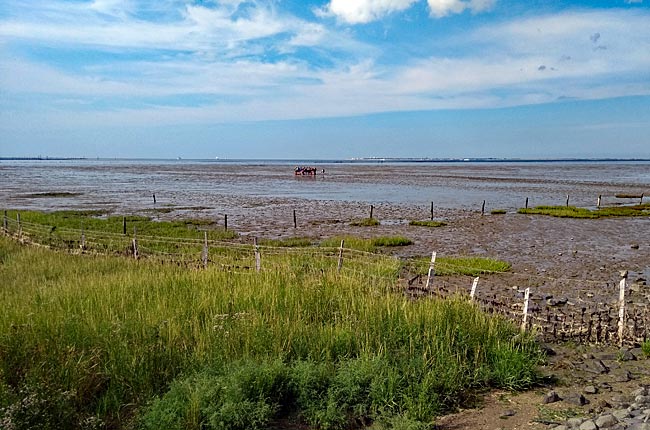
Out and about in the mudflats, but only with an official guide
For the ultimate North Sea experience with long sandy beaches and open sea for swimming, when the sun shines from a cloudless sky and temperatures rise, the islands are unmatched. However, their alternative offerings during bad weather are rather limited. From Emden station, you can comfortably travel directly to the water’s edge, purchase a round-trip ticket, and board for the approximately one-hour crossing to Norderney. The beach at the north side of the island is within a 20-minute walking distance from the harbor. Due to the tides, however, a short visit to the car-free island of Juist must be planned much more carefully.
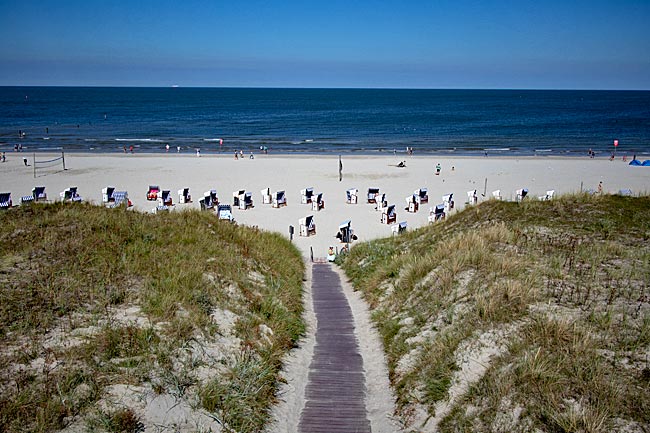
View of the beach at the north side on Norderney
What in other contexts might not be good news - namely, LEER (in german it means empty) - looks no different in East Frisia, but here, LEER is also good. Once again, the train station serves as an excellent starting point, whether you arrive by rail or car, as it lies near the pedestrian zone. However, things only get truly interesting at the end of this zone when entering the picturesque old town. The headquarters of the tea trading house Bünting, founded in 1808, along with its adjacent private tea museum and the bronze sculpture “Teelke” (1991) by artist Karl-Ludwig Blöke, mark the transition.
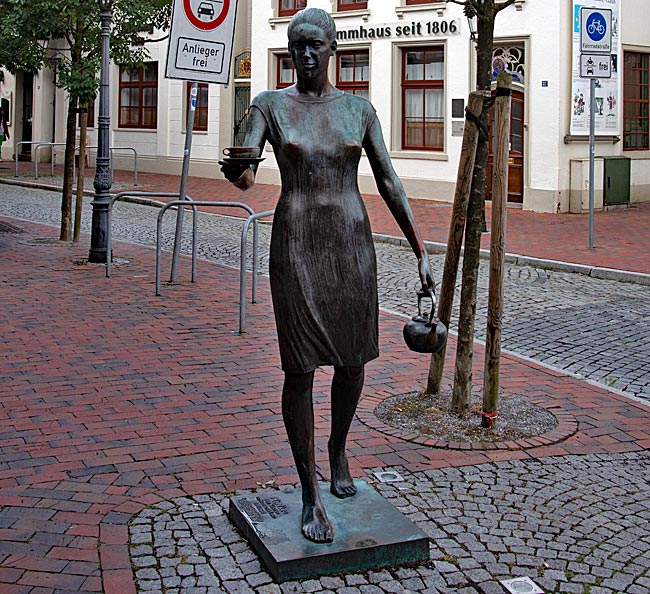
Fancy a cup of tea?
Those who prefer not to explore the old town on their own can follow the metal signs embedded in the pavement reading “LEER Path,” which is indeed educational.
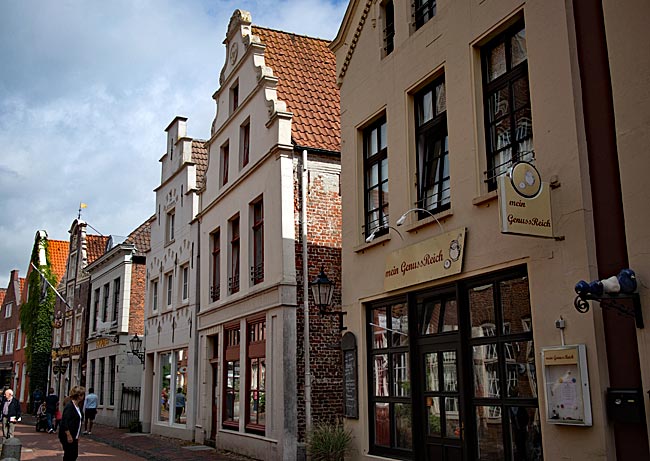
Picturesque row of houses in Rathausstraße
Either way, you’ll likely end up sooner or later in Rathausstraße, whose picturesque row of houses may be the most photographed motif in this East Frisian city - one that also occasionally serves as a backdrop for the ZDF crime series “Friesland,” such as at the museum harbor. Among other things, the 1714-built scales stand there, now housing a restaurant. From its terrace, you have a beautiful view of a tributary of the Leda, which continues further behind the historic steamship Prinz Heinrich. The path along the water is truly a lovely walking route that, by the way, also leads back to the train station.
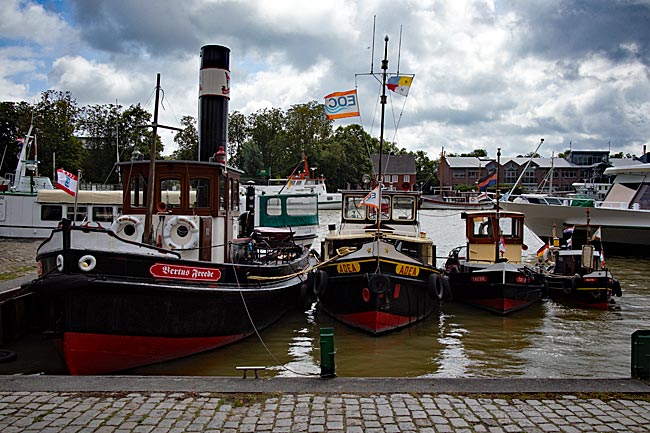
Historical tugboats in the museum harbor
Infos
www.niedersaechsische-muehlenstrasse.de
previous page
 next page
Map
Rügen by the Baltic Sea
Active holiday featuring cycling and hiking
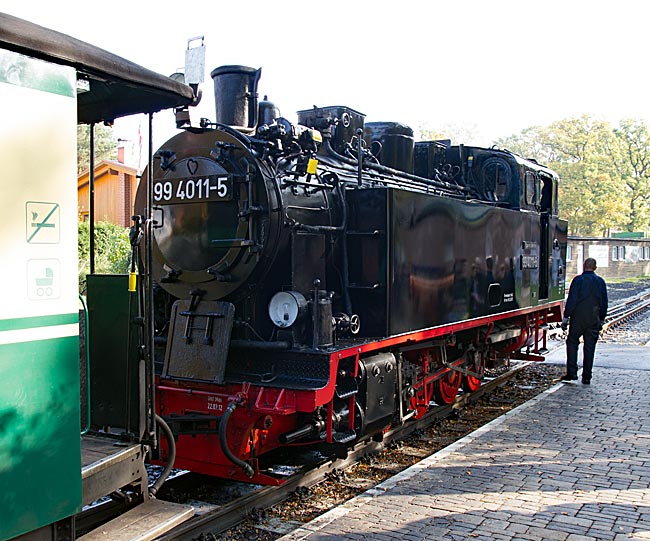
Enjoy an active holiday featuring cycling and hiking along the Baltic coast in Mönchgut on the island of Rügen. Long sandy beaches, rolling hills, and lush forests provide a varied and beautiful setting for your getaway. Often, the only thing breaking the peace is the distant whistle of the historic 'Rasender Roland' steam train. Despite its name (which suggests something "racing" or fast), it’s actually quite the opposite. A journey by train is simply part of the holiday experience.
read more about Rügen ...
Rostock and Warnemünde by the Baltic Sea
A travel guide
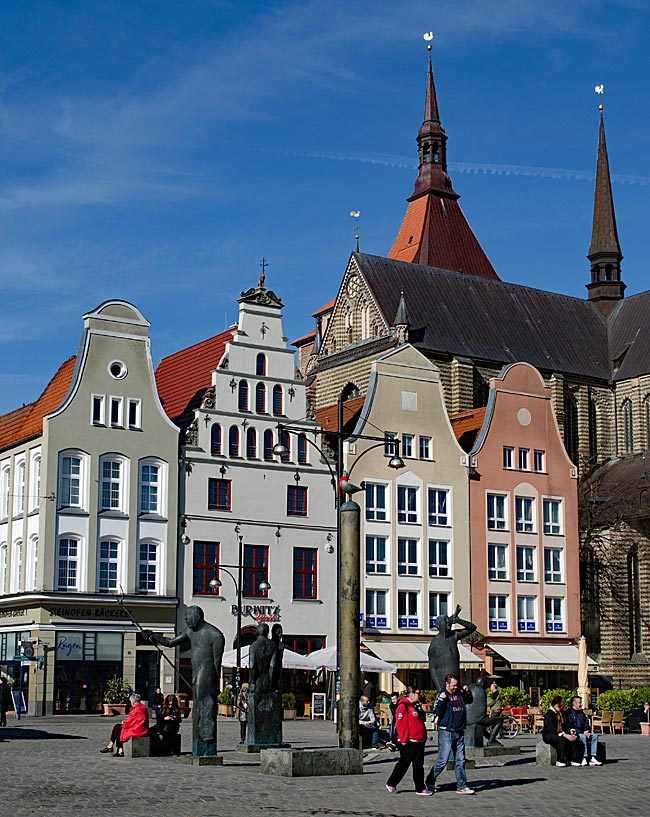
A mini-guide through the Hanseatic city of Rostock and its beautiful beach destination, Warnemünde. Home to one of the oldest universities in the Baltic region, the city boasts a rich history. Join us on a tour of discovery.
read more about Rostock ...
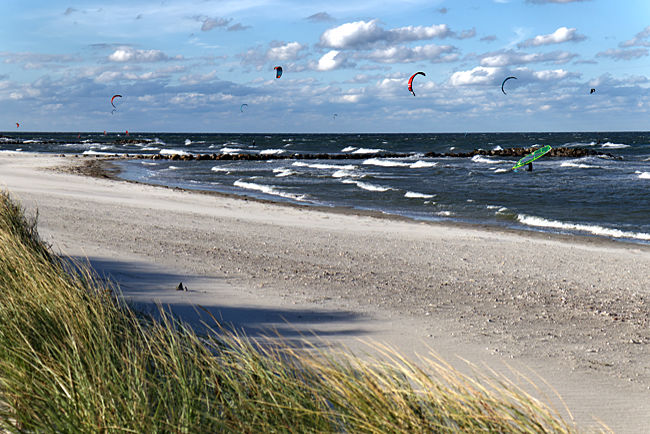
In the Probstei in late summer
Schönberger Strand and sea and more
Can you walk or ride a bike from Brasilien (Brazil) to Kalifornien (California) in just a few minutes, always with a view of the water? No, not with your finger on the globe or map, but in person. You’ll have to forgo Copacabana and the Sunset Strip with the Angels in Los Angeles (Spanish for "The Angels"). Instead, you get Germany’s "True North" with all its bright sides. Of course, there are sometimes shadows here too, but they belong only on the margins of this story.
read more about Schönberger Strand ...
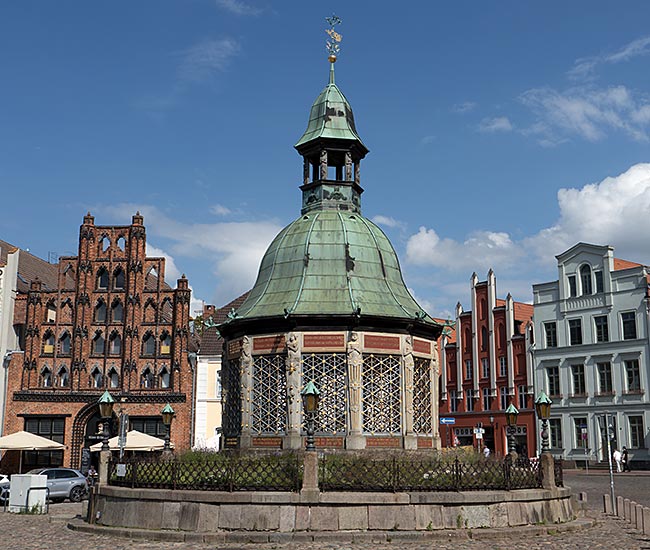
Wismar
The Hanseatic City on the Baltic Sea and its UNESCO World Heritage
The World Heritage House is a building with a stone front house and an attached timber-framed Kemladen on a foundation of loose fieldstones from a medieval predecessor building. This beautifully restored small building complex visually illustrates and provides information via text panels about the lives of past generations in the hall houses typical for Wismar, along with their outbuildings. Additionally, there is extensive information about the city’s history and numerous protected buildings in the old town - there are 1,754 in total, with 306 designated as individual monuments. In the old town, one is right in the middle of Wismar’s UNESCO World Heritage Site.
read more about Wismar ...
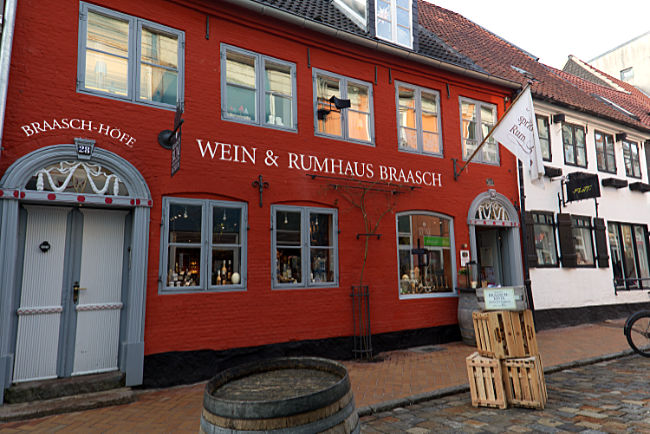
Flensburg on the Baltic Sea
On the Förde at the border to Denmark
"The True North" - that is how the northernmost federal state rightfully markets its unique charms. When "fresh air" is promoted as "the best thing about the North," it is hard to disagree once you are actually here. Fresh breezes blow across the Baltic on the east coast and the North Sea on the west, with roughly 70 kilometers of flat, sparsely populated land stretched between them. With just under 100,000 residents, Flensburg is the third-largest city in Schleswig-Holstein, following the state capital Kiel and the "Pearl of the Hanseatic League," Lübeck.
read more about Flensburg ...
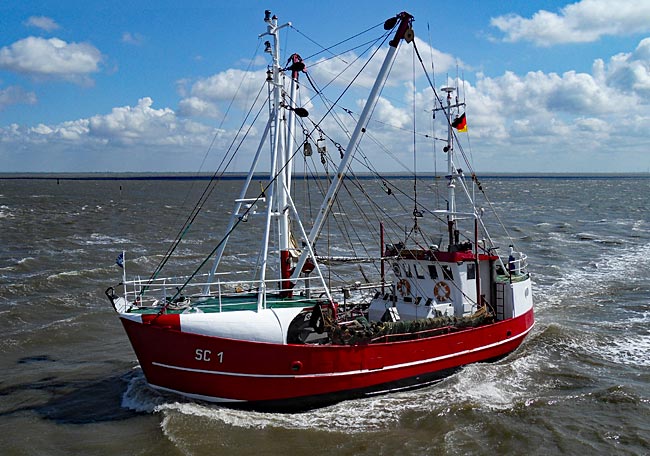
Crabs, dikes and the Wadden Sea
The North Sea spa town of Büsum
Once an island, Büsum was repeatedly threatened by the "Blanken Hans". When the greatest flood of the last century struck in 1962, Büsum was already long connected to the mainland - since 1585. Today, this town of around 5,000 residents, part of the Dithmarschen district, is one of the most important holiday destinations along Schleswig-Holstein's North Sea coast. Since 1985, the sea in front of Büsum has been protected as the Schleswig-Holstein Wadden Sea National Park, and since 2009, it has also been listed as a UNESCO World Heritage Site.
read more about Büsum ...
A stroll through Kiel
Sights in the fjord city and a visit to Laboe
A good starting point for exploring the city today, decades after the end of the war, is the centrally located main train station. On Sophienblatt, the main street running in front of the building, all major bus lines converge, and many sights can also be easily reached on foot during a multi-hour stroll.
read more about Kiel ...
Boltenhagen Seaside Resort
A charming "village-style" town with a long beach
Located between Lübeck and Wismar, near Grevesmühlen, lies the seaside resort of Boltenhagen. Even during the GDR era, the area was a popular destination due to its long sandy beach and was known as the "Resort for the Working People". And tourism continues to bring money into the town, which is invested wisely. Many regularly emptied waste collection containers ensure that trash ends up where it belongs. But that is just one example.
read more about Boltenhagen ...
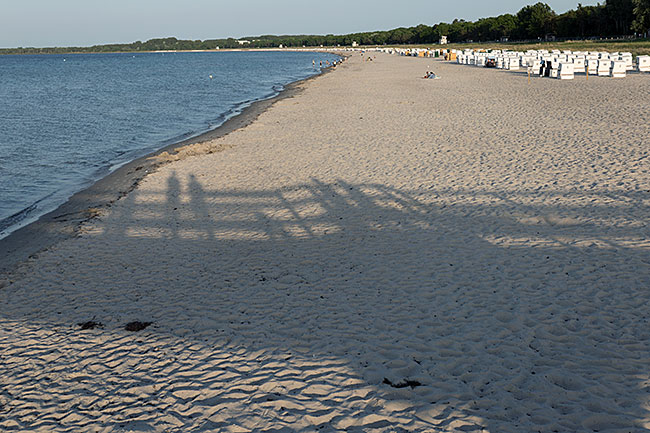
A short visit to the historic old town of Heppenheim
Half-timbering, a false dome, and legendary lanterns
The skyline of Frankfurt, Germany's financial capital with its office towers in the banking district, is still within sight when the train to Darmstadt and Bensheim pulls into the small station of Heppenheim. In 2010, the city was on everyone’s lips after native son Sebastian Vettel left all competition behind in his Red Bull car and became the youngest Formula 1 double world champion of all time. In 2011, he added another title to his collection, as did he in 2012 and finally in 2013 for a fourth time. However, we are not following in Vettel’s footsteps but rather those of history in the picturesque old town with its timber-framed houses.
read more about Heppenheim ...
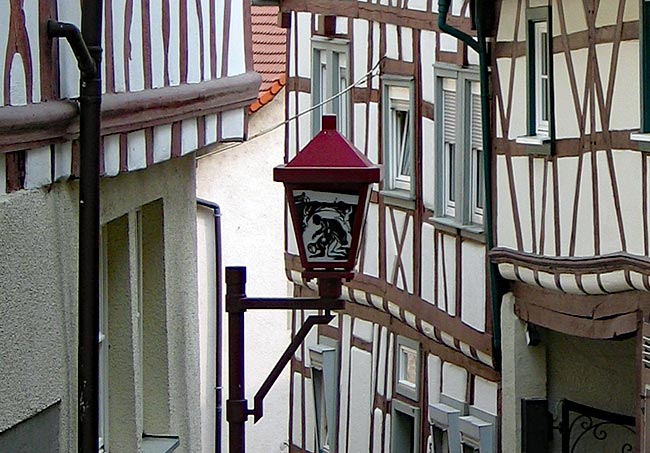
Norden-Norddeich in East Frisia
At the north Sea
At first glance, one might get the impression that this North Sea resort is merely a transfer station for vacationers heading in droves to the islands. Not only do several ferry docks dominate the harbor, but large parking lots and multi-story garages belonging to the Frisia shipping company right behind the dike offer hundreds of parking spaces for island visitors who don’t want or can’t take their cars with them - Juist is car-free after all. But beyond that, Norddeich reveals itself as a far less hectic and manageably small coastal resort. In this state-recognized North Sea spa, tourism has only been promoted since the second half of the last century, apparently with success, as more than 1 million overnight stays per year show.
read more about Norden-Norddeich ...