

DISTANT PLACES
Travel tips for destinations far from the Hanseatic City of Bremen
Wismar
The Hanseatic City on the Baltic Sea
and
its UNESCO World Heritage
Page 3 of 4
There is plenty to see at the Market Square, the medieval center of the city. Even today, this roughly 100 x 100 meter square remains one of the largest marketplaces in Northern Germany. In the past, its size reflected the economic power and influence of the Hanseatic city, as money has always ruled the world, and those who had it made sure to display it.
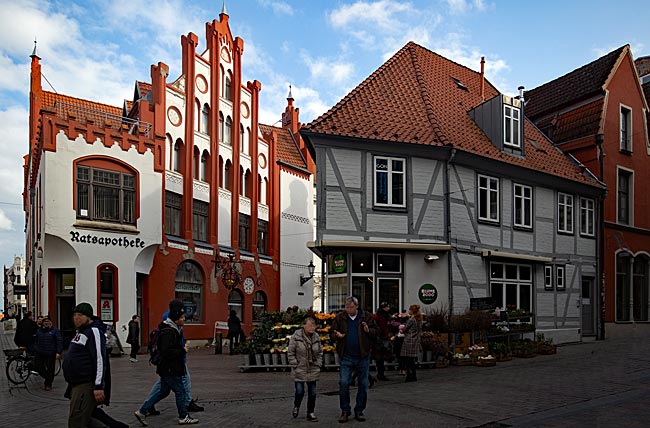
One entrance to the Market Square leads past the former city-owned Ratsapotheke, which was mentioned in documents as early as 1336. The building was renovated in 1902
This might also apply to the town hall, although Wismar's significance in the first decades of the 19th century was less than it had been up until the 16th century. Perhaps it was the renewed self-confidence after the end of Swedish rule that led to the construction of a grand classical building on the edge of the square instead of the Gothic town hall that collapsed in 1807. The symmetrically designed building, with a balcony supported by four columns above its entrance portal, was completed in 1819 after two years of construction. However, medieval traces can still be found today in the cellar vaults, and the court gallery has also been preserved.
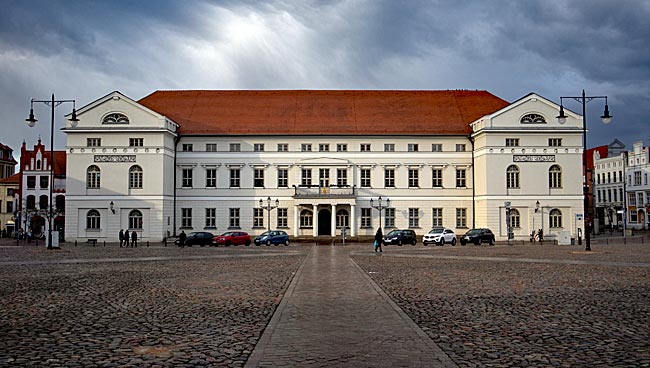
Something is brewing over the town hall ...
It's not new that street names often have a historical reference to trades that were once located there, as shown by the "Sargmacherstraße" (Coffin Maker Street). However, an eye-catcher is the street sign that is mounted above a shop diagonally opposite the town hall. It reads "Tittentasterstraße" in white lettering on a blue background, and yet it isn't even a street. What? As often happens, the common folk are to blame, for in earlier times there was said to be a narrow passage between houses from the Market Square to the "Diebstraße" (Thief Street) that was so narrow that physical contact was unavoidable. The citizens called this passageway "Tittentaster," although from a linguistic perspective, it is not entirely clear whether this refers to the colloquial term for the (touched) female breast or rather to the human chest in general.
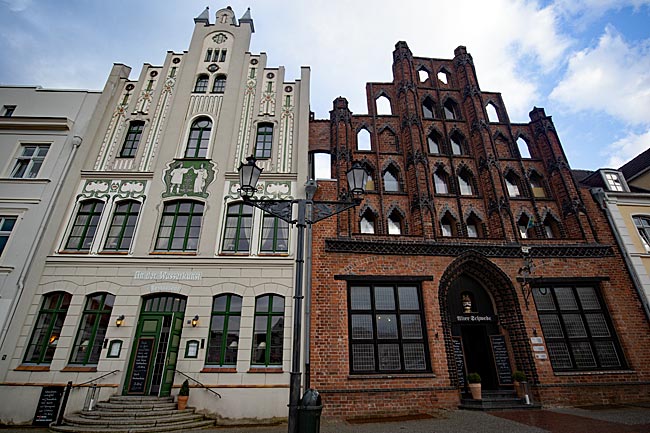
The restaurants "An der Wasserkunst" (At The Water Art) and "Alter Schwede" (Old Swede)
One might think, "Old Swede," but he's a few houses further down, namely as a similarly named restaurant with a Swedish head above the entrance and a Swedish rider on the iron sign holder. The former citizen's house, which has been operating as a gastronomy business since the 17th century, was built around 1380 and is one of the oldest in Wismar. Particularly impressive is the elaborately designed gable with its dark-glazed and unglazed shaped stones. The good condition of the house on the market is due to a long phase of reconstruction and restoration between 1977 and 1989, not only externally but also internally, including the interior.
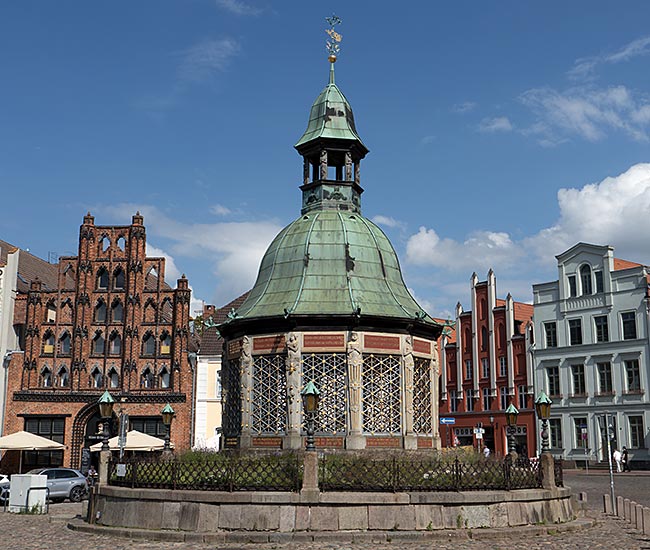
Unusual pavilion: the Wasserkunst
A few meters away from the neat brick building, the Wasserkunst (Water Art) initially appears like an oriental cleansing fountain. Indeed, it is a dodecagonal fountain house with a curved copper roof designed by the Utrecht architect Philipp Brandin, who had previously drawn up plans for the Schabbellhaus. The structure was built between 1595 and 1602 according to his designs. The long construction period does not only refer to the visible part of the installation, as there is an underground water reservoir beneath street level that was fed with fresh spring water from nearby Metelsdorf. Wooden pipes transported the water primarily to the numerous breweries but also to 220 houses of wealthy citizens in Wismar. All others had to continue drawing their water from wells until 1897, when a newly installed supply system for the entire city rendered the Wasserkunst obsolete.
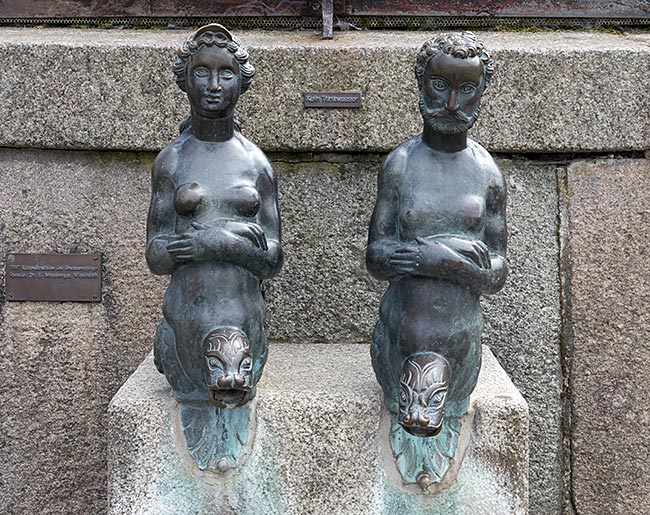
Nix and Nixe
In 1861, the fountain house was renovated and restored, and between 1972 and 1976, it underwent further restoration. During this process, the twelve narrow pillars of the pavilion made from Gotland sandstone were replaced with replicas. The pillars depict men and women, such as "Woman without Arms," "Man with Shield," "Woman with Flower," or "Man with Crossed Arms." The two bronze water spouts, "Nix" (male water spirit) and "Nixe" (female water spirit), are also not the originals.
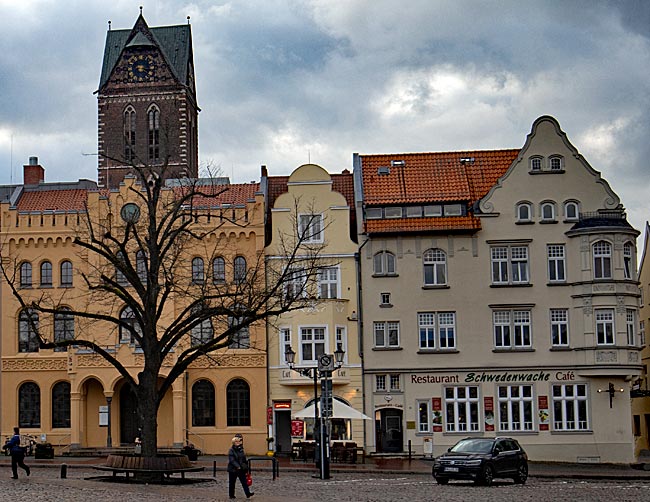
Behind the main guardhouse, the west tower of St. Mary's Church rises into the sky
On the other side of the Market Square, the main guardhouse was completed in 1858. The building, which is now plastered in ochre with two cannon barrels from the Swedish era in front of the entrance portal, was reopened as a citizen service center in July 2015 after one and a half years of renovation and reconstruction. Depending on the direction and angle from which you view the building, you can see the tower of St. Mary's Church (Ratskirche) rising behind it, one of several churches in the city.
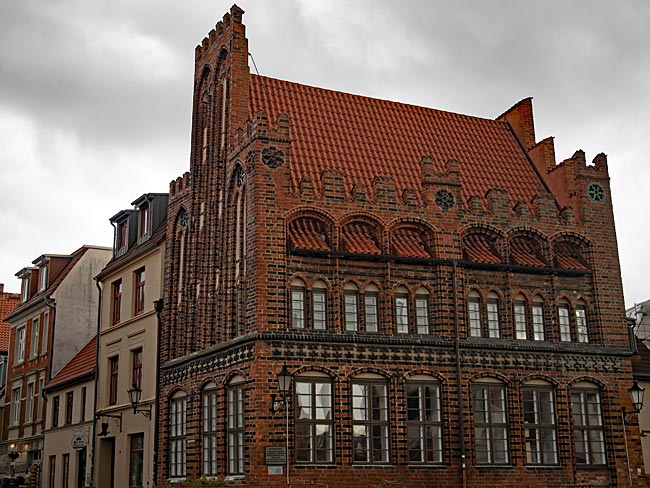
The Archidiakonat is a gem
Leaving the market square towards St. Mary's, you encounter another very noteworthy example of brick Gothic architecture in Wismar: the mid-15th-century townhouse of the then Archdeacon on "Sargstraße" (Coffin Street). Here too, numerous shaped and bricks appear in alternating glazed and unglazed patterns as elements. Both the stepped gable and the eaves (long side) are equally pleasing to the eye. The fact that this house still stands is due to several extensive restoration and reconstruction measures, beginning in 1885. After war damage, further damage occurred in 1960 due to the demolition of the adjacent church nave of St. Mary's. However, restoration and partial reconstruction began just one year later, with the south gable kept simple, yet still a worthwhile investment in my opinion.
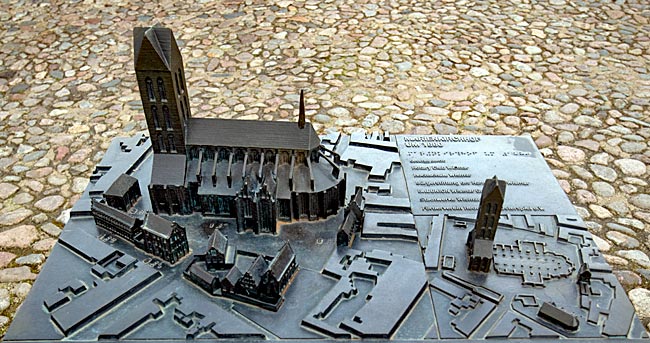
The bronze model at the Forum shows Marienkirchhof around 1880 and today
Demolition of the church nave? After severe bomb hits, despite protests from many citizens, the city authorities decided in 1960 not to rebuild the nave of the church built in 1260. Instead, a forum has been created that suggests the foundation and interior layout. A miniature bronze view shows how Marienkirchhof looked around 1880, how it looks today, and which historical buildings next to the church nave fell victim to the Allied aerial bombs, such as the Old School, a gem of brick Gothic architecture.
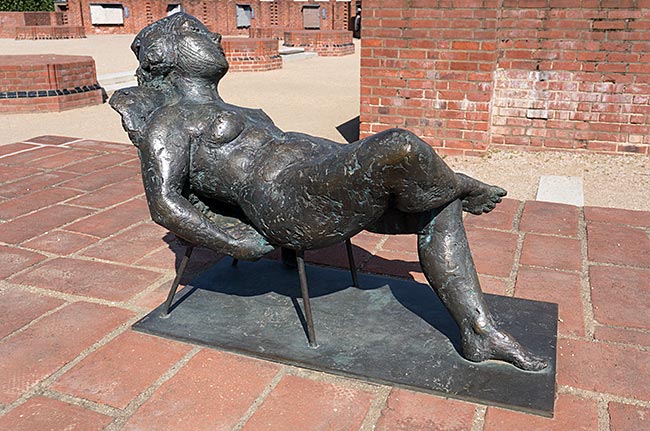
Art at the Forum
Of course, this means that part of Wismar's history and urban culture has been reduced to rubble, yet the Hanseatic city can look back on a well-preserved or restored historical cityscape and has thus had far more luck in misfortune than cities like Kiel, which were 80% destroyed from the air.
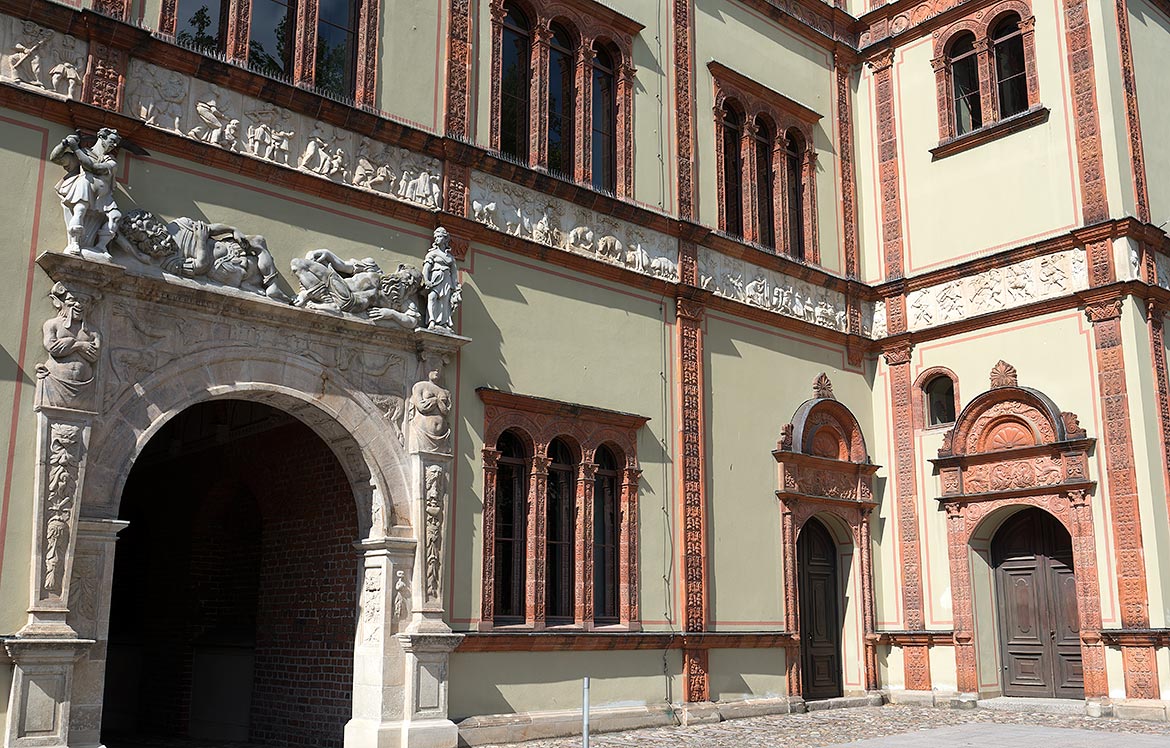
Just a stone's throw from the West Tower of St. Marien, along the path to St. Georgen Church, history continues with the Fürstenhof. The commissioner for this three-story building was Duke Johann Albrecht I of Mecklenburg, who ruled parts of the land until his death in 1576. The plans for the construction were inspired by Upper Italian models, primarily the Palazzo Roverella built in Ferrara in 1508. The residence in Wismar was completed in 1554 and is considered the first significant Renaissance building in the region.
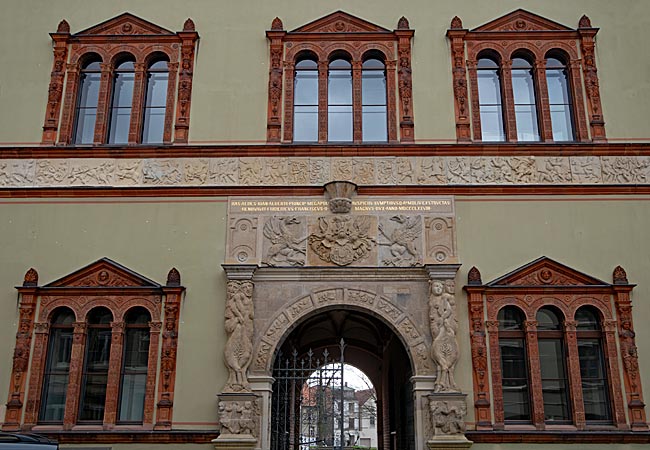
Street-side facade of the Fürstenhof
The Renaissance variation, featuring terracotta-framed round-arched windows, friezes, and medallions also executed in terracotta, as well as lavishly decorated portals, was revived in the 19th century as the Johann-Albrecht style and had a formative influence on the region. A good example of this is the Neo-Renaissance main building of the University of Rostock at Universitätsplatz. Like many historical buildings, the Fürstenhof underwent multiple modifications and renovations over the centuries.
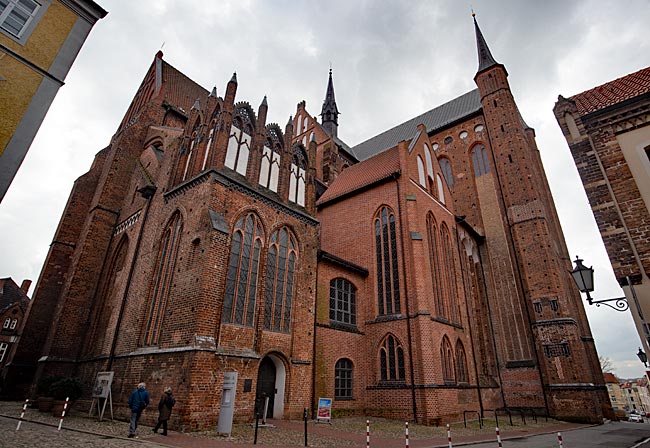
Construction of St. Georgen Church took centuries
This cannot be said about the parish church of St. Georgen; the massive structure was simply never completed as planned. The Gothic church is the third on this site and the youngest in Wismar. While the first building was likely constructed during the city's founding, the current church probably began with the tower around 1404. Church buildings in the Middle Ages were often large projects symbolizing the power of the Catholic Church, consuming vast amounts of money and employing master builders and craftsmen for decades.
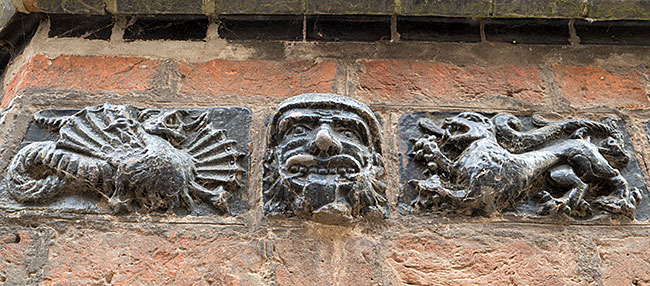
Details of the church walls
However, nearly 190 years of construction activity, as seen at St. Georgen, is indeed unusual. Economic decline due to the slow demise of the Hanseatic League and the reform movement within the Catholic Church - which began before Luther and concluded with the Peace of Westphalia - were two reasons why the building was not completed as planned.
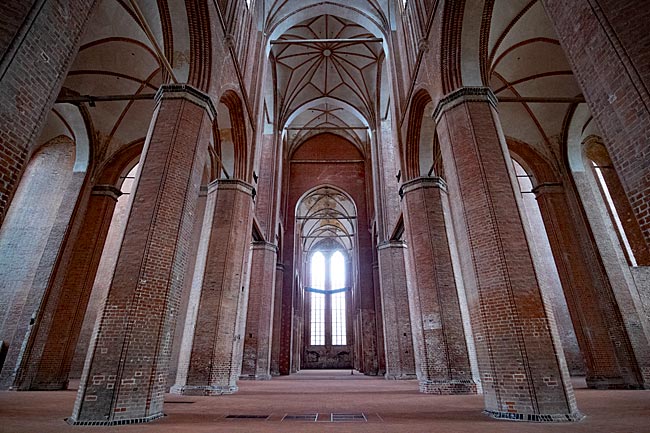
And there was light ... impressive in height but rather empty, though that should change
Nevertheless, efforts were made to prevent the decay of this sacred structure, even despite severe destruction during World War II. Since 1990, continuous restoration work has been underway. St. Georgen Church no longer has a tower rising above the church's roofs; instead, in 2014, an observation platform was installed on the tower stump, accessible by elevator from inside the church. From here, one can enjoy a wide view of the city.
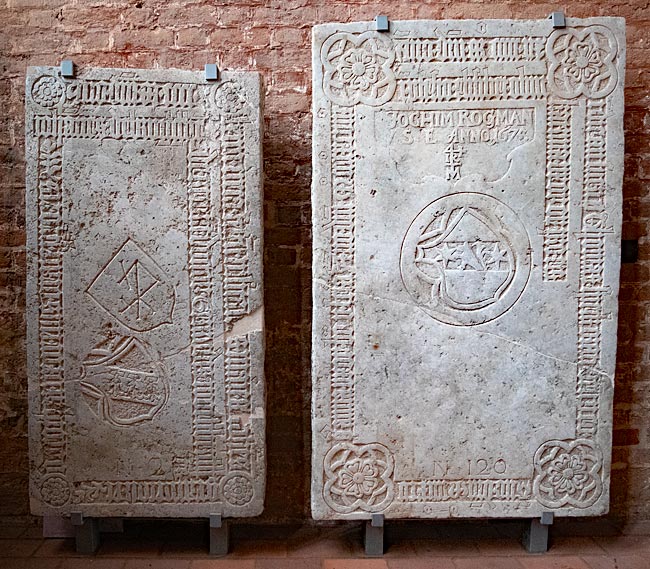
Centuries-old grave slabs in St. Georgen church


Map
Information
Tourist Information
Opening Hours:
April to September: daily 9:00 AM – 5:00 PM
October to March: daily 10:00 AM – 4:00 PM
www.wismar.de/Tourismus-Welterbe (also in english)
Förderverein „Poeler Kogge“ e.V. (Poeler Cog)
www.poeler-kogge.de/kogge.html
Harbor Tour and Island Poel
www.adler-schiffe.de/ab-wismar-und-poel/hafenrundfahrt.php
Tierpark Wismar e.V. (Zoo)
Zum Festplatz 30
23966 Wismar
Phone.: +49 (0)3841 707070
Open: March – October daily 9 AM – 6 PM, November – February only on weekends and holidays 10 AM – 4 PM
Email: info@tierpark-wismar.de
www.tierpark-wismar.de
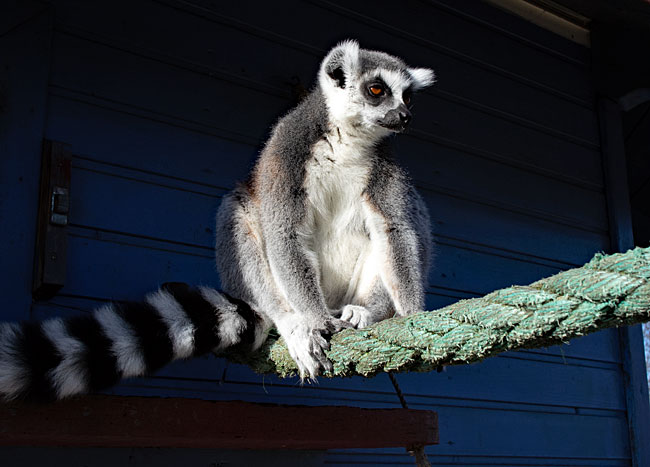
Katta at Tierpark Wismar
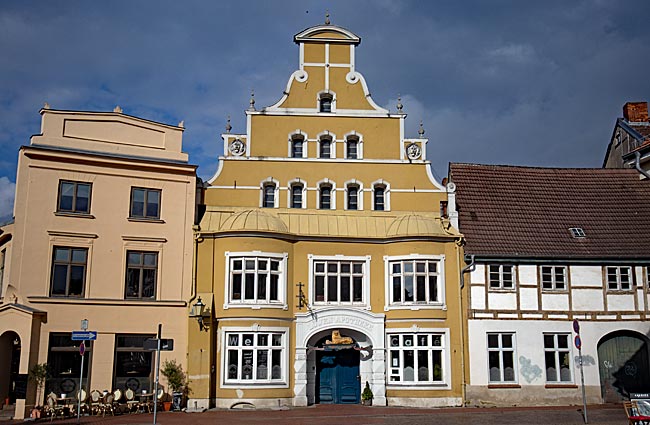
Also beautiful: The Löwen Apotheke (pharmacy) at Hopfenmarkt is now used differently
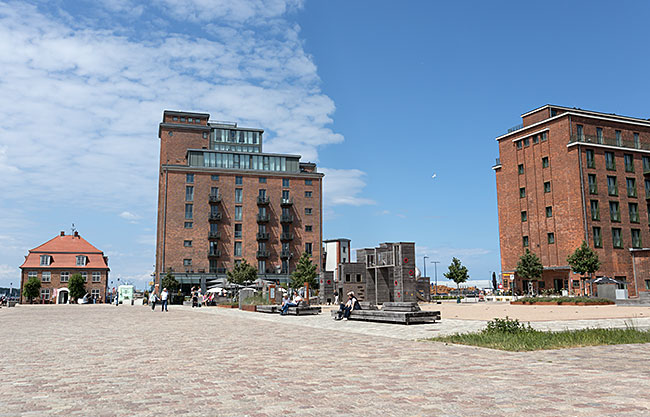
At the Old Harbor
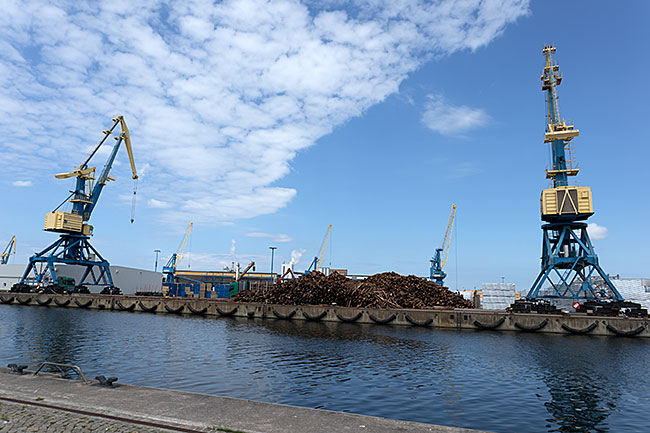
Timber handling in the port
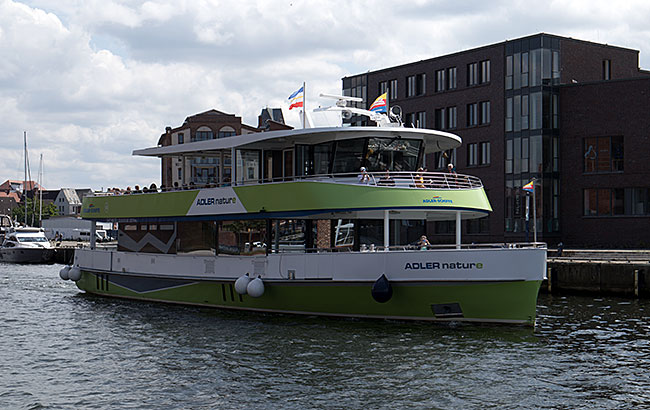
Electric-powered excursion boat
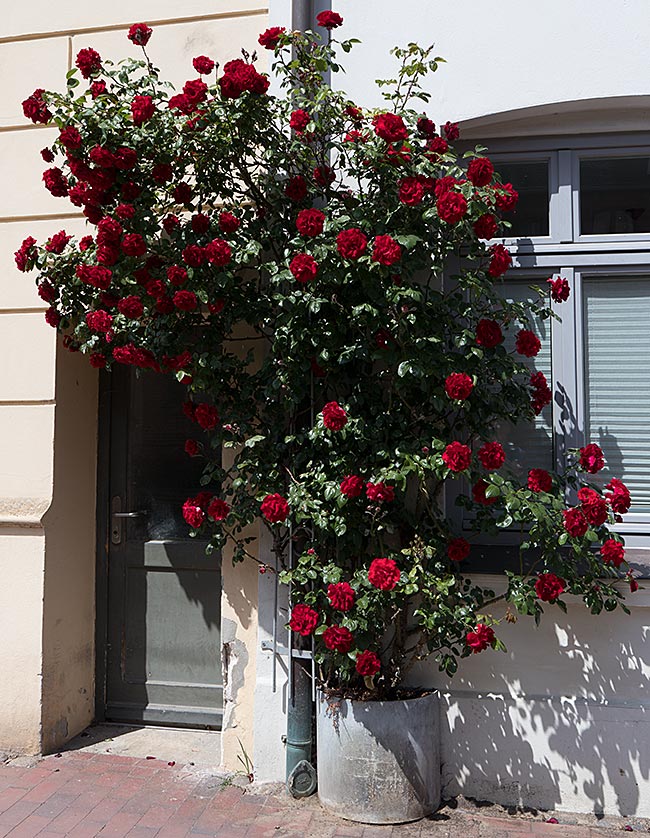
Blooming red roses
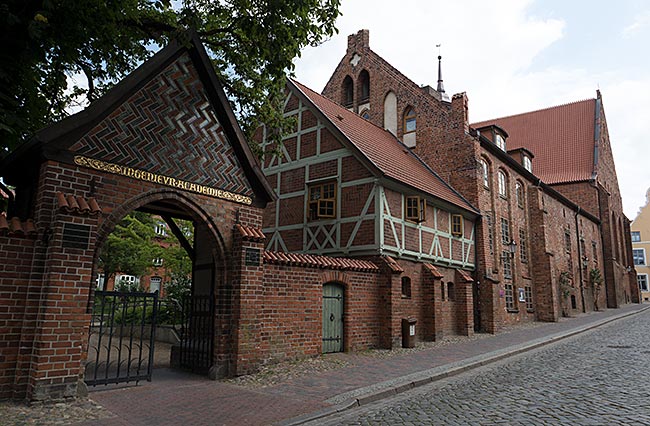
Evangelical lutheran congregation Wismar Heiligen Geist - St. Nikolai
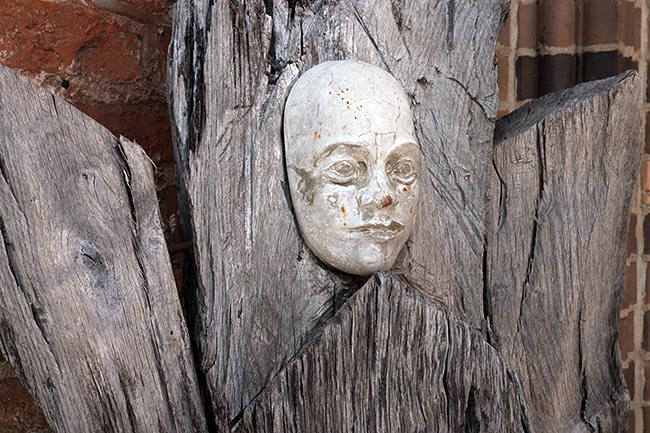
Part of "Holy Family" (2020), a work by Wismar confirmands and artist Lars Maué. The plaster casts of the faces were mounted on the pillars of a former bridge in Wismar.
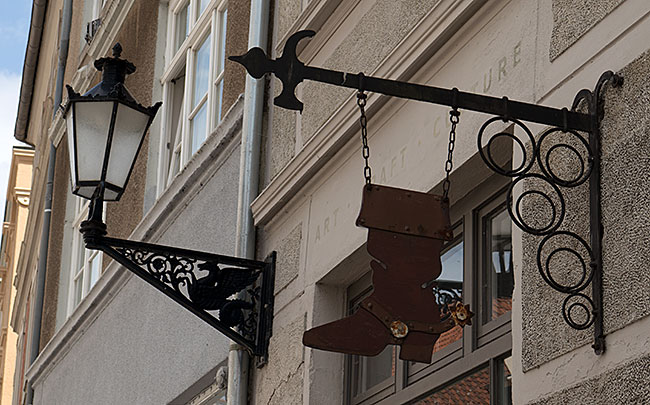
Lantern and sign
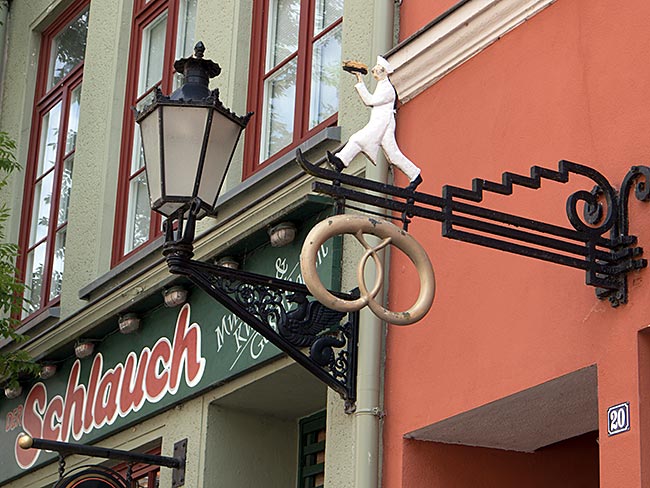
Lantern and sign
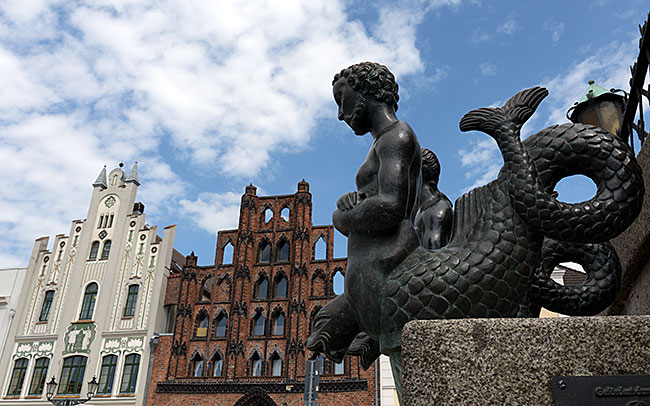
Nix and Nixe with historical houses in the background in the market square
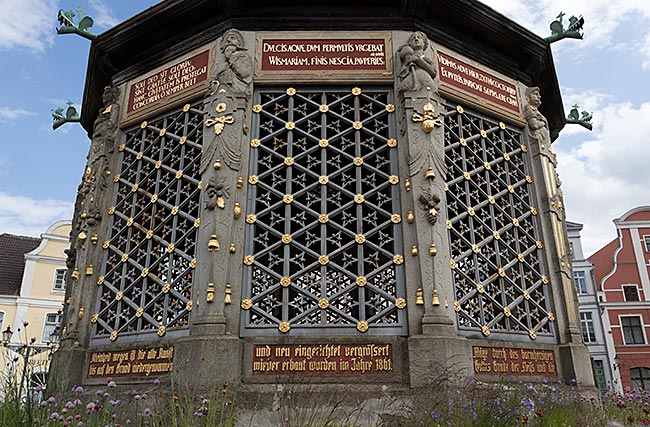
Details of the Wasserkunst, a dodecagonal fountain house in the market square
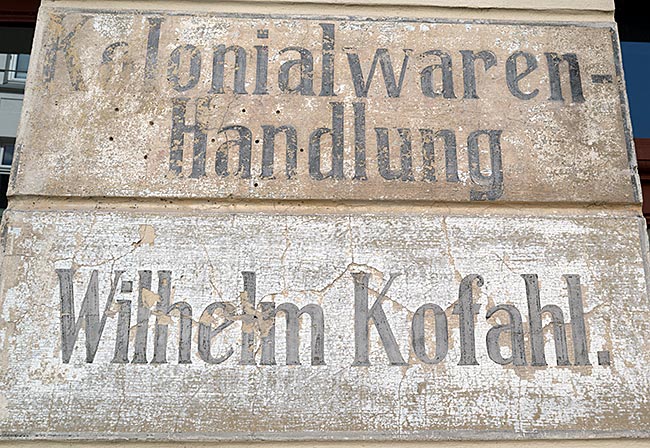
A formerly colonial goods store: These shops originally sold products from overseas colonies. In most of these colonies, the local people were exploited through slavery and even unto death. European merchants became wealthy or even very rich as a result.
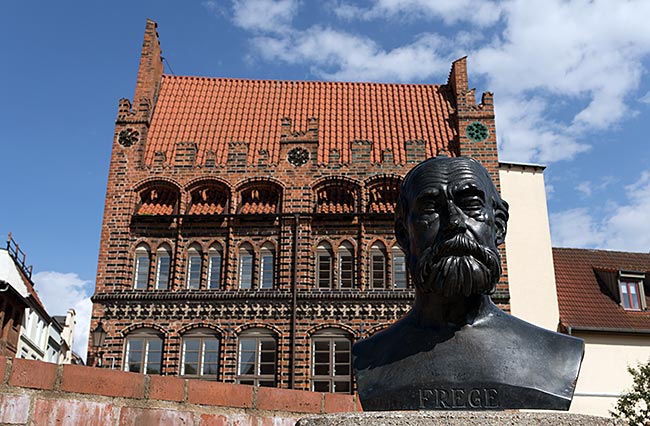
Bronze bust of Gottlob Frege on the Forum; he was a mathematician, logician, and philosopher, born in 1848 in Wismar and died in 1948 in Bad Kleinen. The house in the background is the Archidiakonat.
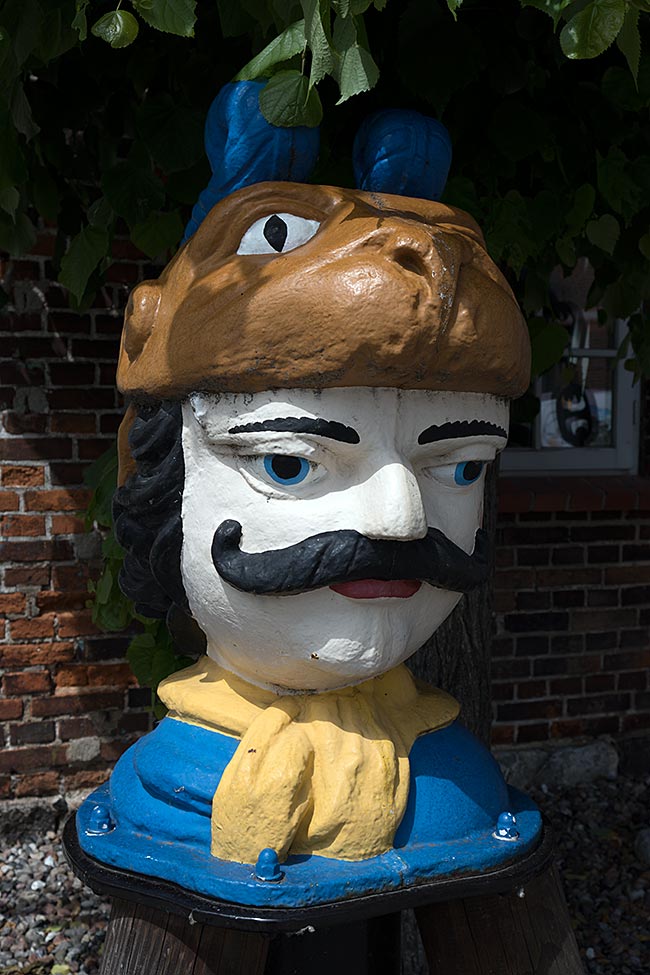
Another Swedish Head
Rügen by the Baltic Sea
Active holiday featuring cycling and hiking
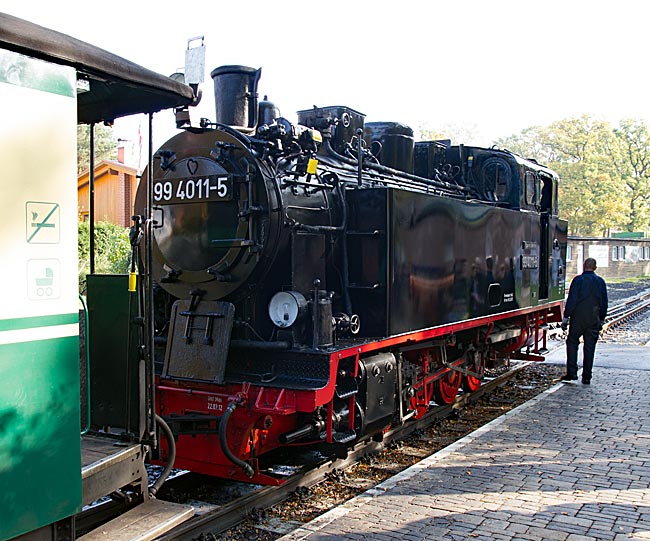
Enjoy an active holiday featuring cycling and hiking along the Baltic coast in Mönchgut on the island of Rügen. Long sandy beaches, rolling hills, and lush forests provide a varied and beautiful setting for your getaway. Often, the only thing breaking the peace is the distant whistle of the historic 'Rasender Roland' steam train. Despite its name (which suggests something "racing" or fast), it’s actually quite the opposite. A journey by train is simply part of the holiday experience.
read more about Rügen ...
Rostock and Warnemünde by the Baltic Sea
A travel guide
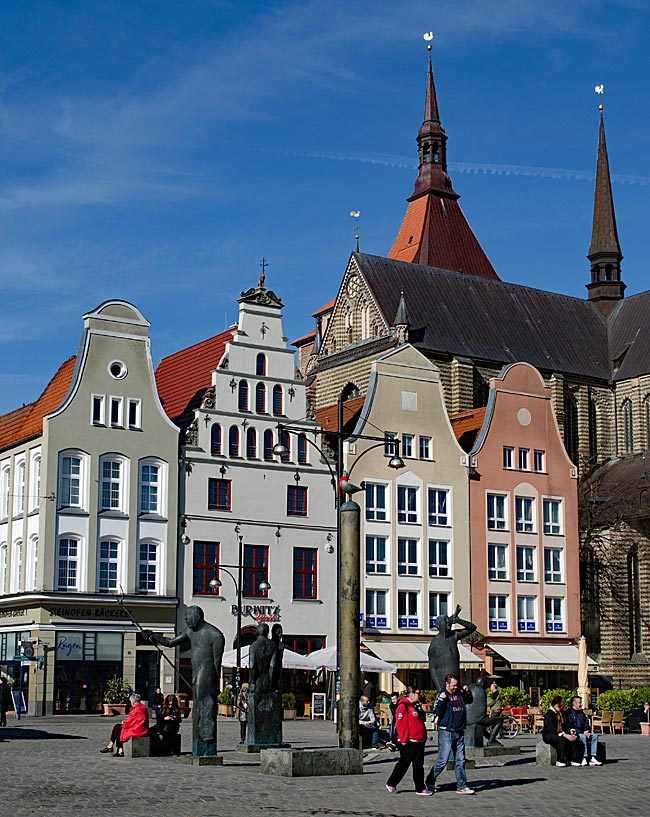
A mini-guide through the Hanseatic city of Rostock and its beautiful beach destination, Warnemünde. Home to one of the oldest universities in the Baltic region, the city boasts a rich history. Join us on a tour of discovery.
read more about Rostock ...
In the Probstei in late summer
Schönberger Strand and sea and more
Can you walk or ride a bike from Brasilien (Brazil) to Kalifornien (California) in just a few minutes, always with a view of the water? No, not with your finger on the globe or map, but in person. You’ll have to forgo Copacabana and the Sunset Strip with the Angels in Los Angeles (Spanish for "The Angels"). Instead, you get Germany’s "True North" with all its bright sides. Of course, there are sometimes shadows here too, but they belong only on the margins of this story.
read more about Schönberger Strand ...